Tomato Plant Nutrient Deficiency: Complete Guide for Gardeners
Tomato Plant Nutrient Deficiency: Symptoms, Causes & Solutions
Growing tomatoes seems simple until your plants start showing strange colors on their leaves or your fruit stops growing the way it should. Most of the time, the problem isn’t pests or disease. It’s tomato plant nutrient deficiency, and it’s more common than most gardeners realize.
Tomatoes are heavy feeders. They pull a lot of nutrients from the soil to support their rapid growth, flower production, and fruit development. When even one nutrient runs low, the whole plant feels it. Leaves change color, growth slows down, and fruit quality suffers.
This guide walks through the most common nutrient deficiencies in tomato plants, how to spot the symptoms, and what you can do to fix the problem before it ruins your harvest. By the end, you’ll know exactly what your tomato plants are trying to tell you and how to respond.
What Is Tomato Plant Nutrient Deficiency?
Tomato plant nutrient deficiency happens when a plant doesn’t get enough of one or more essential nutrients from the soil. These nutrients include nitrogen, phosphorus, potassium, calcium, magnesium, and smaller amounts of minerals like boron and iron.
Every nutrient plays a specific role. Nitrogen supports leafy growth. Phosphorus helps with root development and flowering. Potassium regulates water movement and fruit quality. Calcium builds strong cell walls. Magnesium is a key part of chlorophyll, which gives leaves their green color. When any of these are missing, the plant can’t grow or produce fruit the way it’s supposed to.
Deficiencies can happen for several reasons. Poor soil quality, incorrect soil pH, overwatering, or using the wrong fertilizer can all limit nutrient uptake. Sometimes the nutrients are present in the soil, but the plant simply can’t absorb them because the conditions aren’t right.
Recognizing a nutrient deficiency early gives you a much better chance of saving your plant and your harvest.
Common Nutrient Deficiencies in Tomato Plants
Tomato plants can suffer from several types of nutrient deficiencies, each with its own set of symptoms. Here’s a closer look at the most frequent ones gardeners run into.
Nitrogen Deficiency
Nitrogen deficiency is one of the most common problems in tomato cultivation. Since nitrogen supports leafy green growth, a lack of it usually shows up first in the older leaves. You’ll notice the lower leaves turning pale yellow while the veins may stay slightly green for a while longer.
Plants with a lack of nitrogen often look stunted. Growth slows down, stems can appear thin, and the overall plant looks weaker than it should. If left untreated, nitrogen deficiency can significantly reduce tomato production because the plant doesn’t have the energy or resources to support healthy fruit development.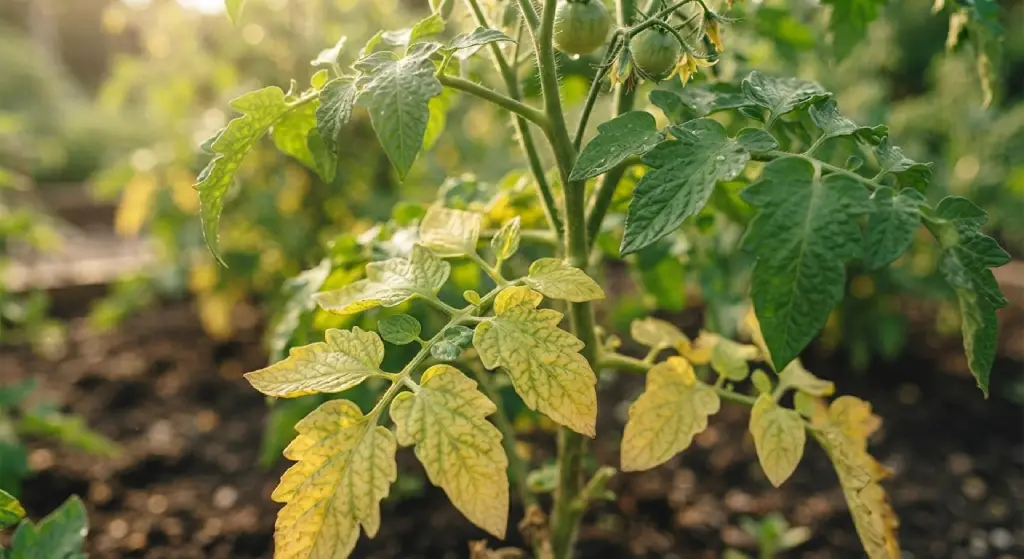
Adding a nitrogen-rich fertilizer or working compost into the soil can help correct this issue fairly quickly, often within a week or two of treatment.
Magnesium Deficiency
Magnesium deficiency is a little trickier to spot because it mimics some other nutrient issues. Mg deficiency typically appears as yellowing between the veins of older leaves, while the veins themselves remain green. This creates a distinct marbled or mottled look.
Since magnesium is essential for chlorophyll production, a lack of it directly affects a plant’s ability to photosynthesize. Over time, magnesium deficiency can cause leaves to curl, become brittle, and eventually drop off if the deficiency isn’t corrected.
Epsom salts, which contain magnesium sulphate, are a popular home remedy for treating magnesium deficiency. Dissolving Epsom salts in water and applying it as a foliar spray or soil drench can improve magnesium uptake and bring the green color back to the leaves within a few weeks.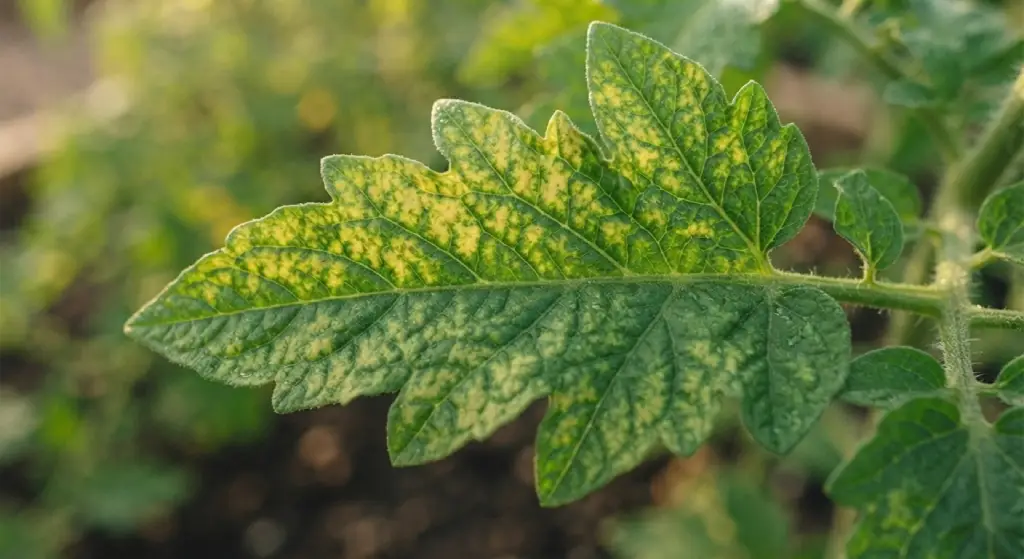
Potassium Deficiency
Potassium deficiency often shows up as yellowing or browning along the edges of older leaves, a condition sometimes called leaf scorch. The center of the leaf may still look green, but the margins turn brittle and dry.
Potassium plays a big role in fruit development, so a deficiency can lead to uneven ripening, smaller fruit, and tomatoes with a weaker flavor. Potassium also helps regulate water movement within the plant, so deficient plants may also struggle with water stress even when watered properly.
Using a fertilizer with a higher potassium content, often labeled as the “K” in NPK ratios, can resolve potassium deficiency. Wood ash and compost are also good natural sources of potassium for the soil.
Calcium Deficiency
Calcium deficiency is well known among tomato growers because it’s directly linked to blossom end rot, a condition where the bottom of the tomato fruit develops dark, sunken spots. This happens because calcium is essential for building strong cell walls, and without enough of it, fruit tissue breaks down.
Ca deficiency isn’t always caused by a lack of calcium in the soil. More often, it’s caused by inconsistent watering, which disrupts calcium uptake through the plant roots. Irregular watering, whether too much water or not enough, can prevent calcium from reaching the fruit even when soil levels are adequate.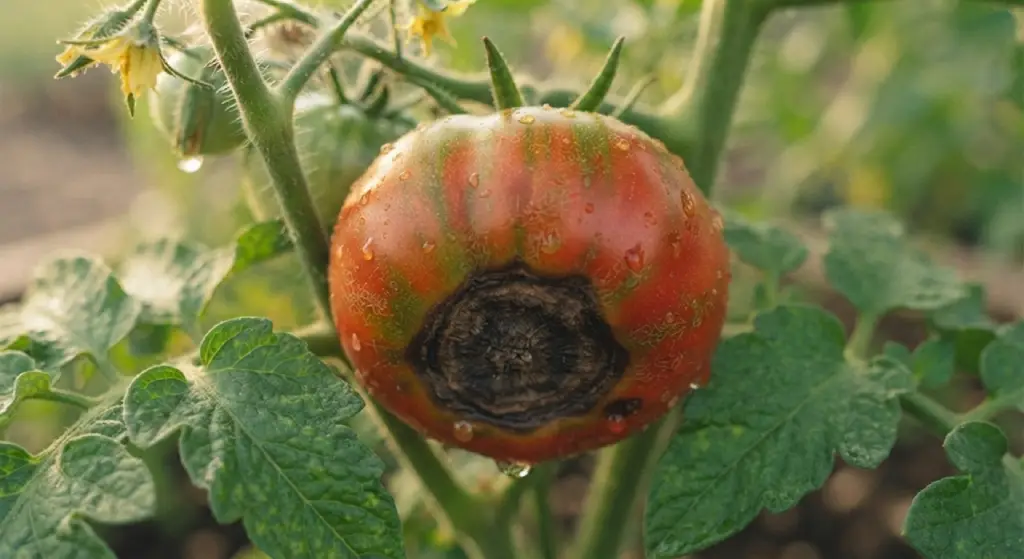
Maintaining consistent soil moisture and adding crushed eggshells or a calcium-based fertilizer to the soil can help prevent and treat calcium deficiency over time.
How to Identify Nutrient Deficiency Symptoms
Identifying nutrient deficiency symptoms starts with paying close attention to your plant’s leaves, since they’re usually the first part of the plant to show signs of trouble. Where the symptoms appear on the plant can tell you a lot. Older, lower leaves usually show deficiencies in nutrients like nitrogen, magnesium, and potassium first, since these nutrients can move from older growth to support newer growth. Calcium and boron deficiencies, on the other hand, tend to show up in young leaves and new growth because these nutrients don’t move around the plant as easily.
Color changes are another major clue. Yellowing, purpling, browning, and curling leaves all point to different nutrient deficiencies. The pattern of the discoloration matters too. Uniform yellowing often points to nitrogen deficiency, while yellowing between green veins usually signals a magnesium or iron deficiency.
It also helps to keep a record of your watering and fertilizing schedule. A sudden change in leaf color after a dry spell or after skipping fertilizer for a few weeks can confirm that a nutrient deficiency, rather than disease, is the likely cause.
Nutrient Deficiency vs Disease
It’s easy to confuse nutrient deficiency in tomato plants with disease, since both can cause yellowing, spotting, or wilting. However, there are a few ways to tell them apart.
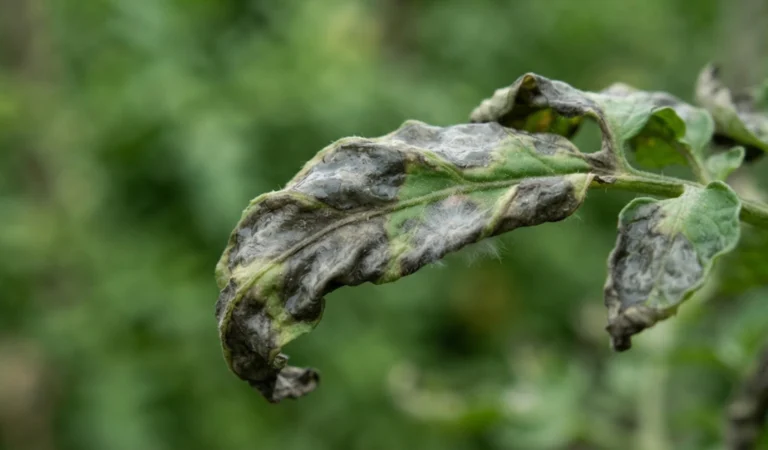
Nutrient deficiencies usually create patterns that are symmetrical and spread gradually across the plant, often starting with older or younger leaves depending on the nutrient involved. Diseases, on the other hand, often cause irregular spotting, lesions, or a rapid spread that doesn’t follow a predictable pattern. Fungal and bacterial diseases may also come with a distinct smell, sticky residue, or visible mold.
Another difference is speed. Nutrient deficiencies tend to develop slowly over days or weeks, while many plant diseases can spread quickly, sometimes affecting a plant within just a few days. If you notice sudden wilting, dark lesions, or spreading spots that don’t match typical deficiency symptoms, it’s worth considering disease as the cause and treating the plant accordingly, which may include removing affected leaves or applying a fungicide.
When in doubt, a soil test can help rule out nutrient deficiency as the cause, allowing you to focus on disease treatment if necessary.
Signs of Nutrient Imbalance
A nutrient imbalance happens when one nutrient is present in excess while another is lacking, and this can create its own set of problems separate from a straightforward deficiency. For example, too much nitrogen can actually block calcium uptake, leading to blossom end rot even when calcium levels in the soil are fine.
Signs of nutrient imbalance include excessive leafy growth with little to no fruit, which often points to too much nitrogen relative to phosphorus and potassium. Weak stems, delayed flowering, and poor root development can also signal that nutrients aren’t balanced correctly.
Soil nutrients work together, so testing your soil periodically is one of the best ways to catch an imbalance before it affects plant growth and development. A balanced, all purpose vegetable fertilizer formulated for tomatoes can help maintain the right nutrient ratios throughout the growing season.
Common Signs of Nutrient Deficiency
While each nutrient deficiency has its own specific symptoms, there are some common signs of nutrient deficiency that every tomato grower should know how to recognize.
Yellow Tomato Leaves
Yellow leaves are probably the most recognized symptom across nearly every type of nutrient deficiency. Nitrogen deficiency causes uniform yellowing of older leaves, while magnesium and iron deficiencies cause yellowing between green veins.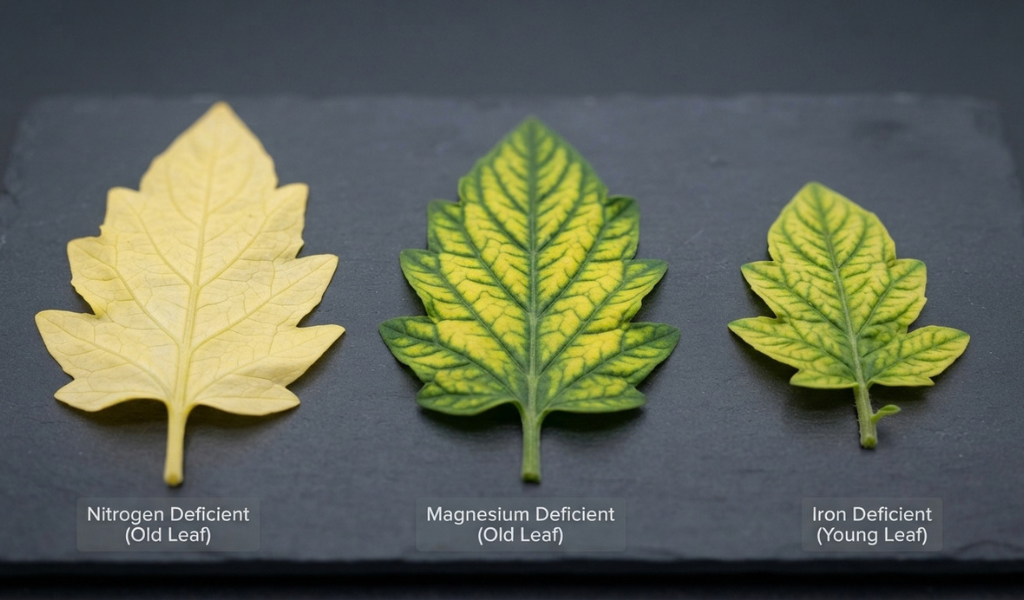
The position of the yellow leaves on the plant offers a helpful clue. Yellowing that starts at the bottom of the plant and moves upward typically points to nitrogen or magnesium deficiency, while yellowing in new growth at the top of the plant often suggests an iron deficiency or a problem with soil pH affecting nutrient absorption.
Purple or Dark Leaves
Leaves that turn purple or develop a dark, dull color are often a sign of phosphorus deficiency. This is especially common in cooler weather, since cold soil temperatures can limit how well tomato plants absorb phosphorus from the soil, even when phosphorus levels are adequate.
Phosphorus deficiency can also delay flowering and fruiting, so if your plants seem slow to produce flowers and the leaves look unusually dark or purplish, phosphorus is worth looking into.
Brown Leaf Edges
Brown, crispy edges on leaves are a hallmark sign of potassium deficiency. This symptom, sometimes called leaf scorch, usually starts on older leaves and can spread if the deficiency isn’t addressed.
Brown edges can sometimes be confused with the symptoms of too much water or underwatering, since both can cause leaf tips and margins to dry out. Checking soil moisture levels alongside leaf symptoms can help you figure out whether potassium deficiency or a watering issue is the real cause.
Poor Growth and Small Fruits
When tomato plants don’t get enough nutrients, overall plant growth slows down, and fruit production often suffers as a result. Plants may produce fewer flowers, and the fruit that does develop can be smaller than expected, with inconsistent ripening or poor flavor.
This symptom is often tied to potassium or phosphorus deficiency, since both nutrients play key roles in flower and fruit development. Addressing the deficiency with the right fertilizer usually leads to noticeable improvement within a few weeks.
How Soil pH Affects Nutrient Availability
Soil pH plays a bigger role in nutrient deficiency in tomato plants than many gardeners realize. Tomatoes grow best in slightly acidic soil, with a pH between 6.0 and 6.8. When soil pH falls outside this range, certain nutrients become harder for plant roots to absorb, even if those nutrients are present in the soil.
For example, in soil that’s too alkaline, iron and phosphorus become less available, which can lead to yellowing and stunted growth even with regular fertilizing. In soil that’s too acidic, calcium and magnesium uptake can suffer, increasing the risk of blossom end rot and magnesium deficiency.
A simple soil test can tell you exactly where your soil pH stands. If adjustments are needed, garden lime can raise pH in overly acidic soil, while sulfur or organic matter like compost can lower pH in overly alkaline soil. Correcting soil pH often resolves nutrient deficiency symptoms faster than adding more fertilizer alone, since it improves nutrient absorption at the root level.
Treatment of Tomato Plant Nutrient Deficiency
Treating tomato plant nutrient deficiency starts with correctly identifying which nutrient is lacking, since the treatment for nitrogen deficiency looks very different from the treatment for calcium deficiency.
Once you’ve identified the deficiency, a few treatment options can help:
- Foliar sprays: Applying a liquid fertilizer directly to the leaves allows for fast nutrient absorption, which is especially helpful for correcting magnesium or iron deficiency.
- Soil amendments: Adding compost, aged manure, or specific mineral amendments like Epsom salts or crushed eggshells can address deficiencies at the root level over time.
- Balanced fertilizing: Switching to a fertilizer that matches your plant’s specific needs, based on a soil test, often resolves multiple nutrient deficiencies at once.
- Watering adjustments: Since inconsistent watering can block nutrient absorption, maintaining even soil moisture helps nutrients like calcium reach the fruit properly.
Most nutrient deficiencies start to improve within one to three weeks of consistent treatment, though severely affected leaves may not recover and can be removed to redirect the plant’s energy toward new, healthy growth.
Choosing the Right Fertilizer
Choosing the right fertilizer makes a big difference in preventing and treating nutrient deficiency in tomato plants. Fertilizers are typically labeled with an NPK ratio, which stands for nitrogen, phosphorus, and potassium, the three primary nutrients plants need most.
For early growth, a fertilizer with slightly higher nitrogen content supports healthy leafy development. Once plants start flowering, switching to a fertilizer with higher phosphorus and potassium supports better flower and fruit production. Many garden centers sell fertilizers specifically formulated for tomatoes, which already balance these nutrients for each growth stage.
If you’re dealing with a specific nutrient deficiency, such as magnesium or calcium, look for fertilizers or amendments that target that nutrient directly rather than relying on a general all purpose blend. Consider a slow release fertilizer for season long feeding, since it reduces the risk of nutrient spikes and keeps nutrient levels steady over time. Always follow label instructions carefully, since over-fertilizing can cause its own set of problems, including nutrient imbalances that mimic deficiency symptoms.
Tips for Preventing Nutrient Deficiencies
Preventing nutrient deficiencies is usually easier and less costly than treating them after symptoms appear. Here are a few practical tips to keep your tomato plants healthy throughout the growing season:
- Test your soil regularly: A soil test before planting and partway through the season can catch nutrient deficiencies before symptoms show up.
- Improve soil with compost: Adding compost regularly improves soil structure and provides a steady supply of essential nutrients.
- Water consistently: Avoid watering too frequently in small amounts or letting the soil dry out completely between waterings, since both extremes disrupt nutrient uptake.
- Mulch around plants: Mulching helps maintain even soil moisture and temperature, which supports healthy nutrient absorption.
- Rotate crops each season: Growing tomatoes in the same spot year after year depletes specific nutrients from the soil faster, increasing the risk of deficiency.
- Monitor plant’s leaves weekly: Checking your plants regularly helps you catch early deficiency symptoms before they affect fruit production.
Taking these preventive steps supports overall plant health and reduces the chances of dealing with a nutrient deficiency partway through the season.
Growing Healthier Tomatoes From the Ground Up
Tomato plant nutrient deficiency doesn’t have to ruin your harvest. Once you know what to look for, whether it’s yellow leaves, brown edges, or poor fruit development, you can quickly identify the cause and take the right steps to fix it.
Healthy tomato plants start with healthy soil. Regular soil testing, balanced fertilizing, and consistent watering go a long way toward preventing most nutrient deficiencies before they start. And when symptoms do appear, catching them early makes treatment faster and more effective.
Keep an eye on your plants throughout the season, adjust your care routine as needed, and you’ll be well on your way to a stronger, more productive tomato harvest.
Frequently Asked Questions
What is the most common nutrient deficiency in tomato plants?
Nitrogen deficiency is one of the most common issues in tomato cultivation, often showing up as yellowing on older, lower leaves along with slowed overall growth.
How can I tell if my tomato plant has a calcium deficiency?
Calcium deficiency usually appears as blossom end rot, which shows up as dark, sunken spots on the bottom of the fruit. It’s often linked to inconsistent watering rather than a true lack of calcium in the soil.
Can too much fertilizer cause nutrient deficiency symptoms?
Yes. Over-fertilizing, especially with nitrogen, can block the uptake of other nutrients like calcium and potassium, creating deficiency symptoms even when nutrient levels in the soil are high.
How does soil pH affect nutrient deficiency in tomato plants?
Soil pH determines how easily plant roots can absorb nutrients. Tomatoes grow best in soil with a pH between 6.0 and 6.8. Outside this range, nutrients like iron, phosphorus, and calcium become harder for plants to absorb.
How quickly can I fix a nutrient deficiency in my tomato plants?
Most nutrient deficiencies start improving within one to three weeks of proper treatment, though severely damaged leaves may not fully recover.
Is yellowing always a sign of nutrient deficiency?
Not always. While yellowing often points to nitrogen, magnesium, or iron deficiency, it can also result from overwatering, poor drainage, or disease, so checking the pattern and location of the yellowing helps confirm the cause.
What fertilizer works best for preventing nutrient deficiencies in tomatoes?
A balanced fertilizer formulated specifically for tomatoes, paired with regular compost additions, helps prevent most common nutrient deficiencies by supplying nitrogen, phosphorus, potassium, calcium, and magnesium in the right proportions.