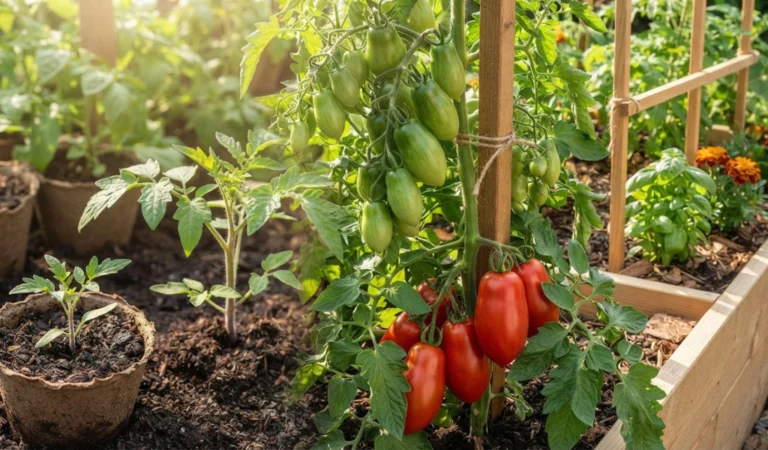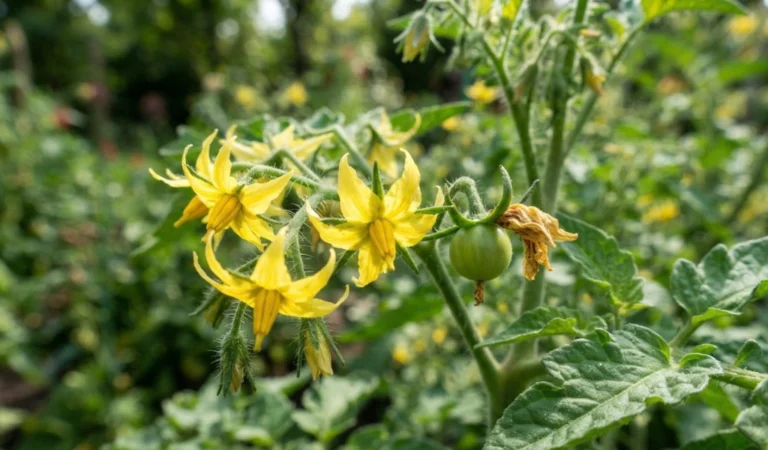
Topping Tomato Plants: When and How to Top Tomato Plants
The Complete Guide to Topping Tomato Plants: Why and How to Do It
As summer starts winding down, a lot of gardeners look at their sprawling tomato plants and wonder if all that new growth is actually doing them any good. Topping tomato plants is one of those pieces of gardening advice that sounds counterintuitive at first, cutting off healthy growing tips on purpose, but once you understand the reasoning, it becomes one of the most useful tricks for getting a better harvest before the season ends.
This is especially valuable for anyone doing Small Space Vegetable Gardening, where a single tomato plant can take over a bed if left to vine and branch endlessly. Topping keeps plants manageable while pushing their energy toward ripening the fruit you already have instead of producing more green tomatoes that will never have time to mature before frost.
In this guide we will cover what topping actually means, why it matters, when to do it, exactly how to top your tomato plants step by step, and the risks to watch out for so you do not accidentally hurt your plant’s remaining harvest. Whether you are growing a few plants on a patio or managing a full garden bed, this technique can genuinely change how much usable fruit you bring in before the growing season closes out.
What Does It Mean to Top a Tomato Plant?
Topping a tomato plant means removing the main growing tip, essentially giving the plant a haircut at its highest point so it stops putting energy into upward growth. This growing tip is where the plant continues producing new leaves, new stems, and eventually new flowers if left alone. Once you cut it off, the plant redirects the energy it would have used on new growth toward the fruit that is already developing.
Definition of the topping process
The topping process itself is simple, pinching or cutting off the terminal shoot at the top of the plant, usually just above the highest fruit cluster you want the plant to focus on. This stops the vine from growing taller and signals the plant to stop investing in new leaves and flowers that would only produce fruit too late in the season to ripen before frost.
The difference between determinate and indeterminate tomato varieties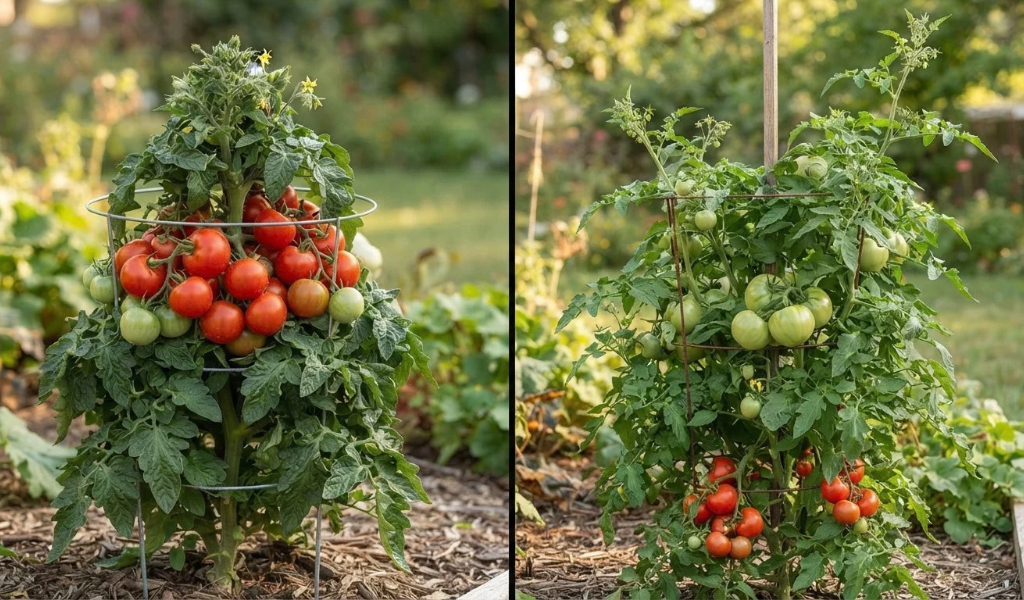
Understanding your tomato varieties matters a lot here. Determinate tomatoes grow to a set height, produce their fruit in a fairly concentrated window, and then naturally stop growing on their own, which means topping is usually unnecessary for determinate varieties. Indeterminate tomatoes, on the other hand, keep growing and producing new flowers all season long until frost or disease stops them, which is exactly why indeterminate varieties are the ones that benefit most from topping late in the season.
Why You Should Top Your Tomato Plants
The logic behind topping comes down to how a tomato plant allocates its limited energy and resources as the growing season winds down.
Directing energy toward ripening existing fruit instead of new vine growth
A tomato plant does not have unlimited energy. Every new leaf, every new flower, and every new sucker the plant grows pulls resources away from the fruit that is already developing on the vine. By removing the growing tip, you stop the plant from continuing to grow taller and producing new flowers that would only turn into more green tomatoes, and instead the plant shifts its energy toward ripening the fruit it already has. This is particularly useful late in the season when you know new flowers will not have enough time to mature into ripe tomatoes before the first frost.
Maximizing harvest quality before the end of the growing season
Beyond just ripening speed, topping also tends to improve the overall quality of your remaining fruit. Tomatoes that get the plant’s full attention rather than competing with new growth often size up better and ripen more evenly. For gardeners who care about getting the most out of a limited growing season, especially in regions with a shorter window before frost, topping is a simple way to make sure the fruit you have already invested months of care into actually reaches your table instead of ending up wasted as unripe green tomatoes at the end of the season.
When Is the Right Time to Top Your Tomatoes?
Timing is everything with topping, since doing it too early can actually reduce your harvest instead of improving it, while waiting too long defeats the purpose entirely.
Timing based on your region’s first fall frost date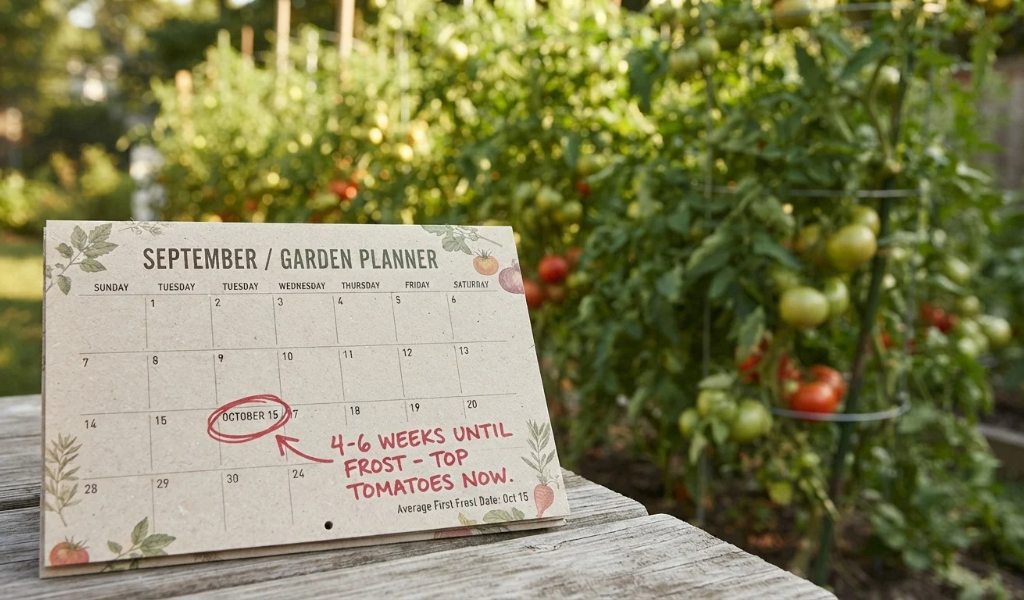
The most reliable way to time topping is by counting back from your region’s expected first fall frost date, usually topping your plants about four to six weeks before that date. This gives existing green tomatoes enough time to mature and ripen fully while cutting off the plant’s ability to keep setting new flowers that would not have time to develop into usable fruit. If you are not sure of your first frost date, a quick search for your specific growing zone or a call to a local extension office will give you a solid estimate to plan around.
Reaching maximum height or maximum cage capacity
Timing is not always just about frost either. If your indeterminate tomato plants have outgrown their cage, trellis, or support structure, topping can be a practical way to stop them from flopping over or breaking under their own weight, regardless of exactly how many weeks remain in the season. Once a plant has reached the top of its stake or the limit of what its support structure can handle, topping keeps things manageable while still allowing the plant to focus on ripening what it has already produced.
Step-by-Step Instructions for Topping Tomatoes
Once you have decided it is time to top your tomato plants, the actual process takes only a few minutes per plant.
Identifying the main terminal shoot above the top fruit cluster
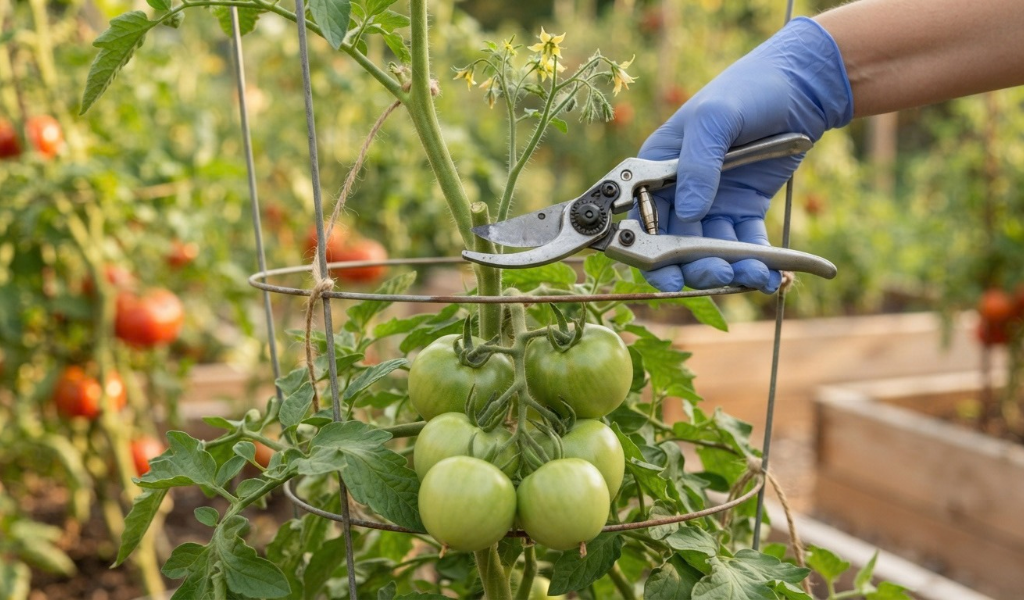
Start by looking at the top of your plant and finding the main terminal shoot, which is the actively growing tip at the very top of the main stem. Look below that growing tip for the highest cluster of fruit you want the plant to prioritize. You will be cutting the stem just above this fruit cluster, leaving enough leaves nearby to support ripening but removing the growth above it that would only produce new flowers and green tomatoes.
Using clean, sterilized shears to prevent disease transmission
Before making any cuts, sterilize your pruning shears with rubbing alcohol or a diluted bleach solution. This step matters more than a lot of gardeners realize, since dirty shears can transfer disease between plants or even introduce infection into the fresh cut you are about to make. Once your shears are clean, snip the main stem cleanly just above your chosen fruit cluster, removing the growing tip along with any small flower buds or new leaves that were forming above it. Repeat this process on each main stem of the plant if you are growing a sprawling indeterminate variety with multiple leaders.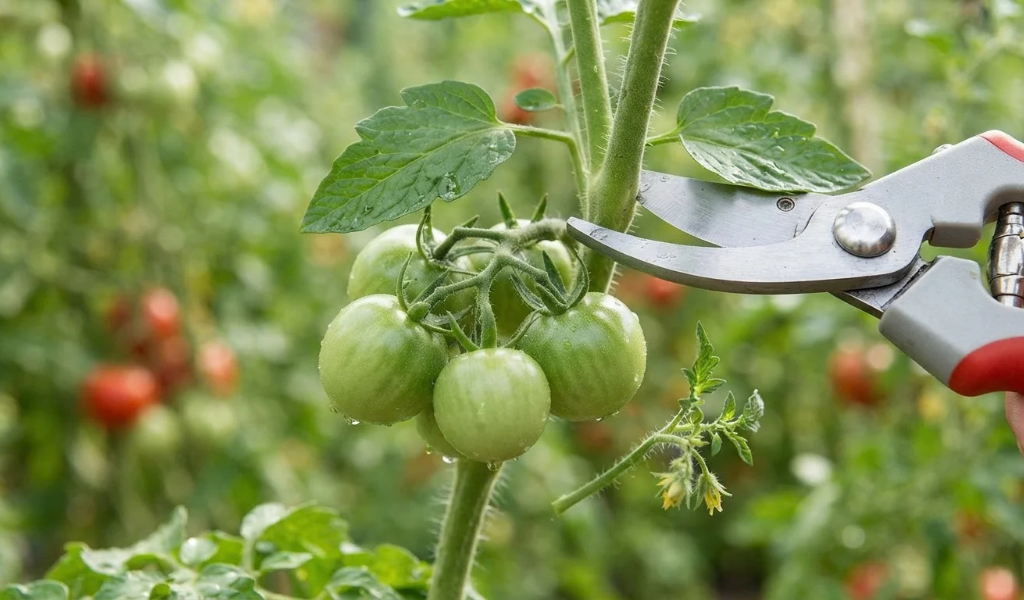
Potential Risks and How to Avoid Them
Topping is a helpful technique, but doing it carelessly can create new problems, so it is worth understanding what to watch for.
Leaving enough foliage above fruit clusters for photosynthesis
One common mistake is cutting too aggressively and removing too many leaves along with the growing tip. Leaves are what power photosynthesis, and photosynthesis is what actually helps fruit ripen and develop properly. If you strip away too much foliage in the name of topping, you can actually slow down ripening rather than speed it up. Aim to leave a reasonable amount of healthy leaf cover above and around your fruit clusters, only removing the actively growing tip and any new growth that would compete with existing fruit for resources.
Avoiding sunscald by maintaining adequate leaf cover
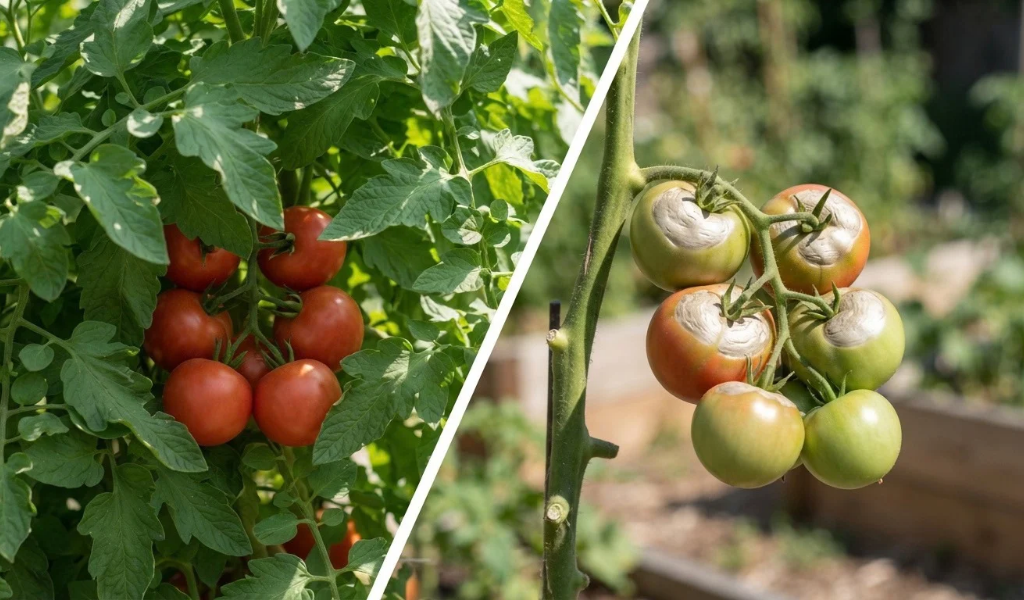
Related to the point above, removing too many leaves also exposes your ripening tomatoes directly to intense sun, which can cause sunscald, a condition where the fruit develops pale, leathery patches from too much direct sun exposure. This is especially a risk in hot climates or during a late season heat wave. Keep enough leaf cover around your fruit clusters to provide some natural shade, and resist the urge to prune more than necessary just because you are already in there with the shears. A light touch with topping protects both the plant’s ripening ability and the fruit’s physical condition.
Common Questions Gardeners Have About Topping
Beyond the basic steps, a few practical concerns come up again and again once gardeners start topping tomato plants for the first time. One is whether topping stresses the plant too much. In most cases, a healthy plant handles the cut well, treating it similarly to routine pruning of suckers or side shoots throughout the growing season. The key is doing it at the right time, since a plant topped too early in the season, well before your first frost, may simply respond by growing new shoots from below the cut, undoing much of the intended effect.
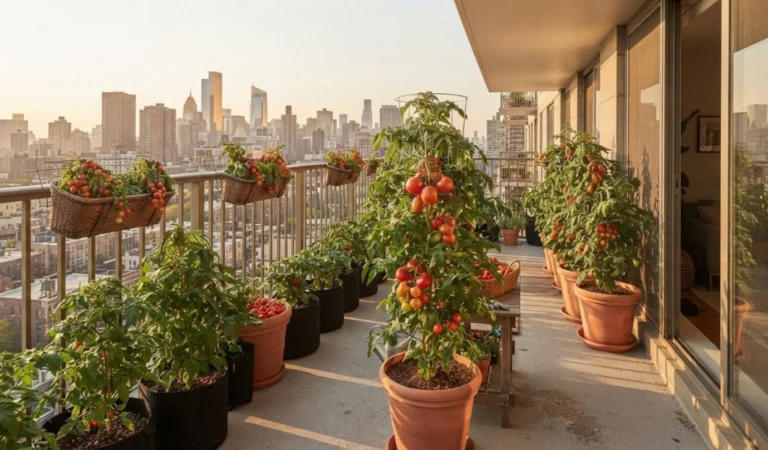
Another common question is whether topping applies to plants grown in containers or smaller garden beds. It absolutely does, and in some ways matters even more in these settings, since container grown tomatoes often have more limited root space and resources to begin with. Directing that limited energy toward ripening fruit rather than continued vertical growth can make a real difference in a small space vegetable gardening setup, where every bit of the plant’s energy needs to count.
Gardeners sometimes also ask whether removing suckers throughout the season eliminates the need for topping later. These are related but different techniques. Removing suckers, the small shoots that grow in the joint between the main stem and a branch, helps manage overall plant size and airflow throughout the growing season. Topping is a more targeted, end of season move focused specifically on stopping new growth so existing fruit gets priority as the season winds down. Many gardeners do both, pruning suckers regularly through summer and then topping once they are within that four to six week window before frost.
A Practical Example From the Garden
Picture a backyard gardener growing an heirloom indeterminate variety on a tall cage, the kind of plant that by late summer has climbed well past the top of its support and is still sending out new flowers every week. With six weeks left before the average first frost in their area, this gardener has a mix of ripe tomatoes, green tomatoes at various stages, and new blossoms that realistically will not have time to develop into anything usable.
By topping each main stem just above the highest cluster of green tomatoes, cutting off the growing tip and any new flowers above it, the gardener redirects the plant’s energy toward the fruit already on the vine. Over the following weeks, those green tomatoes size up and begin to ripen more quickly and more evenly than they likely would have if the plant kept pushing energy into new growth at the top. By the time frost arrives, far fewer tomatoes are left unripened on the vine, and the ones that are ripe tend to be better quality overall. This is the kind of practical payoff that makes topping worth the small amount of effort involved.
Final Thoughts
Topping tomato plants might feel like an unusual thing to do to a plant that is otherwise growing well, but the payoff at the end of the season makes it worth the effort. By cutting off the main growing tip a few weeks before your first frost, you redirect your tomato plant’s energy toward ripening the fruit it has already worked hard to produce, rather than continuing to grow taller and setting new flowers that would only end up wasted as green tomatoes.
As your growing season starts winding down this year, take a look at your indeterminate tomato plants and count back from your expected frost date. If you are within that four to six week window, grab a clean pair of shears and give topping a try. It is a small step that can make a real difference in how much ripe, usable fruit you bring in before the season closes out.
Frequently Asked Questions
Do I need to top determinate tomato varieties?
No, determinate tomatoes stop growing on their own once they reach their natural size and typically do not need topping, since they do not keep producing new growth throughout the season the way indeterminate varieties do.
Will topping harm my tomato plant?
No, when done at the right time, topping is similar to routine pruning and a healthy plant handles it well. The main risk is topping too early, which can cause the plant to send out new shoots below the cut.
How many weeks before frost should I top my tomatoes?
Most gardeners top their indeterminate tomato plants about four to six weeks before their region’s expected first fall frost, giving existing fruit enough time to ripen fully.
Can topping help tomatoes growing in containers or small spaces?
Yes, topping is especially useful in small space vegetable gardening, since container grown plants have more limited resources and benefit from directing that energy toward ripening fruit rather than continued growth.
Is topping the same as removing suckers?
No, these are different techniques. Removing suckers manages plant size and airflow throughout the season, while topping is a targeted cut made near the end of the season to stop new growth and prioritize ripening existing fruit.
What happens if I remove too many leaves while topping?
Removing too much foliage can reduce photosynthesis, which slows ripening, and can also expose fruit to direct sun, leading to sunscald. Leave enough leaves around fruit clusters for shade and energy production.
Can I top my tomato plants if they have not reached the top of their cage yet?
Yes, topping is based mainly on your first frost date rather than plant height, so even a plant that has not maxed out its support structure should be topped if you are within that four to six week window before frost.