Magnesium Deficiency in Tomato Plants: Symptoms and Solutions
Magnesium Deficiency in Tomato Plants: Symptoms, Causes & Solutions
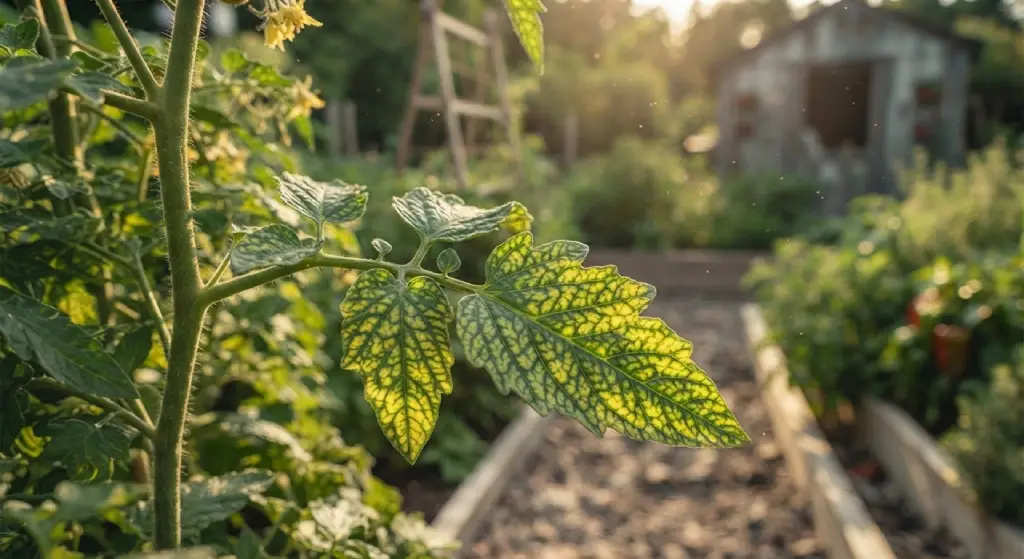
If you have noticed yellow patches creeping across your tomato leaves while the veins stay stubbornly green, you are likely dealing with magnesium deficiency in tomato plants. This common nutrient disorder affects home gardeners and commercial growers alike, and it can quietly reduce fruit set, yield, and overall plant health if it goes unnoticed. The good news is that tomato magnesium deficiency is one of the easier nutrient problems to identify and correct once you know what to look for.
In this guide, we will walk through what magnesium deficiency actually looks like on a tomato plant, how to tell it apart from similar nutrient issues like nitrogen or iron deficiency, and what causes magnesium to run low in the soil in the first place. We will also cover practical steps for confirming the problem, treating it quickly, and preventing it from coming back next season. Whether you are growing a few plants in containers or managing a larger crop, understanding this deficiency will help you keep your tomato plants healthy from seedling to harvest.
What Is Magnesium Deficiency in Tomato Plants?
Magnesium is a secondary nutrient that plants need in smaller amounts than nitrogen, phosphorus, or potassium, but it still plays a major role in plant growth and development. Magnesium sits at the center of the chlorophyll molecule, which means it is directly responsible for giving leaves their green color and allowing photosynthesis to happen. Without enough magnesium, a tomato plant cannot produce chlorophyll efficiently, and the leaf tissue starts to lose its pigment.
Magnesium deficiency in tomato plants happens when the root system cannot absorb enough magnesium from the soil to meet the plant’s needs. This can occur even when magnesium is technically present in the soil, because uptake depends on several other factors, including soil pH, moisture, and competition from other nutrients like potassium and calcium. Because magnesium is a mobile nutrient within the plant, the tomato plant will pull magnesium from its older leaves and send it toward new growth when supplies run low. This is why the deficiency symptoms almost always show up on the lower leaves first.
Left untreated, magnesium deficiency can affect fruit set, slow plant growth, and reduce the overall yield of your tomato crop. Catching it early makes treatment far simpler and protects the rest of the growing season.
Early Signs of Magnesium Deficiency
The earliest warning sign of magnesium deficiency is a subtle yellowing pattern on the older, lower leaves of the tomato plant. At first, you might just notice the leaves looking a little pale or dull rather than fully yellow. As the deficiency progresses, you will see interveinal chlorosis, which means the tissue between the veins turns yellow while the veins themselves stay green. This pattern is one of the most reliable ways to spot a magnesium problem early, before it spreads to the rest of the plant.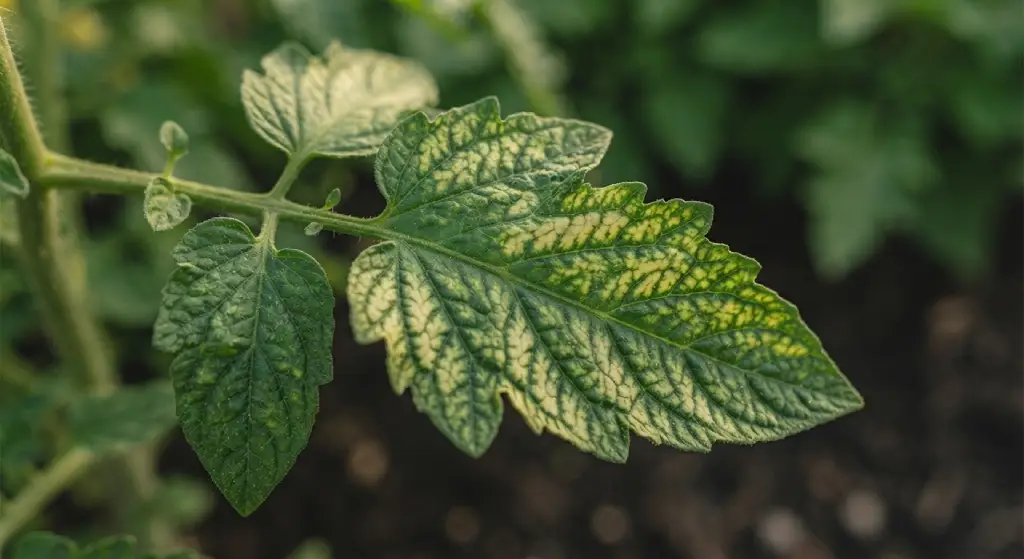
In the early stage, the leaf margins may also show a slight curling or puckering. Growers who inspect their plants regularly, especially during fruit set when nutrient demand is highest, are more likely to catch these early signs before the deficiency symptoms become severe. A quick check of the lower leaves every week or two during the growing season is a simple habit that pays off.
Advanced Symptoms to Watch For
If magnesium deficiency is not addressed early, the symptoms become much more visible and start to affect overall plant health. The yellowing spreads further up the plant, moving from the oldest leaves toward the middle and eventually the newer growth. The interveinal chlorosis becomes more pronounced, and the yellow patches often turn into a bronze or brown color as the leaf tissue begins to die.
At this advanced stage, you may also notice:
- Leaves that curl upward at the edges and feel brittle to the touch
- Premature leaf drop, which reduces the plant’s ability to photosynthesize
- Smaller fruit size or reduced fruit set due to stress on the plant
- Weakened stems, since the plant is directing limited resources toward survival rather than growth
Advanced magnesium deficiency can significantly reduce tomato production for the season. The plant is still alive, but it is operating under constant stress, and that stress shows up in lower yield and poorer fruit quality.
Magnesium Deficiency vs Other Tomato Problems
Magnesium deficiency shares some visual symptoms with other nutrient deficiencies, which can make diagnosis tricky for gardeners who are not familiar with the differences. Knowing how magnesium deficiency compares to nitrogen and iron deficiency will help you treat the correct problem the first time.
Magnesium vs Nitrogen Deficiency
Nitrogen deficiency also causes yellowing in tomato plants, but the pattern is different. With nitrogen deficiency, the entire leaf turns pale yellow, including the veins, rather than just the tissue between them. Nitrogen deficiency also tends to affect the whole plant more uniformly and is often linked to stunted growth and pale green foliage overall, not just the older leaves.
In contrast, magnesium deficiency keeps the veins green while the surrounding tissue yellows, and it typically starts on the lower, older leaves before moving upward. If you see uniform pale yellowing across the whole plant, nitrogen is the more likely culprit. If you see distinct green veins against yellow leaf tissue, magnesium deficiency is more probable.
Magnesium vs Iron Deficiency
Iron deficiency also produces interveinal chlorosis, which is why it is so often confused with magnesium deficiency. The key difference is where the symptoms appear. Iron is an immobile nutrient within the plant, so iron deficiency shows up on the new growth first, with young leaves at the top of the plant turning yellow while the veins remain green.
Magnesium, on the other hand, is mobile, so the plant redirects it from older leaves to support new growth. This means magnesium deficiency symptoms start on the lower, older leaves and move upward over time. If the yellowing is concentrated at the top of the plant, suspect iron. If it starts at the bottom and works its way up, magnesium deficiency is the more likely cause.
Common Symptoms of Magnesium Deficiency
While we have touched on several symptoms already, it helps to break down the most recognizable signs of magnesium deficiency in tomato plants so you know exactly what to look for during routine inspections.
Yellow Leaves Between the Veins
The hallmark symptom of magnesium deficiency is interveinal chlorosis, where the tissue between the leaf veins turns yellow while the veins stay green. This creates a distinctive marbled or mottled appearance on the leaf. This pattern happens because magnesium is essential for chlorophyll production, and without it, the chlorophyll breaks down unevenly across the leaf, leaving the vein structure visible against the yellowing background.
Older Leaves Affected First
Because magnesium is a mobile nutrient, the tomato plant moves it from older leaves to newer growth when supplies are limited. This is a survival strategy that prioritizes the parts of the plant responsible for future growth and fruit production. As a result, the lower, older leaves show deficiency symptoms well before the upper leaves or new growth. Gardeners who only check the top of the plant often miss this early warning sign entirely.
Brown Spots and Leaf Damage
As magnesium deficiency progresses, the yellowed tissue between the veins can develop brown spots or lesions. This is the tissue dying off due to a lack of chlorophyll and the ongoing stress on the plant. In severe cases, the leaf margins curl, become dry and brittle, and the entire leaf may drop from the plant prematurely. This damage reduces the plant’s total leaf surface area, which in turn limits photosynthesis and can affect fruit set and overall yield.
What Causes Magnesium Deficiency in Tomato Plants?
Understanding the root causes of magnesium deficiency makes it much easier to prevent and treat. There are three main factors that typically lead to low magnesium availability or uptake in tomato plants.
Low Magnesium in Soil
The most straightforward cause is simply not having enough magnesium in the soil to begin with. Sandy soils are particularly prone to this issue because they do not hold onto nutrients well, and magnesium can leach out quickly, especially after heavy rainfall or frequent watering. A soil test is the most reliable way to determine whether your soil’s magnesium levels are genuinely low or whether the deficiency is caused by something else, such as pH or nutrient competition.
Incorrect Soil pH
Soil pH has a major influence on how well plant roots can absorb magnesium. Tomato plants generally prefer a soil pH between 6.0 and 6.8. When soil pH drops below this range and becomes too acidic, magnesium availability decreases significantly, even if the nutrient is present in the soil. This is one reason why acidic, sandy soils are especially prone to magnesium deficiency. Testing your soil pH alongside your nutrient levels gives you a much clearer picture of what is actually happening at the root level.
Nutrient Competition
Magnesium shares uptake pathways with other positively charged nutrients, particularly potassium and calcium. When potassium or calcium levels are too high, they can crowd out magnesium and interfere with the root’s ability to absorb it, even in soil that has adequate magnesium overall. This is a common issue when gardeners overfeed their tomato plants with high-potassium fertilizers without balancing them with magnesium. Finding the right balance between calcium, magnesium, and potassium, often summarized as the Ca and Mg ratio, is key to preventing this type of induced deficiency.
How to Confirm and Treat Magnesium Deficiency
Before treating your tomato plants, it helps to confirm that magnesium deficiency is actually the issue. A soil test, available through most local cooperative extension offices or a home soil testing kit, will measure magnesium levels and soil pH so you are not guessing. If a lab test is not available right away, matching the leaf symptoms described earlier, interveinal chlorosis on older leaves, is a strong indicator on its own.
Once confirmed, the fastest and most popular way to treat magnesium deficiency is applying Epsom salts, which is magnesium sulfate. Epsom salts dissolve easily in water and can be applied in two ways:
- Soil drench: Mix one to two tablespoons of Epsom salts per gallon of water and apply it directly to the soil around the base of the plant every two to four weeks during the growing season.
- Foliar spray: Dissolve one tablespoon of Epsom salts per gallon of water and spray it directly onto the leaves. Foliar application allows for faster absorption and is especially useful when symptoms are caught early or when quick correction is needed during fruit set.
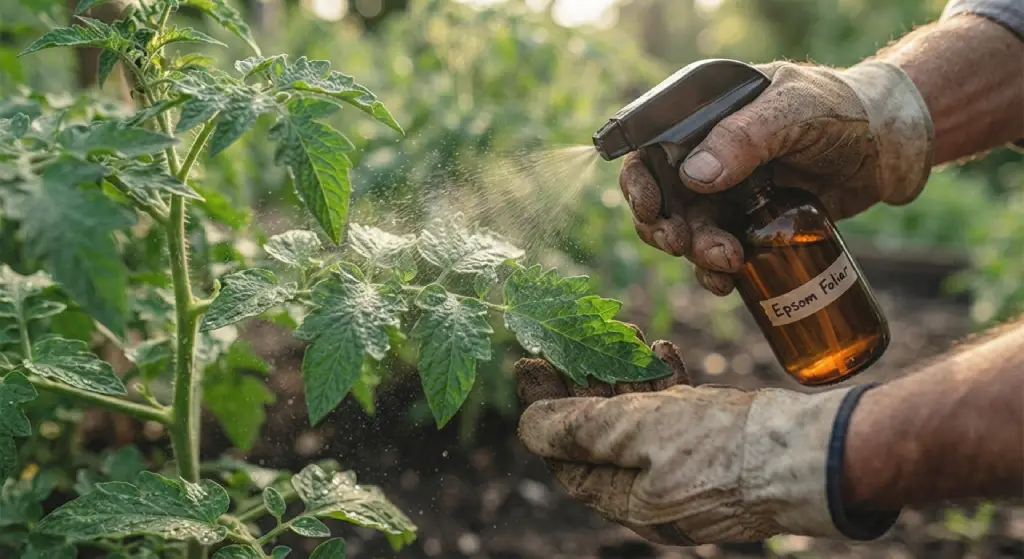
For indoor or container-grown tomato plants, a diluted Epsom salt solution works well since the limited soil volume often depletes magnesium faster than garden beds. Along with Epsom salts, correcting soil pH with lime if the soil is too acidic will also improve the plant’s natural ability to take up magnesium from the soil without relying solely on supplements.
Most tomato plants show visible improvement within one to two weeks of treatment, with new leaf growth appearing a healthier green while the damaged older leaves may not fully recover their color.
Best Ways to Prevent Magnesium Deficiency
Prevention is always easier than treatment, and a few consistent habits will keep magnesium deficiency from becoming a recurring problem in your tomato patch.
Start with a soil test before planting each season. Knowing your baseline magnesium levels and soil pH lets you adjust your soil amendments proactively rather than reacting after symptoms appear. Adding compost regularly improves overall soil structure and nutrient retention, which helps sandy soils hold onto magnesium instead of losing it to drainage.
Maintain a balanced fertilizer program rather than leaning heavily on high-potassium products. If your fertilizer is rich in potassium and phosphorus without magnesium, consider a complete fertilizer that includes magnesium or supplement separately with Epsom salts on a regular schedule. Monitoring soil pH throughout the season, especially in regions with naturally acidic soil, will also help keep magnesium available to the roots.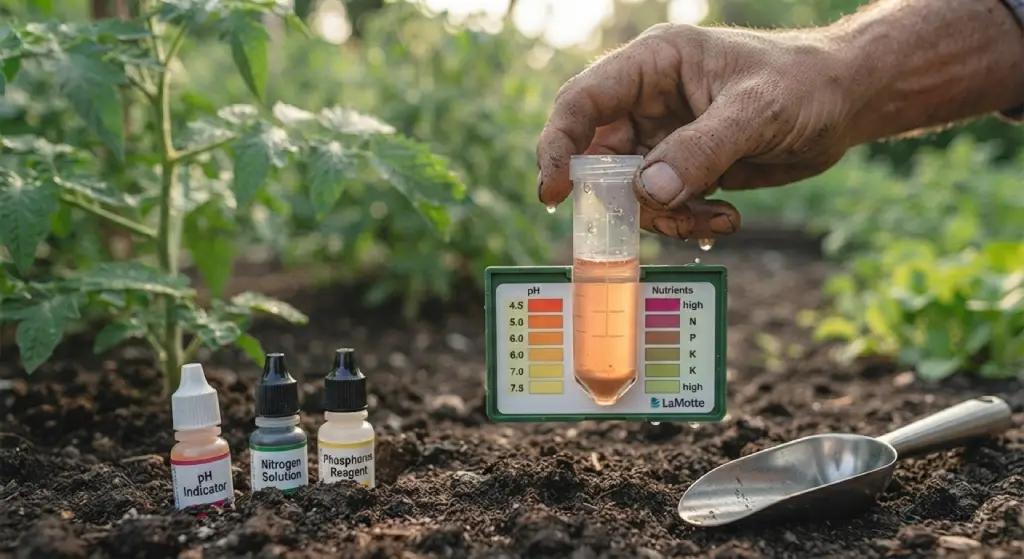
For growers managing larger tomato production, periodic leaf tissue testing alongside soil testing gives a more complete picture of nutrient uptake, since it measures what the plant is actually absorbing rather than what is simply present in the soil. Combining good soil management with routine plant inspections during the growing season is the most reliable way to avoid yield loss from magnesium deficiency.
Keeping Your Tomato Plants Healthy for the Long Run
Magnesium deficiency in tomato plants is common, but it is also one of the more manageable nutrient problems once you know the signs. Watch for yellowing between the veins on your older leaves, confirm the issue with a soil test when possible, and respond quickly with Epsom salts or a soil pH correction. Combine that with balanced fertilizing and regular compost applications, and you will protect your tomato plants from this deficiency season after season.
Make leaf inspection part of your regular garden routine, especially as your plants move into fruit set, since this is when nutrient demand peaks and deficiencies are most likely to appear. A little attention now goes a long way toward a healthier crop and a better harvest later.
Frequently Asked Questions
What does magnesium deficiency look like on tomato leaves?
Magnesium deficiency causes interveinal chlorosis, meaning the tissue between the leaf veins turns yellow while the veins themselves stay green. This typically starts on the older, lower leaves and can progress to brown spots or leaf curling if left untreated.
How quickly does Epsom salt fix magnesium deficiency in tomatoes?
Most tomato plants show improvement within one to two weeks after applying Epsom salts, especially with a foliar spray. New growth usually appears a healthier green first, while already damaged leaves may not fully recover.
Can too much potassium cause magnesium deficiency in tomatoes?
Yes. Potassium and magnesium compete for uptake at the root level, so excessive potassium from overfeeding can block magnesium absorption even when soil magnesium levels are adequate. Balancing fertilizer applications helps prevent this type of induced deficiency.
Is magnesium deficiency the same as calcium deficiency in tomatoes?
No. Calcium deficiency in tomatoes typically causes blossom end rot on the fruit rather than leaf yellowing. Magnesium deficiency affects the leaves through interveinal chlorosis and does not directly cause the fruit-based symptoms associated with low calcium.
What soil pH is best to prevent magnesium deficiency in tomato plants?
Tomato plants generally do best in soil with a pH between 6.0 and 6.8. Soil that becomes too acidic reduces magnesium availability to the roots, so testing and adjusting pH with lime when necessary helps prevent deficiency.
Can magnesium deficiency affect tomato fruit production?
Yes. Since magnesium deficiency reduces the plant’s ability to photosynthesize, it can lead to smaller fruit, reduced fruit set, and lower overall yield if the deficiency is not corrected during the growing season.
How often should I apply Epsom salts to tomato plants?
A soil drench with Epsom salts can be applied every two to four weeks during the growing season for plants showing deficiency symptoms. For general prevention, a lighter, less frequent application is usually sufficient alongside balanced fertilizing.