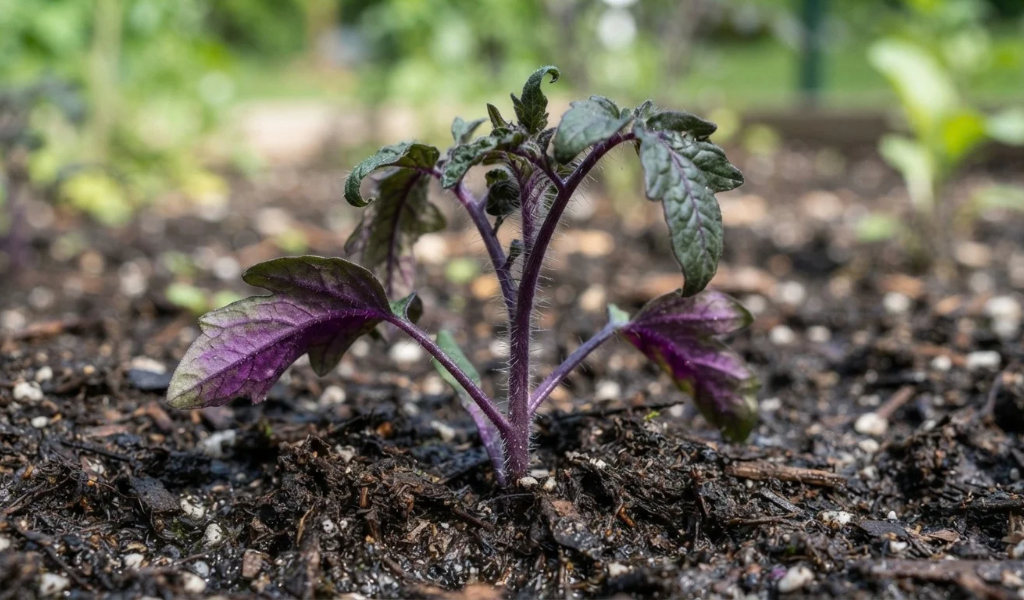
Phosphorus Deficiency in Tomato Plant: Leaf and Fruit Problems
Phosphorus Deficiency in Tomato Plants: Causes and Solutions
Phosphorus deficiency in tomato plant growth is one of the most common nutrient problems in the home garden, and it is also one of the easiest to misread. Gardeners often see purple leaves and blame the weather, a disease, or a bad batch of seedlings. In many cases the real issue is that the plant cannot get enough phosphorus from the soil. This physiological disorder slows root growth, delays flowering, and cuts down the amount of fruit you pick at harvest.
The good news is that it can be fixed once you know what you are looking at. A tomato plant that turns purple is not always doomed. Sometimes the soil is simply too cold. Other times the soil pH is locking the nutrient away, or the bed has been low in phosphate for years. Each cause needs a different solution, so a correct diagnosis matters more than a quick fertilizer fix.
This guide walks through the symptoms, causes, soil testing, and treatment options in plain language. You will also find advice on choosing the best organic fertilizer for tomato plants, along with fast fixes for container plants and garden beds. Whether you grow a few pots on a balcony or a full vegetable plot, the steps below will help you spot trouble early and keep your tomato plants healthy from seedling to final harvest.
Early Symptoms of Phosphorus Deficiency in Tomato Plant Seedlings
Seedlings show phosphorus stress sooner than older plants because their small root systems have little reach. A seedling with phosphorus deficiency often looks healthy at first glance. It is alive and green, yet it grows slowly and seems stuck. Catching these early signs gives you time to act before the plant loses weeks of growth.
Purple Leaves and Stems on Young Tomato Plants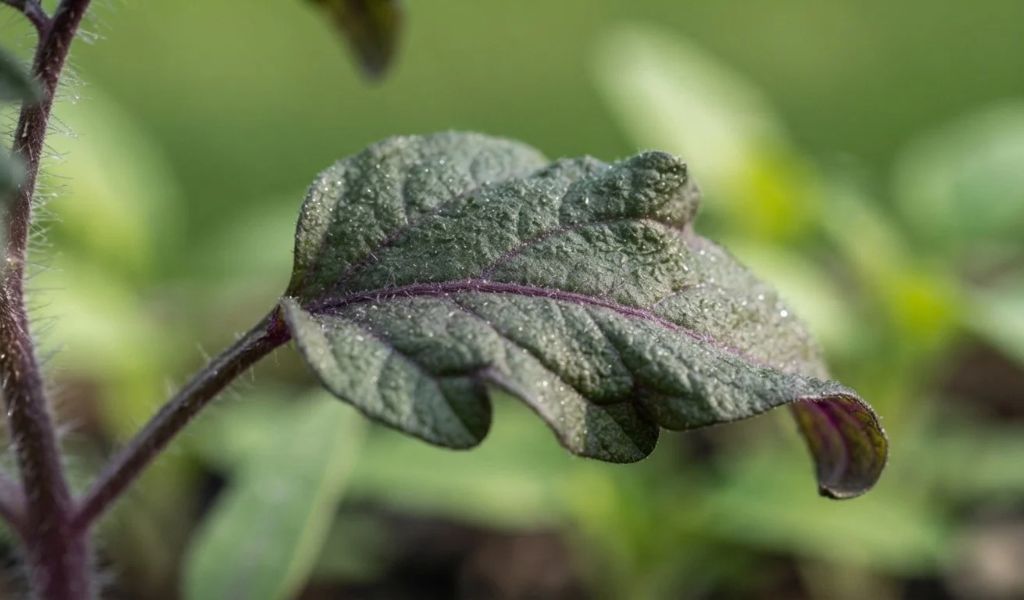
The most famous symptom is a purple or reddish tint. It usually appears on the underside of the leaf first and then spreads to the stems and leaf veins. Older leaves tend to change color before new ones. This happens because the plant moves its limited phosphorus from old growth to the youngest parts.
Keep in mind that purple color alone does not prove a problem. Some tomato varieties have natural purple pigment in their stems and leaf edges. Cold nights can also trigger the color change. If the purple shows up on a plant that is also small and slow, then phosphorus deficiency in tomato plant seedlings becomes a strong suspect.
How to Identify Phosphorus Deficiency in Tomato Plant Leaves
Look at the whole leaf rather than one spot. In a deficient plant the foliage often turns dark green or even bluish green. The leaves can look stiff and small and may curl downward. As the problem gets worse you may see dark brown or dead patches along the veins and leaf edges.
Compare the pattern with other nutrient problems. Nitrogen deficiency turns older leaves pale yellow. Magnesium deficiency causes yellowing between the veins while the veins stay green. Potassium deficiency browns the leaf margins. Phosphorus deficiency in tomato plant leaves stands out because of that dark tone, the purple tint, and the weak growth that comes with it.
Why Phosphorus Matters for Tomato Plant Growth, Flowering, and Fruiting
Phosphorus is one of the three primary nutrients, along with nitrogen and potassium. It is the middle number on a fertilizer label. Inside the plant, it works as an energy carrier. Every time a cell grows, divides, or builds something new, phosphorus helps move the energy needed to do it. At the molecular level, it is part of the compounds that store and transfer that energy and part of the plant’s genetic material.
For a gardener, this means phosphorus supports three big jobs. The first is root growth. Strong roots help the plant take up water and other nutrients, so a shortage of phosphorus can limit the uptake of everything else. The second is flowering. Tomato plants need enough phosphorus to form buds and keep them on the vine. The third is fruit development. Fruit needs a steady supply of energy to size up and ripen on time.
When supply runs short, the plant slows down in a very visible way. Roots stay shallow. Flowers may drop. Fruit comes late and in smaller numbers. This is why Phosphorus Deficiency in Tomato Plant crops can quietly reduce a harvest before anyone notices a clear sign of disease. A plant can survive with low phosphorus, but it cannot thrive or produce well. Recognizing Phosphorus Deficiency in Tomato Plant symptoms early helps gardeners respond before poor growth, weak flowering, and reduced fruit production become more serious problems.
Common Causes of Phosphorus Deficiency in Tomato Plant Gardens
Many gardeners assume the soil simply lacks phosphorus, and sometimes that is true. More often the nutrient is present but the plant cannot reach it. Availability matters more than the total amount in the ground. Several environmental factors can block uptake even in rich garden soil.
Cold Soil and Phosphorus Uptake in Tomato Plants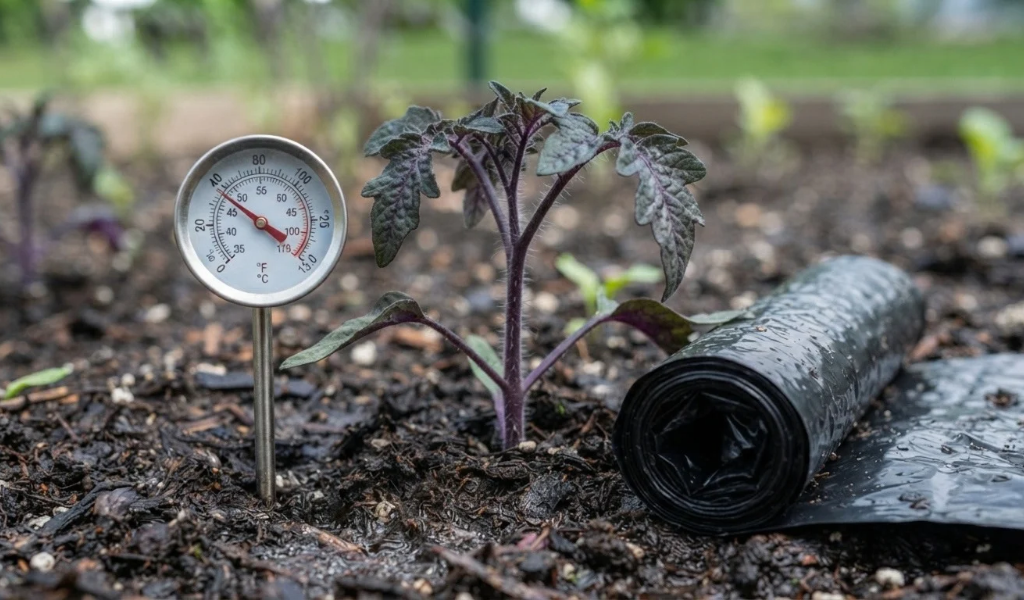
Tomato roots take up phosphorus slowly in cold soil. When soil temperature drops below about 60°F (15°C) the roots become less active and phosphorus moves even more slowly through the soil. This is why early transplants so often turn purple in spring. The plant is under temperature stress and cannot take in what it needs.
The fix is often just time and warmth. Many plants green up on their own once the soil warms. Black plastic mulch, row covers, and raised beds all help the soil heat faster. In containers you can move pots to a sunny spot against a wall. Waiting a week or two before planting out can prevent the problem entirely.
Soil pH and Phosphorus Deficiency in Tomato Plant Beds
Soil pH controls how easily phosphorus dissolves in water. Plants absorb it mainly as orthophosphate, and that form is most available when the soil pH sits between about 6.0 and 6.8. Outside that range phosphorus binds tightly with other minerals. In acidic soil it links up with iron and aluminum. In alkaline soil it links up with calcium. Either way the plant is left without it.
This is why adding more fertilizer to a bed with the wrong pH often does nothing. The fresh phosphate gets locked up just like the old. Correcting the soil pH first is the smarter move. Lime raises pH in acidic soil and sulfur lowers it in alkaline soil. Compacted, waterlogged, or very sandy soil can also hurt root health and make phosphorus deficiency in tomato plant beds worse.
How to Test Soil for Phosphorus Deficiency in Tomato Plant Crops
Guessing is the most expensive way to handle nutrient problems. A soil test tells you exactly what is going on and takes the mystery out of the symptoms. It also protects you from overfeeding, which causes trouble of its own. Too much phosphorus can block the uptake of iron, zinc, and copper and can wash into waterways.
You have two main options. A home test kit gives a quick and rough reading of phosphorus and pH. A lab test through a local agricultural extension office or soil lab gives a more detailed analysis and often includes recommendations for your specific crop. For most gardeners a lab test once every two or three years is plenty.
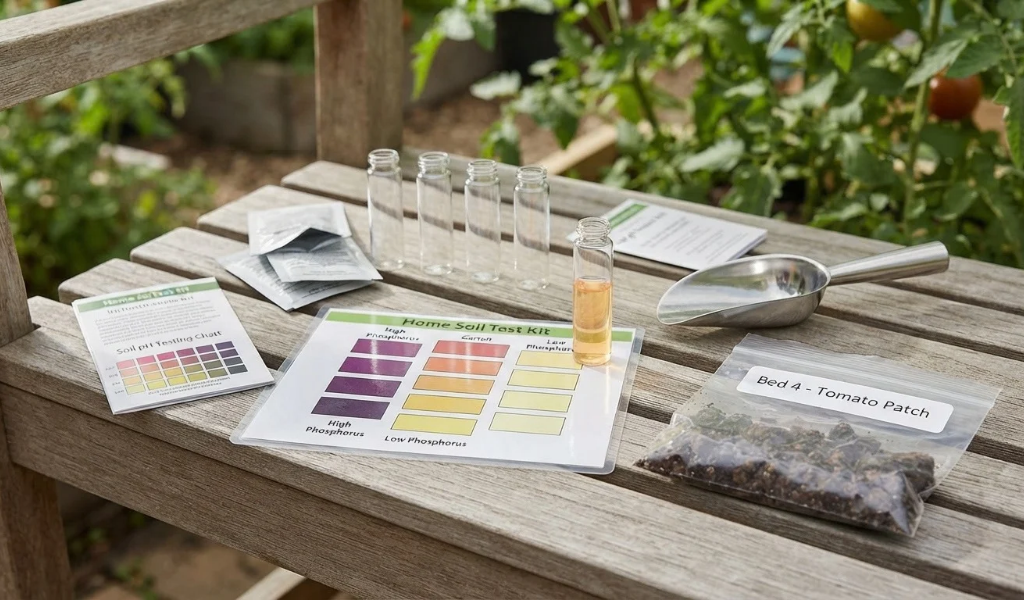 To collect a good sample take small scoops of soil from five or six spots in your bed. Dig down about 4 to 6 inches. Mix the soil in a clean bucket and send or test a portion of the blend. Avoid sampling right after fertilizing since this can skew the numbers.
When the results come back check two things. First look at the phosphorus level. If it is low you have a true shortage. Then look at the pH. If phosphorus is fine but the pH is off then the soil pH is the real cause of your phosphorus deficiency in tomato plant growth. Matching the fix to the cause saves money and time.
Natural and Organic Remedies for Phosphorus Deficiency in Tomato Plant Care
Fertilizer is only part of the answer. Healthy soil helps tomato roots find and use the phosphorus that is already there. Natural methods take longer but they pay off for years. They also lower the risk of overfeeding.
Start with compost. Working a few inches into the bed each year improves soil structure, holds moisture, and supports microbes that release locked up phosphate. Compost also acts as a gentle buffer for soil pH, which keeps nutrients in a more available range over time.
Mycorrhizal fungi are another useful tool. These beneficial fungi attach to tomato roots and stretch far into the soil. They act like extra root hairs and bring phosphorus back to the plant in exchange for sugars. You can buy inoculant products and mix them into the planting hole. Avoid heavy phosphorus fertilizer at planting since it can reduce how well these fungi take hold.
For quick help with a stressed plant try a compost tea or diluted fish emulsion. These are not strong phosphorus sources but they give a gentle boost and support root recovery. Mulch also helps by keeping soil temperature steady and moisture even. In pots use a fresh, good quality potting mix and avoid letting the container dry out or sit in water.
Best Fertilizers to Correct Phosphorus Deficiency in Tomato Plant Growth
Once a test confirms low phosphorus you can choose a fertilizer. Look at the three numbers on the label. They show nitrogen, phosphate, and potassium in that order. For a plant with low phosphorus pick a product where the middle number is equal to or higher than the first. A fertilizer with a ratio like 5-10-5 or 10-20-10 supplies more phosphate than a general lawn or leaf feed.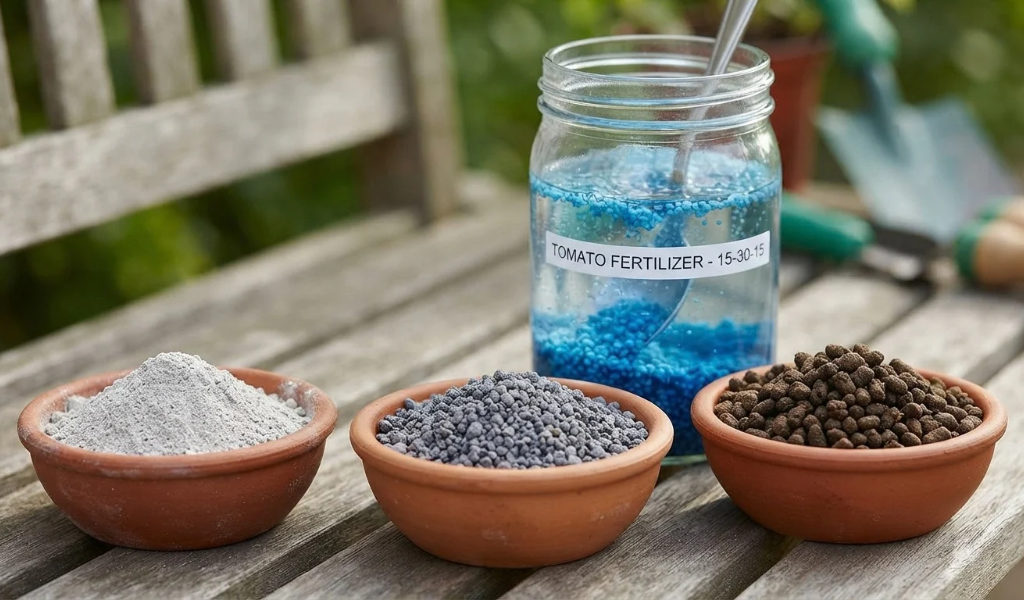
Be careful with heavy nitrogen blends. An all purpose product such as a 24-8-16 formula is popular and easy to find, but its middle number is low compared with the first. Too much nitrogen pushes leafy growth while the plant still lacks phosphorus. Many well known brands such as Miracle Grow also sell tomato specific formulas that give a more balanced ratio. Always read the label and follow the dose.
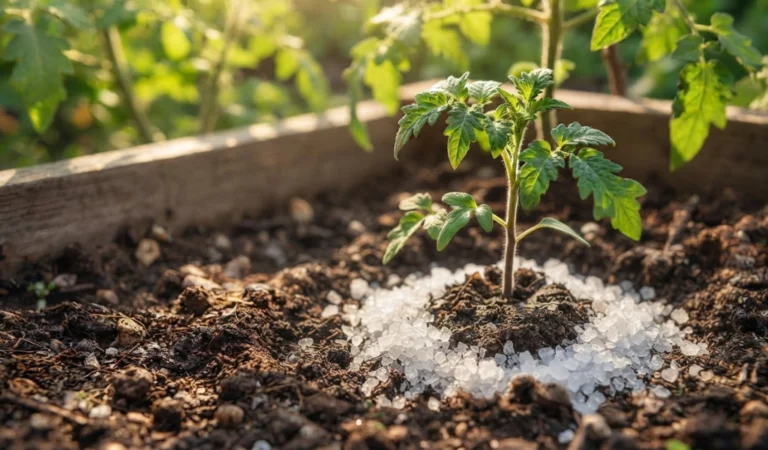
For fast results use a water soluble fertilizer. It reaches the roots quickly and works well in containers. Granular and slow release products last longer but act more slowly. Because phosphorus barely moves in soil you should place the fertilizer near the root zone and water it in well. Surface sprinkling does very little.
Organic Phosphorus Sources for Tomato Plants
If you want the Best Organic Fertilizer for Tomato Plants then bone meal is the classic choice. It supplies phosphorus and calcium and releases slowly as soil microbes break it down. It works best in neutral to slightly acidic soil. Rock phosphate is another option and it builds fertility over several seasons, though it needs acidic soil to release well.
Other sources are worth a look. Composted manure and well aged compost add smaller amounts of phosphorus along with organic matter that feeds soil life. Fish bone meal and seabird guano give a stronger and faster dose. Many organic gardeners blend a few of these to cover both short and long term needs. Remember that organic sources work slowly, so apply them early in the season rather than waiting for symptoms to get serious.
Preventing Phosphorus Deficiency in Tomato Plant Crops Season After Season
Prevention is cheaper and easier than rescue. A few simple habits can keep phosphorus deficiency in tomato plant beds from returning. Most of them cost little and fit into normal garden routines.
Begin each year with a look at your soil. Test the pH and phosphorus level every couple of years and adjust based on the results. Keep pH in the 6.0 to 6.8 range using lime or sulfur. Add compost every spring so the soil stays loose and rich in organic matter.
Pay attention to timing. Plant tomatoes only after the soil has warmed. If you start seeds indoors, harden them off slowly so the plants adjust to outdoor conditions. Use plastic mulch or raised beds in cool regions to speed warming.
Water in a steady way. Both dry and soggy soil damage roots and cut nutrient uptake. Avoid walking on beds because compaction limits root growth. Rotating tomatoes to a new spot each year also helps keep nutrients in balance and reduces disease. Finally apply phosphorus only when a test shows a need. Balanced feeding gives a healthier plant than constant heavy doses.
Final Thoughts
Phosphorus deficiency in tomato plant growth is a common and fixable problem. The key is to read the signs early. Purple leaves, dark foliage, and slow growth point toward low phosphorus, but cold soil and poor pH can cause the same signs. A soil test shows which one you are facing. From there the plan is simple. Warm the soil if it is cold and adjust the pH if it is off. Add a suitable fertilizer or organic source if the soil is truly low. Support the roots with compost and good watering habits. Do these things and your tomato plants will reward you with strong growth, plenty of flowers, and a better harvest. Take a few minutes this week to check your plants and test your soil. A small step now can save a whole season of disappointing fruit.
Frequently Asked Questions
How do I give my tomato plants phosphorus?
Work a phosphorus rich fertilizer or organic source such as bone meal into the soil near the roots and water it in well. Phosphorus does not travel far underground so placement matters. For container plants a water soluble fertilizer is often the easiest method.
What is the fastest way to add phosphorus to soil?
A water soluble fertilizer with a higher middle number gives the quickest response. It reaches the roots within days. Slow sources like bone meal and rock phosphate take weeks or months to work.
What fertilizer is high in phosphorus?
Look for labels where the middle number is high, such as 10-20-10 or a bloom type formula. Superphosphate is a very concentrated option. Among organic choices bone meal and bat or seabird guano are rich in phosphorus.
How to raise phosphorus quickly?
First check the soil pH since a wrong pH can block uptake no matter how much you add. Then apply a soluble fertilizer and keep the soil warm and moist. Avoid adding large amounts at once because excess phosphorus can cause other nutrient problems.
Can phosphorus deficiency in tomato plants kill them?
Severe and long lasting shortages can weaken a plant badly and sometimes lead to death, especially in young seedlings. Most plants simply grow slowly and yield less. Early correction usually brings them back.
Do tomatoes need phosphorus?
Yes. Phosphorus supports root growth, flowering, and fruit set. Tomatoes need a steady supply throughout the season, though they do not need heavy doses if the soil already tests well.