Nitrogen Fertilizer for Pepper Plants: Benefits, Uses, and Fertilizing Tips
Nitrogen Fertilizer for Pepper Plants: Complete Growing Guide
If your pepper plants look pale, grow slowly, or produce fewer fruits than you expected, the problem often comes down to one thing: nitrogen. Using the right nitrogen fertilizer for pepper plants at the right time can be the difference between a leggy, disappointing harvest and a garden full of thick, glossy leaves and heavy fruit clusters. Peppers are heavy feeders during their early growth stages, and nitrogen plays a starring role in helping them build the strong foundation they need before they start flowering and fruiting.
In this guide, we will walk through everything you need to know about feeding pepper plants with nitrogen, from why it matters to how much to use, when to apply it, and how to avoid common mistakes that hold back growth.
Do Pepper Plants Need Nitrogen?
Yes, pepper plants absolutely need nitrogen, and they need it in fairly generous amounts, especially while they are young. Nitrogen is one of the three primary macronutrients plants rely on, alongside phosphorus and potassium, and it is the nutrient most closely tied to leafy, green growth. Without enough of it, pepper seedlings struggle to develop the sturdy stems and full canopy of leaves they need to eventually support flowers and fruit.
That said, peppers are a bit particular. They need nitrogen most during their vegetative stage, but once they start setting flowers and fruit, too much nitrogen can actually work against you. This is one reason finding the best fertilizer for pepper plants to boost growth and yield means paying attention to timing just as much as the product label. A fertilizer that works wonders in April might need to be scaled back by July.
Why Nitrogen Is Important for Pepper Growth
Nitrogen is a building block for chlorophyll, the pigment that gives plants their green color and allows them to turn sunlight into energy through photosynthesis. Without adequate nitrogen, a pepper plant simply cannot produce enough chlorophyll to fuel its own growth. The result is a plant that looks tired, pale, and undersized compared to its well-fed neighbors.
Beyond color, nitrogen is also a core component of amino acids, which are the building blocks of proteins. Every new cell a pepper plant produces, whether it is a leaf, a stem, or a root hair, depends on proteins to form properly. In short, nitrogen is not just a nutrient that makes plants look green, it is directly tied to how fast and how well a plant can grow at the cellular level.
How Nitrogen Supports Healthy Leaves and Stems
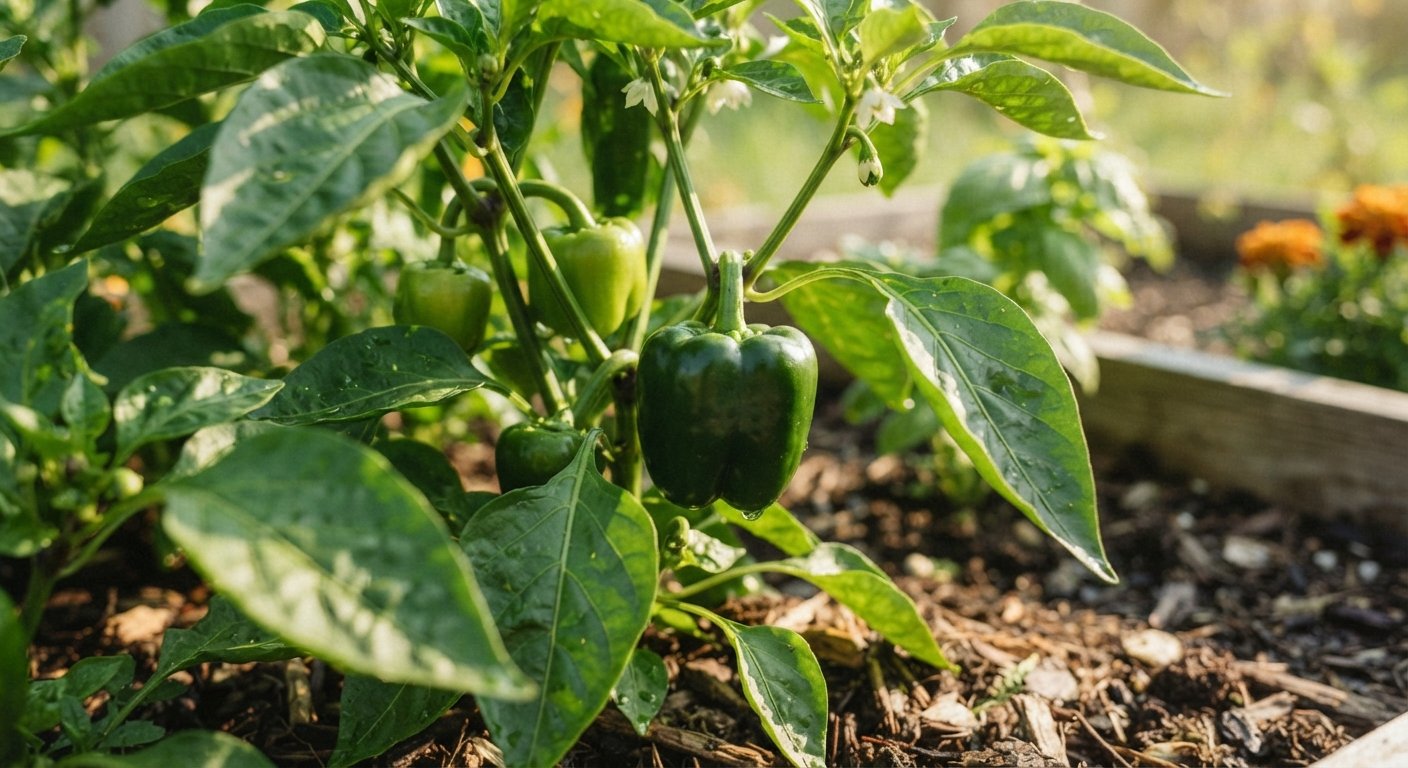
Pepper plants need a full, healthy canopy of leaves to capture sunlight efficiently. Nitrogen fuels this leaf production, helping plants push out new growth quickly during their vegetative phase. Well-fed plants tend to have broader leaves with a deep green color, and their stems grow thicker and sturdier, which matters a lot once the plant starts carrying the weight of developing peppers.
Weak stems are a common problem in home gardens, and nitrogen deficiency is often part of the cause. A pepper plant with thin, floppy stems may need staking not because of poor variety choice, but because it never had the nutrients to build strong cell walls in the first place. Feeding with a balanced nitrogen source early on gives the plant the raw material it needs to grow upright and resilient.
How Nitrogen Affects Pepper Plant Growth
Nitrogen and Vegetative Growth
During the vegetative stage, which is the period before flowering begins, pepper plants are essentially building their own infrastructure. This is when nitrogen has the biggest impact. Adequate nitrogen during this window leads to faster leaf development, more branching, and a bushier overall shape. A pepper plant that gets what it needs early tends to have more branches later, which translates directly into more places for flowers, and eventually fruit, to form.
Gardeners who have grown the same pepper variety side by side, one with a nitrogen boost early on and one without, often notice a visible difference within a few weeks. The fed plant is usually taller, greener, and has more leaf surface area, which sets it up for a stronger fruiting season ahead.
Nitrogen and Overall Plant Health
Nitrogen does more than just drive size. It also plays a role in a plant’s overall resilience. Plants with sufficient nitrogen tend to recover faster from minor stress, whether that is a hot afternoon, a light frost, or transplant shock. This is because nitrogen supports the enzyme systems plants use to repair damaged tissue and continue normal metabolic functions.
On the flip side, a plant that is already short on nitrogen has fewer resources to draw on when stress hits. This can show up as slower recovery after transplanting, more noticeable wilting during heat, or a longer bounce-back time after pest damage.
What Is the Best Nitrogen Fertilizer for Pepper Plants?
Choosing the right nitrogen source depends on your growing style, how quickly you want results, and whether you prefer organic or synthetic inputs. There is no single answer that works for every gardener, but understanding the main categories helps you make a confident choice.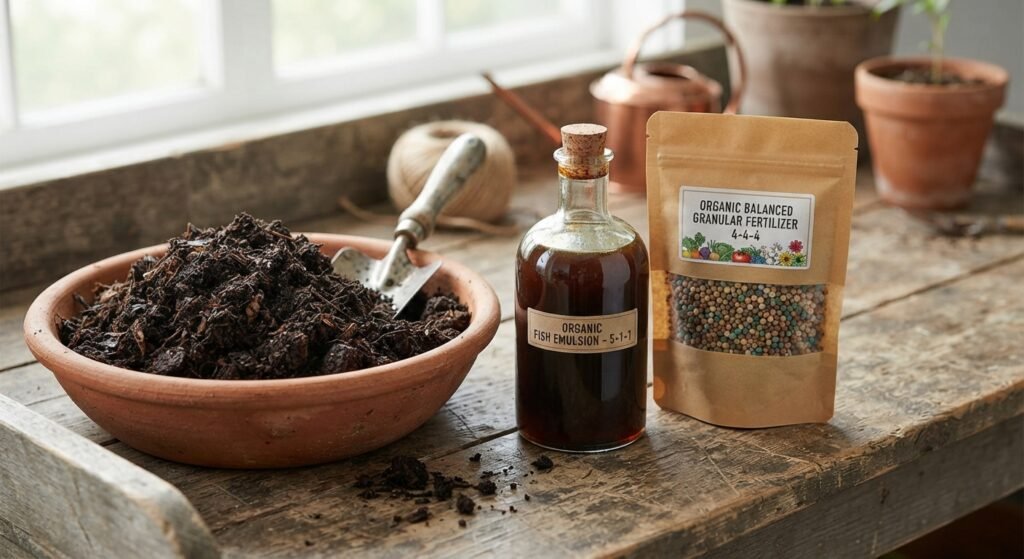
Organic
Organic nitrogen sources include compost, aged manure, fish emulsion, blood meal, and feather meal. These release nitrogen slowly as soil microbes break them down, which means less risk of burning your plants and a steadier feed over time. Compost also improves soil structure, which helps pepper roots access nutrients more efficiently in the long run. The tradeoff is that organic options work more slowly, so if your plants are showing severe deficiency symptoms, you may not see improvement for a week or two.
Synthetic
Synthetic fertilizers, such as ammonium sulfate, urea, or balanced water-soluble blends, deliver nitrogen in a form plants can absorb almost immediately. This makes them useful for correcting a deficiency quickly. The downside is that they are easier to overapply, and excess synthetic nitrogen can leach into groundwater or build up salts in container soil. If you go this route, precise measuring matters more than with organic alternatives.
Liquid vs. Granular
Liquid fertilizers are absorbed quickly through both roots and leaves, making them a good choice for a fast correction or for container gardens where nutrients wash out faster. Granular fertilizers break down over a longer period and are often better suited to in-ground garden beds where you want a steady release across several weeks without repeated applications. Many experienced growers use granular feeding as a base at planting time, then supplement with liquid feeds during the growing season if plants show signs of slowing down.
How Much Nitrogen Do Pepper Plants Need?
Pepper plants are moderate to heavy nitrogen feeders, but the exact amount depends on your soil’s existing fertility, the variety you are growing, and the growing stage. As a general guideline, most gardeners apply a fertilizer with a nitrogen ratio in the range of 5 to 10 percent nitrogen by weight during early growth, tapering off as flowering begins. A common approach is a balanced starter fertilizer at planting, followed by a lighter nitrogen feed every three to four weeks until flowers appear.
It helps to think in terms of plant response rather than a fixed number. If leaves are deep green and growth is steady, you are likely in the right range. If leaves start yellowing or growth stalls, it may be time for a top-up. If you notice excessive leaf growth with few flowers, you have probably gone too heavy on nitrogen and should scale back.
Nitrogen Needs During Early Growth
The first several weeks after germination or transplanting are when pepper plants need nitrogen the most. During this stage, the plant is focused almost entirely on building leaves, stems, and root mass, all of which depend heavily on nitrogen availability. A light, balanced feed at this point, whether from compost worked into the soil or a diluted liquid fertilizer, gives seedlings the push they need to establish quickly.
Skipping nitrogen during this early window often leads to stunted seedlings that never quite catch up, even if you correct the deficiency later. This is why many growers treat the early growth period as the most important feeding window in the entire pepper growing calendar.
When Should You Apply Nitrogen Fertilizer to Peppers?
Feeding Young Pepper Plants
Young pepper seedlings benefit from a gentle nitrogen feed once they have their first set of true leaves. At this stage, plants are sensitive, so a diluted liquid fertilizer or a small amount of well-aged compost is usually safer than a full-strength granular application. The goal is to support steady early growth without overwhelming a small root system.
Fertilizing After Transplanting
Once pepper plants move from a seed tray or nursery pot into the garden or a larger container, they experience a period of stress known as transplant shock. Waiting about one to two weeks after transplanting before applying a nitrogen-focused fertilizer gives roots time to settle in. Applying too soon, especially with a strong synthetic fertilizer, can burn tender new roots and slow recovery instead of helping it.
Managing Nitrogen During Fruiting
This is the stage where many gardeners get it wrong. Once pepper plants begin flowering and setting fruit, their nitrogen needs actually decrease while their need for phosphorus and potassium increases. Continuing to apply heavy nitrogen during fruiting often results in a lush, leafy plant with disappointing fruit set. Switching to a lower nitrogen, higher phosphorus and potassium fertilizer during this stage supports better flowering and fruit development instead.
How to Apply Nitrogen Fertilizer to Pepper Plants
Measuring the Correct Fertilizer Amount
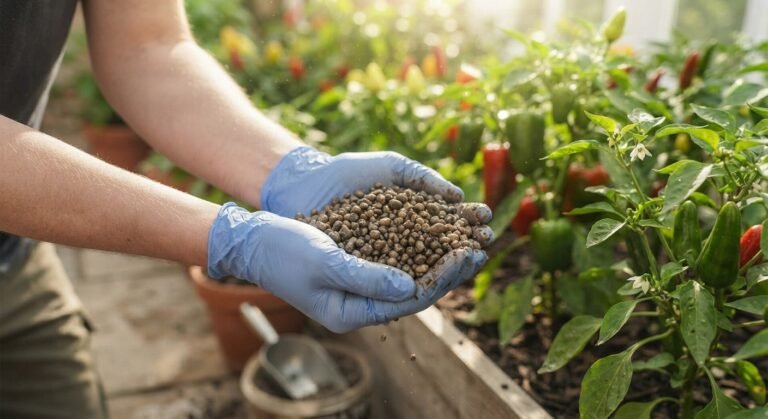
Overapplying fertilizer is one of the most common mistakes new pepper growers make. Always follow the product label as a starting point, and when in doubt, apply slightly less than recommended rather than more. For granular fertilizers, a light sprinkle worked into the top few inches of soil around each plant is usually sufficient. For liquid fertilizers, diluting to half strength during early growth stages is a safer approach than using a full dose.
Applying Fertilizer Around the Root Zone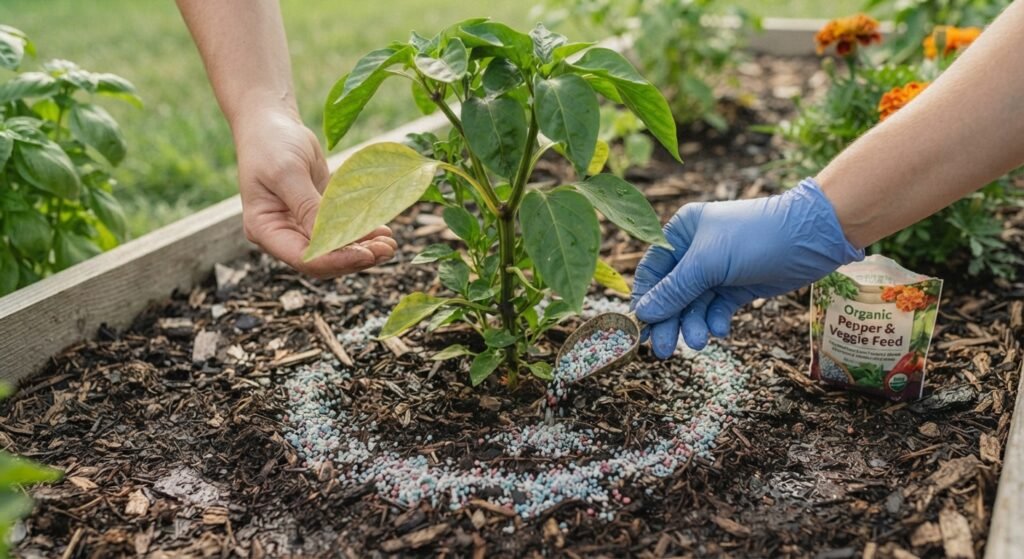
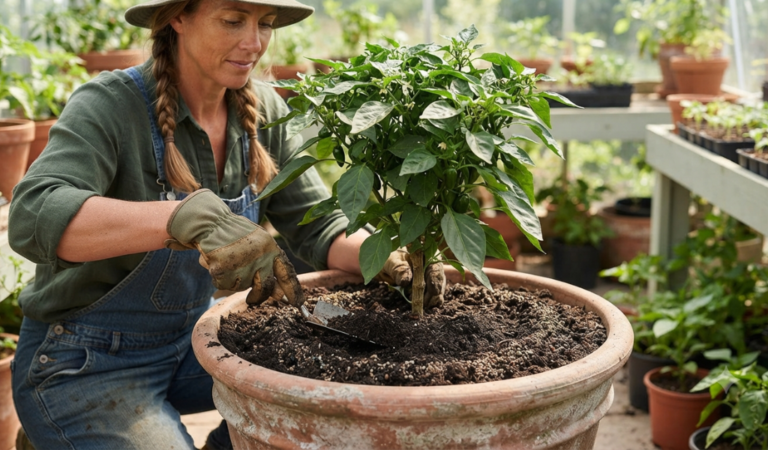
Nitrogen fertilizer should be applied around the plant’s root zone rather than directly against the stem. A ring a few inches out from the base, roughly matching the spread of the leaves above, targets the area where active feeder roots are concentrated. Avoid piling fertilizer directly against the stem, since this can cause chemical burn on the plant’s tissue.
Watering After Fertilizing
After applying any nitrogen fertilizer, water the area thoroughly. This helps dissolve granular fertilizer so nutrients become available to roots, and it also reduces the risk of fertilizer burn from concentrated salts sitting on dry soil. A deep watering after feeding is just as important as the fertilizer application itself.
Signs of Nitrogen Deficiency in Pepper Plants
Yellowing or Pale Leaves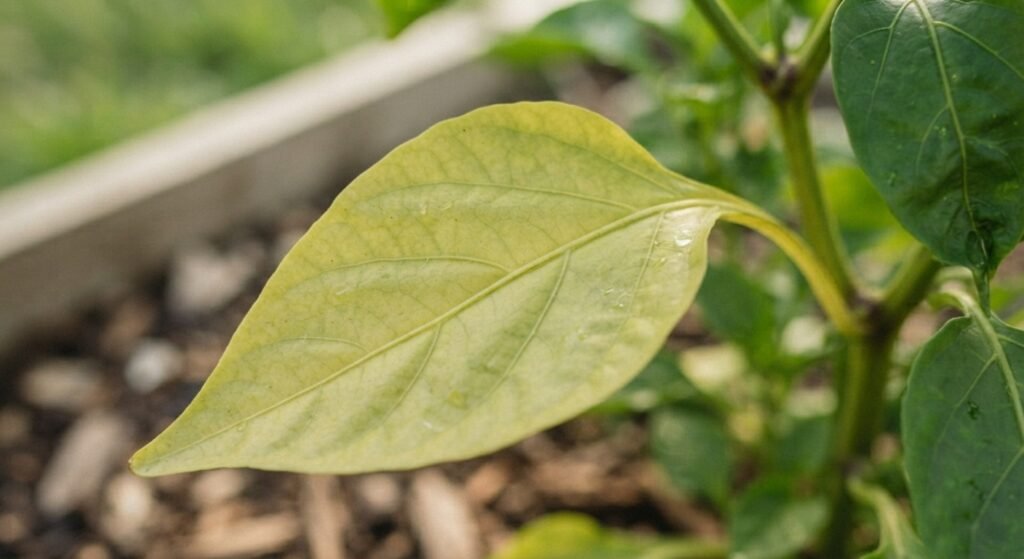
The most recognizable sign of nitrogen deficiency is a general yellowing or pale green color across the leaves, rather than yellowing in a specific pattern like a nutrient such as magnesium would cause. Leaves may look washed out compared to the deep green you would expect from a healthy pepper plant.
Slow or Stunted Growth
Nitrogen-deficient pepper plants often grow noticeably slower than expected. New leaves may be smaller than normal, and overall plant height can lag behind what you would see in a properly fed plant of the same age and variety.
Older Leaves Showing Symptoms First
Because nitrogen is a mobile nutrient, plants will pull it from older, lower leaves and redirect it to new growth when supplies run low. This means the lower, older leaves on the plant typically show yellowing first, while the newest leaves at the top may still look relatively green. Watching for this pattern helps distinguish nitrogen deficiency from other nutrient issues.
Can Too Much Nitrogen Harm Pepper Plants?
Yes, and this is a mistake almost as common as underfeeding. Too much nitrogen pushes pepper plants into rapid leaf and stem growth at the expense of flowering and fruit set. You may end up with a large, bushy, dark green plant that produces very few peppers, because the plant’s energy is going toward vegetative growth rather than reproduction.
Excess nitrogen can also make plants more attractive to certain pests, since soft, lush new growth is often easier for insects like aphids to feed on. In severe cases, too much synthetic nitrogen can burn roots outright, causing wilting and leaf scorch even though the soil looks otherwise healthy. If you suspect overfeeding, flushing the soil with plain water and holding off on further fertilizer for a few weeks usually allows the plant to rebalance.
Nitrogen Fertilizer for Peppers in Pots vs. Garden Soil
Feeding Container-Grown Pepper Plants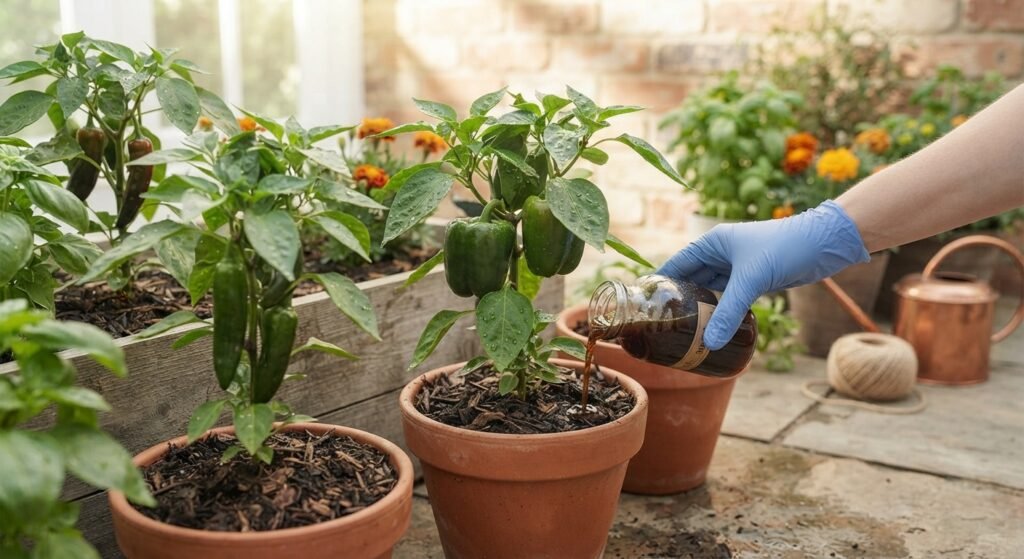
Container-grown peppers lose nutrients faster than those in garden beds, since watering washes nitrogen out of the limited soil volume more quickly. This means potted peppers usually need more frequent, lighter feedings rather than a single large application. A diluted liquid fertilizer applied every two to three weeks tends to work better in containers than a heavy granular dose that may not have room to spread through the soil evenly.
Managing Nitrogen in Garden Beds
In-ground garden soil generally holds nutrients longer and benefits from organic matter that continues feeding plants gradually over time. Working compost or aged manure into garden beds before planting builds a nutrient reserve that reduces how often you need to fertilize during the season. Garden soil also tends to have more established microbial life, which helps convert organic nitrogen sources into a form pepper roots can use.
Best Practices for Using Nitrogen Fertilizer on Peppers
Start light and adjust based on how your plants respond rather than sticking rigidly to a schedule. Test your soil if possible, since some garden beds already have plenty of nitrogen from previous seasons and may not need much supplementation at all. Always water after fertilizing, and avoid feeding during the hottest part of the day when plants are already under stress. Keep a simple record of what you applied and when, since this makes it much easier to spot patterns if something goes wrong later in the season.
Balance Nitrogen With Other Essential Nutrients
Nitrogen is important, but it does not work alone. Phosphorus supports root development and flowering, while potassium strengthens overall plant health and improves fruit quality. A pepper plant fed nitrogen without enough phosphorus or potassium may grow plenty of leaves but struggle to produce a strong pepper harvest. This is why many experienced gardeners shift from a nitrogen-heavy fertilizer during early growth to a more balanced or even nitrogen-light blend once flowering begins, allowing the plant to direct its energy toward fruit rather than foliage.
Final Thoughts
Getting nitrogen right is one of the simplest ways to improve your pepper harvest, but it does require paying attention to timing. Feed generously while plants are young and building their structure, then ease off once flowers appear so the plant can focus on fruit instead of leaves. Watch your plants closely, since the color and growth rate of your peppers will usually tell you everything you need to know about whether you are feeding correctly. With a thoughtful approach to nitrogen, along with the right balance of phosphorus and potassium, you can set your pepper plants up for a season of strong growth and a generous harvest.
Frequently Asked Questions
What is the best nitrogen fertilizer for pepper plants?
There is no single best option for every garden. Organic sources like compost or fish emulsion work well for slow, steady feeding, while synthetic fertilizers offer faster results when a quick correction is needed. Many gardeners use a combination depending on the growth stage.
Can I use too much nitrogen fertilizer on my pepper plants?
Yes. Excess nitrogen leads to lush leafy growth with poor flowering and fruit set, and in severe cases can burn roots. It is better to underfeed slightly and adjust than to apply too much at once.
How often should I fertilize pepper plants with nitrogen? During early vegetative growth, feeding every three to four weeks is common. Once flowering begins, reduce nitrogen and shift toward a more balanced fertilizer to support fruit development instead.
Do pepper plants need less nitrogen once they start flowering?
Yes. High nitrogen during fruiting often results in more leaves and fewer peppers. Switching to a lower nitrogen fertilizer with more phosphorus and potassium supports a better fruit set.
What does nitrogen deficiency look like in pepper plants?
Look for pale or yellowing leaves, especially on the older, lower parts of the plant, along with slower than expected growth and smaller new leaves.
Is organic or synthetic nitrogen better for pepper plants?
Organic nitrogen releases slowly and improves soil health over time, while synthetic nitrogen acts quickly but requires careful measuring to avoid overfeeding. Both can work well depending on your goals and growing setup.
Do potted pepper plants need more nitrogen than those in garden soil?
Container-grown peppers typically need more frequent, lighter feedings, since nutrients wash out of potting soil faster than they do from garden beds.