Pepper Anthracnose Treatment: Fungus, Symptoms and Prevention
Pepper Anthracnose Treatment: Identify and Control the Disease
Pepper anthracnose treatment starts with one honest question. Are those sunken, dark spots on your peppers really anthracnose, or something else? Many growers guess wrong and lose weeks. Anthracnose is a fungal disease caused by Colletotrichum species, and it is one of the most common reasons pepper fruit gets thrown away before it ever reaches the market. In places like Korea, where red pepper is a major crop, the disease can wipe out a large part of the harvest in a wet year. Home gardeners feel it too. Picture a grower with a few hot pepper plants on a rooftop who watches half the red fruit rot in ten days. The plants looked fine until the fruit began to ripen. That is how this pathogen works. It waits quietly and strikes late. Before you spend money on sprays, it helps to know what you are fighting and what your plants need. Strong plants fight disease better, and good nutrients for pepper plants such as balanced nitrogen, potassium, and calcium give them a real edge.
 This guide walks you through the whole story. You will learn how to spot the disease, what causes it, which fungicides work, which natural options are worth trying, and how to build a simple plan that fits your garden or farm. Whether you grow in a field or a greenhouse, the steps here will help you protect your crop and keep losses low.
Understanding Pepper Anthracnose and Why It Hits So Hard
Anthracnose is a fungal disease that attacks leaves, stems, and above all the fruit. The main cause is the Colletotrichum group, often written as Colletotrichum spp. Researchers have named several species behind pepper anthracnose, including Colletotrichum acutatum, Colletotrichum gloeosporioides, and Colletotrichum capsici. In Korea, which has large pepper production, Colletotrichum acutatum is one of the most reported causes, and it can bring heavy yield loss in red pepper fields. Each isolate behaves a little differently. Some grow fast in the lab and some spread faster on real fruit. That is one reason a single fix rarely works for every farm.
The disease hits hard because the pathogen is patient. It can live in crop debris, on weeds, and inside seed. Spores called conidia wait until warm wet weather arrives and then spread through rain splash and irrigation water. Green fruit can carry the fungus without any sign. Once ripening starts the spots appear almost overnight. By then the damage is done, which is why pepper anthracnose treatment works best before the first lesion rather than after it.
How to Identify Pepper Anthracnose on Leaves, Stems, and Fruit
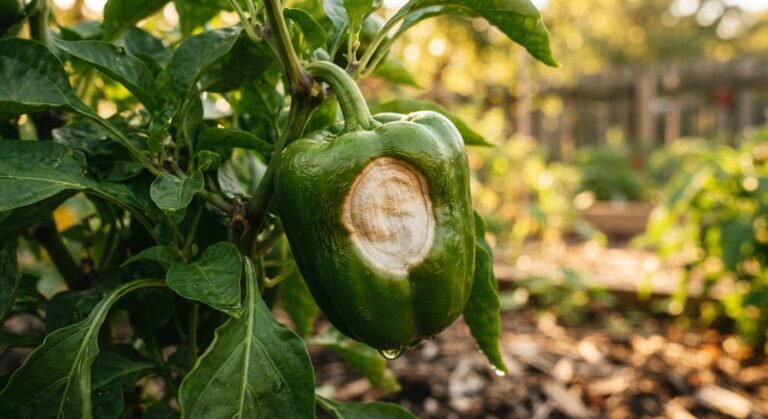
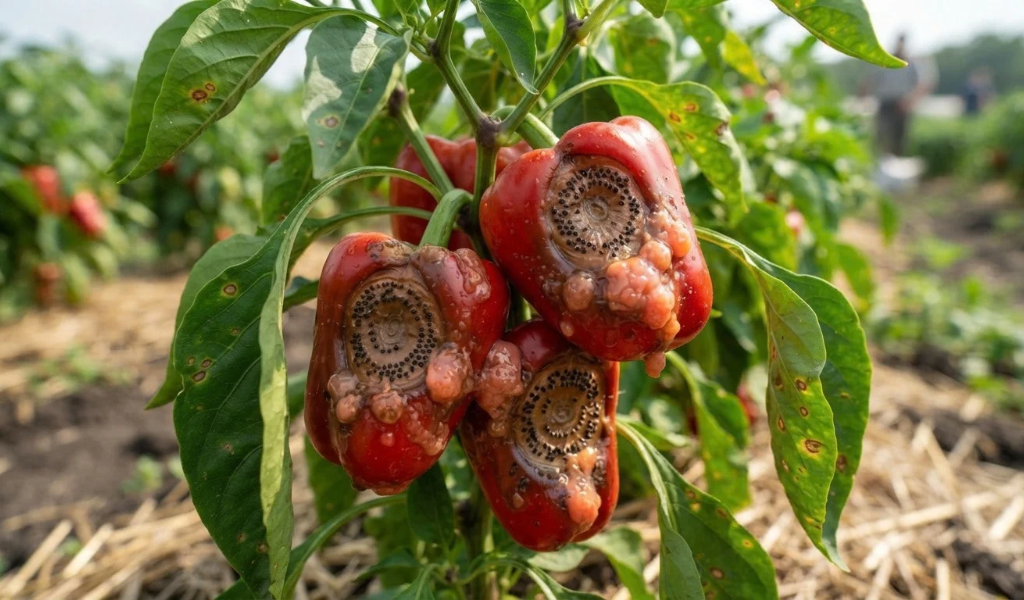
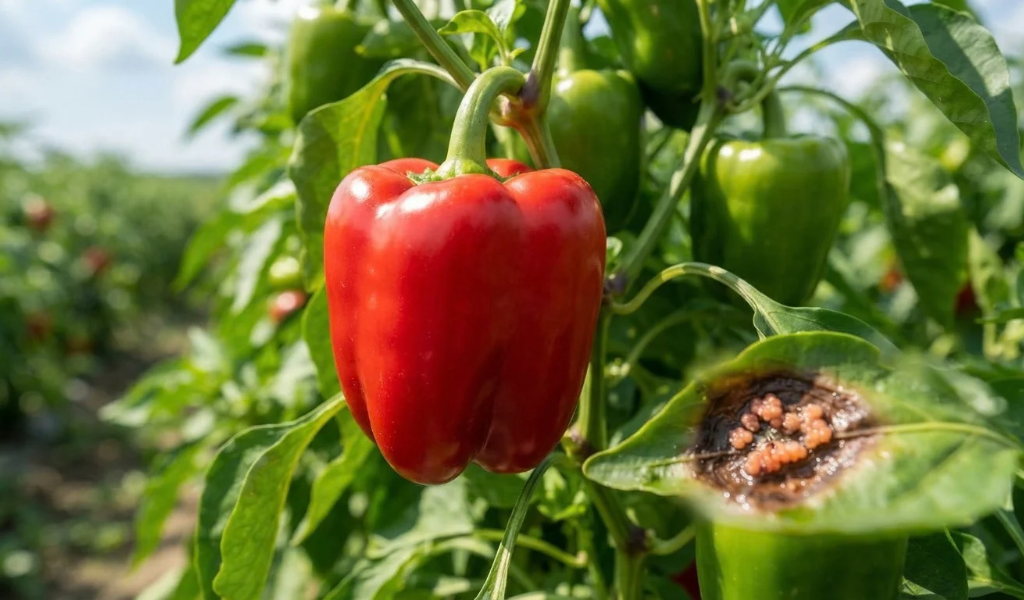
Learn to read your plants and you will catch trouble early. On fruit, the first sign is a small water-soaked spot. It grows into a sunken round lesion that can reach the size of a coin. Look closely at the center. In humid weather you may see orange or pink spore masses, and old lesions often show dark rings or tiny black dots. Red pepper fruits and detached pepper fruits in storage show the same pattern, which is why one infected basket can ruin a whole shipment.
Leaves and stems tell a quieter story. Leaf spots are small and brown with a yellow edge, and stems may show dark sunken streaks. Heavy infection can cause leaf drop and dieback on young shoots.
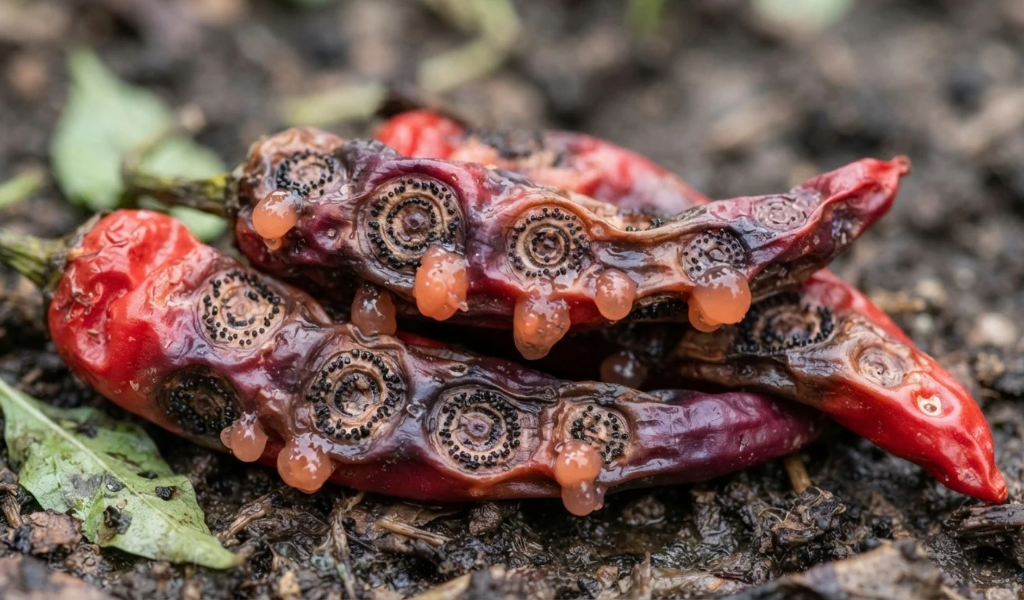 Do not confuse it with other problems. Sunscald leaves papery white patches without rings. Bacterial spot makes small raised dots on leaves. Gray mold gives a fuzzy gray cover, often on flowers and damaged tissue, especially in a greenhouse. If you are unsure, cut one fruit, put it in a sealed bag for two days, and watch for spore masses. You can also send a sample to a local plant clinic. A correct label saves you from using the wrong pepper anthracnose treatment.
What Causes Anthracnose in Peppers and How the Fungus Spreads
Weather is the biggest trigger. Warm temperatures around 25 to 30 degrees Celsius and long periods of leaf wetness give spores everything they need. Rain splash carries conidia from old debris to fruit, and overhead watering does the same job on a dry day. Thick plant stands trap moisture, so a crowded greenhouse or a tight field row becomes a perfect home for the fungus.
Plant stress adds fuel. Fruit that stays on the plant too long becomes more susceptible. Heavy nitrogen with weak potassium and calcium makes soft tissue that the pathogen enters easily. A balanced feeding plan builds firmer fruit skin that resists entry.
The source of the problem is often invisible. Infected seed brings the fungus in from day one. Leftover residue from last season keeps it alive through winter. Even tools, boots, and harvest baskets can move spores between plots. In one common story a small farm bought cheap transplants, planted them next to last year’s diseased rows, and saw anthracnose in three weeks. The fungus did not travel far. It was already waiting.
Best Fungicides for Pepper Anthracnose Treatment
Fungicide is the fastest tool when disease pressure is high, but it only works when you pick the right product and use it on time. Always read the label first. Approved products and waiting periods before harvest change by country and by crop, so check local rules before you buy. Think of fungicide as one layer of pepper anthracnose treatment, not the whole plan.
Copper-Based Fungicide Options
Copper products are a common starting point because they are affordable and easy to find. They work as protectants, which means they sit on the surface of the fruit and leaf and stop spores from starting an infection. Copper hydroxide and copper oxychloride are widely used on peppers. They do not cure old lesions, so apply them before symptoms show or at the first sign. Use the label rate and avoid spraying in hot midday sun, since too much copper can burn tender leaves. Repeated use may also build copper in the soil over many seasons, so keep it as one tool in a rotation instead of the only one.
Systemic and Protectant Fungicide Options
Protectant fungicides such as mancozeb and chlorothalonil cover the plant surface much like copper does. Systemic products move into the plant tissue and give longer and deeper protection. Strobilurins like azoxystrobin and pyraclostrobin, and triazoles like difenoconazole, are often used against Colletotrichum on pepper. Studies in Korea and other pepper regions have shown that several of these products can cut anthracnose severity and inhibit the mycelial growth of the fungus in lab tests and in the field.
Resistance is the catch. When the same chemical group is used again and again, the pathogen adapts, and reports of reduced sensitivity in Colletotrichum isolates are growing. Rotate products from different groups and mix a protectant with a systemic one when the label allows. Growers who follow this simple habit tend to keep their best products working for much longer.
Organic and Natural Pepper Anthracnose Treatment Methods
Not every grower wants synthetic sprays, and natural pepper anthracnose treatment has more options than most people think. Researchers have tested many biocontrol agent candidates against anthracnose. Bacillus subtilis and other Bacillus strains, Trichoderma species, and some Streptomyces isolates have shown strong antifungal activities in lab plates and on detached pepper fruits. In vitro tests often show that these microbes slow the mycelial growth of the pathogen, and field trials show a smaller but real drop in disease incidence.
Plant-based sprays can help too. Neem oil, garlic extract, and baking soda mixes may reduce spore germination when used early and often. Their effect is milder than that of conventional fungicides, and rain can wash them off quickly.
The honest advice is to treat natural methods as part of a system. A small organic farm that combines mulch, drip lines, compost tea, and a weekly biological spray can still see a clear drop in fruit rot. It will not match a heavy chemical program in a wet year, but it will protect soil life and keep your fruit clean for people who care about that.
Cultural Practices That Strengthen Your Pepper Anthracnose Treatment Plan
Daily habits beat emergency sprays. Start with space. Plant rows wide enough for air to move and stake the plants so leaves dry fast after rain. In a greenhouse, open vents early and keep humidity low.
Water the soil and not the leaves. Drip lines keep fruit dry and stop splash. Plastic or straw mulch also blocks soil from bouncing onto low fruit.
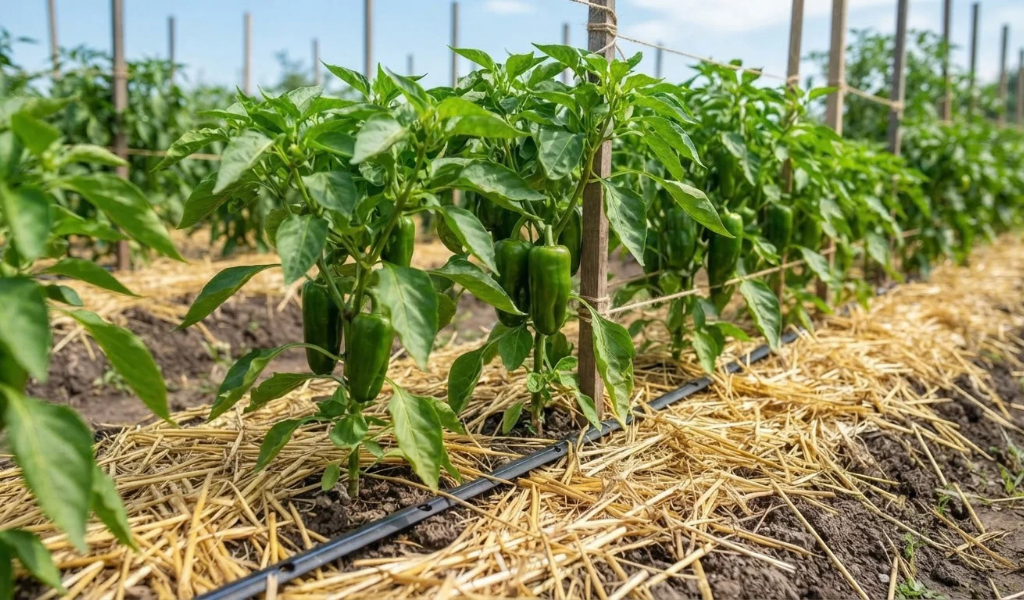 Rotate your crop. Do not plant pepper, tomato, or eggplant in the same bed more than once every three years. After harvest remove all infected fruit and plant parts and bury or burn them away from the field. Pick ripe fruit on time because overripe fruit is the easiest target.
Feed with care. Balanced nitrogen, phosphorus, potassium, and calcium create stronger plants, while too much nitrogen creates soft growth. Clean your tools and baskets between plots. These steps feel small, but together they cut the amount of fungus your plants ever meet.
Pepper Anthracnose Treatment Timing and Spray Schedule
Timing decides whether your spray works. Fungicide is a shield, not a cure, so the best window is before the disease shows up. Start spraying when the first fruit sets, especially if the weather turns warm and wet. Repeat every 7 to 10 days in rainy weeks and stretch to 14 days when the weather is dry. Always follow the label for the exact gap.
Here is a simple schedule many growers use. Spray a protectant such as copper at fruit set. Switch to a systemic product ten days later. Go back to a protectant after that. Then add a different systemic group if rain continues. Stop at the pre-harvest interval printed on the label.
Cover the fruit and both sides of the leaves well, and spray in the early morning or late evening so the product dries without burning the plant. If heavy rain falls within a few hours of spraying, repeat the application. Keep a notebook with dates, products, and weather. After one season you will see patterns that no guide can give you.
Anthracnose Prevention in Pepper Plants: Steps to Take Before Symptoms Appear
Prevention is cheaper than any cure. The work starts before the plants ever touch the soil. Pick a well-drained site and avoid fields where pepper grew last year. Prepare raised beds so water drains away from roots. Disinfect trays, stakes, and greenhouse surfaces. Check transplants one by one and throw away any with spots.
Once plants are in, scout twice a week and look at the fruit as closely as the leaves. Pull off any spotted fruit right away and keep it out of the garden. Watch the forecast. When a run of warm wet days is coming, spray a protectant before the rain arrives instead of after.
Keep weeds down because some weeds host Colletotrichum. And keep your plants well fed. A grower who tracks both disease signs and plant nutrition notices problems sooner and fixes them while they are still small.
Resistant Pepper Varieties and Clean Seed for Anthracnose Control
Genetic strength is the best long-term answer, but it is not simple. Full resistance to every Colletotrichum species is rare in commercial pepper. Some cultivars, especially certain hot pepper lines, show better tolerance than others, and breeders in Korea and other countries keep working on new resistant lines. Tests that rate days after inoculation help show which cultivars hold up best. Ask local seed dealers and extension agents which types do well in your area.
Seed quality matters just as much. Buy certified clean seed and never save seed from fruit that showed even a small spot. Hot water treatment at about 52 degrees Celsius for 25 to 30 minutes can lower the spore load on seed, but follow a tested guide because too much heat harms germination. A tolerant cultivar plus clean seed gives you a head start before the first spray.
Common Pepper Anthracnose Treatment Mistakes and How to Avoid Them
The first mistake is waiting. Many growers start pepper anthracnose treatment after half the fruit is spotted, and by then no spray can repair the damage. The second mistake is using the same fungicide every week. This pushes the pathogen toward resistance and wastes money. A third mistake is poor coverage. If you spray only the tops of leaves, spores on the fruit and under the leaves stay safe.
Another common error is ignoring the label. Too high a rate can burn plants and too low a rate fails to control the fungus. Skipping the pre-harvest interval is also risky for anyone who eats the fruit.
Finally, many people forget sanitation. They treat the plants and leave infected fruit in the bin or on the ground, which keeps the spore supply alive. Others water from above in the evening and wonder why the disease keeps coming back. Fix these habits first and every other part of your plan works better.
Final Thoughts
Pepper anthracnose treatment is not one trick. It is a mix of good seed, clean fields, smart watering, balanced feeding, and well-timed sprays. Know the fungus, spot the signs early, and act before the rain, and you will keep most of your harvest. Natural options and resistant cultivars add extra safety, while fungicide rotation protects your best products. Start this week. Walk your rows, check the fruit, clear old debris, and write your spray plan on paper. One small change today can save a large part of your crop at harvest. Share this guide with a fellow grower who needs it too.
Frequently Asked Questions
What is the best fungicide for treating anthracnose?
There is no single winner. Strobilurins, triazoles, and protectants like mancozeb or chlorothalonil are widely used, and the best choice depends on local approval and resistance in your area. Rotate groups and follow the label.
How do you get rid of anthracnose naturally?
You cannot erase it fully, but you can cut it a lot. Use clean seed, drip irrigation, mulch, crop rotation, and fast removal of infected fruit. Add a biocontrol agent such as Bacillus or Trichoderma and use copper if your rules allow.
What is the best fungicide for pepper plants?
For pepper plants, growers often start with copper or a protectant at fruit set and then switch to a systemic product. Always check that the product is approved for pepper in your country.
What is the best fungicide to use to control chilli anthracnose?
Chilli anthracnose responds well to a rotation program. Mix a protectant with a strobilurin or triazole and spray before long wet spells. Local extension offices can name the exact products that work on chilli in your region.
Did pepper anthracnose treatment affect fruit quality?
When done right, treatment protects fruit quality. Problems appear only when rates are too high or the waiting period is skipped, which can leave residues or burn the skin. Follow the label and the fruit stays safe.
Does pepper anthracnose treatment work?
Yes, when you start early and combine methods. Trials in the lab and in field conditions show that sprays and biological agents cut disease severity, but nothing works well once fruit is already covered in lesions.