Controlling Tomato Blossom Drop: Keep Tomato Flowers
Controlling Tomato Blossom Drop: A Practical Guide to Better Fruit Set
Nothing is more frustrating than watching a healthy tomato plant produce plenty of yellow flowers, only to find those flowers drying up and falling before a single tomato forms. If you are dealing with this problem, Controlling Tomato Blossom Drop starts with understanding why the flowers are falling and what your tomato plant needs during flowering and fruit set. Tomatoes can look strong, green, and full of flowers while still struggling to set fruit. Temperature changes, inconsistent watering, poor pollination, excess nitrogen, humidity, overcrowding, pests, and disease can all contribute to blossom drop.
The good news is that most cases can be improved with a few changes in daily care. Once you understand the connection between flowering, pollination, water, temperature, and fruit development, Controlling Tomato Blossom Drop becomes much easier. If you are already familiar with the Tomato Growing Stages, you know that flowering is an important turning point. The plant must move successfully from healthy growth into pollination and fruit production. When something goes wrong during this stage, tomato flowers may fall without setting fruit.
Understanding Tomato Blossom Drop
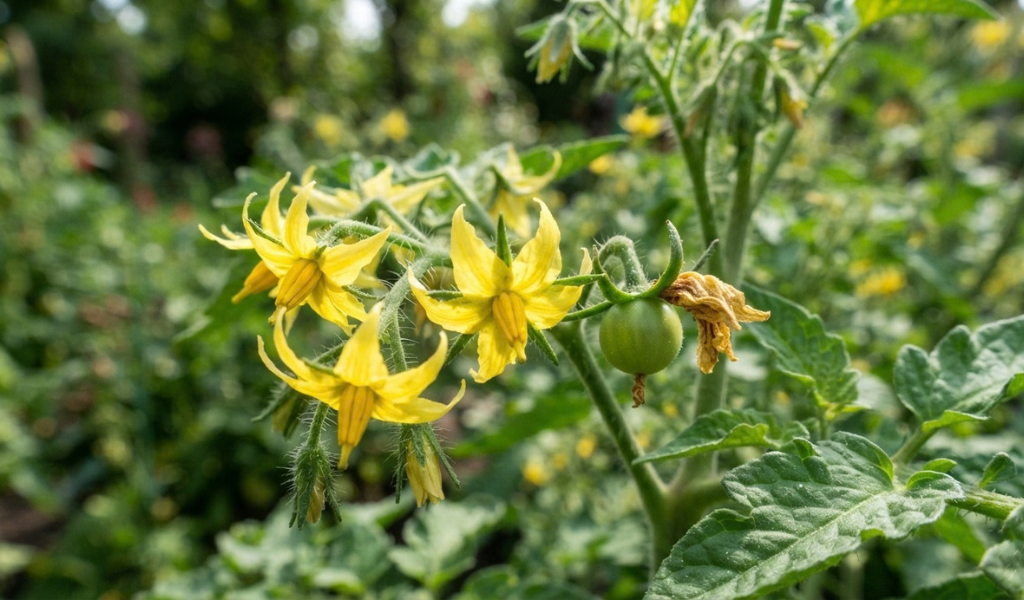
Controlling Tomato Blossom Drop begins with knowing what normal tomato flowering looks like. A tomato flower contains both male and female parts, so tomatoes are self-pollinating. The pollen still needs to move from the male part of the flower to the female part before fruit can develop. A healthy tomato flower usually remains attached while pollination takes place. After successful pollination, the flower begins to fade, and a tiny green tomato develops behind it. When pollination fails or the plant experiences stress, the flower can dry up and drop off the plant. This is known as tomato blossom drop. A few dropped flowers do not always mean there is a serious problem. Tomato plants may produce more flowers than they can support, especially during periods of stress. However, if flowers are repeatedly falling and the plant is producing little or no fruit, it is time to investigate. For example, imagine a tomato plant covered in flowers after several hot days. T
he plant may look productive, but if daytime temperatures are too high, the pollen can become less effective. The flowers may open, remain attached briefly, and then fall without setting fruit. That is why Controlling Tomato Blossom Drop is not simply about adding more fertilizer. It is about creating conditions where the tomato plant can flower, pollinate, and develop fruit successfully.
Main Causes of Tomato Blossoms Drying Up
There is rarely one single cause of blossom drop. Several conditions can affect flowering at the same time. The most common reasons include high temperatures, cold nighttime temperatures, inconsistent watering, poor pollination, excess nitrogen, unsuitable humidity, pest pressure, disease, and crowded plants.
Understanding the cause makes Controlling Tomato Blossom Drop much more practical. Instead of treating every dropped flower the same way, look at what has changed around the plant. If the soil is extremely dry, watering may be the answer. If the plant is producing huge amounts of leaves but very few tomatoes, fertilizer could be part of the problem. If flowers are dropping during a heatwave, temperature is a stronger suspect.
Temperature Swings Are Usually the Number One Culprit
Temperature is one of the biggest factors behind blossom drop in tomatoes. Tomatoes thrive in warm weather, but flowering and fruit set can suffer when temperatures become extreme. Very high daytime temperatures can interfere with pollen movement and reduce successful pollination. Cold nighttime temperatures can also affect the process. When temperatures remain above the plant’s comfortable range, flowers may dry up and fall before fruit development begins. On the other hand, nighttime temperatures that drop below about 55°F can also contribute to poor fruit set in some situations. This is particularly common during sudden weather changes. A gardener may have several cool nights followed by intense daytime heat. The tomato plant responds to these conditions by focusing on survival rather than successful fruit production.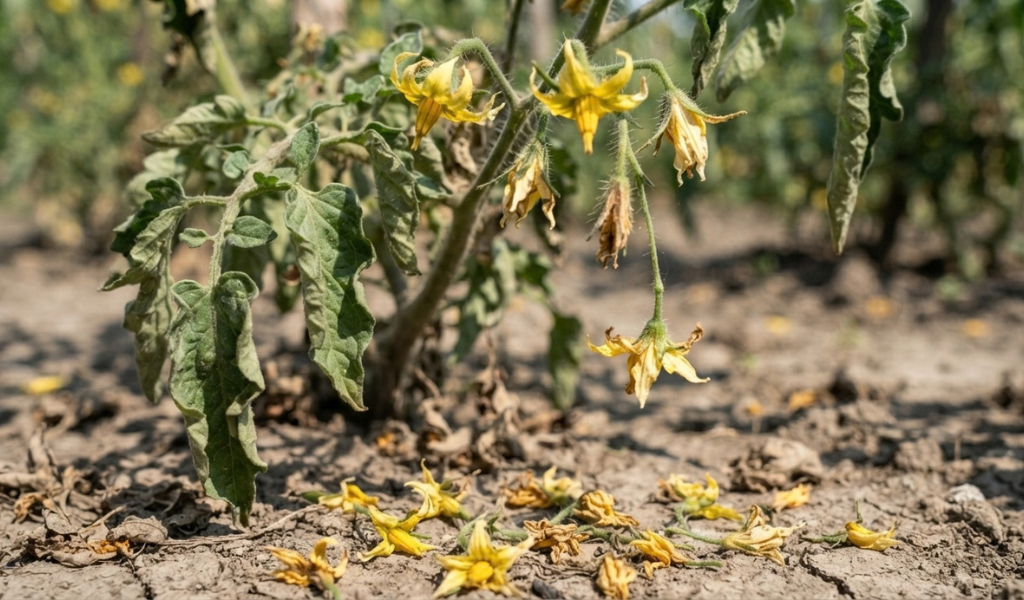
For Controlling Tomato Blossom Drop, keep an eye on local weather during the flowering period. If a heatwave is coming, providing temporary shade during the hottest afternoon hours can help reduce stress. A shade cloth can be useful when temperatures become unusually high. It does not need to remain over the plant all season. Think of it as temporary protection during extreme conditions.
Too Much Nitrogen Can Backfire in a Big Way
Nitrogen is important for healthy leaves and stems, but too much nitrogen can push a tomato plant toward excessive leafy growth. You may notice a plant with large, dark green leaves, strong stems, and plenty of new growth but surprisingly few tomatoes. In some cases, flowers may also struggle to develop properly.
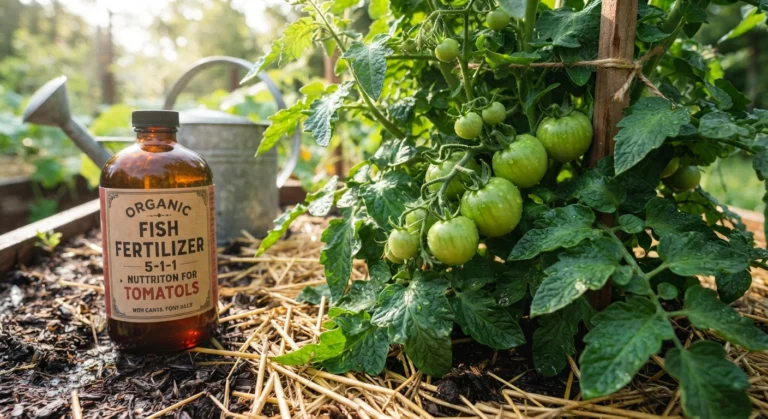
This is why Controlling Tomato Blossom Drop should include balanced fertilization rather than simply adding more fertilizer whenever the plant looks stressed. During flowering and fruiting, tomato plants need a balance of nutrients. Avoid repeatedly applying high-nitrogen fertilizer unless there is a confirmed need.
A balanced fertilizer can be more suitable for general feeding. Always follow the product label and avoid assuming that more fertilizer will produce more tomatoes. Too much fertilizer can also increase salt levels in the soil and create additional root stress.
Inconsistent Watering Confuses Your Plant More Than You Think
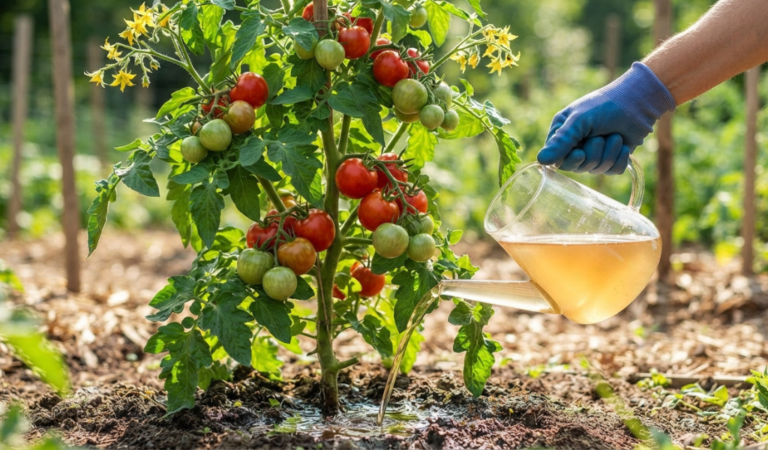
Watering problems are another common reason tomato flowers fall. Tomato plants need steady soil moisture, especially while flowering and trying to set fruit. Letting the soil become very dry and then soaking it heavily creates stressful swings that can contribute to flower drop. This is why Controlling Tomato Blossom Drop includes more than simply watering frequently. The goal is consistent moisture rather than constantly wet soil. Check the soil a few inches below the surface. If it feels dry, water deeply around the root zone. Avoid watering only the top layer because shallow watering can encourage shallow roots. Mulch can help slow evaporation and keep soil moisture more stable. Organic mulch such as straw, shredded leaves, or compost can be useful around tomato plants.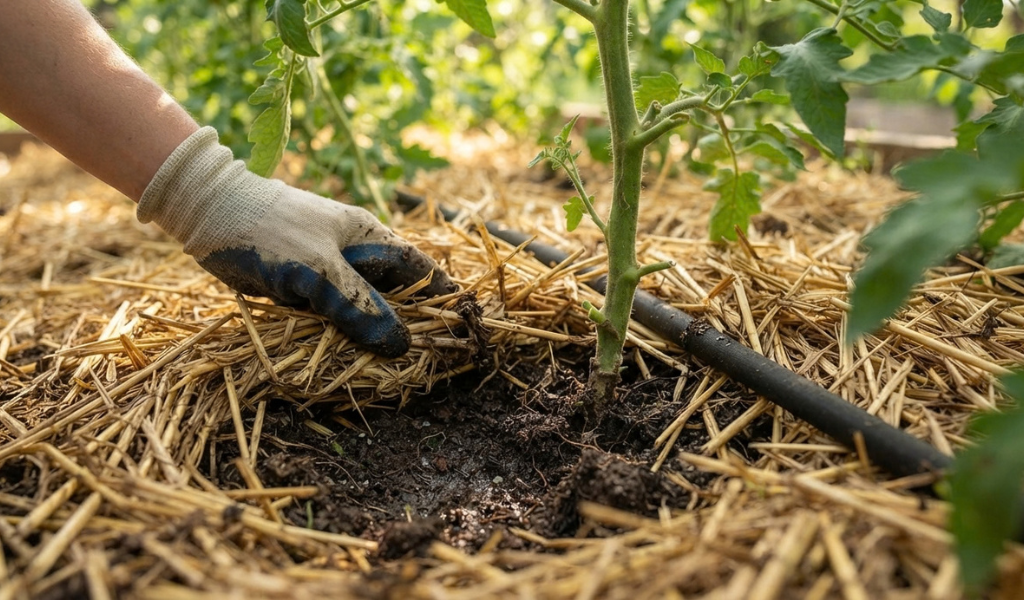
Try to water near the base of the plant rather than repeatedly wetting the leaves. Morning watering is often a practical choice because excess moisture on foliage has more time to dry during the day. Remember that overwatering can also create problems. Tomato roots need oxygen as well as moisture, so constantly soggy soil can damage roots and weaken the plant.
Humidity Levels Play a Bigger Role Than You Might Expect
Humidity can influence pollination and fruit set. Very high humidity can make pollen sticky, making it harder for pollen to move properly. Extremely dry conditions can create another type of stress, particularly when combined with high temperatures and dry soil.
Good airflow around the plant helps. Avoid placing tomato plants so close together that their leaves remain crowded and wet for long periods. Pruning should be done carefully, especially with indeterminate varieties, to improve airflow without removing too much healthy foliage. Balanced humidity, good airflow, and stable soil moisture can make Controlling Tomato Blossom Drop easier during difficult weather.
Overcrowding Your Tomato Plants Creates Unnecessary Competition
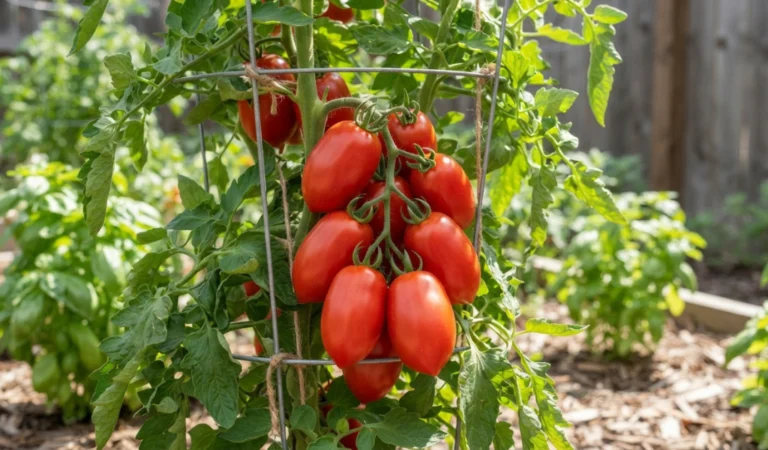
Tomato plants need space for roots, leaves, air movement, and sunlight. Tomato Seedlings also need enough room to establish healthy roots and develop strong foliage. When several plants are packed into a small area, they compete for water and nutrients. Dense foliage can also reduce airflow and create a humid environment around the flowers. Crowding does not automatically cause every flower to drop, but it can add stress when combined with heat, inconsistent watering, or disease. Give each tomato plant enough room according to its variety and growth habit. Indeterminate tomatoes usually need more vertical and horizontal space because they continue growing throughout the season.
Good spacing supports healthier growth and can make Controlling Tomato Blossom Drop easier because you can inspect flowers, leaves, stems, and soil more easily.
Pest and Disease Stress Often Gets Overlooked
Tomato pests can damage flowers and growing tips, while diseases can weaken the entire plant. Aphids, thrips, whiteflies, and other pests may feed on tender plant tissue. Some pests can also interfere with flowers or spread disease. Inspect your tomato plant regularly. Look underneath leaves, around new growth, and near flower clusters.
Disease can also contribute to flower loss. Plants suffering from serious leaf damage may struggle to support normal flowering and fruit development. Do not automatically assume every dropped flower is caused by fertilizer or temperature. Look at the entire plant. If you notice curling leaves, spots, sticky residue, insects, or unusual growth, identify the problem before choosing a spray. Healthy plants are generally better able to handle normal weather stress, making pest monitoring another useful part of Controlling Tomato Blossom Drop.
Poor Pollination Is More Common Than Most Gardeners Realize
Tomatoes are self-pollinating, but that does not mean every flower automatically becomes a tomato. The pollen still needs to move within the flower. Wind, insects, and gentle plant movement can help.
In a quiet greenhouse, enclosed growing area, or sheltered balcony, there may not be enough natural movement around the flowers. High humidity can also cause pollen to become sticky, while very dry conditions can reduce successful pollen movement. When Controlling Tomato Blossom Drop, gently tapping the support stake or flower clusters can sometimes help release pollen. You can do this around midday when flowers are dry and open.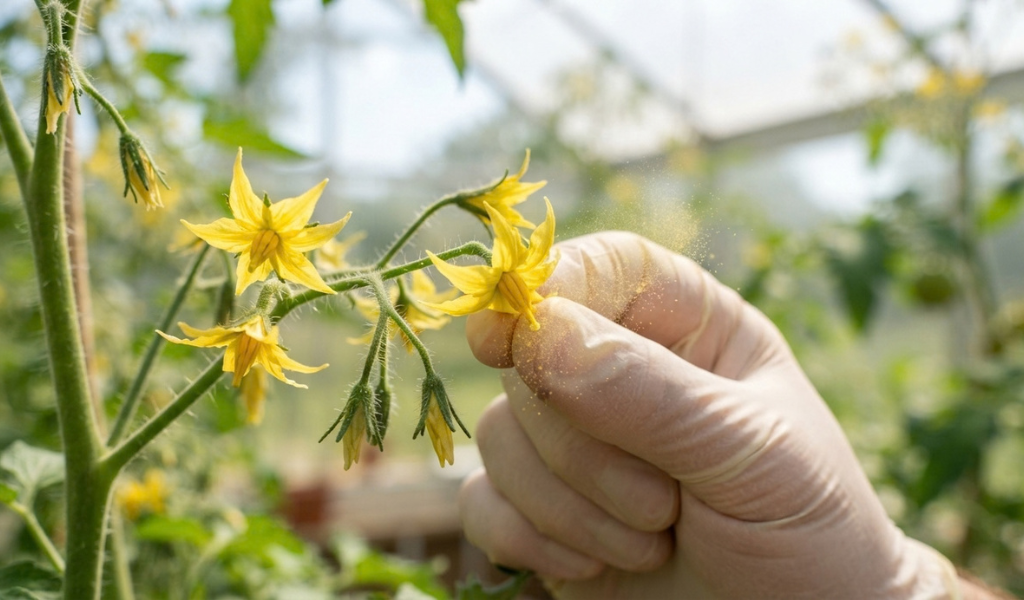
Pollinators such as bees can also contribute to flower movement. Avoid spraying broad-spectrum insecticides around flowering plants unless absolutely necessary. If flowers are healthy but repeatedly fail to set fruit, lack of pollination deserves attention.
Best Practices to Prevent Tomato Blossom Drop
The best approach to Controlling Tomato Blossom Drop is prevention. Instead of waiting until every flower has fallen, create stable growing conditions from the beginning. Focus on soil moisture, temperature, nutrition, airflow, pollination, and plant spacing.
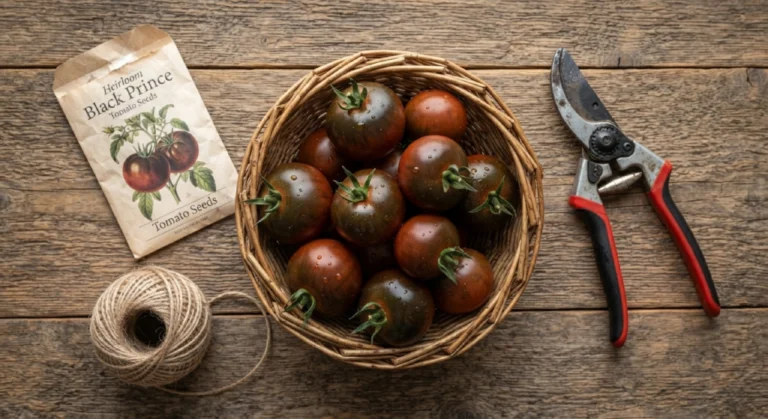
Different tomato varieties also respond differently to weather. Some may handle heat better than others, while certain heirloom tomato varieties can be more sensitive to environmental changes.
Choose the Right Variety for Your Climate
Tomato varieties matter more than many gardeners realize. If your growing season includes very hot weather, choose varieties known to perform reasonably well in warm conditions. If your season has cooler nights, look for varieties suited to your local climate. Cherry tomatoes may set fruit differently from large beefsteak types. Heirloom tomato varieties can also have different responses to temperature and humidity. Before planting, consider your growing season, average temperatures, available space, and whether you are growing in the ground, raised beds, or containers. Choosing a suitable variety is one of the easiest ways to support fruit set and improve Controlling Tomato Blossom Drop before problems begin.
Mulch to Regulate Soil Conditions
Mulch is a simple tool with several benefits. A layer of organic mulch helps slow water loss, reduce rapid soil temperature changes, and protect the soil surface from drying out too quickly. Keep mulch slightly away from the main stem to reduce the chance of constant moisture around the stem. Stable soil moisture supports the roots and helps the tomato plant handle periods of heat. It can also make your watering routine easier.
Provide Shade During Heatwaves
Extreme heat can quickly turn a productive tomato plant into a plant covered with flowers that never become fruit. During severe heat, temporary shade can protect flowers from the hottest part of the afternoon. Shade cloth can be particularly useful for container plants and exposed garden beds. Avoid blocking sunlight all day because tomatoes still need adequate light for healthy growth and fruit development. The goal is to reduce extreme heat stress, not to keep the plant permanently shaded.
Fertilize Strategically
Fertilizer should support the plant rather than force rapid growth. Use a balanced fertilizer when needed and follow the recommended application rate. Avoid repeatedly feeding a tomato plant with excessive nitrogen. Watch the plant itself. A healthy balance of leaves, flowers, and developing fruit is usually more useful than simply trying to make the plant grow as large as possible.
Remember that blossom end rot is different from blossom drop. Blossom end rot appears as a dark, sunken area on developing fruit and is commonly associated with calcium availability problems and inconsistent water supply. Knowing the difference prevents you from treating the wrong problem.
Support Pollinators
Pollinators and natural flower movement can help with pollination. Grow flowering plants nearby to make the garden more attractive to beneficial insects. Avoid unnecessary pesticide sprays during active flowering. If you grow tomatoes indoors or in a protected space, gently shake the flower clusters or tap the support system around midday when conditions are dry. This small action can help move pollen within the tomato flower.
Rotate Crops
Crop rotation can help reduce the buildup of certain soil-related pests and diseases. Instead of planting tomatoes in exactly the same spot year after year, rotate them with unrelated vegetable crops when your garden space allows. Rotation will not directly stop every case of blossom drop, but it can contribute to healthier soil and reduce some long-term growing problems. Healthy roots support healthy flowering, so crop rotation can be part of a wider Controlling Tomato Blossom Drop strategy.
Water Deeply and Consistently
Deep, consistent watering is one of the most useful habits for tomato growers. Rather than giving the plant a small amount of water every day, provide enough water to moisten the root zone deeply, then allow the surface to dry slightly before watering again. The exact schedule depends on soil type, temperature, rainfall, container size, and plant size. During hot weather, containers may need water more often because they dry out quickly.
Check the soil instead of following a rigid schedule. If the root zone is dry, water thoroughly. If it is already wet, wait. This simple approach supports stable soil moisture and is an important part of Controlling Tomato Blossom Drop.
Final Thoughts
Tomato blossom drop does not require a complicated routine. Start by checking temperature, soil moisture, nutrition, pollination, airflow, and pest pressure around your plant. Once you identify the likely cause, make one or two targeted changes instead of changing everything at once. A few flowers falling is normal, but repeated flower loss with poor fruit set needs attention. For Controlling Tomato Blossom Drop, focus on steady watering, suitable nutrition, good airflow, proper temperatures, and reliable pollination. The goal is not to force every flower to become fruit, but to create the conditions your tomato plant needs for healthy flowering and fruit development.
Frequently Asked Questions
How to prevent blossom drop on tomato plants?
Keep soil moisture consistent, avoid excess nitrogen, protect plants from extreme temperatures, provide good airflow, and support pollination. These steps can help with Controlling Tomato Blossom Drop.
Can tomato plants recover from blossom drop?
Yes. If the cause is corrected, a healthy tomato plant can produce new flowers and set fruit later in the growing season.
What can I give my tomato plants to stop blossom end rot?
Blossom end rot is different from blossom drop. Maintain consistent soil moisture and provide balanced nutrition rather than adding large amounts of fertilizer.
How to prevent flower drop?
Focus on stable watering, suitable temperatures, good pollination, balanced fertilizer, and pest control. Avoid stressing the plant during flowering.
At what temperature do tomato blossoms drop?
Very high temperatures can interfere with pollen and fruit set. Cold nights, particularly temperatures below about 55°F, can also contribute to poor fruit set.
Can blossom drop be reversed?
A flower that has already fallen cannot be restored. However, correcting the underlying stress can help the tomato plant produce new flowers and set fruit.
Have you battled blossom drop in your tomatoes?
If your tomato blossoms are falling, check temperature, watering, pollination, nutrition, pests, and plant spacing before changing your entire growing routine.
How Long Do Tomatoes Take to Ripen on the Vine?
Many tomatoes take roughly 40 to 60 days after fruit set to ripen, depending on the variety and growing conditions. Small tomatoes often mature faster than large varieties.