Iron Deficiency in Tomato Plant: Best Ways to Fix It
Iron Deficiency in Tomato Plant: The Yellow Leaf Mystery Every Gardener Faces
Iron deficiency in tomato plant growth is one of the most confusing problems a vegetable grower can face. The youngest leaves turn yellow while the veins remain green, and many growers react by adding more fertilizer. That usually makes things worse. The real trouble is often not a lack of iron in the ground. It is a problem with iron uptake, which depends on soil pH, moisture, and root health.
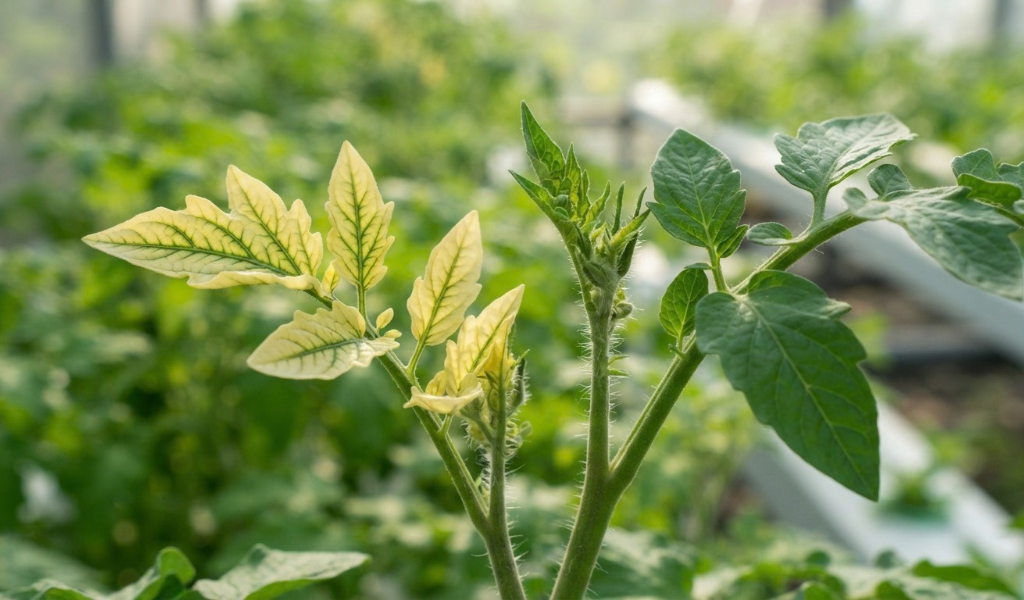
Tomato leaves tell a clear story if you know how to read them. Yellow tissue between green veins on new growth points to an iron deficient plant, while yellowing on older leaves usually signals a different nutrient problem. Telling these apart saves time, money, and a lot of lost fruit.
This guide explains what iron does inside a tomato plant, how to spot iron deficiency symptoms, and how to fix them with foliar application or soil changes. It also covers prevention, because good soil for tomato plants starts with balanced pH, steady moisture, and plenty of organic matter. Whether you grow a few tomato seedling pots on a balcony or a full garden bed, the steps below will help you correct the deficiency and protect your tomato yield.
Why Iron Matters for a Healthy Tomato Plant
Iron is a micronutrient, so a tomato plant needs only small amounts of it. Even so, the whole plant depends on it. Iron takes part in making chlorophyll, the green pigment that drives photosynthesis. It also works inside many enzyme systems that handle respiration and energy release in plant cells. When iron runs short, these metabolic processes slow down and the plant cannot build the sugars it needs for growth.
Tomato is a Strategy I plant, which means its roots handle iron in a specific way. The roots release acid to loosen iron in the soil. An enzyme called ferric chelate reductase then converts ferric iron into ferrous iron, the form that roots can absorb. This system works well in slightly acidic soil. It struggles in high pH soil, which is why iron deficiency in tomato plant beds is so common in alkaline regions.
Iron also moves slowly within the plant. Once it settles in a mature leaf, it stays there. New leaves must get their own supply directly from the roots. That single fact explains why the youngest leaves show trouble first.
Early Signs of Iron Deficiency in Tomato Plant Leaves
The first warning of iron deficiency in tomato plant leaves appears at the growing tips. New leaves come out smaller than normal and look pale or washed out. Older leaves stay green because they already hold their iron. Growers who check the top of the plant every few days can catch the problem while it is still easy to fix.
The Classic Interveinal Pattern
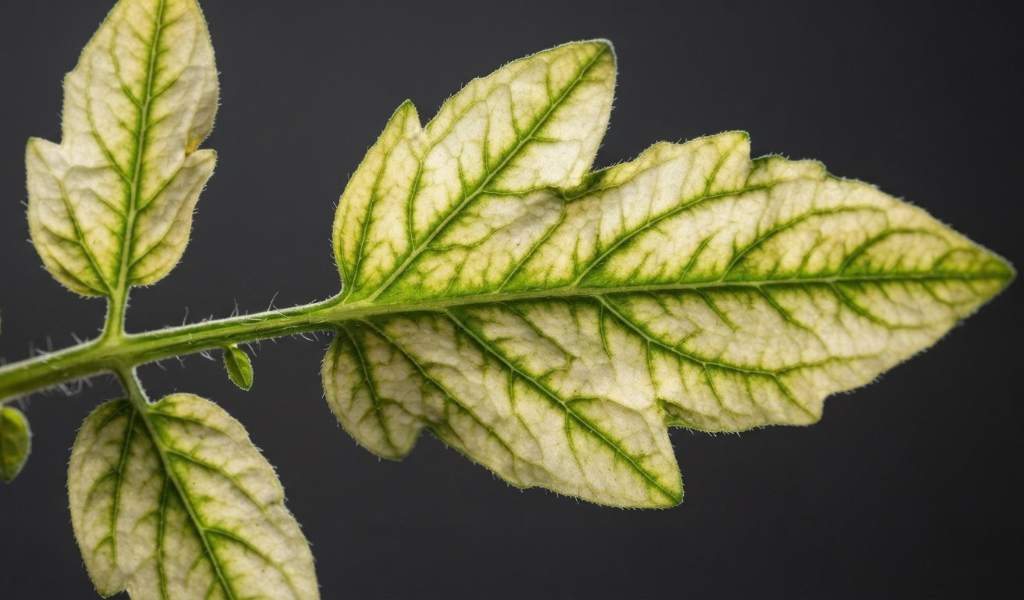
The best known sign is interveinal chlorosis. The tissue between the leaf veins loses color and turns yellow, while the veins remain green. The leaf ends up looking like a fine green net laid over a yellow sheet. At first the change is faint and easy to blame on poor light. Within one to two weeks it becomes clear.
As the lack of iron continues, the yellow spreads and deepens. Whole leaves can turn cream or almost white. The smallest leaves at the very top are usually the palest. This pattern is the most reliable way to separate iron deficiency symptoms from other causes of yellow leaves.
 What Happens If You Ignore It
An untreated iron deficient plant slides downhill fast. Leaf edges turn brown and crispy, and the pale tissue may develop dead patches. Leaf growth slows, and new shoots come out thin and short. Without enough chlorophyll, the plant cannot photosynthesize at a normal rate.
Flowering also suffers. Blossoms often drop before they set fruit, and the few tomatoes that form tend to stay small. A mild case can be corrected in a couple of weeks. A severe case left alone for a month may cost a large share of the season’s crop.
Main Causes of Iron Deficiency in Tomato Plant
Most soils hold plenty of iron. The usual cause of iron deficiency in tomato plant growth is poor availability rather than a true shortage. Several conditions block the roots from taking up the iron that is already there. Knowing which one applies is the key to choosing the right fix.
Waterlogged soil is a major cause. Roots need oxygen to power the ferric chelate reductase system, and wet compacted soil starves them. Cold spring weather can trigger the same problem in a young tomato seedling, even when the pH is fine. Poor drainage in containers has the same effect.
Nutrient imbalance is another cause. Heavy phosphorus feeding can lock up iron. Too much zinc, copper, or manganese competes with iron at the root surface. Root damage from nematodes, pests, or rough transplanting limits uptake too. Favorable weather conditions for root growth help, while hot swings and soggy spells make the problem worse.
High Soil pH and Alkaline Conditions
High pH is the leading cause worldwide. Tomatoes grow best when soil pH sits between about 6.2 and 6.8. Above 7.0, iron changes into oxide forms that dissolve poorly, and the roots cannot absorb them. Limestone soils and areas with hard irrigation water are the most affected.
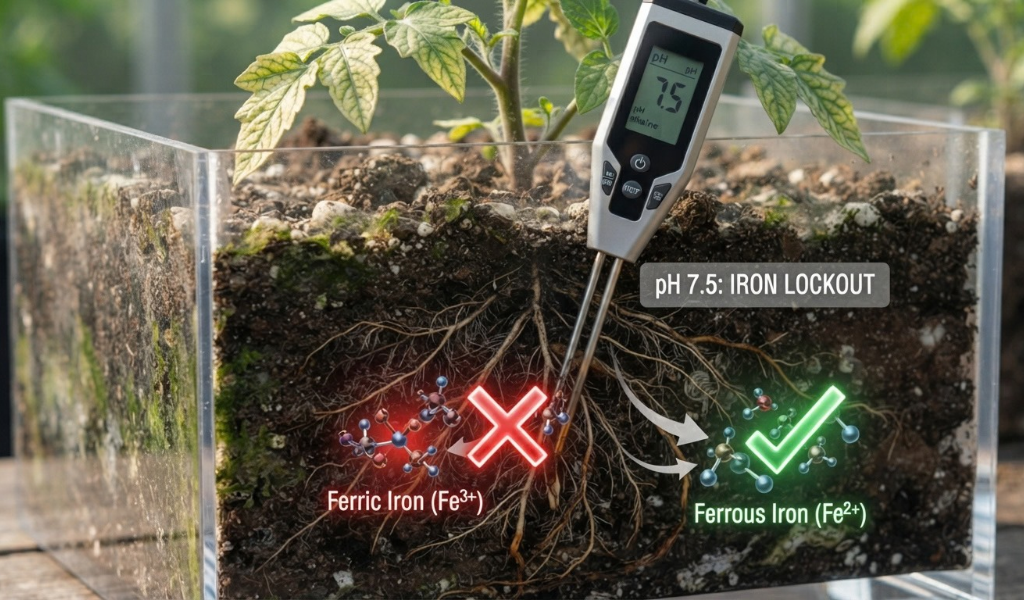 Hard water adds to the problem over time. Each watering leaves small amounts of lime behind, and pH creeps upward season after season. Container mixes are especially sensitive because the small volume of soil changes quickly. Testing pH once a season is a simple habit that prevents many crop failures. Good Soil for Tomato Plants stays in that slightly acidic range, where iron remains available.
Iron Deficiency in Tomato Plant vs. Nitrogen and Magnesium Deficiency
Yellow tomato leaves have many causes, and nutrient deficiencies often look alike at a glance. Location and pattern are the best clues. Iron deficiency shows on the youngest leaves with green veins. Nitrogen and magnesium problems usually begin on the older leaves.
Nitrogen deficiency makes the lower leaves turn an even pale yellow. The whole plant looks thin and weak, and growth slows. Because nitrogen is mobile, the plant pulls it from old leaves to feed new ones. Adding nitrogen fertilizer clears this problem quickly, but it will not help an iron deficient plant. Too much ammonium based fertilizer can even push pH down or damage roots.
Magnesium deficiency also starts low on the plant. The older leaves yellow between the veins, and the edges may turn red or purple. This can look like iron deficiency, but the leaf age tells the difference. Potassium deficiency is another look-alike. It causes yellow or brown scorching along the edges of older leaves, and fruit may ripen unevenly. Manganese deficiency can resemble iron on young leaves, though it often leaves a speckled pattern.
Disease and pests add more confusion. Powdery mildew, root rot, and spider mites can all cause pale foliage. These usually come with spots, webbing, white dust, or wilting. If those signs are missing, and the top leaves are pale with green veins, iron is the likely cause.
How to Diagnose Iron Deficiency in Tomato Plant at Home
A careful look at the plant is the first step. Check the age of the affected leaves, the pattern of yellowing, and whether the problem is spreading upward. Compare several plants in the garden bed. If only the newest growth is pale and the veins stay green, mark iron deficiency in tomato plant growth as the top suspect.
Next, test the soil pH. A basic home kit costs very little and gives a quick reading. A result above 7.0 strongly supports the iron diagnosis. For a fuller picture, send a sample to a local extension service or soil lab. Ask for a nutrient panel so you can see phosphorus, zinc, manganese, and iron levels together.
Check the growing conditions as well. Push a finger into the soil to see if it stays soggy. Look at drainage holes in containers, and think about the water source. Hard water, heavy rain, or a cold snap can all trigger temporary symptoms.
A simple field test also helps. Spray a small amount of chelated iron on one yellow branch and leave the rest alone. If new leaves on that branch turn green within a week, the diagnosis is confirmed. This quick trial costs almost nothing and removes the guesswork.
Best Ways to Fix Iron Deficiency in Tomato Plant Fast
Quick correction matters because every week of pale leaves reduces the plant’s ability to produce energy. Two fast methods work well. Foliar application delivers iron straight to the leaves, while soil applied chelates support the roots. Many growers use both together for a short time while they fix the underlying cause.
Remember that fast fixes treat the symptom only. If soil pH stays high, the deficiency will return when the treatment wears off. Plan the quick fix and the long-term fix as one program.
Chelated Iron Foliar Spray
A chelate wraps iron in a protective molecule so it stays soluble and ready for use. Foliar application bypasses the soil problem completely, which makes it the fastest way to correct the deficiency. Use a chelated iron product made for plants and mix it at the label rate. A diluted iron sulfate solution of about one to two grams per liter also works, though it burns leaves more easily.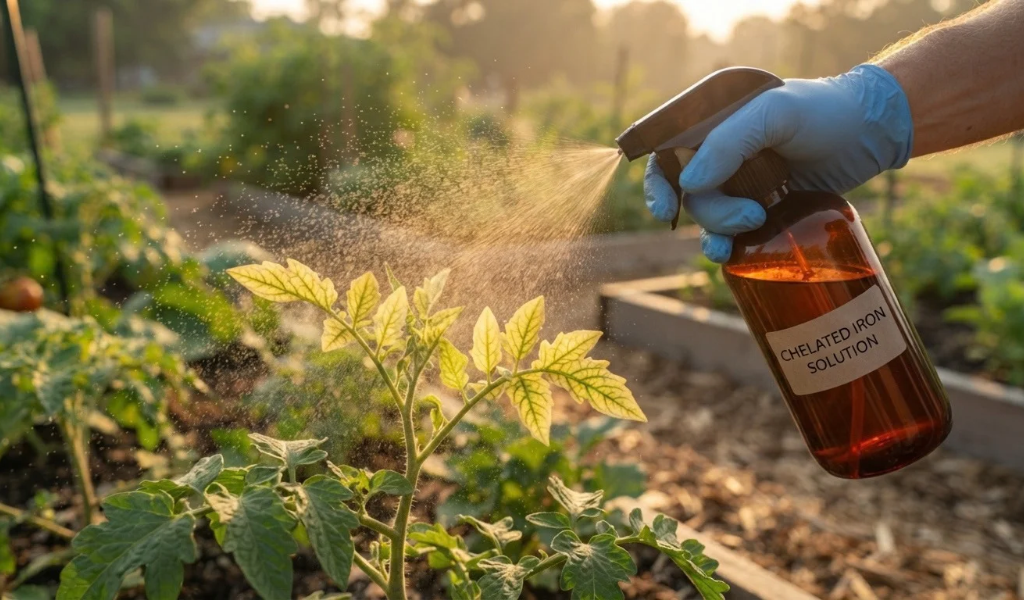
Spray in the early morning or late evening. Midday sun can scorch wet leaves. Cover both sides of the foliage, especially the newest growth. New leaves usually start turning green in five to ten days. Leaves that are already yellow may stay pale, so judge success by the new growth.
For soil treatments, the type of chelate matters. Fe-EDDHA stays stable in high pH soil and is the best choice for alkaline ground. Fe-EDTA and Fe-DTPA suit more neutral conditions. More product is not better, because excess iron can harm roots and upset other nutrients.
Organic Remedies for Iron Deficiency in Tomato Plant
Growers who prefer natural methods have several good options. Compost is the foundation. It improves drainage, feeds soil life, and slowly releases small amounts of iron and other nutrients. Well-rotted manure adds organic acids that help keep iron available.
Elemental sulfur lowers soil pH over time. Soil bacteria convert it to sulfuric acid, so it needs several months to work. Apply it before planting for the best results. Peat moss and pine needle mulch can also help in small beds and pots.
Seaweed extract and kelp meal supply trace minerals, including iron. Liquid kelp works well as a foliar feed and may help plants recover from stress. Some growers also bury a few rusty nails or iron filings near the roots. This is slow and unreliable in alkaline soil because the iron stays locked up. Fixing pH and drainage gives far better results than adding raw metal.
Preventing Iron Deficiency in Tomato Plant in Containers and Garden Beds
Prevention costs less than correction. In containers, start with a quality potting mix that drains well and has a slightly acidic pH. Use pots with drainage holes and never let water collect in the saucer. Choose a fertilizer with balanced numbers rather than a phosphorus heavy blend. If tap water is hard, use rainwater when possible.
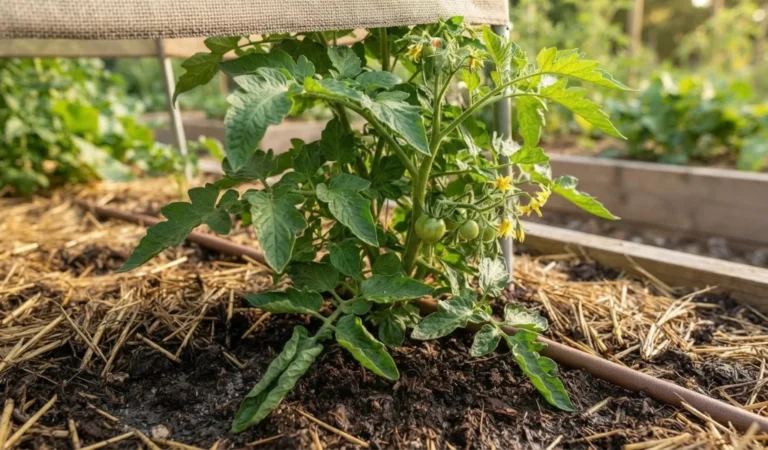
In a garden bed, test pH before planting and adjust early. Mix in compost every season to build structure. Mulch with straw or shredded leaves to keep moisture steady and protect the roots from temperature swings. Water deeply but let the top inch of soil dry between sessions.
Raised beds filled with good soil are a smart answer for gardens with chalky or heavy clay ground. They give full control over pH and drainage. Rotate crops each year, and watch for root pests that can reduce iron uptake. A tomato seedling that starts in healthy, well drained soil rarely shows trouble later.
Effects of Iron Deficiency in Tomato Plant on Fruit Yield and Quality
Iron deficiency in tomato plant growth does more than spoil the look of the leaves. Lower chlorophyll means less photosynthesis, and less photosynthesis means fewer sugars for flowers and fruit. Tomato yield drops because the plant sets fewer fruit and the fruit that does form grows smaller.
Quality suffers too. Fruit from stressed plants can ripen unevenly, taste bland, and have a thinner skin. Weak plants also attract more diseases and pests, so a nutrient problem can lead to a bigger crop loss. Lipid peroxidation in stressed plant cells damages tissue and speeds up decline.
Research in higher plants shows that iron stress changes gene expression and shifts many metabolic pathways. The plant puts its energy into survival responses rather than growth. Vegetable growers who correct the deficiency early usually recover most of the expected harvest. Those who wait often lose a large part of it.
Long-Term Soil Management to Stop Iron Deficiency in Tomato Plant
Lasting control comes from soil care. Start with regular testing, at least once a year, and keep a record of pH readings. This helps spot slow changes before leaves show symptoms. If pH is high, apply elemental sulfur well ahead of planting and retest after a few months.
Build organic matter every season. Compost and aged manure improve root growth, hold moisture, and soften pH swings. Avoid overusing lime or wood ash, which push pH higher. Choose fertilizers carefully. Ammonium sulfate can help lower pH in small amounts, while heavy phosphorus feeding should be avoided.
Manage water with care. Fix drainage problems, avoid compaction, and do not work wet soil. Good Soil for Tomato Plants is loose, rich in organic matter, and slightly acidic. In severe alkaline sites, grow tomatoes in raised beds or large containers with a custom mix. Consistent habits matter more than any single product.
Final Thoughts
Iron deficiency in tomato plant growth is easy to recognize once you know the pattern. Yellow new leaves with green veins point to an iron uptake problem, and the cause is usually high soil pH, poor drainage, or nutrient imbalance. Check the youngest leaves, test the soil, and rule out nitrogen, magnesium, and potassium problems before treating.
For a fast result, use a chelated iron foliar spray and choose Fe-EDDHA for soil in alkaline areas. For lasting results, lower pH, add compost, and keep moisture steady. Start by testing your soil this week. A few small steps now can protect your plants and your harvest all season.
Frequently Asked Questions
How do I give my plants iron naturally?
Add compost, aged manure, and leaf mulch to the soil. Use elemental sulfur to lower pH so existing iron becomes available. Kelp extract can also supply small amounts of iron and other trace minerals.
What is the best vegetable for iron deficiency?
For people, spinach, lentils, and beans are strong iron sources. In a garden, no vegetable cures soil iron problems. Some crops, like blueberries and potatoes, prefer acidic soil, which helps iron stay available nearby.
How can I correct iron deficiency in my plants?
Confirm the cause by testing soil pH. Apply chelated iron to the leaves for a quick response. Then lower pH, improve drainage, and add organic matter so the problem does not return.
What fertilizer is high in iron for plants?
Chelated iron products such as Fe-EDDHA, Fe-EDTA, and Fe-DTPA are the most reliable. Iron sulfate is a cheaper option for acidic or neutral soil. Many micronutrient blends and kelp products also contain iron.
Are iron deficiency in tomato plants harmful?
Yes. It reduces chlorophyll, slows growth, and cuts fruit production. Mild cases cause little lasting damage, but severe or long cases can greatly lower yield and weaken the plant.
Should iron deficiency in tomato plants be treated right away?
Yes. Early treatment protects new growth and prevents flower drop. Waiting allows the plant to lose energy and become more open to pests and disease.
Can iron deficiency in tomato plants be reversed?
In most cases, yes. New leaves usually turn green within one to two weeks after treatment. Old yellow leaves may not recover fully, but healthy new growth shows the fix is working.