Rutgers Tomato Plant: Care, Growing Tips, and Harvest Guide
How to Grow Rutgers Tomato Plants Successfully: From Seed to Harvest Everything You Need to Know
If you have ever bitten into a tomato and thought, “why don’t tomatoes taste like this anymore,” there is a good chance you were eating a Rutgers tomato. The Rutgers tomato plant is one of the most storied vegetables in American gardening history, and it still earns a spot in backyard gardens across the country. This guide walks you through everything from its background to planting, care, and harvest, so you can grow your own patch of this classic Jersey tomato at home.
Before we get into the details, it helps to understand how any tomato plant develops, since the Rutgers variety follows the same basic path. Tomato Growing Stages: How Tomato Plants Grow Step by Step starts with seed germination, moves into seedling growth, then flowering, fruit set, and finally ripening. Knowing this cycle in advance makes it much easier to plan your planting schedule and spot problems early, especially with a heritage variety like Rutgers that rewards a bit of patience.
What Is a Rutgers Tomato Plant (History and Characteristics)
The Rutgers tomato traces back to 1934, when it was released through a partnership between the Rutgers New Jersey Agricultural Experiment Station and the Campbell Soup Company. Plant breeder Lyman Schermerhorn crossed two well known processing tomatoes of the era, JTD and Marglobe, aiming for a fruit that worked equally well for fresh eating and canning. The result was a tomato with firm red flesh, balanced acidity and sweetness, and a texture that held up to cooking without falling apart.
For decades, the Rutgers tomato dominated commercial production. By the early 1950s it accounted for a huge share of tomatoes grown for processing in the United States, and companies like Campbell’s, Hunt’s, and Heinz all leaned on it for their product lines. As farming shifted toward mechanical harvesting and long distance shipping in the mid twentieth century, thinner skinned heirloom types like Rutgers lost ground to tougher hybrids bred for durability rather than flavor.
In 2016, Rutgers University marked its 250th anniversary by reintroducing an updated version of the tomato called Rutgers 250. Researchers worked with Campbell’s, which had preserved original seed stock from JTD and Marglobe in cold storage, to recreate and refine the historic cross. Rutgers 250 tomato seeds kept the classic Jersey tomato flavor while offering firmer skin and slightly improved disease resistance, and they sold out almost immediately once released to home gardeners.
Why Rutgers Is a Popular Tomato Variety
Gardeners keep coming back to Rutgers tomato seeds for a simple reason: flavor. This heirloom variety produces fruit with a rich, old fashioned tomato taste that many people associate with childhood gardens or roadside farm stands. The balance between acid and sugar is what people usually mean when they talk about a true “Jersey tomato,” and Rutgers is often considered the benchmark for that flavor profile.
Beyond taste, Rutgers tomatoes are appreciated for their versatility. The fruit works well whether you plan to slice it for sandwiches, can it for winter sauce, or turn it into a batch of salsa. It also has a reputation for being a fairly reliable performer in the garden, since the original breeding program selected for disease resistance alongside flavor, something not every heirloom variety can claim.
There is also a nostalgia factor. Many home gardeners choose Rutgers because it connects to agricultural history, particularly in New Jersey, where the tomato became a symbol of state pride. Growing Rutgers tomato seeds feels a little like keeping a piece of that history alive in your own backyard.
Rutgers Tomato Plant Growth Habit
Rutgers is generally grown as a determinate tomato plant, meaning it reaches a set height, produces most of its fruit within a shorter window, and then tapers off rather than continuing to grow and set new flowers all season. This growth pattern makes it a good fit for gardeners who want a concentrated harvest for canning, since a large portion of the crop ripens around the same time.
Compared to indeterminate varieties, which keep climbing and producing until frost, a Rutgers tomato plant stays more compact and manageable. Most plants top out around 3 to 4 feet, with sturdy stems and dense foliage that helps shade the developing fruit from sunscald.
Fruit Size, Seed ,Shape, and Flavor
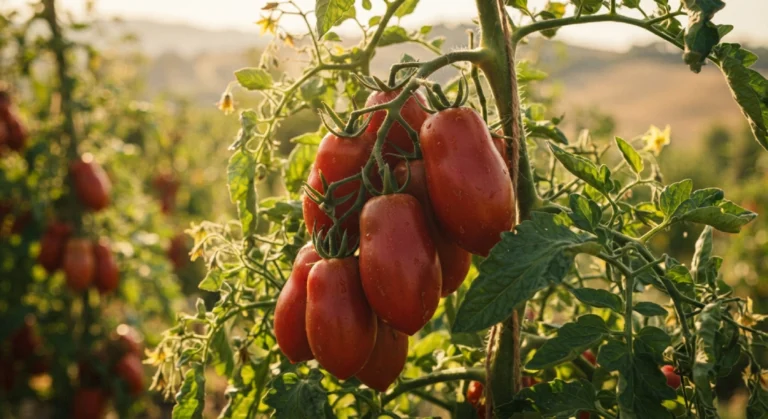
Rutgers tomatoes are medium to large, typically weighing between 6 and 8 ounces, though some fruit can grow larger under good growing conditions. The shape is best described as globe-shaped and slightly flattened, with smooth red skin and few visible seams. Inside, the flesh is meaty with relatively small seed cavities, which is part of why the variety became so popular for canning and sauce making.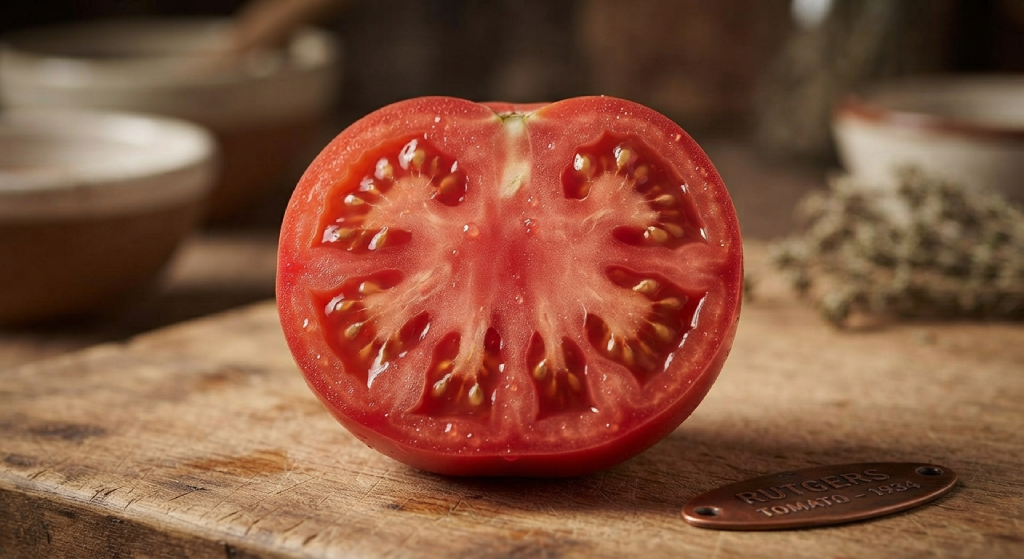
The flavor is what really sets Rutgers apart. It has a classic, well rounded tomato taste with enough acidity to keep it from tasting flat, balanced by natural sweetness that develops as the fruit fully ripens on the vine. Many people compare it directly to what a “real” tomato is supposed to taste like, especially next to the milder, less complex flavor of store bought slicing tomatoes.
How to Plant Rutgers Tomatoes
Getting a Rutgers tomato plant off to a strong start begins well before it ever goes into the garden. Whether you are starting from tomato seeds indoors or picking up seedlings from a local nursery, timing and technique both matter.
Starting Rutgers Tomatoes From Seed
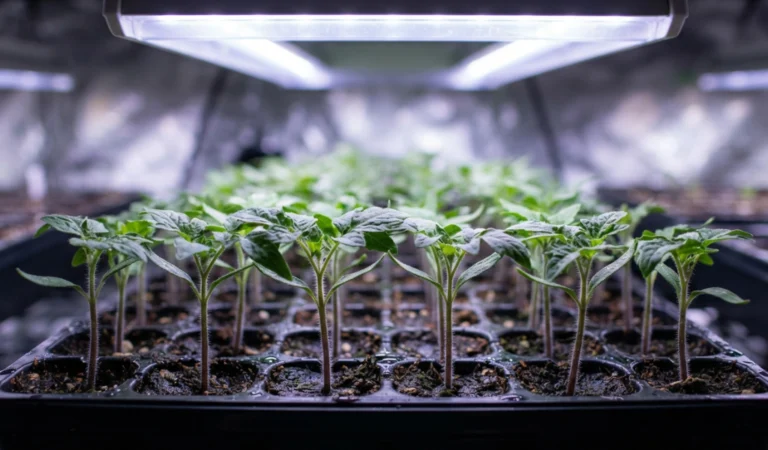
Start Rutgers tomato seeds indoors about 6 to 8 weeks before your last expected frost date. Use small pots or seed trays filled with a light seed starting mix, and plant seeds about a quarter inch deep. Keep the soil evenly moist, not soggy, and maintain a temperature around 70°F for the best germination rate. Under these conditions, seeds typically germinate within 7 to 14 days.
Once seedlings appear, move them to a spot with bright light, either a sunny window or a grow light set close to the plants. Weak light is one of the most common reasons seedlings turn leggy, so don’t skimp on this step.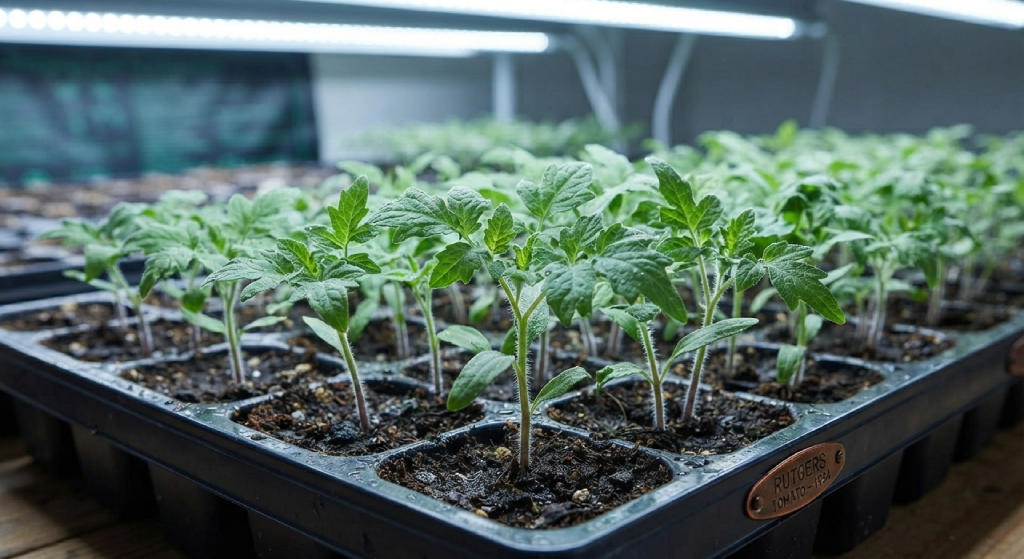 As the young plants grow their first true leaves, thin them out or transplant into larger pots to give the roots room to develop before they head outside.
Transplanting Seedlings
Before moving seedlings into the garden, they need to be hardened off. This means gradually exposing them to outdoor conditions over 7 to 10 days, starting with an hour or two in a sheltered spot and slowly increasing their time outside. Skipping this step often leads to transplant shock, where plants wilt or stall after being moved.
Transplant seedlings once all danger of frost has passed and nighttime temperatures stay reliably above 50°F. Plant them slightly deeper than they were growing in their pots, burying part of the stem, since tomato plants can grow roots along a buried stem, which helps build a stronger root system. Space plants 24 to 36 inches apart, with rows set 36 to 60 inches apart to allow good airflow and room for staking.
Best Growing Conditions for Rutgers Tomatoes
Like most tomato varieties, Rutgers performs best when its basic needs for light, warmth, and soil quality are met consistently through the season.
Sunlight and Temperature
Rutgers tomato plants need full sun, which means at least 6 hours of direct sun each day, and they tend to reward even more than that with heavier fruit set. Choose the sunniest spot available in your yard or garden bed. Tomatoes are warm season annuals, so they thrive once daytime temperatures settle into the 70s and 80s. Cold snaps or lingering frost can seriously set back young plants, which is why timing your transplant date matters so much.
Soil and Drainage
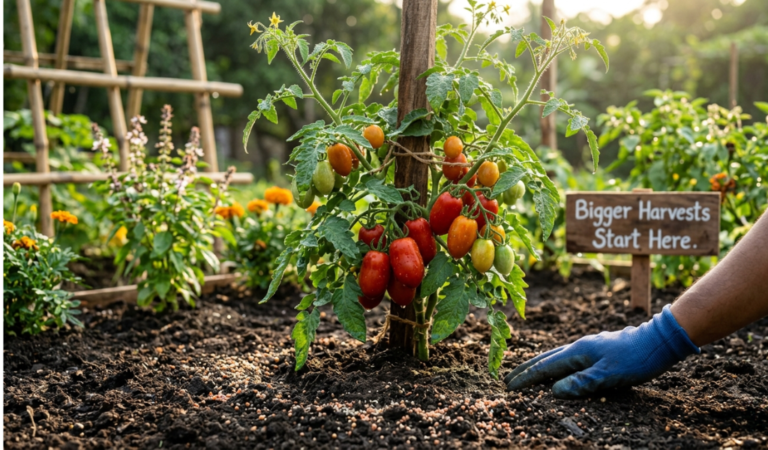
Rutgers tomatoes prefer well-drained soil rich in organic matter. Heavy clay soil that holds water can lead to root rot and other problems, so work in compost or aged manure before planting to improve both drainage and fertility. A soil pH between 6.2 and 6.8 is generally ideal for tomato production.
Some gardeners use black plastic mulch around the base of their plants. It warms the soil earlier in spring, suppresses weeds, and helps retain moisture, all of which benefit a heat loving crop like tomatoes.
Rutgers Tomato Plant Care
Once your Rutgers tomato plant is in the ground, ongoing care makes the difference between a modest harvest and a truly productive one.
Watering
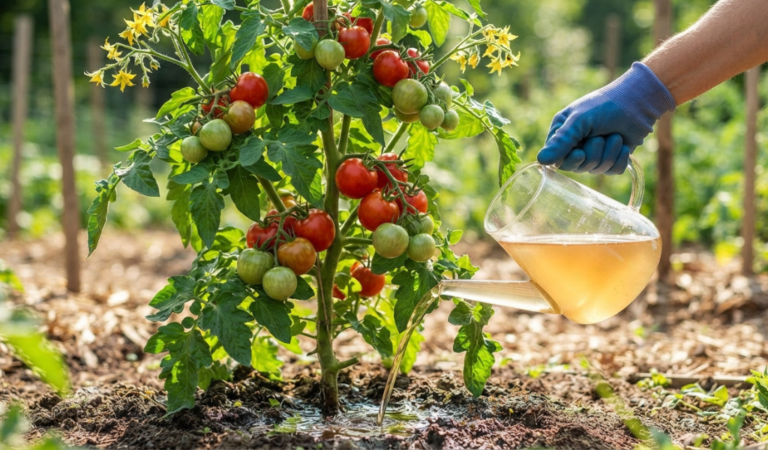
Keep the soil evenly moist throughout the growing season, aiming for about 1 to 2 inches of water per week, adjusting for rainfall and heat. Deep, consistent watering encourages the plant to grow deep roots, which makes it more resilient during dry spells. Uneven watering, where the soil dries out and then gets soaked, is a common cause of blossom end rot and cracked fruit, so try to keep moisture levels steady rather than letting plants swing between drought and flood.
Watering at the base of the plant rather than overhead helps keep foliage dry, which reduces the risk of fungal disease. A layer of mulch around the base also helps the soil retain moisture between waterings.
Fertilizing
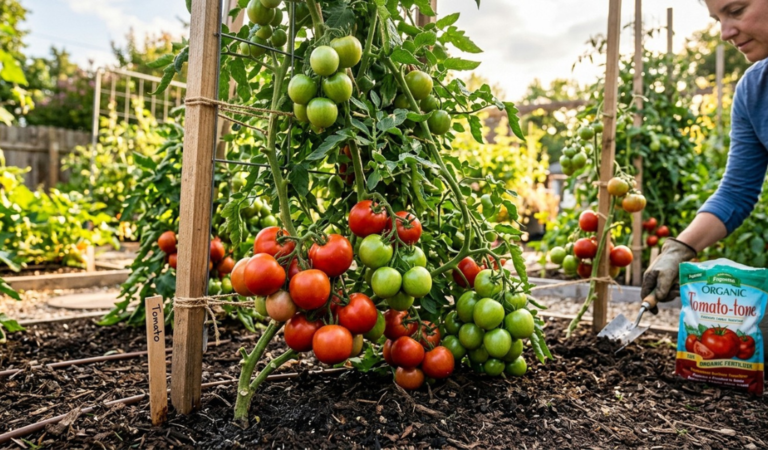
Tomatoes are fairly heavy feeders. Work a balanced fertilizer into the soil at planting time, but be cautious with high nitrogen fertilizer once the plant starts flowering, since too much nitrogen encourages lush foliage at the expense of fruit production. As plants move into their flowering and fruiting stage, switch to a fertilizer with more phosphorus and potassium, which support strong root development, flowering, and fruit set. Calcium is also worth watching, since a deficiency is linked to blossom end rot.
Staking and Support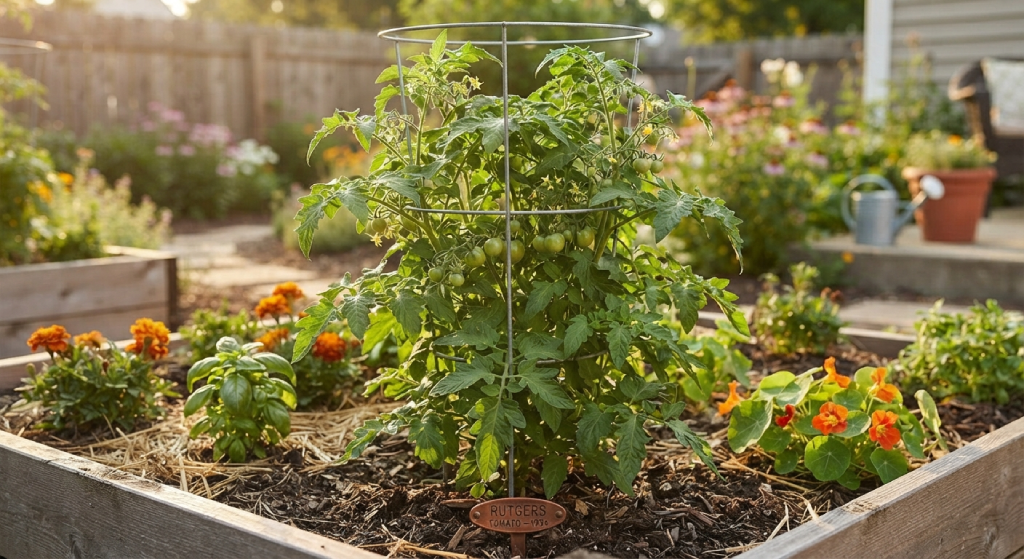
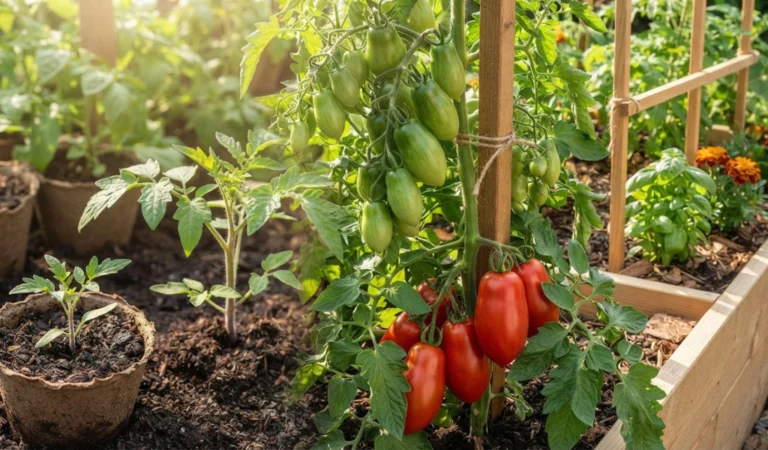
Even though Rutgers is a determinate variety and stays more compact than sprawling indeterminate types, it still benefits from support. A sturdy cage or stake keeps developing fruit off the ground, improves air circulation through the foliage, and makes harvesting easier. Set up your cage or stake at planting time or shortly after, rather than waiting until the plant is heavy with fruit, since disturbing an established root system can stress the plant.
Rutgers Tomato Growing Stages
Understanding how a Rutgers tomato plant develops helps you know what to expect and when to intervene if something looks off. After germination, the plant enters a vegetative growth stage, putting energy into building leaves, stems, and root mass. This typically lasts several weeks after transplanting.
Next comes flowering, when small yellow blossoms appear along the stems. Pollination, often helped along by wind or visiting insects, allows these flowers to develop into small green fruit. From there, the fruit gradually increases in size before beginning to change color, moving from green to a lighter shade and eventually to the deep scarlet red that signals full ripeness.
For Rutgers tomato seeds, days to maturity usually falls somewhere between 70 and 80 days from transplant, depending on growing conditions. Because it is a determinate variety, a large share of the crop tends to ripen within a fairly compact window, which is convenient if you are planning a big canning session but means you should be ready to harvest and process fruit in batches rather than trickling in a few tomatoes at a time all summer.
Common Rutgers Tomato Plant Problems Gardener should know
Even a variety bred partly for resilience can run into trouble. Early blight is one of the more frequent issues, showing up as dark spots with concentric rings on lower leaves, which can spread upward if left unchecked. Good airflow, mulching, and avoiding overhead watering all help reduce the risk. Fusarium wilt is another disease to watch for, though the original Rutgers breeding program did select for resistance to several common tomato diseases, giving it an edge over some other heirlooms.
Pest pressure can also affect a tomato crop. Common culprits include aphids, hornworms, and whiteflies, all of which can be managed with regular inspection and, when needed, row covers or targeted treatments. Blossom end rot, that sunken dark patch on the bottom of the fruit, usually points to inconsistent watering or a calcium shortage rather than a pest or disease, so adjusting your watering routine is often the fix.
Weed competition is worth mentioning too. Weeds compete with tomato plants for water, nutrients, and light, so keeping the bed weeded, especially early in the season, gives your Rutgers tomato plant a better shot at strong growth.
When and How to Harvest Rutgers Tomato
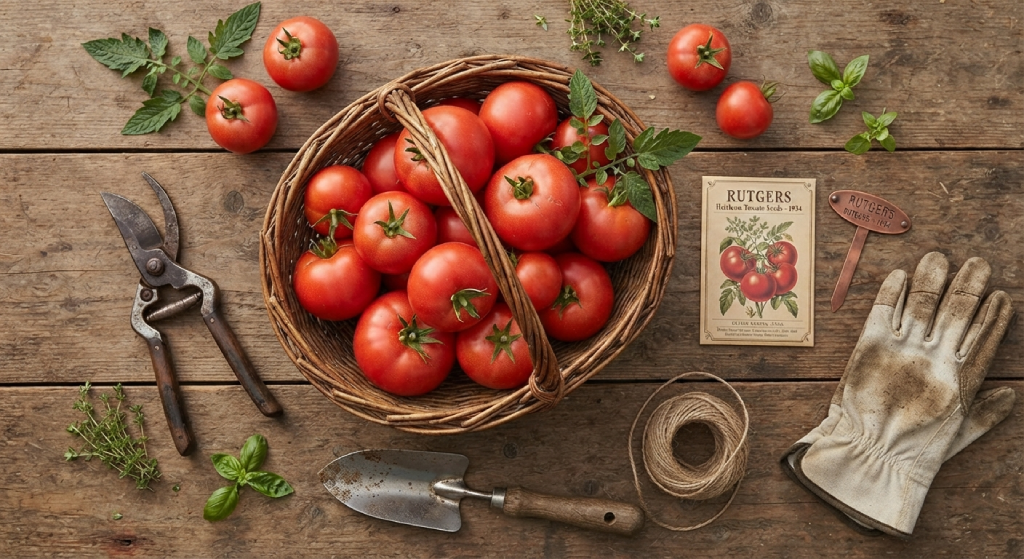
Harvest Rutgers tomatoes once they reach a deep, even red color and give slightly when gently squeezed. Fruit picked too early won’t develop its full flavor, while fruit left too long on the vine can become soft or attract pests. Use pruning shears or twist gently at the stem to avoid damaging the plant or nearby fruit.
If a hard frost is approaching and you still have green fruit on the vine, you can pick them and let them ripen indoors on a windowsill, though the flavor won’t quite match fruit that ripened naturally in the sun. Once harvested, Rutgers tomatoes are excellent fresh in salads and sandwiches, sliced for a classic BLT, or canned and turned into sauce for the months ahead, carrying on the same purpose this variety was originally bred for back in 1934.
Final Thoughts
Growing a Rutgers tomato plant is really about connecting with a piece of agricultural history while enjoying one of the best tasting tomatoes you can put on your table. From its roots as a Campbell Soup and Rutgers University collaboration to its modern revival as Rutgers 250, this heirloom variety has earned its reputation the honest way, through flavor that has kept gardeners coming back for generations. With full sun, well-drained soil, steady watering, and a bit of staking support, a Rutgers tomato plant can reward you with a generous harvest of classic, richly flavored fruit. If you have never grown it before, this season is a good time to give Rutgers tomato seeds a try in your own garden.
Frequently Asked Questions
Is the Rutgers tomato an heirloom variety?
Yes. Rutgers is considered a classic heirloom, open-pollinated tomato first released in 1934. Because it is open-pollinated, you can save seeds from mature fruit and grow true to type the following season.
Is Rutgers a determinate or indeterminate tomato?
Rutgers is typically grown as a determinate variety, meaning it reaches a set size and produces most of its fruit within a shorter window, unlike indeterminate varieties that keep growing and fruiting until frost.
How long does it take for a Rutgers tomato plant to produce fruit?
Most Rutgers tomato plants reach maturity in about 70 to 80 days from transplant, though this can vary slightly depending on weather and growing conditions.
What is the difference between Rutgers and Rutgers 250 tomatoes?
The original Rutgers tomato dates to 1934, while Rutgers 250 is a 2016 re-creation developed to mark Rutgers University’s 250th anniversary. Rutgers 250 aims to preserve the classic Jersey tomato flavor while offering firmer skin and improved fruit quality.
Do Rutgers tomatoes need to be staked?
While the plant stays fairly compact as a determinate variety, staking or caging is still recommended. It keeps fruit off the soil, improves airflow, and makes harvesting easier.
Can I grow Rutgers tomatoes in containers?
Yes, Rutgers tomatoes can be grown in large containers, ideally at least 5 gallons in size, as long as the pot has good drainage and the plant gets full sun. Container grown tomatoes may need more frequent watering than those in garden beds.
What can I plant alongside Rutgers tomatoes?
Basil is a popular companion plant for tomatoes and is often said to improve flavor and help repel certain pests. Other compatible companions include eggplant and pepper plants, which share similar sunlight, soil, and watering needs. Avoid planting near members of the cabbage family or turnip, which can compete for nutrients and attract different pest issues.