Magnesium Deficiency in Pepper Plants: Complete Guide to Symptoms and Solutions
Magnesium Deficiency in Pepper Plants: Complete Guide
If your pepper leaves are turning yellow but the veins stay green, you’re probably dealing with magnesium deficiency in pepper plants. This common nutrient deficiency affects everything from seedling to mature plant, and if left untreated, it can hurt fruit production and overall plant health. The good news? Once you know what to look for, magnesium deficiency is one of the easier problems to fix in the garden.
This guide walks you through everything you need to know about magnesium deficiency in pepper plants, from the early warning signs to the exact steps for fixing and preventing it. Whether you’re growing bell peppers, jalapenos, or a hot variety for your next batch of salsa, understanding how magnesium affects your plants will help you grow healthier peppers and bigger harvests.
What Is Magnesium Deficiency in Pepper Plants?
Magnesium deficiency happens when a pepper plant can’t access enough magnesium from the soil to support normal growth. Magnesium is a secondary macronutrient, which means plants need smaller amounts of it compared to nitrogen, phosphorus, and potassium, but it’s still essential. Without enough of it, pepper plants struggle to produce chlorophyll, slow down photosynthesis, and eventually show visible stress in their leaves.
Unlike some nutrient problems that show up fast and dramatic, magnesium deficiency tends to creep in slowly. A gardener might notice a few yellow patches on lower leaves and assume it’s just normal aging. But if left unaddressed, the deficiency spreads, weakens the plant, and reduces how much fruit it can produce.
Why Peppers Need Magnesium
Peppers are fairly heavy feeders, and magnesium plays a central role in their development. It’s a core component of chlorophyll, the pigment that gives leaves their green color and allows plants to convert sunlight into energy. Without enough magnesium, a pepper plant simply can’t photosynthesize efficiently, no matter how much sunlight or water it gets.
Magnesium also helps activate enzymes involved in energy transfer, protein synthesis, and the uptake of other nutrients like phosphorus. In short, it’s a nutrient that supports the entire plant guide to healthy growth, not just leaf color. A plant lacking magnesium might still survive, but it won’t thrive, and the fruit it produces will likely be smaller or fewer in number.
How Magnesium Supports Plant Growth
Beyond chlorophyll production, magnesium helps regulate how a pepper plant uses water and transports sugars from the leaves to the fruit. This matters a lot during the fruiting stage, when the plant needs to move energy efficiently from where it’s made (the leaves) to where it’s needed (the developing peppers).
Magnesium also supports root development, which affects how well a plant can draw up other nutrients from the soil. A pepper plant with strong magnesium levels tends to have deeper green leaves, stronger stems, and better resistance to common garden stressors like heat and inconsistent watering. When magnesium runs low, all of these functions suffer, and you’ll start to see it in the leaves first.
Symptoms of Magnesium Deficiency
Catching magnesium deficiency early makes it much easier to treat. The most common visual symptom is a distinct yellowing pattern that’s different from the way leaves naturally age or react to other nutrient deficiencies. Learning to recognize this pattern is the first step toward fixing the problem before it spreads through the whole plant.
Yellow Leaves Between the Veins
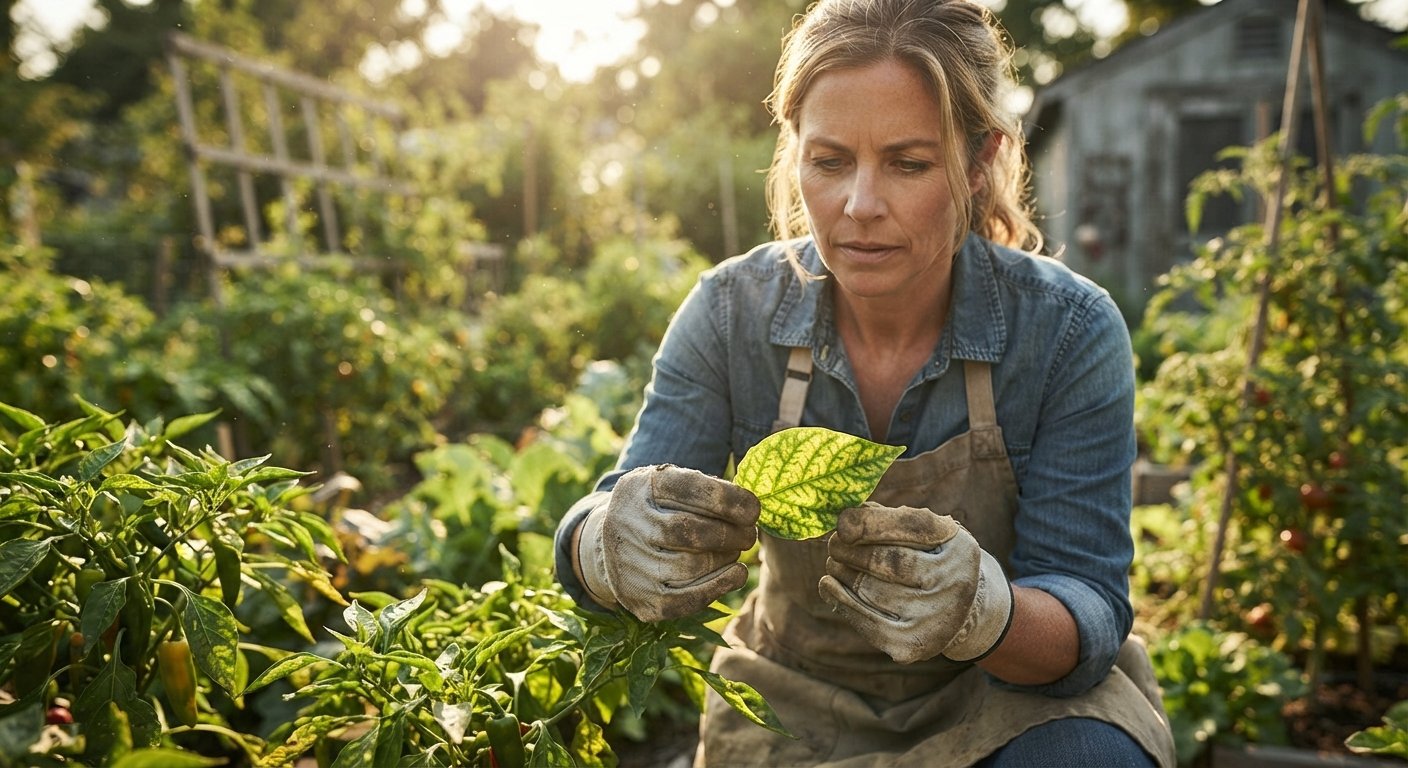
The telltale sign of magnesium deficiency is interveinal chlorosis, which is a fancy way of saying the tissue between the leaf veins turns yellow while the veins themselves stay green. This creates a distinctive marbled or mottled look on the leaf. It’s one of the easiest nutrient deficiencies to identify once you know what to look for, because the pattern is so specific.
As the deficiency progresses, the yellowing can spread until most of the leaf is pale, with only the veins holding onto their green color. In more severe cases, the leaf edges may start to curl or turn brown, and the plant will eventually defoliate if the issue isn’t corrected. Dropped leaves mean less photosynthesis, which directly impacts fruit production.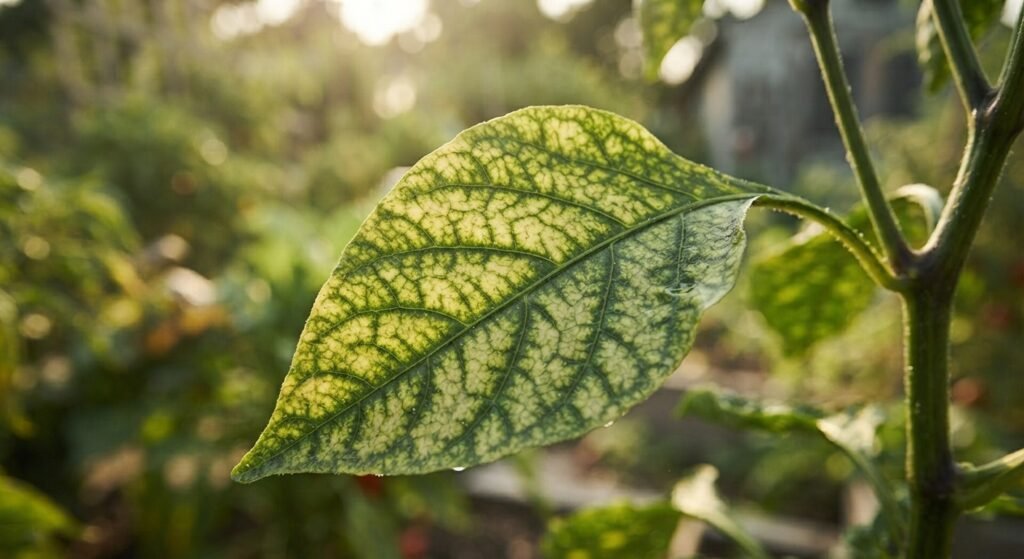
Older Leaves Showing Symptoms First
Magnesium is a mobile nutrient, meaning the plant can move it from older leaves to newer growth when supplies run short. This is why magnesium deficiency shows up on the lower, older leaves first while the newer leaves at the top of the plant often stay green and healthy for longer.
If you’re inspecting your pepper plants, always start at the bottom and work your way up. Seeing yellowing concentrated on older leaves, especially with the veins still green, is a strong indicator of magnesium deficiency rather than a different nutrient problem. This pattern also helps distinguish it from diseases or pest damage, which tend to appear more randomly across the plant rather than following an age-based pattern.
Magnesium Deficiency vs. Other Nutrient Problems
It’s easy to confuse magnesium deficiency with other nutrient deficiencies, since several of them cause yellowing leaves. The key is paying attention to where the yellowing appears and what pattern it follows.
Nitrogen deficiency also causes yellowing, but it affects the entire leaf, including the veins, rather than leaving them green. It also tends to show up on older leaves first, similar to magnesium deficiency, which is why the two are sometimes mixed up. The difference comes down to the veins: green veins with yellow surrounding tissue points to magnesium, while uniform yellowing across the whole leaf points to nitrogen.
Iron deficiency, on the other hand, also causes interveinal chlorosis, but it typically shows up on new growth at the top of the plant instead of older leaves, since iron isn’t mobile within the plant the way magnesium is. Calcium deficiency often shows up differently altogether, commonly as blossom end rot on the fruit itself rather than yellowing leaves.
A low pH soil can make several of these deficiencies worse at once, since nutrient availability is closely tied to soil chemistry. If your garden soil tests below the ideal range for peppers, it’s worth correcting the pH alongside any nutrient treatment, since magnesium and other minerals become harder for roots to absorb in overly acidic conditions.
Causes Behind Magnesium Deficiency
There are several reasons pepper plants end up short on magnesium, and most of them trace back to either the soil itself or how water moves through it.
Sandy soils are one of the most common culprits because they drain quickly and don’t hold onto nutrients well. Heavy rainfall or frequent watering can cause magnesium to leach out of the root zone before the plant has a chance to absorb it. Gardens with naturally low magnesium content in their native soil are also prone to deficiency, especially if they haven’t been amended in a while.
Low soil pH is another major factor. When soil becomes too acidic, magnesium becomes less available to plant roots, even if there’s technically enough magnesium present in the ground. This is a common issue in a mature organic garden that hasn’t had its pH tested in several seasons, since organic matter can gradually acidify soil over time.
Potassium or calcium overload can also trigger magnesium deficiency. These three nutrients compete for uptake by plant roots, so if there’s too much potassium or calcium in the soil, the pepper plant may struggle to take in enough magnesium even when supplies are adequate. This is sometimes seen in gardens that have been heavily fertilized with potassium-rich products without balancing out the other nutrients.
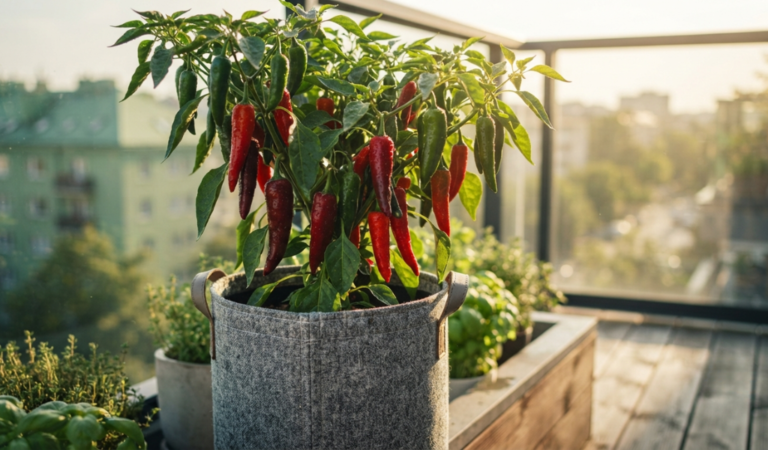
Container-grown peppers are also at higher risk, since potting soil has a limited nutrient reserve and frequent watering can wash magnesium out of the container faster than it would leach from garden ground.
How to Fix Magnesium Deficiency
The most effective and widely used treatment for magnesium deficiency in pepper plants is Epsom salt, which is made of magnesium sulphate. It’s affordable, easy to find, and works quickly compared to other soil amendments.
To treat an existing deficiency, dissolve about 1 tablespoon of Epsom salts per gallon of water and apply it as a soil drench around the base of the plant. This allows the magnesium to reach the root zone where it can be absorbed directly. Many gardeners repeat this application every two to three weeks during the growing season if symptoms persist, though you should watch the plant’s response before reapplying too often.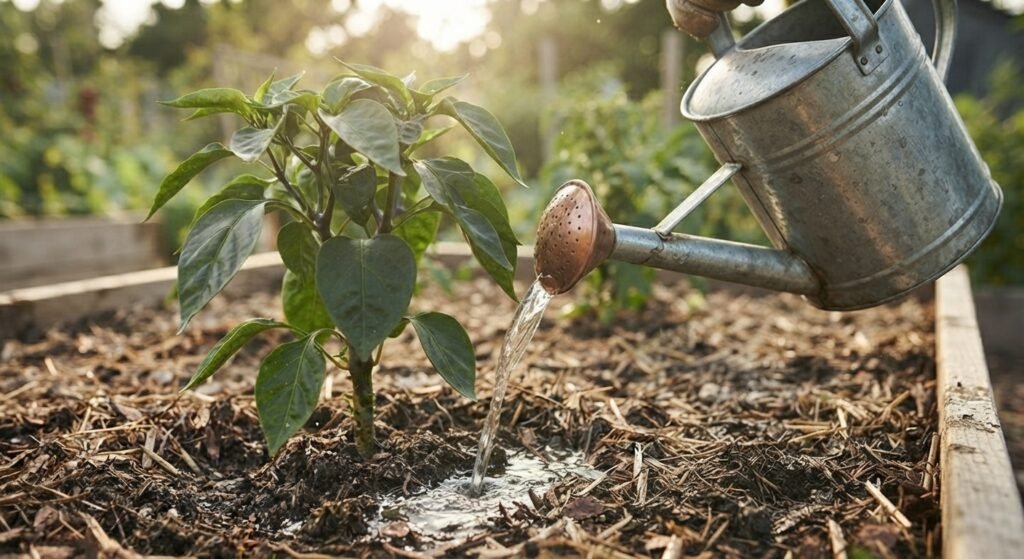
For a foliar approach, mix 1 tablespoon of Epsom salts per gallon of water and spray it directly onto the leaves. Foliar feeding allows the plant to absorb magnesium faster through its leaf surface, which can be useful if you need to see results quickly during fruiting season.
If you prefer a longer-term soil amendment rather than a quick fix, calcium magnesium carbonate, often sold as dolomitic lime, can raise both magnesium levels and soil pH at the same time. This is especially useful if a soil test shows your garden is both low in magnesium and overly acidic. Just keep in mind that dolomitic lime works slowly, so it’s better suited for preventing future problems than solving an active deficiency right away.
When applying any magnesium treatment, it helps to know your garden’s scale. A general guideline for granular magnesium sulphate application is around 1 to 2 pounds spread evenly every 100 square feet of garden bed. Always water it in well after application so the salt can dissolve and move into the root zone rather than sitting on the surface.
How to Prevent Future Deficiency
Once you’ve corrected an active deficiency, the next goal is making sure it doesn’t come back. Prevention starts with understanding your soil. Getting a soil test done before the last frost date each season gives you a clear picture of your magnesium, pH, and overall nutrient levels before you even put seedlings in the ground. This is far more reliable than guessing based on symptoms after the fact.
If your soil test shows low magnesium, working in compost or a balanced organic fertilizer ahead of planting season can help build up nutrient reserves naturally. Compost also improves soil structure, which reduces how quickly nutrients leach out, especially in sandy or fast-draining ground.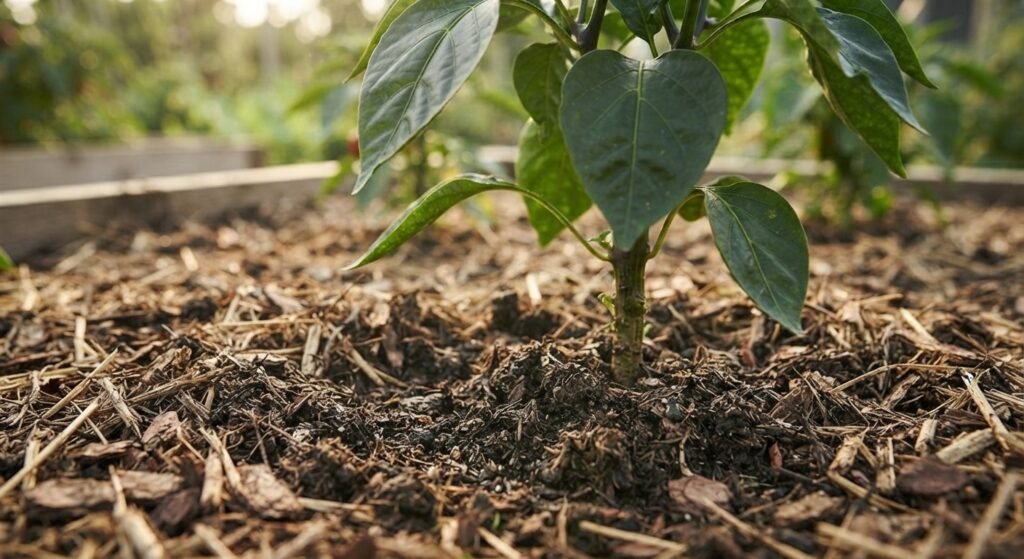
Watering consistency matters too. Peppers prefer evenly moist soil rather than alternating between soggy and bone dry. Overwatering is one of the biggest contributors to nutrient leaching, including magnesium, so using mulch around the base of your plants can help regulate moisture and reduce how often you need to water.
Spacing also plays a quiet but important role. Pepper plants, whether you’re growing a compact jalapeno or a larger bell variety, should generally be spaced with at least 6 inches of room around the root zone, though many varieties do best with even more space as they mature. Crowded plants compete for the same limited nutrients, which can accelerate deficiencies even in otherwise healthy soil.
For gardeners tracking planting and harvest timing, it’s worth noting your local LFD (last frost date) and FFD (first frost date), since these dates affect how long your peppers have to grow and ripen before cold weather sets in. Healthier, well-fed plants ripen fruit more reliably within that window, going from green to red without the stress that triggers nutrient problems in the first place.
Finally, rotate your pepper beds every season if possible. Planting peppers in the same ground year after year depletes specific nutrients, including magnesium, faster than rotating with other crops. If rotation isn’t possible in a small garden, amending the soil generously between seasons helps replenish what previous plants used up.
Growing Healthier Pepper Plants From Seed to Harvest
Magnesium deficiency in pepper plants is common, but it’s also one of the more manageable problems you’ll encounter in the garden. The key is catching it early by checking your older leaves for that telltale yellowing between the veins, then responding with a quick Epsom salt treatment to correct the imbalance. From there, building better soil health through compost, proper pH, consistent watering, and good spacing will keep the problem from returning.
Whether you’re growing sweet bell peppers, a mild jalapeno, or a fiery hot variety, healthy magnesium levels support stronger leaves, better fruit development, and a more productive harvest overall. Keep an eye on your plants throughout the season, test your soil when you can, and don’t be afraid to adjust your care routine based on what the leaves are telling you. A little attention now saves you a lot of reduced yield later.
Frequently Asked Questions
How quickly does Epsom salt fix magnesium deficiency in pepper plants?
Most gardeners notice improvement within one to two weeks of applying an Epsom salt soil drench or foliar spray. New leaf growth typically shows the first signs of recovery, while already-yellowed leaves may not fully reverse but will stop declining further.
Can magnesium deficiency affect pepper fruit production?
Yes. Since magnesium supports photosynthesis and energy transport within the plant, a deficiency can lead to smaller fruit, fewer peppers per plant, and slower ripening. Correcting the deficiency early helps protect your overall yield.
Is Epsom salt safe to use on all pepper varieties?
Epsom salt is generally safe across pepper varieties, from mild bell peppers to hot capsicum types. Just avoid overapplying, since excess magnesium can throw off the balance with other nutrients like calcium and potassium.
How do I know if it’s magnesium deficiency and not just old leaves naturally yellowing?
Natural leaf aging usually causes uniform yellowing or browning across the whole leaf, including the veins. Magnesium deficiency specifically leaves the veins green while the surrounding tissue turns yellow, creating a mottled pattern that’s easy to spot once you know what to look for.
Does soil pH really affect magnesium availability?
Yes, significantly. Low pH soil makes it harder for pepper plant roots to absorb magnesium even when it’s present in the ground. Testing and correcting your soil pH is often just as important as adding magnesium directly.
Can container-grown pepper plants get magnesium deficiency too?
Container plants are actually more prone to magnesium deficiency, since potting soil has limited nutrient reserves and frequent watering can wash magnesium out faster than it would in garden ground. Regular feeding with a balanced fertilizer helps prevent this.
How often should I apply magnesium sulphate to prevent deficiency?
For prevention, many gardeners apply a diluted Epsom salt solution once a month during the growing season. If you’re correcting an active deficiency, applying every two to three weeks is more common until symptoms clear up, after which you can scale back to a maintenance schedule.