Tomato Leaf Roll Treatment: Easy Ways to Prevent Tomato Leaf Curl
Tomato Leaf Roll Treatment: Stop Tomato Leaves From Curling
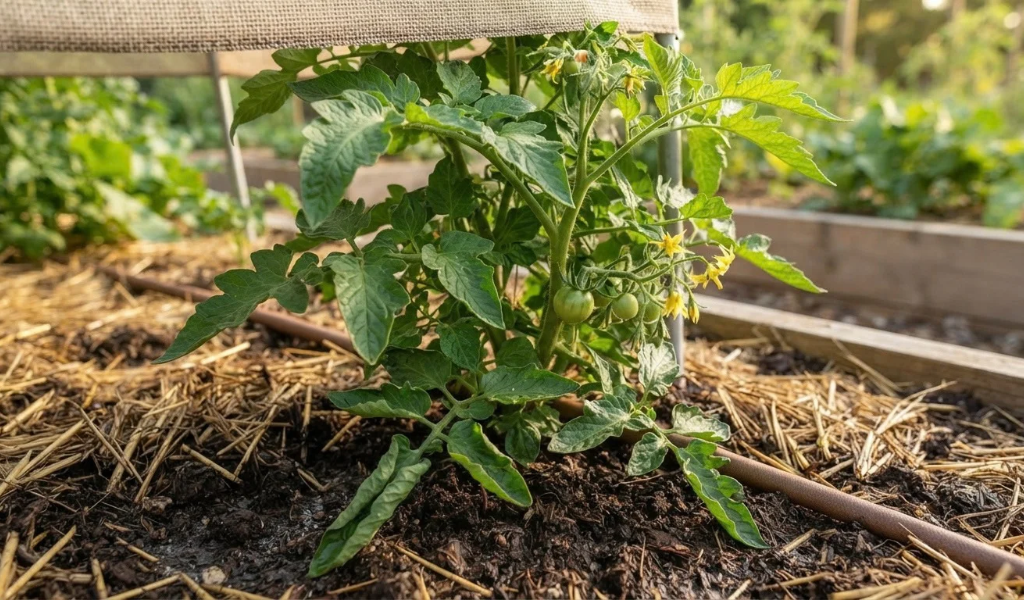
Tomato Leaf Roll Treatment begins with a calm look at the plant, not a rush to the garden store. Picture a gardener named Dana who walks out one hot July morning and finds every leaf on her best tomato plant folded inward like a taco. She panics, grabs a spray, and makes things worse. The truth is that tomato leaf curl has many causes, and most of them are easy to fix once you know what you are dealing with. Healthy roots, steady moisture, and good soil for tomato plants go a long way toward keeping foliage flat and healthy. Tomato Leaf Roll Treatment starts by identifying whether heat, watering stress, pests, disease, or other growing conditions are causing the leaves to curl. Once you know the cause, you can choose the right solution instead of treating the wrong problem.
In this guide, you will learn how to read the clues, match each cause to the right fix, and build a simple routine so the problem does not come back. With the right Tomato Leaf Roll Treatment, curled leaves can often be managed before the plant’s growth and fruit production suffer.
Why Are My Tomato Leaves Curling? Spotting the Real Cause First
The best Tomato Leaf Roll Treatment is the one that matches the cause. Treat the wrong problem and you waste money while the plant keeps struggling. So before you do anything, slow down and play detective for ten minutes.
Look at Where the Curl Starts
Start with the pattern. If the older leaves at the bottom of the plant curl first, the cause is often water, heat, or pruning stress. If the new growth at the top is twisted, small, and yellow, think pests or a virus. If the whole plant shows the same curl overnight, think weather or a chemical that drifted in. The location of the curl tells you more than the curl itself.
Check Your Recent Routine
Next, look back over the last two weeks. Did you change your watering schedule, add fertilizer, prune heavily, or transplant a seedling? Did a heat wave roll through? Did a neighbor spray a lawn or weeds nearby? Gardeners often find the answer in a simple calendar check. Write down what changed, then match it against the sections below.
Physiological Leaf Roll vs. Disease-Related Leaf Curl
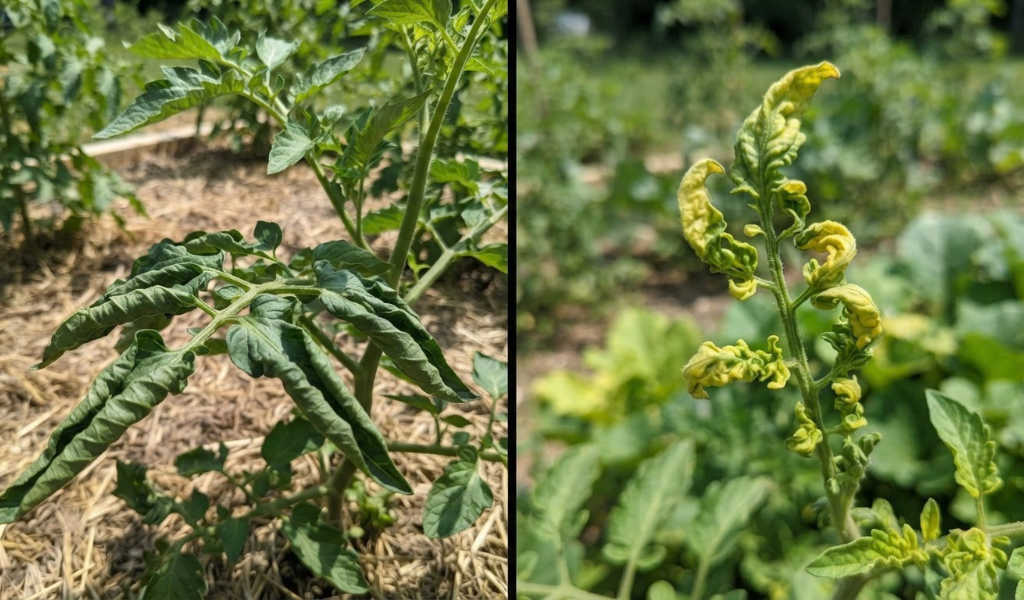
Not every curled leaf means trouble. Physiological leaf roll is a stress response and not an infection. The plant rolls its leaves to protect itself, mostly to cut down on water loss. The leaves tend to roll upward along the edges, feel thick or leathery, and stay green. The plant usually keeps flowering and setting fruit.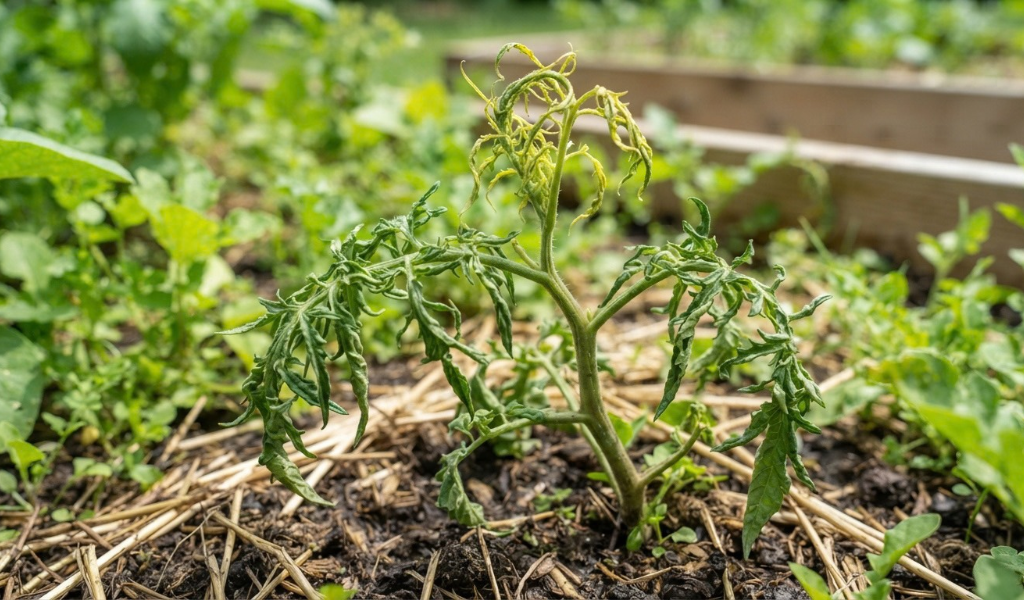
Disease-related leaf curl looks different. Leaves often turn yellow, shrink, and crinkle, and the plant may show stunted growth. New leaves come in small and cupped. Fruit set drops or stops. This is the pattern that points toward a virus such as Tomato Yellow Leaf Curl Virus, often shortened to TYLCV.
Here is a quick rule. Green, thick, rolled leaves on an otherwise active plant usually mean physiological leaf curl, which needs a gentle Tomato Leaf Roll Treatment based on better care. Yellow, small, twisted new growth with poor plant growth is a red flag for infection. When you are unsure, wait a week while you correct watering and shade. If the plant bounces back, you had a stress issue. If the new leaves keep coming in worse, a pest or virus is more likely.
Tomato Leaf Roll Treatment for Heat, Wind, and Water Stress
Tomatoes love sun, but they have limits. When daytime temperatures stay above 90°F, leaves roll inward to reduce the surface area exposed to the sun. This cuts down on transpiration, which is the loss of water vapor through the leaf. It is a clever trick, and it is harmless in most cases.
For heat stress, the Tomato Leaf Roll Treatment is shade and steady moisture. Hang a 30 percent shade cloth over your plants during the hottest part of the afternoon. Add three to four inches of mulch around the base to keep roots cool. Water deeply in the early morning so the plant has a full tank before the heat hits.
Wind causes a similar reaction. Strong, dry gusts pull moisture out of the leaves faster than roots can replace it. A simple windbreak made from burlap, a fence panel, or a row of tall flowers can calm things down. Dana tried this with a few stakes and a piece of garden fabric, and her leaves relaxed within days.
Do not panic and cut off the curled leaves. They are working hard to protect the plant. Fix the conditions and let the plant sort itself out.
Overwatering and Underwatering: The Hidden Triggers Behind Rolled Tomato Leaves
Water is the most common cause of curled tomato leaves, and it works in both directions. Too little water makes leaves curl as the plant tries to save moisture. Too much water drowns roots, which then cannot take up water or oxygen, so the leaves curl as if the plant were thirsty. That is why overwatered plants fool so many gardeners.
To check, push your finger two inches into the soil. If it is bone dry, water slowly and deeply. If it is soggy and smells sour, stop watering and let the bed dry out. Poor drainage can lead to root rot, and soggy soil also raises the risk of blossom end rot on the fruit.
This is where Good Soil for Tomato Plants earns its reputation again. A mix of garden soil, compost, and a little coarse sand drains well and still holds enough moisture. Containers need drainage holes and a quality potting mix. Aim for about one to two inches of water per week, spread across two or three deep waterings. Consistency matters more than volume. Swinging between drought and flood is exactly what pushes leaves to curl and fruit to crack.
Herbicide Drift and Chemical Damage: A Tomato Leaf Roll Treatment Guide
Tomatoes are very sensitive to weed killers. Even a tiny amount of herbicide drift from a neighbor’s lawn spray can make leaves twist, cup, and curl downward. The new growth often looks stringy or distorted, and stems may bend in odd directions. Products that contain 2,4-D, dicamba, or glyphosate are common culprits.
Ask yourself one simple question. Did anyone spray a lawn or field nearby in the past few weeks? Drift can travel on a breezy day, and vapors can move even further in hot weather. Contaminated compost, mulch, or grass clippings can also carry herbicide residue into your bed.
The honest Tomato Leaf Roll Treatment here is patience. Rinse the leaves with plain water as soon as you suspect drift, since this can wash off some of the chemical. Keep the plant watered and fed with balanced fertilizer. Remove the worst of the distorted growth only if it looks dead. Many plants outgrow mild damage and produce normal leaves higher up, though the fruit that sets during the stress may be odd. If the damage is severe, replant. In the future, keep tools and sprayers used for weeds completely separate from your garden, and test any compost by sprouting a few beans in it first.
How to Treat Leaf Roll Caused by Pests Like Aphids, Whiteflies, and Broad Mites
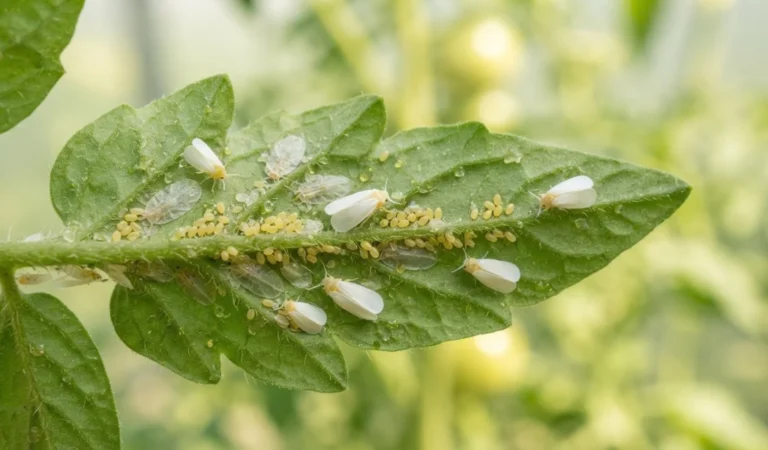
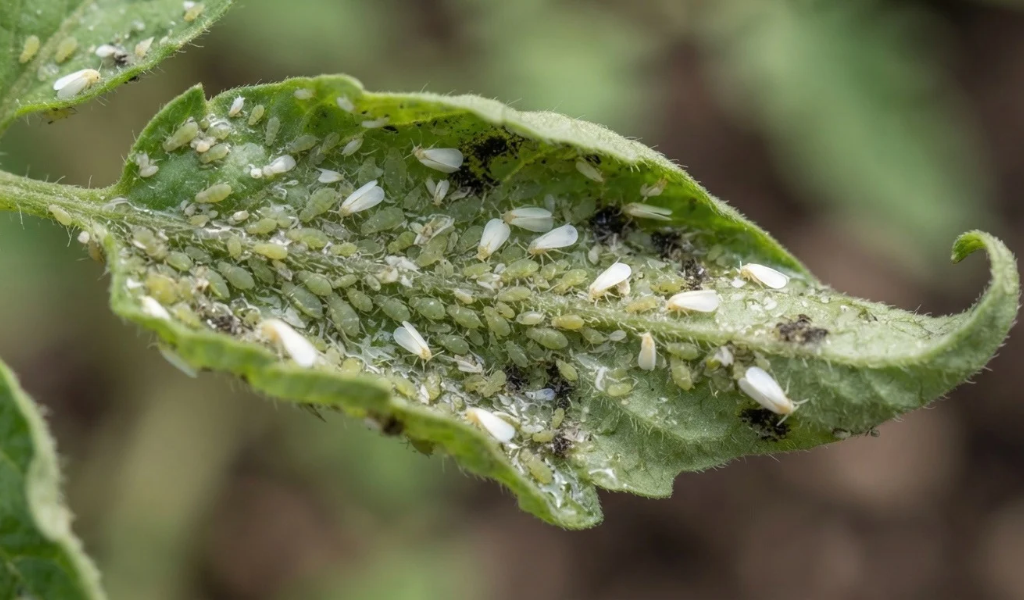 Tiny pests can cause big curling. Aphids suck sap from tender new growth, and the leaves curl and become sticky with honeydew. Whiteflies cluster on the underside of leaves and fly up in a cloud when you shake the plant. Broad mites are even harder to see, but they leave new leaves hard, shiny, narrow, and curled downward.
Flip a few leaves over and look closely. A cheap hand lens helps a lot. If you see small insects, sticky residue, or sooty black mold, you have found your suspect.
Start the Tomato Leaf Roll Treatment with a strong spray of water to knock aphids loose. Follow with insecticidal soap or neem oil, and spray in the evening so the leaves do not burn in the sun. Cover the undersides of the leaves, because that is where pests hide. Repeat every five to seven days for three rounds. Yellow sticky traps help catch adult whiteflies. For broad mites, a miticide or sulfur-based product may be needed, and heavily infested plants are often best removed.
Whiteflies matter for another reason. They spread viruses, which brings us to the next problem.
Viral Culprits: Tomato Yellow Leaf Curl Virus and What You Can Do About It
Tomato Yellow Leaf Curl Virus is one of the most serious causes of tomato leaf curl in warm regions. Whiteflies carry it from plant to plant as they feed. Infected plants show upward curling leaves with yellow edges, leaf crinkling, and a bushy, stunted look. Flowers often drop, and fruit production falls sharply. Young plants infected early may never produce anything useful.
Other viruses can look similar. Tomato mosaic virus creates mottled light and dark green patches and fern-like leaves. Curly top virus, spread by leafhoppers, causes thick, leathery, rolled leaves with a purple tint on the veins. Because symptoms overlap, a local extension office can confirm what you have. Many offer low-cost plant diagnosis if you bring in a sample.
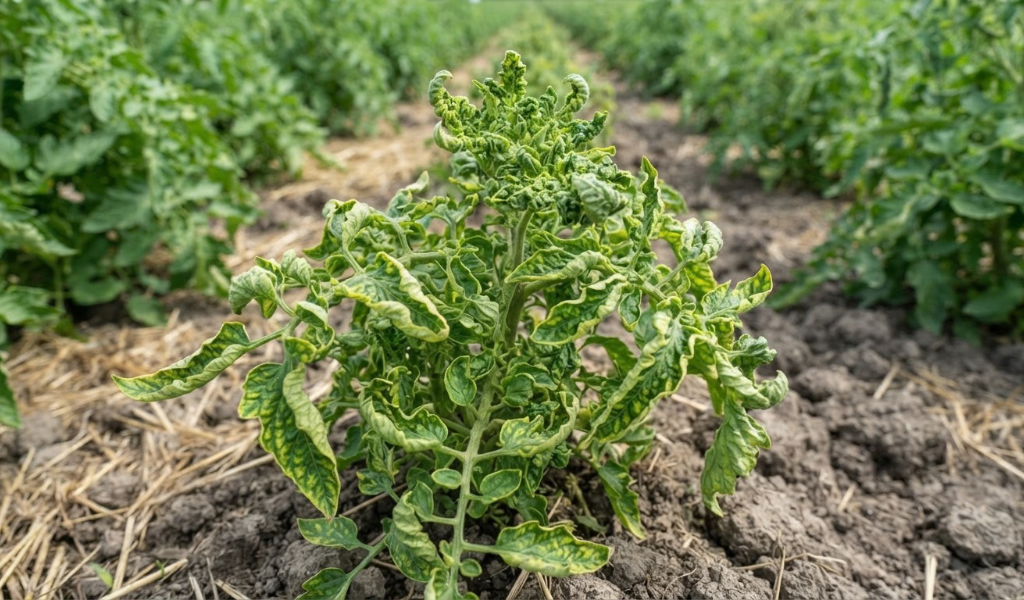 There is no spray that cures a virus, so the real Tomato Leaf Roll Treatment here is prevention. Buy resistant tomato varieties, which are often labeled with the letters TYLCV or “Ty” on the seed packet or plant tag. Use insect netting or row covers on young transplants. Control whiteflies early, and keep weeds down since they host both the pests and the virus. Inspect new plants before you bring them home.
Is There a Cure? Managing Infected Plants Realistically
Here is the hard truth. If your tomato plant is infected with a virus, there is no cure. You cannot spray, feed, or prune your way out of it. The goal shifts from healing the plant to protecting everything else in your garden.
If the plant is young and clearly infected, remove the plant right away. Bag it and put it in the trash. Do not compost it, because some viruses survive in plant debris and tools. Wash your hands and clean your pruners with a diluted bleach solution before moving to another plant. Tomato mosaic virus in particular spreads easily on hands and tools, and smokers should wash before touching plants since tobacco can carry related viruses.
If a mature plant is infected late in the season and still producing, you can sometimes keep it a few more weeks. Just keep it far from healthy plants and control whiteflies around it. Fruit from an infected plant is generally safe to eat, though yields are lower. Many gardeners decide it is not worth the risk and pull the plant. That is a fair call.
After removal, clean up fallen leaves, rotate crops, and avoid planting tomatoes, peppers, or potatoes in that spot next year.
Pruning and Staking Mistakes That Make Tomato Leaves Roll (and How to Fix Them)
Sometimes the cause is us. Heavy pruning removes too much leaf area, and the plant responds with stress. Leaves may roll, and growth slows down. Gardeners who strip a plant of half its foliage in one afternoon often see curling a day or two later.
A better approach is to prune lightly and often. Remove suckers when they are small, take off lower leaves that touch the soil, and never take more than a quarter of the plant at once. Make cuts with clean shears on a dry morning so wounds heal fast.
Staking matters too. A plant tied too tightly can have its stem pinched, which restricts water flow and causes upper leaves to curl. Use soft ties, leave a little slack, and check them every couple of weeks as stems thicken. Root damage can create the same problem. Digging near the plant with a hoe or trowel cuts shallow roots, so mulch instead of cultivating. Transplant shock is another quiet trigger. A new seedling may curl for several days while its roots settle in, and the best Tomato Leaf Roll Treatment is light shade, regular water, and time.
Organic Tomato Leaf Roll Treatment: Natural Remedies Gardeners Swear By
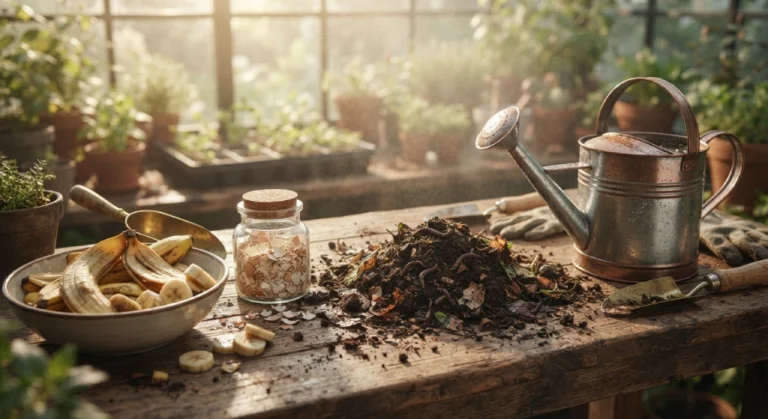
Many gardeners prefer to avoid harsh chemicals, and the good news is that organic methods work well for most leaf curl problems. The foundation is soil. Work in two to three inches of finished compost before planting, and top dress with more during the season. Compost feeds soil life, balances moisture, and supports strong roots.
Mulch is the next big helper. Straw, shredded leaves, or untreated grass clippings keep soil cool, hold moisture, and block weeds. Just make sure the clippings are free from herbicide.
For pests, neem oil, insecticidal soap, and a simple spray of diluted dish soap and water can reduce aphids and whiteflies. Release ladybugs or lacewings to help with natural control. Plant basil, marigolds, or alyssum nearby to attract beneficial insects.
Be careful with nitrogen. Too much high-nitrogen fertilizer causes lush leaves that roll upward and fewer flowers. Use a balanced or tomato-specific fertilizer, and switch to a lower nitrogen blend once fruit sets. A seaweed or fish emulsion feed every two weeks can strengthen plants against stress. Every organic Tomato Leaf Roll Treatment works best when paired with steady watering and good airflow.
Preventing Tomato Leaf Roll Next Season: A Simple Year-Round Care Plan
Prevention is easier than rescue. Think of it as a plan with a few simple habits.
In late winter, test your soil and pick resistant tomato varieties suited to your climate. Start seeds indoors in clean trays, and harden off seedlings for a week before transplanting. In spring, build beds with Good Soil for Tomato Plants, meaning loose, rich, and well drained. Space plants at least two feet apart so air can move freely.
At planting time, add a thick layer of mulch and install stakes or cages right away to avoid root damage later. Cover young plants with insect netting if whiteflies are common in your area.
During summer, water deeply and regularly, watch the forecast for heat waves, and add shade cloth when needed. Scout your plants every few days. Flip a few leaves, check the new growth, and catch trouble early. That habit alone makes every Tomato Leaf Roll Treatment faster and cheaper.
In fall, clear out old plants, rotate crops, and add compost to the bed. A little work now keeps next year’s tomato production strong.
Final Thoughts
Curled tomato leaves are a message from your plant, and the message is not always bad news. Most of the time the cause is heat, water, wind, or a pruning mistake, and a simple change brings the plant back. Pests and chemicals take a bit more effort, and viruses call for tough decisions. The key is to identify the cause before you act, then choose the Tomato Leaf Roll Treatment that fits.
Start with the basics this week. Check your soil moisture, look under the leaves, and think about what changed recently. Build your beds with Good Soil for Tomato Plants and keep a steady routine. If you found this guide useful, share it with a fellow gardener whose tomatoes are curling, and tell us in the comments what worked in your garden.
Frequently Asked Questions
What is the best cure for leaf curl in tomatoes?
There is no single cure because the cause changes from plant to plant. For stress related curl, fix the water, shade, and pruning habits. For pests, use insecticidal soap or neem oil. For viruses, there is no cure, so remove the plant and protect the others.
Can tomato plants recover from leaf curl?
Yes, plants with stress related curl often recover fully once conditions improve. Old curled leaves will not flatten, but new growth will come in normal. Virus infected plants will not recover and usually get worse.
What is the best fungicide for leaf curl?
Fungicide is rarely the answer for tomato leaf curl. Most cases come from stress, pests, chemicals, or viruses, and none of these respond to fungicide. Use a copper or chlorothalonil product only if you have confirmed a fungal disease such as early blight.
What causes leaf roll on tomato plants?
Common causes include heat, wind, uneven watering, heavy pruning, too much nitrogen, herbicide drift, pests, and viruses. Physiological leaf roll is the most common and the least harmful.
Did anyone spray a lawn nearby recently?
This is worth asking whenever curling appears suddenly with twisted, stringy new growth. Herbicide drift can travel from lawns and fields. Talk to your neighbors, rinse the leaves with water, and keep the plant healthy while it recovers.
Can a mature tomato plant be transplanted?
Yes, but it takes care. Water the plant well the day before, dig a wide root ball, and move it in the cool evening. Expect some leaf curl and wilting for a few days. Add shade and mulch, and avoid fertilizing until new growth appears.
How do you treat leaf curls on tomato plants?
Start by finding the cause. Adjust watering, add mulch and shade, prune lightly, and check for pests. Apply the right Tomato Leaf Roll Treatment for that cause, and give the plant one to two weeks to respond.
Is the curling limited to one area?
If only the lower leaves curl, think water or heat stress. If only the new top growth curls, think pests, herbicide, or a virus. If the whole plant curls evenly, weather is the likely cause. The pattern is your best clue.