How to Get Rid of Flea Beetles on Tomato Plants: Expert Tips and Step-by-Step Guide
How to Get Rid of Flea Beetles on Tomato Plants: A Complete Guide
If your tomato leaves look like someone took a tiny shotgun to them, flea beetles are probably the culprit. These small, jumpy pests can tear through young tomato plants in just a few days, leaving behind a trail of pinholes and weakened stems. Learning how to get rid of flea beetles early is the difference between a thriving tomato patch and a stunted, struggling one.
The good news is that flea beetles are manageable once you know what to look for and how to respond. This guide walks you through identifying flea beetles, spotting the damage they cause, and using natural methods to remove them from your garden. We’ll also cover prevention tips and when it makes sense to bring in an insecticide. And if you’re dealing with other tomato issues too, like blossom deformities, you might also want to look into how to stop catfacing on tomatoes, since both problems tend to show up when plants are already stressed.
Let’s get into what flea beetles actually are and how you can spot them before they cause serious harm.
What Are Flea Beetles?
Flea beetles are small, dark-colored insects that belong to the Chrysomelidae family. They get their name from their habit of jumping like fleas when disturbed, which makes them tricky to catch by hand. Despite their tiny size, usually just one-tenth of an inch long, flea beetles can cause outsized damage to tomato plants, especially seedlings and young transplants.
These pests are most active in early spring, right when tomato plants are just getting established. Adult beetles overwinter in soil, leaf litter, and garden debris, then emerge as temperatures warm up to feed on tender new growth. Because tomato seedlings are so vulnerable at this stage, even a small population of flea beetles can set your plants back significantly.
How to Identify Flea Beetles
Flea beetles are shiny and black, bronze, or sometimes striped with a metallic sheen. Their bodies are oval-shaped and compact, and their back legs are noticeably larger than their front legs, which gives them that springing, flea-like movement when you get close.
If you’re not sure whether what you’re seeing is a flea beetle, try this simple test: gently shake or tap the plant. If small insects scatter and jump away rather than fly, there’s a good chance you’re dealing with flea beetles. You can also check the soil around the base of your tomato plants early in the morning, since that’s often where they hide during cooler hours.
What Flea Beetles Look Like on Tomato Plants
On tomato plants specifically, flea beetles tend to cluster on the undersides of leaves and around the stem base of young plants. They’re often mistaken for other small garden pests, but their jumping behavior and shiny exoskeleton set them apart from aphids or whiteflies, which move more slowly and don’t have that same spring-loaded escape.
You’ll usually notice flea beetles before you notice the beetles themselves, simply because the damage they leave behind is so distinctive.
Signs of Flea Beetle Damage on Tomatoes
Recognizing flea beetle damage early can save your tomato crop from serious setbacks. The two most common signs are leaf damage and stunted seedling growth, both of which show up quickly once beetles start feeding.
Small Shot-Hole Leaves
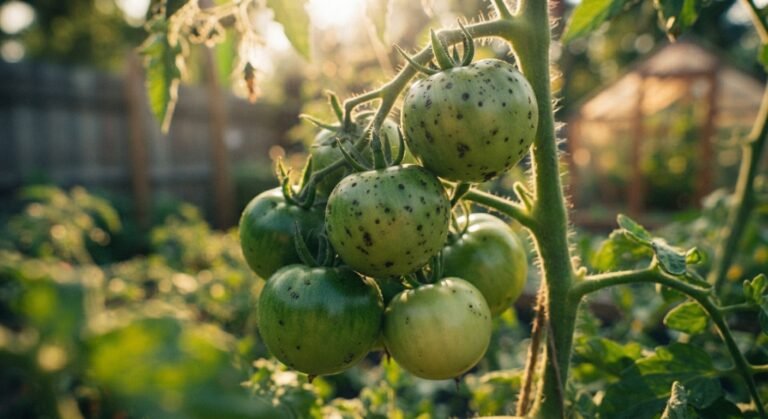
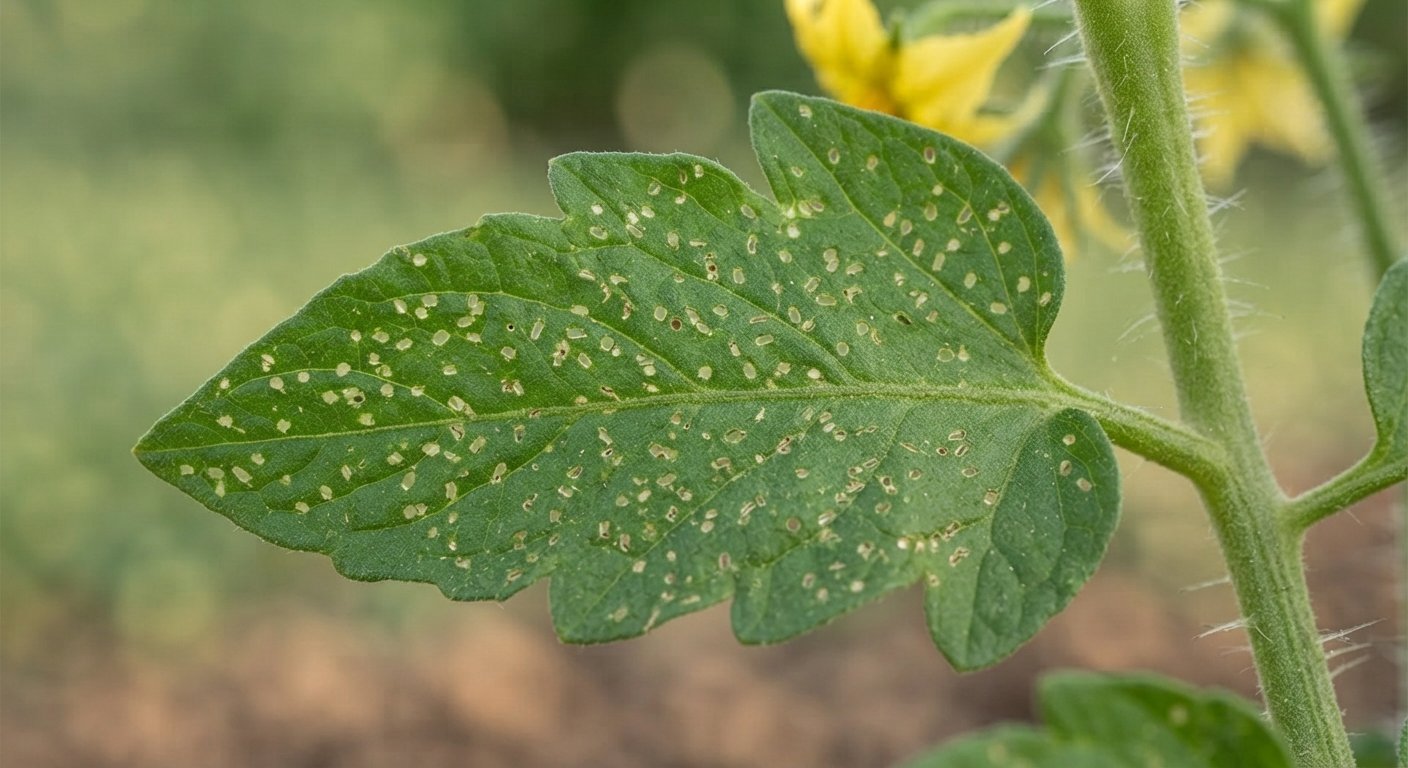
The telltale sign of flea beetle activity is a pattern of small, round holes scattered across tomato leaves, often described as “shot-hole” damage because it looks like the leaves were peppered with tiny buckshot. This happens because flea beetles chew through the leaf surface in small, irregular patches, leaving behind a lace-like appearance on heavily affected leaves.
While a few holes here and there won’t kill a mature tomato plant, widespread shot-hole damage can reduce the plant’s ability to photosynthesize effectively. Over time, this weakens the plant and makes it more susceptible to disease and other pest problems.
Stunted or Damaged Seedlings
Young tomato seedlings are especially vulnerable to flea beetle feeding because they have fewer leaves to spare. A flea beetle infestation on a seedling can quickly move from cosmetic damage to something more serious, including stunted growth, wilting, or even plant death if the population isn’t controlled.
If you notice your tomato transplants aren’t growing as quickly as expected, or if the stems look chewed or discolored near the soil line, flea beetles could be feeding on the roots and lower stem as well as the leaves. This is one of the reasons early intervention matters so much when growing tomatoes from seed or young transplants.
How to Get Rid of Flea Beetles Naturally
Once you’ve confirmed flea beetles are the problem, the next step is removing them without resorting to harsh chemicals right away. Several natural methods work well for home gardeners, especially when applied consistently over the first few weeks after planting.
Handpicking and Physical Removal
While flea beetles are fast, handpicking can still be effective for small infestations, particularly in the early morning when beetles are less active and less likely to jump away. Wear gloves, and gently knock beetles into a cup of soapy water where they’ll drown quickly.
For a slightly easier approach, try shaking affected plants over a tray or cloth. Many beetles will drop off and can then be collected and disposed of. This method works best on calm mornings before the day heats up, since warmer temperatures make flea beetles more active and harder to catch.
Use Row Covers
Floating row covers are one of the most reliable ways to protect young tomato plants from flea beetles. These lightweight fabric covers create a physical barrier that prevents adult beetles from reaching your plants while still allowing sunlight, air, and water through.
Row covers work best when applied immediately after transplanting, before beetles have a chance to find your plants. Just remember to remove the covers once your tomatoes start flowering, since bees and other pollinators need access to the blooms for fruit production.
Apply Diatomaceous Earth
Diatomaceous earth, often shortened to DE, is a natural powder made from fossilized algae. It works by damaging the exoskeletons of flea beetles and other soft-bodied insects, causing them to dehydrate and die. Sprinkle a thin layer of food-grade diatomaceous earth around the base of your tomato plants and on the leaves themselves for the best results.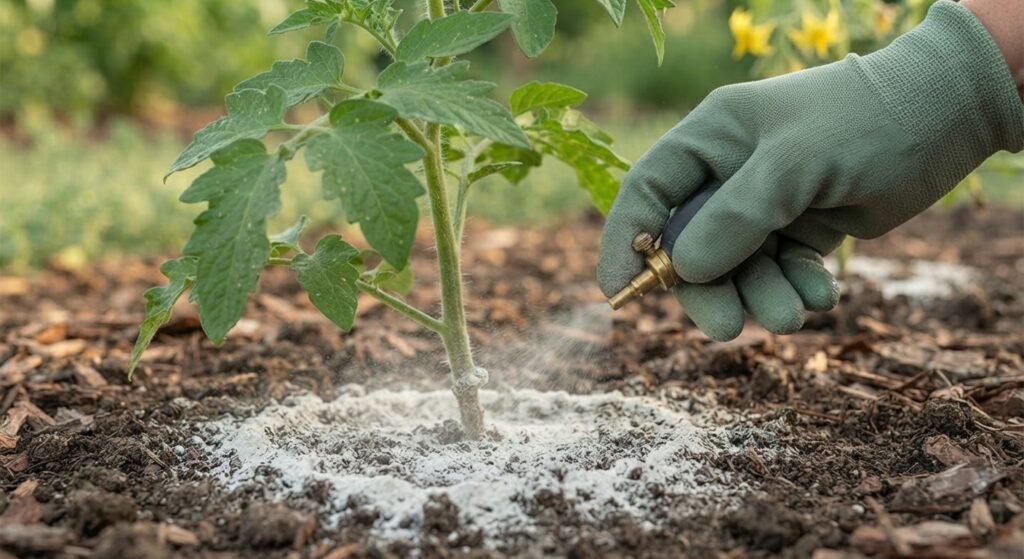
Keep in mind that diatomaceous earth loses its effectiveness when wet, so you’ll need to reapply it after rain or watering. It’s a low-cost, low-risk option that many organic gardeners rely on as a first line of defense.
How to Prevent Flea Beetles on Tomato Plants
Prevention is often easier than treatment when it comes to flea beetles, and a few simple habits can make a big difference over the growing season.
Start by cleaning up garden debris in the fall, since flea beetles overwinter in leaf litter and old plant material. Removing this debris reduces the number of beetles that survive to spring. Crop rotation also helps, since planting tomatoes in the same spot year after year gives flea beetles a predictable place to return to.
Companion planting is another useful strategy. Interplanting tomatoes with strong-smelling herbs like basil, catnip, or mint can help mask the scent that attracts flea beetles in the first place. Some gardeners also have success with trap crops like radishes, which flea beetles prefer over tomatoes and can be planted a short distance away to lure beetles elsewhere.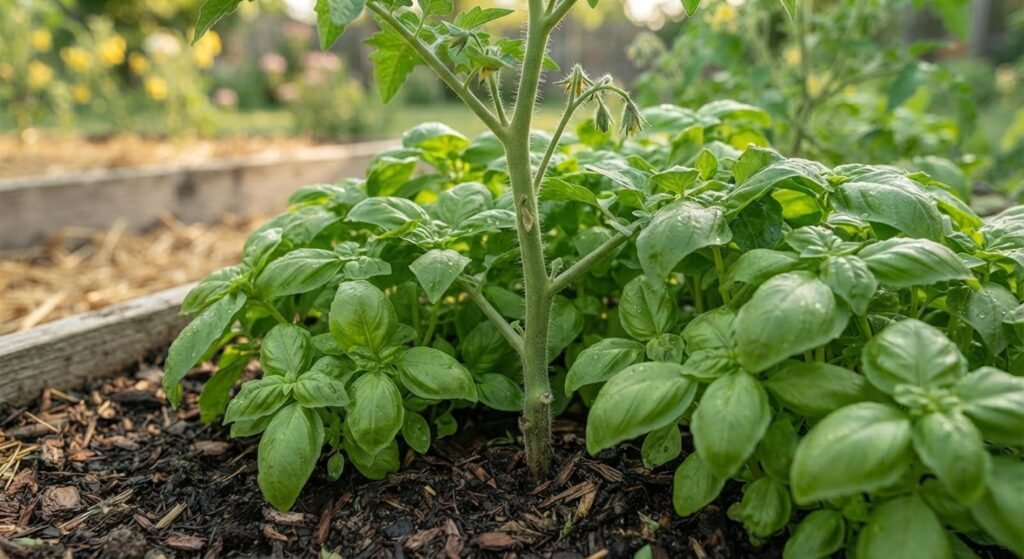
Finally, keeping your tomato plants healthy and well-watered makes them more resilient to pest pressure overall. Stressed plants tend to attract more pests, whether that stress comes from flea beetles, inconsistent watering, or issues like blossom-end problems. If you’ve noticed odd scarring near the blossom end of your fruit, it’s worth learning how to stop catfacing on tomatoes as well, since both issues often trace back to inconsistent growing conditions.
When to Use Insecticides
If natural methods aren’t keeping the flea beetle population under control, insecticides may become necessary, particularly for larger gardens or severe infestations. Neem oil and insecticidal soap are two lower-impact options that target flea beetles while being gentler on beneficial insects like ladybugs and bees.
For more severe infestations, pyrethrin-based insecticides offer a plant-derived option that breaks down quickly in the environment. Always apply insecticides in the early morning or evening when pollinators are less active, and follow label instructions carefully regarding application frequency and harvest waiting periods.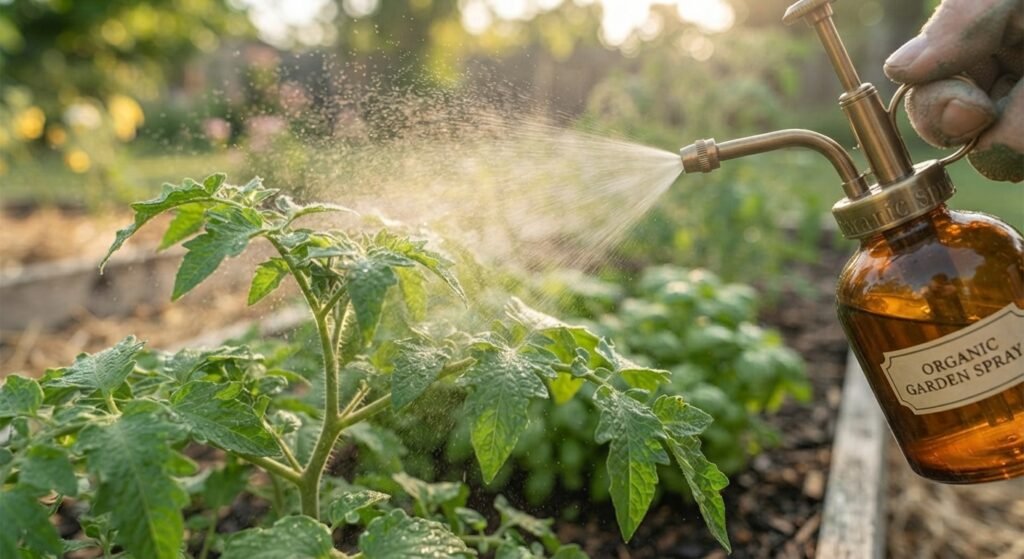
Chemical insecticides containing carbaryl or permethrin are also available for extreme cases, but these should be considered a last resort given their broader impact on beneficial insects in your garden. Whenever possible, start with the least invasive option and escalate only if the flea beetle population continues to grow despite your efforts.
Final Thoughts
Flea beetles are a common but manageable challenge for tomato growers. By learning to identify these pests early, watching for shot-hole damage and stunted seedlings, and applying natural control methods like handpicking, row covers, and diatomaceous earth, you can protect your tomato plants without reaching for harsh chemicals right away. Combine these efforts with good garden hygiene and smart companion planting, and you’ll have a much stronger defense against flea beetles season after season.
If flea beetles have been a recurring problem in your garden, take some time this season to build prevention into your routine from the start. A little extra effort in early spring can save you a lot of frustration later on.
Frequently Asked Questions About Flea Beetles
Do flea beetles kill tomato plants?
Flea beetles rarely kill mature tomato plants on their own, but they can seriously damage or kill young seedlings, especially when populations are high and left untreated.
What do flea beetles hate?
Flea beetles tend to avoid strong-smelling plants like basil, mint, and catnip, which makes companion planting a useful deterrent strategy.
How long do flea beetles stay active in the garden?
Flea beetles are most active in early spring, but they can remain a problem throughout the growing season if conditions stay favorable and food sources remain available.
Can I use dish soap to get rid of flea beetles?
A diluted dish soap and water solution can help kill flea beetles on contact when sprayed directly on them, though it works best as a supplement to other control methods rather than a standalone solution.
Is diatomaceous earth safe for vegetable gardens?
Yes, food-grade diatomaceous earth is safe for use around vegetable gardens, including tomato plants, as long as it’s applied according to label directions.
Why do my tomato seedlings keep getting attacked by flea beetles every year?
Recurring flea beetle problems are often linked to overwintering beetles in nearby soil or garden debris, so improving fall cleanup and rotating your planting locations can reduce yearly infestations.
Should I remove all damaged leaves from my tomato plant?
It’s usually not necessary to remove every damaged leaf, since tomato plants can tolerate some shot-hole damage. Focus instead on treating the infestation and monitoring new growth for signs of improvement.