Nutrients for Pepper Plants and the Best Fertilizer for Peppers
Nutrients for Pepper Plants: Fertilizer Needs at Every Growth Stage
Growing a strong pepper plant takes more than sun and water. The right nutrients for pepper plants decide whether you get a few small fruits or a heavy harvest of thick-walled bell peppers and fiery hot peppers. Pepper plants are steady feeders. They pull different nutrients from the soil at different times, and a mistake at one stage can show up weeks later as weak flowers or poor fruit.
The most common question growers ask is about the right pepper fertilizer ratio. The NPK numbers on a bag stand for nitrogen, phosphorus and potassium. Young pepper plants do best with a balanced fertilizer such as 10-10-10 so they can build roots and leaves. Once flowering starts, a lower nitrogen mix like 5-10-10 helps the plant focus on blossoms and fruit rather than extra leaves. This single change in the fertilizer for peppers is one of the easiest ways to boost pepper production.
This guide explains what each nutrient does, how to spot trouble, which fertilizers work best, and how to feed peppers in pots or in the ground. Use it as a stage by stage plan for fertilizing peppers from seedling to final harvest.
Why Nutrients for Pepper Plants Make or Break Your Harvest
Every part of a pepper plant is built from nutrients. Roots, stems, leaves, flowers and fruit all depend on what the soil can supply. When the supply runs short, the plant slows down first and then drops flowers to save energy. That is why the nutrients for pepper plants matter as much as sunlight and water.
How Nutrients Shape Plant Growth and Fruit Quality
Nutrients work like a team. Nitrogen builds green growth, phosphorus supports roots and flowers, and potassium moves sugars into the fruit. Calcium keeps cell walls firm so the pepper wall stays thick and crisp. A plant that gets all of these in balance grows evenly and sets fruit steadily.
Taste is affected too. Well fed plants make sweeter bell peppers and more flavorful peppers overall. Some growers also notice that hot peppers carry better heat when the plant is healthy and not stressed by hunger. A plant short on nutrients tends to give thin, pale and bland fruit.
What Happens When Feeding Goes Wrong
Too little food leads to yellow leaves, slow growth and few blooms. Too much is just as risky. Heavy nitrogen gives a tall, dark green plant that looks great but sets almost no fruit. Extra fertilizer salts can also burn roots and block the plant from drinking water.
A good example is a gardener who feeds a high nitrogen lawn product to peppers all summer. The plants grow huge but produce a handful of peppers. Switching to a fertilizer with more phosphorus and potassium usually fixes this within a few weeks. The goal is steady and measured feeding, not heavy feeding.
Nitrogen, Phosphorus and Potassium: The Core Nutrients for Pepper Plants
These three are the primary nutrients, and they make up the three numbers on every fertilizer label. A bag marked 5-10-10 holds 5 percent nitrogen, 10 percent phosphorus and 10 percent potassium. Understanding what each one does makes choosing the right fertilizer much easier.
Nitrogen: The Driver of Leafy, Vigorous Growth
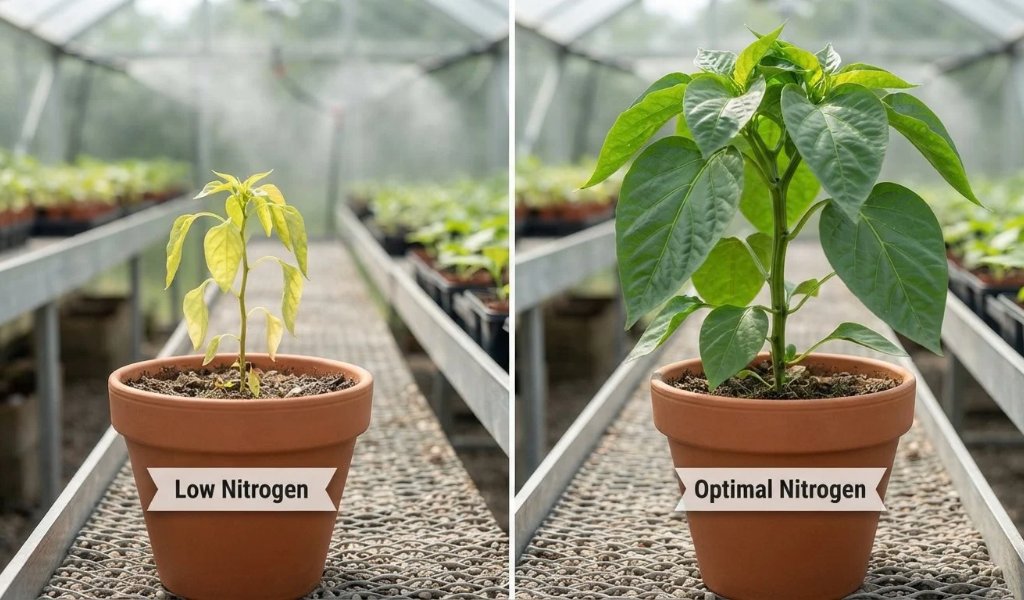 Nitrogen is the nutrient behind vegetative growth. It helps pepper plants build strong stems and wide green leaves, and those leaves collect the sunlight that powers fruit later on. Young plants and transplants need plenty of nitrogen in the first weeks after planting.
Timing is the key. Early in the season nitrogen helps the plant reach a good size. After the first flowers open, the plant should receive less of it. Too much nitrogen at this point creates leafy plants with weak flowering and delayed fruit. Many pepper plants drop blossoms when nitrogen stays high.
Nitrogen also moves easily through soil and washes away in heavy rain or frequent watering. Plants in pots lose it fastest. If lower leaves turn pale yellow while new growth stays green, the plant is probably asking for more nitrogen. A light feeding with a diluted liquid fertilizer usually brings color back within a week or two.
Phosphorus and Potassium: Building Blocks for Flowers, Fruit and Disease Resistance
Phosphorus supports early growth in roots and later helps the plant form flowers and set fruit. It carries energy around the plant, so a shortage slows everything. Cold soil locks phosphorus away, which is why young plants set out too early sometimes turn purple and stall.
Potassium looks after overall plant health. It helps control water inside the plant, moves sugars into developing fruit and makes plants tougher against disease and heat. During fruit development peppers use a lot of it. A plant short on potassium often shows scorched leaf edges and soft or uneven fruit.
The phosphorus and potassium pair is the reason many growers switch to a 5-10-10 mix once buds appear. This ratio keeps the plant steady while shifting energy toward flowering and fruit. Bone meal, rock phosphate, greensand and wood ash in small amounts are common sources. Apply wood ash lightly because it raises soil pH quickly.
Calcium and Magnesium: Essential Secondary Nutrients for Pepper Plants
Secondary nutrients get less attention than NPK, but peppers cannot do well without them. Calcium and magnesium are needed in smaller amounts than the big three, yet a shortage causes some of the most frustrating problems in the garden.
Calcium and Blossom End Rot Prevention
Calcium builds strong cell walls inside the plant and the fruit. When a pepper cannot get enough calcium, the bottom of the fruit turns dark and leathery. This is blossom end rot, and it often shows up on the first fruits of the season.
The surprise is that soil often holds plenty of calcium. The real problem is calcium uptake. Calcium travels only with water, so uneven watering, dry spells or root damage block it from reaching the fruit. Heavy nitrogen feeding can also push the plant to favor leaves over fruit.
To prevent calcium deficiency, keep the soil evenly moist and add mulch to hold moisture. If a soil test shows low calcium, mix in gypsum or crushed eggshells before planting. Eggshells work slowly so they are best added weeks ahead. Spraying calcium on leaves rarely fixes existing damage, so steady watering is the better cure.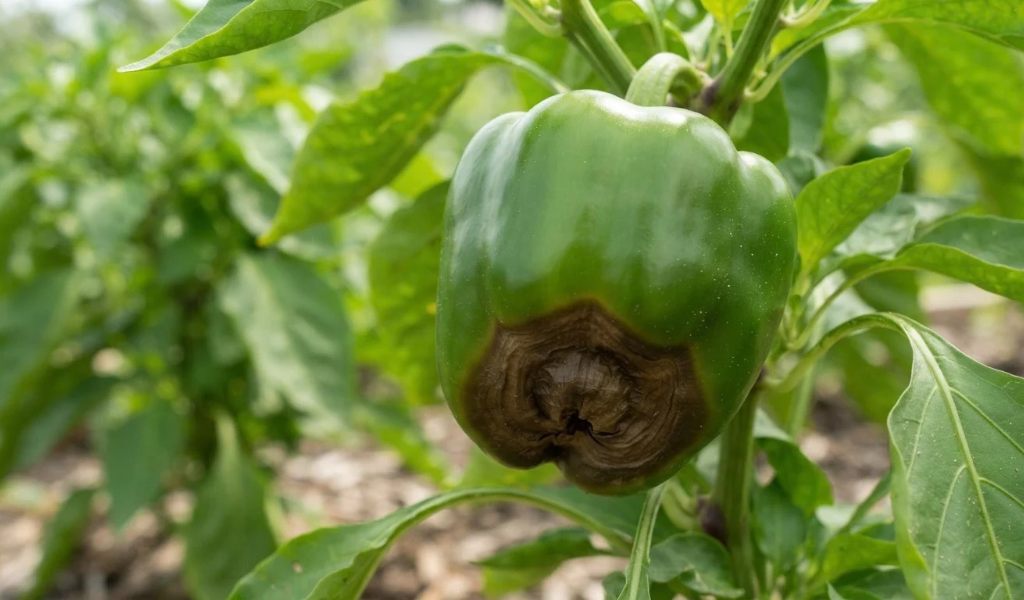
Magnesium and Epsom Salt: When and How to Use It
Magnesium sits at the center of chlorophyll, the green pigment that lets leaves make food. When magnesium runs low, older leaves turn yellow between the veins while the veins stay green. Sandy soil and heavy rain make this problem more likely.
Epsom salt is a popular fix because it contains magnesium and sulfur. A common method is mixing one tablespoon in a gallon of water and applying it every few weeks as a soil drench or light foliar spray. Use it only when you see signs or a soil test confirms a need. Adding Epsom salt to soil that already has enough magnesium does nothing helpful and can upset the balance with calcium.
Sulfur, Zinc and Boron: Getting Micronutrients Right for Peppers
Micronutrients are needed in tiny amounts. Still, one missing element can hold back growth even when everything else is perfect. Most garden soil with good compost covers these needs, but container mixes and sandy soils may run short.
Sulfur and Zinc for Steady Growth
Sulfur helps plants make proteins and gives peppers some of their sharp flavor. A shortage looks like nitrogen hunger, with pale new leaves instead of old ones. Epsom salt, gypsum and compost all supply sulfur, so deficiency is uncommon in most gardens.
Zinc supports growth hormones and leaf development. Low zinc causes small, twisted new leaves and short spaces between leaf nodes. It shows up most in alkaline or very cold soil where zinc becomes hard for roots to take in. Compost and a balanced fertilizer with trace elements are usually enough. A chelated zinc spray works if a soil test shows a real gap.
Boron and Other Trace Elements
Boron helps flowers form and pollen move so fruit can set. Without it, blossoms may fall and new growth can turn brittle or distorted. The gap between too little and too much boron is very small, so never add it without a test result. Too much boron burns leaf edges and damages roots.
The safest way to cover trace elements is steady organic matter. Compost, aged manure and seaweed extract release small amounts of many minerals. This approach also improves soil health, which protects against sudden shortages.
Signs of Nutrient Deficiency in Pepper Plants and How to Spot Them Early
Pepper plants show hunger on their leaves before yield drops. Learning the patterns lets you act in time. Check plants once a week and look closely at both old and new growth.
Reading Leaf Color and Growth Patterns
Where the symptoms appear tells you a lot. Nutrients that move inside the plant, such as nitrogen, phosphorus, potassium and magnesium, show problems on older leaves first. Nutrients that stay put, such as calcium, sulfur, zinc and boron, show problems on new growth.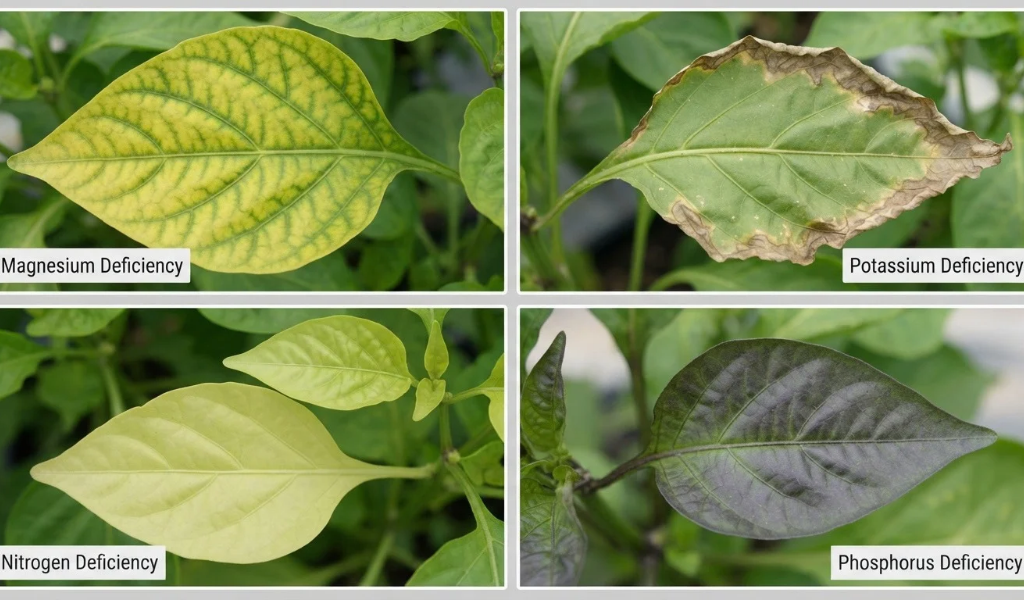
- Pale yellow lower leaves usually point to low nitrogen.
- Purple or dark green leaves, often in cool weather, suggest low phosphorus.
- Brown, crispy leaf edges on older leaves point to low potassium.
- Yellow leaves with green veins on older leaves suggest low magnesium.
- Pale new leaves with green veins can mean a shortage of iron or zinc.
Common Mistakes When Diagnosing Problems
Not every yellow leaf means hunger. Overwatering, root damage, pests and heat stress can look almost the same. If the soil stays soggy, roots cannot absorb nutrients no matter how much fertilizer you add. Fix drainage first and then feed.
Soil pH is another common cause. A plant can sit in rich soil and still starve if the pH blocks uptake. Before adding more fertilizer to treat a mystery problem, run a soil test. It costs little and prevents guesswork. Never change several things at once, because then you cannot tell what worked.
Organic Ways to Supply Nutrients for Pepper Plants
Organic feeding builds soil life and releases food gradually. It rarely burns plants and improves soil structure over time. Many growers combine it with a small amount of balanced fertilizer for steady results.
Compost, Manure and Other Soil Builders
Homemade compost is the foundation of organic feeding. It adds a wide range of nutrients and helps the soil hold moisture. Mix two to three inches into the bed before planting. Well aged manure works too, but fresh manure is too strong and can burn roots.
Other useful organic fertilizer options include fish emulsion for nitrogen, bone meal for phosphorus, kelp meal for potassium and trace minerals, and worm castings for general nutrition. Granular organic products break down slowly and release nutrients slowly, so apply them at planting and again at mid season.
Homemade Fertilizers and Kitchen Scraps
Several homemade fertilizers can help when used wisely. Compost tea gives a gentle liquid feed. Used coffee grounds add a little nitrogen and improve soil texture, but they should go into compost first or be mixed into soil thinly. Banana peels offer some potassium, though they work best chopped and composted, since buried raw peels break down slowly.
Crushed eggshells add calcium over time. Epsom salt can solve magnesium problems. These kitchen options support the soil but do not replace a full feeding plan. Treat them as helpers.
Fertilizer Rates and Schedules: Feeding Pepper Plants at the Right Time
The best fertilizer for pepper plants is the one matched to the growth stage. A simple schedule keeps feeding steady and avoids the swing between hunger and overload. Always follow the label rate on the package, and when in doubt use a little less.
Feeding at Transplant and Early Growth
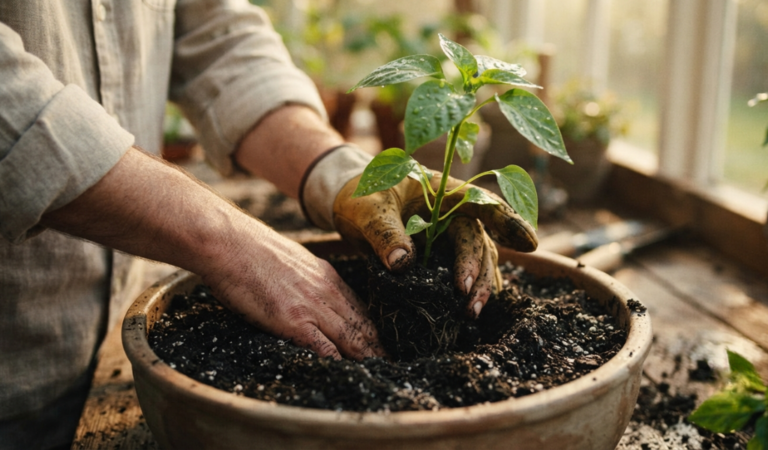
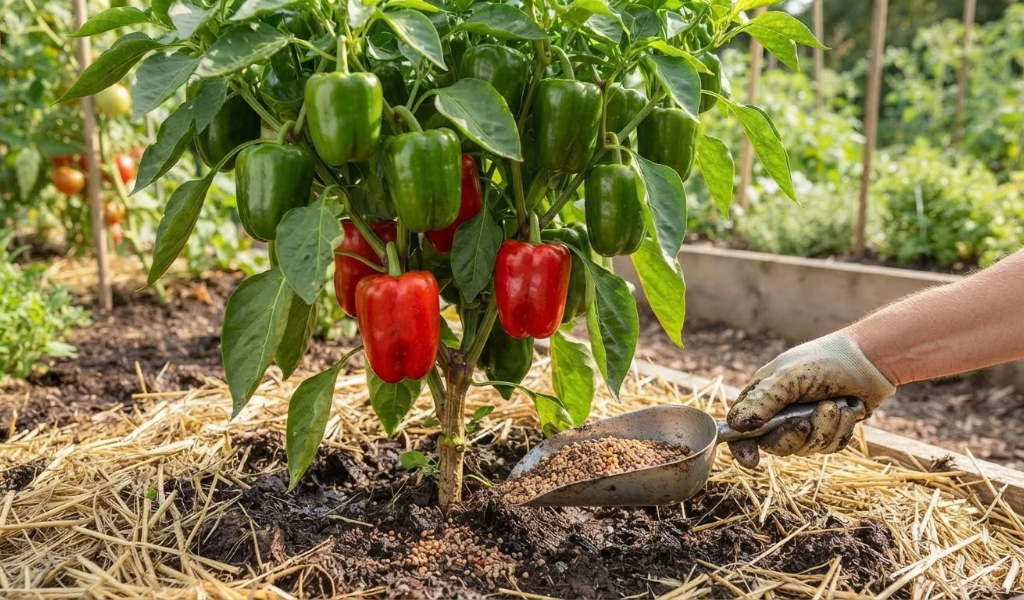
At planting, mix a balanced fertilizer or compost into the soil. A granular product like 10-10-10 works well at the rate listed on the bag. Water it in deeply so roots can reach it. In the first few weeks young plants need nitrogen for leaves and phosphorus for roots, so skip heavy feeding until they settle in.
Around two to three weeks after transplanting, start light feedings. A diluted liquid fertilizer every two weeks keeps the plant moving without pushing too much leafy growth.
Feeding During Flowering and Fruit Set
When the first flowers appear, switch to a fertilizer like 5-10-10 or another mix lower in nitrogen. This supports flowering and fruit while keeping growth in check. Apply granular fertilizer about every four to six weeks, or use liquid feed every two weeks at half strength.
During heavy fruiting, add a side dressing of compost or a potassium rich product. Keep watering steady, since nutrients only reach the plant through moist soil. A soil drench around the base is more effective than spraying leaves for main nutrients.
When to Stop Fertilizing
Stop about four to six weeks before the first expected frost. Late feeding pushes soft new growth that will not mature in time. At this point the plant should focus on ripening fruit. Your soil test shows what to restore for next season, so plan any amendments after harvest.
Soil pH and Quality: The Hidden Key to Nutrient Uptake in Pepper Plants
Even the best fertilizer fails if the soil cannot deliver it. Soil pH controls whether nutrients stay available or lock up. Peppers prefer slightly acidic soil, with a pH between 6.0 and 6.8. Within this range plants absorb nutrients efficiently.
Testing Soil and Adjusting pH
A soil test is the best first step. Home kits give a rough idea, while a lab test reports pH and nutrient levels in detail. Take samples from several spots about six inches deep, then mix them together.
If the pH is too low, add garden lime. If it is too high, add elemental sulfur or well rotted organic matter. Changes work slowly, so apply them in fall or several weeks before planting. Recheck the soil after a few months. When the soil test shows plenty of one nutrient, skip that part of the fertilizer.
Building Healthy Soil Over Time
Good soil holds both air and water. Add compost every year to keep soil structure loose and rich. Mulch with straw or shredded leaves to protect soil moisture and keep roots cool. Rotate peppers away from tomatoes, potatoes and eggplants, which use similar nutrients and share pests.
Companion plants such as basil and marigolds can add variety to the bed and attract helpful insects. Healthy soil full of life breaks down organic matter and releases nutrients at a pace plants can use.
Container vs. Garden Bed: Practical Nutrient Management for Pepper Plants
Where you grow changes how you feed. Pots and beds behave very differently, so the same plan will not work for both.
Feeding Peppers in Pots and Containers
Growing in pots limits the root zone, so nutrients run out faster. Frequent watering also washes them away. Start with a quality potting mix and add slow release granules at planting. After that, give diluted liquid fertilizer every one to two weeks during the growing season.
Use pots at least five gallons in size and make sure they drain well. Flush the soil with plain water once a month to remove salt buildup, which shows as a white crust on the surface. Containers also need extra attention to magnesium and calcium because potting mixes hold little of either.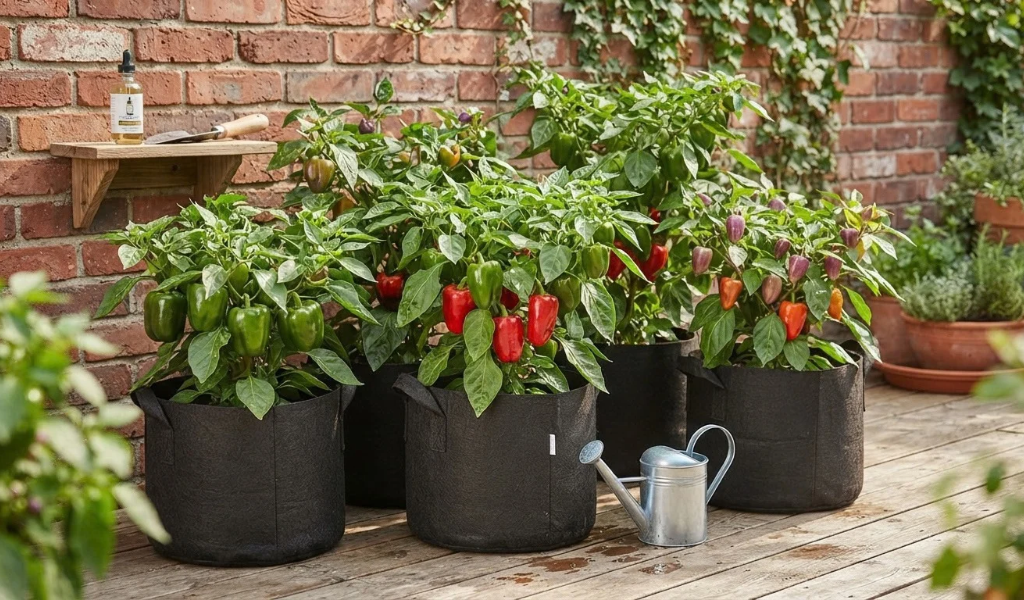
Managing Nutrients in Garden Beds
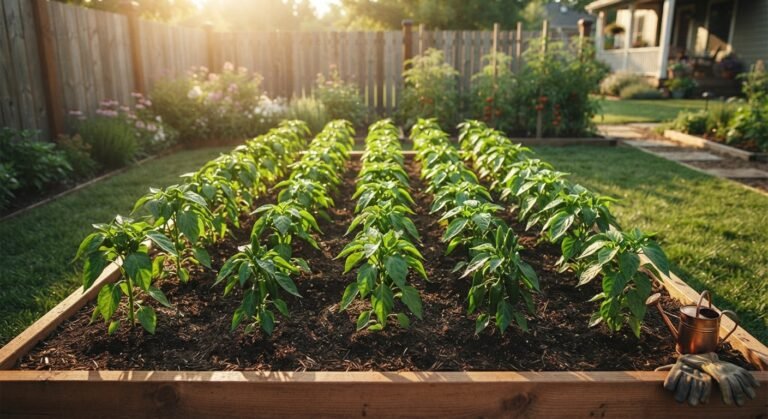
In the ground, soil holds more reserves, so feeding can be lighter. Prepare the bed with compost and a balanced fertilizer before planting, then add side dressings once or twice during the season. Deep, less frequent watering encourages roots to reach more soil and take up more nutrients.
Raised beds sit between the two. They warm early and drain well, but they can also lose nutrients faster than native soil. Watch the plants and adjust. Plant color and growth rate are the best guide to what the bed needs.
Final Thoughts
Strong harvests come from matching feeding to the plant’s needs. Nitrogen builds early growth, phosphorus and potassium drive flowers and fruit, and calcium and magnesium prevent common problems like blossom end rot and yellowing. Micronutrients fill the small gaps, and good soil pH keeps everything available. Understanding the nutrients for pepper plants takes the guesswork out of fertilizing peppers. Start with a soil test, choose a balanced fertilizer for young plants, then move to a lower nitrogen mix once flowers form. Add organic matter every year and watch your plants closely. Ready to try it? Test your soil this week, pick the right fertilizer for peppers and put this schedule into action for your next crop.
Frequently Asked Questions
Will coffee grounds help my pepper plants?
They can help in small amounts. Used grounds add a little nitrogen and improve soil texture. Composting them first is safer than spreading thick layers, which can form a crust and block water.
What does Epsom salt do for pepper plants?
Epsom salt supplies magnesium and sulfur. It can fix yellowing between leaf veins caused by low magnesium. Use it only when symptoms or a soil test show a need.
What helps pepper plants grow better?
Steady moisture, full sun, soil pH near 6.0 to 6.8, and the right nutrients at each stage all help. Compost every year and a balanced fertilizer early on make a strong base.
Are banana peels good for pepper plants?
They add some potassium but break down slowly when buried raw. Compost them or chop them finely first. They are a helpful extra and not a full fertilizer.
Should nutrients for pepper plants change as they grow?
Yes. Young plants need balanced nutrition with enough nitrogen for leaves and roots. After flowering starts, shift to a fertilizer with less nitrogen and more phosphorus and potassium.
What to fertilize pepper plants with?
Use a balanced fertilizer like 10-10-10 early and a 5-10-10 type once blossoms appear. Compost, fish emulsion and bone meal are good organic choices.
What nutrients do bell pepper plants need?
Bell peppers need nitrogen, phosphorus and potassium as main nutrients. They also need calcium for thick, firm walls and magnesium for healthy leaves, plus small amounts of micronutrients like sulfur, zinc and boron.