Sunscald on Peppers: Causes, Symptoms, Prevention, and Treatment
Sunscald on Peppers: A Complete Guide to Prevention and Treatment
If you have ever walked into your garden and found pale, papery patches on your pepper fruits, you have probably met sunscald. Sunscald on peppers is one of the most common problems gardeners run into during hot summer months, and it can turn a healthy looking plant into a source of frustration almost overnight. The good news is that this issue is not a disease, it is not caused by pests, and once you understand why it happens, it becomes fairly easy to manage.
In this guide, we will walk through everything you need to know about sunscald, from what it actually is, why it shows up, how to spot it early, and what you can do to protect your harvest. We will also cover how it differs from other common pepper problems so you are not left guessing. And if you end up with a bumper crop this season, you might also want to check out How to Preserve Peppers: Easy Ways to Preserve Your Harvest, which is a handy companion resource for making the most of every pepper you grow, sunscald free or not.
Whether you are growing bell peppers, jalapenos, or a few pots of chili peppers on a balcony, this article will help you keep your fruits healthy from flower to harvest.
What Is Sunscald on Peppers?
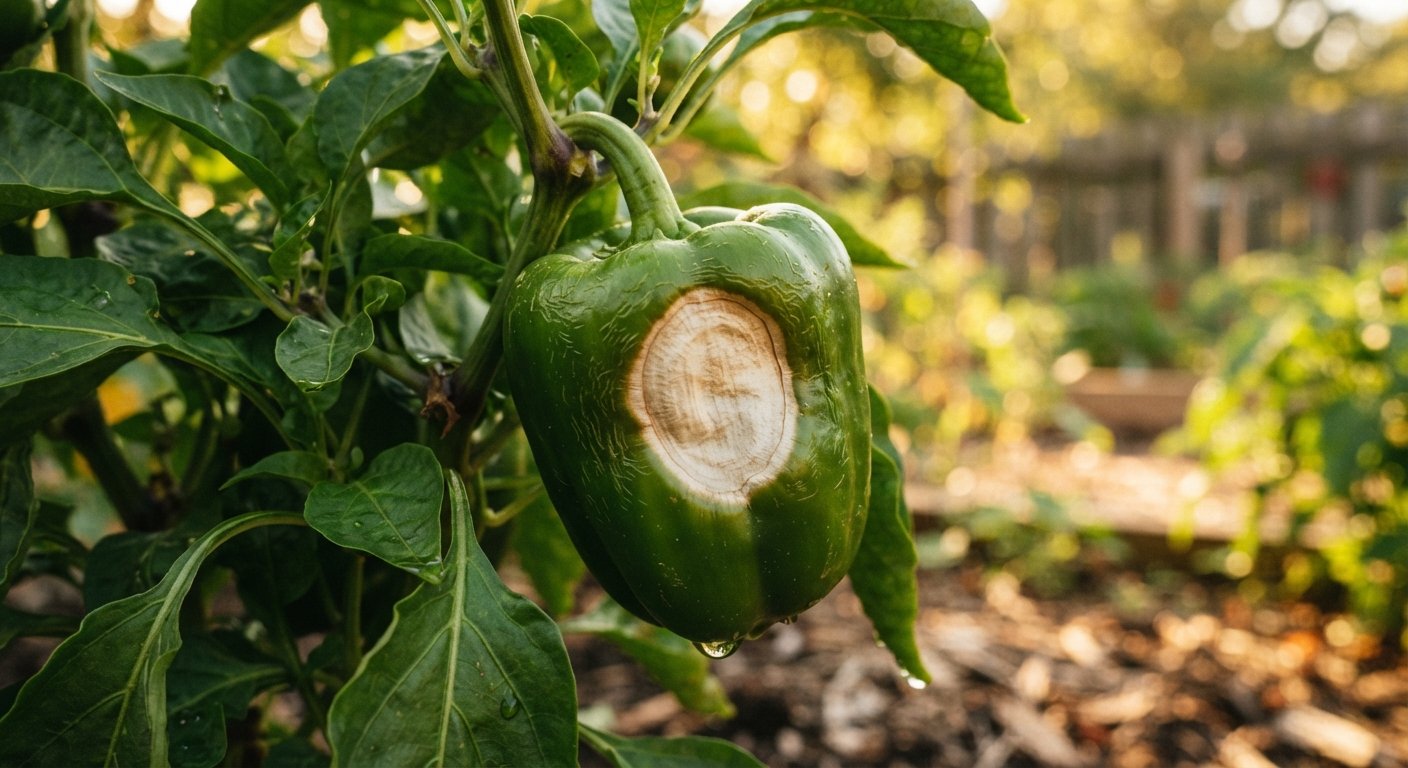
Sunscald is a type of physical injury that happens when pepper fruit gets exposed to more direct sunlight and heat than its skin can handle. Unlike a fungal or bacterial disease, sunscald is not caused by a living organism. It is purely environmental damage, similar to how human skin reacts to too much sun without protection.
When a pepper fruit is suddenly left uncovered, usually because nearby leaves have thinned out or fallen off, the surface facing the sun heats up quickly. The plant tissue underneath cannot cool itself fast enough, and the cells on that side begin to break down. The result is a soft, discolored patch that stands out clearly against the rest of the healthy fruit.
Sunscald can affect peppers at any growth stage, whether they are still green or starting to turn red, yellow, or orange. It tends to appear on the side of the fruit that faces the strongest afternoon sun, which is usually the south or west facing side in most gardens.
What Causes Sunscald on Pepper Plants?
At its core, sunscald happens because of a mismatch between light exposure and the plant’s natural protection. Pepper leaves are not just there for photosynthesis, they also act as a natural umbrella for the developing fruit. When that leaf canopy is reduced, either through pruning, disease, or wind damage, fruits that were once shaded suddenly find themselves in direct light for hours at a time.
Heat plays just as big a role as light. On days when temperatures climb past 90 degrees Fahrenheit, the surface of an exposed pepper can reach temperatures well above the surrounding air. This heat buildup damages the outer skin cells, and once that damage starts, it does not reverse itself. The fruit tissue basically cooks in place, leading to the telltale bleached or leathery spot associated with sunscald.
Stress from underwatering also makes plants more vulnerable, since a stressed plant often drops leaves or wilts, reducing shade coverage right when the fruit needs it most.
Common Causes of Sunscald
There are a handful of situations that consistently lead to sunscald in home gardens, and most of them come down to sudden changes in the plant’s environment.
Heavy pruning is one of the biggest culprits. Gardeners sometimes remove leaves to improve airflow or encourage more fruit production, not realizing that this also strips away the shade fruits depend on. Wind and hailstorms can do the same thing by physically knocking leaves off the plant.
Disease outbreaks, such as bacterial leaf spot or early blight, cause leaves to yellow and drop, which again leaves fruit exposed. Heat waves combined with low humidity are another major factor, since dry heat intensifies the effect of direct sun on fruit skin. Finally, transplanting seedlings directly into full sun without a hardening off period can shock young plants and thin out their foliage before fruit even sets.
Signs of Sunscald on Pepper Fruits
Spotting sunscald early can help you catch the problem before it spreads to more of your crop. The most obvious sign is a pale, almost white or yellowish patch on the side of the fruit that faces the sun. This patch often looks dry and slightly sunken compared to the surrounding healthy skin.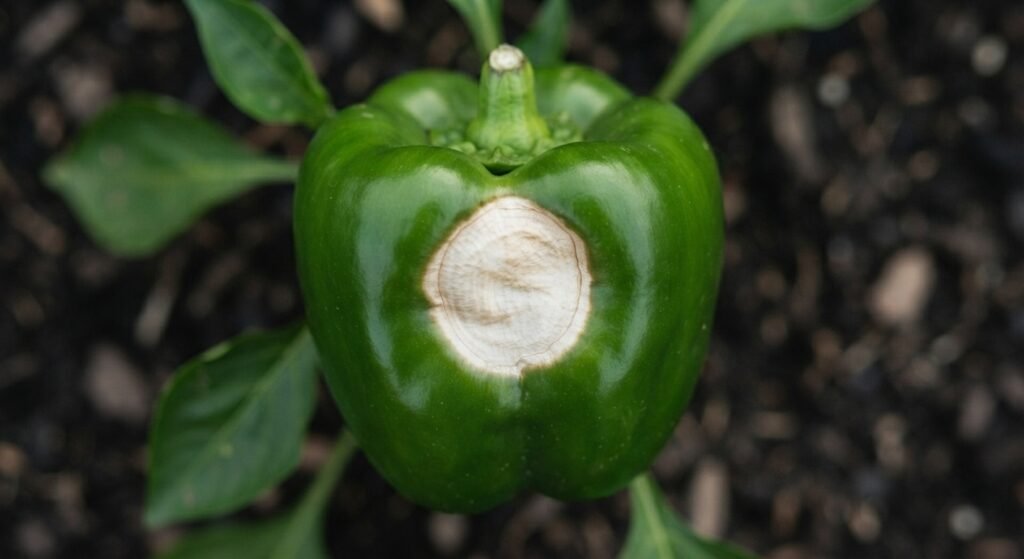
As the damage progresses, the affected area can develop a papery or blistered texture, sometimes described as looking like thin parchment paper stretched over the fruit. In more advanced cases, the sunscalded tissue turns brown or black, especially if secondary mold or rot sets in after the skin has broken down.
Unlike insect damage, sunscald patches are smooth and do not have chew marks or holes. Unlike fungal disease, there is usually no fuzzy growth or spreading rings, at least not until secondary infection takes hold in the damaged tissue.
How Sunscald Affects Pepper Plants
While sunscald technically affects individual fruits rather than the whole plant, repeated sun damage can still take a toll on overall plant health and productivity. Fruits with sunscald are usually unmarketable or unappealing for fresh eating, which means a real loss in harvest yield, especially for gardeners growing peppers to sell at farmers markets or share with family.
Damaged fruit also becomes an easy entry point for secondary infections. Once the skin breaks down, bacteria and fungi can move in, leading to soft rot that can spread if the pepper is left on the plant too long. This can sometimes affect nearby healthy fruit if conditions stay warm and humid.
On a broader level, a plant that keeps losing fruit to sunscald may redirect energy toward producing more blossoms instead of ripening existing fruit, which can throw off the natural rhythm of your harvest.
Steps to Protect Peppers From Sun Damage
Protecting your pepper plants does not require anything complicated, just a bit of planning before the hottest part of the season arrives.
Start by keeping your plants well covered with foliage through moderate, thoughtful pruning rather than heavy leaf removal. If you need to stake or cage your plants, do it early so you are not disturbing established leaves later in the season. Installing shade cloth over your pepper bed during heat waves is one of the most effective physical barriers against sunscald, and it can be removed once temperatures cool down. 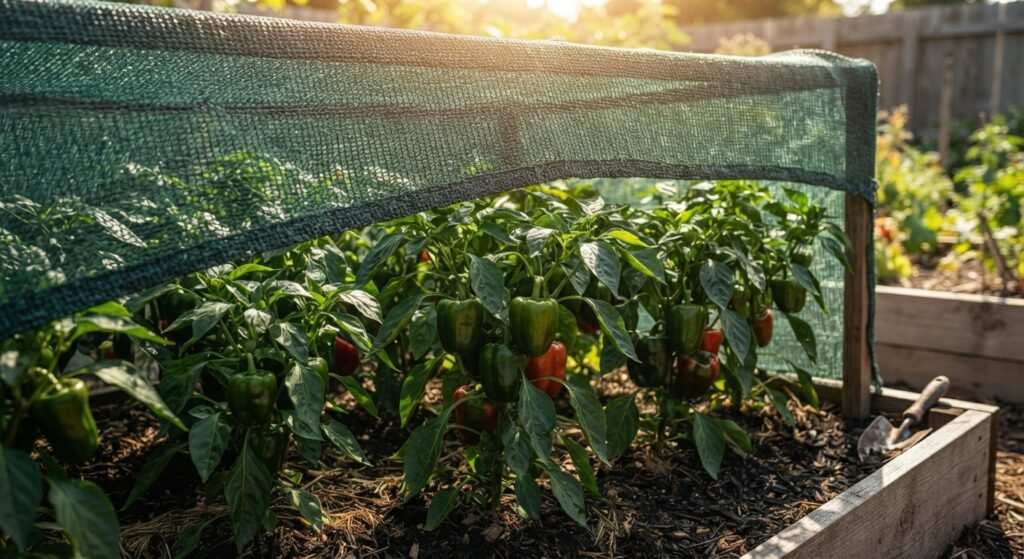
Mulching around the base of your plants helps retain soil moisture, which keeps the plant hydrated and less likely to wilt or drop leaves under stress. Consistent watering, ideally deep watering a few times a week rather than light daily sprinkles, also supports strong foliage growth that naturally shades the fruit.
How to Prevent Sunscald on Pepper Plants
Prevention is really about giving your plants the conditions they need to keep a full, healthy canopy of leaves. Choose a planting location that gets good morning sun but has a bit of relief from the harshest afternoon rays if possible, especially in regions with intense summer heat.
Avoid pruning pepper plants aggressively, particularly during the peak of summer. If you do need to trim, remove only damaged or diseased leaves and leave the rest intact. Applying a balanced fertilizer supports steady leafy growth, which naturally increases shade coverage over developing fruit.
Row covers or shade netting rated for around 30 to 50 percent light reduction can be used during the hottest weeks without significantly affecting fruit ripening. Spacing plants properly when you first plant them also encourages a fuller, bushier growth habit that shades fruit more effectively than plants that are too close together and competing for light.
Sunscald on Peppers vs. Other Pepper Problems
Sunscald can sometimes be mistaken for other common pepper issues, so it helps to know how to tell them apart.
Sunscald vs. Blossom End Rot
Blossom end rot appears at the bottom tip of the fruit, opposite the stem, and is caused by a calcium imbalance often linked to inconsistent watering. It starts as a small water soaked spot that turns dark brown and leathery. Sunscald, on the other hand, shows up on the side of the fruit facing the sun and starts as a pale, dry patch rather than a dark sunken one.
Sunscald vs. Disease Damage
Fungal and bacterial diseases usually create spreading spots with defined rings, fuzzy mold growth, or a wet, slimy texture. These issues often appear on leaves first before moving to fruit. Sunscald stays limited to the sun facing side of the fruit and does not typically show the concentric rings or fuzzy texture associated with disease.
Sunscald vs. Pest Damage
Pest damage usually comes with visible holes, chew marks, or tiny puncture wounds, sometimes accompanied by insect eggs or frass near the site. Sunscald patches are smooth and intact until secondary rot sets in, with no bite marks or insect activity involved in the initial damage.
How to Treat Sunscald on Peppers
Once sunscald has already happened, there is no way to reverse the damage on the affected fruit, but you can still manage the situation to protect the rest of your harvest. Start by removing severely damaged peppers from the plant so the plant can redirect its energy toward healthy fruit instead of trying to ripen ones that are already compromised.
If the sunscald is minor and limited to a small patch, you can still harvest and use the pepper by simply cutting away the damaged section, as the rest of the fruit is usually perfectly fine to eat. Inspect nearby fruits regularly for signs of secondary rot, especially in humid weather, and remove anything that shows soft, mushy spots.
Going forward, add shade cloth or increase watering consistency to prevent further sun damage to fruits that are still developing on the plant.
Why Do Peppers Get Sunscald?
Peppers are more prone to sunscald than some other vegetables because their fruit skin is relatively thin and their fruit often sits in clusters near the outer edge of the plant, closer to direct light than tomatoes or eggplants tend to be. Pepper plants also naturally have a more open growth habit compared to bushier vegetables, which means there is often less leaf coverage to begin with.
Add in the fact that peppers are typically grown during the hottest months of the year, and it becomes clear why sunscald is such a frequent complaint among home gardeners. The combination of thin skin, sparse foliage, and peak summer heat creates the perfect setup for sun damage if extra care is not taken.
Sunscald on Green and Ripe Peppers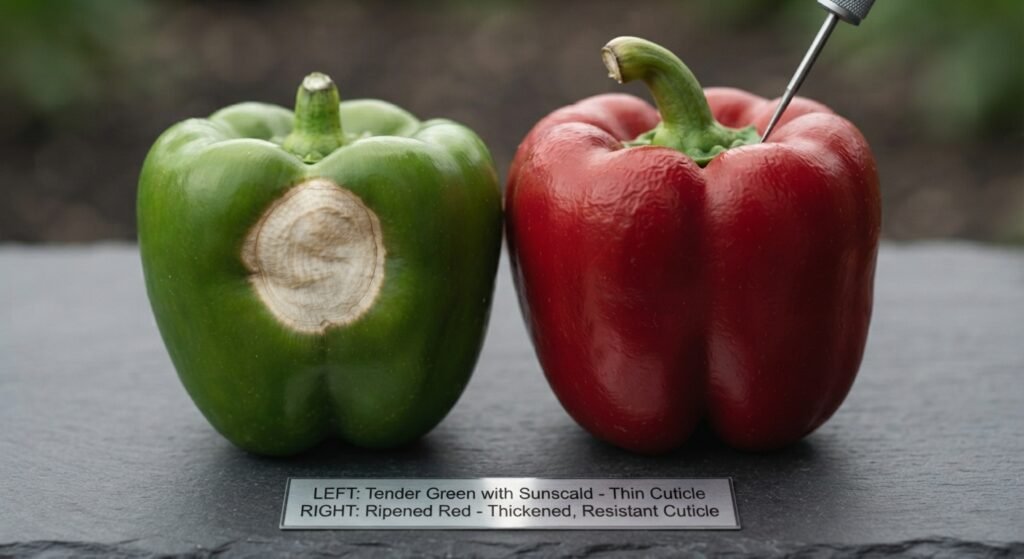
Sunscald on Green Peppers
Green peppers are actually more vulnerable to sunscald than fully ripened ones in many cases, since their skin has not yet developed the thicker cuticle layer that comes with ripening. A green pepper exposed to sudden direct sun can develop a bleached patch within just a day or two of high heat exposure.
Sunscald During Pepper Ripening
As peppers ripen and change color, whether to red, yellow, orange, or purple depending on the variety, their skin naturally thickens slightly, offering a bit more resistance to sun damage. However, ripening peppers still need adequate shade, since the color change process itself uses plant energy and any additional stress from sun exposure can slow or disrupt that process.
How Sun Exposure Changes Pepper Skin
Direct, prolonged sun exposure breaks down the cell walls on the surface of the fruit, causing the skin to lose its normal texture and color. What was once smooth and glossy becomes dry, thin, and pale, almost like the skin has been bleached from the inside out. This change is permanent and does not correct itself even if the fruit is later shaded again.
Sunscald Prevention Tips for Container-Grown Peppers
Container gardening comes with its own set of sunscald challenges, mainly because pots often heat up faster than garden soil and container plants can dry out more quickly, leading to stressed foliage. Choose light colored containers rather than dark ones, since dark pots absorb more heat and can raise the temperature around the root zone, adding stress to the whole plant.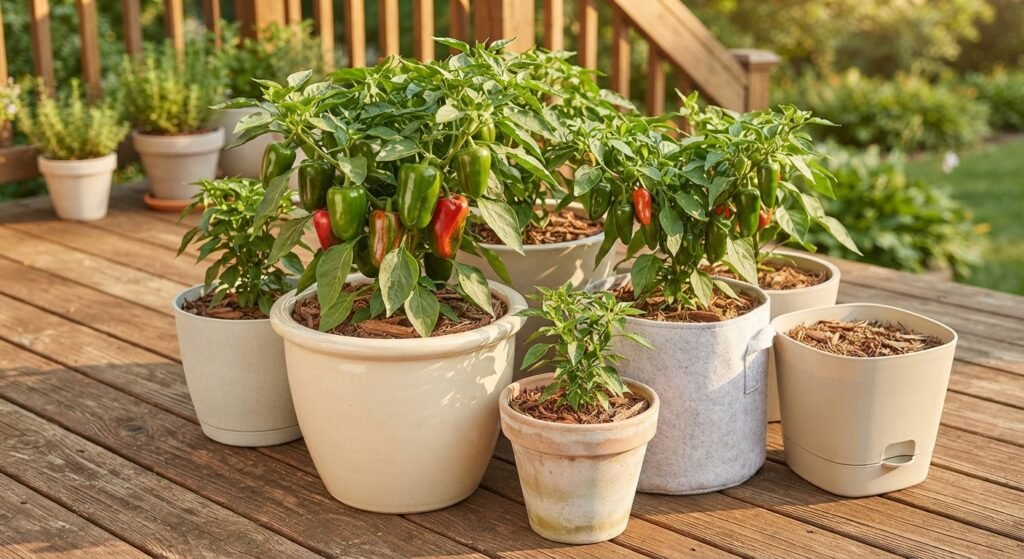
Group containers together when possible so plants can share some shade with each other, similar to how plants in a garden bed naturally do. Moving pots to a spot with afternoon shade during extreme heat waves is much easier than trying to shade an in ground garden bed, which is one advantage container growers actually have.
Check soil moisture daily during hot weather, since containers dry out faster than garden soil and a wilted plant loses its natural fruit shading almost immediately.
Common Mistakes That Increase Sunscald on Peppers
Removing Too Many Leaves
Many gardeners prune peppers thinking it will boost airflow or fruit production, but removing too much foliage strips away the natural shade fruits rely on. A light touch is almost always better than heavy pruning when it comes to pepper plants.
Letting Pepper Plants Dry Out
Underwatered plants wilt and drop leaves as a survival response, which directly reduces shade coverage over fruit right when protection matters most. Consistent, deep watering keeps foliage full and turgid throughout the growing season.
Exposing Plants to Intense Sun Suddenly
Moving seedlings from indoor or shaded conditions straight into full sun without a gradual hardening off period can shock young plants, causing leaf loss and thin canopies just as fruit begins to form.
Overlooking Heat Stress
Gardeners sometimes focus only on watering and forget that extreme heat alone, even with moist soil, can still cause leaf curling and reduced canopy density. Watching the weather forecast and adding temporary shade during heat waves goes a long way.
Failing to Protect Developing Fruits
Once fruit sets, it needs consistent protection all the way through ripening. Skipping shade cloth or row covers during a single hot week can be enough to cause noticeable sunscald damage on an otherwise healthy crop.
Sunscald on Peppers: Best Care Tips for Healthy Plants
Healthy, well cared for pepper plants are naturally more resistant to sunscald because they maintain fuller foliage and handle stress better overall. Water deeply and consistently, mulch to retain soil moisture, and avoid unnecessary pruning during the peak growing season.
Pay attention to your local weather, and be ready to add shade cloth or row covers when a heat wave is forecast. Feed your plants with a balanced fertilizer to support steady leaf growth, and space plants far enough apart that they are not competing so hard for light and nutrients that their foliage suffers.
With a bit of attention, most gardeners can keep sunscald to a minimum and enjoy a full, healthy harvest of peppers all season long.
Conclusion
Sunscald on peppers is a common but manageable problem once you understand what causes it. It comes down to fruit losing the natural shade of leaves and getting exposed to more heat and direct light than its skin can safely handle. By keeping your plants well watered, avoiding heavy pruning, and using shade cloth during the hottest stretches of summer, you can protect your harvest and keep more of your peppers healthy from flower to plate.
If this is turning into a big harvest year for you, do not let any of it go to waste. Take a look at How to Preserve Peppers: Easy Ways to Preserve Your Harvest for simple methods to freeze, dry, or pickle your peppers so you can enjoy them long after the growing season ends.
Frequently Asked Questions
Can sunscald damaged peppers still be eaten?
Yes, in most cases. If the damage is limited to a small patch, you can cut away the affected area and use the rest of the pepper as usual. Just check for any soft, mushy spots that might indicate secondary rot before eating.
Does sunscald spread from one pepper to another?
Sunscald itself does not spread, since it is caused by sun and heat exposure rather than a living organism. However, secondary rot that develops in damaged tissue can sometimes spread to nearby fruit in warm, humid conditions.
Is sunscald more common on certain pepper varieties?
Thin skinned varieties, including many sweet bell peppers, tend to show sunscald more easily than thicker skinned hot pepper varieties, though any pepper plant can be affected under the right conditions.
How quickly does sunscald appear after sun exposure?
Sunscald can appear within a day or two of intense sun exposure, especially during a sudden heat wave or after significant leaf loss from pruning or storm damage.
Will shade cloth reduce my pepper yield?
Light shade cloth rated around 30 to 50 percent is generally safe and will not meaningfully reduce yield. It simply softens the intensity of direct afternoon sun during the hottest parts of the day.
Can overwatering cause sunscald?
Overwatering does not directly cause sunscald, but it can weaken root health over time, which may indirectly affect leaf density and the plant’s overall stress tolerance.
What is the best time of day to check plants for sunscald risk?
Late afternoon, when the sun is at its most intense and plants have been under stress the longest, is the best time to check for wilting leaves or fruit that has become newly exposed to direct light.