Tomato Fertilizer Recommendations: Best Fertilizer for Tomato Plants in Your Garden
Best Tomato Fertilizer Recommendations: A Complete Fertilizer Guide to Feed Your Plants
Growing the juiciest, most flavorful tomatoes in your garden comes down to one thing most people overlook: knowing exactly what your tomato plant needs and when it needs it. Tomato fertilizer recommendations can feel overwhelming, especially with so many products on store shelves promising the best results. But here is the truth: feeding tomatoes is not complicated once you understand a few basics.
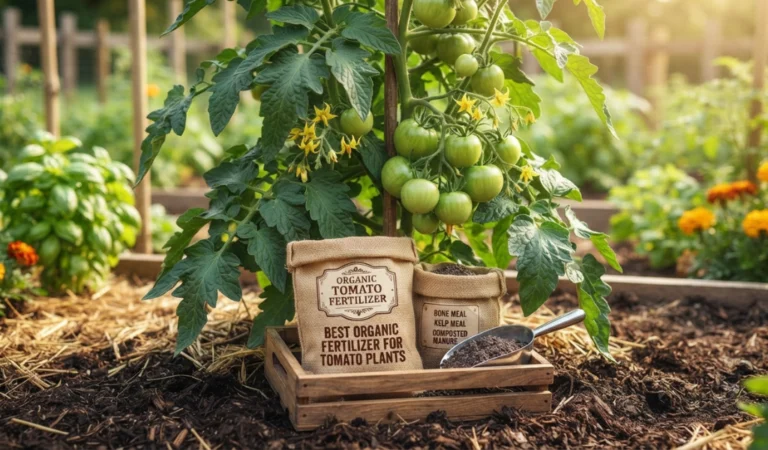
Tomatoes are heavy feeders. They pull a lot from the soil throughout the growing season, which means the nutrients in your garden beds can run low faster than you might expect. Using the best fertilizer for tomatoes plants can help provide essential nutrients throughout the growing season. Without proper feeding, plants may look green and healthy early on but struggle to produce fruit or develop problems like blossom end rot as the season progresses. The right fertilizer supports stronger roots, healthy growth, better flowering, and a more productive tomato harvest.
This guide covers everything from soil testing to the best fertilizer for tomato plants, homemade options, and a practical feeding schedule that works across different tomato varieties. By the end, you will know exactly which nutrients your tomatoes need, when to apply them, and how to avoid the most common fertilizer mistakes gardeners make.
Test the Soil Before You Fertilize Tomatoes
Before adding any fertilizer for tomatoes, you need to know what is already in your soil. Skipping a soil test is one of the most common mistakes gardeners make. You could be adding nutrients your plants already have plenty of while missing the ones they actually lack.
A basic soil test kit from your local garden center will measure pH, nitrogen, phosphorus, and potassium levels. For tomato plants, the ideal soil pH sits between 6.0 and 6.8. Outside that range, your plants cannot absorb nutrients properly, no matter how much fertilizer you apply.
If your soil test shows a deficiency, you can amend accordingly. Low nitrogen? Add blood meal or composted manure. Low potassium? Kelp meal works well. High nitrogen? Skip the nitrogen-heavy fertilizers and focus on phosphorus and potassium instead. Starting with a soil test saves money and prevents common problems down the line.
Best Fertilizer for Tomatoes: What Actually Works
The best fertilizer for tomatoes depends on your soil, your growing method, and the stage of growth your plants are in. There is no single product that works perfectly for every gardener, but there are some clear standouts worth knowing about.
A balanced vegetable fertilizer with an NPK ratio around 10-10-10 works well early in the season when plants are getting established. Once tomatoes begin to flower and set fruit, shifting to a fertilizer lower in nitrogen and higher in phosphorus and potassium encourages better fruit development. Too much nitrogen at this stage leads to lush foliage but fewer tomatoes.
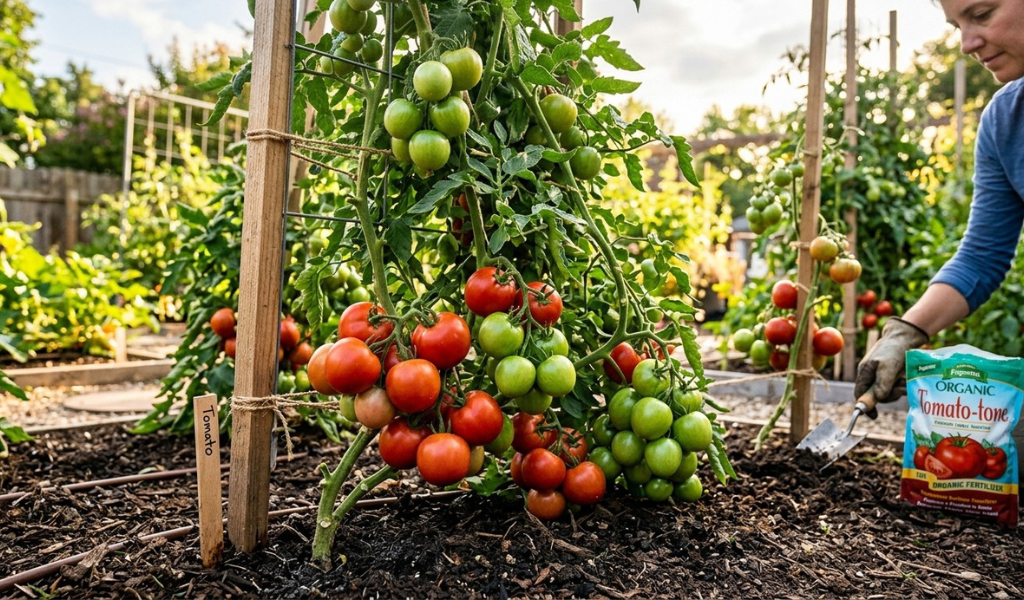
For gardeners who prefer organic options, there are excellent organic tomato fertilizers on the market, including Espoma Tomato-tone, which is formulated specifically for tomatoes with a gentle, slow-release blend that feeds consistently without burning plants.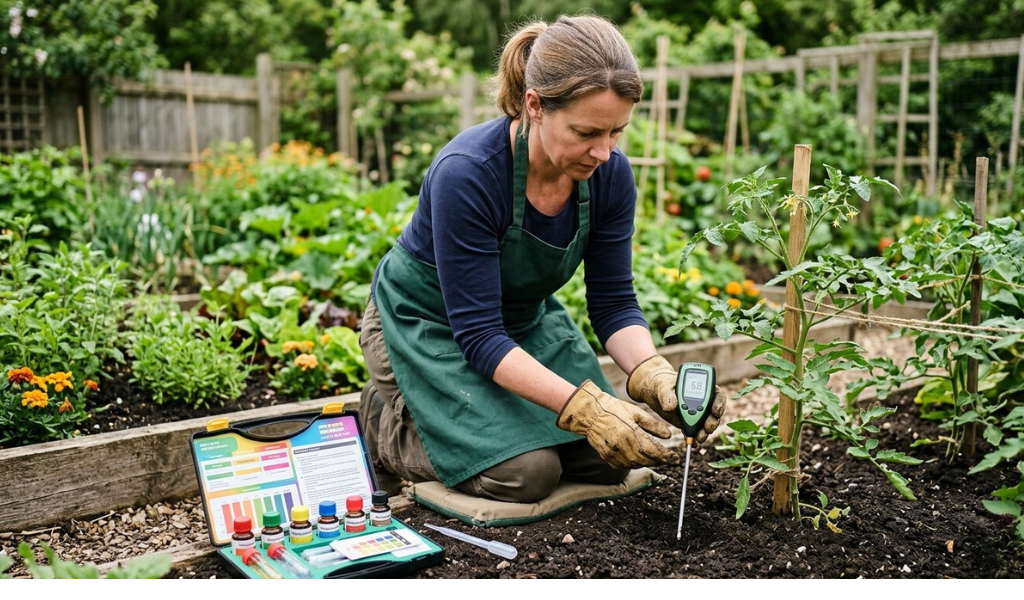 Dr. Earth Organic Tomato fertilizer is another popular choice, especially in raised beds and container gardens where soil nutrition can be harder to maintain.
Organic vs. Synthetic Fertilizer
Organic fertilizer options like compost, blood meal, kelp meal, and fish bone meal release nutrients slowly as soil microbes break them down. This gentler process reduces the risk of burning plants and supports long-term soil health. Organic fertilizers often improve soil structure over time, which benefits future growing seasons.
Synthetic fertilizer, on the other hand, delivers nutrients quickly and in precise amounts. Water-soluble synthetic options like Miracle-Gro Tomato Plant Food are easy to use and show results fast. However, over-reliance on synthetic fertilizer can reduce soil biology and lead to nutrient imbalances if not monitored carefully.
The bottom line: organic fertilizers build healthy soil over time, while synthetic options can fill immediate gaps. Many experienced gardeners use a combination of both depending on the growth stage.
Homemade Tomato Fertilizers That Actually Feed Your Plants
Not every great fertilizer for tomato plants comes from a bag. Some of the most effective plant food options can be made at home using common kitchen and garden materials.
Compost tea is one of the simplest homemade fertilizers. Steep finished compost in water for 24 to 48 hours, strain the liquid, and apply it around the base of your tomato plants. It delivers a gentle mix of nutrients and beneficial microorganisms that support plant health.
Banana peel fertilizer is a natural source of potassium. You can bury chopped banana peels around your plants or blend them with water and apply as a liquid fertilizer. Potassium is especially important during the fruiting stage.
Eggshell fertilizer provides calcium, which is a key micronutrient that helps prevent blossom end rot in tomatoes. Crush dried eggshells and work them into the soil around your plants at planting time or throughout the growing season.
Epsom salt (magnesium sulfate) is often used as a soil amendment for tomatoes. If a soil test reveals low magnesium levels, dissolving one tablespoon of Epsom salt per gallon of water and applying it every two weeks can help with chlorosis and overall plant vigor.
How to Choose the Right Fertilizer for Your Tomato Plants
Choosing a fertilizer feels complicated because there are so many forms. Granular fertilizer, liquid fertilizer, slow-release fertilizer, water-soluble options — each has its place depending on how and where you are growing.
Granular fertilizer is easy to apply and ideal for amending soil at planting time. Slow-release granular fertilizers break down over weeks or months, providing a steady supply of nutrients without frequent reapplication.
Liquid fertilizer is absorbed quickly and works well during active growth phases. Apply it every one to two weeks during the growing season for consistent feeding.
Slow-release fertilizer is particularly useful in raised beds and containers where nutrients leach out more quickly with regular watering. One application can feed plants for several months.
When reading a fertilizer label, look at the NPK ratio first. The three numbers represent nitrogen (N), phosphorus (P), and potassium (K) by percentage. Understanding what these numbers mean for your tomatoes at each growth stage is key to getting fertilizer right.
What Necessary Nutrients Do Tomatoes Need to Thrive?
Tomatoes are heavy feeders that require a range of nutrients throughout the growing season. While NPK gets most of the attention, micronutrients matter just as much. 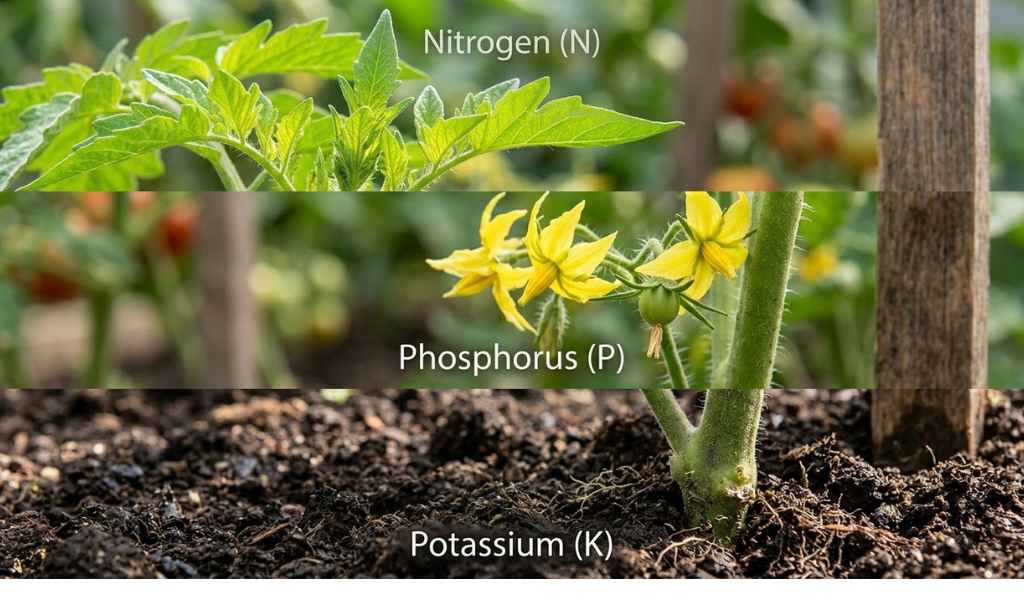
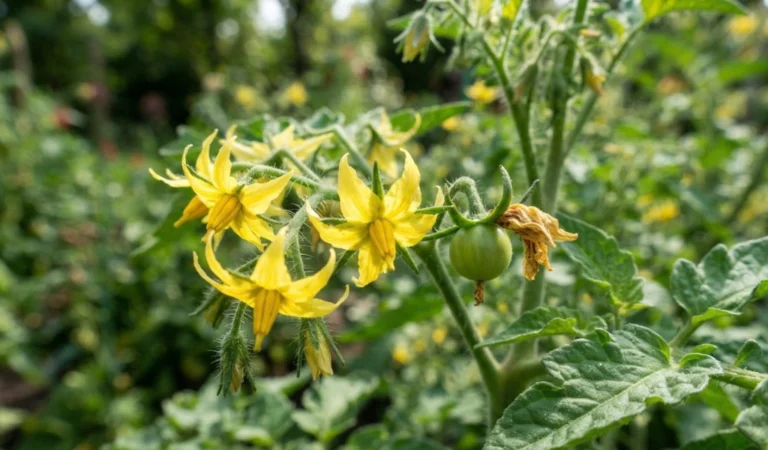
Nitrogen drives leafy, vegetative growth. Young plants need a moderate nitrogen supply early on, but too much later in the season pushes plants to produce foliage instead of fruit.
Phosphorus supports root development and fruit production. At transplanting and again during flowering, phosphorus is especially important.
Potassium regulates water movement in the plant, strengthens cell walls, and contributes to flavor development in the fruit. Tomatoes need consistent potassium throughout the growing season.
Calcium prevents blossom end rot, a common problem where the bottom of the tomato turns black and leathery. Calcium deficiency is often related to irregular watering rather than a true soil shortage, but adding lime or gypsum can help.
Magnesium supports chlorophyll production. Without it, leaves may turn yellow between the veins, a condition called interveinal chlorosis.
Boron, manganese, and iron are micronutrients that play roles in fruit set, enzyme function, and overall plant health. They are rarely deficient in well-amended garden beds but can become an issue in containers or highly leached soils.
Tomato Fertilizer Mix for Seed Starting
When starting tomatoes from seed, less is more. Seeds contain enough energy to germinate on their own, and adding fertilizer too early can burn delicate seedlings.
Use a seed starting mix that is light and well-draining. Once seedlings develop their first true leaves, you can begin feeding with a diluted liquid fertilizer. A quarter-strength dose of a balanced organic fertilizer applied once a week is enough to support young plants without overwhelming them.
Avoid fertilizers high in nitrogen at this stage. The goal during seed starting is steady, compact growth rather than rapid, leafy development.
What Tomato Fertilizer to Add at Transplanting
The moment you move seedlings into the garden is one of the most important fertilizing opportunities of the season. Getting transplanting nutrition right sets plants up for the rest of the growing season.
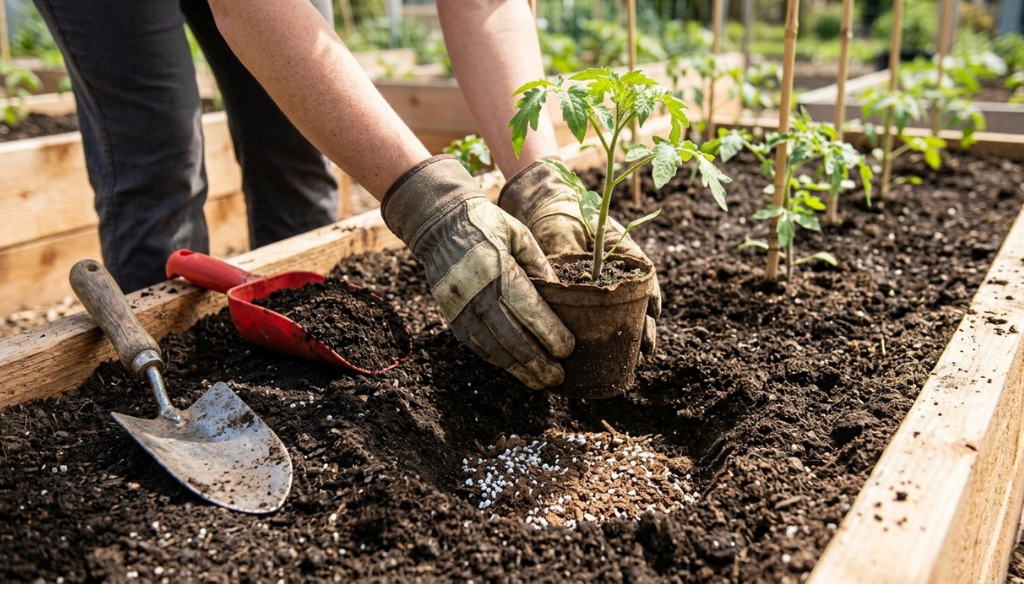 Compost
Work two to four inches of finished compost into your garden beds before transplanting. Compost improves soil structure, provides a slow release of nutrients, and feeds the soil biology that supports plant health over time. It is one of the most important inputs for growing healthy tomatoes.
Blood Meal (Nitrogen)
If your soil test shows low nitrogen, adding blood meal at transplanting gives young plants a boost when they need it most. Work it into the soil at the recommended label rate. Blood meal is concentrated, so using more than directed can burn plants.
Kelp Meal (Potassium and Trace Minerals)
Kelp meal is a natural source of potassium and a wide range of trace minerals that can be difficult to find in other fertilizers. Work it into the planting hole at transplanting, or apply it as a top dressing every few weeks throughout the growing season.
What About Phosphorus?
Phosphorus supports root development at transplanting, which is exactly what newly moved seedlings need. Bone meal and fish bone meal are excellent organic sources of phosphorus. Work a small handful into the planting hole before placing your transplant.
Avoid high-phosphorus fertilizers if your soil test already shows adequate levels. Excess phosphorus can interfere with the uptake of other nutrients, particularly zinc and iron.
Soil Biology Booster
Mycorrhizal inoculants are worth mentioning here. These beneficial fungi form a partnership with plant roots, extending their reach into the soil and improving nutrient and water uptake. Applying a mycorrhizal inoculant directly to the roots at transplanting can noticeably improve establishment speed and overall plant vigor.
Shop Fertilizing Essentials
A well-stocked garden shed makes it much easier to stay on top of your tomato fertilizer schedule. Here are a few essentials worth keeping on hand throughout the growing season:
- A soil test kit or digital meter for monitoring pH and nutrient levels
- A balanced granular fertilizer or an organic tomato fertilizer blend
- Blood meal and kelp meal for targeted nutrient corrections
- Bone meal or fish bone meal for phosphorus at planting
- Compost or aged manure for ongoing soil health
- A watering can or garden sprayer for applying liquid fertilizer
- Epsom salt for magnesium supplementation if needed
When to Side Dress Tomato Plants with Additional Fertilizer
Side dressing is the practice of applying fertilizer around the base of established plants during the growing season. For tomatoes, timing matters.
The first side dressing usually happens about two to three weeks after transplanting, once plants are visibly growing and roots are settled in. Use a balanced granular fertilizer or a layer of compost worked into the soil around each plant, keeping it a few inches away from the stem.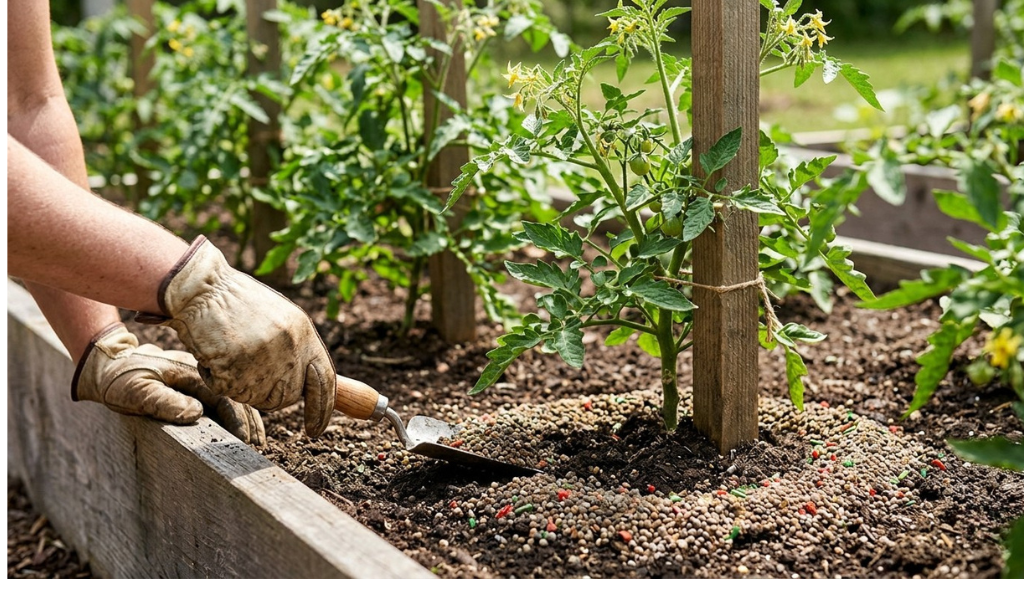
When plants begin to flower, switch to a fertilizer lower in nitrogen and higher in potassium. Too much nitrogen at this stage redirects energy away from fruit production. A tomato-specific fertilizer or a 5-10-10 blend works well during this phase.
Continue feeding every three to four weeks through the growing season. If you are using liquid fertilizer, weekly applications at a moderate strength are generally more effective than infrequent heavy doses. Keep an eye on your plants throughout the season. Yellow leaves, slow growth, or poor fruit development are all signs that feeding may need to be adjusted.
Grow Healthy Tomato Plants: Final Thoughts
Good tomato fertilizer recommendations are not about finding a miracle product. They are about understanding what your tomato plant needs at each stage of growth and providing it consistently. Start with a soil test, build your soil with compost, choose the right NPK ratio for each growth phase, and pay attention to what your plants are telling you.
Whether you go fully organic or use a mix of organic and synthetic fertilizer, the plants in your vegetable garden will reward consistent, thoughtful feeding with better growth, stronger roots, and a more abundant tomato harvest. The practices in this guide apply across tomato varieties and growing situations, from small raised beds to large garden plots.
Give your tomatoes the nutrition they need and they will give you exactly what you planted them for.
Frequently Asked Questions
Can I use Tomato Fertilizer 4-18-38 in a hydroponic system?
Yes, a 4-18-38 NPK ratio works well in hydroponic tomato systems because it is high in potassium and phosphorus while keeping nitrogen at a controlled level. However, in a hydroponic setup, you also need to supplement with calcium and magnesium separately, since those micronutrients are not included in a standard 4-18-38 blend. Always check the full nutrient profile of your fertilizer, not just the NPK numbers.
Is 10-10-10 fertilizer good for tomato plants?
A 10-10-10 balanced fertilizer is a solid starting point early in the season when tomato plants are young and establishing their root systems. It provides equal parts nitrogen, phosphorus, and potassium, which supports overall growth. However, once plants begin to flower and fruit, shifting to a formula lower in nitrogen and higher in potassium gives better results.
Can I use coffee grounds as an organic fertilizer for tomato plants?
Coffee grounds can be used as an organic fertilizer in moderation. They add a small amount of nitrogen to the soil and can slightly lower soil pH, which may benefit tomatoes growing in alkaline conditions. The best approach is to mix coffee grounds into compost rather than applying them directly to the soil in large amounts, as too much can compact and reduce drainage around your plants.
What are common tomato fertilizer mistakes?
The most common mistake is adding too much nitrogen, especially during the fruiting stage. This produces lush foliage but reduces fruit yield. Other common errors include skipping a soil test, applying fertilizer to dry soil (which can burn roots), ignoring calcium deficiency until blossom end rot appears, and over-fertilizing with synthetic fertilizer without monitoring soil health. Less consistent, smaller applications are almost always better than infrequent heavy doses.
Is a 10-30-20 fertilizer good for tomatoes?
A 10-30-20 fertilizer is high in phosphorus and potassium relative to nitrogen, which makes it a reasonable choice during the flowering and fruiting stages of tomato growth. The elevated phosphorus supports fruit set, while the higher potassium promotes fruit quality and disease resistance. It is not ideal for young seedlings or early vegetative growth, when a more balanced NPK ratio works better.
What is the best fertilizer schedule for tomato plants?
A practical schedule looks like this: at transplanting, incorporate compost, bone meal, and kelp meal into the soil. Two to three weeks later, apply a balanced granular or liquid fertilizer. Once flowering begins, switch to a low-nitrogen, higher-potassium formula. Continue feeding every three to four weeks through the growing season, tapering off as the season nears its end. Adjust based on what your soil test and plant appearance indicate throughout the season.
What is the best fertilizer for tomato plants?
There is no single best fertilizer for all tomato growers, but a combination approach tends to produce the best results. Starting with compost and organic amendments at planting, then supplementing with a tomato-specific granular or liquid fertilizer throughout the growing season, covers most nutritional needs. If you prefer a single product recommendation, Espoma Tomato-tone and Dr. Earth Organic Tomato are two of the most consistently well-reviewed options for organic gardeners. For fast results, a water-soluble balanced fertilizer applied every one to two weeks is effective.