Organic Tomato Hornworm Control: Natural Ways to Protect Plants
Organic Tomato Hornworm Control: Complete Guide
If you have ever walked into your garden and found half your tomato plant stripped of leaves overnight, you already know how destructive these pests can be. Organic tomato hornworm control is one of the most searched topics among backyard gardeners every summer, and for good reason. These fat, green caterpillars can demolish a healthy tomato plant in just a few days if left unchecked. The good news is that you do not need harsh chemicals to keep them away. With the right combination of handpicking, beneficial insects, and organic sprays, you can protect your harvest while keeping your garden safe for pollinators, pets, and family.
This guide walks you through everything you need to know about spotting hornworms early, understanding their life cycle, and using proven organic methods to stop them before they ruin your tomato crop. Whether you are growing a single container plant on a balcony or managing rows of tomatoes in a backyard plot, the same principles apply. If you are just starting out and want a broader foundation, our companion resource, Vegetable Backyard Garden: A Simple Vegetable Garden Guide for Every Gardener, covers the basics of building healthy soil and choosing the right vegetable varieties, which makes pest problems like hornworms much easier to manage from the start.
Let’s dig into how to identify these pests and stop them naturally, without reaching for synthetic pesticides.
Identifying Tomato Hornworms
Before you can control hornworms, you need to know exactly what you are dealing with. These caterpillars are surprisingly easy to miss at first glance because their coloring blends almost perfectly with tomato foliage. A mature hornworm can grow up to four inches long, with a plump green body, white diagonal stripes along its sides, and a small horn-like projection near its rear end. That horn looks intimidating but is completely harmless to humans.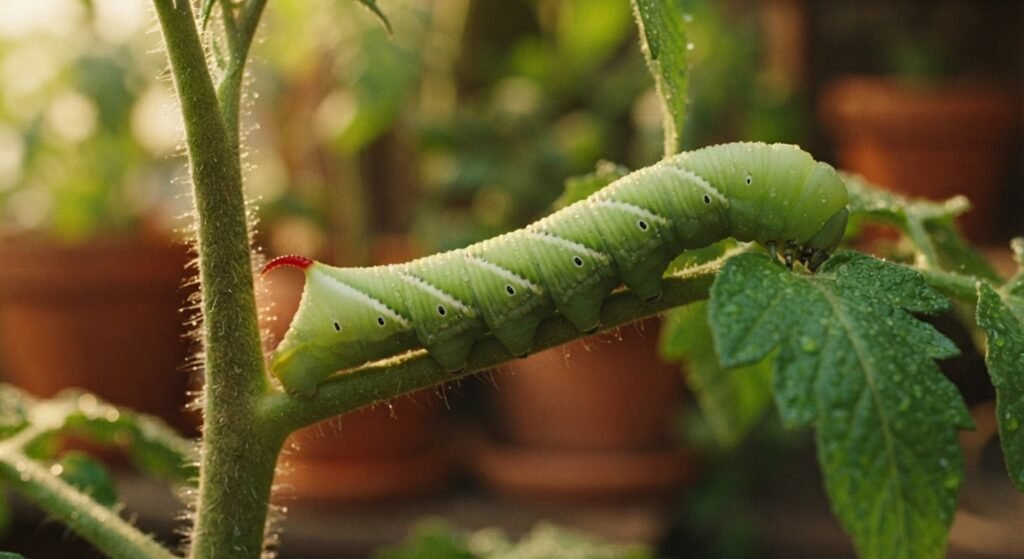
Common signs of hornworm damage
The first clue most gardeners notice is not the caterpillar itself but the damage it leaves behind. Look for stems that have been stripped bare of leaves, almost as if someone took scissors to the plant overnight. Chewed leaf edges, missing entire leaflets, and dark green or black droppings scattered on the soil or on lower leaves are all telltale signs. These droppings, called frass, are often the easiest way to locate a hornworm since the insect itself can be tricky to spot even when you are staring right at the plant.
Another sign to watch for is damage to young, unripe tomatoes. Hornworms will sometimes chew large gouges directly into the fruit, especially when foliage on the upper part of the plant has already been eaten. If you notice a sudden and rapid loss of leaves paired with these other clues, it is time to inspect your plants closely, ideally in the early morning or evening when hornworms are most active and easier to see.
Tomato hornworm vs tobacco hornworm
Many gardeners use the term hornworm loosely, but there are actually two closely related species that attack tomato plants. The tomato hornworm has eight V-shaped white markings along its body and a black horn. The tobacco hornworm, on the other hand, has seven diagonal white stripes with black edging and a red horn. Both caterpillars feed on tomato, pepper, eggplant, and potato plants, and both cause similar damage, so the control methods described in this guide work equally well for either pest.
Knowing the difference matters mostly for identification purposes rather than treatment, since your organic control strategy will not change much depending on which species you find. Still, it helps to recognize both so you are not caught off guard by slight variations in coloring.
Organic Ways to Control Tomato Hornworms
There is no single magic solution for keeping hornworms off your tomato plants. Instead, effective organic pest management relies on layering several strategies together. Combining physical removal, encouraging natural predators, and using targeted organic sprays gives you the best results without introducing synthetic chemicals into your garden or onto your food.
Start by inspecting your plants regularly, at least two to three times a week during peak growing season. Early detection makes every other control method far more effective, since a small population of hornworms is much easier to manage than an infestation that has already caused significant damage. Rotating your tomato crops each season, tilling the soil in fall to disturb overwintering pupae, and keeping the area around your plants free of weeds also reduce the chances of a heavy hornworm outbreak the following year.
Companion planting can play a supporting role too. Marigolds, basil, and dill are often planted near tomatoes because they attract beneficial insects that prey on hornworm eggs and young larvae. While companion planting alone will not eliminate an existing infestation, it creates a garden environment that naturally discourages pests from settling in.
Handpicking Hornworms From Tomato Plants
Handpicking remains one of the simplest and most reliable organic control methods available, especially for home gardeners with a manageable number of plants. It requires no special tools or products, just a bit of patience and a keen eye.
The best time to search for hornworms is early morning or dusk, when the light hits the leaves at an angle that makes the caterpillars’ shadows more visible against the foliage. Some gardeners also use a blacklight flashlight after dark, since hornworms glow faintly under UV light, making them much easier to spot on large plants.
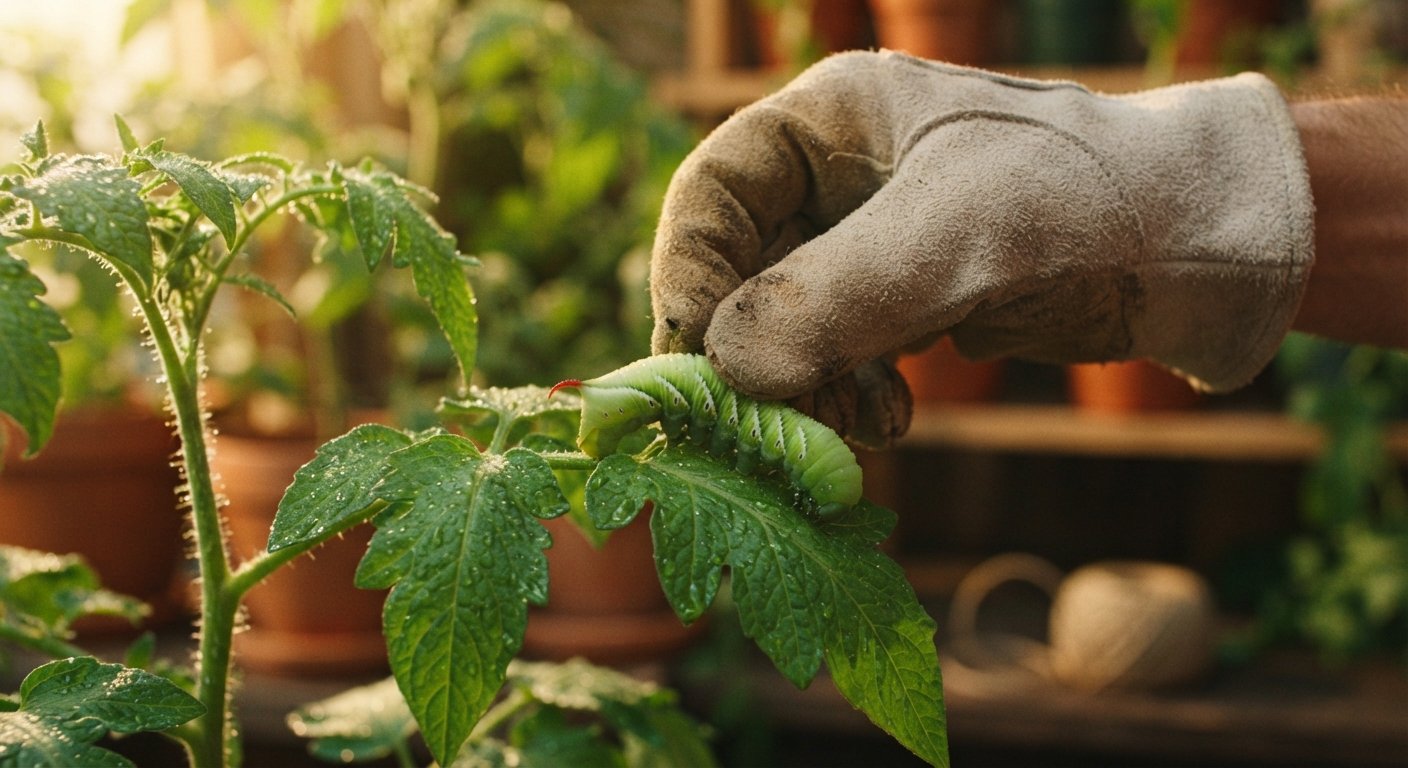
Once you find a hornworm, simply pluck it off the plant by hand or with a pair of garden gloves and drop it into a bucket of soapy water. If handling caterpillars is not for you, you can also snip them in half with garden shears or relocate them far away from your vegetable beds. Checking the undersides of leaves and the main stem is important too, since hornworms often rest in these hidden spots during the hottest part of the day.
Consistency matters here. A single pass through your garden will not catch every hornworm, especially newly hatched ones that are still tiny and pale green. Make handpicking part of your regular garden routine throughout the growing season for the best results.
Using Beneficial Insects for Natural Control
Nature already has a system in place for keeping hornworm populations in check, and encouraging these natural predators is one of the smartest long-term strategies for organic gardening. Beneficial insects can dramatically reduce hornworm numbers without any effort on your part once they establish themselves in your garden.
Braconid wasps
Braconid wasps are tiny parasitic wasps that lay their eggs inside the body of a hornworm. As the wasp larvae grow, they feed on the caterpillar from within and eventually emerge to spin small white cocoons that look like grains of rice sticking out of the hornworm’s back. If you ever spot a hornworm covered in these small white pods, leave it alone. That caterpillar is already dying, and the wasps that hatch from those cocoons will go on to parasitize even more hornworms in your garden.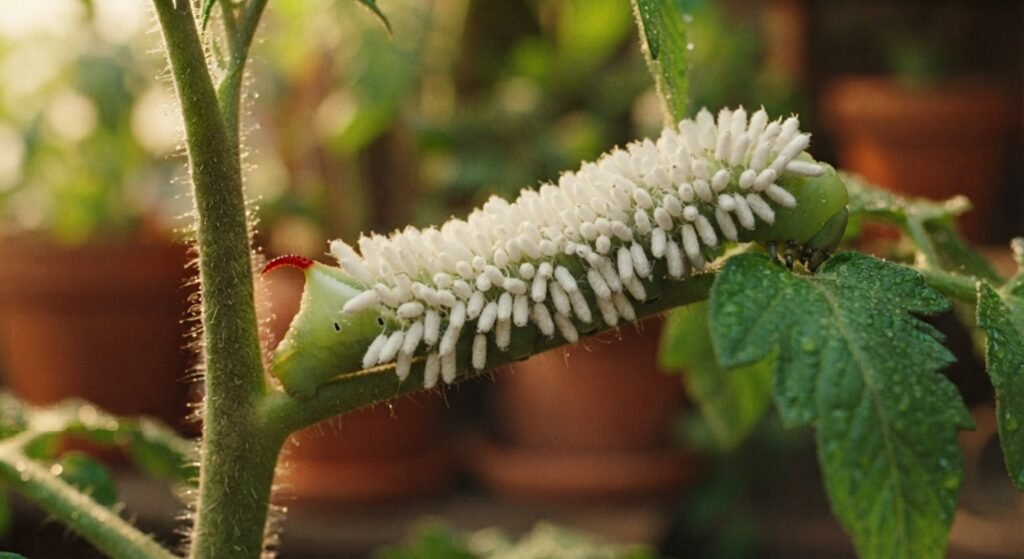
Attracting braconid wasps naturally is fairly easy. Planting small-flowered herbs like dill, fennel, and yarrow gives adult wasps a source of nectar, which encourages them to stick around and continue laying eggs on any hornworms they find.
Other beneficial garden insects
Braconid wasps are not the only allies you have. Ladybugs and lacewings feed on hornworm eggs before they even hatch, helping to reduce the overall population before it becomes a problem. Ground beetles are another overlooked predator, often hunting hornworm larvae at night when the caterpillars are most active.
To attract and support these beneficial insects, avoid using broad spectrum pesticides that kill indiscriminately. Planting a diverse mix of flowering plants throughout your vegetable garden gives these helpful predators the food and shelter they need to thrive, which in turn keeps hornworm numbers naturally low season after season.
Organic Sprays for Tomato Hornworms
When handpicking and beneficial insects are not enough on their own, organic sprays can offer an extra layer of protection. Unlike synthetic pesticides, these treatments are derived from natural sources and break down quickly in the environment, making them a safer choice for edible crops.
Insecticidal soap is one option that works well on young hornworm larvae by disrupting their outer protective layer, though it is less effective on larger, more mature caterpillars. Diatomaceous earth, a fine powder made from fossilized algae, can be dusted around the base of plants and on leaf surfaces to damage the exoskeleton of small caterpillars, though it needs to be reapplied after rain.
For heavier infestations, many organic gardeners turn to two specific treatments that consistently deliver strong results: Bacillus thuringiensis, commonly known as Bt, and neem oil. Both are covered in more detail in the sections below, since they deserve special attention as the most effective organic options available for hornworm control.
Using Bt for Hornworm Control
Bacillus thuringiensis, or Bt, is a naturally occurring soil bacterium that has become a cornerstone of organic pest management. It works by producing a protein that is toxic specifically to caterpillars when ingested, while remaining harmless to humans, pets, birds, and most beneficial insects.
To use Bt effectively, mix it according to the label instructions and spray it directly onto the leaves of your tomato plants, focusing on both the tops and undersides where hornworms feed. Once a caterpillar eats treated foliage, the bacteria disrupt its digestive system, and the hornworm typically stops feeding within a day or two before dying shortly after.
Timing matters quite a bit with Bt since it breaks down when exposed to sunlight and needs to be reapplied every five to seven days during an active infestation, or sooner if it rains. Applying it in the early evening gives the product more time to work before the next day’s sun begins to degrade it. Bt is most effective against younger, smaller hornworms, so catching an infestation early makes this treatment even more successful.
One of the biggest advantages of Bt is its selectivity. Because it only affects caterpillars that actually consume treated leaves, it will not harm bees, ladybugs, or the braconid wasps you are trying to encourage in your garden, making it one of the safest tools in your organic pest control arsenal.
Neem Oil and Hornworm Management
Neem oil, extracted from the seeds of the neem tree, is another staple in organic gardening that works well against tomato hornworms, particularly at earlier life stages. It functions in a few different ways, acting as a feeding deterrent, disrupting the hormones caterpillars need to grow and molt, and smothering eggs before they hatch.
To apply neem oil, dilute it with water according to the product instructions and spray it evenly across the plant, making sure to coat the undersides of leaves where hornworms and their eggs are often found. Like Bt, neem oil is most effective on younger caterpillars and works better as a preventative measure or early intervention rather than a solution for large, nearly mature hornworms that have already caused significant damage.
Apply neem oil in the early morning or late evening to avoid harming beneficial insects that may be active during the day, and to prevent leaf burn that can occur when oil-based sprays are applied under direct sun. Regular applications every seven to fourteen days throughout the growing season can help keep hornworm populations low, especially when combined with handpicking and encouraging natural predators.
It is worth noting that neem oil has a mild odor and can leave a slight residue on leaves, but it breaks down naturally within a few days and is considered safe for use on edible crops when applied correctly and with proper harvest intervals observed.
Preventing Future Hornworm Problems
Stopping this year’s hornworms is only half the battle. Taking a few preventative steps in the off season and throughout the year can significantly reduce how many hornworms show up in your garden next summer.
Tilling your soil in the fall after harvest is one of the most effective long-term strategies. Hornworms pupate underground over winter, burrowing several inches into the soil before emerging as moths in spring. Turning over the soil exposes these pupae to birds and cold temperatures, killing a large percentage before they have a chance to mature and lay eggs the following season.
Crop rotation also helps break the hornworm life cycle. Avoid planting tomatoes, peppers, or eggplants in the same spot year after year, since moths tend to lay eggs near where they previously fed as caterpillars. Rotating these crops to a different area of your garden each season makes it harder for hornworm populations to build up over time.
Keeping your garden beds weeded and clean throughout the season removes hiding spots and alternate food sources for hornworm moths. Installing floating row covers early in the season, before moths begin laying eggs, can also physically block them from reaching your plants in the first place, though covers need to be removed once flowers appear so pollinators can reach the plants.
Finally, continuing to attract and support beneficial insects like braconid wasps and ladybugs throughout the year, not just during an active infestation, creates a garden ecosystem that naturally keeps hornworm numbers in check season after season.
Final Thoughts
Tomato hornworms can be alarming to discover, especially when they strip a healthy plant of its leaves in what feels like overnight. But with consistent monitoring, handpicking, and the support of beneficial insects and organic sprays like Bt and neem oil, you can protect your tomato harvest without ever reaching for synthetic chemicals. The key is staying proactive rather than reactive, checking your plants regularly, and layering multiple organic strategies together for the best results.
If you are building out your vegetable garden and want more foundational tips beyond pest control, take a look at our full guide for practical advice on soil health, plant spacing, and choosing varieties that thrive in your specific growing conditions. A strong, healthy garden from the ground up makes every pest, including hornworms, much easier to manage.
Frequently Asked Questions
Are tomato hornworms harmful to humans or pets?
No. Despite their intimidating horn and large size, tomato hornworms do not bite or sting and pose no danger to humans or pets. The horn is purely for appearance and cannot cause any harm if touched.
How quickly can hornworms destroy a tomato plant?
A single mature hornworm can eat a surprising amount of foliage in just 24 to 48 hours. A small infestation of several hornworms can strip a young or small tomato plant bare in just a few days if left untreated.
Is it safe to use Bt and neem oil together?
Yes, many gardeners alternate between Bt and neem oil or use them at different stages of an infestation. Just avoid spraying both on the same day to reduce plant stress, and always follow label directions for reapplication timing.
Do hornworms turn into a specific type of moth?
Yes. Tomato hornworms mature into the five-spotted hawk moth, while tobacco hornworms become the Carolina sphinx moth. Both are large, fast-flying moths that are sometimes mistaken for hummingbirds due to their size and hovering flight pattern.
Should I kill a hornworm covered in white cocoons?
No, leave it alone. Those white cocoons belong to parasitic braconid wasps that are already killing the hornworm from within. Allowing the wasps to complete their life cycle helps control future hornworm populations naturally.
Can I use organic methods if I only have a few container tomato plants?
Absolutely. Handpicking is especially effective for container gardens since there are fewer plants to check, and organic sprays like neem oil work just as well in small-scale setups as they do in larger garden beds.
What time of year are hornworms most active?
Hornworms are typically most active from midsummer through early fall, with populations often peaking in July and August depending on your climate and growing zone. Regular monitoring during these months is especially important.