How to Prevent Blossom End Rot in Tomatoes: Watering, Calcium, and Soil Tips
How to Prevent Blossom End Rot in Tomatoes: Complete Guide
Few things are more frustrating than watching your tomatoes grow big and healthy, only to flip one over and find a dark, sunken patch rotting away at the bottom. If you have experienced this, you already know why so many gardeners search for how to prevent blossom end rot in tomatoes every single growing season. The good news is that this common problem is almost always preventable once you understand what is actually causing it.
Blossom end rot is not a disease and it does not spread from plant to plant the way fungal infections do. Instead, it is a physiological condition tied directly to how your plants absorb water and calcium. Once you know what triggers it, fixing the problem becomes much more straightforward than most gardeners expect.
This guide covers everything you need to know, from spotting the earliest symptoms to building watering and feeding habits that keep it from coming back. And since a healthy tomato plant is your best defense against nearly every garden problem, pairing these tips with other organic practices makes a real difference. If pests are also giving you trouble this season, our guide on Organic Tomato Hornworm Control: Natural Ways to Protect Plants walks through safe, chemical-free methods for keeping hungry caterpillars off your plants too, since a stressed plant fighting pests is often more prone to calcium issues as well.
Let’s break down exactly what causes blossom end rot and how to stop it before it ruins your harvest.
What Is Blossom End Rot in Tomatoes?
Blossom end rot is a condition that affects the bottom of the tomato fruit, the same spot where the flower blossom used to be before the fruit formed. It happens when the developing fruit does not receive enough calcium during a critical growth stage, causing the cell walls at the blossom end to break down and form a dark, leathery patch.
Despite how it looks, blossom end rot is not caused by insects, fungus, or bacteria. It is purely a calcium and water distribution problem, which is actually good news because it means the fix does not involve pesticides or fungicides at all. Understanding this distinction is the first step toward solving it correctly, since treating it like a disease will not fix the underlying issue.
Common signs and symptoms
The first sign usually appears when the fruit is still green and about half its full size. A small, water-soaked spot forms at the blossom end, which is the bottom of the tomato opposite the stem. Over the next several days, this spot darkens, growing larger and turning brown, black, or even leathery in texture. In more severe cases, the affected area can become sunken and flattened, sometimes covering nearly a third of the entire fruit.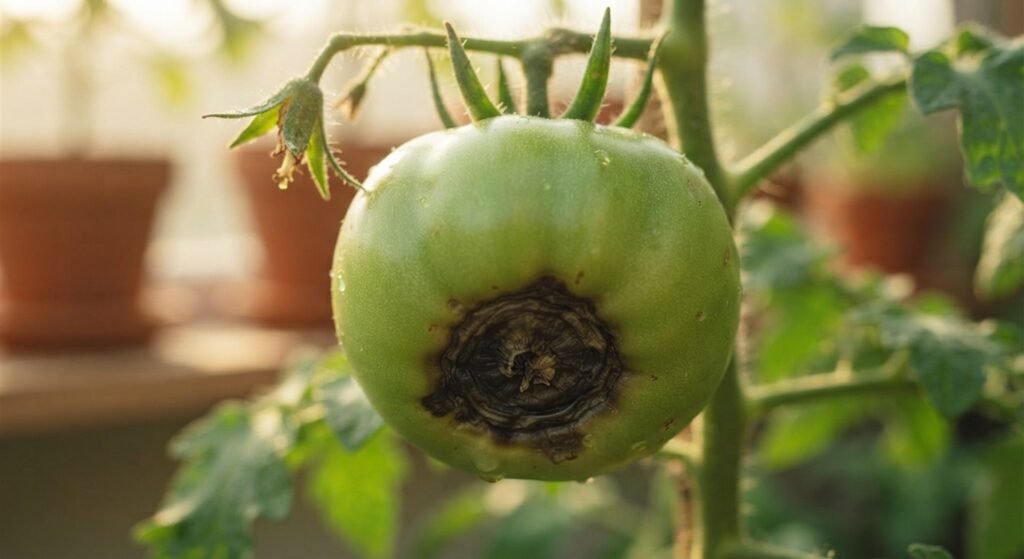
Secondary mold or fungal growth can sometimes appear on the rotted tissue afterward, but this is a result of the damage rather than the original cause. Catching the symptoms early, while the spot is still small, gives you a much better chance of saving the rest of the fruit cluster and adjusting your care routine before more tomatoes are affected.
Tomato varieties commonly affected
While any tomato variety can develop blossom end rot under the wrong conditions, some are more prone to it than others. Roma tomatoes and other paste varieties tend to show symptoms more often, largely because of their elongated shape and rapid early fruit development. Large beefsteak varieties are also frequently affected since their bigger fruit size demands a steady and higher calcium supply during growth.
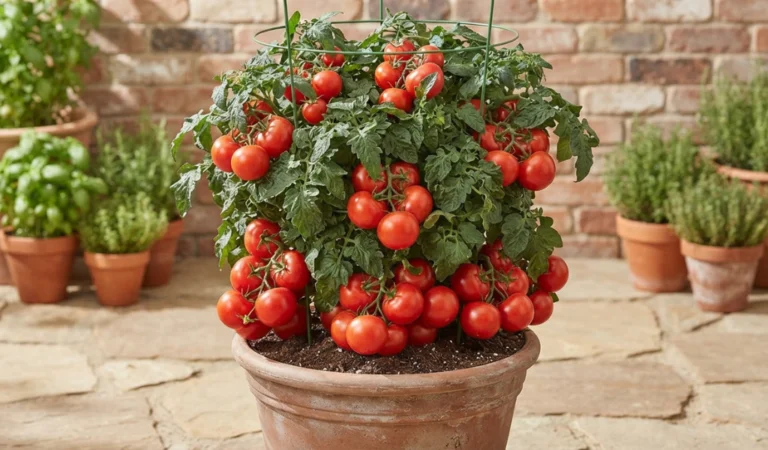
Container grown tomatoes of any variety face a higher risk too, simply because pots dry out faster and make consistent watering more difficult. If you are growing in containers, paying extra attention to soil moisture becomes even more important for preventing this issue from showing up in the first place.
Main Causes of Blossom End Rot
At its core, blossom end rot comes down to calcium not reaching the fruit in sufficient amounts at the right time. But the tricky part is that this is rarely because the soil actually lacks calcium. In most gardens, there is already plenty of calcium present. The real problem is usually inconsistent watering, which disrupts the plant’s ability to move calcium from the soil up into the developing fruit.
Calcium travels through a plant dissolved in water, moving upward through the roots and stems along with moisture. When soil moisture fluctuates dramatically, swinging from bone dry to soaking wet, the plant struggles to transport calcium efficiently to the fastest growing parts, which are often the developing fruits. This is why blossom end rot tends to show up right after a stretch of uneven watering, especially during hot, dry spells followed by heavy rain.
Excess nitrogen fertilizer can also contribute to the problem. Too much nitrogen pushes the plant to focus heavily on leafy green growth, which competes with the fruit for available calcium. Root damage from aggressive tilling or transplanting, high soil salt levels, and rapid early season growth spurts can all play a role as well, making this a condition with several contributing factors rather than one single cause.
Maintain Consistent Soil Moisture
If there is one single habit that prevents blossom end rot more than anything else, it is watering consistently. Tomato plants need steady, even moisture from the moment they are transplanted through the entire fruiting period, and dramatic swings between dry and wet soil are usually the biggest trigger behind calcium related problems.
Aim to water deeply two to three times a week rather than giving your plants a light sprinkle every day. Deep watering encourages roots to grow further down into the soil where moisture levels stay more stable, making the plant less vulnerable to surface level dry spells. A simple way to check if it is time to water is to stick a finger about two inches into the soil. If it feels dry at that depth, it is time to water again.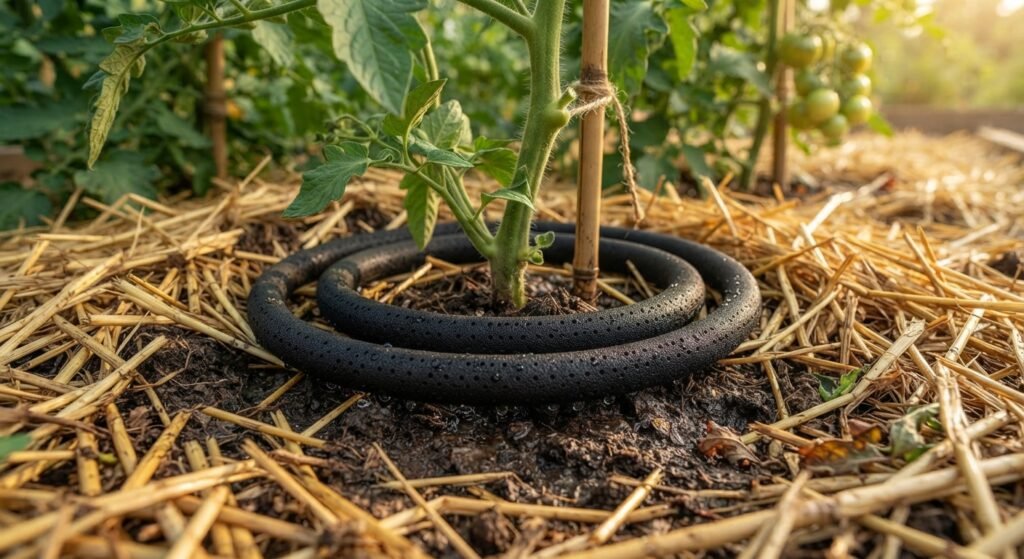
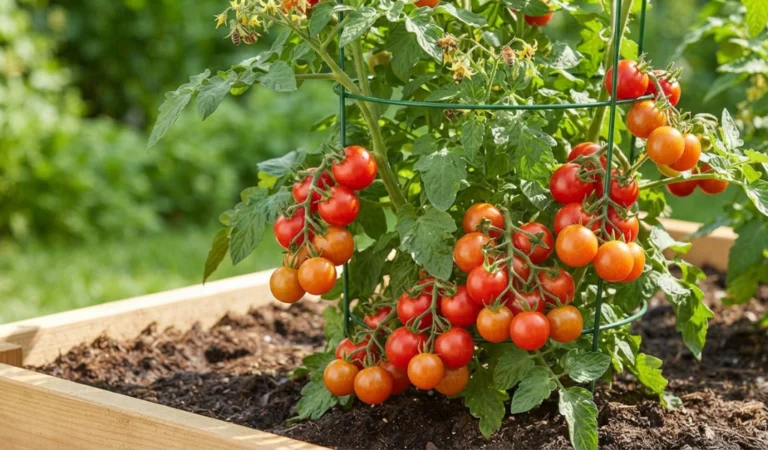
During particularly hot weeks, container plants and raised beds may need watering more frequently since they dry out faster than plants grown directly in the ground. Installing a drip irrigation system or soaker hose can make a huge difference here, since it delivers water slowly and evenly right at the root zone, removing much of the guesswork involved in manual watering.
Provide Adequate Calcium for Tomato Plants
While a genuine calcium deficiency in the soil is less common than people assume, it can still happen, particularly in sandy soils or gardens with a very low soil pH. Testing your soil at the start of the season gives you a clear picture of what you are actually working with rather than guessing.
If a soil test does confirm low calcium levels, adding crushed eggshells, gypsum, or agricultural lime can help raise calcium content over time. Eggshells are a favorite among home gardeners since they are free and easy to work into the soil around the base of each plant, though they break down slowly and work better as a long-term solution rather than a quick fix.
For a faster response once symptoms have already appeared, a foliar calcium spray can be applied directly to the leaves and developing fruit. These sprays are absorbed more quickly than calcium applied to the soil, making them useful for addressing an active outbreak while you also work on fixing your watering routine, which remains the more important long-term solution.
Choose the Right Fertilizer
The fertilizer you choose plays a bigger role in preventing blossom end rot than many gardeners realize. Tomato plants need a balanced supply of nutrients, but leaning too heavily on nitrogen rich fertilizers can actually make blossom end rot worse rather than better.
Look for a fertilizer specifically formulated for tomatoes, typically labeled with a lower first number on the N-P-K ratio and higher middle and last numbers representing phosphorus and potassium. These nutrients support strong root development and healthy fruit formation without encouraging excessive leafy growth that competes with fruit for calcium.
Organic options like compost, well-rotted manure, and bone meal work particularly well since they release nutrients slowly and steadily rather than in one quick burst. This slow release pattern mirrors what a tomato plant actually needs throughout the season, providing steady nourishment without the sudden nutrient spikes that synthetic fertilizers can sometimes cause.
Mulch Around Tomato Plants
Mulching is one of the simplest and most effective tools for maintaining the consistent soil moisture that prevents blossom end rot. A two to three inch layer of organic mulch, such as straw, shredded leaves, or grass clippings, placed around the base of each tomato plant helps regulate soil temperature and dramatically slows down water evaporation.
Beyond moisture retention, mulch also suppresses weeds that would otherwise compete with your tomato plants for both water and nutrients. As organic mulch breaks down over the season, it slowly adds beneficial organic matter back into the soil, improving overall soil structure and its natural ability to hold moisture evenly over time.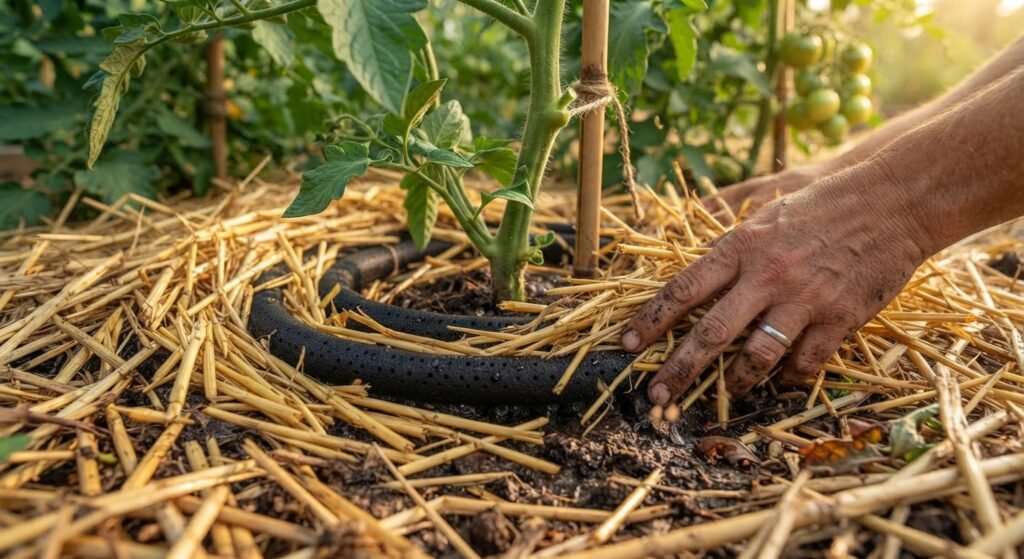
Apply mulch once the soil has warmed up in late spring, keeping it a few inches away from direct contact with the plant stem to avoid trapping excess moisture against it, which can lead to stem rot or other fungal issues. Refreshing the mulch layer partway through the season helps maintain its effectiveness as it naturally breaks down and compresses.
Avoid Root Damage and Plant Stress
A tomato plant’s roots are directly responsible for absorbing both water and calcium, so anything that damages or stresses the root system can interfere with calcium uptake and increase the risk of blossom end rot. Being mindful of how you handle your plants throughout the season makes a real difference here.
When transplanting seedlings, handle the root ball gently and avoid disturbing it more than necessary. Aggressive tilling or hoeing too close to established plants can sever fine feeder roots that are essential for nutrient absorption, so it is best to cultivate lightly and stay a few inches away from the base of each plant once it is established.
Temperature stress can play a role too. A sudden cold snap after transplanting, or extreme heat during flowering, can disrupt a plant’s normal functions, including calcium transport. Using row covers during unexpected cold spells and providing light afternoon shade during extreme heat waves can help reduce this kind of stress and keep your plants functioning normally during vulnerable periods.
Prevent Blossom End Rot Throughout the Growing Season
Preventing blossom end rot is not a one-time fix but an ongoing habit that needs attention from the moment you transplant seedlings until the last tomato is harvested. Early season prevention starts with proper soil preparation, working compost into your beds before planting and testing soil pH to ensure it falls within the ideal range of 6.2 to 6.8 for healthy calcium absorption.
As the season progresses, keep a consistent watering schedule and resist the urge to skip waterings during busy weeks, since even a few days of neglect can trigger symptoms on developing fruit. Keep an eye on the weather forecast too, since an unexpected dry spell followed by heavy rain is one of the most common triggers gardeners overlook until it is too late.
Regularly inspect your plants, checking the undersides and blossom ends of developing fruit at least once a week. Catching a single affected tomato early allows you to remove it and refocus your care routine before the problem spreads to other fruit on the same plant. By treating prevention as a season-long practice rather than a single fix, most gardeners find that blossom end rot becomes a rare inconvenience instead of a recurring frustration.
Final Thoughts
Blossom end rot might look alarming the first time you spot it, but once you understand that it comes down to calcium and water management rather than disease, it becomes a much easier problem to solve. Consistent watering, healthy soil, the right fertilizer, and a good layer of mulch work together to keep your tomato plants supplying calcium exactly where it needs to go.
Pair these habits with smart pest management and you will find your tomato patch becomes far more productive and far less stressful to maintain. A healthy, well cared for plant is naturally more resistant to almost every problem a garden can throw at it, blossom end rot included. Start with your watering routine this week, and you will likely see healthier fruit within just a few weeks.
Frequently Asked Questions
Can a tomato with blossom end rot still be eaten?
Yes, as long as you cut away the affected portion. The rest of the tomato is safe to eat since blossom end rot is a physiological issue, not a disease that spreads through the entire fruit.
Will blossom end rot go away on its own?
It often resolves on its own once watering becomes more consistent, since new fruit that forms after the underlying cause is corrected typically grows without symptoms. Existing affected fruit will not heal, but future fruit can be perfectly healthy.
How long does it take to fix blossom end rot once I start watering consistently?
Most gardeners notice improvement within one to two weeks, since that is roughly how long it takes for new fruit to form and develop under corrected watering conditions.
Does Epsom salt help prevent blossom end rot?
Not usually. Epsom salt contains magnesium, not calcium, and adding it can sometimes make blossom end rot worse by competing with calcium absorption. Stick to calcium specific solutions like gypsum or eggshells instead.
Can blossom end rot affect peppers and squash too?
Yes. Peppers, squash, watermelon, and eggplant can all develop blossom end rot under the same conditions, since the underlying cause of inconsistent calcium delivery applies to many fruiting vegetables, not just tomatoes.
Is blossom end rot more common in raised beds or containers?
Container gardens tend to see it more often since pots dry out faster and make consistent moisture harder to maintain. Raised beds are less prone to it than containers but still require more attentive watering than in-ground gardens.
Should I remove affected tomatoes from the plant right away?
Yes, removing badly affected fruit early redirects the plant’s energy toward healthy, developing tomatoes and makes it easier to monitor the rest of the plant for new symptoms.