Pepper Fertilizer Requirements: Choosing the Right Fertilizer to Fertilize Pepper Plants
Pepper Fertilizer Requirements: Best Fertilizer for Peppers and When to Apply It
Getting the most out of your pepper plants comes down to one thing more than almost anything else: feeding them right. Whether you’re growing sweet bell peppers, fiery hot peppers, or anything in between, understanding pepper fertilizer requirements can be the difference between a disappointing harvest and plants loaded with fruit from top to bottom.
This guide covers everything you need to know about fertilizing peppers, from the nutrients they need most to exactly when and how to apply them. You’ll also find practical tips on homemade fertilizer for pepper plants, how to avoid the most common feeding mistakes, and what to do when something looks off. Understanding Pepper Fertilizer Requirements can help you choose the right nutrients, apply fertilizer at the right time, and support stronger growth, flowering, and healthy pepper production.
When you apply fertilizer to pepper plants, timing and the amount you use matter just as much as the fertilizer itself. Follow the plant’s growth stage, soil condition, and overall appearance to avoid overfeeding or nutrient deficiencies. With the right approach to Pepper Fertilizer Requirements, you can encourage vigorous plants, better flower development, and a more productive harvest throughout the growing season.
Understanding Pepper Fertilizer Requirements
Pepper plants are heavy feeders. They pull a lot of nutrients from the soil throughout the growing season, and if those nutrients aren’t available when the plant needs them, you’ll notice it fast. Yellowing leaves, poor fruit set, weak stems, and small peppers are all signs that something is missing.
The three main nutrients every fertilizer for pepper plants needs to address are nitrogen (N), phosphorus (P), and potassium (K). These are the numbers you see on any bag or bottle of fertilizer, written as an N-P-K ratio. Each one plays a specific role in plant growth, and understanding what they do makes it much easier to choose the right fertilizer at the right time.
Nitrogen for Leaf and Stem Growth
Nitrogen drives leafy, vegetative growth. It’s what keeps your pepper plant looking green and full during the early weeks of the season. Without enough nitrogen, foliage turns yellow and growth slows down considerably.
When Nitrogen Is Most Useful
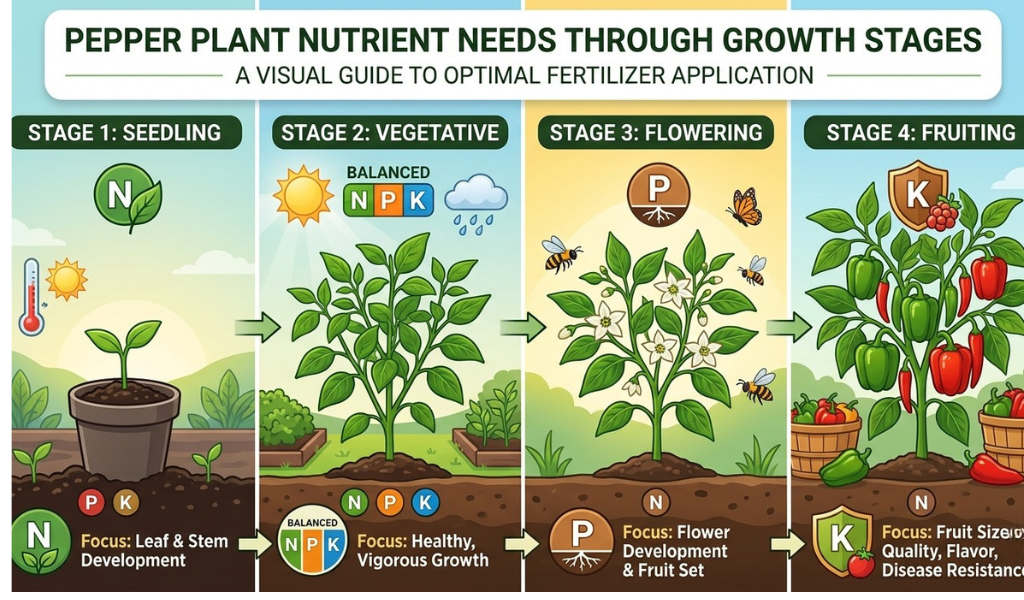
Nitrogen is most valuable during the seedling and early vegetative stages. Once plants start flowering, you’ll want to ease off. Too much nitrogen late in the season pushes the plant to keep producing leaves instead of setting fruit.
Phosphorus for Roots, Flowers, and Fruit Development
Phosphorus supports root development early on and becomes especially important during flowering and fruit development. If you notice poor fruit set or weak flowers, low phosphorus is often a contributing factor. Bone meal is a popular organic source of phosphorus and works well when mixed into the soil before transplanting pepper seeds or seedlings.
Potassium for Overall Plant Performance
Potassium helps regulate water movement in the plant, improves disease resistance, and plays a major role in fruit quality. Along with phosphorus and potassium working together, this pair supports everything that happens during the second half of the growing season.
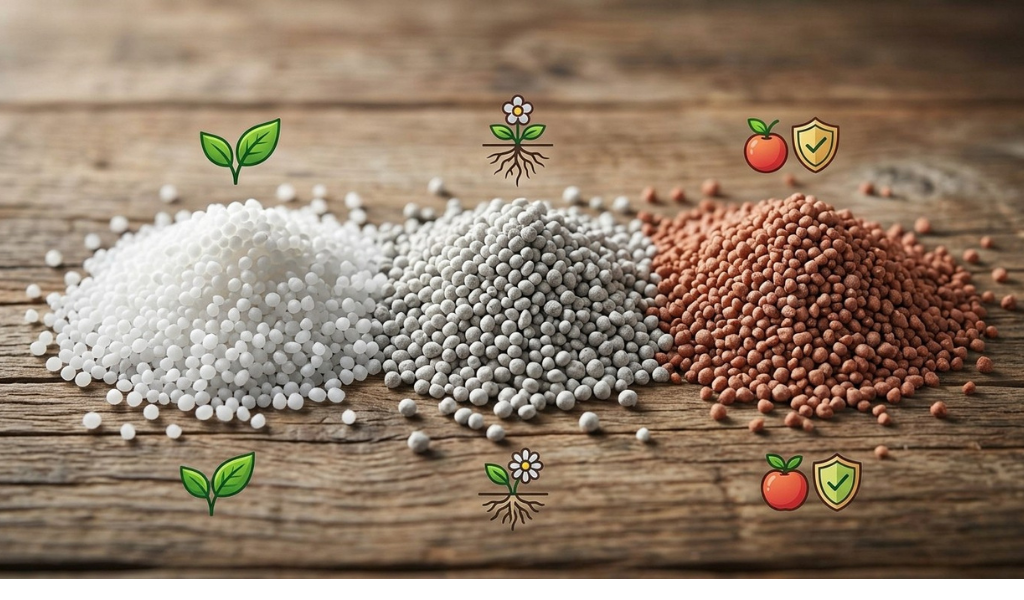 Beyond the main three nutrients, pepper plants also benefit from secondary nutrients like calcium, magnesium, and sulfur. Calcium helps prevent blossom end rot, a common issue in both bell peppers and hot peppers. Magnesium supports chlorophyll production, and a light application of Epsom salt (magnesium sulfate) is a popular fix when leaves start showing yellowing between the veins.
Pepper Fertilizer Requirements by Growth Stage
Pepper plants have different needs depending on what stage of growth they’re in. Using the same fertilizer from seed to harvest is one of the most common mistakes gardeners make.
Seedling Stage
Young pepper seeds and seedlings have delicate root systems that are sensitive to concentrated fertilizer. Most commercial potting soils contain enough nutrients to carry seedlings for the first few weeks. If you’re starting seeds in a basic seed-starting mix, you can begin feeding with a diluted liquid fertilizer at about half strength once the first true leaves appear.
Avoid Fertilizer Burn
The biggest risk at this stage is fertilizer burn. Adding fertilizer too early or in too high a concentration can damage roots and stunt growth. If you prefer a natural approach, a light application of worm castings or compost tea works well as a gentle homemade fertilizer for pepper plants during this phase.
Pepper Fertilizer Requirements During Vegetative Growth
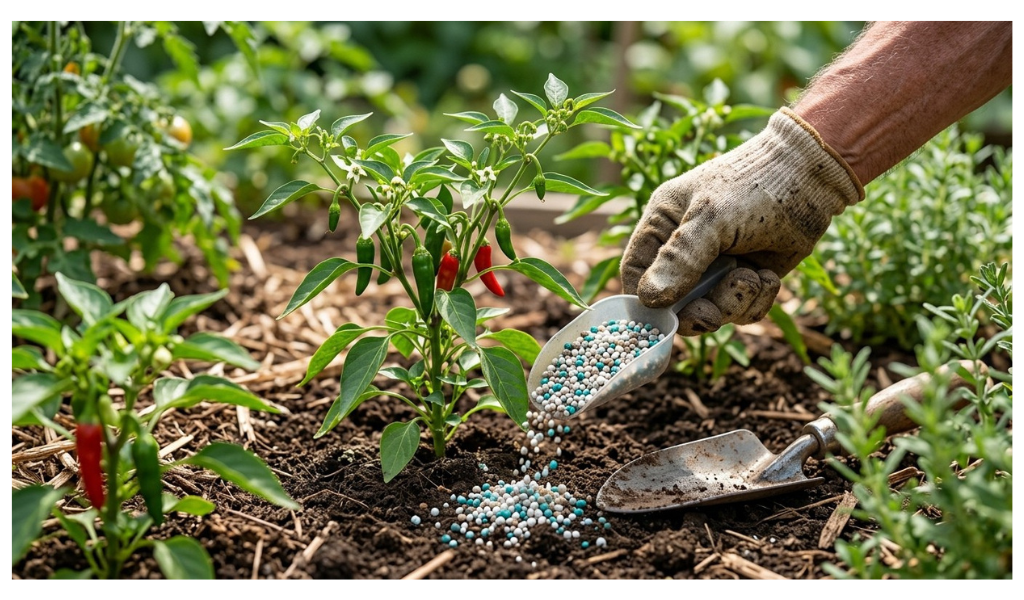
Once you’ve transplanted your seedlings into the garden or a larger pot, the plant shifts focus to growing strong stems, healthy leaves, and an established root system. This is when a balanced fertilizer or one that’s slightly higher in nitrogen makes the most sense. Understanding Pepper Fertilizer Requirements during this vegetative stage helps provide the nutrients your pepper plants need without encouraging excessive leafy growth. A balanced formula such as 10-10-10 or a slightly nitrogen-focused option can support steady growth. Avoid applying too much fertilizer at once, especially when young plants are still adjusting to their new environment. Start with a moderate amount and follow the product label for application rates. Regular watering also helps nutrients move through the soil and reach the roots. With the right balance of fertilizer, moisture, sunlight, and growing space, pepper plants can develop sturdy stems and lush foliage that prepare them for the flowering and fruiting stages ahead.
 Choosing an NPK Ratio
A balanced fertilizer like 10-10-10 works for many gardeners during the vegetative stage. If your soil already has decent phosphorus and potassium levels, you might choose something with a slightly higher nitrogen value. Liquid fertilizers are convenient here because they’re easy to dilute and apply directly to the soil around the base of the plant.
Watch the Plant Instead of Following the Calendar
Pepper plants communicate what they need through their appearance. Pale green or yellow leaves during the vegetative stage usually point to a nitrogen shortage. Dark, stunted growth sometimes signals overfertilization. Rather than following a rigid schedule, check the plant itself every 2-3 weeks and adjust accordingly.
Pepper Fertilizer Requirements During Flowering
This is one of the most critical transitions in pepper growing. When buds start to appear, the plant’s priorities shift from leafy growth to reproduction.
Why Too Much Nitrogen Can Be a Problem
Excess nitrogen during the flowering stage is a well-known problem. When a pepper plant has too much nitrogen available, it continues to produce lush foliage at the expense of flowers and fruit. If you’ve been using a high-nitrogen fertilizer, this is the time to switch.
Supporting Flower Production
Reduce nitrogen and increase phosphorus and potassium to support flower production and fruit set. A fertilizer with an N-P-K ratio like 5-10-10 or 4-8-8 fits this stage well. Some gardeners also apply a foliar spray with diluted liquid fertilizer to give plants a quick nutrient boost during heavy flowering periods.
Pepper Fertilizer Requirements During Fruit Production
Once fruits begin to develop, the focus shifts almost entirely to potassium. Potassium supports cell development, improves fruit size, and helps the plant push sugars into the fruit for better flavor.
Feeding Fruiting Pepper Plants
Continue applying a low-nitrogen, high-potassium fertilizer every 2-3 weeks throughout the fruiting period. Compost or aged manure worked around the base of the plant can supplement your regular fertilizer and improve soil health at the same time. Applying a layer of mulch around the base also helps retain moisture and keep the soil temperature stable, which indirectly supports nutrient uptake.
As you approach the end of the season, there’s no need to continue heavy feeding. Holding off on fertilizing in the final few weeks lets the plant finish ripening its existing fruit without being pushed to produce new growth.
Pepper Fertilizer Requirements for Container Plants
Growing peppers in containers introduces a different set of challenges. Pot-grown plants dry out faster, and water carries nutrients out of the bottom of the pot with every watering. Because of this, container pepper plants require more frequent feeding than those grown in the ground.
How Container Feeding Differs
A good approach for container plants is to use a diluted liquid fertilizer more frequently rather than a concentrated dose every few weeks. Applying fertilizer at half strength every week during the peak growing season keeps a steady supply of nutrients available without overwhelming the plant.
Potting soil also loses its nutrients faster than garden soil, so it’s worth choosing a potting mix with added organic matter or slow-release fertilizer built in. For those who prefer a DIY approach, a homemade fertilizer for pepper plants using diluted fish emulsion or compost tea works well for container growing and provides a mix of both macronutrients and micronutrients.
Pepper Fertilizer Requirements and Soil Testing
Before you add any fertilizer for your pepper plants, knowing what your soil actually contains saves you a lot of guesswork and money.
Why Soil Matters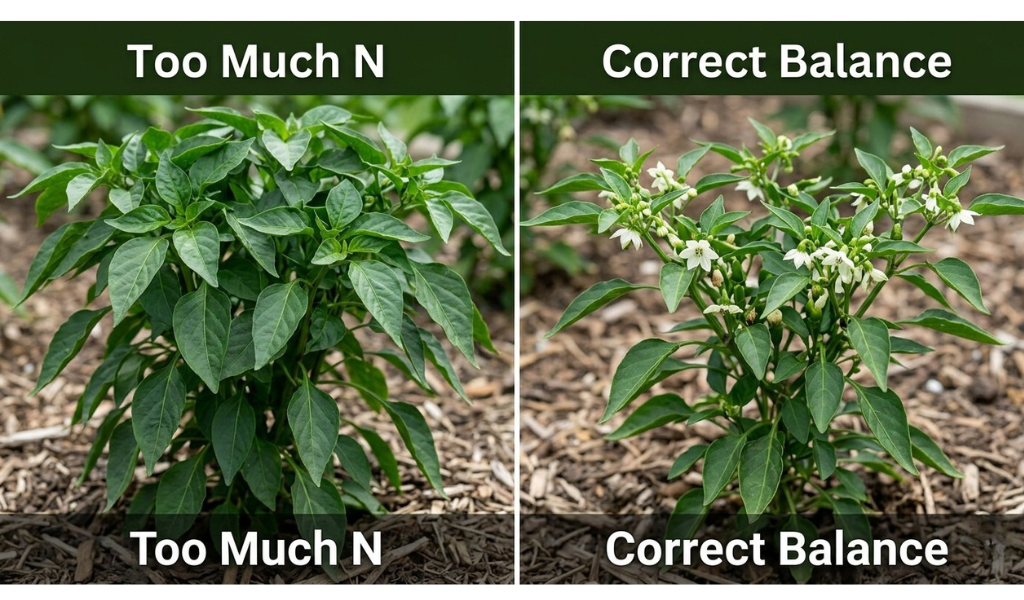
Peppers prefer a slightly acidic soil pH between 6.0 and 6.8. Outside this range, nutrients can become locked up in the soil even when they’re physically present. A soil test tells you the pH along with existing nutrient levels, so you can amend accordingly before planting.
If your soil is too acidic, adding lime helps bring the pH up. If it’s too alkaline, elemental sulfur can bring it down. Addressing soil pH before planting is always more effective than trying to correct it mid-season. Many local gardening centers offer affordable soil testing kits, and your county extension office can often provide a more detailed analysis.
Testing the soil before planting also reveals whether your soil is already high in phosphorus, which is common in many garden beds that have been fertilized for years. If phosphorus is already plentiful, there’s no reason to add more, and doing so can actually interfere with zinc and iron uptake.
Common Fertilizer Mistakes With Pepper Plants
Even experienced gardeners make mistakes when it comes to fertilizing peppers. Here are the four most common ones and how to avoid them.
Mistake 1: Fertilizing Too Often
More fertilizer does not mean more peppers. Fertilizing too frequently leads to nutrient buildup in the soil, salt damage to roots, and excessive leafy growth. Stick to a consistent schedule and give the plant time to use what you’ve applied before adding more.
Mistake 2: Using Too Much Fertilizer
Over-application is one of the leading causes of nutrient deficiencies in pepper plants, which is the opposite of what you’d expect. When fertilizer salts accumulate in the soil, they can prevent roots from absorbing water and nutrients properly. Always follow the recommended rates on the product label and dilute liquid fertilizers when in doubt.
Mistake 3: Chasing a Specific NPK Number
There’s no single best fertilizer for peppers that works for every garden in every situation. The right fertilizer depends on your soil, your climate, your specific pepper varieties, and the current growth stage. Soil testing and close observation of your plants are more useful guides than any product recommendation.
Mistake 4: Ignoring Water and Sunlight
Nutrients move into plant roots dissolved in water. A pepper plant that doesn’t get consistent moisture won’t absorb fertilizer effectively regardless of how much you apply. Poor sunlight causes the same problem. Before adding more fertilizer, make sure the basics are covered.
A Practical Pepper Fertilizer Strategy
Here’s a simple approach that works well for most home gardeners growing peppers in the ground or in containers.
Start by testing your soil before planting and amending as needed. Work compost or aged manure into the bed to build organic matter and improve soil structure. If you’re planting into an established bed, bone meal worked into the soil adds phosphorus right where transplant roots will find it.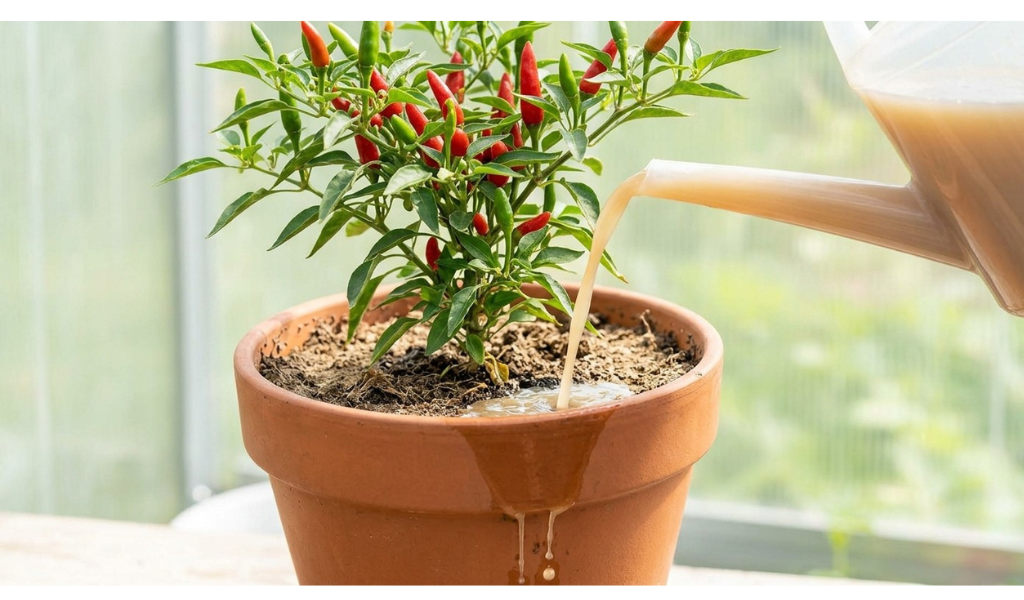
During the seedling and early vegetative stage, use a balanced fertilizer at half strength or rely on a homemade fertilizer for pepper plants like diluted compost tea. Once plants are established and growing steadily, apply a balanced fertilizer every 2-3 weeks.
When flower buds appear, switch to a low-nitrogen fertilizer that emphasizes phosphorus and potassium. Continue this through the fruiting period, adding a layer of mulch around the base to hold moisture and reduce temperature stress. Scale back feeding as the season winds down and let the plant finish what it’s already working on.
For gardeners dealing with specific problems, such as yellow leaves, poor fruit, or slow growth, a foliar spray with a diluted liquid fertilizer or a targeted amendment like Epsom salt for magnesium deficiency can offer quick results while the underlying soil issue is corrected.
Final Thoughts
Fertilizing pepper plants well doesn’t require expensive products or complicated routines. It requires paying attention to what your plants are telling you, understanding the basic roles of nitrogen, phosphorus, and potassium, and adjusting your approach as the season progresses.
Start with healthy soil, choose a fertilizer that matches the current growth stage, and resist the urge to overfeed. Do those three things consistently, and you’ll grow peppers that produce far more fruit than plants left to struggle through the season without proper nutrition.
If you’re just starting out, pick up a basic soil test kit, grab a balanced granular or liquid fertilizer, and keep a simple log of when and how much you’ve applied. That record alone will help you fine-tune your approach from one season to the next.
Frequently Asked Questions
What is the best fertilizer for peppers?
There’s no single answer since the best fertilizer for peppers depends on your soil and the plant’s current stage. A balanced fertilizer like 10-10-10 works well during vegetative growth, while a low-nitrogen formula with higher phosphorus and potassium is better during flowering and fruit production. Organic options like compost, bone meal, and fish emulsion are excellent for building long-term soil health.
Is 20-20-20 fertilizer good for peppers?
A 20-20-20 balanced fertilizer can be used on pepper plants, but it’s best applied at a reduced rate and primarily during the vegetative stage. The high nitrogen content makes it less suitable once flowering begins. If you do use it, dilute it to half the recommended strength to avoid fertilizer burn.
What do coffee grounds do for pepper plants?
Coffee grounds add small amounts of nitrogen to the soil and can improve drainage in clay-heavy soils. They’re slightly acidic, which suits peppers that prefer a soil pH between 6.0 and 6.8. That said, coffee grounds aren’t a replacement for a complete fertilizer. Use them as a soil amendment mixed into compost rather than applying them directly around the base of the plant.
Is 10-10-10 fertilizer good for pepper plants?
Yes, a 10-10-10 balanced fertilizer is a solid choice for the early growing season. It provides equal amounts of nitrogen, phosphorus, and potassium, which suits peppers during the vegetative stage when they need steady, even nutrition. Once flowering starts, switch to a formula with lower nitrogen.
What nutrients do pepper plants need most?
Pepper plants need nitrogen for leafy growth, phosphorus for root development and fruit set, and potassium for overall plant health and fruit quality. Secondary nutrients including calcium, magnesium, and sulfur also play important roles. Calcium prevents blossom end rot, and magnesium supports healthy green foliage.
How often should you fertilize pepper plants?
Most pepper plants benefit from fertilizing every 2-3 weeks during the active growing season. Container-grown plants may need feeding more frequently, sometimes weekly at a reduced strength, because nutrients wash out of pots faster than garden beds. Always check the plant’s appearance and adjust based on what you observe rather than following a fixed schedule.
Can I use homemade fertilizer for pepper plants?
Homemade fertilizer for pepper plants is both effective and affordable. Compost tea, diluted fish emulsion, worm castings, and aged manure are all excellent options. They release nutrients slowly, improve soil structure, and reduce the risk of overfertilization. Homemade options work best when combined with a soil test so you know what nutrients are already present.