Best Fertilizer for Peppers When Fruiting : A Complete Feeding Guide
Best Fertilizer for Peppers When Fruiting: Complete Production and Harvest Guide
Watching your pepper plants finally set fruit is one of the best feelings in the garden. But if you want plump, flavorful peppers instead of small or sparse ones, the best fertilizer for peppers when fruiting matters more than almost anything else you do at this stage. Feeding your plants the wrong nutrients, or feeding them at the wrong time, can quietly slow down fruit production even when everything else looks healthy. In this guide, you will learn exactly what your pepper plants need once they start fruiting, how to build a simple feeding routine, and how to avoid the common mistakes that hold plants back.
What Fertilizer Do Pepper Plants Need When Fruiting?
Once your pepper plants shift from flowering to producing fruit, they need a fertilizer that leans toward phosphorus and potassium rather than nitrogen. Nitrogen is great early on for building leaves and stems, but too much of it during fruiting can actually work against you. Instead, a balanced or slightly lower-nitrogen fertilizer helps the plant put its energy into growing fruit rather than more foliage.
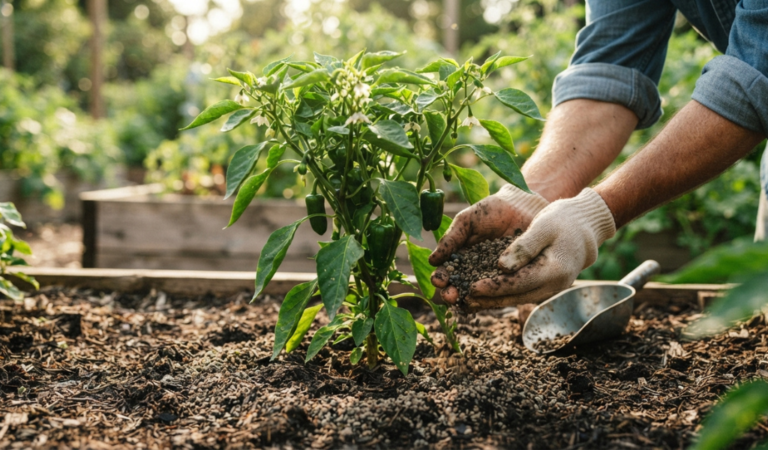
So how do you apply fertilizer to pepper plants once they reach this stage? The simplest approach is to feed the soil around the base of the plant, not the leaves, and to water thoroughly before and after applying it. This helps the roots absorb nutrients evenly without any risk of burning them. Many gardeners like to work a granular fertilizer into the top layer of soil every few weeks, while others prefer a liquid feed mixed into their regular watering routine every one to two weeks. Both methods work well, and the right choice usually depends on how much time you want to spend and how quickly you want results.
Peppers grown in pots often need feeding more often than those grown in garden beds, simply because nutrients wash out of container soil faster. Keeping an eye on the plant itself, its leaf color, flower production, and fruit size, will tell you a lot about whether your current fertilizing schedule is working.
Why Nutrient Needs Change During Fruiting
A pepper plant’s nutritional needs are not the same throughout its life. In the seedling and early vegetative stage, the plant is mostly focused on growing roots, stems, and leaves. This is when nitrogen plays the biggest role, since it fuels that leafy green growth.
Once flowers appear and fruit begins to form, the plant’s priorities shift. It needs to support pollination, hold onto its flowers instead of dropping them, and then fill out the fruit with sugars, water, and structural strength. This process demands more phosphorus and potassium than nitrogen. If you keep feeding a pepper plant the same high-nitrogen fertilizer you used early on, you risk pushing it to keep producing leaves and branches while neglecting the fruit that is already forming. That is why switching your fertilizer formula as the plant matures is one of the smartest things you can do for a strong harvest.
Key Nutrients for Pepper Fruit Development
Peppers rely on a mix of primary and secondary nutrients to grow healthy, well-formed fruit.
- Phosphorus supports root strength and helps the plant convert energy into flower and fruit production.
- Potassium strengthens the plant’s ability to move water and nutrients, which directly affects fruit size, texture, and flavor.
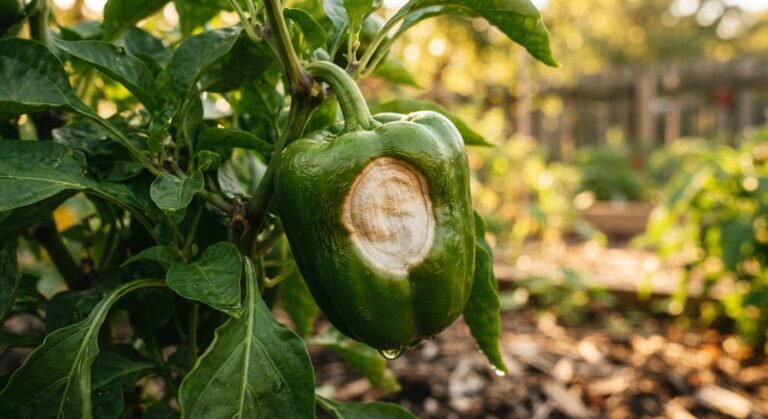
- Calcium helps prevent blossom end rot, a common problem where the bottom of the pepper turns dark and sunken.
- Magnesium keeps leaves photosynthesizing efficiently, which fuels fruit growth from the inside out.
- Micronutrients like boron and zinc, while needed in tiny amounts, still play a role in fruit set and overall plant vigor.
A fertilizer that covers these bases, either through a complete blend or through occasional supplements like calcium spray or Epsom salt for magnesium, will give your peppers what they need to thrive during this demanding stage.
What NPK Ratio Is Best for Fruiting Pepper Plants?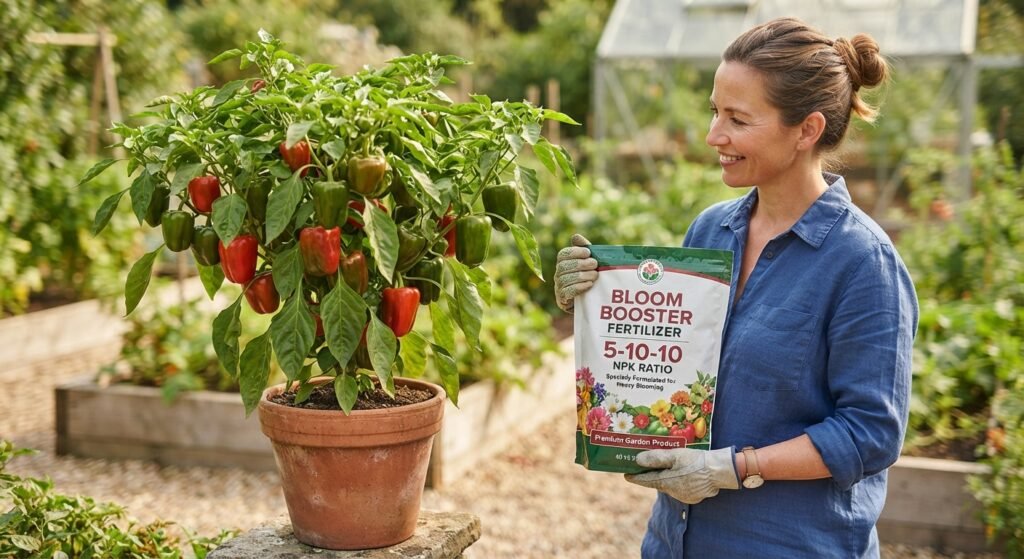
For fruiting peppers, look for an NPK ratio where phosphorus and potassium are equal to or higher than nitrogen. A ratio like 5-10-10 or 4-6-8 works well for most gardeners. Some prefer a balanced option such as 10-10-10, especially if their soil already has decent nitrogen levels from earlier feeding or added compost.
The exact numbers matter less than the general pattern: nitrogen should not dominate the mix once fruiting begins. If you are using a tomato and pepper specific fertilizer, many of these are already formulated with fruiting plants in mind, so checking the label for something marketed toward fruiting vegetables is a quick shortcut.
Understanding Nitrogen, Phosphorus, and Potassium
These three numbers on every fertilizer bag represent nitrogen, phosphorus, and potassium, usually in that order. Understanding what each one does makes it much easier to choose the right product.
Nitrogen builds leafy growth and gives plants their deep green color. In small amounts during fruiting, it keeps the plant healthy, but in large amounts it can cause excessive leaf growth at the expense of fruit.
Phosphorus supports strong root systems and plays a direct role in flowering and fruit set. Plants that are short on phosphorus often struggle to hold onto their blossoms.
Potassium, sometimes labeled as potash, helps regulate water movement within the plant and strengthens overall structure. It is closely linked to fruit quality, including size, firmness, and taste.
Choosing a Balanced or Lower-Nitrogen Fertilizer
When picking a fertilizer for your fruiting pepper plants, a balanced formula or one that is slightly lower in nitrogen compared to phosphorus and potassium tends to give the best results. Avoid all-purpose lawn or garden fertilizers with very high first numbers, since these are built for leafy growth rather than fruit production. Instead, look for labels that mention “bloom booster,” “fruiting formula,” or vegetable-specific blends.
Best Fertilizer Types for Peppers During Fruiting
Different fertilizer types suit different gardening styles, and each has its own advantages once your peppers start setting fruit.
Liquid Fertilizer
Liquid fertilizer is fast acting since it gets absorbed quickly through the root system. It is a good choice if you notice your plants need an immediate boost, such as after a period of stress or slow growth. Most liquid feeds are diluted with water and applied every one to two weeks. The downside is that they do not last long in the soil, so consistency is important.
Granular Fertilizer
Granular fertilizer is applied directly to the soil and breaks down gradually as you water. It is convenient because you do not need to mix anything, and a single application can feed the plant for several weeks. This works well for gardeners who want a lower-maintenance option and do not mind waiting a bit longer to see results.
Slow-Release Fertilizer
Slow-release fertilizer is coated so that nutrients are released over an extended period, often two to three months. This is especially useful for container-grown peppers, since it reduces how often you need to feed the plant while still supplying a steady stream of nutrients throughout the fruiting season.
How Often Should You Fertilize Peppers When Fruiting?
Most pepper plants benefit from feeding every two to three weeks once fruiting begins, though this can vary depending on the fertilizer type and your soil quality. Liquid fertilizers usually need more frequent applications, while granular and slow-release options can be spaced further apart.
Creating a Feeding Schedule
A simple schedule might look like this: feed with a balanced liquid fertilizer every two weeks, or apply a granular fruiting fertilizer once at the start of the fruiting stage and again about a month later. Keeping a small notebook or phone reminder helps you stay consistent, since irregular feeding is one of the biggest reasons plants underperform.
When to Increase or Reduce Feeding
If your plants are producing a heavy load of fruit, they may need slightly more frequent feeding to keep up with the demand. On the other hand, if you notice dark green, overly bushy leaves with few flowers, it is a sign to cut back on nitrogen and space out feedings a little more.
How to Fertilize Pepper Plants During Fruit Production
Applying fertilizer correctly is just as important as choosing the right formula. Peppers absorb nutrients through their roots, so getting the fertilizer to the right spot matters.
Applying Fertilizer Around the Root Zone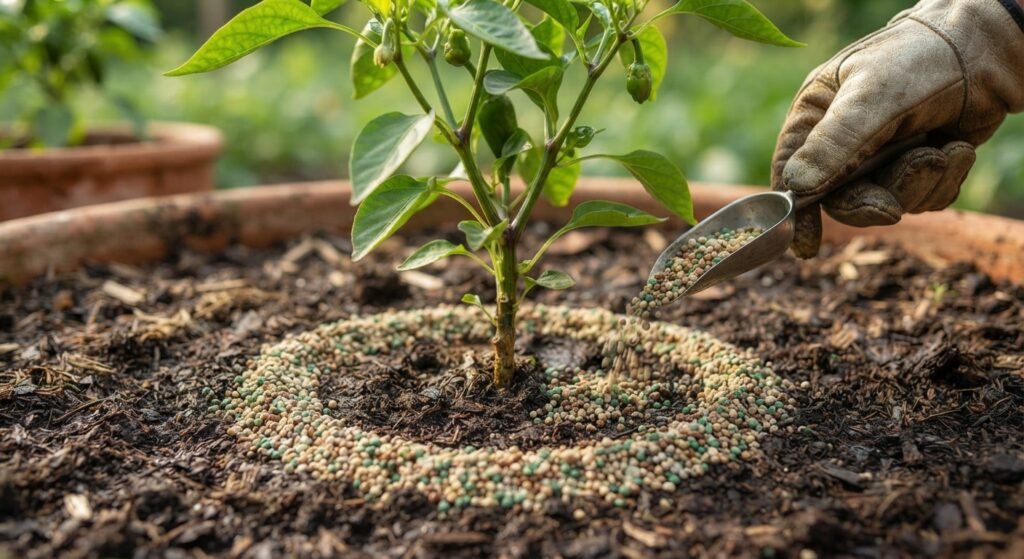
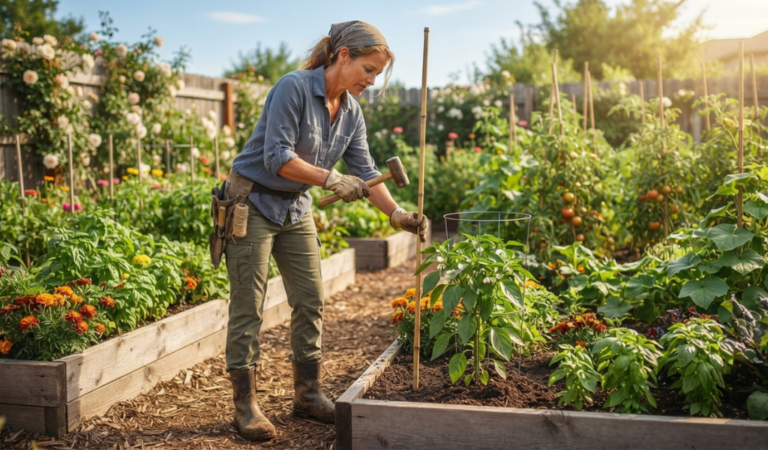
Sprinkle granular fertilizer in a ring around the base of the plant, staying a few inches away from the stem to avoid direct contact. For liquid fertilizer, pour the diluted mixture slowly around the root zone rather than on the leaves. This targeted approach ensures the roots get what they need without wasting fertilizer on areas the plant cannot easily use.
Watering Before and After Fertilizing
Water your pepper plants lightly before fertilizing so the soil is not completely dry. This prevents the fertilizer from concentrating too strongly around the roots. After applying, water again to help the nutrients settle into the soil and become available to the plant. This two-step watering habit protects your peppers from fertilizer burn and helps nutrients absorb more evenly.
Best Organic Fertilizers for Fruiting Peppers
If you prefer a more natural approach, there are several organic options that work well for peppers during fruit production.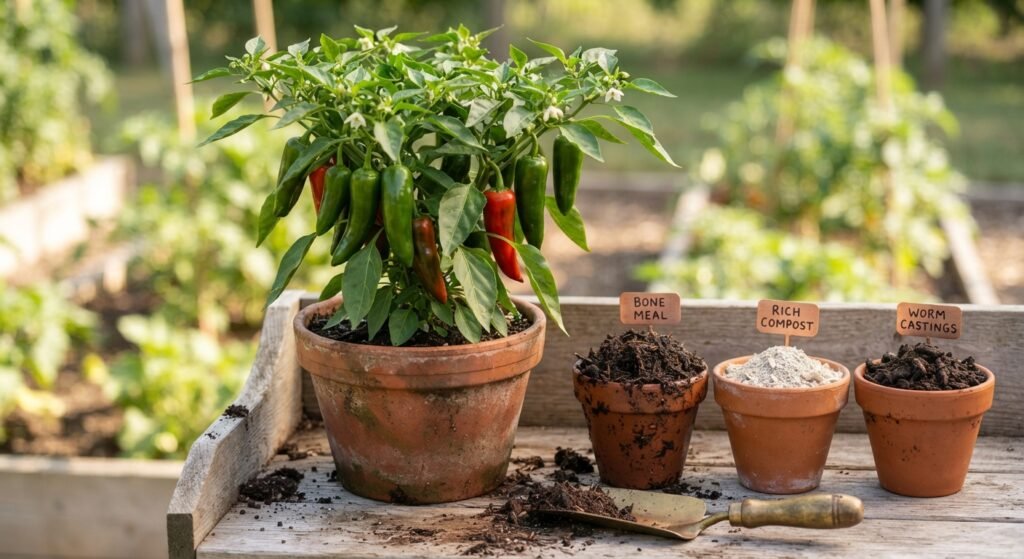
Compost and Organic Matter
Compost is one of the easiest ways to feed your soil naturally. It improves soil structure, encourages beneficial microbes, and slowly releases nutrients over time. Working a layer of finished compost around your plants every few weeks can supplement whatever other fertilizer you are using, or serve as a gentle standalone feed for peppers that are not heavy feeders.
Fish Emulsion and Other Organic Options
Fish emulsion is a popular organic liquid fertilizer that supplies a good mix of nitrogen along with trace minerals. Other organic choices include bone meal, which is rich in phosphorus and great for fruit set, and kelp meal, which offers potassium and micronutrients. Combining a couple of these organic sources often gives a more complete nutrient profile than relying on just one.
Signs Your Fruiting Pepper Plants Need Fertilizer
Your plants will usually tell you when something is off, as long as you know what to look for.
Yellowing Leaves and Slow Growth
Pale or yellowing leaves, especially older ones lower on the plant, often point to a nitrogen shortage. If growth also seems slower than expected, it may be time for a light feeding.
Poor Flowering or Small Fruits
If your plant is flowering but the blossoms drop before turning into fruit, or the peppers that do form stay small, this can signal low phosphorus or potassium. Adjusting your fertilizer ratio usually helps within a couple of weeks.
Recognizing Nutrient Deficiencies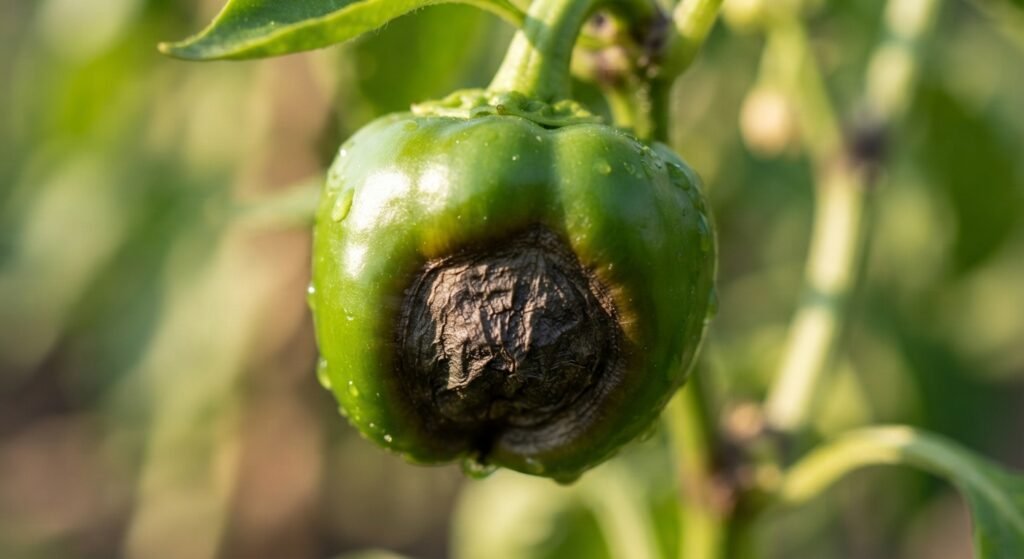
Purple tinted leaves can indicate a phosphorus deficiency, while brown leaf edges often point to a lack of potassium. Blossom end rot, where the bottom of the fruit turns dark and leathery, is usually a calcium issue tied to inconsistent watering rather than fertilizer alone. Watching for these patterns helps you fine-tune your feeding before problems get worse.
Can Too Much Fertilizer Hurt Fruiting Pepper Plants?
Yes, overfertilizing can do real damage. Too much nitrogen leads to lush green growth with very little fruit, since the plant puts its energy into leaves instead of blossoms. Excess fertilizer of any kind can also build up salts in the soil, which draws moisture away from the roots and causes leaf scorch or wilting even when the plant has plenty of water. If you accidentally over apply, flushing the soil with plain water can help dilute the excess and give the roots some relief. It is always safer to underfeed slightly and adjust based on what you observe than to overcorrect with heavy applications.
Fertilizing Peppers in Containers vs. Garden Soil
Where your peppers are growing changes how often and how much you should feed them.
Feeding Container-Grown Peppers
Container soil has a limited nutrient supply and drains faster than garden beds, which means nutrients wash out more quickly during watering. Potted peppers typically need feeding every one to two weeks with a diluted liquid fertilizer, or a slow-release option mixed in at planting time and refreshed partway through the season.
Fertilizing Peppers in the Ground
Peppers planted directly in garden soil generally hold onto nutrients longer, especially in soil that has been enriched with compost. These plants can often go three to four weeks between feedings, though sandy soils may need more frequent applications since they drain quickly, similar to containers.
Common Fertilizer Mistakes During Fruiting
A few small missteps can undo an otherwise solid fertilizing routine.
Using Too Much Nitrogen
This is the most common mistake gardeners make with fruiting peppers. It leads to big, leafy plants that look healthy but produce disappointing amounts of fruit. Switching to a lower-nitrogen formula once flowering starts solves this in most cases.
Fertilizing Too Frequently
More fertilizer does not mean more fruit. Feeding too often can overwhelm the plant, cause nutrient burn, and disrupt the natural balance of the soil. Stick to a schedule and give the plant time to actually use what you have already applied.
Ignoring Watering and Soil Conditions
Fertilizer cannot do its job properly if watering is inconsistent or the soil is compacted and poorly drained. Nutrients need water to dissolve and move into the root zone, so pairing a good watering routine with your fertilizing schedule is just as important as the fertilizer itself.
Final Thoughts
Getting the timing and type of fertilizer right during the fruiting stage can make a noticeable difference in how many peppers you harvest and how good they taste. Focus on a balanced or lower-nitrogen formula, feed consistently but not excessively, and pay attention to what your plants are telling you through their leaves and fruit. Whether you choose liquid, granular, or organic options, the goal stays the same: support the plant’s natural shift from growing leaves to growing fruit. With a little attention and the right feeding routine, your pepper plants can reward you with a strong, flavorful harvest all season long.
Frequently Asked Questions
What is the best fertilizer for peppers when fruiting?
A balanced or lower-nitrogen fertilizer with a higher ratio of phosphorus and potassium, such as 5-10-10, tends to work best once peppers begin setting fruit.
How often should I fertilize pepper plants during fruiting?
Most plants do well with feeding every two to three weeks, though container-grown peppers may need it slightly more often due to faster nutrient drainage.
Can I use tomato fertilizer on peppers?
Yes, tomato fertilizer often works well for peppers since both are fruiting vegetables with similar nutrient needs during this stage.
Do peppers need calcium during fruiting?
Yes, calcium helps prevent blossom end rot. Consistent watering combined with a calcium-rich fertilizer or supplement can help avoid this issue.
Is organic fertilizer as effective as synthetic fertilizer for peppers?
Organic options like compost, fish emulsion, and bone meal can be just as effective, though they may release nutrients more slowly compared to synthetic blends.
Why are my pepper plants flowering but not producing fruit?
This is often linked to low phosphorus or potassium, inconsistent watering, or extreme temperatures affecting pollination rather than the fertilizer alone.
Should I stop fertilizing once peppers start turning color?
You can reduce feeding slightly as fruit matures, but light feeding can continue if the plant is still producing new flowers and fruit throughout the season.