How to Fix Leggy Tomato Seedlings: Easy Steps & Forum Tips for Gardeners
How to Fix Leggy Tomato Seedlings for Healthy Tomato Plant Growth
You start your tomato seeds with big plans. A week later the little sprouts look tall, thin, and floppy, and you wonder what went wrong. Learning how to fix leggy tomato seedlings is one of the first skills every gardener needs, and the good news is that most stretched plants can be rescued. Whether you are growing a few pots on a windowsill or a full tray for the garden, the fixes are simple and cheap.
You may also be hunting for the best organic fertilizer for tomato plants at this point. Feeding does matter, and we will cover it later, but light and temperature come first. A weak seedling will not use fertilizer well, and too much of it can actually make legginess worse. Let’s start with the real cause and work forward.
What Are Leggy Tomato Seedlings?
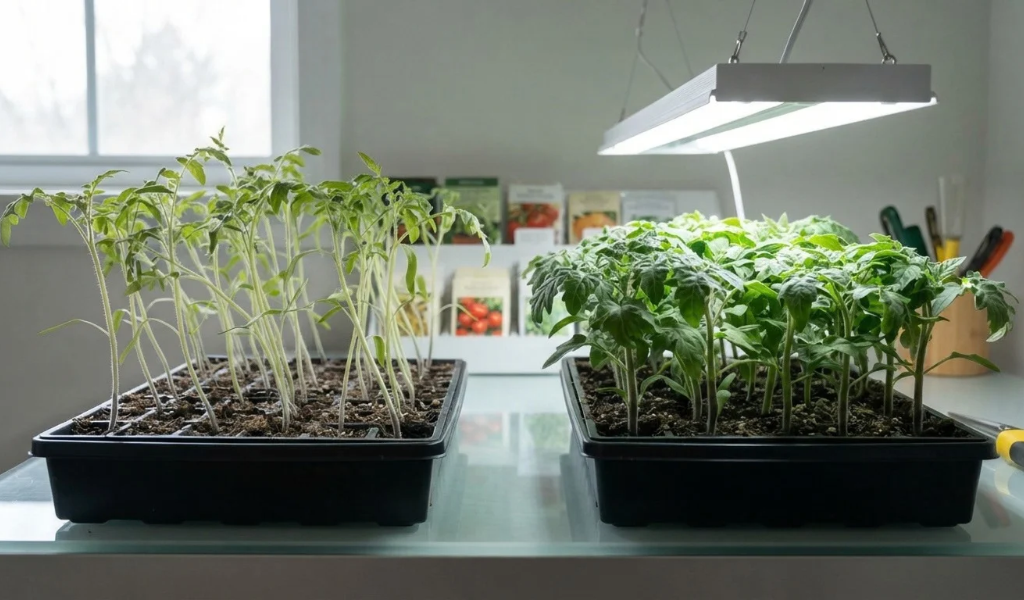
A leggy tomato seedling is a young plant that has grown tall and skinny while searching for light. The stem is pale green, thin as a pencil lead, and often bends or falls over. The true leaves look small and far apart, and the whole plant seems to lean toward the nearest window.
A healthy tomato seedling looks different. It is short and sturdy, with a thick stem, dark green leaves, and leaves set close together. Most gardeners say a good seedling is about as tall as it is strong, not taller than 6 to 8 inches when it is ready to move outside.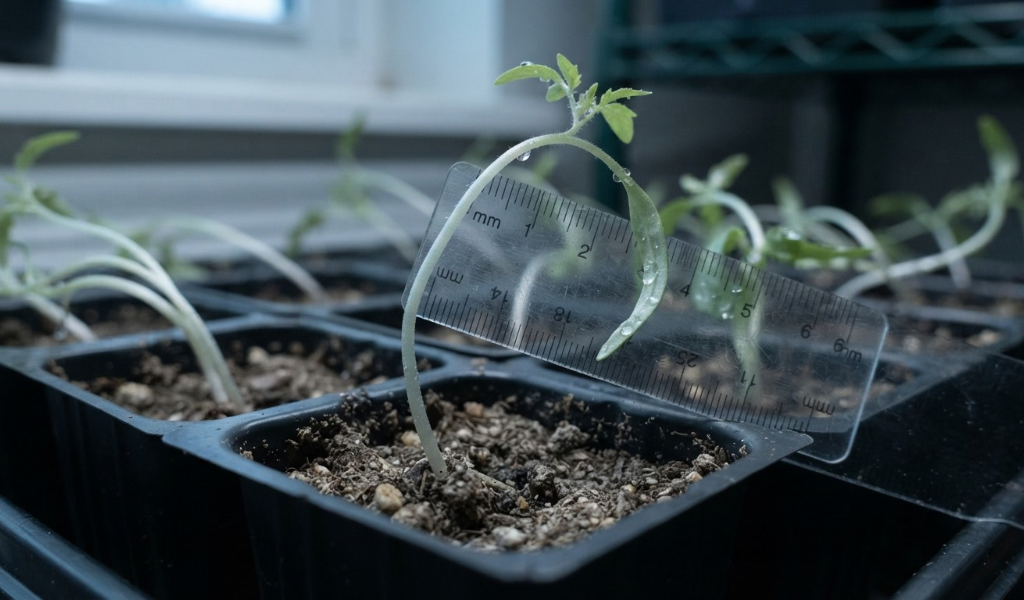
Legginess is very common, and any forum on gardening is full of photos of stretched tomato plants from people in the same spot. It is not a sign that you are a bad gardener. It is simply the way a tomato plant reacts when something in its setup is off. The plant is doing its best to reach light, and it puts all its energy into height instead of roots and strong stalk.
Why Tomato Seedlings Become Leggy in the First Place
Before you fix the problem, you need to know what caused it. Most cases come down to four things, and often more than one is happening at the same time.
Not Enough Light
This is the number one cause. A seedling that cannot find enough light stretches its stem to reach for more. A windowsill may look bright to you, but in late winter the sun is low and weak, and window glass cuts the strength even more. A plant on a north window or a cloudy week can go leggy in just a few days after it sprouts.
Lighting is also about how long and how close the light is. A seedling needs bright light for many hours each day. If your setup gives it only a dim glow for six or eight hours, the plant will keep stretching no matter what else you do.
Too Much Heat
Warm soil helps a tomato seed germinate fast. The trouble starts when the heat stays on after the seed has sprouted. A heat mat is great for the first few days, but a seedling grown in a hot room grows quickly and weakly. The stem lengthens faster than the plant can thicken it.
Many people keep trays on top of a fridge or near a heater. That is fine until you see the first green. After that, the warmth works against you, especially when the light is low.
Crowded Trays and Poor Airflow
When you sow many tomato seeds in one tray or one small pot, the young plants fight each other for light. Each seedling reaches up to get above its neighbor, and the result is a tray of tall, thin stems.
Still air adds to the problem. Plants that never feel a breeze do not build thick stems. In a closed room or under a plastic dome left on too long, seedlings stay soft and weak.
Too Much Water or Nitrogen
Soggy soil keeps roots from breathing, and heavy feeding with nitrogen pushes soft leafy growth. A seedling fed too soon or too strong will grow tall and green but not sturdy. Wet soil also invites fungus and damping off, which can kill a whole tray overnight. Keep the soil lightly moist, not wet, and hold off on feeding until the first true leaves have formed.
How to Fix Leggy Tomato Seedlings With Better Light
Good light is the best cure, and it is also the best prevention. If you only change one thing, change this. You can start fixing legginess the same day you notice it by moving the plants closer to a stronger source.
Place seedlings where they get the brightest light you can offer, and do not expect a normal room lamp to work. Household bulbs are far too weak for tomatoes. You want a real light source that is either strong sunshine or a proper grow light. New growth that comes in after you improve the light will be short and thick. The old stretched part stays tall, but the plant stops getting worse and begins to build strength.
Grow Lights vs. Sunny Windowsills
A south-facing windowsill can work well in spring when the days are long and the sun is high. On that kind of sill, turn the pots every day so the plant does not lean, and keep the leaves from touching cold glass. Still, even a sunny window often gives less light than you think, and gray days can ruin a whole week of growth.
A grow light gives you control. You can use a cheap fluorescent shop light with a cool white bulb, or a modern LED grow light. Both work. LED lights use less power and run cooler, while an old fluorescent tube is a budget choice that still grows good tomato seedlings. The best setup is a light you can raise as the plants grow. Many gardeners who post in a forum swear by a simple shelf with two shop lights, and it costs less than a nice dinner.
If you have the choice, pick the grow light. It gives steady results no matter the weather, and your tomato seedlings will reward you with stocky, dark green growth.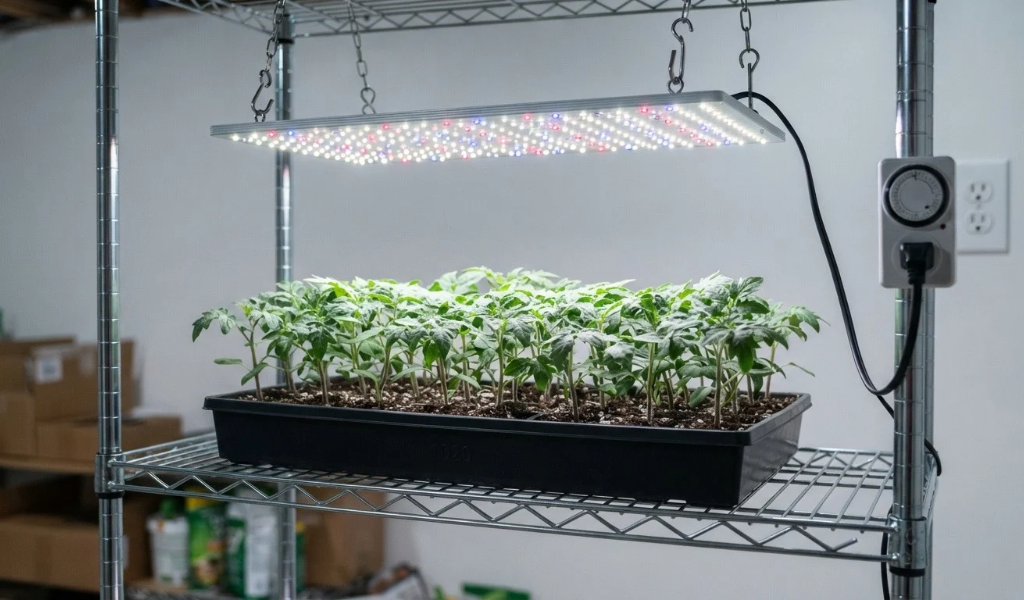
Temperature Tips to Stop Tomato Seedlings From Stretching
Tomato seedlings like a warm room, but not a hot one. After germination, they grow best when days stay around 65 to 70 degrees Fahrenheit and nights are a little cooler, around 60 to 65. A cooler night slows down stem stretching and lets the plant build strength.
Take the tray off the heat mat as soon as most seeds have sprouted. Remove the dome too, since trapped warmth and damp air help fungus and weak growth. Keep the plants away from heaters, radiators, and sunny windows that turn into ovens by midday.
If your only spot is a warm room, raise the light strength and watch your plants closely. A cooler hallway, garage with a light, or basement shelf often grows better tomatoes than a cozy living room. Many pepper seedlings like more heat than tomatoes do, so if you grow both, keep the peppers on the warmer end and the tomatoes a little cooler.
How to Fix Leggy Tomato Seedlings by Adjusting Light Distance and Timing
Light distance matters more than most people expect. Keep the light 2 to 3 inches above the tops of your seedlings for fluorescent tubes, and a bit farther for strong LED panels as the maker suggests. Raise the light as the plants grow so the gap stays the same. If the light sits too high, the plants stretch. If it sits too close to hot bulbs, leaves can burn.
Timing is just as important. Tomato seedlings need about 14 to 16 hours a day of light, and some growers go up to 18 hours. They also need a dark period each night to rest, so avoid running lights all day and night. A plug-in timer makes this easy and takes away the guessing.
A good habit is to check your seedlings every morning. If they lean, the light is too weak or too far. If they look pale, the plant wants more. If the tips curl or turn crisp, the light is too close. Small changes every few days keep the plants on track, and it beats waiting until the whole tray is tall and floppy.
Watering, Feeding, and Pot Size Tips for Leggy Tomato Seedlings
Water tomato seedlings only when the top of the soil feels dry. Bottom watering works very well. Set the pot in a tray with an inch of water for about 20 minutes, then pour out the extra. This keeps the stem dry and pushes the roots downward, which builds a stronger plant.
For feeding, wait until the seedling has at least one or two sets of true leaves. Then use a weak mix, about a quarter to half of the strength on the label, once every week or two. This is where the Best Organic Fertilizer for Tomato Plants comes in handy. A mild fish emulsion, a seaweed mix, or a bit of worm compost in the potting soil gives gentle nutrition without the nitrogen rush that leads to soft, tall growth. Go easy, because too much feeding on a leggy seedling makes the stretching worse.
Pot size also plays a role. Seeds sown in a tight tray often need a move to bigger pots in two or three weeks. Repot into a bigger pot once roots fill the tray or the plant gets crowded. A deeper pot gives room for the buried stem to grow roots. Avoid jumping to a huge container too early, though, because a small plant in a large pot sits in wet soil for too long. Step up in size slowly, from a small cell to a 3 or 4 inch pot, then to a larger one before planting out.
Bury the Stem: Planting Leggy Tomato Seedlings Deeper
This is the classic fix for legginess. When you repot or transplant, bury the stem up to the first set of true leaves. The buried part will sprout roots, and more roots mean a stronger plant that can drink and feed better.
Here is how to do it. Fill a deeper pot with fresh, loose potting soil mixed with a little compost. Gently lift the seedling out of its old tray and hold it by the leaves, never the stem. Set it in the new pot so the stem sits low in the soil, leaving just the top leaves above the surface. Press the soil lightly and water gently.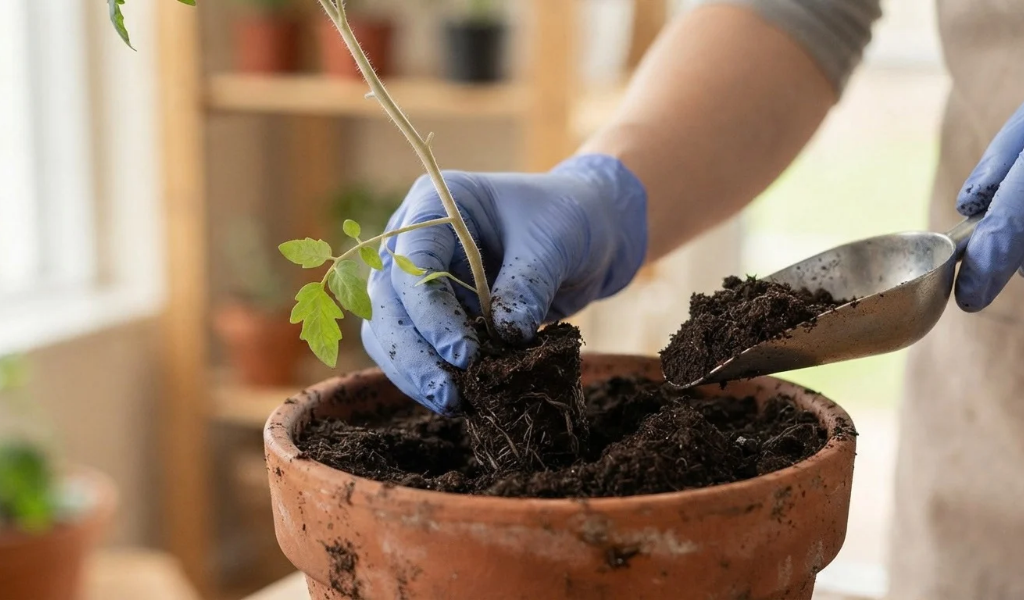
If the stem is very long or bent, you can also lay it sideways in a small trench and curl the top upward. The plant will turn toward the light within a day or two. Just be sure to remove the lower leaves that would sit under the soil, but keep the cotyledon leaves only if they stay above it.
Do not try this with peat pots that are too tight. Peat pots can work for moving seedlings, but the roots often struggle to break through the walls. If you use them, tear off the rim so no edge sticks out above the soil, since that part dries out and pulls water away from the plant.
Strengthen Leggy Tomato Seedlings With Airflow and Gentle Touch
In nature, wind makes plants thicker and tougher. You can copy that indoors with very little effort. Set a small fan on low near your seedlings for a few hours each day, aimed to give a soft breeze rather than a blast. You want the leaves to move a little, not shake.
If you do not have a fan, use your hand. Brush your palm lightly over the tops of the seedlings once or twice a day for a minute or so. This simple touch tells the plant to grow a thicker stem. Gardeners have used this trick for years, and many forum threads mention that it really does work.
Better airflow also dries the soil surface and cuts the risk of fungus and damping off. Give every plant some space, too. Thin extra seedlings early by snipping the weaker ones at the soil line, leaving one strong sprout per cell or pot. A crowded tray is one of the easiest ways to end up with a pack of leaning, weak plants.
How to Harden Off Leggy Tomato Seedlings Before Transplanting
Hardening off means slowly getting your seedlings used to the outdoors. This step is even more important for plants that started out leggy, since their stems and leaves are softer than normal. Skipping it can cause sunscald, wilting, or snapped stems.
Begin about a week or two before your last frost date has passed and nights stay above 50 degrees. On day one, place the plants outside in a shady, sheltered spot for one or two hours. Each day, add more time and a little more sun. After about seven to ten days, they should handle a full day in full sun. Bring them in if the forecast shows frost or strong wind.
Move the light slowly and watch the leaves. Pale or white patches mean too much sun too fast. When you finally plant them in your garden, choose a cloudy afternoon or evening, and bury the stem deep as described earlier. Water well after planting, and give the new roots a few days to settle before you expect new growth.
How to Prevent Leggy Tomato Seedlings Next Season
The easiest way to beat legginess is to avoid it. Start your tomato seeds at the right time. Most growers sow six to eight weeks before the last frost. Starting much earlier than that often leaves you with tall plants stuck indoors, waiting for warm weather. If you started later than usual, do not panic. Tomato plants catch up quickly once they are in warm soil.
Set up your lights before the seeds sprout. Put the light just above the tray from day one, and leave it on for 14 to 16 hours a day. Use fresh seed starting mix, sow one or two seeds per cell, and thin to the strongest one. Take the tray off the heat mat once seeds sprout, and remove the dome right away.
Choose varieties with care, too. Compact bush types and many cherry tomatoes stay shorter and handle indoor life better than tall indeterminate kinds. Keep a simple notebook with dates, light setup, and what worked. By next season you will have your own plan, and your seedlings will look healthy from the first leaf to the day they reach the garden.
Final Thoughts
Leggy tomato seedlings are frustrating, but they are rarely a disaster. Give the plants strong light for enough hours, keep the room a little cooler, water with care, and add a gentle breeze. When the stems are already long, bury the stem deeper and let the plant grow new roots. Harden off slowly, and your tomato plants will move into the garden ready to grow. Now it is your turn. Check your seedlings today, raise or add a light if needed, and repot any stretched plants. Have a story or a question about your own leggy tomato plants? Share it in the comments or on your favorite gardening forum, because every gardener learns something from another’s tray.
Frequently Asked Questions
Will leggy seedlings recover?
Yes, most will. Once you improve the light and lower the heat, new growth comes in short and thick. If you also bury the stem when you repot, the plant builds extra roots and often catches up within a few weeks.
Can you bury leggy seedlings deeper?
Yes. Tomatoes grow roots along the buried part of their stem, so planting deeper makes the plant stronger. Bury the stem up to the first true leaves, and use a deeper pot if the stem is very long.
Why are my tomato seedlings taking so long to grow?
Slow growth usually comes from cold soil, weak light, or roots that are too wet. Tomato seeds sprout best in warm soil, but they need bright light and moderate air temperature after that. Check your light first, then the watering.
Can you cut the tops off of leggy tomato plants?
You can, but it is not the best first step. Topping a seedling removes its growing point and slows it down. Burying the stem or rooting the cutting is usually better. If you do cut the top, place it in water or moist soil, and it will often grow roots of its own.
How can I fix leggy tomato seedlings?
Start with more light, closer to the plant and on for 14 to 16 hours a day. Then cool the room, add a little airflow, and repot with the stem buried deeper. These small changes work together and give the best results.
What causes leggy tomato seedlings?
The main causes are weak light, too much heat, crowded trays, and too much water or nitrogen. Low light is the most common reason, so check that first.
How do I strengthen leggy tomato seedlings?
Use a small fan or brush the tops with your hand every day to build a thicker stem. Give steady light, feed lightly with a mild organic fertilizer after true leaves appear, and harden the plants off slowly before moving them outside.