Growing Tomatoes on Balcony: How to Grow Tomatoes on Your Balcony in Pots
Growing Tomatoes on Balcony: Create Your Own Tomato Garden
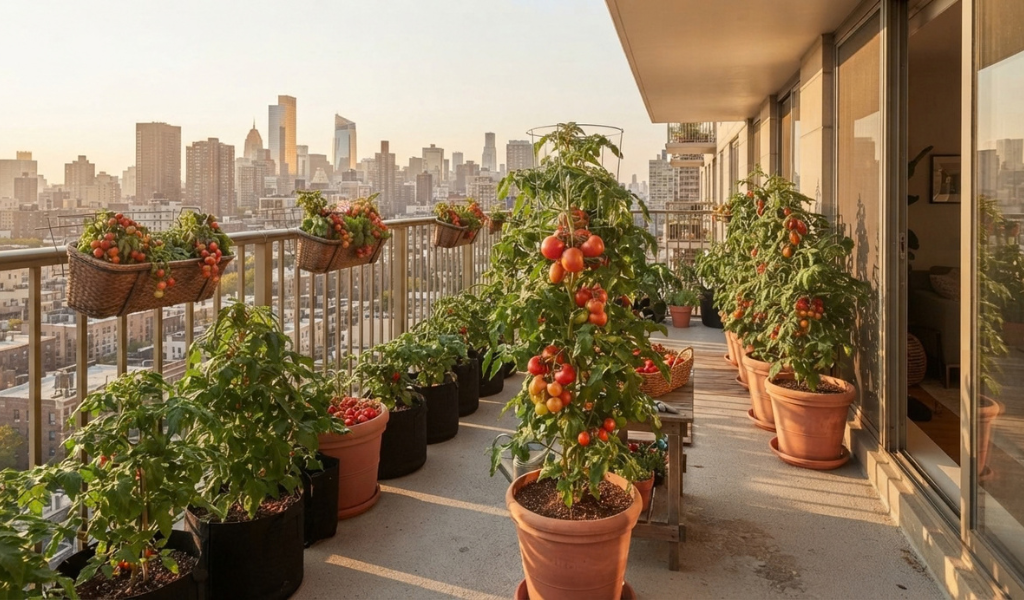
If you have ever dreamed of walking onto your balcony and picking a sun-warmed tomato for dinner, you are closer to that reality than you think. Growing Tomatoes on Balcony spaces has become one of the most popular ways for apartment dwellers to enjoy fresh produce without needing a backyard. All you really need is a sunny spot, the right pot, and a little patience. Whether you live in a high-rise flat or a small apartment with a narrow balcony, you can grow tomatoes on a balcony successfully with the right setup.
Good soil for tomato plants, the correct container, and consistent watering are the three pillars that decide whether your balcony tomato garden thrives or struggles. Choosing a container with enough space for the roots, providing at least several hours of sunlight, and checking the soil moisture regularly can make a noticeable difference. Growing Tomatoes on Balcony areas is also a practical option for gardeners who have limited outdoor space but still want fresh, homegrown tomatoes. This guide walks you through every step so your tomatoes on your balcony turn out juicy, healthy, and abundant.
Choosing the Right Tomato Varieties for Balcony Gardening
Not every tomato plant is built for container gardening. Some vines sprawl for feet and need a full garden bed, while others are bred specifically to be compact and perfect for balcony spaces. If you are just starting out, cherry tomato varieties are the easiest and most forgiving choice. They grow fast, tolerate a bit of neglect, and reward you with sweet cherry tomatoes in clusters rather than waiting on a handful of large fruit.
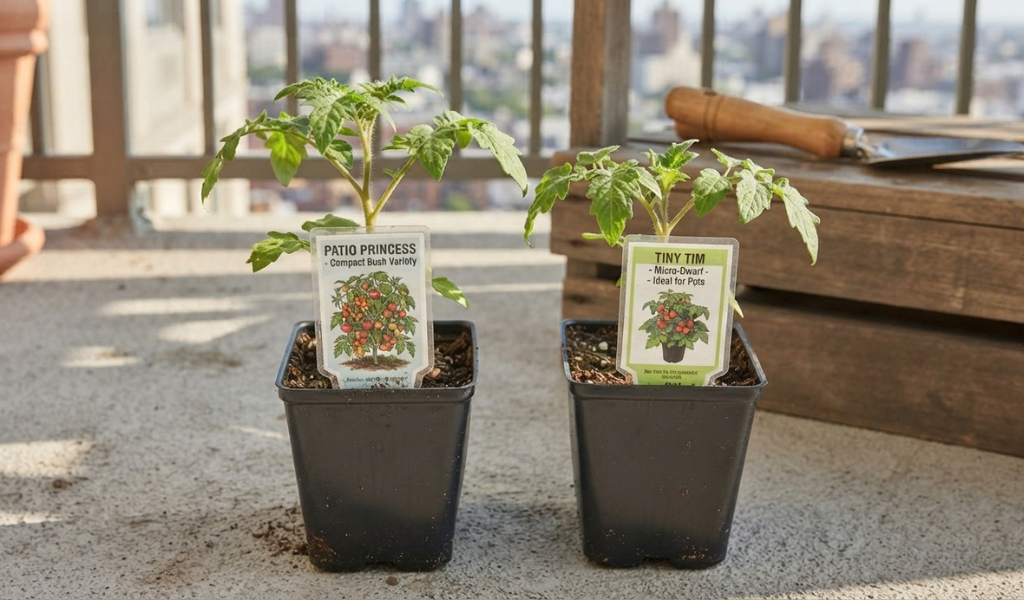 Patio Princess, Tiny Tim, Balcony Star, and Tumbling Tom are popular dwarf varieties bred for pots on your balcony. If you want something bigger, Roma or Better Bush tomatoes work well in large containers as long as you give them enough root space. When picking tomato seeds or seedlings, always check the plant tag or seed packet for words like “bush,” “patio,” “dwarf,” or “compact.” These words tell you the variety was built for container tomatoes rather than an open field.
Picking the Perfect Containers for Balcony Tomato Plants
The pot you choose can make or break your balcony tomato growing project. Tomatoes need deep, wide containers because they develop extensive root systems even in dwarf varieties. A container at least 12 to 16 inches deep and equally wide is a safe starting point for most types of tomatoes in pots.
Grow bags have become extremely popular for tomatoes in pots because they offer excellent drainage and allow tomato roots to breathe. Plastic pots retain moisture longer, which is helpful in hot, dry climates, while terracotta pots dry out faster but reduce the risk of rot in humid areas. Whichever you use, good drainage is non-negotiable. Every container needs holes at the bottom of the pot so excess water can escape instead of sitting around the roots.
If your balcony railing has weight restrictions or limited floor space, consider railing planters or hanging containers designed for small pots. These let you use vertical space effectively while still giving your tomato plant enough room to grow.
Growing Tomatoes on Balcony: Step-by-Step Planting Instructions
Once you have your variety and container sorted, planting is straightforward. Start by filling your pot about three-quarters full with a quality potting mix. Place your tomato seedling in the center, burying it slightly deeper than it sat in its original pot or seed tray. Burying part of the stem encourages the plant to grow extra roots along the buried section, which creates a stronger, more stable plant.
Water the soil when planting so it settles around the roots and removes any air pockets. Leave a small gap between the soil line and the rim of the pot so water does not spill over every time you water. Place the pot in its permanent sunny spot right away, since tomatoes dislike being moved around too often once they start growing.
If you are starting from tomato seeds instead of seedlings, sow them indoors about six to eight weeks before your last frost date, then transplant once they have two sets of true leaves and the weather has warmed up.
Sunlight Requirements for Balcony Tomatoes
Tomatoes are sun-lovers through and through. For strong growth and a good harvest, your plants need at least six to eight hours of direct sunlight every day. A south-facing or west-facing balcony usually offers the best light, though east-facing balconies can still work for varieties that tolerate partial shade slightly better.
If your balcony only gets a few hours of full sun, choose cherry or micro-dwarf varieties, since they tend to produce fruit with less light than larger types. Rotate your pots every few days if sunlight only hits one side of the balcony, so the plant grows evenly rather than leaning and stretching toward the light.
Soil and Potting Mix Tips for Healthy Balcony Tomatoes
Good soil for tomato plants is one of the most important factors in balcony tomato growing, and it is also one of the most overlooked. Regular garden soil is too dense for containers and tends to compact, choking the roots and trapping water. Instead, use a lightweight potting mix formulated for vegetables or containers.
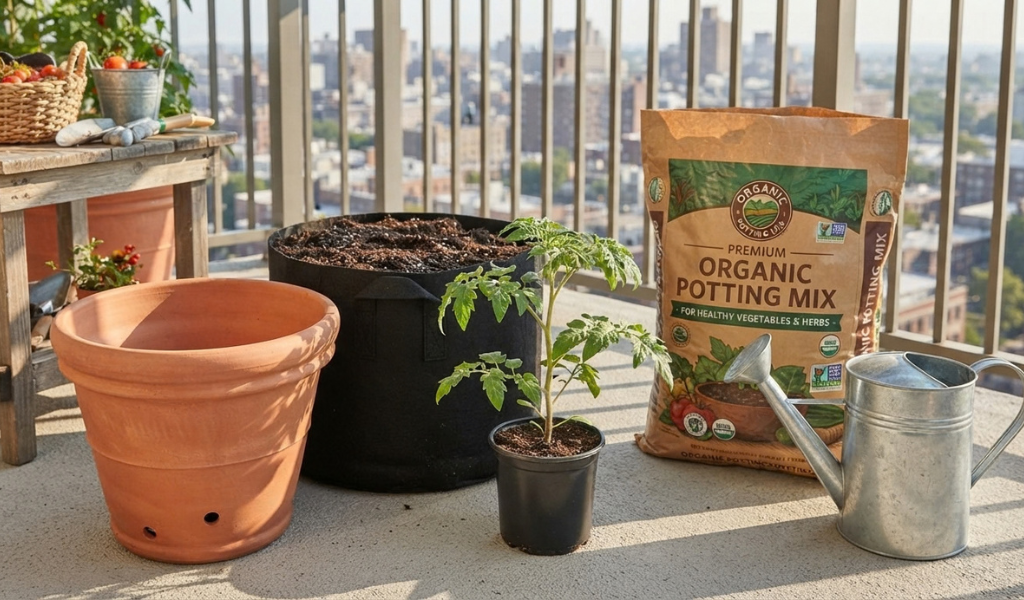 A great growing medium for tomatoes typically combines potting soil with compost and perlite or coarse sand for drainage. This blend keeps the soil moist without becoming soggy while still allowing roots to access oxygen. Adding a handful of compost at planting time gives your tomato plant a nutrient boost right from the start.
Check your potting mix every season, since soil in containers loses nutrients faster than garden soil. Refreshing the top few inches with new compost each year keeps your balcony tomato plants healthy without needing to repot everything.
Watering Schedule for Tomatoes Grown on a Balcony
Consistent moisture is the golden rule for tomatoes in containers. Because pots dry out faster than garden beds, especially in summer heat, you may need to water daily once temperatures rise. The general rule is to water when the top inch of soil feels dry to the touch.
Water deeply until it drains from the bottom of the pot rather than giving a light sprinkle on top. Shallow watering encourages roots to stay near the surface, making the plant more vulnerable to drying out. Morning watering is best because it gives the plant enough moisture to handle the heat of the day and reduces the risk of fungal issues that come from wet leaves overnight.
During flowering and fruiting, keep the soil moist and avoid letting the pots dry out completely, since inconsistent watering during this stage is one of the leading causes of cracked or oddly shaped tomatoes.
Signs You’re Overwatering or Underwatering
Learning to read your plant is a skill every balcony gardener develops over time. Yellowing lower leaves, a wilted appearance despite moist soil, and a moldy smell from the pot usually point to overwatering. The roots may be sitting in water without enough oxygen, which eventually leads to root rot.
On the other hand, if leaves are crispy, curling inward, and the soil pulls away from the sides of the pot, your plant is underwatered. Blossom end rot, which shows up as a dark, sunken spot on the bottom of the fruit, is often linked to a calcium deficiency triggered by uneven watering rather than a true lack of calcium in the soil. Keeping a consistent watering routine helps prevent both extremes and keeps your plants growing steadily.
Feeding and Fertilizing Your Balcony Tomato Plants
Because container plants cannot draw on the wide nutrient reserves found in open garden soil, regular tomato fertilizer is essential for balcony gardening. Start feeding about two to three weeks after transplanting, using a balanced fertilizer or one slightly higher in phosphorus and potassium, which support flowering and fruit development.
Liquid feeds are easy to apply every two weeks, while slow-release granules can be mixed into the soil at planting time for steady nutrition throughout the season. Avoid overfeeding with nitrogen-heavy fertilizers, since this pushes leafy growth at the expense of the fruit you actually want. Once flowers appear, switch to a fertilizer designed for fruiting vegetables to encourage a strong tomato harvest.
Supporting and Staking Tomatoes in Small Spaces
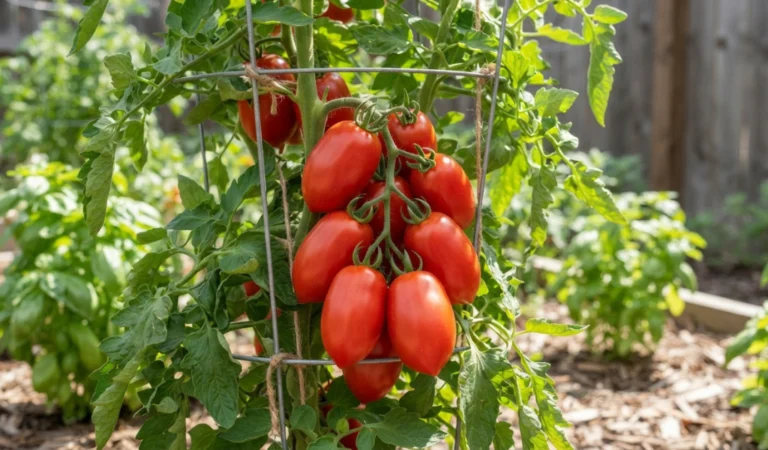
Even compact varieties often need some form of support once they start carrying fruit. A simple stake, a small tomato cage, or a trellis attached to the balcony railing keeps the plant upright and prevents branches from snapping under the weight of ripening tomatoes.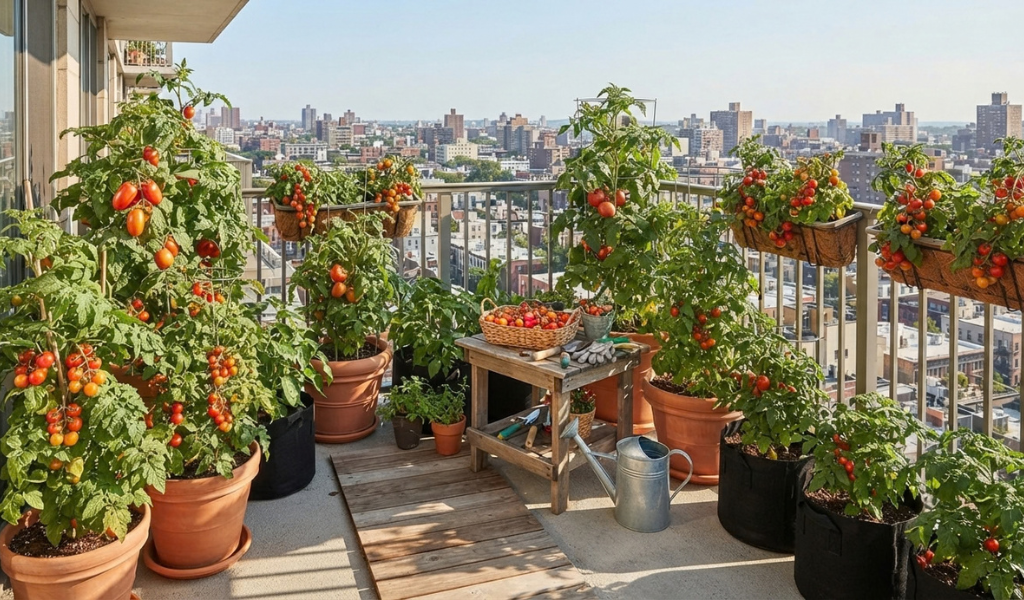
For balcony gardens with limited floor space, vertical stakes or cages take up less room than sprawling supports and keep the plant tidy. Tie the main stem loosely to the stake as it grows, checking every week or two to loosen ties before they cut into the stem. Pruning suckers, the small shoots that form between the main stem and branches, helps direct the plant’s energy into fruit production rather than excess foliage, especially useful when growing tomatoes on a small balcony where space is tight.
Indeterminate vs. Determinate (The Tomato Secret)
Understanding this difference is the real secret to successful balcony tomato growing, and it explains why some gardeners struggle while others thrive.
Indeterminate (Climbing Vines – Avoid)
Indeterminate tomatoes grow like vines and keep climbing throughout the entire season, often reaching six feet or more. They need constant staking, heavy pruning, and large amounts of space. For most balconies, especially smaller ones, these varieties become unmanageable and are best avoided unless you have a very large balcony and are prepared for intensive care.
Determinate (Compact Bushes – Choose)
Determinate tomatoes grow to a set height, usually two to four feet, then stop growing and produce most of their fruit within a shorter window. These compact bushes are far easier to manage in pots and are a smart choice for balcony gardeners who want a manageable, tidy plant with a predictable harvest.
Micro-Dwarfs (Patio Champions)
Micro-dwarf varieties are the smallest option, often growing under 12 inches tall and fitting comfortably in small pots on windowsills or tight balcony corners. They are true patio champions, ideal for tomatoes on a small balcony or for gardeners who want multiple plants in a limited footprint.
Common Pests and Problems in Balcony Tomato Gardening
Balcony gardens generally face fewer pests than open ground gardens, but problems still show up. Aphids cluster on new growth and can be washed off with a strong spray of water or treated with insecticidal soap. Tomato hornworms are large green caterpillars that can strip leaves quickly. Since they blend in well, check the undersides of leaves regularly and remove them by hand if you find your plants under attack.
Whiteflies and spider mites also appear in dry, warm conditions, often signaled by tiny webs or a fine stippling on the leaves. Good airflow around your containers and avoiding overcrowded pots go a long way in preventing many of these balcony tomato growing problems. Fungal issues like early blight can appear as dark spots on lower leaves, usually caused by water splashing soil onto the foliage. Watering at the base of the plant rather than overhead helps keep this in check.
Harvesting and Using Your Tomatoes
When to Harvest
Tomatoes are ready to pick once they reach full color for their variety, whether that is deep red, orange, or yellow, and feel slightly soft when gently squeezed. Ripe tomatoes should come away from the vine with a gentle twist rather than needing to be pulled forcefully. Cherry tomato clusters often ripen at different times, so check your plants every couple of days during peak season rather than waiting for the whole cluster to turn at once.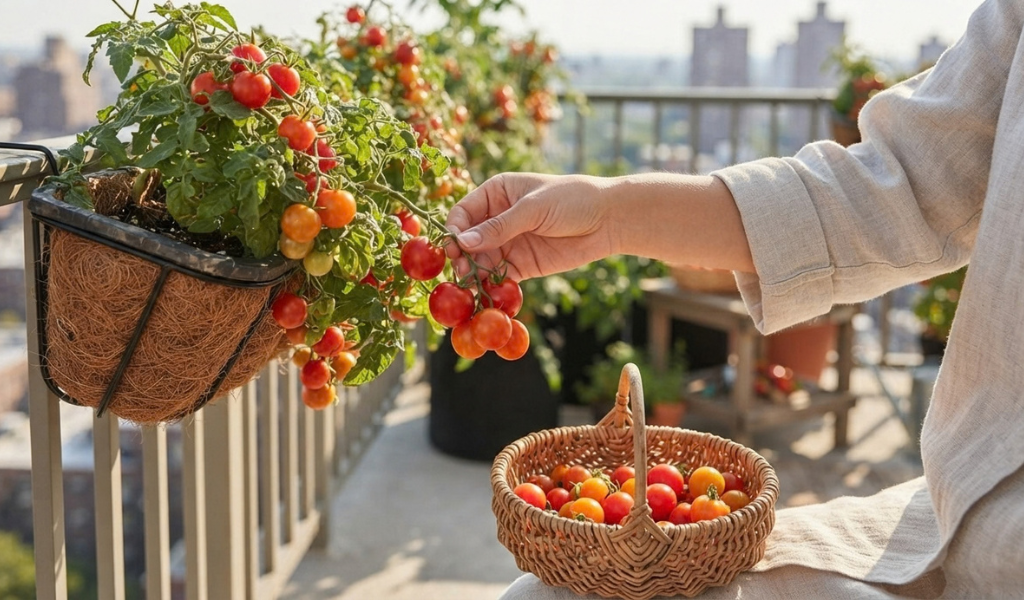
Storage Tips
Freshly picked tomatoes taste best kept at room temperature rather than in the refrigerator, since cold temperatures dull their flavor and texture. Store them stem-side down out of direct sunlight, and use them within a week for the best taste. If you have a larger harvest than you can eat fresh, tomatoes freeze well for sauces, or can be halved and slow-roasted for a concentrated flavor that keeps for months.
Final Thoughts
Growing tomatoes on balcony spaces is entirely achievable with the right variety, a properly sized pot, good soil for tomato plants, and a consistent watering routine. Choosing determinate or micro-dwarf varieties over sprawling indeterminate vines sets you up for success from day one, especially if your space is limited. With steady sunlight, regular feeding, and a little attention to pests, your balcony can produce a steady supply of fresh, homegrown tomatoes all season long. Start with one or two pots this season, learn what works on your balcony, and expand your little garden from there. There is nothing quite like the taste of a tomato you grew yourself.
Frequently Asked Questions
What are 9 common mistakes to avoid when growing tomatoes?
The most common mistakes include using poor quality soil, choosing a pot that is too small, overwatering or underwatering inconsistently, placing plants where they get less than six hours of sunlight, skipping fertilizer, ignoring pest problems until they spread, planting indeterminate varieties in small pots, forgetting to stake or support the plant, and harvesting tomatoes too early before they fully ripen.
Do tomatoes do better in pots or in the ground?
Tomatoes generally grow larger and produce more fruit in the ground because roots have unlimited space to spread. However, tomatoes in pots can still produce excellent yields when given a large enough container, good soil, and consistent care, making pots a practical choice for balcony or patio gardening.
What are the easiest vegetables to grow on a balcony?
Along with cherry tomatoes, easy balcony vegetables include peppers, lettuce, herbs like basil and mint, radishes, and green beans. These all adapt well to container gardening and don’t require as much space as larger vegetables like squash or corn.
Do tomatoes grow best in full sun or shade?
Tomatoes grow best in full sun. They need direct sunlight to produce energy for fruiting, and too much shade leads to weak, leggy plants with little to no fruit.
Do tomatoes grow best in full sun or shade on a balcony?
The same rule applies on a balcony. Full sun, ideally six to eight hours a day, gives the strongest results. If your balcony only gets partial sun, choose compact or cherry varieties, which tend to tolerate lower light levels better than larger tomato types.
What are the best types of tomatoes to grow on a balcony or in pots?
Determinate and micro-dwarf varieties are best for balconies and pots. Popular choices include Tiny Tim, Patio Princess, Balcony Star, Tumbling Tom, and Roma, all of which stay compact while still producing a reliable harvest.
What size pot is best for growing tomatoes on a balcony?
A pot at least 12 to 16 inches deep and wide works well for most dwarf and determinate varieties. Larger types benefit from containers of 18 inches or more, since more soil volume means more room for roots and better moisture retention.