Mortgage Lifter Tomato Plants: Growing Guide for Big Heirloom Tomatoes
Mortgage Lifter Tomato Plants: How to Grow This Heirloom Tomato from Seed
Some tomatoes are just tomatoes. Then there is the one that supposedly saved a man’s home. Mortgage lifter tomato plants have been growing in backyards since the 1930s, and gardeners still talk about them like old friends. The fruit is huge and meaty, with a sweet flavor and a mild tang. One thick slice can cover a whole sandwich.
This guide covers everything you need to know. You will learn where the variety came from, how to choose good heirloom seeds, how to start them indoors, and how to keep the vines strong all season. I will also share a few DIY Tomato Trellis Ideas, because this plant grows tall and carries heavy fruit, so it needs real support. Whether you have a few pots on a balcony or a full vegetable garden, you can grow this one.
The Story of the Mortgage Lifter Tomato
The tale starts in Logan, West Virginia. A radiator repairman named M.C. Byles, better known as Radiator Charlie, loved growing tomatoes. Money was tight during the Great Depression, and he owed $6000 on his home. Charlie wanted a tomato bigger and meatier than anything in the area. The details change depending on who tells the story. Most versions say he crossed four large varieties over several years, including a German Johnson and a beefsteak type.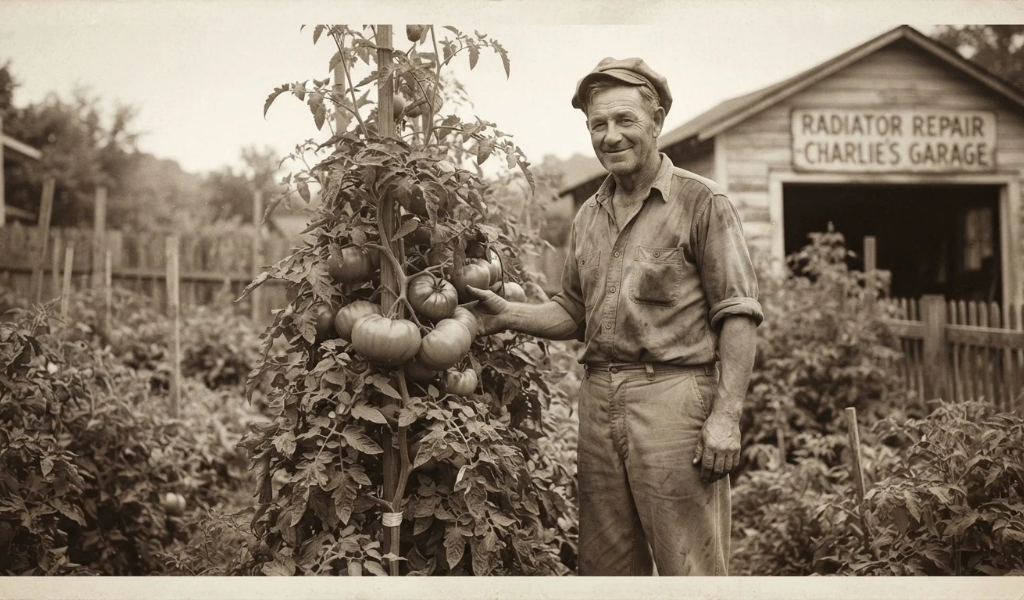 Each season he saved seed from the best fruit and planted it again.
Once his plant was stable, Charlie began selling seedlings from his yard. Gardeners drove in from nearby states to buy them, and the price was about a dollar per plant. That sounds small today. In the 1930s and 1940s it added up fast. The story says he cleared the mortgage in about six years.
People started calling the tomato the mortgage lifter because it helped Charlie pay off his mortgage. The name stuck and the variety spread through seed swaps and garden clubs. It is still popular today. A variety that has lasted this long usually earns its place by working well in real gardens.
What Makes This Heirloom Beefsteak Tomato Special
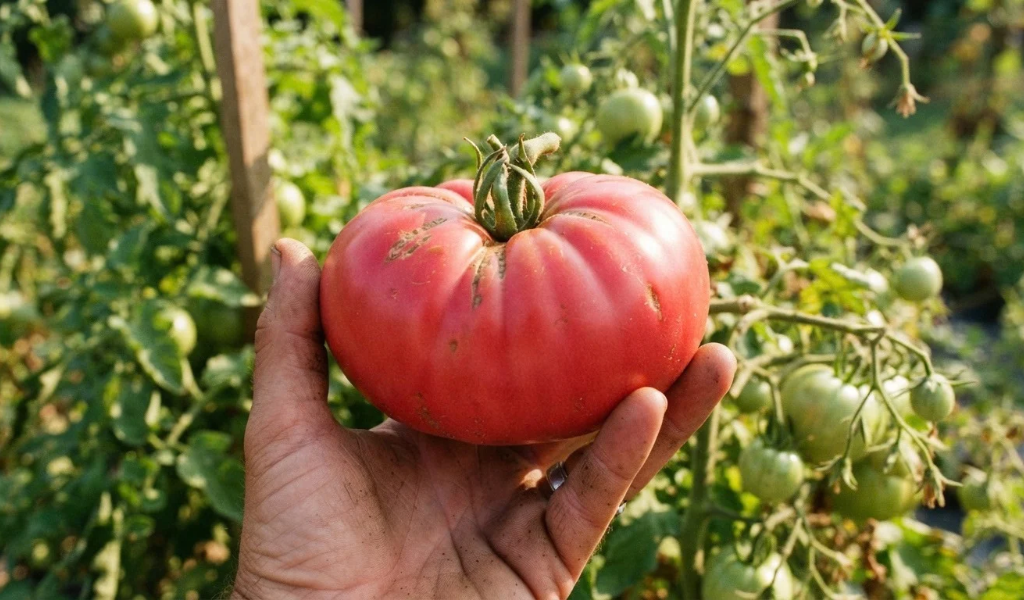
Mortgage lifter tomato fruit is big. Most tomatoes weigh one to two pounds, and some go well past that in a good year. The fruit is pink or pinkish red, a little flat on the top, and often a bit ribbed near the stem. It looks like a classic beefsteak tomato and it slices like one too. The inside is dense with few seeds and very little juice running out.
The taste is the real reason people love it. It is sweet and rich with just enough acid to keep it lively. The meaty texture holds up on burgers and sandwiches without turning soggy. Many gardeners also use it for thick sauce, since the low water content means less cooking time. If you want one tomato to fill a whole plate, this is a fine choice.
This is an open-pollinated heirloom variety, so the seeds grow true to type. A non-GMO heirloom plant passes its traits to the next generation as long as it does not cross with another kind. That means you can save your own seed and plant it next year. Commercial hybrids do not work this way. With a hybrid you get unpredictable plants from saved seed.
Solanum Lycopersicum and Tomato Varieties Explained
Every tomato you have ever eaten belongs to one species. Its scientific name is Solanum lycopersicum, and it sits in the nightshade family with peppers and potatoes. Breeders and gardeners have shaped that one species into thousands of shapes, sizes, and colors. That is why a tiny cherry tomato and a giant beefsteak can both carry the same label. Tomato varieties fall into two main groups. A determinate plant grows to a set height, sets fruit all at once, and then slows down. These are handy for canning or small spaces. An indeterminate tomato keeps growing and making fruit until frost stops it. Mortgage lifter is an indeterminate variety. The vines can reach six feet or more, so plan for height from day one. Among tomato varieties, this one sits with the big slicers like Brandywine and Cherokee Purple. It tends to be a little more forgiving than some of them. It also has a long record of doing well in home gardens across many climates. If you have grown an heirloom tomato before, you will feel right at home. If this is your first, it is a friendly place to start.
Buying Mortgage Lifter Tomato Seeds
Good mortgage lifter tomato seeds should come in a sealed packet with a clear packing date. Check that the label says open-pollinated and non-GMO. A fresh packet gives better germination than an old one from the bottom of a drawer. Most packets hold around 25 to 50 seeds, which is plenty for a family garden with some left to share.
Buy from a seed company that specializes in heirloom seeds. Small regional companies and seed saver groups often describe their stock in honest detail. Look for notes on days to maturity, plant height, and fruit weight. Be careful with listings that promise giant tomatoes in every case. Fruit size depends on weather, soil, and care. A good seller will say so.
Saving seed is simple with this variety. Pick a fully ripe fruit from your healthiest plant and scoop out the seeds with the gel. Let them sit in a cup of water for two or three days until a thin film forms. Rinse them well, spread them on a paper plate, and dry them for a week. Store them in a labeled envelope somewhere cool and dark. Try to plant mortgage lifter away from other tomato types so the seed stays pure.
Starting Tomato Seed Indoors
Seed starting works best about six to eight weeks before the last frost. Start too early and the seedlings get tall and leggy. Start too late and you lose part of the growing season. Mortgage lifter needs around 80 to 90 days from transplant to ripe fruit, so a good head start matters. Check your local frost dates and count backward. Fill clean trays with a light seed starting mix and plant each seed about a quarter inch deep. Keep the mix damp but not soggy. Warmth is the key here. Seeds sprout best at 70 to 80 degrees Fahrenheit, and a heat mat under the tray helps a lot.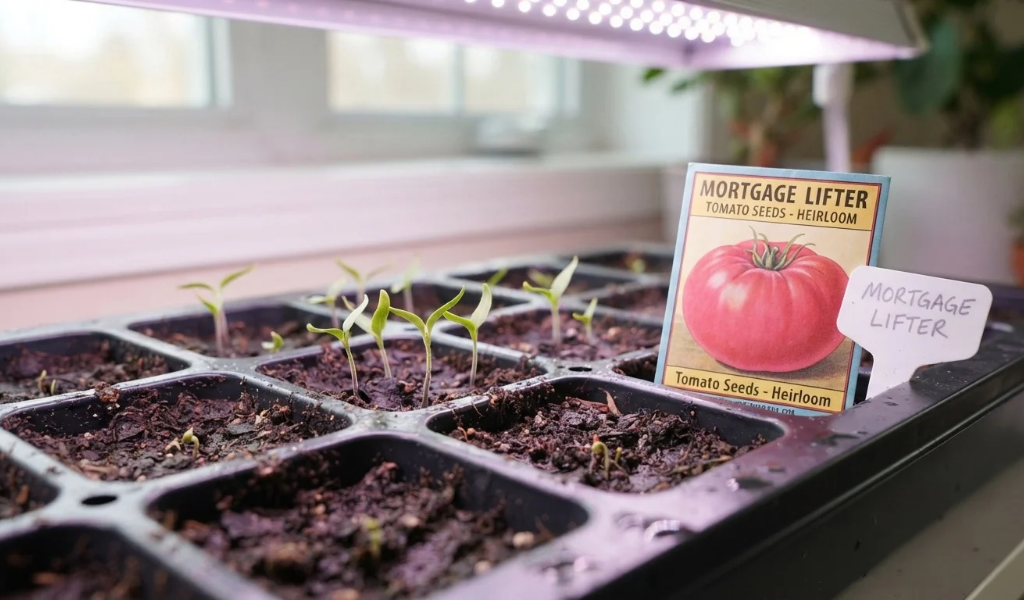 Germination usually takes five to ten days. Once the first green shoots appear, move the tray under a bright light.
Give each seedling 14 to 16 hours of light every day. A sunny window rarely provides enough, so a simple grow light placed a few inches above the plants works much better. After the first true leaves appear, move each seedling into its own small pot. Bury the stem a little deeper than before. Tomatoes grow extra roots along the buried stem, and that makes a sturdier plant. A small fan blowing gently across the tray also builds strong stems.
Moving Your Tomato Plant Outside
Do not rush a seedling straight into the garden. About a week before transplant, set the trays outside in a shady, sheltered spot for a few hours. Add more time and more sun each day. This process is called hardening off, and it helps the young plants handle wind and bright light without shock.
Wait until the danger of frost has passed and the soil feels warm. Tomatoes want plenty of sun, and that means at least eight hours of full sun each day. Pick a spot with loose, rich soil that drains well. Mix in a few shovels of compost before planting. Avoid the place where tomatoes or peppers grew last year, since soil diseases can linger.
Give each plant room. Set them about three feet apart in rows, with the rows four feet apart. That sounds like a lot for a small seedling. By midsummer you will be glad of the space, since crowded plants get sick more often. Dig a deep hole, remove the lower leaves, and plant the stem up to the first set of leaves. Water well and add a thin layer of mulch.
Caring for an Indeterminate Tomato
Watering and Mulch
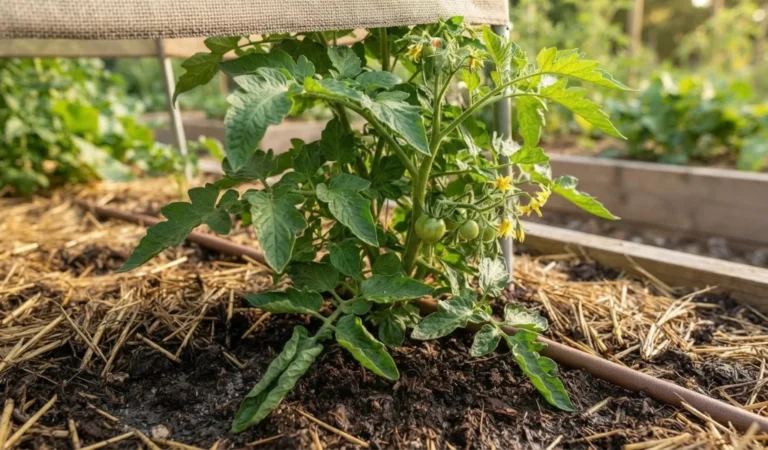
Steady water keeps the fruit from cracking and helps the plant grow evenly. Give each plant about one to two inches of water a week, delivered at the base and not over the leaves. Dry soil followed by a sudden soaking is the usual reason big tomatoes split. A layer of straw or shredded leaves keeps moisture in and stops soil from splashing onto the lower leaves.
Fertilizer Tips
Feed the plants lightly at planting time and again when the first fruit set begins. Too much nitrogen gives you a huge green vine with few tomatoes. Use a fertilizer made for tomatoes, or one with more phosphorus and potassium than nitrogen. Compost tea or a scoop of well rotted compost also works well. Gardeners who feed only with heavy lawn fertilizer often wonder why their plants have no flowers.
DIY Tomato Trellis Ideas for Tall Vines
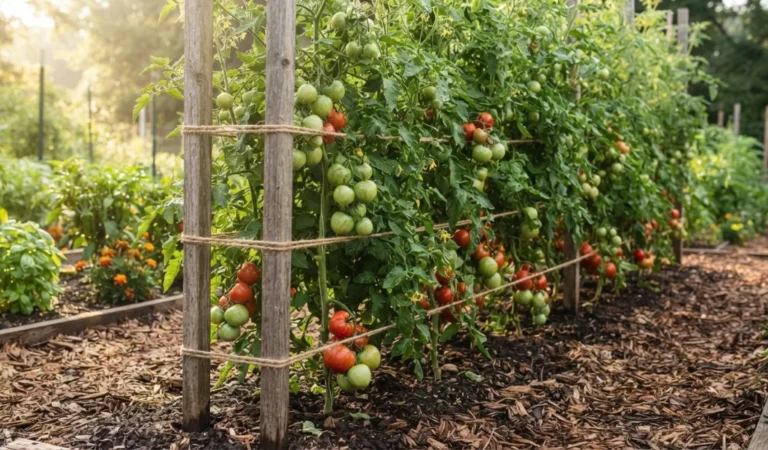
This plant needs strong support. A single cage from the garden store often tips over once the fruit gets heavy. Here are a few DIY Tomato Trellis Ideas that hold up well. The first is a simple stake and twine setup, where you drive a six-foot stake beside each plant and tie the main stem loosely every foot or so.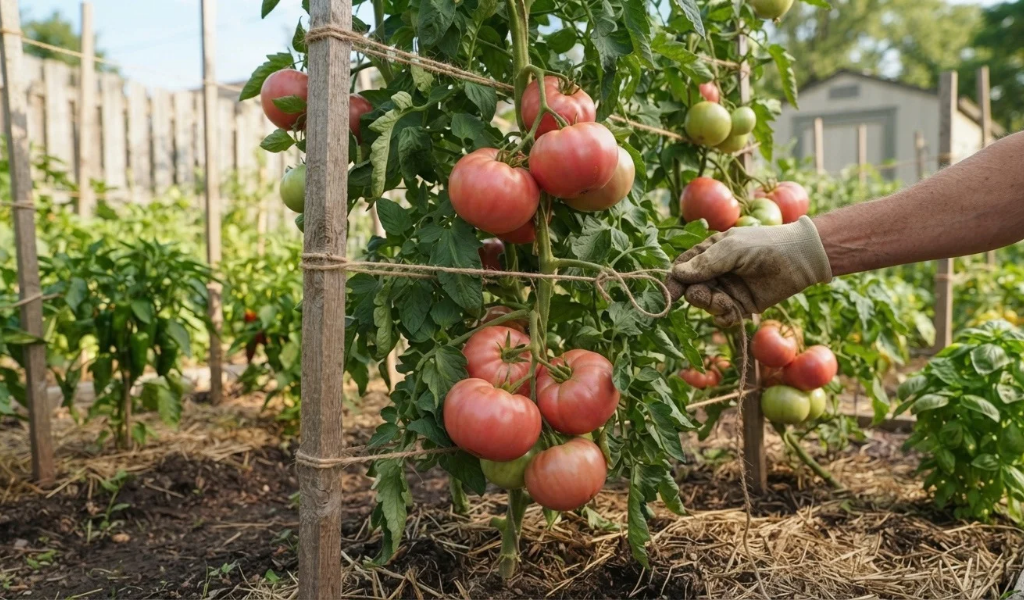 The second is a cattle panel arch, which uses a sturdy wire panel bent between two rows and anchored with metal posts. Plants climb it easily and the fruit hangs in the open. The third is a string trellis, where you run a wire along two tall posts and drop strings down to each plant. You twist the vine around the string as it grows. All three cost little and last for years.
Many gardeners remove the small shoots that grow between the main stem and a leaf branch. These are called suckers. Taking off some of them sends energy into fewer and larger fruits. Pinch them out when they are small with your fingers. You do not have to remove all of them. Leaving a few gives extra shade for the fruit and more total tomatoes. In the last month before frost, snip the top of the plant so it stops making new flowers and puts its strength into ripening what is already there.
Common Problems and Simple Fixes
Hornworms are the big green caterpillars that can strip a plant overnight. Check the leaves every few days and pick them off by hand. Aphids and whiteflies show up too, and a spray of water or some insecticidal soap usually handles them. Planting basil and marigolds nearby will not solve everything, but it does make the bed a little less inviting to pests.
Big beefsteak tomatoes crack easily when water swings from dry to wet. Steady watering and mulch are the best cure. Blossom end rot shows up as a dark, sunken patch at the bottom of the fruit. It is usually a sign of uneven watering, not a lack of calcium in the soil. Water on a schedule and the problem often fades on its own.
Sometimes a healthy plant blooms and then drops its flowers. Hot nights above 75 degrees or cold nights below 55 can stop pollen from working. Too much nitrogen can also slow things down. Be patient, keep the watering even, and give the plant a gentle shake at midday to help pollen move. Fruit set usually picks up when the weather settles.
Harvesting Mortgage Lifter Tomatoes
Harvesting at the right moment makes a big difference in flavor. The fruit should turn red with a pink blush, and it should feel slightly soft when you press it gently. The shoulders near the stem often stay a bit paler than the rest, and that is normal for this variety. Expect the first ripe tomatoes about 80 to 90 days after transplant, and keep picking throughout the growing season until frost.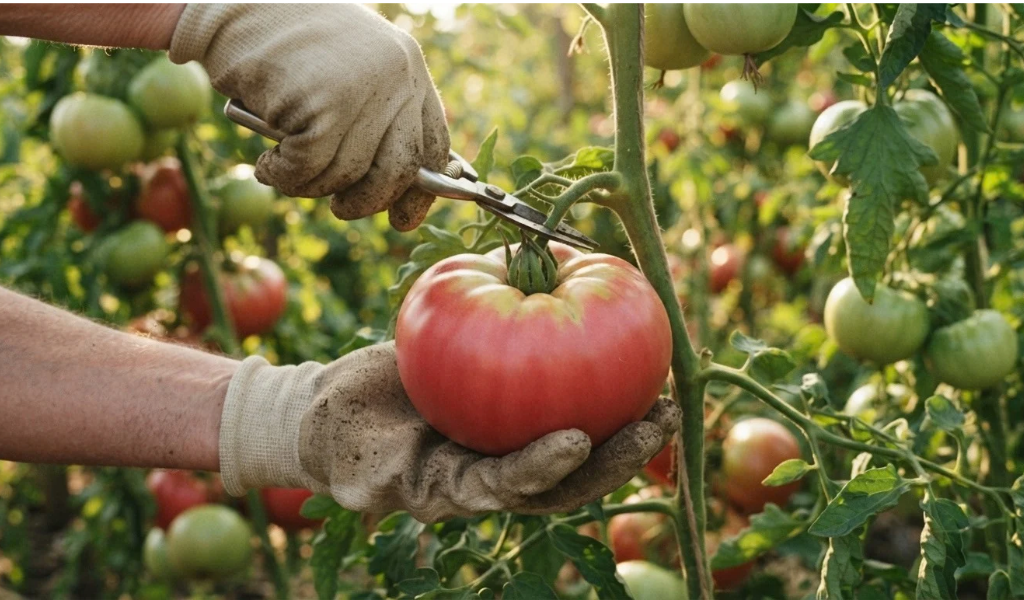
Hold the fruit in one hand and lift it upward until the stem snaps at the joint. You can also use clean pruning shears. Try not to pull hard, since the heavy tomatoes can tear the vine. Handle each one like an egg. Bruised spots spoil fast, and these fruits are big enough that a small mark can ruin a slice.
Keep ripe tomatoes on the counter away from direct sun. Do not refrigerate them unless they are cut, because cold dulls the flavor. Most will stay good for about three to five days. If you have too many, turn them into sauce, salsa, or roasted tomato soup. The meaty flesh cooks down quickly, so it makes a thick sauce without long simmering. You can also freeze whole tomatoes and peel them easily once thawed.
Customer Reviews and Gardener Feedback
Across garden forums and seed company pages, customer reviews of mortgage lifter tomato seeds share a few common points. People praise the taste first, calling it sweet and rich. Many say it is their favorite tomato for sandwiches. They also like the large size and the fact that one plant gives a steady supply all summer. A lot of growers mention that the plant is easy to start from seed.
Reviews are not all glowing. Some gardeners say the plants take a long time to ripen in cool climates. Others find the fruit cracks in wet seasons, and a few report lower yields than smaller varieties. The plant also gets very tall, and some new growers underestimate the support it needs. None of these is a deal breaker. They are simply good reasons to plan ahead.
Experienced growers often suggest starting seeds a little early and using a black plastic mulch in cooler areas to warm the soil. Others say mortgage lifter loves deep watering and does best with steady care instead of heavy feeding. Many also recommend growing it next to a smaller early tomato, so you have fruit to pick while you wait for the big ones. If you read the reviews before you buy, you will know what to expect.
Final Thoughts
The mortgage lifter tomato has a great story, but it would not still be around if it were not a good plant. It gives big, meaty fruit with real flavor, it grows well from seed, and it rewards even a beginner who pays attention to water, sun, and support. Start the seeds indoors at the right time, give the plants room, and build a strong trellis before the vines get heavy. Then pick the fruit when it is ready and enjoy every slice.
If you have been thinking about trying an heirloom variety, this is your sign. Order a packet of non-GMO heirloom seeds, mark your frost date on the calendar, and get started. Share your first big tomato with a neighbor and pass along a few saved seeds. That is how this variety has traveled for almost a century.
Frequently Asked Questions
How long does it take for mortgage lifter tomatoes to ripen?
Most plants produce ripe fruit about 80 to 90 days after transplant. In cooler areas it can take a little longer. Starting seeds six to eight weeks before the last frost gives you the best chance of a full harvest.
Is mortgage lifter a determinate or indeterminate tomato?
It is an indeterminate tomato. The vines keep growing and setting fruit until frost ends the season. Plan for a tall trellis or strong stakes, since plants can pass six feet.
Can I grow mortgage lifter tomato plants in containers?
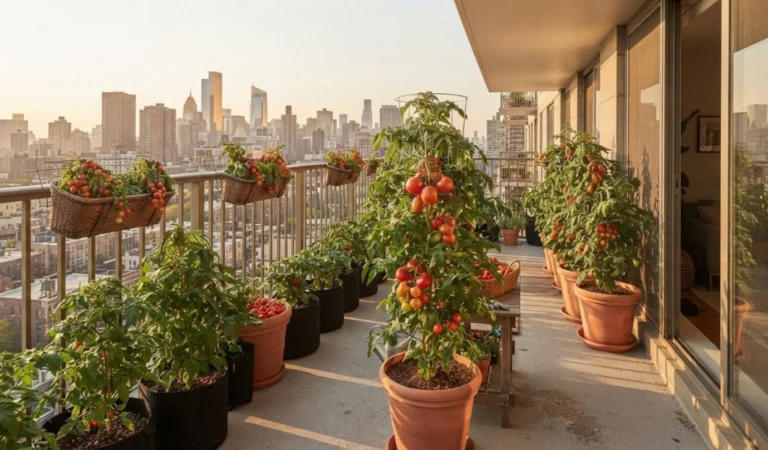
Yes, but you need a large pot. Use a container that holds at least 15 to 20 gallons and add a strong stake or cage. Water often, since pots dry out fast in summer heat. Garden beds usually give better yields.
Can I save seeds from my mortgage lifter tomatoes?
Yes. This is an open-pollinated heirloom, so saved seeds will grow true to type. Ferment the seeds in water for a couple of days, rinse them, and dry them well. Grow them away from other tomato varieties to keep them pure.
How big do mortgage lifter tomatoes get?
Most fruits weigh one to two pounds. In ideal conditions some can grow larger. Size depends on weather, soil, water, and how many fruits you leave on each plant.
Why are my mortgage lifter tomatoes cracking?
Cracking usually comes from uneven watering. A long dry spell followed by heavy rain or a big soaking causes the skin to split. Mulch the soil and water on a steady schedule to reduce the problem.
Do mortgage lifter tomatoes need full sun?
They do. Give them at least eight hours of direct sun each day for the best growth and flavor. Plants in shade grow slowly and produce fewer, smaller tomatoes.