Nitrogen Deficiency in Tomato Plants: Nutrient Deficiency Guide
Nitrogen Deficiency in Tomato Plants: Best Ways to Treat It
Nitrogen deficiency in tomato plants is one of the most common problems that home gardeners and commercial growers face. It shows up as pale leaves, slow growth and weak stems, and it can cut your harvest badly if you ignore it. The good news is that this tomato nutrient problem is easy to spot and simple to fix once you know what to look for. Tomato plants need a steady supply of nitrogen from the first week in the garden until the last fruit is picked. When the supply runs short, the plant struggles to make green color, build new leaves and carry fruit to full size.
This guide explains how nitrogen deficiency in tomato plants starts, how to read the signs on your tomato leaves and how to treat it without harming the crop. If you want a wider view of every nutrient problem a tomato crop can have, the tomato plant nutrient deficiency guide covers them side by side. Here we focus on nitrogen and on the other nutrient deficiencies that look like it, so you can avoid a wrong diagnosis. You will also learn the common mistakes people make when they fertilize and why too much nitrogen can be just as damaging as too little. By the end you will have a clear plan to treat and prevent nitrogen deficiency in tomato plants all season long.
Understanding Nitrogen Deficiency in Tomato Plants
Nitrogen deficiency in tomato plants happens when the soil cannot give the plant enough usable nitrogen for its growth. It is one of the most frequent nutrient deficiencies in tomatoes because the plant uses so much of it. A tomato plant grows fast and sets heavy fruit, so it keeps pulling nutrients from the soil week after week. Knowing how nitrogen works inside the plant makes the symptoms much easier to understand.
How Nitrogen Powers Tomato Growth
Nitrogen is the main building block of chlorophyll, the green pigment that captures sunlight and turns it into sugar. It is also part of amino acids and proteins, which the tomato plant needs to make new cells, stems and foliage. In simple terms nitrogen drives leafy growth. A healthy supply gives a tomato plant deep green leaves, thick stems and the strength to hold flowers and fruit. Without it the plant slows down and cannot use the sunlight it receives. That is why nitrogen deficiency in tomato plants affects the whole plant and not just a few leaves.
Visual Symptoms of Nitrogen Deficiency in Tomato Plants
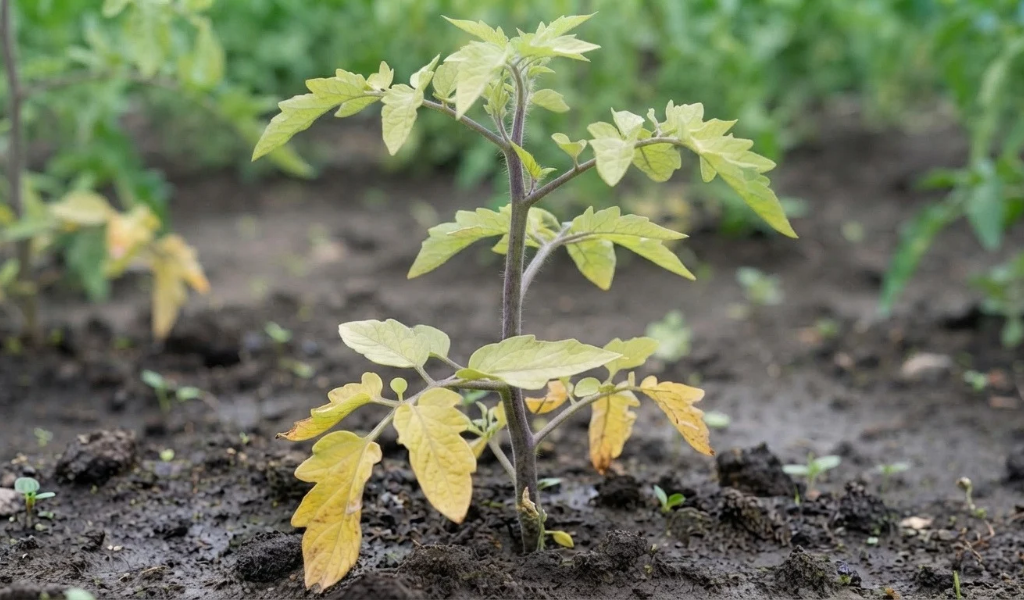
The first sign is usually a light green or pale yellow color on the lower leaves. The leaf turns yellow evenly across the blade and the leaf veins fade along with the rest of the tissue. As the problem grows the leaves turn pale and then dry up and drop. Stems become thin and sometimes show a purple tint. The whole tomato plant looks small and stunted and the flower clusters are fewer than normal. Fruit that does form is often small and slow to ripen. These symptoms of nitrogen deficiency in tomato plants build gradually, so regular checks of the lower foliage help you act early.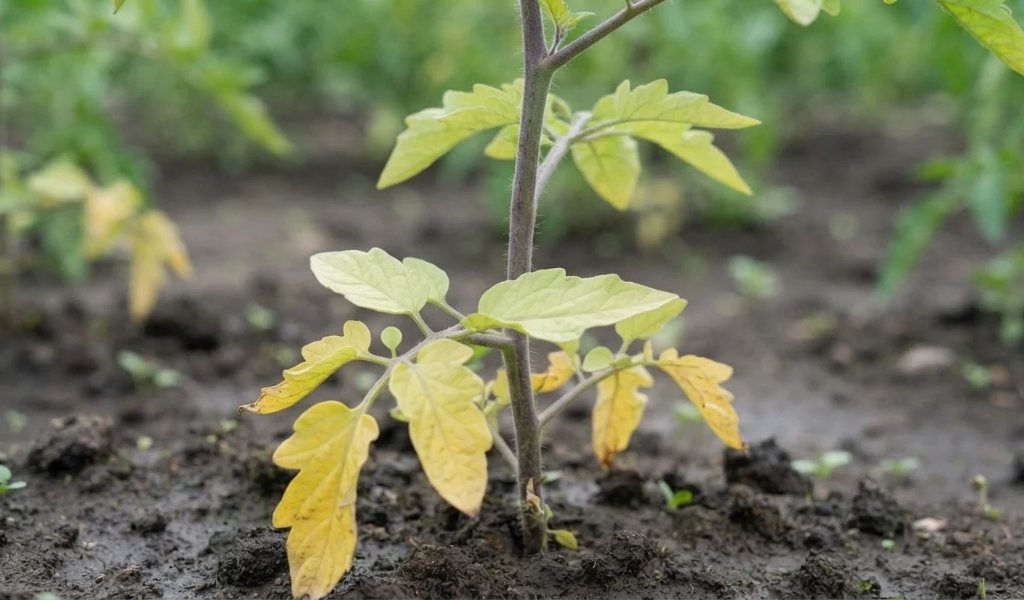
Why Older Leaves Show Nitrogen Deficiency First
Nitrogen is a mobile nutrient, which means the plant can move it from one part to another. When the soil runs low, the plant takes nitrogen out of its older leaves and sends it to the new growth at the top. This keeps the growing tips alive for a while but leaves the lower leaves starving. That is why nitrogen deficiency in tomato plants shows on the older leaves first while the younger leaves still look fairly green. If the yellowing starts on new leaves instead, you are probably looking at a different problem such as iron or sulfur. This simple rule of old versus new leaves is the quickest first test you can do.
Main Causes Behind Nitrogen Deficiency in Tomato Plants
Most cases of nitrogen deficiency in tomato plants come from the soil and the growing conditions rather than from the plant itself. Poor soil is the biggest cause. Beds that are used for tomatoes year after year lose their organic matter, and sandy soil holds very little nitrogen to begin with. Adding compost every season keeps the soil rich enough to feed the plants.
Heavy rain and too much watering are another common cause. Nitrogen in the form of nitrate dissolves easily and moves down with the water, which is called leaching. A week of strong rain can wash out most of the available nitrogen from a garden bed. Container tomatoes lose nutrients even faster because every watering pushes some through the drainage holes.
Carbon rich mulch can also tie up nitrogen. Wood chips, sawdust and fresh straw feed soil microbes as they break down, and those microbes use up nitrogen from the soil during the process. The nutrient is still there but the tomato plant cannot reach it for a while.
Cold soil is the last major cause. Roots take up nitrogen slowly when the soil is cold, so early planting in spring often leads to pale plants even when the soil has enough nitrogen. The plants usually recover once the soil warms up. Soil pH also plays a part. Tomatoes prefer a range from 6.2 to 6.8, and outside that range nutrient uptake drops and many deficiency signs can appear together.
How to Tell Nitrogen Deficiency Apart From Other Tomato Nutrient Problems
Yellow leaves do not always point to nitrogen deficiency in tomato plants. Several tomato nutrient deficiencies cause yellowing, and a wrong guess wastes time and fertilizer. The pattern of the yellow color and the age of the affected leaves tell you most of what you need to know.
Magnesium deficiency causes interveinal chlorosis on the lower leaves. The tissue between the veins turns yellow while the veins remain green, which gives the leaf a striped look. Nitrogen deficiency fades the whole leaf evenly instead. Iron deficiency in tomatoes also shows as interveinal yellow, but it begins on the youngest leaves at the top. This is common in alkaline soil where iron is locked away. Manganese deficiency looks similar to iron problems and appears on newer leaves with small dark spots in some cases. Zinc deficiency gives small leaves and a short stunted look on new growth.
Potassium deficiency shows as yellow or brown edges on the older leaves, and the fruit may ripen unevenly with yellow shoulders. Phosphorus deficiency gives dark green or purplish leaves and slow growth, mostly in young plants and cold soil. Calcium deficiency attacks new growth and fruit, and it causes sunken dark spots on the bottom of the tomato, known as blossom end rot. Boron deficiency makes new leaves brittle and distorted.
A soil test removes the guesswork. Home kits give a rough idea, but a lab test from your local extension office shows nutrient levels and soil pH clearly. Use the test together with the leaf pattern before you choose any fertilizer or amendment.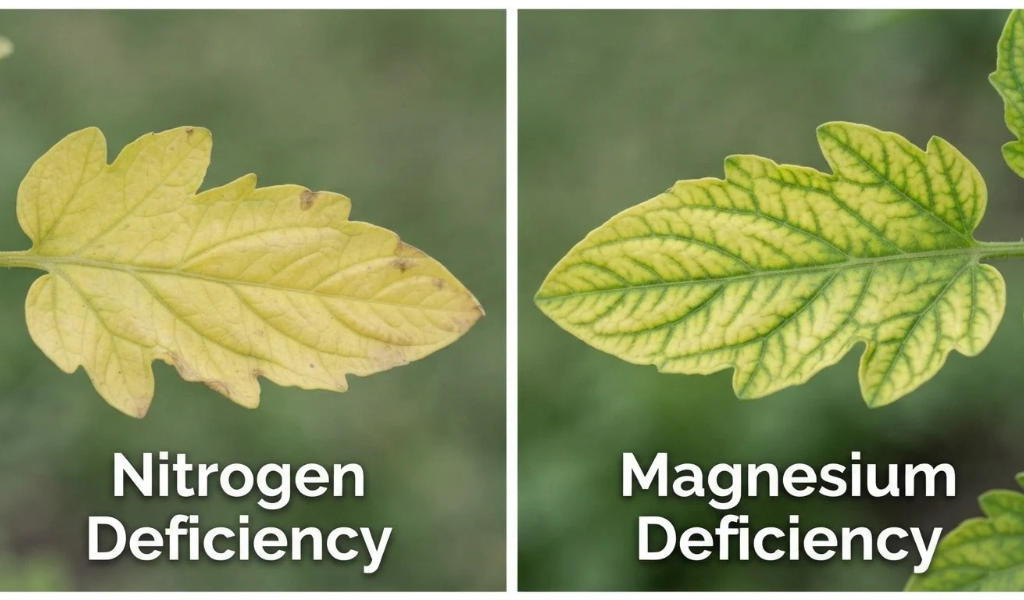
Troubleshooting Common Mistakes When Treating Nitrogen Deficiency in Tomatoes
Many gardeners notice nitrogen deficiency in tomato plants and then make the problem worse by treating it the wrong way. These mistakes are easy to avoid once you know them.
Applying Fertilizer Too Late or Too Heavily
Waiting until the plant is badly yellow makes recovery slow, because damaged leaves will not turn green again. Many growers then try to fix the delay with a very large dose. A heavy dose can burn roots and push soft leafy growth at the cost of flowers. Feed at the first sign of pale lower leaves and use small amounts. Two light feedings a week or two apart work better than one heavy feeding.
Using the Wrong Nitrogen Source for Your Soil
Not every nitrogen source suits every garden. Urea is cheap and strong but needs warm soil and moisture to work and can burn plants if it sits on the surface. Nitrate based fertilizers act fast and suit cool soil, but they leach quickly in sandy beds. Organic sources such as compost and fish emulsion work slowly and build the soil. Match the product to your soil type and weather and always read the label before use.
Ignoring Soil pH and Cold Soil Conditions
Adding more fertilizer will not help if the roots cannot take it up. Soil that is too alkaline or too acidic blocks nutrients, and cold soil slows the roots down. A pH test is quick and cheap. If the pH is outside 6.2 to 6.8, correct it first with sulfur to lower it or lime to raise it. In cold weather wait for warmer soil or use a mild liquid feed that roots can absorb easily.
Overlooking Mulch and Watering Habits
Fresh wood mulch pulled against the stem can tie up nitrogen, and uneven watering can wash it out. Use straw or aged compost as mulch and keep it a few inches from the stem. Water deeply but less often so that nutrients stay in the root zone. In containers use a slow feeding routine because frequent watering removes nutrients quickly.
Over-Fertilizing Risks: What Too Much Nitrogen Does to Tomato Plants
Fixing nitrogen deficiency in tomato plants should never turn into over-feeding. Excessive nitrogen causes its own set of problems, and they can be harder to reverse than a mild deficiency.
Leafy Growth, Fewer Flowers and Poor Fruit Set
When a tomato plant gets too much nitrogen, it puts its energy into big dark green foliage and forgets about fruit. You see tall bushy plants with few flowers and a poor fruit set. The fruit that does appear may ripen late. Lush soft growth also attracts pests such as aphids and is more open to disease. If your plants look huge but give little fruit, stop nitrogen feeding and switch to a fertilizer with more phosphorus and potassium to support fruit development.
Fertilizer Burn and Root Damage
Strong fertilizer salts pull water out of roots and cause burn. Signs include brown leaf tips, wilting even in moist soil and a white crust on the soil surface. Roots can be damaged badly, and then the plant cannot take up water or any nutrient, which makes it look like a deficiency again. If this happens flush the soil with plenty of clean water to wash out extra salts. For container plants let the water drain freely several times. Then hold all feeding for a couple of weeks and let the plant recover.
Safe Ways to Correct Nitrogen Deficiency in Tomato Plants Without Overdoing It
A careful approach fixes nitrogen deficiency in tomato plants quickly and keeps the plant balanced. Start by confirming the problem with the leaf pattern and a soil test. Then pick a method that fits the speed you need.
For a fast rescue use a liquid feed. Fish emulsion, liquid seaweed or a balanced water soluble fertilizer mixed at half the label rate is a good start. Water it into the soil near the roots and expect greener new growth within a week or so. A foliar spray of a diluted nitrogen solution gives even faster relief because leaves absorb it directly. Spray early in the morning or late in the evening to avoid leaf burn.
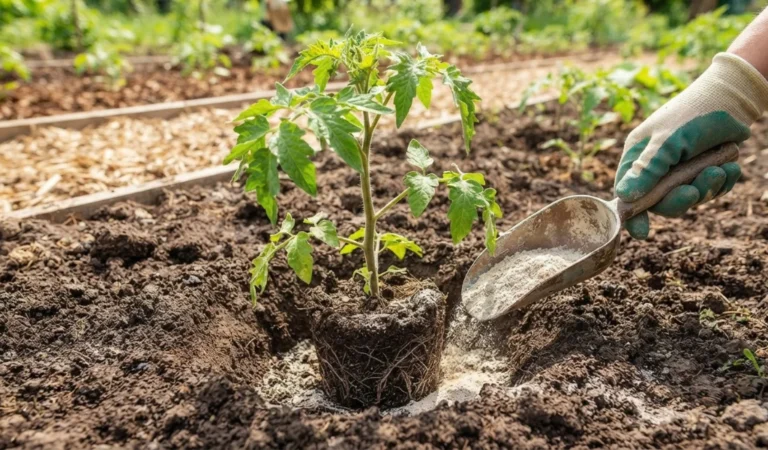
For steadier results work a balanced granular fertilizer into the top inch of soil around each plant and water it in well. Keep it away from the stem. Repeat every three to four weeks and follow the label closely.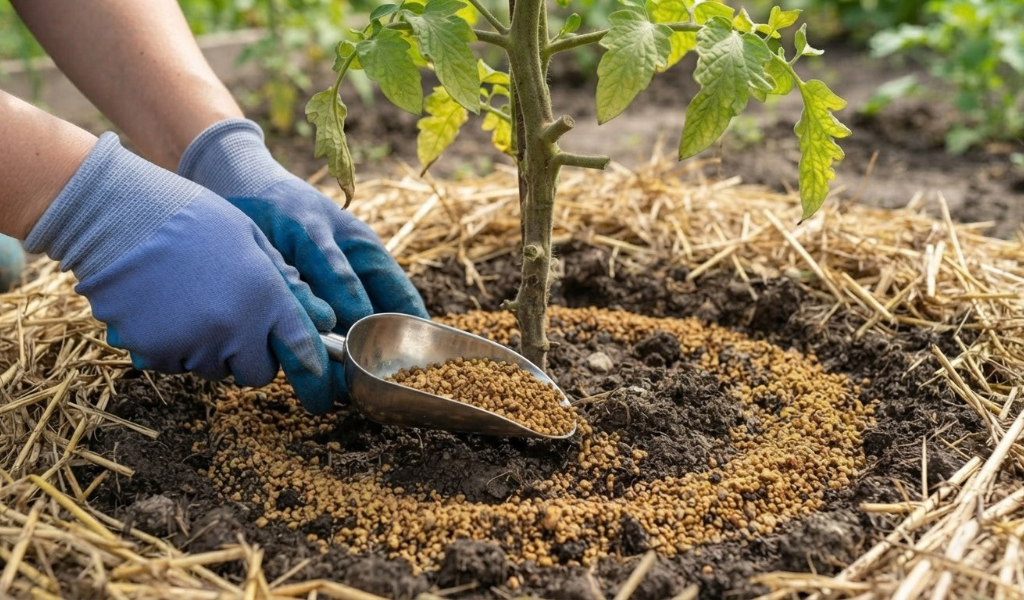
Watch the plant after each feeding. New leaves should turn deeper green within one to two weeks. Older yellow leaves will not recover, so remove them to improve airflow. If the plant improves, move to a regular schedule. If it does not, recheck your soil pH and look for other nutrient deficiencies in tomatoes before adding more nitrogen.
Organic and Long-Term Fixes for Nitrogen Deficiency in Tomatoes
Organic methods take longer to act but they build healthy soil that prevents nitrogen deficiency in tomato plants in future seasons. Compost is the best place to start. A layer about two inches thick spread around the plants releases nutrients slowly and improves soil structure and water holding.
Blood meal is a fast organic source with a high nitrogen content. Use it lightly because too much can burn roots. Composted chicken manure is also rich in nitrogen, but it must be fully aged since fresh manure is too strong. Coffee grounds work best when mixed into compost first and not piled thickly on the soil. Wood ash adds potassium but not nitrogen and it raises soil pH, so use it only when a soil test shows you need it.
Cover crops give the biggest long-term gain. Clover, hairy vetch and field peas pull nitrogen from the air and store it in their roots. When you cut them and turn them into the soil in spring the nitrogen becomes available to your tomatoes. Rotating tomatoes with beans or peas has a similar effect. Over a few seasons these habits raise organic matter and reduce your need for fertilizer.
Preventing Nitrogen Deficiency in Tomato Plants With a Smart Feeding Schedule
Prevention is easier than correction, and a simple feeding plan keeps nitrogen deficiency in tomato plants away. Begin before planting by mixing compost and a balanced fertilizer into the bed based on your soil test. This gives young plants a strong start.
Feed lightly at transplanting and again when the first flower clusters appear. During this early stage the plant needs moderate nitrogen to build a strong frame. Once fruit begins to set shift to a fertilizer with less nitrogen and more potassium and phosphorus. This supports fruit development and helps the tomatoes ripen well. Continue light feeding every two to four weeks throughout the growing season, and adjust after heavy rain because leaching removes nitrogen fast.
Container growers should feed every one to two weeks with a diluted liquid fertilizer. Keep mulch light and use materials that do not tie up nitrogen. Check lower leaves every week as an early warning. Keep a short garden note of what you applied and when, so you can see what works for your tomato crop.
Final Thoughts
Nitrogen deficiency in tomato plants is a common problem but it is not a hard one to solve. Pale lower leaves, thin stems and slow growth are clear signs. Confirm the cause with a soil test and rule out look-alike problems such as magnesium, iron and potassium deficiency. Treat the plant with light and timely feeding, and avoid the common mistakes of late, heavy or poorly matched fertilizer. Build long-term soil health with compost, cover crops and crop rotation.
Check your tomato plants this week and look closely at the lower leaves. If you spot early signs, act now with a mild liquid feed and a soil test. Share this guide with another gardener who is struggling with yellow tomato leaves, and keep exploring the full range of tomato nutrient deficiencies so every plant in your garden stays healthy.
Frequently Asked Questions
What is the fastest way to increase nitrogen in soil?
Liquid fertilizers such as fish emulsion or a water soluble balanced feed raise available nitrogen quickly. Blood meal also works fast. Apply small amounts and water them in well to avoid burn.
How do I add nitrogen to tomato plants?
Water a diluted liquid fertilizer into the soil near the roots or spread a granular feed around the plant and water it in. Compost worked into the soil adds nitrogen slowly. Always keep fertilizer away from the stem.
What is the best natural fertilizer for nitrogen deficiency?
Well-aged compost is the best all round choice because it feeds the plant and improves the soil. For a quicker boost use fish emulsion or blood meal in small amounts.
What is the first symptom of nitrogen deficiency?
The first symptom is usually pale green or yellow color on the oldest lower leaves. Growth also slows and stems look thinner than normal.
Will nitrogen deficiency in tomato plants reduce fruit yield?
Yes. Nitrogen deficiency in tomato plants lowers leaf growth and sugar production, so the plant sets fewer flowers and produces smaller fruit. Fixing the problem early protects your harvest.
Can tomato plants recover from nitrogen deficiency?
Yes. Most plants recover within one to two weeks of proper feeding. New growth turns green again, but the older yellow leaves will not regain their color.