
How to Get Rid of Tomato Hornworms: A Complete Guide
How to Get Rid of Tomato Hornworms on Tomato Plants
If you grow tomatoes, chances are you’ve run into tomato hornworms at some point. These large green caterpillars can strip a healthy tomato plant bare in just a few days, leaving gardeners frustrated and confused about what happened overnight. One morning your plants look fine, and the next, you’re staring at bare stems and chewed-up leaves wondering what on earth caused this much damage.
The good news is that tomato hornworms are manageable once you know what to look for. This guide walks you through everything you need to know about identifying these garden pests, understanding their life cycle, and using effective, mostly organic methods to get rid of tomato hornworms for good. Whether you’re dealing with your first hornworm infestation or trying to prevent one before it starts, you’ll find practical solutions below that actually work.
What Are Tomato Hornworms?
Tomato hornworms are the larvae of the five-spotted hawk moth, a large, fast-flying moth sometimes mistaken for a hummingbird because of how it hovers near flowers at dusk. These caterpillars are closely related to tobacco hornworms, which feed on similar plants and are often confused with one another since both belong to the sphinx moth family.
Both tomato and tobacco hornworms feed heavily on plants in the nightshade family, which includes tomatoes, peppers, eggplants, and potatoes. Because tomato plants are a favorite target, home gardeners with a vegetable garden are the ones most likely to encounter this pest during the growing season.
How to Identify Tomato Hornworms
Tomato hornworms are large, dark green caterpillars that can grow up to four inches long, making them one of the biggest caterpillars you’ll find in a home garden. Their bodies have eight diagonal white stripes running along each side, and they have a distinctive black horn protruding from their rear end, which is where the name “hornworm” comes from.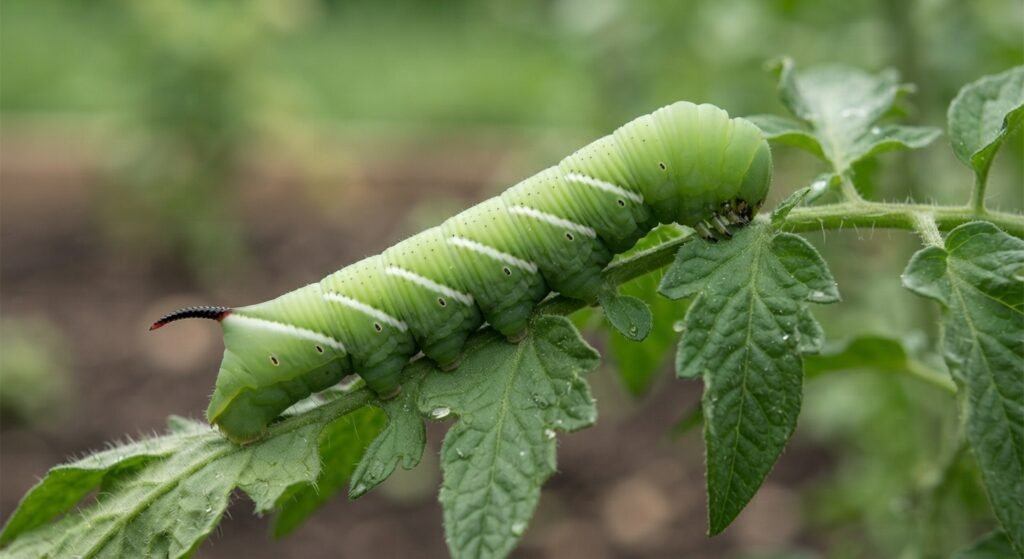
Tobacco hornworms look almost identical, but there’s an easy way to tell them apart. Tomato hornworms have straight white stripes and a black horn, while tobacco hornworms have white stripes with black edging and a red horn. Unless you’re trying to tell the two apart for curiosity’s sake, the treatment for both is the same.
Because of their dark green color, these caterpillars blend in remarkably well with tomato foliage. Many gardeners don’t spot them until they notice the damage first, like chewed leaves or black droppings scattered on the ground beneath the plant, which look like small grains of rice.
Tomato Hornworm Life Cycle
Understanding the life cycle of a tomato hornworm makes it much easier to time your control methods. Adult moths emerge in late spring and begin laying eggs on the undersides of tomato leaves. These eggs are small, round, and pale green or white, and they hatch within about a week.
Once the eggs hatch, the larvae begin feeding right away. Hornworm caterpillars go through several growth stages over three to four weeks, consuming an increasing amount of foliage as they grow larger. After reaching full size, the larva drops to the soil and burrows down to pupate, forming a hard brown cocoon.
In warmer climates, hornworms may complete two generations in a single growing season. In cooler regions, the pupa will overwinter in the soil and emerge as an adult hawk moth the following spring. Knowing this cycle helps explain why hornworm infestations often seem to appear suddenly in mid to late summer.
Signs of Tomato Hornworm Damage
Spotting hornworm damage early can save your tomato plant from serious harm. Since the caterpillars themselves are hard to see, most gardeners first notice the aftermath of their feeding.
Chewed Tomato Leaves
The most obvious sign of a hornworm infestation is chewed tomato leaves, often with large, ragged holes or entire sections of foliage missing. Because hornworms are such aggressive eaters, a small population can cause noticeable damage within just a day or two.
You might also notice black droppings on the leaves below where a hornworm is feeding, or scattered across the soil at the base of the plant. These droppings are one of the clearest indicators that a hornworm caterpillar is nearby, even if you can’t spot it right away.
Missing Flowers and Fruit
While hornworms prefer tender new leaves, they’ll also feed on flowers and even young, developing fruit when foliage runs low. If you notice tomato blossoms disappearing or small bite marks on green tomatoes, it’s worth inspecting the plant closely for hornworms, especially on the stem and undersides of leaves where they tend to hide during the day.
Large hornworms can cause significant damage in a short time because of how much they eat as they approach full size. Catching the problem early, before the caterpillars grow too large, makes control much easier.
How to Get Rid of Tomato Hornworms
Once you’ve confirmed a hornworm infestation, it’s time to act. Fortunately, there are several effective ways to get rid of hornworms, ranging from simple hand removal to targeted organic treatments.
Handpick Hornworms
The simplest and most direct method is to handpick hornworms off your plants. Because hornworms are large, they’re relatively easy to remove by hand once you spot them, even though their green coloring makes them tricky to find at first.
Check your tomato plants in the early morning or evening when hornworms are most active and easier to see. Look closely at the stem, the undersides of leaves, and any areas with visible chewing or droppings. Once you find one, simply pluck it off and drop it into a bucket of soapy water, which will kill it quickly and safely without chemicals. Some gardeners prefer to relocate hornworms to a less valuable plant, but this often just shifts the hornworm population rather than solving the problem.
A black light at night can also help you spot hornworms more easily, since they tend to glow slightly under UV light, making those late-night garden checks surprisingly effective.
Use Beneficial Insects
Nature already has a built-in solution for hornworm control: beneficial insects. The braconid wasp is one of the most effective natural predators of the tomato hornworm. If you ever see a hornworm covered in small white grains that resemble rice, that caterpillar has been parasitized by a braconid wasp. Those white grains are actually wasp cocoons, and the hornworm will die once the young wasps emerge.
If you spot a parasitized hornworm, leave it in the garden rather than removing it. Allowing the braconid wasp larvae to complete their cycle helps control the broader hornworm population naturally, since the emerging wasps will go on to attack more hornworms.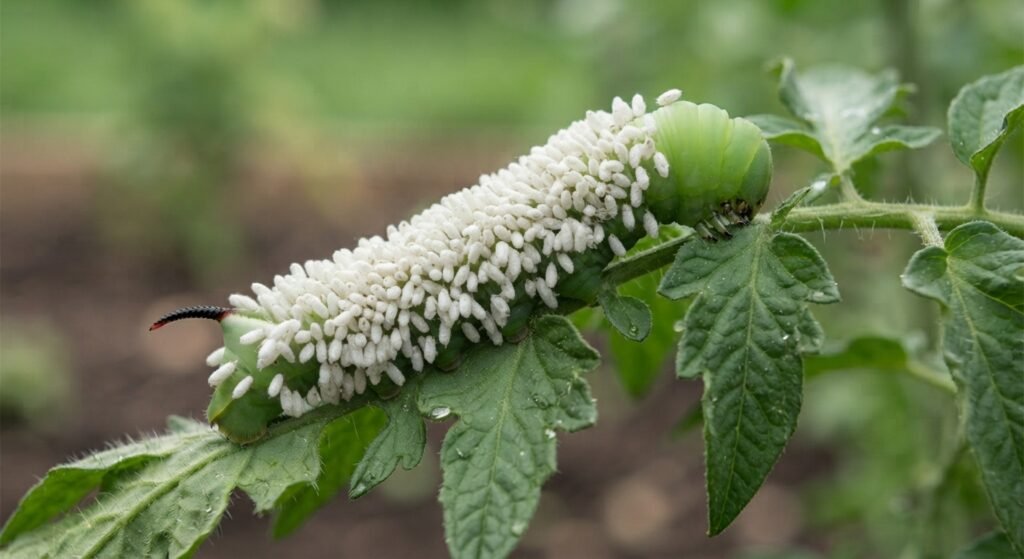
Attracting other beneficial insects, like ladybugs and green lacewings, can also help manage hornworm eggs and young larvae before they grow into large caterpillars. Planting pollinator-friendly native plants and flowering herbs nearby encourages these helpful insects to stick around your vegetable garden.
Apply Organic Pest Control
For larger infestations, organic pest control products can help get hornworms under control without harming your plants or the surrounding ecosystem. Bacillus thuringiensis, commonly known as Bt, is a naturally occurring bacteria that specifically targets caterpillars, including tomato and tobacco hornworms, while leaving beneficial insects and pollinators unharmed.
Bt is typically sprayed directly onto the foliage, where hornworms ingest it while feeding. Within a few days, affected caterpillars stop eating and die, making Bt one of the safest and most effective organic options for hornworm control.
Neem oil is another organic option that can deter hornworms and other garden pests when applied regularly. While it works best as a preventive measure against young larvae, it’s less effective against large, established hornworms. For serious infestations, Bt combined with regular handpicking tends to produce the best results.
Avoid broad-spectrum pesticide products when possible, since they can kill the very beneficial insects, like the braconid wasp, that help keep hornworm populations in check naturally.
How to Prevent Tomato Hornworms
Preventing a hornworm infestation is often easier than dealing with one after it’s already taken hold. Start by inspecting your tomato plants regularly throughout the growing season, especially during midsummer when adult moths are actively laying eggs. Catching hornworm eggs or tiny larvae early, before they grow into large hornworms, makes removal far simpler.
Tilling the soil in fall or early spring can help disrupt overwintering pupae, reducing the number of adult moths that emerge the following year. Since hornworms pupate in the soil, disturbing that soil layer interrupts their life cycle before it even begins.
Companion planting is another helpful strategy. Dill, basil, and marigold are known to attract beneficial insects and may help repel adult moths from laying eggs near your tomato plants. Rotating your nightshade family crops each year, rather than planting tomatoes in the same spot season after season, can also reduce the chances of a recurring hornworm population.
Encouraging a healthy population of pollinators and beneficial insects in your garden provides long-term, natural hornworm control. A garden that supports ladybugs, lacewings, and parasitic wasps is far less likely to experience severe infestations compared to one treated solely with pesticide products.
Can Tomato Hornworms Kill Tomato Plants?
Yes, a severe hornworm infestation can kill a tomato plant, particularly if the plant is young or already under stress from heat, drought, or disease. Because hornworms consume such a large amount of foliage relative to their size, a handful of large caterpillars can defoliate a small or medium-sized plant within days.
Mature, established tomato plants can often recover from moderate hornworm damage, especially if the infestation is caught and addressed quickly. However, repeated feeding on the same plant, combined with lost leaves that are needed for photosynthesis, can stunt growth and significantly reduce fruit production for the rest of the season.
This is why regular monitoring matters so much. Catching a hornworm infestation early, while the caterpillars are still small, protects both the plant’s health and your harvest of cherry tomatoes or whatever variety you’re growing.
Final Thoughts
Tomato hornworms might look alarming with their size and that distinctive horn, but they’re far from unbeatable. Regular garden inspections, quick handpicking, and support from beneficial insects like the braconid wasp will handle most infestations without needing harsh chemicals. For bigger outbreaks, organic options like Bt offer a safe and reliable way to protect your harvest.
The key takeaway is consistency. Check your plants often, especially during peak hornworm season in midsummer, and address any signs of damage right away. A little attention goes a long way toward keeping your tomato plants healthy and productive all season long.
Frequently Asked Questions
What is the fastest way to get rid of tomato hornworms?
Handpicking is the fastest method for small infestations. Simply remove the caterpillars by hand and drop them into soapy water. For larger outbreaks, applying Bt (Bacillus thuringiensis) offers quick and effective control within a few days.
Are tomato hornworms harmful to humans or pets?
No, tomato hornworms are not poisonous or dangerous to touch, despite their intimidating appearance and horn. They can’t sting or bite, so handling them directly is completely safe.
Why do tomato hornworms suddenly appear on my plants?
Hornworms often go unnoticed while small because of their green coloring, which blends in with tomato foliage. By the time gardeners spot chewed leaves or black droppings, the caterpillars have usually already grown quite large, making it seem like they appeared overnight.
Do ladybugs eat tomato hornworms?
Ladybugs and green lacewings primarily target hornworm eggs and very young larvae rather than full-grown caterpillars. They play a helpful supporting role in hornworm control, especially when combined with other prevention methods.
Should I kill a hornworm covered in white eggs?
No. Those white grains are braconid wasp cocoons, meaning the hornworm has already been parasitized. Leaving it in the garden allows the young wasps to emerge and continue controlling the hornworm population naturally.
Can I use dish soap to kill tomato hornworms?
Yes, dropping hand-picked hornworms into a bucket of soapy water is a simple, chemical-free way to kill them. Soapy water breaks down their outer coating, causing them to die quickly.
Do tomato hornworms turn into butterflies?
No, tomato hornworms grow into five-spotted hawk moths, not butterflies. These moths are large, fast fliers often seen hovering near flowers at dusk, resembling hummingbirds in flight