Why Do Tomatoes Crack on the Vine? Tomato Splits Explained
Why Do Tomatoes Crack on the Vine: Causes, Tips, and Prevention
If you have ever walked out to your garden the morning after a heavy rain and found your ripest tomato split wide open, you already know the frustration. Why Do Tomatoes Crack on the Vine is a common question among gardeners, especially when healthy-looking fruit suddenly develops deep cracks just before harvest. Why does it always seem to happen to the biggest, prettiest one on the plant? The short answer is water. The long answer involves skin, pressure, weather, and a few growing habits most gardeners do not think about until the damage is already done.
Tomatoes can crack when the plant takes up water faster than the fruit skin can expand. This often happens after a dry period followed by heavy rain or sudden, deep watering. As the inside of the tomato swells, pressure builds against the skin, causing it to split. Rapid changes in temperature, uneven soil moisture, and certain tomato varieties can also make cracking more likely. If you have been searching for the best fertilizer for tomatoes plants or wondering whether your watering routine is to blame, you are in the right place.
In this guide, we will explain Why Do Tomatoes Crack on the Vine, which varieties are more likely to split, and the simple growing and watering habits that can help prevent cracking before your harvest is ruined.
Why Do Tomatoes Crack on the Vine?
At its core, cracking happens when the inside of the fruit grows faster than the skin can stretch to keep up. Tomatoes are made mostly of water, and when the plant pulls in a large amount of moisture quickly, the fruit swells. The skin, especially on a tomato that is already ripening, has lost some of its flexibility. It cannot expand at the same rate as the flesh underneath, so it gives way and splits. This is the basic reason tomatoes split, whether you are growing a backyard cherry tomato or a full-size heirloom tomato variety.
Gardeners often notice this right after a dry spell breaks. The soil has been dry for days or weeks, the tomato plant has been under mild stress, and then a big rain or a deep watering session floods the root zone all at once. The fruit absorbs water faster than it can handle, and the skin cracks under the pressure. It is less about how much rain fell and more about how sudden the change was.
The Science Behind Cracked Tomatoes (Water, Skin, and Pressure)
To really understand tomato cracking, it helps to picture the fruit as a balloon with a slightly stiff shell. As the plant draws water up through its roots, that water moves into the fruit through the vascular tissue. Early in the fruit’s life, the skin is elastic enough to stretch along with the growing flesh. As the tomato matures and starts to change color, the skin cells stop dividing and the outer layer becomes firmer and less stretchy.
This is exactly the stage when splitting is most likely. A green tomato can often absorb a sudden dose of water without much trouble because its skin is still growing. A tomato that is turning red, on the other hand, has a skin structure that is basically locked in place. When water rushes into the fruit at that point, something has to give, and it is almost always the skin.
Soil moisture plays the biggest role here, but it is not acting alone. Heat, humidity, and how deeply the roots have grown all affect how much water reaches the fruit at any given moment. A tomato plant with shallow roots is more sensitive to swings in surface soil moisture, which is one reason mulch and consistent watering matter so much later in this guide.
Concentric vs. Radial Cracks: What Your Tomato Is Telling You
Not all cracks look the same, and the type of splitting on your fruit can actually tell you something about what caused it. There are two main types of tomato cracks that gardeners run into.
Concentric cracking shows up as rings that circle the stem end of the tomato, almost like the growth rings on a tree stump. This type is usually linked to a sudden growth spurt in the fruit itself, often triggered by a big jump in water or nutrients right as the tomato is sizing up.
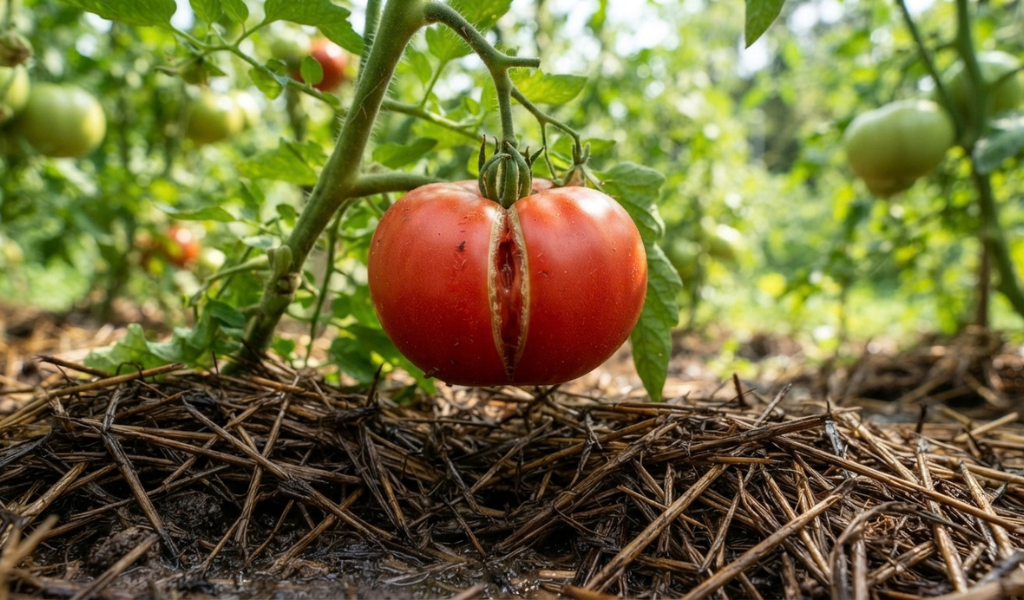
Radial cracks run vertically, from top to bottom, starting near the stem and moving down the side of the fruit like a burst seam. These vertical splits tend to happen later, closer to ripening, and are almost always tied to a rapid water intake after a dry period. Radial cracking is the type most gardeners deal with, especially after heavy rainfall following a stretch of dry weather.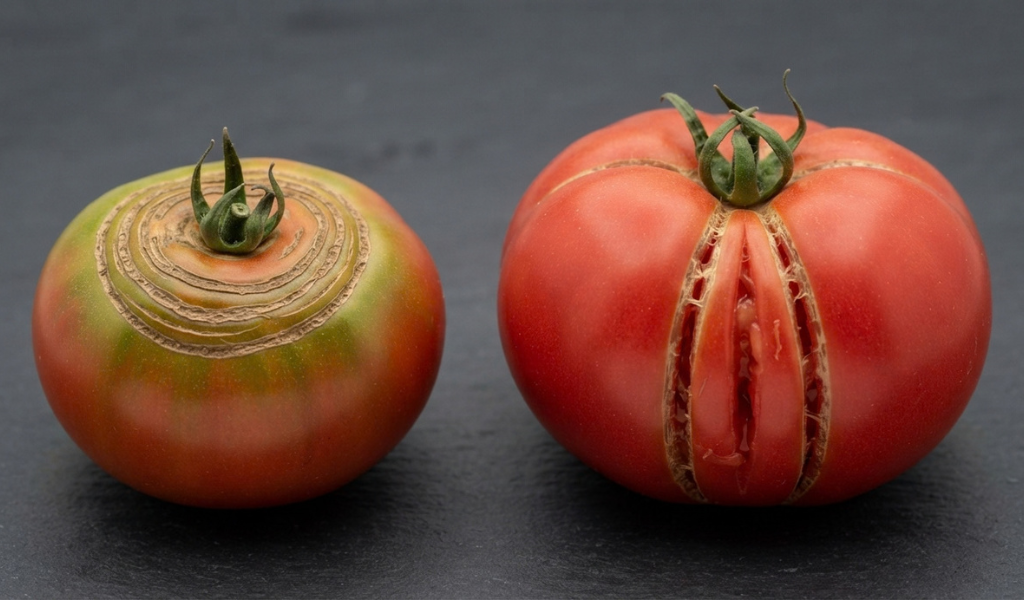
Knowing which type of splitting you are seeing can help you pinpoint the reason tomatoes split in your specific garden, whether it is watering inconsistency, weather, or a combination of both.
Inconsistent Watering: The Number One Cause of Tomato Cracking
If there is one factor that explains most cases of splitting and cracking, it is inconsistent watering. Tomato plants are surprisingly forgiving of a steady routine, even if that routine is not perfect. What they do not tolerate well is a feast or famine pattern, where the soil dries out completely and then gets soaked all at once.
Picture a home gardener who waters heavily on weekends but barely touches the plants during the work week. The soil dries out by Wednesday, the plant pulls back on growth to cope, and then Saturday’s deep watering session sends a rush of moisture into fruit that was not prepared for it. That is a textbook setup for cracked tomatoes.
The fix is not complicated, but it does require a bit of discipline. Watering your tomato plants on a consistent schedule, ideally every day or every other day depending on your climate, keeps soil moisture steady and prevents the dramatic swings that lead to splitting. Drip irrigation on a timer is one of the most reliable tools for this, since it delivers a small, steady amount of water directly to the root zone rather than one big soak.
How Hot Weather and Sudden Rain Team Up to Split Your Tomatoes
Weather is the wildcard that even the most careful gardener cannot fully control. A long stretch of hot, dry days followed by sudden rain is one of the most common real-world causes tomatoes to crack. The heat slows fruit growth and stresses the plant slightly, and the skin on ripening fruit becomes tougher and less pliable as it adjusts to the dry conditions. Then a storm rolls through and dumps an inch of rain overnight.
That combination, dry heat followed by heavy rain, is almost guaranteed to cause a wave of cracked tomatoes within a day or two. Gardeners in regions with unpredictable summer storms deal with this constantly, and there is only so much you can do about the sky. What you can control is the soil around the plant. Good drainage, raised beds, and a layer of mulch all help buffer the fruit from those sudden swings, even when the rain itself is out of your hands.
Which Tomato Varieties Crack the Most (and Which Resist It)
Not every tomato plant is equally at risk. Some varieties have thinner or more delicate skin and are simply more prone to splitting, while others were bred specifically to resist it.
Many heirloom tomato varieties, prized for their flavor, tend to have thinner skin and are less forgiving when moisture levels swing. Beefsteak types and other large-fruited tomatoes also crack more often, mostly because there is more surface area for the skin to cover and more flesh pushing outward as the fruit grows.
On the other end, several crack-resistant tomatoes have been developed with tougher, more elastic skin. Varieties often marketed as split-resistant tomato types, along with many modern hybrid cherry tomato and grape tomato cultivars, tend to hold up much better under the same conditions that would split a delicate heirloom. If cracking has been a recurring problem in your garden, choosing a few crack-resistant tomatoes for next season alongside your favorite heirlooms can cut down on losses significantly.
How to Stop Tomatoes From Cracking Before It Starts
Prevention starts well before the fruit even forms. When you are planting your tomatoes, choosing a spot with good drainage matters just as much as sunlight. Soil that drains well prevents water from pooling around the roots after a storm, which reduces those sudden spikes in moisture uptake.
Raised beds are especially useful here, since water drains through them more evenly than it does in dense, compacted garden soil. If you are working with containers, make sure there are enough drainage holes so excess water has somewhere to go instead of sitting at the bottom of the pot.
Fertilizing also plays a role that gets overlooked. Using a balanced fertilizer, rather than one loaded with nitrogen, encourages steady fruit development instead of sudden growth spurts. Many gardeners searching for the best fertilizer for tomatoes plants end up choosing a formula with balanced nitrogen, phosphorus, and potassium, along with added calcium, since calcium deficiency has been linked to weaker cell walls in the fruit and can make splitting more likely.
Mulching, Watering Schedules, and Other Prevention Tricks That Work
Mulch is one of the simplest, most effective tools a gardener has against tomato cracking. A two to three inch layer of straw, wood chips, or shredded leaves around the base of the plant helps the soil hold moisture evenly, which means less dramatic swings between wet and dry. Mulch helps regulate soil temperature too, keeping roots cooler during heat waves and reducing the stress that leads to skin toughening.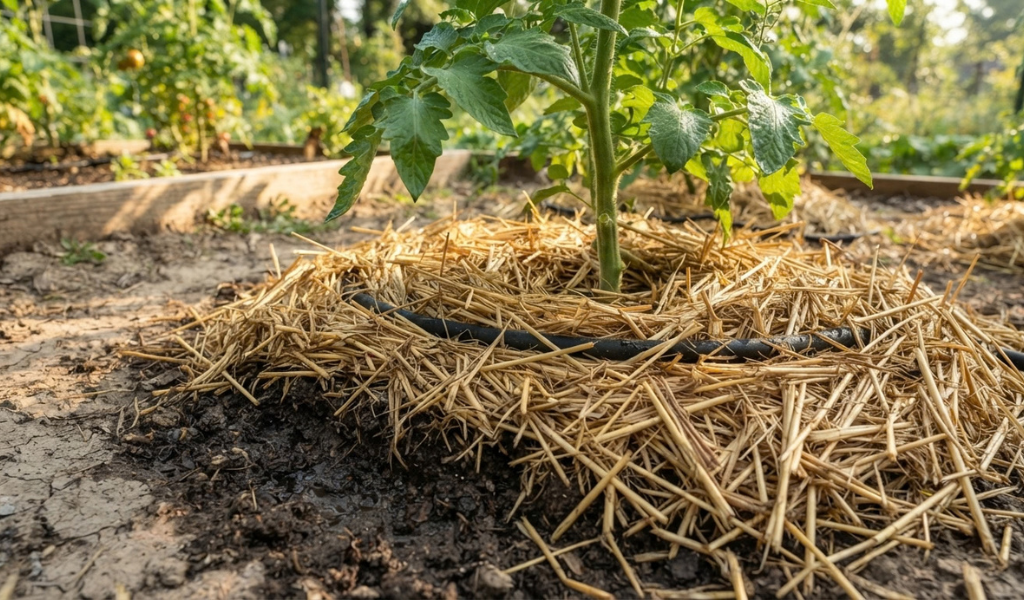
Pairing mulch with a consistent watering schedule is where real prevention happens. Watering your tomato plants every one to two days, depending on rainfall and temperature, keeps the root zone at a steady moisture level. Drip irrigation systems on a timer take the guesswork out of this entirely and are worth the investment if cracking has been a recurring issue.
A few other habits help too. Avoid heavy pruning right before a fruit’s peak growth stage, since sudden changes in sun exposure can stress the plant. Keep an eye on the weather forecast, and if you know heavy rain is coming after a dry stretch, give the plant a light watering beforehand so the change is not as drastic when the storm arrives.
When to Harvest Early to Avoid Cracking Altogether
One of the most reliable tricks experienced gardeners use is simply picking tomatoes a little earlier than they might otherwise. Tomatoes do not need to ripen on the vine to develop good flavor. A tomato picked at the point where it is starting to turn color, sometimes called the breaker stage, will continue to ripen just fine on a countertop indoors, away from the swings in soil moisture that cause splitting outside.
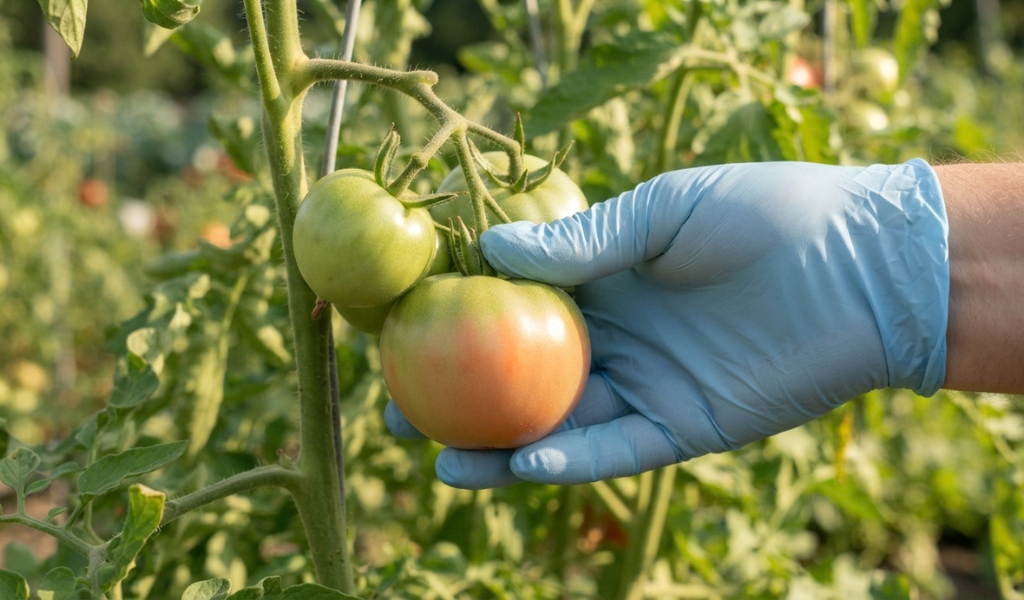 This matters most when rain is in the forecast. If you know a storm is rolling in and you have red tomatoes or ones close to ripe already hanging on the vine, harvesting them a day or two early can save them from splitting entirely. You lose a little bit of that vine-ripened sweetness, but you gain a tomato that actually makes it to your kitchen in
Practical Fixes That Actually Prevent Cracking Long-Term
Putting it all together, the fixes are pretty unglamorous but they work. Once you understand Why Do Tomatoes Crack on the Vine, these simple steps can help you prevent the problem instead of constantly dealing with split fruit.
Water consistently instead of sporadically, ideally with drip irrigation or soaker hoses rather than overhead sprinklers. Consistent moisture is one of the easiest ways to prevent the rapid changes in water availability that can cause tomato skins to split.
Mulch heavily to buffer soil moisture swings. A thick layer of straw, shredded leaves, or another suitable mulch can help keep the soil from becoming extremely dry and then suddenly soaked after heavy watering or rain.
Choose crack-resistant varieties if this has been a repeat problem in your garden. Some tomato varieties naturally have tougher skins and are less likely to split when moisture levels change quickly.
Keep an eye on calcium and potassium levels through the season. While inconsistent watering is usually a major factor, balanced nutrition supports healthy plant growth and fruit development.
And when a big rain is coming and your fruit is close to ripe, just pick it early. Bringing nearly ripe tomatoes indoors can save them from splitting during a sudden downpour.
None of this requires fancy equipment or a science degree — it’s mostly about consistency, which, frankly, is true of most things in gardening.
Once you understand Why Do Tomatoes Crack on the Vine, it stops feeling like bad luck and starts feeling like something you can actually manage, one watering can at a time.
Final Thoughts
Cracked tomatoes are one of those garden problems that feels bigger than it is once you understand the cause. Splitting almost always comes down to water moving into the fruit faster than the skin can stretch to handle it, whether that is triggered by inconsistent watering, a sudden rainstorm after a dry spell, or a variety with naturally thin skin. The good news is that most of the fixes are simple and within your control. Water on a steady schedule, mulch around your plants, choose crack-resistant tomatoes when you can, and do not be afraid to pick fruit a little early when rain is coming. With a few small changes, you can keep more of your harvest whole, ripe, and ready for the table instead of losing it to a crack you saw coming but did not stop in time.
Frequently Asked Questions
How do you keep tomatoes from cracking?
Keep soil moisture consistent by watering on a regular schedule instead of letting the soil dry out between waterings. Adding mulch around the base of the plant helps retain even moisture, and choosing crack-resistant tomato varieties reduces the risk even further.
Is it okay to eat tomatoes that have split on the vine?
Yes, in most cases. A freshly cracked tomato with firm, healthy flesh underneath is safe to eat. Just avoid any that show soft spots, mold, or a bad smell, since an open crack can let rot or pests in over time.
Why are my tomatoes splitting on the vine before they are ripe?
This usually happens when the fruit takes in a large amount of water quickly, often after a dry period followed by heavy rain or a deep watering session. Even green tomatoes can split, though it becomes more common as the fruit matures and the skin loses some of its flexibility.
What nutrient deficiencies can cause cracking in tomatoes?
Calcium deficiency is the main nutrient issue linked to tomato splitting, since calcium supports strong cell walls in the fruit. Using a balanced fertilizer with adequate calcium can help reduce the risk alongside consistent watering.
What are the main causes of tomatoes splitting?
The main causes are inconsistent watering, sudden heavy rain after a dry spell, thin-skinned varieties, and calcium deficiency. Most cases come down to the fruit absorbing water faster than its skin can stretch to accommodate.
Are there specific tomato varieties that are resistant to cracking?
Yes. Many modern hybrid varieties, along with several cherry and grape tomato cultivars, are bred specifically to be less prone to splitting. If cracking has been an ongoing problem, planting a few split-resistant tomato varieties alongside your usual favorites can make a noticeable difference.