Bone Meal for Tomatoes: How to Use This Garden Fertilizer
Bone Meal for Tomatoes: A Simple Garden Guide
Bone meal for tomatoes is one of the oldest tricks in the garden, and it still earns its place in the shed. Tomatoes are hungry plants. They need strong roots early and plenty of energy to set fruit later. Bone meal fertilizer supplies a steady source of phosphorus and calcium, two nutrients that every tomato plant relies on from transplant day to the final harvest. Many gardeners treat it as the best organic fertilizer for tomato plants when the goal is better roots and more flowers. That claim holds up in the right conditions, but bone meal is not magic. Soil test results, pH level and timing all change how well it works.
This guide explains what bone meal is, how it feeds your plants and when to add bone meal to the soil. You will also learn how much to use, which mistakes to avoid and how it compares with blood meal, kelp meal and compost. Whether you grow a few pots on a patio or a full vegetable garden, bone meal for tomatoes can help you build a stronger foundation. Read on to see how to use it with confidence and without waste.
What Is Bone Meal for Tomatoes and Why Do Gardeners Swear By It?
Bone meal is a fine powder made from animal bones, usually from cattle. The bones are steamed and ground so the product is safe to handle and easy to mix into garden soil. It counts as an organic fertilizer and a classic soil amendment. A typical bag shows an NPK ratio near 3-15-0. That means a small amount of nitrogen, a high amount of phosphorus and no potassium. Bone meal also contains a good share of calcium.
Gardeners swear by bone meal for tomatoes because young plants often struggle early in the season. Cold soil slows root growth, and a stalled seedling can lose weeks. Phosphorus supports root development, so a tomato plant with bone meal in the planting hole often settles in faster. The nutrients release slowly, which means the feed lasts through much of the growing season. Many people also like that it is natural and does not burn roots the way strong synthetic products can.
Bone meal is not a complete tomato food. It has no potassium and only a small amount of nitrogen. Think of it as one useful tool in a balanced feeding plan rather than the whole plan.
How Bone Meal for Tomatoes Works: The Phosphorus and Calcium Connection
Bone meal for tomatoes works through two main nutrients. Phosphorus and calcium both play clear roles in plant health. The trick is that bone meal releases them slowly, so patience matters.
Phosphorus is the nutrient behind energy transfer inside a plant. Roots use it to grow and spread. Later in the season the plant uses it to form flowers and set fruit. Bone meal is a rich source of phosphorus, and the phosphorus in bone meal stays in the soil rather than washing away quickly. A tomato plant that has plenty of phosphorus early tends to build a bigger root system. A bigger root system then pulls in more water and plant nutrients all summer.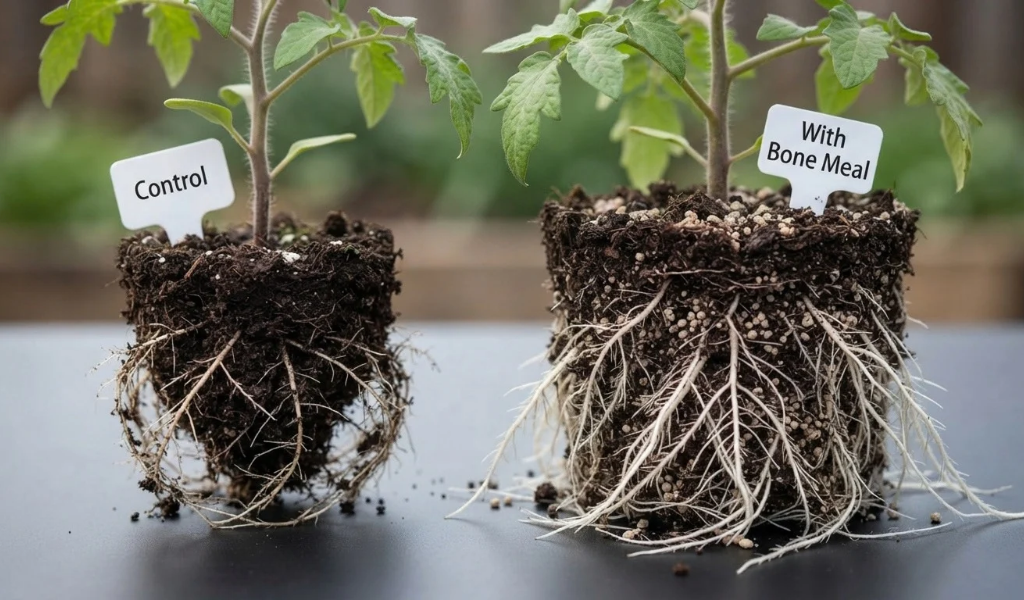
Calcium helps build firm cell walls. Tomato fruit needs it to develop properly. Bone meal contains calcium, but it breaks down slowly. This means it supports long-term soil health better than it fixes a sudden shortage.
Bone meal works best in soil with a pH level below 7. In alkaline soil the phosphorus stays locked up and plants cannot use it. Tomatoes grow best in slightly acidic soil between 6.2 and 6.8. A simple soil test tells you where you stand before you add bone meal.
Benefits of Using Bone Meal for Tomatoes in Your Garden
The benefits of bone meal show up in several parts of the tomato plant. Results depend on your starting soil, but the gains are real when the soil is low in phosphorus.
- Stronger Roots After Transplant: Transplant shock slows many tomato seedlings. Bone meal gives roots the phosphorus they need to recover and spread. A plant with a healthy root system stands up better to wind, heat and dry spells.
- More Flowers and Better Fruit Set: Flowering takes a lot of energy. Tomato plants with enough phosphorus tend to produce more blooms. More blooms give you more chances for fruit. Gardeners who add bone meal often report heavier clusters on each vine.
- Slow Feeding That Lasts: Bone meal is a slow-release fertilizer. It does not give a quick green flush like a liquid feed. It supplies nutrients steadily through the growing season. That makes it a good base layer for any vegetable garden.
- Natural Soil Building: Bone meal also adds calcium and a little nitrogen to garden beds. Over several seasons it helps build fertile soil when used with compost. It is a gentle option for gardeners who prefer organic methods.
Bone Meal for Tomatoes and Blossom End Rot Prevention
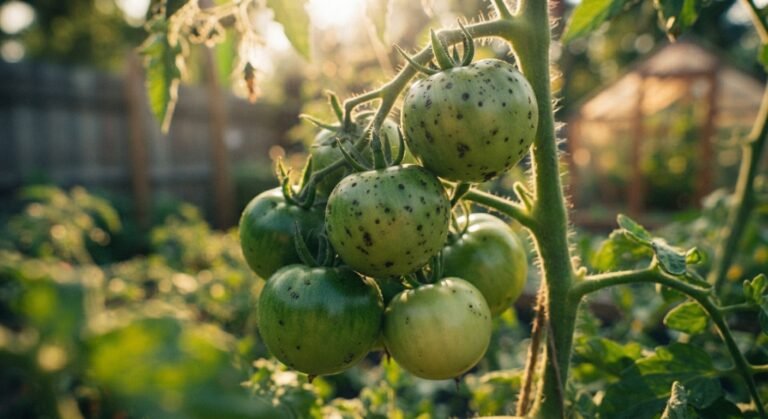
Blossom end rot is the dark, sunken patch that appears on the bottom of tomato fruit. Many gardeners blame low calcium and reach for bone meal right away. The real story is a bit more complicated.
- What Causes Blossom End Rot: Blossom end rot happens when the plant cannot move enough calcium to the developing fruit. The soil may hold plenty of calcium. The problem often comes from uneven watering. Dry spells followed by heavy watering disrupt calcium movement inside the plant. Fast growth and root damage can also play a part.
- Can Bone Meal Help?: Bone meal for tomatoes can help in soils that are truly low in calcium. A soil test confirms this. In most gardens though the calcium in bone meal is too slow to rescue fruit that is already affected. Bone meal also has no quick effect during a dry week.
- Better Ways to Prevent Rot: Steady watering is the most reliable fix. Aim for deep watering about once or twice a week rather than light daily sprinkles. Mulch keeps soil moisture even. Use bone meal at planting time as a long-term calcium source, and treat consistent watering as the main defense against rot.
When to Apply Bone Meal for Tomatoes: Timing Tips for Bigger Harvests
Timing matters because bone meal takes weeks to break down. Applying it too late means the plant may not benefit until the season is almost over.
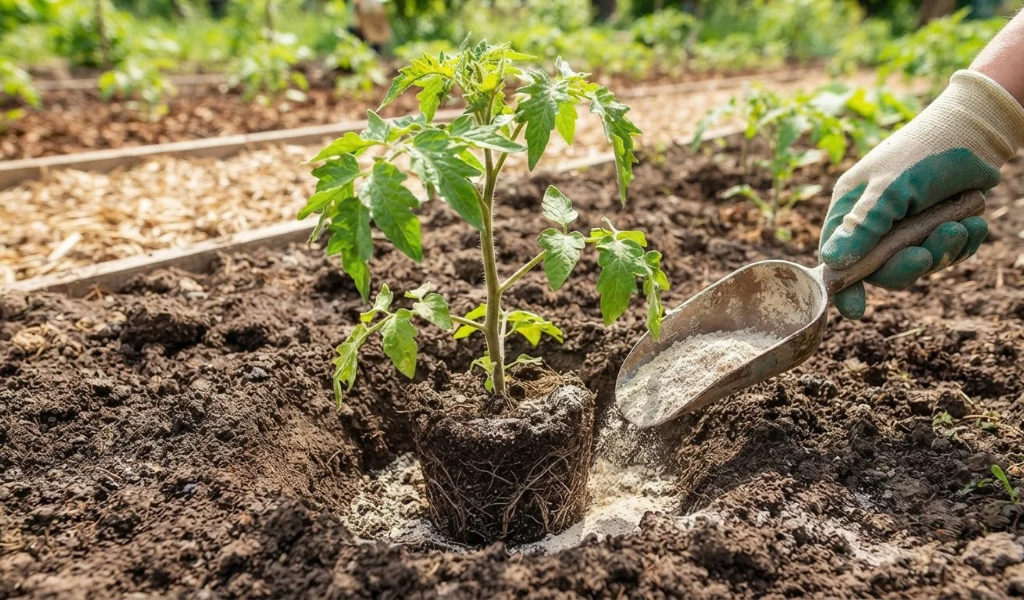
- Apply at Planting Time: The best moment to use bone meal is at transplant. Mix it into the planting hole so roots grow right into the nutrients. This gives the plant phosphorus exactly when it needs it most.
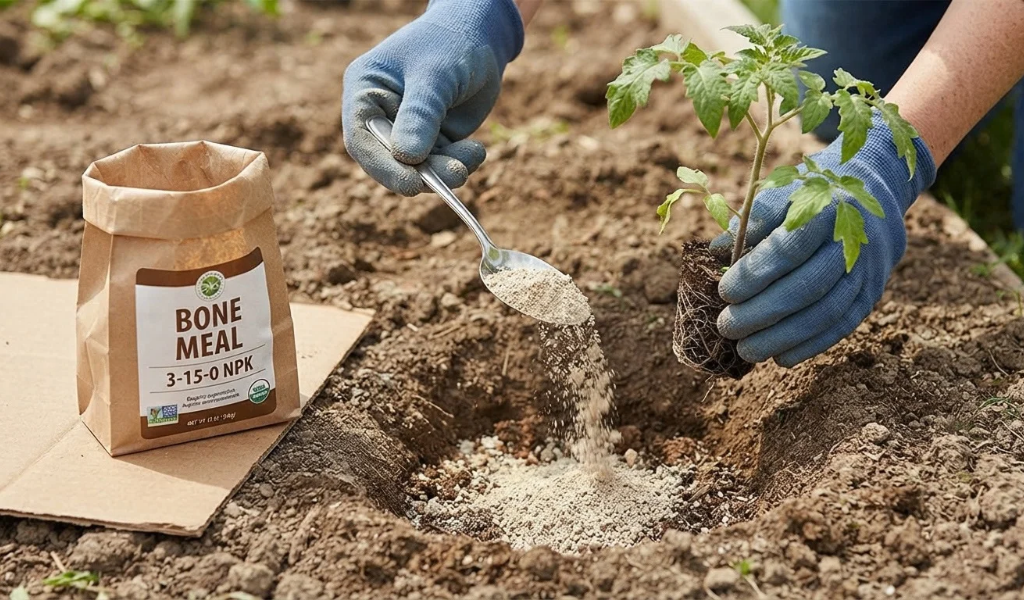
- Prepare Beds in the Spring: You can also mix bone meal into garden beds a few weeks before planting. A meal in the spring gives soil microbes time to start breaking it down. This works well if you plan to grow tomatoes across a whole row.
- Side-Dress Once During the Season: A light second application can help when plants start flowering. Sprinkle a small amount around the base and scratch it into the top inch of soil. Stop feeding about six to eight weeks before the first expected frost. Late feeding does not help fruit ripen.
How Much Bone Meal to Use for Tomato Plants
Too little does nothing and too much can harm the plant. The right amount of bone meal depends on your soil and the product label. Always read the bag first because strengths differ between brands.
For each tomato plant, mix about one to two tablespoons of bone meal into the soil at the bottom of the planting hole. Some gardeners use up to a quarter cup in poor soil. Blend it well with the soil so roots do not touch concentrated powder.
When treating a whole bed, many labels suggest roughly two to three pounds per 100 square feet. Spread it evenly and work it into the top several inches of soil. A soil test helps you avoid adding phosphorus the soil already has.
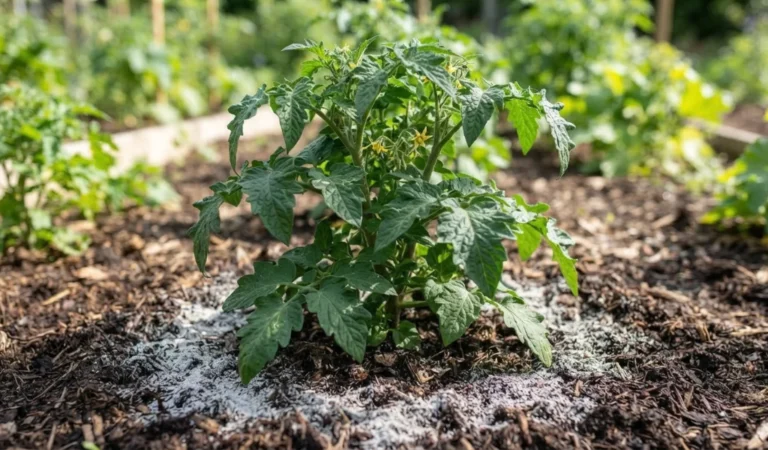
For mid-season feeding, use about one tablespoon per plant. Scatter it in a ring around the stem and lightly mix it in. Water well afterward so nutrients start moving toward the roots.
Too much bone meal can raise phosphorus to a level that blocks other nutrients like iron and zinc. Leaves may turn pale or yellow. Growth may slow even though the soil looks rich. If this happens skip further feeding and let the soil balance out.
Step-by-Step Guide to Adding Bone Meal to Tomato Plants
Using bone meal is simple when you follow a clear order. These steps work for both seedlings and larger transplants.
- Step One: Test the Soil: Start with a basic soil test. It shows your pH level and your current phosphorus and calcium numbers. If phosphorus is already high you can skip bone meal for this season.
- Step Two: Dig the Planting Hole: Dig the hole deeper than the root ball. Tomatoes root along the buried stem, so a deep hole is useful. Loosen the soil at the bottom to help roots spread.
- Step Three: Mix the Bone Meal Into the Soil: Add the measured amount of bone meal and blend it with the loose soil. Mix well rather than leaving a pocket of powder. A well-mixed hole prevents root burn and keeps the scent of bone meal low, which helps keep animals from digging.
- Step Four: Plant and Water: Set the tomato in the hole and fill with soil. Water deeply right away. Water helps the fertilizer start releasing nutrients and settles the soil around the roots.
- Step Five: Mulch and Monitor: Spread mulch around the plant to hold moisture. Watch the leaves through the season. Healthy green growth and steady flowering tell you the feeding plan is working.
Bone Meal vs. Other Fertilizers for Tomatoes: Which Is Better?
Tomato growers can choose from many fertilizers. Comparing the main types helps you see where bone meal fits.
Synthetic products like 10-10-10 deliver nutrients fast and in a balanced mix. They give quick results but can leach out of soil or burn roots if overapplied. Bone meal is gentler and slower. It also adds calcium, which most synthetic blends do not.
Compost improves soil structure and feeds soil life. It has a balanced but mild nutrient level. Bone meal is more concentrated in phosphorus. The two work well together because compost builds the soil and bone meal fills the phosphorus gap.
Bone meal suits gardeners who want a natural phosphorus boost at planting time. It is less useful as a stand-alone feed. Most tomatoes need nitrogen for leafy growth and potassium for fruit quality, so pair bone meal with other inputs.
Bone Meal for Tomatoes in Containers vs. Garden Beds
Where you grow changes how you use bone meal. Containers and beds behave very differently when it comes to nutrients and drainage.
Potting mix holds less nutrition than garden soil and dries faster. Use about one tablespoon of bone meal per gallon of potting mix and blend it thoroughly before planting. Keep amounts small because nutrients cannot spread out in a pot. Container tomatoes also need regular watering since frequent watering can wash nutrients away.
Garden beds give roots more space and more natural soil life. Bone meal breaks down more reliably in beds because microbes are active. You can apply it across the whole bed or only in planting holes. Beds with a high pH level or high phosphorus should get a soil test first.
Containers need closer attention. Their small soil volume makes it easy to overfeed or underfeed. Beds are more forgiving and recover from small mistakes.
Common Mistakes to Avoid When Using Bone Meal for Tomatoes
Most problems with bone meal come from a few simple errors. Avoiding them saves money and protects your plants.
Many gardeners add bone meal out of habit. If the soil already holds plenty of phosphorus the extra can cause trouble. A test costs little and removes the guesswork.
Bone meal does little in soil with a pH level above 7. The phosphorus stays locked in the soil. Adjust the soil first or choose another phosphorus source.
More is not better. Heavy applications can lock out other plant nutrients and cause stunted growth. Measure carefully and follow the label.
Bone meal left on the surface breaks down slowly and attracts dogs and wildlife. Mix it into the soil and water it in. This keeps the scent low and gets nutrients to the roots.
Bone meal takes time. Do not expect a fast green-up like you would get from a liquid feed. Judge results across the season instead of across a week.
Bone meal alone leaves gaps. Tomatoes also need nitrogen and potassium to grow well. Balance bone meal with other organic fertilizer for full nutrition.
Organic Alternatives to Bone Meal for Growing Big, Healthy Tomatoes
Some gardeners avoid animal products. Others cannot find bone meal locally. Good alternatives exist.
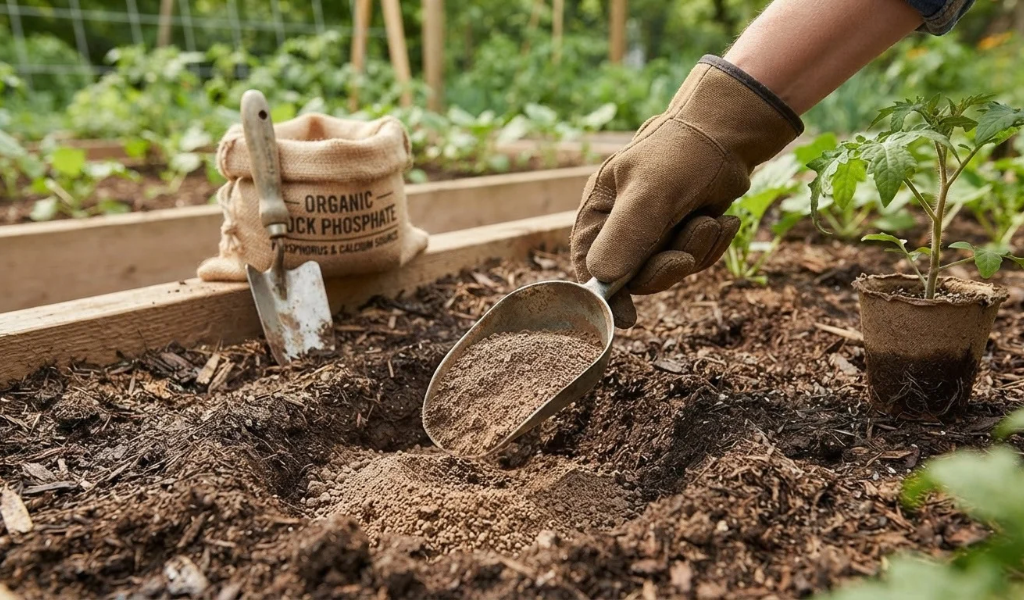
- Rock phosphate is a mined mineral that gives phosphorus and calcium. It breaks down very slowly and works best in acidic soil. Apply it well before planting.
- Well-aged compost adds balanced nutrients and improves soil texture. Aged manure adds nitrogen and some phosphorus. Always use fully composted material to avoid burning plants.
- Crushed eggshells add calcium slowly. Gypsum offers calcium without changing soil pH. Neither supplies phosphorus so pair them with another source.
- Alfalfa meal and kelp meal feed soil and plants gently. They suit vegetarian gardeners and organic beds. Mix them into the soil before planting.
Final Thoughts
Bone meal for tomatoes is a simple and reliable way to support root growth and flowering. It supplies phosphorus and calcium slowly and fits well in any organic garden. The best results come from testing your soil first and adding the right amount at planting time. Keep watering steady to prevent rot and pair bone meal with nitrogen and potassium sources for balance. Used wisely this natural fertilizer can help your tomato plants grow stronger and set more fruit. Test your soil this week and give bone meal for tomatoes a try in your next planting hole.
Frequently Asked Questions
Do tomatoes like bone meal?
Yes, tomatoes respond well to bone meal when the soil is low in phosphorus. It supports root growth and flowering. In soil that already has plenty of phosphorus the benefit is small.
Can you sprinkle bone meal on top of soil?
You can but it works poorly. Surface bone meal breaks down slowly and attracts animals. Mix it into the top few inches of soil and water it in for better results.
Which plants do not like bone meal?
Acid-loving plants such as blueberries, azaleas and rhododendrons do not benefit. Plants in soil with high phosphorus should also skip it. Always check your soil test first.
What is the best fertilizer for tomatoes?
A balanced approach works best. Use bone meal for phosphorus, blood meal or compost for nitrogen and kelp meal for potassium. Many gardeners also use a fertilizer made for tomatoes during fruiting.
Is bone meal good fertilizer for tomatoes?
Yes, it is a good fertilizer for tomatoes as a phosphorus and calcium source. It is not complete on its own. Combine it with other nutrients for the best harvest.
How to use bone meal for tomato plants?
Mix one to two tablespoons into each planting hole at transplant. Add one tablespoon around the base during flowering if needed. Water well after each application.
Is bone meal calcium for tomatoes?
Bone meal does contain calcium, but it releases slowly. It supports long-term soil health but will not quickly fix blossom end rot. Steady watering matters more for that problem.
Does bone meal help tomatoes grow?
Yes, it can help tomatoes grow stronger roots and more flowers. Results are best in slightly acidic soil that lacks phosphorus. Measure the amount and mix it in well.