How to Get Rid of Whiteflies on Tomatoes Naturally
How to Get Rid of Whiteflies on Tomatoes: A Complete Guide to Saving Your Plants
Whiteflies may be tiny, but they can cause serious trouble for tomato plants if left unchecked. These small white insects often fly up in a cloud whenever you brush against a leaf, and a growing infestation can weaken a healthy plant within just a few weeks. A backyard gardener in Ohio once lost nearly half of her tomato crop by midsummer because she waited too long to act. Pests can also make Controlling Tomato Blossom Drop much harder, since stressed plants may drop their flowers before they develop into fruit.
When you know How to Get Rid of Whiteflies on Tomatoes, it becomes easier to spot an infestation early and choose the right treatment before the damage gets worse. This guide covers what whiteflies are, how to identify them, and which natural or store-bought treatments can help protect your plants. You will also find simple prevention habits that can reduce the chances of whiteflies returning. Whether you grow tomatoes in a backyard garden, raised bed, or container, understanding How to Get Rid of Whiteflies on Tomatoes can help you keep your plants healthier and productive throughout the growing season.
How to Get Rid of Whiteflies on Tomatoes: What You’re Really Dealing With
Meet the Whitefly
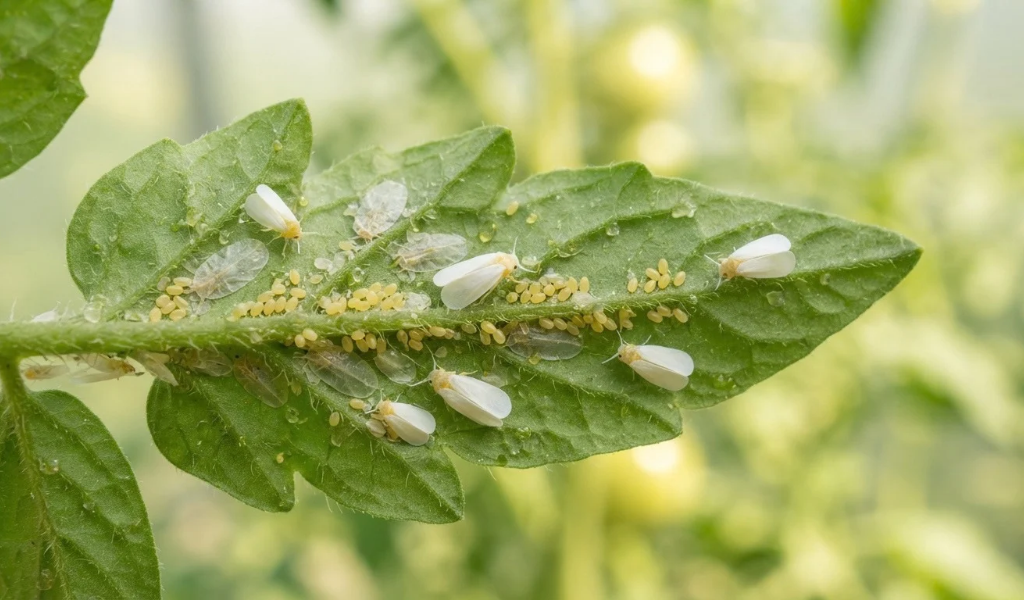
Whiteflies are small sap-feeding insects about the size of a pinhead. Despite the name they are not true flies. They are relatives of aphids and scale insects. The adults have powdery white wings that they hold over their bodies like a tiny roof. Two species cause most of the trouble in tomato gardens. The greenhouse whitefly is common in protected growing spaces, and the sweet potato or silverleaf whitefly thrives in warm outdoor beds and hot climates.
The Whitefly Life Cycle
Understanding the life cycle explains why one spray is rarely enough. A female lays dozens of tiny eggs on the underside of a leaf. The eggs hatch into crawlers that settle down and feed. They pass through several immature stages that look like flat, pale scales. Adults emerge and start laying eggs within days. In warm weather the whole cycle can finish in about three to four weeks. Sprays usually kill adults and young nymphs but miss eggs and the protected pupal stage, so you need repeated treatments to break the chain.
What Causes Whiteflies on Tomatoes (and Why They Keep Coming Back)
Whiteflies love heat. Populations grow fastest between 75 and 90 degrees Fahrenheit, which explains why infestations explode in late summer. Greenhouses, hoop houses, and sunny patios with poor airflow give them a comfortable home. A small colony that would struggle outdoors can boom under plastic within a couple of weeks.
Too much nitrogen fertilizer produces soft, lush growth that whiteflies find very attractive. Plants stressed by drought or root damage also attract more pests. Gardeners often notice that the greenest, most heavily fed plants get hit first.
Many outbreaks begin with a store-bought seedling that carried a few hidden eggs. Neighboring plants matter too. Whiteflies feed on hibiscus, squash, cucumbers, sweet potatoes, and many common weeds. They move from these hosts to your tomatoes without much effort.
Broad spectrum insecticides wipe out ladybugs, lacewings, and parasitic wasps along with the pests. Whiteflies rebuild their numbers faster than their predators do, which is why heavy spraying often leaves a garden with a worse problem than before.
Signs of Whiteflies on Tomato Plants Before the Damage Gets Out of Hand
The simplest way to confirm an infestation is to gently shake a branch. A cloud of small white insects will fly up and settle again within seconds.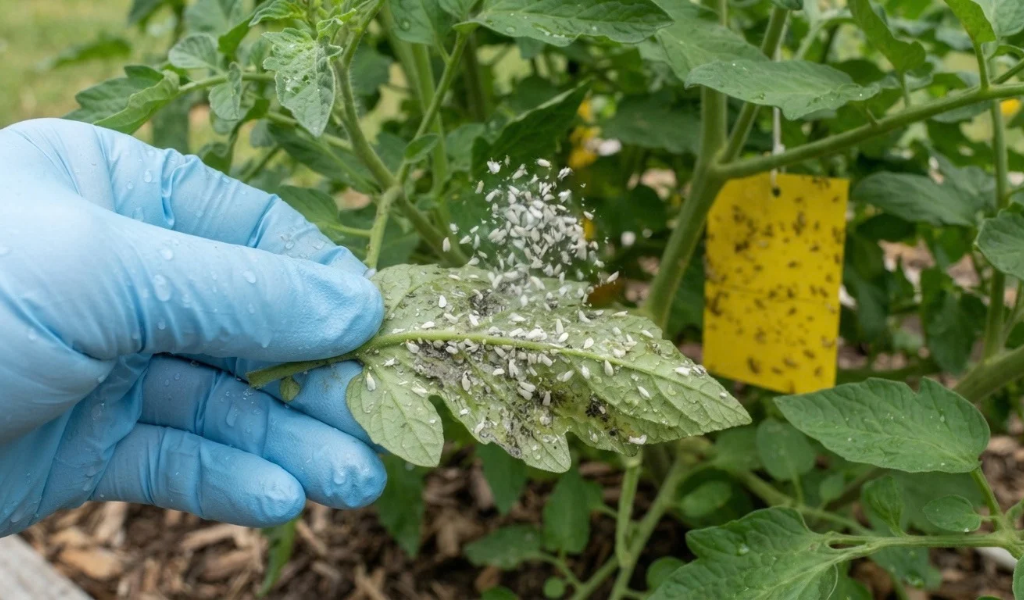 Then turn over a few leaves. Look for clusters of adults, tiny oval eggs arranged in circles, and flat translucent nymphs. Check the lower and middle leaves first because whiteflies tend to start there.
Whiteflies feed on plant sap and leave behind a sticky liquid called honeydew. This coating makes leaves look shiny and feel tacky. Black sooty mold soon grows on the honeydew and blocks sunlight from reaching the leaf surface. Affected leaves turn yellow, curl, and drop early. Weak plants set fewer flowers, and this is one more reason Controlling Tomato Blossom Drop becomes difficult when pests are left alone.
Silverleaf whiteflies can carry tomato yellow leaf curl virus. Infected plants show stunted growth, upward curling leaves, and a sharp drop in yield. There is no cure once a plant is infected. Early control of the insects is the best defense.
How to Get Rid of Whiteflies on Tomatoes Naturally, Without Harsh Chemicals
A natural approach begins with simple garden housekeeping. Remove the most heavily infested leaves and place them in a sealed bag in the trash. Do not put them in the compost pile. Pull weeds around the bed and clear away fallen leaves where pests can hide. This step alone can cut a small population by a large margin.
No single natural method removes every whitefly. The best results come from combining several tools over a few weeks. A typical plan starts with a strong water spray, follows with an insecticidal soap or neem application, adds sticky traps to catch adults, and finishes with beneficial insects for long-term balance. A grower in Texas who followed this routine for a month reported that her whitefly count dropped from thousands to a handful, and her plants set fruit normally again.
Natural products work more slowly than synthetic ones. Expect to treat every four to seven days for at least three rounds. Stopping after one spray is the most common reason natural control fails.
Best Homemade Sprays to Kill Whiteflies on Tomato Plants
Mix one to two teaspoons of mild liquid soap into a quart of water. Avoid soaps with degreasers or bleach because they can burn leaves. Spray the tops and undersides of the foliage until the leaves are wet.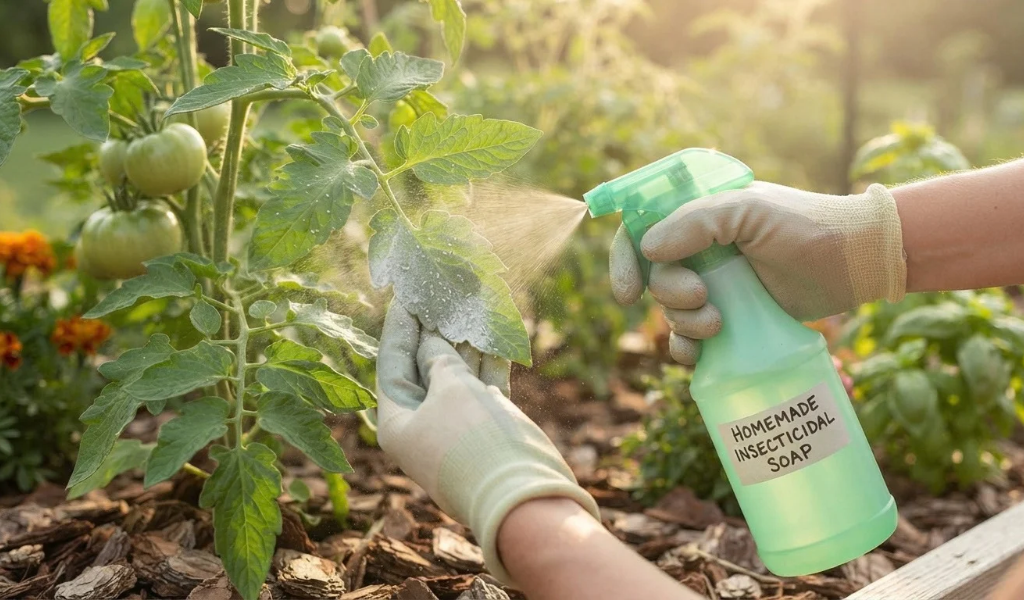 The soap breaks down the outer coating of soft-bodied insects and dries them out. Apply early in the morning or in the evening so the leaves do not scorch in bright sun.
Combine two teaspoons of cold-pressed neem oil, one teaspoon of mild soap, and a quart of warm water. The soap helps the oil mix. Shake well and keep shaking during use. Neem disrupts feeding and slows the growth of young nymphs.
Blend several crushed garlic cloves with a little hot pepper and steep them in water overnight. Strain the liquid and add a few drops of soap. This mixture repels adults and works best as a supporting treatment. Always test any homemade spray on a few leaves first and wait a day to check for damage.
Neem Oil, Insecticidal Soap, and Garlic Spray Compared
Insecticidal soap kills on contact and leaves little residue. Neem oil works on contact and also interferes with growth and egg laying. Garlic spray mainly repels and rarely kills a large number of insects. Each product has a different job, so it helps to match the tool to the stage of the problem.
Soap acts within hours and is gentle on people and pets. It needs frequent reapplication because it has no lasting effect. Neem lasts longer but can harm some beneficial insects if sprayed directly on them. Garlic spray is cheap and easy to make but gives the weakest results. Commercial soap and neem products cost a little more and have consistent strength, which makes dosing easier for beginners.
For a light infestation start with insecticidal soap. For a moderate problem alternate soap and neem oil every few days. Use garlic spray as a deterrent after the population is under control. Rotating products also lowers the chance that pests adapt.
Sticky Traps, Water Blasts, and Other Quick Fixes That Actually Work
Whiteflies are strongly drawn to the color yellow. Hang yellow sticky cards just above the plant canopy and replace them when they fill up. The traps will not solve the problem alone but they show how heavy the infestation is and catch many adults before they lay eggs. Keep them away from flowers where bees visit.
A firm blast of water from a hose knocks adults and nymphs off the leaves. Aim at the undersides of the leaves and repeat every couple of days. Do this in the morning so the foliage dries quickly and does not invite fungal disease. This method is free and surprisingly effective on young plants.
Some growers use a small handheld vacuum early in the morning when the insects are slow. Reflective silver mulch spread around the base of the plants confuses flying whiteflies and lowers landing rates. Both methods are especially helpful in small gardens and greenhouses.
Beneficial Insects That Eat Whiteflies and Protect Your Tomatoes
Encarsia formosa is a tiny wasp that lays its eggs inside whitefly nymphs. The nymph turns black and dies as the young wasp develops.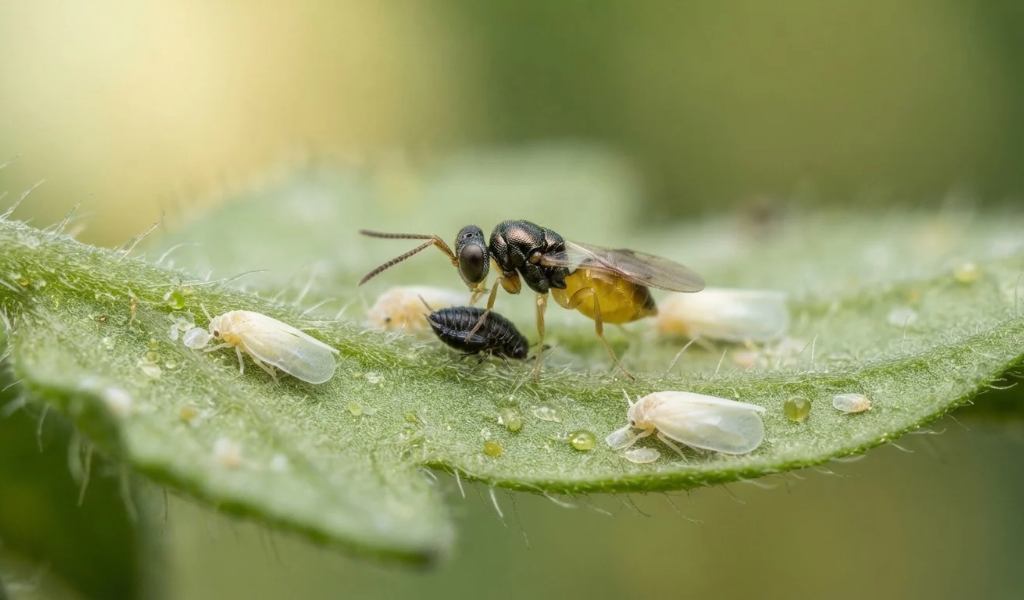 Eretmocerus species do similar work against the silverleaf whitefly. These wasps are harmless to people and are widely used in commercial greenhouses.
Lacewing larvae, ladybugs, and minute pirate bugs feed on whitefly eggs and nymphs. Delphastus catalinae, a small black lady beetle, is a specialist that eats large numbers of eggs. Many garden suppliers sell these insects by mail.
Release beneficial insects early when whitefly numbers are still low. Avoid spraying strong products for at least a week before and after a release. Planting alyssum, dill, and yarrow nearby provides nectar that keeps predators around. A small greenhouse owner in Oregon started releasing Encarsia in spring and found that whiteflies stayed below damaging levels for the entire season.
When Organic Isn’t Enough: Safe Chemical Options for Stubborn Whitefly Infestations
If soap and neem are not enough, refined horticultural oils and pyrethrin based sprays offer stronger action. Oils smother all stages of the insect on contact. Pyrethrin knocks down adults quickly but also harms helpful insects, so use it sparingly and in the evening when bees are not active.
Spinosad is a natural soil bacterium product that gives good control of whitefly nymphs. Systemic products containing imidacloprid or similar ingredients are taken up by the roots and protect the plant from inside. Many of these products can harm pollinators, and tomato plants bloom for a long time. Always check the label for use on edible crops and follow the waiting period before harvest.
Read every label from start to finish. Wear gloves and avoid spraying in wind. Rotate between products with different modes of action to slow resistance. Spot treat the worst plants rather than the entire garden whenever possible.
How to Prevent Whiteflies on Tomatoes From Returning Next Season
Check every new seedling before it enters the garden. Turn the leaves over and look for eggs and nymphs. Keep new plants apart from the rest for about a week. This habit prevents many outbreaks before they start.
At the end of the season remove all plant debris and dispose of it. Rotate tomatoes to a different bed each year and avoid planting them beside squash or cucumbers. Turn the soil lightly to disturb any leftover pupae.
Water at the base of the plant and feed with balanced fertilizer instead of heavy nitrogen. Space plants so air can move freely between them. Companion plants such as basil, marigold, and nasturtium may help repel adults or draw them away. Insect netting or row covers placed over young plants create a strong barrier. Healthy plants recover faster from damage, which also supports Controlling Tomato Blossom Drop through steady watering and reduced stress.
Common Mistakes That Make Whitefly Problems Worse (and How to Fix Them)
- Spraying Only the Tops of Leaves: Most whiteflies live on the undersides. Spraying only the upper surface misses the majority of the population. Always coat the underside thoroughly.
- Stopping Too Soon: One treatment does not finish the job because eggs and pupae survive. Continue every four to seven days for at least three weeks and keep monitoring after that.
- Spraying in Midday Heat: Soap and oil sprays can burn leaves when applied in strong sun. Treat plants early or late in the day.
- Overusing Harsh Products: Repeated broad spectrum sprays wipe out beneficial insects and can lead to resistant whiteflies. Choose the mildest effective option first and save stronger products for real emergencies.
- Ignoring Weeds and Nearby Plants: Treating tomatoes while infested weeds sit a few feet away wastes effort. Clean up the surrounding area at the same time so the insects have nowhere to return from.
Final Thoughts
Success with whiteflies comes from steady action rather than a single perfect product. Start with early detection, prune infested leaves, and use water sprays and sticky traps to reduce numbers. Follow up with soap or neem every few days, bring in beneficial insects, and keep chemical options in reserve for severe cases. Good garden hygiene and careful plant inspection stop most problems before they begin. If your plants are struggling right now, inspect the undersides of the leaves today and begin the first round of treatment this week. Share this guide with a fellow gardener who needs it and keep it handy for the next growing season.
Frequently Asked Questions
What is the fastest way to get rid of whiteflies?
A strong water spray followed by insecticidal soap gives the quickest visible results. The water removes many insects at once and the soap kills those that remain. Repeat every few days to catch newly hatched nymphs.
Will vinegar kill whiteflies?
Diluted vinegar can kill some insects on contact but it is risky on tomato plants. The acid can burn leaves and stems. Insecticidal soap or neem oil is a safer and more reliable choice.
What is the best insecticide to use to get rid of whiteflies on tomatoes?
For most home gardens insecticidal soap, neem oil, and horticultural oil are the best starting points. Spinosad is a stronger option for heavy infestations. Always pick a product labeled for tomatoes and follow the harvest waiting period.
Can you eat vegetables with whiteflies?
Yes. Whiteflies do not make fruit unsafe to eat. Wash the tomatoes well to remove honeydew and any sooty mold. Fruit from a heavily infested plant may be smaller and less tasty but it is not harmful.
How to get rid of whiteflies on tomatoes naturally
Use pruning, water sprays, yellow sticky traps, insecticidal soap, and neem oil together. Add parasitic wasps or lacewings for long-term control. Repeat treatments weekly and keep the garden free of weeds.
What can I use for white fly infestation on tomatoes?
Begin with soap spray and sticky traps. Move to neem oil or horticultural oil if the population keeps growing. For severe outbreaks a spinosad product may be needed. Combine these with regular plant checks.
How to Identify and Get Rid of Whiteflies?
Shake the plant and look for a small cloud of white insects. Check the undersides of leaves for eggs and pale nymphs. Once confirmed remove damaged leaves and start a repeat treatment schedule with water, soap, or neem oil. Keep monitoring for several weeks to make sure the population stays down.