Protecting Tomatoes From Frost in Your Garden
Protecting Tomatoes from Frost: A Gardener’s Complete Guide to Saving Your Harvest
Protecting Tomatoes from Frost is one of those garden jobs that feels small until you walk outside on a cold morning and find your plants limp and dark. One chilly night can undo four months of watering, staking, and waiting. I learned this the hard way a few years ago. I had twelve plants loaded with green fruit in early October, and I ignored a forecast that promised a light chill. By sunrise, the leaves had turned black and soggy.
The good news is that a little planning goes a long way. Tomatoes are tender plants, but you can shield them with simple tools you probably already own. Strong plants also handle stress better, so I feed mine with the best organic fertilizer for tomato plants, which for me means finished compost, worm castings, and a splash of fish emulsion. Healthy plants bounce back faster when the weather turns. This guide walks you through every step, from reading the forecast to saving fruit after a hard freeze. Grab a coffee, and let’s keep your garden alive a few weeks longer.
Protecting Tomatoes from Frost: What Every Gardener Needs to Know
Tomatoes come from warm regions, and their bodies still remember it. The leaves and stems are full of water, and when temperatures fall close to freezing, that water turns to ice crystals inside the plant cells. The crystals break the cell walls, and the tissue collapses. That is why a frosted tomato plant looks wilted and dark even though it was healthy the day before.
Cold also slows the plant down long before ice shows up. Below about 50 degrees Fahrenheit, growth stalls, and flowers may drop without setting fruit. So even a mild cold snap can cost you tomatoes.
Many gardeners use these words as if they mean the same thing, but they do not. Frost is a thin layer of ice that forms on surfaces when the air is near 32 degrees and the night is clear. A freeze means the air temperature itself drops to 32 degrees or lower, often for hours. A light frost might only nip the leaf tips, while a hard freeze can kill the whole plant. Knowing which one is coming helps you choose the right level of protection.
When Does Frost Threaten Tomato Plants? Dates, Temperatures, and Warning Signs
Every region has an average last spring frost and first fall frost. Your local extension office or a neighbor with a long-running vegetable garden can give you those dates. Treat them as a rough guide, not a promise. I know a gardener at our community garden who lost her seedlings in late May after a warm April fooled her into planting early. The average date is a guess based on old records, and weather does not read records.
Check the forecast every evening once nights start to cool. Look at the predicted low, and then subtract a few degrees for your own yard. Low spots, open fields, and areas near bare soil can run colder than the official number. If the forecast says 36 degrees, treat it as a frost night anyway. A cheap outdoor thermometer placed near your plants will tell you the truth about your own garden.
Some nights feel different. The sky is clear, the wind is calm, and the air turns crisp right after sunset. Clouds act like a blanket and hold heat near the ground, so a cloudy night is usually safer than a clear one. If you feel the temperature drop fast at dusk, go ahead and cover your plants.
Best Covers for Protecting Tomatoes from Frost: Sheets, Row Covers, and Cloches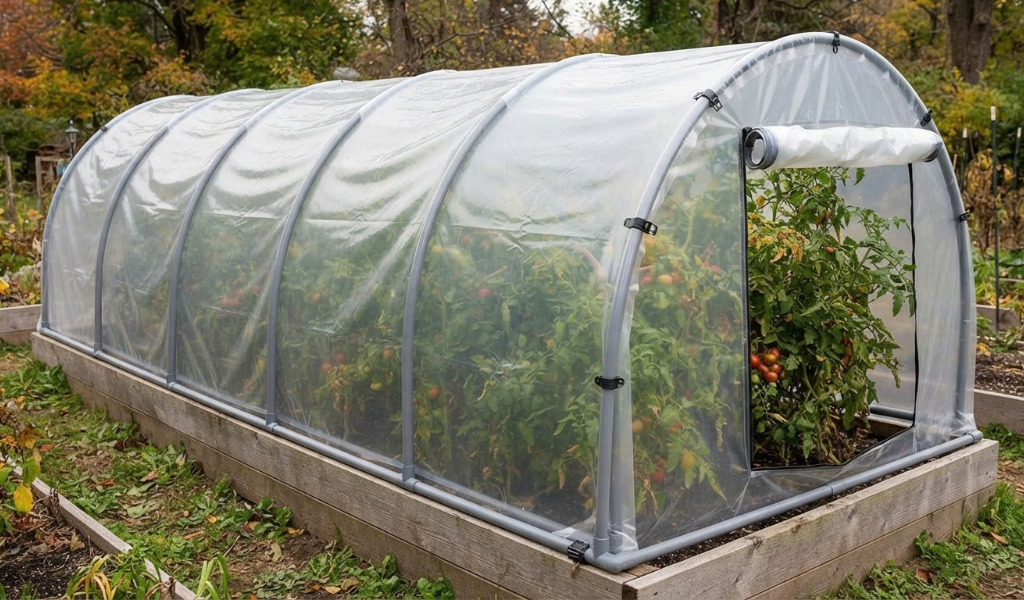
- Floating Row Cover: A floating row cover is a lightweight, breathable fabric that you lay over plants or hoops. Most gain you about 4 to 8 degrees of protection, depending on thickness. It lets in light and water, so you can leave it in place for days during a cold spell. If you plan to buy row cover, pick a heavier weight for late fall and a lighter one for early spring. It is reusable for several seasons if you store it dry.
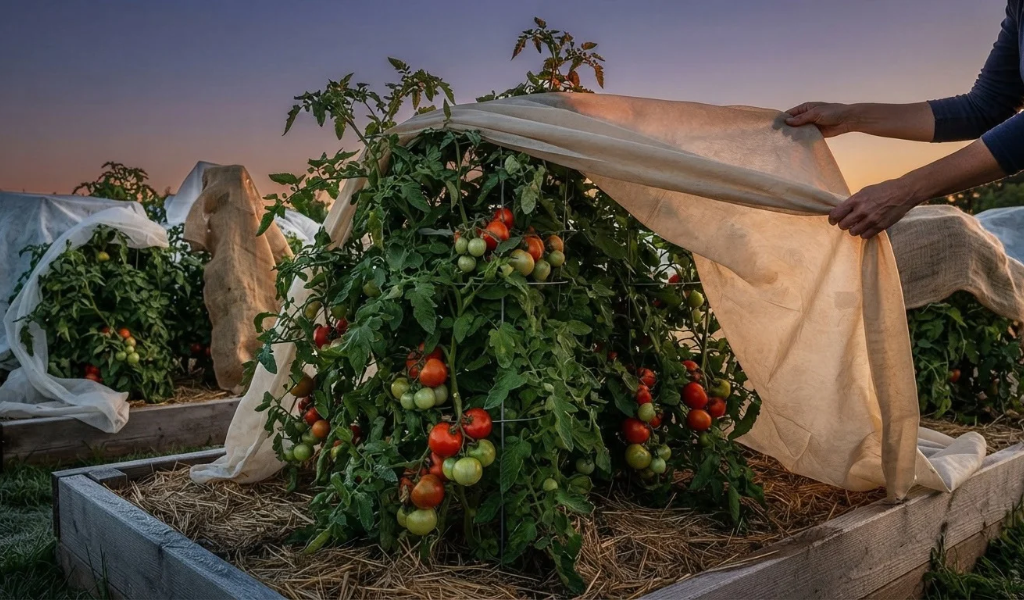
- Sheets, Blankets, and Cloth: Cloth is the classic choice. Old cotton sheets and wool blankets are great at holding heat, and they cost nothing if you already own them. Remove them in the morning once the air warms up so plants can get sunlight. Avoid using plastic directly against the leaves, because it can transfer cold and cause more damage than the frost itself.
- Cloches and Plastic Tunnels: A cloche is a small dome that sits over one plant. You can buy glass ones, but a cut milk jug works well too. For bigger plantings, bend hoops over the bed and cover them with translucent plastic. This builds a low tunnel that traps heat during the day. Be careful on sunny days, because plastic can overheat your plants fast, so vent the ends when the temperature climbs.
Simple Ways to Protect Tomatoes from Frost Overnight
- Water the Soil Before Sunset: This tip sounds too easy, but it works. Wet soil holds heat better than dry soil, and it releases that warmth slowly through the night. Water your bed in the afternoon so the ground can soak up the sun. Do not overdo it, because soggy roots cause their own problems.
- Drape Plants and Wrap Tomato Plants: If a cold night is coming, drape plants with an old bedsheet, a blanket, or a piece of burlap. Tomato cages make a wonderful frame for this. Set the cloth over the cage so it does not crush the leaves. Then tuck the edges down to the soil so warm air from the ground stays trapped. For a single plant, you can wrap tomato plants by circling the cage with fabric and tying it loosely at the top.
- Add Mulch Around the Base: A thick layer of straw or shredded leaves around the roots helps insulate the soil. It will not save the leaves in a hard freeze, but it protects the root zone and helps the plant recover from a light frost. Pull the mulch back in spring so the soil can warm up fast.
DIY Frost Protection for Tomato Plants Using Items Already in Your Garage
Turn a bucket upside down over a small plant, and you have instant frost protection. Put a brick on top so wind does not carry it off. Large cardboard boxes work too. For potted tomatoes, drop a bucket over the whole pot. Just remember to lift everything off in the morning, or your plant will sit in the dark and get weak.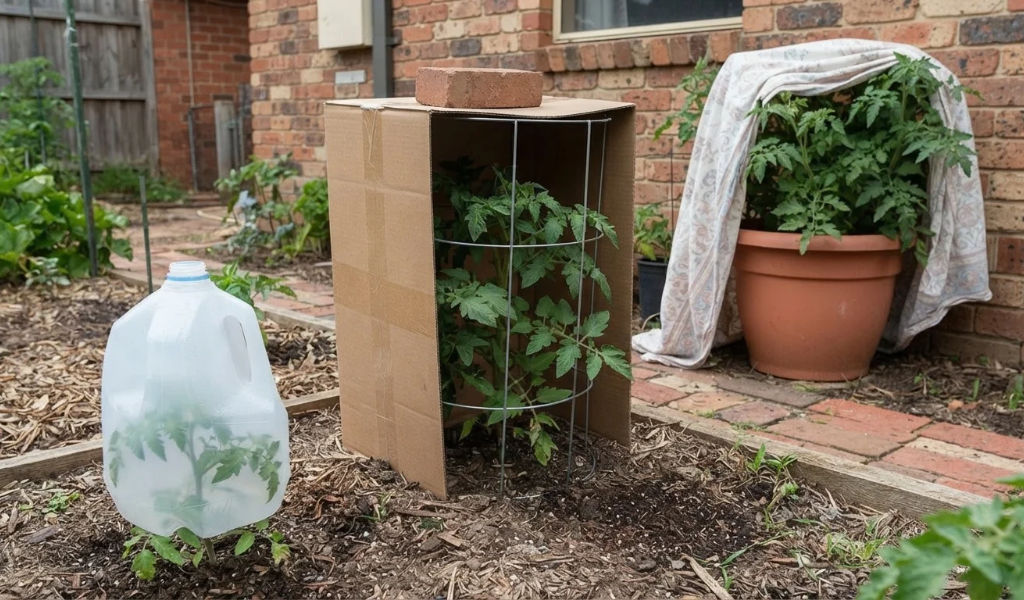
Water jugs are another trick I like. Fill dark plastic jugs with water, and place them around your plants during the day. They soak up heat and release it slowly after sunset. It is a small boost, but on a borderline night it can make the difference.
Old incandescent holiday lights give off a small amount of warmth. Wrap them around the cage, then cover the plant with a sheet. The lights warm the pocket of air under the cloth by a few degrees. Use outdoor-rated cords and keep bulbs from touching the fabric. LED lights stay too cool to help.
If you want long-term results, build a greenhouse from PVC pipe and clear plastic. A simple hoop house takes a weekend and costs less than a nice dinner out. Anchor the pipes over your bed, stretch the plastic tight, and clip it down. You can also set up a cold frame, which is basically a bottomless box with a clear lid. It works great for protecting smaller plants and for hardening off seedlings.
Protecting Tomatoes from Frost in Containers and Raised Beds
The biggest advantage of container growing is mobility. When the forecast looks scary, carry your pots into a garage, shed, or porch. Even moving them against the south wall of your house can add several degrees, because the bricks hold heat. A cheap plant dolly makes heavy pots much easier to roll. I once moved six large buckets of tomatoes into my garage on a cold October evening, and they kept producing until November.
Raised beds drain well and warm up fast in spring, but they also lose heat faster at night because the sides are exposed. Fit a simple frame of PVC hoops over the bed so you can throw a cover on quickly. Mulch the top of the soil, and cover the bed before sunset so it keeps the day’s warmth.
If you garden in a shared plot, talk to your neighbors. At our community garden, we started a group text during frost season. Whoever sees the forecast first sends a note, and people help cover plots for folks who are traveling. A few spare sheets kept in the tool shed have saved plenty of plants.
How to Save Frost-Damaged Tomato Plants (and When to Let Go)
- First Steps After a Light Frost: If you wake up to frost on the leaves, do not panic and do not pull off the cover right away. Let the sun warm things slowly, then spray the plants lightly with cool water to help thaw the tissue. Wait a day or two before you trim anything, because it takes time to see what is truly dead. Prune only the clearly black, mushy parts, and leave green stems alone.
- Helping the Plant Recover: A stressed plant needs gentle care. Water evenly, and avoid heavy feeding right away. Once new growth appears, a mild dose of the Best Organic Fertilizer for Tomato Plants, such as compost tea or worm castings, can help it rebuild. Keep an eye out for new shoots coming from the lower stems. If you see them, the plant is fighting back.
- Knowing When to Let Go: Sometimes the plant is finished. If the main stem is soft all the way down and there are no green buds, it will not come back. Harvest any firm fruit, and move on. Pulling dead plants early helps prevent disease from carrying over to next season, and the bed will be ready for cool season crops or a cover crop.
What to Do with Green Tomatoes Before the First Frost
If a hard freeze is in the forecast and covers will not be enough, pick your fruit. Tomatoes that have reached the mature green stage, where the skin looks pale and glossy, will ripen indoors. Fruit that is small and dark green usually will not. Pick gently, and leave a short piece of stem on each one.
One old method is to pull up the whole plant, shake off the soil, and hang tomatoes upside down in a cool garage or basement. The fruit keeps getting nutrients from the vine as it ripens. It looks a little funny, but it works, especially with indeterminate varieties that carry lots of fruit at different stages.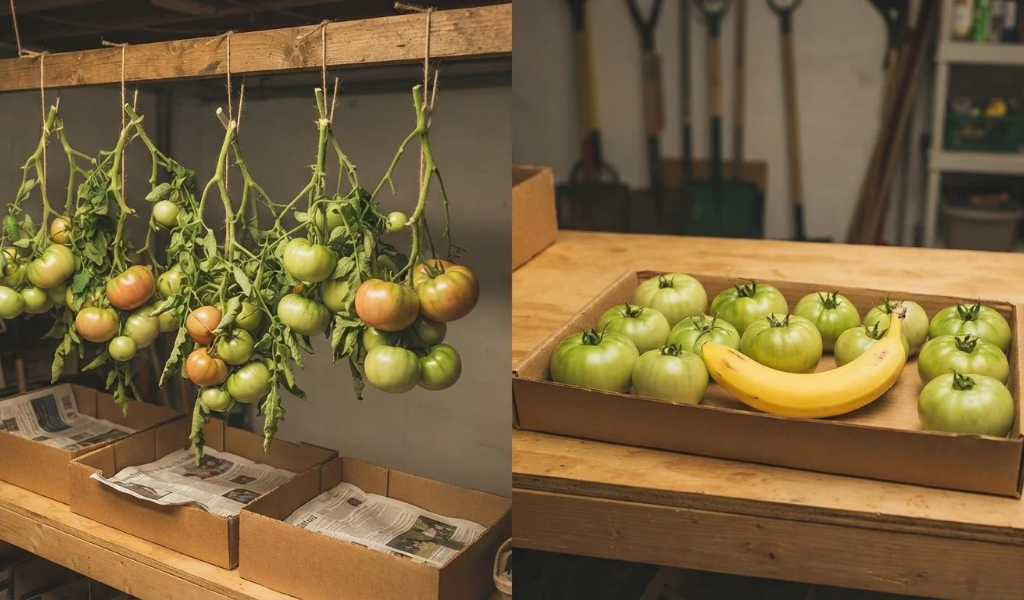
If hanging is not practical, lay tomatoes in a single layer in a cardboard box, and keep them at room temperature. Put a ripe banana or apple in the box, since those fruits give off a gas that speeds ripening. Check them every day and remove any that show soft spots. Some people wrap each fruit in newspaper, which slows ripening so you can enjoy fresh tomatoes into December.
Long-Term Strategies for Protecting Tomatoes from Frost Every Season
Choose varieties that match your growing season. Short season types, often called early varieties, ripen in 55 to 70 days, which gives them time to finish before fall cold. Indeterminate tomatoes keep growing and producing until frost stops them, so they need more protection at the end of the season. Determinate types set fruit all at once, which makes harvest before a freeze much simpler.
Do not rush spring. Wait until nights stay above 50 degrees, and the soil has warmed up. Start seeds indoors about six to eight weeks before your last frost date, and harden them off for a week before planting. A wall of water or a cloche around each seedling gives you a safety net. Good planning is the heart of Protecting Tomatoes from Frost, because it keeps trouble from ever starting.
Rich soil grows stronger plants. Add compost every year, and use organic amendments to feed the soil, not just the plant. Reduce wind with a fence or hedge, since wind makes cold feel worse and strips heat from leaves. You can also pair tomatoes with crops that handle cold better. Broccoli, lettuce, chard, and cabbage shrug off light frost, so they make smart neighbors for fall planting. If you grow vegetables this way, you extend the growing season and keep producing sustainably grown produce long after the first chill.
Final Thoughts
Protecting Tomatoes from Frost is not complicated, but it does require attention. Watch the forecast, know your frost dates, and keep a few covers ready before you need them. Water the soil, drape plants with fabric, and use cloches or row covers for extra safety. If a hard freeze is coming, pick your green tomatoes and ripen them indoors. Good habits matter too. Feed your plants well, choose the right varieties, and plan your planting dates with care. A healthy garden handles stress better, and a prepared gardener sleeps better. So take a few minutes this week to gather your sheets, buckets, and row cover. Put them somewhere easy to reach. Then the next time a cold night sneaks up on you, you will be ready. Share this guide with a gardening friend, and tell us in the comments which frost trick works best in your yard.
Frequently Asked Questions
What temperature will kill tomato plants?
Tomato plants start to suffer around 32 degrees, and most will die if temperatures stay below 28 degrees for several hours. Even 35 degrees can harm tender leaves on a clear, windy night.
Can tomato plants survive a light frost?
Sometimes they can. A very light frost may only burn a few leaves, especially if the plant is covered or sitting near a warm wall. Repeated frosts or longer freezes are much more dangerous.
What is the best cloth to cover tomatoes at night?
Cotton sheets, wool blankets, and burlap all work well. A floating row cover is even better because it is lightweight and breathable. Avoid plastic touching the leaves, because it can make cold damage worse.
Should I remove the cover in the morning?
Yes. Once the air warms up, take the cover off so the plants can get sun and air. Leaving fabric or plastic on all day can overheat the plants, especially on sunny days.
Can I plant tomatoes again after frost kills them?
It depends on your season length. In spring, you can replant if enough warm weeks remain. In fall, it is usually too late, so focus on cool season crops like lettuce, chard, or cabbage instead.
Will green tomatoes ripen after frost?
Fully mature green tomatoes can ripen indoors if they were not frozen. Fruit that took a hard freeze will usually turn mushy, so pick them before the cold hits whenever possible.
Is it worth building a greenhouse for frost protection?
If you garden often and live in a cold region, yes. A small hoop house or cold frame costs little and can add weeks to both ends of your season. Even a basic setup can help you keep harvesting when neighbors have already stopped.