Tomato Grow Upside Down in Your Garden: Guide to Grow Tomatoes Upside Down in Tomato Planters
Tomato Grow Upside Down: Easy Guide to Growing an Upside Down Tomato Plant
If you’ve scrolled through gardening forums or walked past a nursery display, you’ve probably seen someone try to tomato grow upside down in a hanging planter. It looks strange at first, but this method has earned a loyal following among gardeners who are short on space or tired of staking sprawling vines. Before you buy one of those topsy turvy tomato planters, though, it helps to understand how this growing method actually works, which tomato varieties do best, and what problems you might run into along the way.
This guide walks through everything you need to know about tomato grow upside down, from choosing the right container to picking the best fertilizer for tomatoes plants and troubleshooting common issues. Whether you have a small balcony, a cramped patio, or just want to try something new in your garden, you’ll find practical, tested advice here to help your upside down tomato thrive.
What Does Tomato Grow Upside Down Actually Mean?
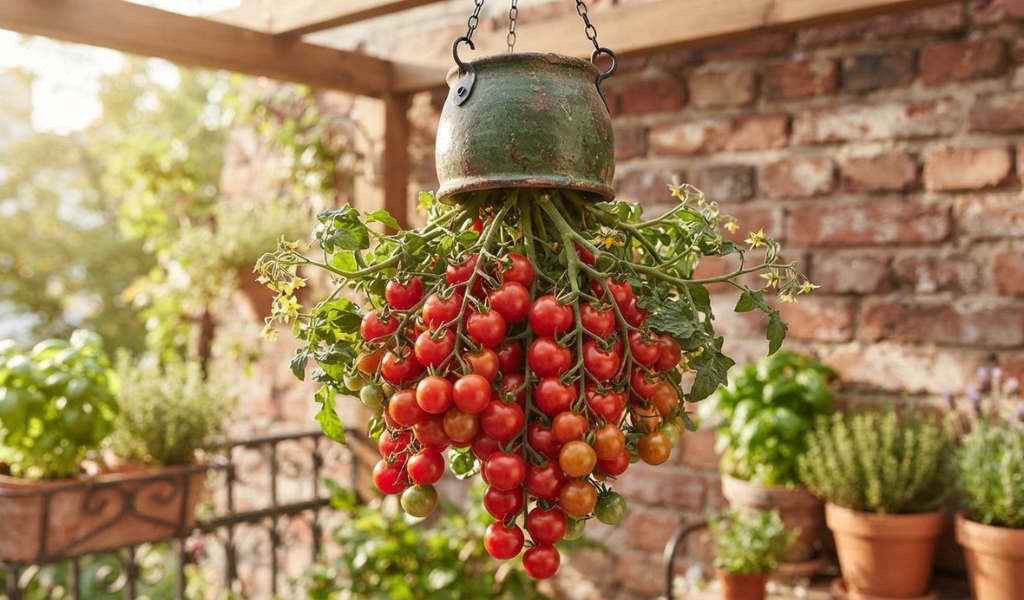
Growing a tomato plant upside down means flipping the traditional planting method on its head, literally. Instead of planting a seedling in soil and letting it grow upward, you thread the tomato seedling through a hole in the bottom of a container, fill it with soil, and hang it from a hook or bracket. The plant grows downward before its stems naturally curve upward toward the sun.
This method became popular through products like the Topsy Turvy planter, but gardeners can also make their own upside down tomato planter using a plastic bucket, hanging basket, or recycled container. If you want to tomato grow upside down, there are three key benefits.
Save Valuable Garden Space
If you’re short on space, a hanging tomato planter lets you grow food vertically instead of horizontally.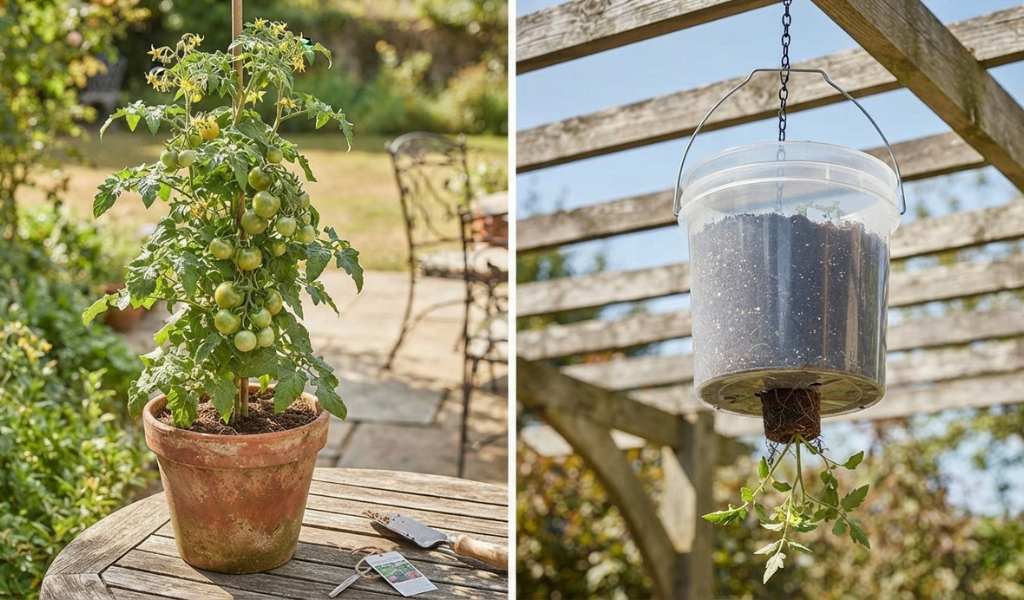 Small space gardeners with balconies, patios, or tiny yards can hang several planters from a railing or pergola and still have room to walk underneath. This makes upside-down growing especially popular for apartment dwellers and anyone working with a small space garden.
Keep the Plant Away From the Ground
Ground-level tomato plants are more exposed to soil-borne diseases, slugs, and other pests that crawl up from the dirt. When you grow tomatoes upside down, the entire plant hangs above the ground, which naturally reduces contact with many common garden pests and reduces the risk of soil splashing onto the leaves during rain.
Make Harvesting More Convenient
The fruit hangs below the container, making ripe tomatoes easier to reach. You can harvest without bending or kneeling, making tomato grow upside down a convenient option for many home gardeners.
Which Tomatoes Are Best for Growing Upside Down?
Not every tomato plant is suited for this upside-down growing method. The variety you choose can make a big difference in how well your plant performs when you tomato grow upside down.
Determinate Tomatoes
Determinate tomatoes grow to a set size, produce fruit within a shorter period, and remain more compact. Their manageable size makes them a good choice for hanging planters because they are less likely to become too heavy or sprawling.
Small Cherry Tomatoes
Cherry tomatoes are among the best choices for upside-down growing. Their small fruit puts less weight on the stems, while their vigorous growth looks attractive cascading from a hanging planter. 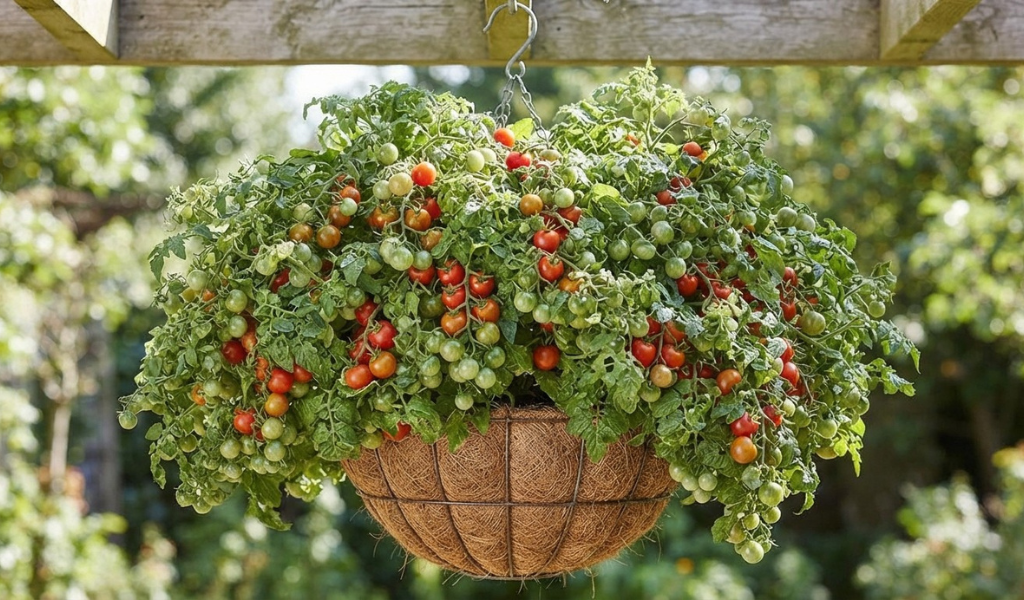
Varieties like Sweet 100 and Tumbling Tom are popular options for gardeners who want to tomato grow upside down.
Indeterminate Tomatoes
Indeterminate tomatoes, including beefsteak and Roma varieties, continue growing and producing throughout the season. They can work in an upside-down planter, but their larger vines and heavier fruit require a sturdy container and strong hanging hardware. Beefsteak varieties may need extra support because their heavy fruit can put significant strain on the planter.
How to Choose the Right Container for an Upside Down Tomato
The container you choose can make or break your upside-down tomato growing experience. Since the entire weight of the soil, water, and eventually the fruit will hang from one point, your planter needs to be tough enough for the job. Choosing the right container is especially important when you tomato grow upside down.
Use a Strong, Food-Safe Container
A 5-gallon bucket is one of the most popular choices for a DIY upside down tomato planter because it’s affordable, sturdy, and easy to find. Just make sure any bucket you repurpose is food-safe plastic, since some industrial buckets contain chemicals that can leach into the soil. Purpose-built hanging planters and hanging baskets designed for tomatoes are also widely available if you’d rather skip the DIY route.
Make Sure the Container Has Good Drainage
Good drainage is essential for the health of your tomato plant. Along with the planting hole in the bottom of the bucket where the seedling grows through, you’ll want a few smaller holes higher up on the sides to let excess water escape. Without proper drainage, the roots can sit in standing water, leading to root rot and a weak, unproductive plant.
Consider Container Size Carefully
Size matters more than most new gardeners expect. A 5 gallon bucket is generally the minimum size for a single tomato plant, since anything smaller won’t hold enough growing medium to support healthy root development. Larger indeterminate varieties may benefit from an even bigger container to accommodate their extensive root systems and heavier fruit loads.
How to Grow Tomatoes Upside Down Step by Step
Once you’ve picked your tomato variety and container, it’s time to get planting. Follow these steps to set up your upside down tomato planter correctly. These steps can help you successfully tomato grow upside down at home.
Step 1: Choose a Healthy Tomato Seedling
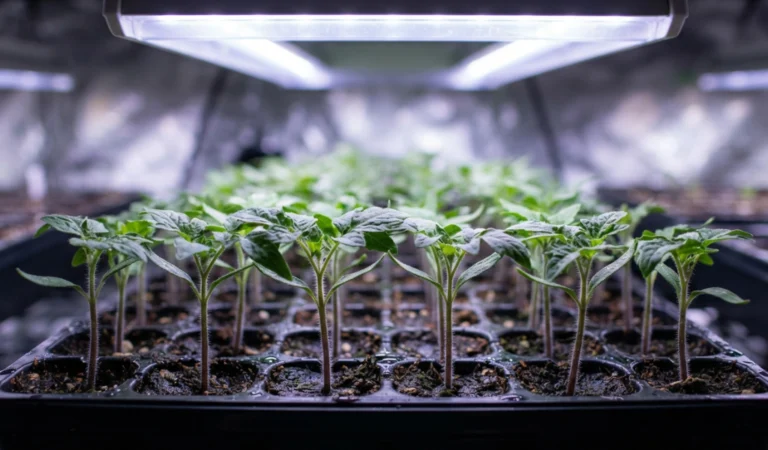
Start with a young, healthy tomato seedling rather than starting from seed. A seedling that’s six to ten inches tall with sturdy stems will handle the transplanting process better than a seed sown directly into a hanging container.
Step 2: Prepare the Container
Cut or drill a hole roughly two to three inches wide in the bottom of the bucket or planter. This is where the tomato seedling will hang through. Add a few extra drainage holes near the top sides of the container as well.
Step 3: Carefully Position the Seedling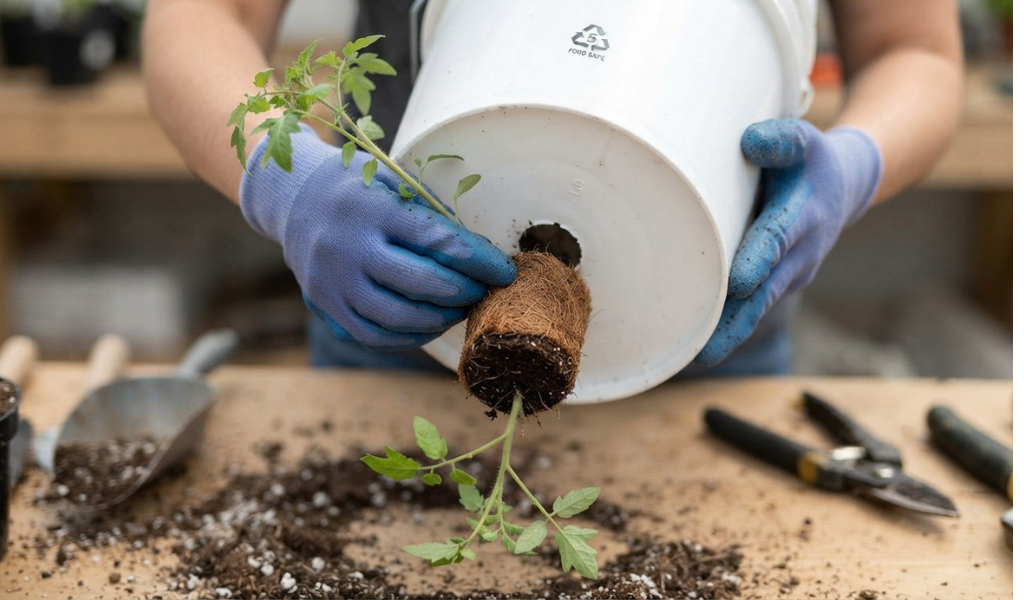
Wrap the root ball loosely in a piece of landscape fabric, coconut coir, or even paper towel to hold the soil together, then gently thread the stem and root ball through the hole from the inside of the container. Support the plant so it hangs freely below the bucket while you work.
Step 4: Add the Growing Medium
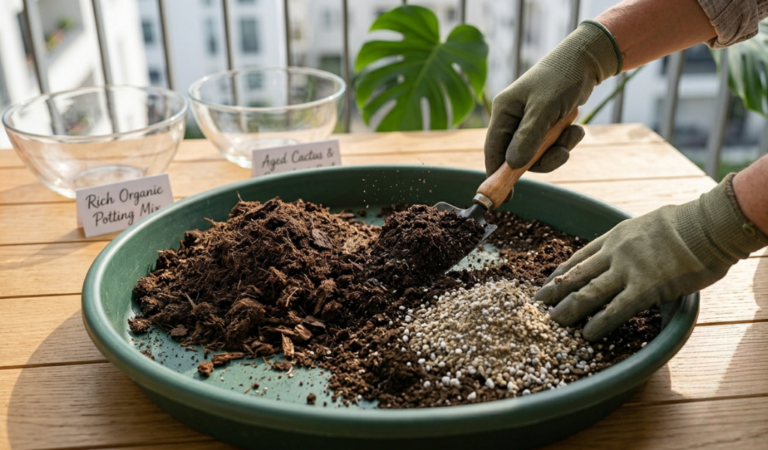
Fill the container with a quality potting mix. Avoid using heavy garden soil, since it compacts easily and drains poorly in a hanging container. A mix formulated for container plants, ideally one that includes compost, will give your tomato plant the nutrients it needs early on.
Step 5: Secure the Plant
Once the growing medium is in place, gently pack it around the base of the stem to help hold the seedling steady while the roots establish themselves in the soil above.
Step 6: Water Thoroughly
Give the plant a deep watering right after planting to help settle the soil and reduce transplant shock. Water should drain steadily from the top holes, confirming that your drainage setup works properly.
Step 7: Hang It in a Sunny Location
Use a strong hook rated for the container’s full weight once soil, water, and fruit are all factored in, then hang your upside-down tomato in a spot that gets plenty of direct sunlight throughout the day. A suitable location makes it easier to tomato grow upside down successfully.
How Much Sun Does an Upside-Down Tomato Need?
Tomato plants are sun-loving by nature, and an upside-down tomato is no exception. If you want to tomato grow upside down successfully, adequate sunlight is essential.
Choose the Sunniest Practical Location
Aim for a location that gets at least six to eight hours of full sun each day. A south-facing balcony or patio typically works best. Because hanging planters can be moved, take advantage of this flexibility to chase the sunniest spot in your gardening space throughout the season.
Watch for Excessive Heat
While tomatoes need plenty of light, a container hanging in direct sun all day can dry out fast and heat up more than an in-ground bed would. Keep an eye on the growing medium during heat waves, and consider some afternoon shade in extremely hot climates to prevent the plant from wilting.
How Often Should You Water an Upside-Down Tomato?
Watering is one of the trickiest parts of growing tomatoes upside down, since hanging containers dry out faster than in-ground beds or even traditional pots. This is particularly important when you tomato grow upside down in warm weather.
Check the Growing Medium Instead of Following a Rigid Schedule
Rather than watering on a fixed schedule, stick your finger an inch or two into the soil. If it feels dry, it’s time to water. Hot, sunny days may mean watering once a day, while cooler weather might only require watering every other day.
Water Slowly and Thoroughly
When you do water, pour slowly and steadily until you see it running out of the drainage holes. This ensures the entire root ball gets moisture rather than just the top layer of soil.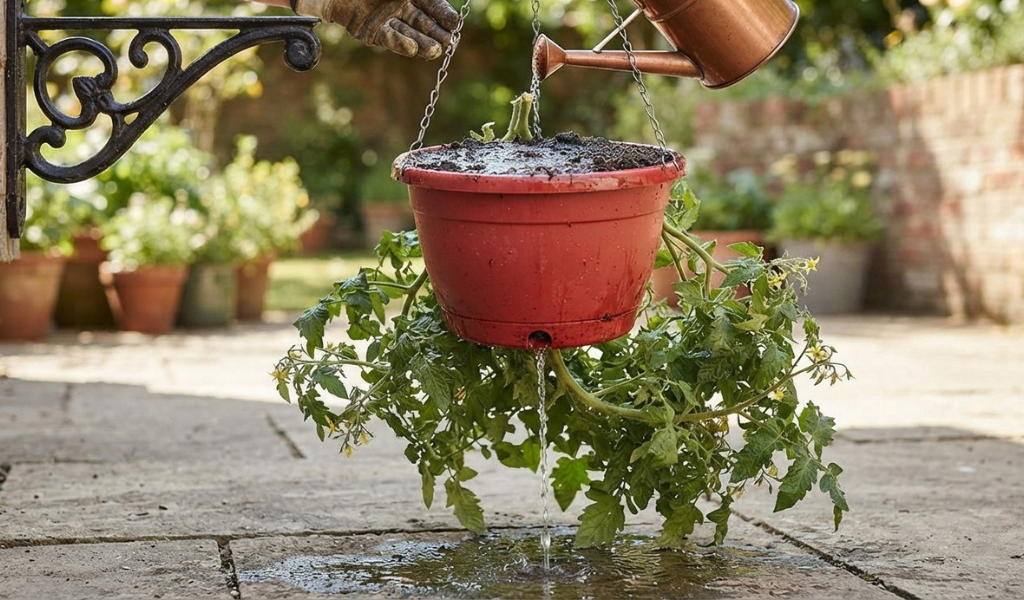
Do Not Keep the Roots Constantly Saturated
Overwatering is just as harmful as underwatering. Constantly soggy soil suffocates the roots and encourages root rot, so let the top inch of soil dry out slightly between waterings whenever possible.
Fertilizing Tomatoes Growing Upside Down
Because a hanging container holds limited soil, nutrients get used up and washed out faster than in a garden bed. Regular feeding is essential for a productive tomato plant. Proper fertilizing is an important part of learning how to Tomato Grow Upside Down.
Start With a Good Container Mix
Choose a quality potting mix containing compost or slow-release fertilizer to give your seedling a strong start and provide nutrients from the beginning.
Feed According to the Product Instructions
Once your plant starts growing steadily, use a balanced liquid fertilizer or one formulated for tomatoes. When people search for the best fertilizer for tomatoes plants, they’re usually looking for balanced nitrogen, phosphorus, and potassium, along with calcium to help prevent blossom end rot. Feed every one to two weeks during the growing season, following the product label to avoid root burn.
Watch the Plant for Clues
Yellowing leaves can signal a nitrogen deficiency, while poor fruit set may indicate nutrient issues. Adjust your feeding routine based on the plant’s growth and appearance rather than following a rigid schedule.
Supporting an Upside-Down Tomato Plant
Even though the plant hangs downward, it still needs some support as it grows and produces fruit. Proper support becomes especially important when you tomato grow upside down with larger varieties.
Give the Stems Enough Room
As the plant matures, its stems and leaves will naturally curve upward toward the light. Make sure nothing is blocking this growth, and avoid crowding multiple hanging planters too close together, since the plants need air circulation and enough space to grow toward the sun without bending awkwardly.
Protect the Hanging Hardware
The combined weight of soil, water, and ripening fruit adds up quickly. Use a strong hook or bracket rated well beyond the container’s estimated weight, and check it periodically throughout the season to make sure it hasn’t loosened or started to bend under the load.
Common Problems When Growing Tomatoes Upside Down
Even with the best setup, upside-down tomato growing comes with its own set of challenges. Understanding these problems can make it easier to tomato grow upside down with better results.
The Plant Wilts During Hot Weather
Hanging containers lose moisture quickly, especially in full sun. If your plant wilts in the afternoon heat, check the soil moisture first, and consider moving the planter to a spot with some relief from intense afternoon sun.
The Tomato Plant Looks Small
Limited soil volume restricts root growth, which can result in a smaller plant compared to one grown in the ground. This is normal for container plants, but consistent feeding and watering can help maximize the plant’s size and productivity.
Flowers Appear but Tomatoes Do Not
If your plant is flowering but not setting fruit, poor pollination is often the cause. Hanging planters can be harder for pollinators to reach, so consider gently shaking the plant or hand-pollinating the flowers with a small brush.
The Container Keeps Drying Out
If you find yourself watering constantly, your container may be too small for the plant’s root system, or it may be hanging in a spot with too much wind and sun exposure. Moving to a larger container or a slightly more sheltered spot can help.
Pros and Cons of Growing Tomato Plants Upside Down
What Are the Advantages of Growing Tomato Plants Upside Down?
Growing tomatoes upside down saves space, keeps plants off the ground, makes harvesting easier, and adds vertical interest to balconies or patios. It’s also useful for renters because planters can be moved easily. These benefits make many gardeners choose to tomato grow upside down.
What Are the Disadvantages of Growing Tomatoes Upside Down?
This method can cause faster soil drying, require more watering and feeding, limit root space and yields, and need strong hooks for heavy plants. Hanging containers may also be more vulnerable to wind.
Which Varieties Are Best for Growing Tomatoes Upside Down?
Cherry tomatoes and other small, determinate varieties tend to perform best because their lighter fruit doesn’t strain the stems or the hanging hardware as much as large beefsteak or roma tomatoes.
Is It Better to Grow Tomatoes in the Ground or Upside Down in Hanging Containers?
It depends on your situation. Choose upside-down growing if you’re short on ground space, want to keep plants off the soil, or need a portable setup for a balcony or patio. Choose traditional in-ground planting if you want higher yields, easier watering, and less concern about container weight or hardware failure.
Upside-Down Tomatoes vs Traditional Container Tomatoes
Traditional Containers Are Easier to Control
A traditional pot sitting on the ground or a stand tends to hold moisture longer and offers more room for roots to spread compared to most hanging tomato setups. Staking or caging a traditional container plant is also more straightforward.
Upside-Down Containers Use Vertical Space
The biggest advantage of an upside down tomato planter is how it uses vertical growing methods to free up floor space. For anyone dealing with a small balcony or patio, this can be the deciding factor between growing your own tomatoes or not having room for a garden at all. This is one of the main reasons gardeners choose to tomato grow upside down.
Tips for Getting More Tomatoes From an Upside-Down Plant
Give the Plant Plenty of Light
Full sun is non-negotiable for a productive tomato plant. Aim for the sunniest spot available, and rotate the container occasionally if one side isn’t getting as much light as the other.
Keep Moisture Consistent
Inconsistent watering leads to problems like blossom end rot and split fruit. Try to keep the soil evenly moist rather than letting it swing between bone dry and soaking wet.
Feed Sensibly
Stick to a regular feeding schedule with a quality fertilizer, and adjust based on how the plant responds rather than overfeeding out of caution.
Monitor Pests Regularly
While hanging planters reduce exposure to ground-level pests, they aren’t immune to problems like aphids or hornworms. Check the leaves and stems every few days so you can catch issues early.
Harvest Ripe Tomatoes Promptly
Letting ripe fruit sit on the vine too long can attract pests and slow down the production of new fruit. Pick tomatoes as soon as they ripen to keep the plant focused on producing more.
Final Thoughts
Growing tomatoes upside down isn’t a gimmick, but it isn’t a perfect solution either. For gardeners with limited space, a sunny balcony, or a desire to keep plants off the ground, this method offers a useful way to grow tomatoes without sacrificing yard space. The tradeoff is more frequent watering, careful fertilizing, and sturdy hardware that can handle the weight of a mature plant. If you want to tomato grow upside down, understanding these tradeoffs is essential.
If you’re ready to try it, start with a single cherry tomato variety in a 5-gallon bucket. Keep a close eye on watering and feeding, and adjust your care as the plant grows. With the right setup, tomato grow upside down can be a practical and interesting option for small-space gardeners.
Frequently Asked Questions
Can I grow tomatoes upside down in a 5-gallon bucket?
Yes, a 5-gallon bucket is one of the most common containers used for upside-down tomato growing. Just make sure it’s food-safe plastic, has a properly sized hole for the seedling, and includes extra drainage holes near the top.
What are the most common mistakes when growing tomatoes upside down?
The most frequent mistakes include using a container that’s too small, skipping proper drainage holes, choosing a heavy indeterminate variety without reinforcing the hanging hardware, and letting the soil dry out too often.
Will my tomato plant still grow if the stem bends over?
Yes. Tomato stems are flexible and will naturally curve and grow toward sunlight even after starting out pointed downward in a hanging planter.
Do tomato plants need to be rotated?
Rotating your hanging tomato planter occasionally helps ensure even light exposure on all sides, which can lead to more balanced growth and fruit production.
Which tomato varieties are best for growing upside down?
Small, determinate varieties and cherry tomatoes like Sweet 100 or Tumbling Tom are generally best, since their lighter fruit puts less strain on the stems and hanging hardware.
How do I set up an upside-down tomato planter?
Cut a hole in the bottom of a sturdy, food-safe container, thread a healthy seedling through it, fill the container with quality potting mix, water thoroughly, and hang it in a sunny spot using a strong hook.
Is it necessary to fertilize an upside-down tomato plant more than a ground-planted one?
Yes, because hanging containers hold limited soil, nutrients deplete faster. Regular feeding with a balanced fertilizer helps maintain healthy growth and fruit production throughout the season.