Fish Fertilizer for Tomato Plants: Fish Emulsion Feeding Tips in Your Garden
Best Fish Fertilizer for Tomato Plants: A Practical Garden Guide
Growing juicy, flavorful tomatoes starts with what you feed them, and fish fertilizer for tomato plants has become one of the most trusted choices among home gardeners. This nutrient-rich, natural fertilizer comes from the fishing industry and has been used for generations to support strong roots, healthy foliage, and heavy fruit production.
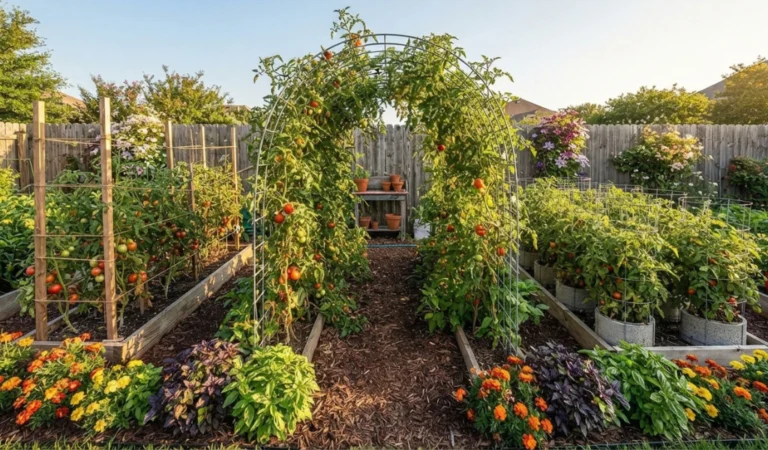
If you’re searching for the best fertilizer for tomatoes plants, fish fertilizer deserves a spot on your shortlist. It delivers essential nutrients like nitrogen, phosphorus, and potassium in a form that plants can absorb quickly, while also feeding the soil itself. For more practical tomato growing tips, understanding how and when to use fish fertilizer can help you get better results throughout the growing season. Whether you’re growing tomatoes in a raised garden bed, a vegetable garden, or in potted plants on a patio, fish fertilizer for tomato plants can make a noticeable difference in how your plants grow and produce.
This guide walks through everything you need to know about using fish fertilizer for tomato plants, including how it’s made, when to apply it, how much to use, and the mistakes to avoid along the way.
What Is Fish Fertilizer for Tomato Plants?
Fish fertilizer for tomato plants is a natural fertilizer made from fish byproducts. It’s a favorite among gardeners who want an organic gardening option that feeds plants without relying on synthetic chemicals.
How Fish Fertilizer Is Made
Most fish fertilizer starts as a byproduct of the fishing industry. Fish scraps, such as bones and other leftover parts, are broken down and processed into a concentrated liquid or fish emulsion fertilizer. Brands like Alaska fish fertilizer have built a reputation for using this traditional method to create a reliable, nutrient-rich liquid plant food.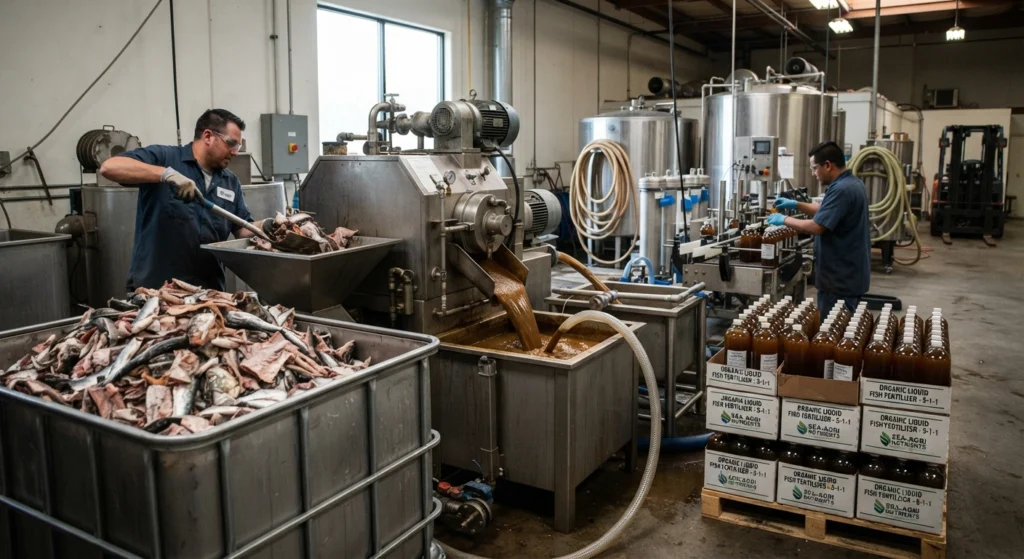
What Nutrients Does Fish Fertilizer Provide?
Fish fertilizer supplies nitrogen, phosphorus, potassium, calcium, and trace elements like magnesium. This combination supports leafy growth, root development, and overall plant health, making it a well-rounded choice for tomato plants.
Why Gardeners Use Fish Fertilizer on Tomatoes
Gardeners turn to fish fertilizer for tomato plants because it’s gentle, effective, and easy to apply. Unlike some synthetic options, fish emulsion on tomato plants rarely causes fertilizer burn when diluted correctly, making it a safer choice for beginners and experienced growers alike.
Is Fish Fertilizer Organic?
Yes, fish fertilizer is considered a natural, organic fertilizer since it comes directly from fish rather than lab-created chemical compounds. Many organic gardening enthusiasts choose fish fertilizer as their go-to natural source of nutrients.
Is Fish Fertilizer Good for Tomato Plants?
Fish fertilizer for tomato plants is widely regarded as a strong option for supporting healthy plant growth from seedling to harvest.
How Fish Fertilizer Supports Tomato Growth
Because fish fertilizer is water soluble, tomato roots absorb its nutrients quickly. This helps plants recover from transplant stress and keeps growth steady throughout the growing season.
Fish Fertilizer for Healthy Roots and Foliage
The nitrogen and trace elements in fish fertilizer promote strong stems and leaves, giving tomato plants the green leafy growth needed to support future flowers and fruit.
Can Fish Fertilizer Help Tomato Plants Produce More Fruit?
When paired with the right nutrients during flowering, fish fertilizer can support fruit development. Some gardeners combine it with a vegetable 3-6-6 formula for extra phosphorus and potassium once flowers appear.
When Fish Fertilizer Works Best for Tomatoes
Fish fertilizer for tomato plants works best during early growth stages and can continue benefiting plants throughout the season when used at the right dilution rates.
What to Expect After Feeding Your Tomato Plants
After applying fish fertilizer, expect to see darker green foliage and steady new growth within a week or two. Results vary depending on soil conditions and how consistently you fertilize.
Benefits of Fish Fertilizer for Tomato Plants
There are several reasons fish fertilizer has earned its place as one of the best fertilizers for tomatoes plants.
Provides a Gentle Source of Nutrients
Fish fertilizer delivers nutrients gradually, which reduces the risk of overwhelming tomato plants with too much of any single nutrient.
Supports Strong Vegetative Growth
The nitrogen content encourages leafy growth early in the season, helping tomato plants build a solid foundation before flowering begins.
Helps Develop Healthy Roots
Phosphorus and trace elements in fish fertilizer support root uptake, which strengthens the plant’s ability to absorb water and additional nutrients.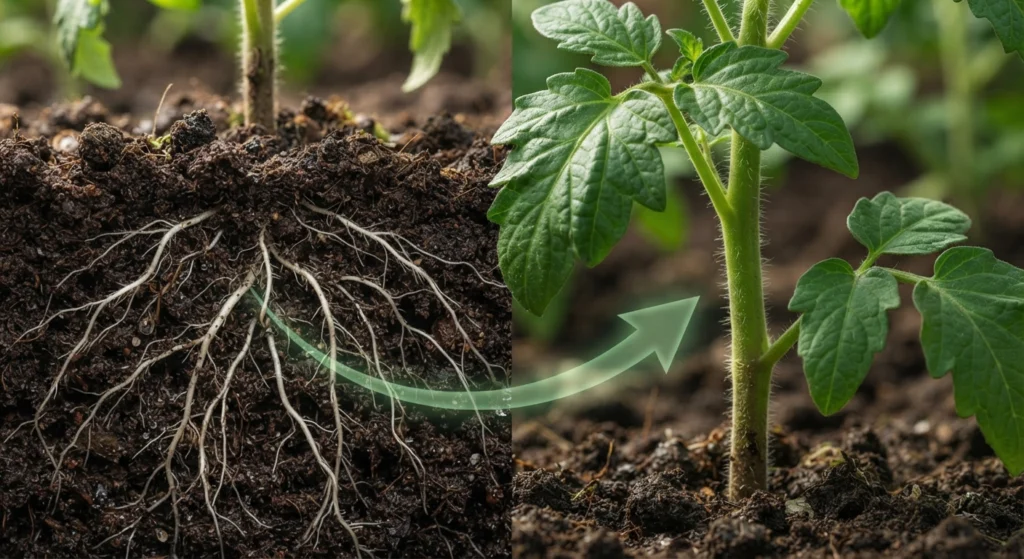
Encourages Productive Tomato Plants
Balanced feeding with fish fertilizer for tomato plants often leads to more flowers, which can translate into a better harvest when combined with good garden care.
Supports Soil Microbial Activity
Fish fertilizer feeds beneficial microbes in the soil, which helps break down organic matter and improves long-term soil health in your garden bed.
Why Liquid Fish Fertilizer Is Convenient for Containers
Liquid fertilizer is easy to mix with water and apply evenly, making it a practical choice for potted plants and container gardens where soil volume is limited.
How to Use Fish Fertilizer for Tomato Plants
Applying fish fertilizer correctly makes a big difference in how well your tomato plants respond.
Read the Fertilizer Label Before Applying
Always follow the instructions on the label. Dilution rates and application frequency vary between brands, including Alaska fish fertilizer and other fish emulsion products.
Dilute Fish Fertilizer Correctly
Most fish fertilizer concentrate needs to be diluted with water, often at a rate of 1 to 2 tablespoons per gallon of water. Using it undiluted can burn plants.
Water Tomato Plants Before Fertilizing
Watering the tomato plants before applying fertilizer helps prevent root shock and allows nutrients to spread evenly through the soil.
Apply Fish Fertilizer Around the Root Zone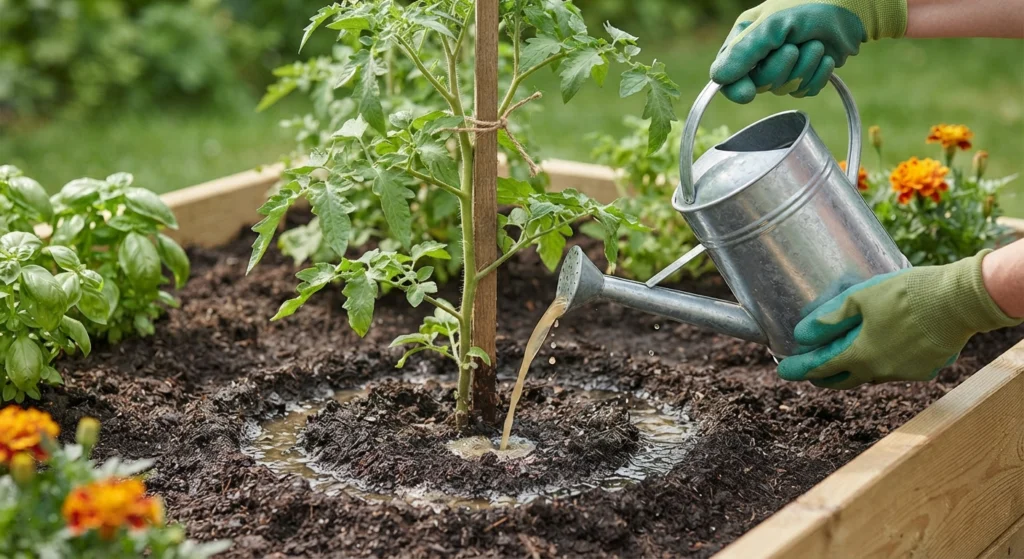
Pour the diluted fish fertilizer around the base of the plant, focusing on the root zone rather than the leaves, unless you’re using it as a foliar spray.
Avoid Pouring Fertilizer Directly on the Stem
Direct contact with the stem can cause irritation. Apply fertilizer a few inches away from the base to protect the plant.
How Much Fish Fertilizer Should You Use?
Getting the dosage right helps tomato plants thrive without risking nutrient burn.
Fish Fertilizer Dosage for Young Tomato Plants
Young tomato seedlings need a lighter dose, often half the recommended strength, to avoid overwhelming their developing root systems.
Fish Fertilizer for Mature Tomato Plants
Mature tomato plants can handle the full recommended dilution, typically 1 to 2 tablespoons per gallon of water, applied every couple of weeks.
Adjusting Fertilizer for Container-Grown Tomatoes
Potted plants may need more frequent but lighter feedings since nutrients wash out of container soil faster than garden beds.
When to Apply Fish Fertilizer to Tomato Plants
Timing plays a big role in how effective fish fertilizer for tomato plants can be.
Feeding Tomatoes During the Seedling Stage
Use a diluted formula sparingly during the seedling stage to support early growth without overwhelming young roots.
Fertilizing After Transplanting
Wait about a week after transplant before fertilizing to let the plant recover from the stress of being moved.
Fish Fertilizer During Vegetative Growth
During vegetative growth, fish fertilizer supports the leafy growth tomato plants need to prepare for flowering.
Feeding Tomatoes Before Flowering
As flowers appear, consider adjusting the NPK ratio to include more phosphorus and potassium alongside fish fertilizer.
Should You Use Fish Fertilizer During Fruit Development?
Yes, though many growers reduce nitrogen and add potassium-rich options during fruit development to support fruit size and flavor.
How Often Should You Fertilize Tomato Plants?
Most gardeners fertilize tomato plants every two to three weeks throughout the growing season, adjusting based on plant response.
Fish Fertilizer NPK: What Tomato Growers Should Know
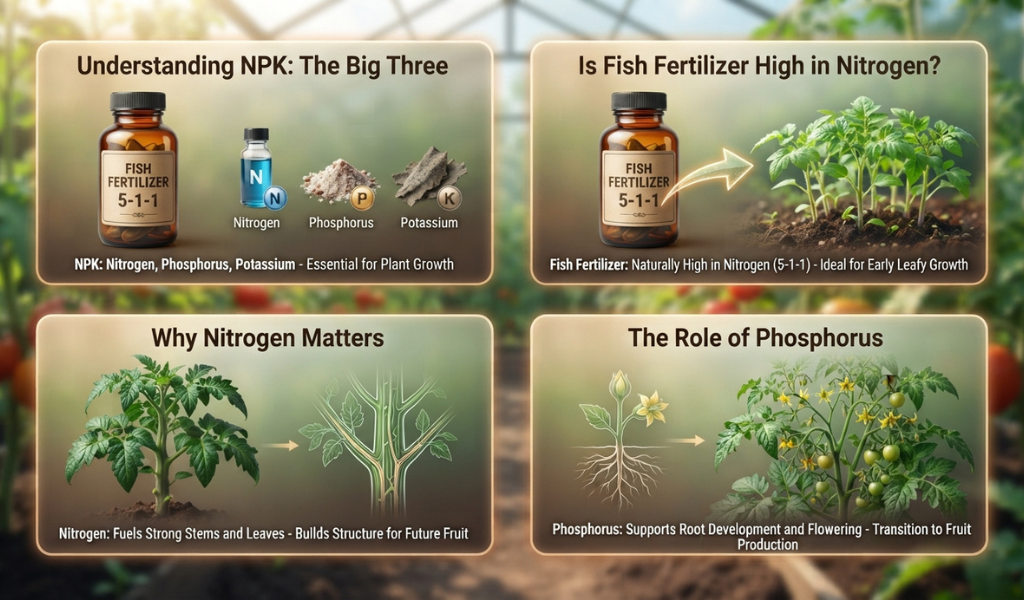 Understanding the NPK ratio helps you use fish fertilizer for tomato plants more effectively.
Understanding Nitrogen, Phosphorus, and Potassium
NPK stands for nitrogen, phosphorus, and potassium, the three essential nutrients that support different stages of plant growth.
Is Fish Fertilizer High in Nitrogen?
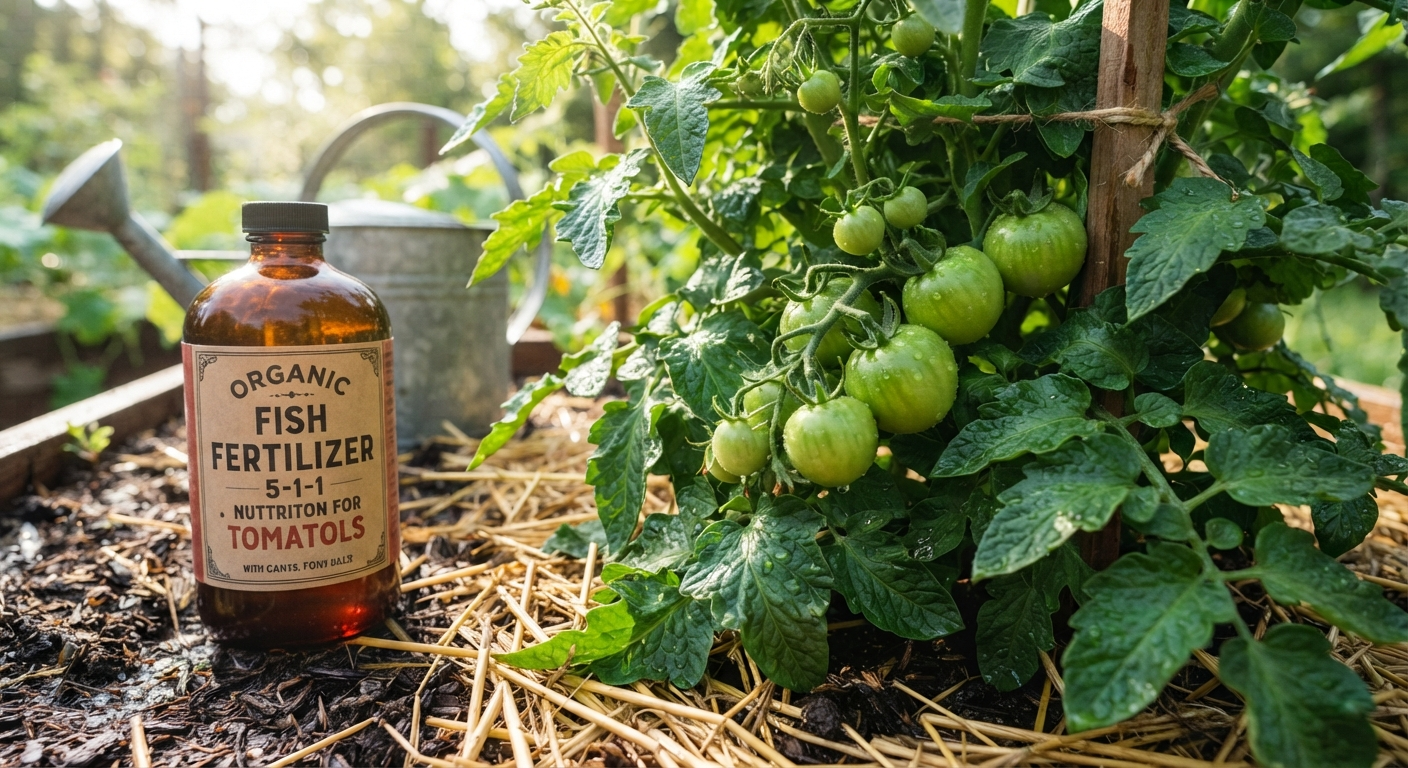
Many fish fertilizers, such as those with a 5-1-1 ratio, are high in nitrogen, making them especially useful for early leafy growth.
Why Nitrogen Matters for Tomato Leaves and Stems
Nitrogen fuels strong stems and leaves, giving tomato plants the structure needed to support future fruit.
The Role of Phosphorus in Tomato Development
Phosphorus supports root development and flowering, helping tomato plants transition from vegetative growth to fruit production.
Why Potassium Becomes Important During Fruiting
Potassium helps regulate water uptake and can help prevent blossom end rot, a common issue during fruit development.
How to Choose an NPK Ratio for Tomatoes
Choose a higher nitrogen ratio like 5-1-1 early on, then shift to balanced or phosphorus-heavy options like vegetable 3-6-6 as flowers appear.
Fish Fertilizer vs Other Tomato Fertilizers
Comparing fish fertilizer for tomato plants to other options helps you decide what fits your garden best.
Fish Fertilizer vs Compost
Compost improves soil structure over time, while fish fertilizer delivers a faster, more concentrated nutrient boost.
Fish Fertilizer vs Fish Emulsion
Fish fertilizer and fish emulsion fertilizer are closely related, though fish emulsion is typically more processed and often has a milder smell.
Fish Fertilizer vs Synthetic Tomato Fertilizer
Synthetic tomato fertilizer delivers nutrients faster but lacks the trace elements and soil benefits that come with a natural fertilizer like fish fertilizer.
Fish Fertilizer vs Liquid Seaweed
Liquid seaweed is rich in trace elements and growth hormones, while fish fertilizer leans more heavily toward nitrogen and phosphorus.
Which Fertilizer Is Better for Container Tomatoes?
Fish fertilizer works well for container tomatoes because it’s easy to dilute and won’t burn plants when used correctly.
Can Fish Fertilizer and Compost Be Used Together?
Yes, many gardeners combine fish fertilizer with compost to get both immediate nutrients and long-term soil improvement.
Common Mistakes When Using Fish Fertilizer for Tomato Plants
Avoiding these mistakes helps you get the most from fish fertilizer for tomato plants.
Applying Too Much Fertilizer
Overdoing it can stunt growth or burn plants. Always follow the recommended dilution rates on the label.
Using Undiluted Fish Fertilizer
Undiluted fish fertilizer is too concentrated and can burn plants, especially young tomato seedlings.
Fertilizing Dry, Stressed Tomato Plants
Applying fertilizer to dry or stressed plants can cause more harm than good. Water first, then fertilize.
Feeding Tomatoes Too Frequently
Fertilizing too often, especially with nitrogen-heavy formulas, can lead to excessive leaf growth at the expense of fruit.
Ignoring the Fertilizer NPK Ratio
Using the wrong NPK ratio at the wrong growth stage can slow flowering and fruit production.
Overfeeding Tomatoes With Nitrogen
Too much nitrogen encourages leafy growth but can reduce flowers and fruit, so balance is key once plants mature.
Fertilizing Without Checking Soil Conditions
Soil that’s already nutrient-rich may not need frequent fertilizing. Check soil conditions before adding more fertilizer.
Applying Fertilizer to the Leaves in Hot Weather
Using fish fertilizer as a foliar spray during hot weather can burn plants. Apply it in the early morning or evening instead.
How to Build a Simple Feeding Routine for Tomatoes
A consistent routine makes fish fertilizer for tomato plants easier to manage.
Start With Healthy Soil
Healthy soil reduces how much fertilizer your tomato plants need overall, so improve soil quality with compost before planting.
Feed Young Plants Lightly
Start seedlings with a diluted formula to avoid overwhelming their delicate root systems.
Increase Feeding as Plants Grow
As tomato plants grow larger, gradually increase the fertilizer strength based on label recommendations.
Adjust Fertilizer During Flowering and Fruiting
Shift toward phosphorus and potassium-rich options as flowers appear and fruit begins to develop.
Watch the Plant Instead of Following a Rigid Schedule
Let your tomato plants guide you. Adjust feeding based on how they look rather than sticking strictly to a calendar.
Signs Your Tomato Plants Need More Nutrients
Recognizing these signs helps you know when to apply fish fertilizer for tomato plants.
Yellowing Older Leaves
Yellowing on older, lower leaves often signals a nitrogen deficiency that fish fertilizer can help correct.
Slow or Weak Growth
Slow growth despite good sunlight and water may mean your tomato plants need more nutrients.
Pale Green Foliage
Pale green leaves instead of deep green foliage can indicate a lack of essential nutrients.
Signs Your Tomato Plants Are Getting Too Much Fertilizer
Too much fish fertilizer for tomato plants can cause its own set of problems.
Leaf Tip Burn
Brown, crispy leaf tips often point to over-fertilization or using fertilizer at too strong a concentration.
Excessive Leaf Growth
Lush, oversized leaves with little flowering often mean too much nitrogen and not enough phosphorus or potassium.
Poor Flower and Fruit Production
Too much fertilizer, especially high nitrogen formulas, can reduce flowering and slow fruit production.
Salt Buildup in Container Soil
Overfertilizing potted plants can lead to salt buildup, which shows up as a white crust on the soil surface.
Fish Fertilizer for Tomato Plants in Containers
Container gardening comes with its own considerations when using fish fertilizer for tomato plants.
Choosing the Right Potting Mix
Use a well-draining potting mix designed for vegetable gardens to support healthy root growth.
Why Drainage Matters When Fertilizing Tomatoes
Good drainage prevents nutrient buildup and helps flush out excess salts from fertilizing.
How Often to Feed Potted Tomato Plants
Potted tomato plants often need feeding every one to two weeks since nutrients leach out faster than in garden beds.
Adjusting Fish Fertilizer for Small Containers
Smaller containers hold less soil, so use lighter, more frequent doses of fish fertilizer to avoid nutrient buildup.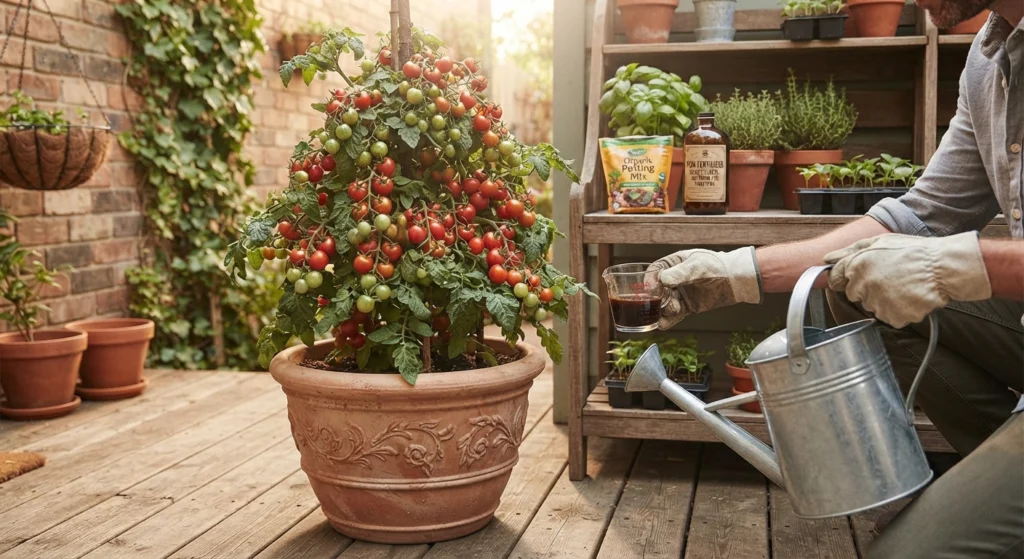
Preventing Nutrient Buildup in Pots
Flush container soil with plain water occasionally to prevent excess salts from accumulating.
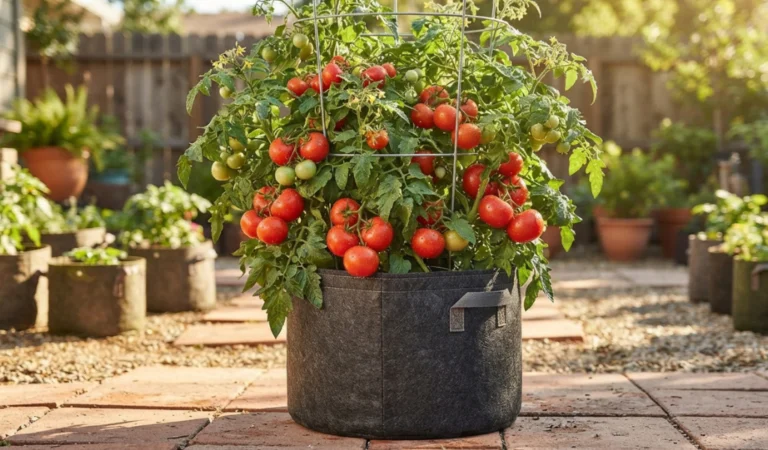
Feeding Tomatoes in Grow Bags
Grow bags drain quickly, so tomato plants in grow bags often benefit from slightly more frequent feeding with diluted fish fertilizer.
How to Get the Best Results From Fish Fertilizer for Tomato Plants
Small adjustments can make a big difference in how well tomato plants respond to fish fertilizer.
Give Tomatoes Enough Sunlight
Tomato plants need at least six to eight hours of sunlight daily to make full use of the nutrients they receive.
Maintain Consistent Soil Moisture
Consistent moisture helps roots absorb nutrients evenly and reduces stress on the plant.
Keep the Root Zone Healthy
Avoid compacting soil around the root zone, since healthy roots absorb fish fertilizer more efficiently.
Mulch Around Tomato Plants
Mulching helps retain moisture and regulate soil temperature, supporting steady nutrient uptake.
Monitor New Growth and Flowering
Watch for new growth and flowering as signs that your feeding routine is working well.
Adjust Feeding Based on Plant Response
If plants show signs of stress or slow growth, adjust the fertilizer strength or frequency accordingly.
Avoid Fertilizing Just Because the Calendar Says So
Base your feeding schedule on how the plant looks and grows, not strictly on a fixed calendar.
Final Thoughts
Fish fertilizer for tomato plants offers a natural, nutrient-rich way to support healthy growth from seedling to harvest. With the right dilution, timing, and NPK balance, this natural fertilizer can help tomato plants develop strong roots, lush foliage, and a more productive harvest. Whether you’re gardening in raised beds, containers, or grow bags, fish fertilizer for tomato plants remains one of the most reliable, gardener-trusted options for feeding your vegetable garden. Start with a light hand, watch how your plants respond, and adjust your feeding routine as the season progresses for the best results.
Frequently Asked Questions
Can I use fish fertilizer on tomato plants?
Yes, fish fertilizer for tomato plants is a safe and effective choice when diluted properly and applied around the root zone rather than directly on the stem.
What is the best fertilizer to give tomatoes?
Many gardeners consider fish fertilizer one of the best fertilizers for tomatoes plants because it provides balanced nutrients and supports both foliage and fruit development.
Which plants don’t like fish fertilizer?
Most vegetables and flowering plants respond well to fish fertilizer, though some sensitive herbs may prefer milder, less concentrated feeding.
When should I start using fish fertilizer?
You can start using a diluted fish fertilizer once tomato seedlings have established a few sets of true leaves, then continue throughout the growing season.
How do I apply fish fertilizer to tomato plants?
Dilute fish fertilizer with water according to the label, then pour it around the root zone, avoiding direct contact with the stem or leaves in hot weather.
How often should I fertilize tomato plants with fish fertilizer?
Most tomato plants benefit from fish fertilizer applications every two to three weeks, adjusted based on plant size and growth stage.
Is fish emulsion the same as fish fertilizer?
Fish emulsion and fish fertilizer are similar, though fish emulsion fertilizer is typically more refined and may have a milder odor when applied to tomato plants.