How to Get Rid of Whiteflies on Pepper Plants: Identification and Organic Control Guide
Whiteflies on Pepper Plants: How to Identify and Get Rid of This Pest
You water your peppers and check the first flowers. Then you brush a leaf and a cloud of tiny white specks lifts into the air. That is the moment most gardeners learn they have whiteflies on pepper plants. These small insects look harmless but they can cause serious damage in a short time. They drain the plant and spread disease and leave a sticky mess behind.
Peppers are an easy target because they have soft and juicy leaves. They also grow in warm and sheltered spots like greenhouses and sunny patios. That is exactly where this pest thrives. If your plants are still tiny seedlings you should also read How to Stop Damping Off in Pepper Seedlings so they start strong before any bug arrives.
In this guide you will learn how to identify and get rid of white flies without harsh chemicals. We will cover the signs to watch for and the life cycle that makes them so hard to stop. Then we move to organic sprays and helpful bugs and ways to prevent a repeat next season.
Recognizing the Signs: Symptoms of a Whitefly Infestation
Whiteflies are tiny and hard to see until the numbers grow. An adult is about the size of a pinhead and has pale wings that look powdery. Despite their name these insects are not true flies. They are closely related to aphids and mealybug and scale. They all feed the same way by sucking sap from the plant.
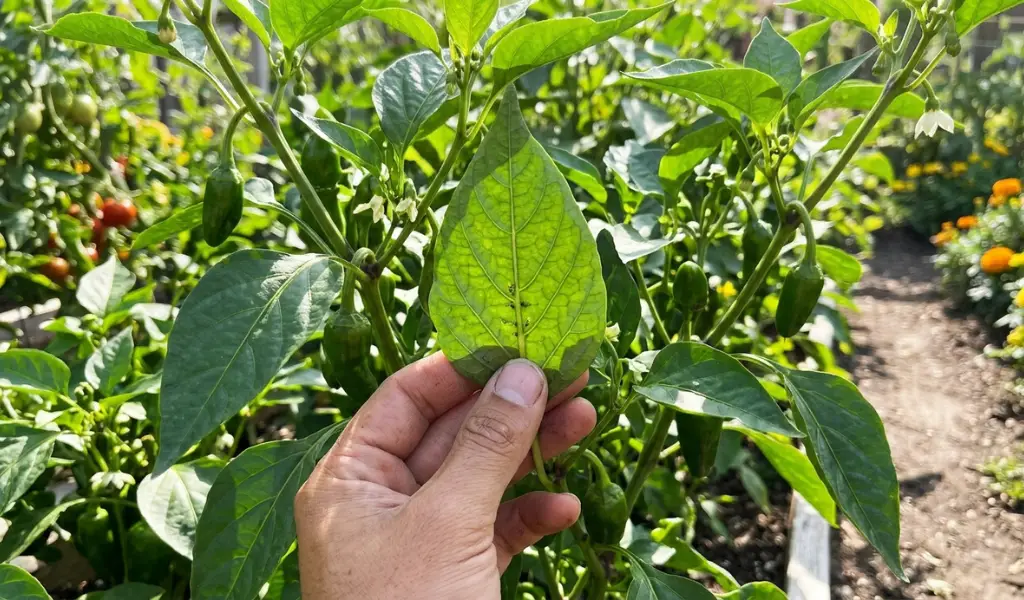
The easiest way to check is to shake a branch gently. Adults will flutter up and settle again within a few seconds. Then look at the underside of leaves. This is where females lay eggs and where the young nymphs hide. A quick inspection each week can save your whole crop.
Yellowing Leaves, Stunted Growth, and Leaf Drop
The first clue on the plant itself is often a leaf that turns pale or yellow. You may see small light dots on the top surface where the insects have been feeding. As more of them feed on plant sap the leaf loses strength. It curls and wilts and may fall off.
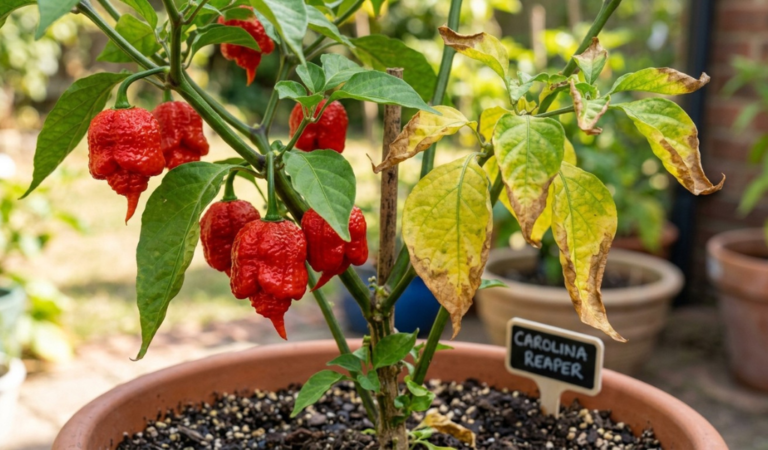
Growth slows down too. New shoots look small and weak and the plant stops putting out fresh leaves. Flowers may drop before they set fruit. Peppers that do form are often smaller and sunburnt because the leaves that should shade them have gone.
Some whitefly types also transmit plant viruses. These can cause twisted leaves and strange patterns that look like a nutrient problem. A friend of mine thought her peppers needed fertilizer and fed them for weeks.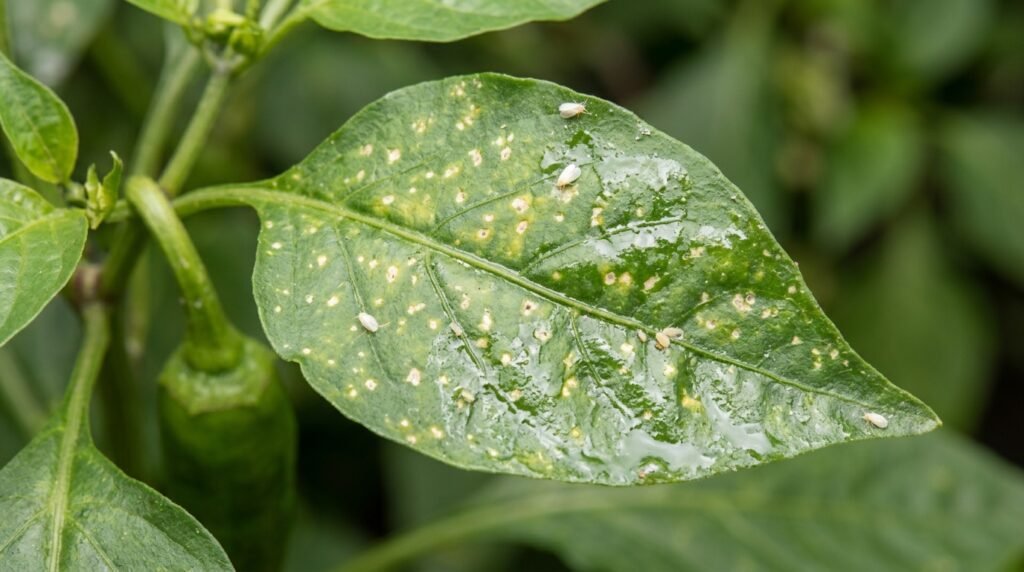 The real cause was a whitefly infestation hiding on the undersides of leaves. The extra feed only made the plants more attractive to the pest.
Honeydew Secretion and Black Sooty Mold
Whiteflies release a sweet and sticky substance called honeydew as they feed. It lands on the leaves below and makes them shiny and tacky. You may notice that your hands feel sticky after you touch the plant. Ants often show up too because they love the sugar.
In time a dark fungus grows on this sticky layer. It is called black sooty mold. It looks like a layer of soot on the leaf and it blocks light. The mold does not attack the plant directly but it reduces how much sunlight the leaf can use. That means weaker growth and fewer peppers. If you wipe a leaf and the black coating comes off you are likely dealing with sooty mold from an infested plant.
Whiteflies vs. Aphids and Thrips
Many gardeners mix up these three pests. Aphids are soft and round and they stay still in clusters on new growth. They come in green or black or other colours and they do not fly much. Thrips are very thin and long and they leave silver streaks on leaves and flowers. Whiteflies are the only ones that fly up in a white puff when you disturb the plant.
Do not confuse them with fungus gnats either. Fungus gnats are dark and sit around the soil of potted plants. They bother the roots of seedlings but they do not feed on leaf sap. Knowing which pest you have helps you pick the right fix.
Understanding the Whitefly Life Cycle
To beat this pest you need to understand its life cycle. Most failed sprays happen because the gardener treats only the adults. The eggs and nymphs sit tight and wait for the spray to wear off.
It starts with eggs. The female lays them in small circles or groups on the underside of young leaves. Each one is tiny and hard to see with the naked eye. They look pale yellow at first and turn brown as they age. A single female can lay a hundred eggs or more during her life.
The eggs hatch in about five to ten days depending on the weather. The first nymph stage is called a crawler. It moves a short distance and then settles on the leaf and sticks its mouth into the plant. After that it stops moving. The later nymphs look like flat and pale scales and they feed non stop. This is the stage that does most of the sap damage.
The last nymph stage is a resting stage often called the pupa. Soon after the adult whitefly pushes out and flies off to find a mate. The whole cycle takes about three to four weeks in warm weather. In a heated greenhouse it never really stops so you may see all stages on the same leaf at the same time.
There are two types gardeners meet most often. The greenhouse whitefly is common on indoor plants and in protected growing spaces. The silverleaf or sweet potato whitefly loves hot outdoor gardens and is the one most linked to plant viruses. The control steps are similar for both.
The key point is that adult sprays and traps alone will not end the problem. You must repeat your treatment every few days so you catch each new group as the eggs hatch. Many successful growers treat once a week for three or four weeks to break the cycle.
Best Organic Control Methods (Neem Oil, Soaps, and Water Blasts)
Start with the gentlest option and move up only if you need to. Organic methods work well when you act early and stay consistent. They also protect the helpful insects in your garden.
Start with a Water Blast
A strong stream of water knocks adults and nymphs off the leaves. Use a hose with a spray nozzle and focus on the undersides of leaves. Do this in the morning so the plants dry before night. Repeat every two or three days. This will not kill every insect but it cuts the population fast and costs nothing. Be careful with young peppers since a hard blast can tear soft leaves.
Insecticidal Soap and Soapy Water
Insecticidal soap kills soft bodied pests on contact. You can buy a ready made spray or mix your own. Add about one teaspoon of mild castile soap to a litre of water. Avoid strong washing up liquid that contains degreasers or bleach because it can burn the leaves. Test a small area first and wait a day.
Spray the plant stems and leaves with extra focus on the underside. The soap has to touch the insect to work. It leaves no lasting effect once it dries so you need to repeat every five to seven days. Do not spray in bright midday sun or in heat above about 90 degrees Fahrenheit because the mix can scorch the foliage.
Neem Oil Spray
Neem oil is a favourite organic pest control tool. It comes from the seeds of the neem tree. It smothers eggs and nymphs and also makes the leaves less tasty for the adults. Mix it with a little soap so it blends with water and follow the label for the right ratio. Shake the bottle often while you spray.
Apply it in the early morning or the evening and cover the underside of every leaf. Repeat every seven days for a few weeks. Skip open flowers while pollinators are active because oils can harm bees if sprayed directly on them.  A neem oil spray works best as a steady routine rather than a one time fix.
Yellow Sticky Traps
Whiteflies are attracted to the yellow colour. Hang yellow sticky traps just above the tops of your plants and check them every few days. They catch flying adults and tell you how bad the problem is. You can make your own by painting a card yellow and coating it with petroleum jelly. Remember that traps won’t eliminate the infestation. They are a monitoring tool and a helper not a full cure. Keep them away from your flowers so you do not catch good insects.
A Word on Chemical Pesticide
A strong insecticide can seem tempting but it often backfires. Whiteflies build resistance fast and the spray also kills the natural predators that would help you. If you ever need a stronger product choose one labelled for peppers and follow the safety rules to the letter. For most home gardens the organic methods above are enough.
Biological Controls: Beneficial Insects and Parasitic Wasps
Nature has its own answer to this pest. Many natural predators and tiny wasps feed on whiteflies all day long. Bringing them in can keep your numbers low with almost no work. This is a great option for greenhouse growers and anyone who wants a long term fix.
The most famous helper is a tiny parasitic wasp called Encarsia formosa. The female lays an egg inside a whitefly nymph. The wasp grows inside and the nymph turns black as it dies. A second wasp called Eretmocerus also does a great job in hot weather. These wasps are harmless to people and pets. You can order them online and they arrive as small cards you hang on your plants.
Other good predators include green lacewing larvae which eat eggs and nymphs in large numbers. A small black lady beetle called Delphastus catalinae is another strong feeder that goes after whitefly eggs. Minute pirate bugs and some small mirid bugs also join in.
Beneficial insects work best when you release them early while the numbers are low. Do not release them right after you spray soap or oil because the residue can harm them. Stick to one method at a time or wait a week between them. A greenhouse grower I know brings in wasps every spring in March and rarely sees an outbreak by summer.
You can also invite wild helpers to your garden. Plant flowers like sweet alyssum and marigold and dill near your peppers. These flowers give nectar and shelter to lacewings and tiny wasps. They also support pollinator insects so the garden benefits twice.
Prevention Strategies for Next Season
Prevention is cheaper and easier than treatment. A few small habits can help you prevent whitefly trouble before it begins.
- Inspect new plants before you bring them home and check the undersides of leaves. Keep them apart from your other plants for two weeks if you can.
- Clear weeds and old plant matter at the end of the season because they can hide eggs and adults over winter.
- Watch out for host plants that attract the pest nearby. Hibiscus and begonia and tomato and eggplant and squash are common ones.
- Use reflective mulch under your plants. The shiny surface confuses flying insects and keeps them away from the leaves.
- Do not over feed with nitrogen. Soft and fast growth is exactly what whiteflies like best.
- In a greenhouse use fine mesh on vents and doors and keep the area clean.
- Rotate your pepper beds and clean pots and trays before you start new seedlings.
Floating row covers can also protect young plants in early summer when whiteflies begin to fly. Remove them once the peppers flower so pollinators can reach the blooms. Check your plants once a week through the season. Catching a few insects early is far easier than fighting a thousand later.
One simple trick is to look at the first yellow sticky trap you hang each spring. If you catch two or three adults in a week you know the pest has arrived. Start your soap or neem routine right away and you will often stop the problem before leaves yellow at all.
Final Thoughts: Protect Your Peppers Before They Pay the Price
Whiteflies on pepper plants can turn a promising crop into a sticky and yellow mess. The good news is that you can win with simple steps. Check the underside of leaves every week and learn the life cycle so you can time your treatment. Use water and soap and neem oil first and add traps for monitoring. Bring in natural predators and plant flowers that attract them. Then build good habits that keep the pest from coming back.
Go out to your garden today and flip over five leaves. If you spot tiny white insects or sticky leaves start your first spray tonight. Your peppers will thank you with healthier plants and a bigger harvest.
Frequently Asked Questions (FAQ)
What causes whiteflies on pepper plants?
They arrive on the wind or on new plants and they love warm and sheltered spots. Weeds and nearby host plants like hibiscus and begonia can also feed them. Too much nitrogen fertilizer makes the leaves extra soft and attractive.
How do I kill whitefly naturally?
Start with a water blast and then use insecticidal soap or neem oil every five to seven days. Add yellow sticky traps to catch adults and release natural predators such as lacewings or the Encarsia wasp for long term control.
Can whiteflies kill a pepper plant?
A heavy infestation can weaken a plant so much that it stops producing fruit and may die. Some whiteflies also spread viruses that harm the crop. Early action keeps most plants safe.
Are whiteflies the same as aphids?
No. They are related and both suck sap but they look different. Aphids are soft and stay in clusters while whiteflies are small and powdery and fly up when you shake the plant.
How often should I spray for whiteflies?
Spray every five to seven days for three to four weeks. This timing matches the life cycle and catches new nymphs as the eggs hatch. Always cover the underside of the leaves.
Does neem oil harm bees and other pollinators?
Neem oil can harm bees if sprayed directly on them. Apply it in the evening or early morning and avoid open flowers. Once it dries it is much safer for visiting insects.
Will yellow sticky traps get rid of whiteflies?
Not on their own. Sticky traps catch adults and help you spot an outbreak early but they will not clear eggs and nymphs. Use them together with sprays or beneficial insects.