Best Companion Plants for Tomatoes and Peppers: Complete Guide
Companion Plants for Tomatoes and Peppers: The Complete Guide
If your tomatoes look stressed by midsummer or your pepper plants keep attracting aphids no matter what you spray, the fix might not be a product at all. It might be what is growing right next to them. Companion plants for tomatoes and peppers can change the whole health of your garden bed, cutting down on pests, improving flavor, and making better use of every inch of soil you have.
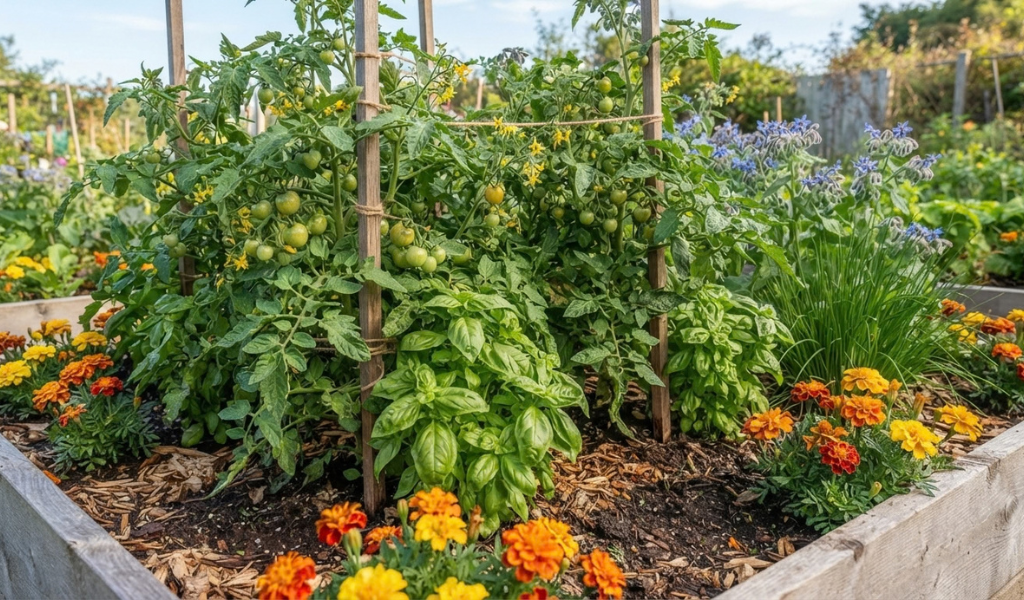
This guide is especially useful if you are working with Small Space Vegetable Gardening, where every square foot needs to earn its place. When garden space is tight, understanding the Life Cycle of the Tomato Plant and picking the right companions for tomatoes and peppers means you are not just filling gaps with random plants, you are actually helping your main crops grow stronger while getting a second harvest out of the same bed. Basil, marigolds, and a handful of other proven partners can do double duty this way, giving you pest control and a usable harvest from the same square foot.
Below we will walk through what companion planting actually does, why tomatoes and peppers benefit so much from it, and exactly which plants work best next to each one. We will also cover what to avoid planting nearby, since a few common garden plants can actually hurt your tomatoes and peppers rather than help them.
Understanding Companion Planting
Companion planting is a gardening technique that involves placing different plants together based on how they help each other grow. Some plant pairings work through scent, where the strong smell of an herb like basil confuses pests searching for their favorite host plant. Others work through the soil, where certain plants pull nutrients that neighboring plants do not need, or in the case of legumes, actually fix nitrogen back into the ground for others to use.
This is not some fringe idea gardeners just made up. Farmers have paired specific plants for generations because the results speak for themselves. A pepper plant surrounded by pest deterring herbs simply deals with fewer problems than one standing alone in bare soil. The idea is not magic, it is about understanding how plants interact above and below ground, then using that to your advantage.
For tomatoes and peppers specifically, both being warm season crops with similar needs, companion planting also solves a practical problem: how to use your garden space wisely when both crops need room, sun, and water at the same time.
Benefits of Companion Planting for Tomatoes and Peppers
The benefits of companion planting go beyond just looking nice in the garden bed. Pest control is the biggest one. Aromatic herbs like basil, along with flowers like marigolds, release scents that make it harder for pests to locate your tomato plants by smell, which is how many insects find their targets in the first place. This alone can cut down on common troublemakers like aphids, whiteflies, and flea beetles.
Companion plants also attract beneficial insects like ladybugs and hoverflies, which prey on the very pests that damage tomatoes and peppers. A garden with a mix of flowering companions tends to have a more balanced ecosystem, where predator insects keep pest populations in check naturally instead of you needing to step in with sprays.
Soil health improves too. Plants like chives and beans interact with the soil in ways that support neighboring roots, whether through fixing nitrogen or simply not competing for the same nutrients tomatoes and peppers need most. Some companions also act as a living mulch, helping to retain soil moisture and keeping weeds down around the base of your main crops.
Finally, many gardeners report that certain companions actually improve the flavor of tomatoes. Basil in particular has a long standing reputation for this, and whether it is the shared growing conditions or something in the plant chemistry, the pairing has stuck around in gardens for good reason.
Best Companion Plants for Tomatoes
Basil
Basil is the classic companion plant for tomatoes, and it earns that reputation. The scent of basil confuses pests like tomato hornworms and aphids, making it harder for them to zero in on your tomato plants. Basil also enjoys the same sun and water conditions as tomatoes, so the pairing makes practical sense in terms of care, not just pest control. Many gardeners plant basil in the same bed or even the same container as their tomatoes, and beyond the garden benefits, having fresh basil right next to ripening tomatoes makes harvest time a lot more rewarding in the kitchen.
Marigolds
Marigolds deter nematodes, tiny soil dwelling pests that attack tomato roots and weaken the whole plant from below ground where you cannot see the damage happening. Beyond nematodes, marigolds release a scent that many garden pests find unpleasant, adding another layer of protection. They are also excellent at attracting pollinators and beneficial insects, thanks to their bright blooms, which means more bees visiting your tomato flowers and better fruit set overall.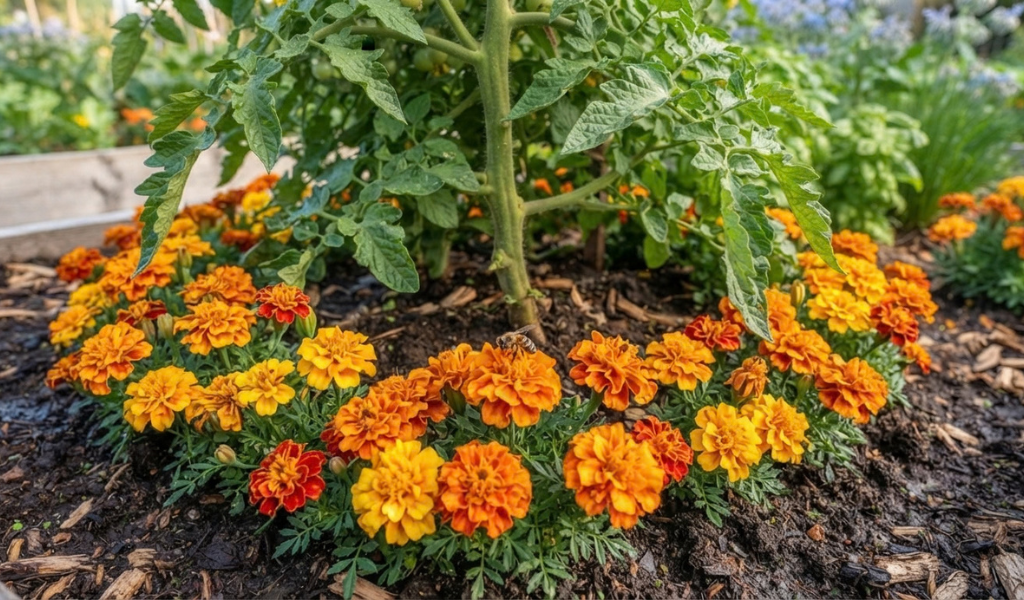
Borage
Borage might be less familiar than basil or marigolds, but it deserves more attention from tomato growers. This herb attracts pollinators and beneficial insects that prey on tomato hornworms, giving you natural pest control without any extra work. Borage is also known to improve the growth of tomato plants nearby, and some gardeners swear it improves flavor as well. Its blue star shaped flowers are edible too, making it a nice addition to salads while it works quietly in the garden bed.
Best Companion Plants for Peppers
Basil
Just as it works for tomatoes, basil is one of the best companion plants for peppers too. The same pest confusing scent that protects tomato plants works for peppers, helping repel aphids and other common pests that target pepper plants. Basil and peppers also share similar water and sun needs, which makes them easy to grow side by side without one crowding out the other’s care requirements.
Oregano
Oregano is a low growing, bushy herb that works well as a living ground cover around pepper plants. It helps retain soil moisture and can suppress weeds simply by filling in space that weeds would otherwise take over. Oregano is also known to attract beneficial insects that help control pests around your peppers, and like basil, it doubles as a useful kitchen herb once it is established.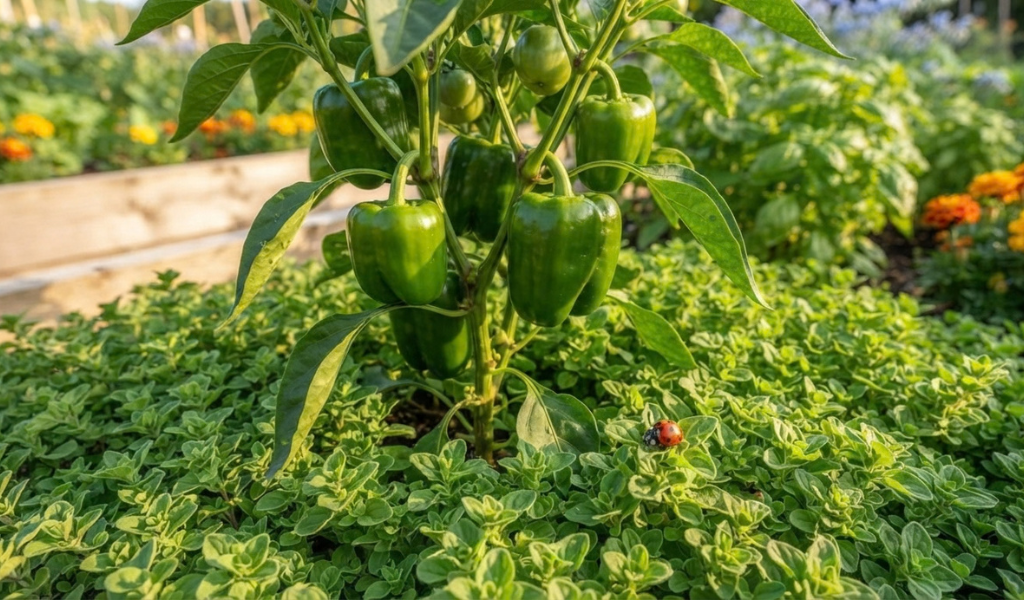
Marigolds
Marigolds work just as well next to peppers as they do next to tomatoes. They deter nematodes and other harmful soil pests, and their bright flowers pull in pollinators that help peppers set more fruit. Since pepper plants can sometimes struggle with poor fruit set in cooler or shadier spots, having marigolds nearby to attract extra pollinator activity can genuinely boost your harvest.
Companion Plants Suitable for Both Crops
Several plants work well planted with tomatoes and peppers at the same time, which is especially handy in a small garden bed where both crops are growing close together. Chives can help deter aphids and other pests thanks to their oniony scent, and their compact growth habit means they do not compete much for space or light.
Nasturtiums act almost like a decoy, drawing aphids toward themselves and away from your tomatoes and peppers. Some gardeners consider this a sacrificial planting strategy, letting nasturtiums take the pest pressure while the main crops stay cleaner. Nasturtium flowers are edible too, adding a peppery bite to salads.
Parsley and dill both attract beneficial insects, including the kind that prey on aphids and other common garden pests. Dill in particular draws in predatory wasps and ladybugs, though it should be kept a bit separate from peppers as it matures, since a fully grown dill plant can shade out shorter neighbors.
Bush beans are another solid choice for both crops. As a legume, beans fix nitrogen in the soil, which benefits the heavy feeding tomatoes and peppers growing nearby. Just give beans their own space so their roots and foliage do not compete too directly with your main crops for light and root room.
Plants to Avoid Near Tomatoes and Peppers
Not every plant pairing works out well, and knowing what to avoid planting is just as important as knowing what to plant. Fennel is one of the most commonly warned against companions. It releases compounds into the soil that can stunt the growth of nearby plants, including tomatoes and peppers, so it is best grown well away from your main vegetable beds.
Brassicas like cabbage, broccoli, and cauliflower are generally not recommended near tomatoes and peppers either. These plants tend to compete heavily for nutrients and can also share some of the same pest problems, meaning you double up on risk instead of spreading it out.
Corn is another plant to avoid pairing closely with tomatoes, mainly because both attract the same pest, the corn earworm, which is essentially the same insect as the tomato fruitworm. Planting them side by side can make it easier for this pest to move between crops and cause more damage overall.
It is also worth remembering that potatoes belong to the nightshade family, just like tomatoes and peppers. Planting all three close together increases the risk of shared soil borne diseases and pests, since they are all vulnerable to similar problems. Keeping nightshade family plants rotated and spaced apart in the garden helps avoid this buildup of shared issues over time.
Garden Layout and Plant Spacing
Good companion planting only works if you also get the spacing right. Tomatoes need enough room for airflow around their foliage, since crowded plants are more prone to fungal issues like blight. A general rule is to leave at least two feet between tomato plants, with companions like basil or marigolds tucked into the gaps rather than crammed directly against the stem.
Peppers can be planted a bit closer together, usually around 18 inches apart, but they still benefit from having low growing companions like oregano or chives nearby rather than tall plants that would block their sunlight. When space is tight, think in layers, tall tomatoes in the back or center of a bed, medium height peppers around them, and low growing herbs and flowers filling the edges and gaps.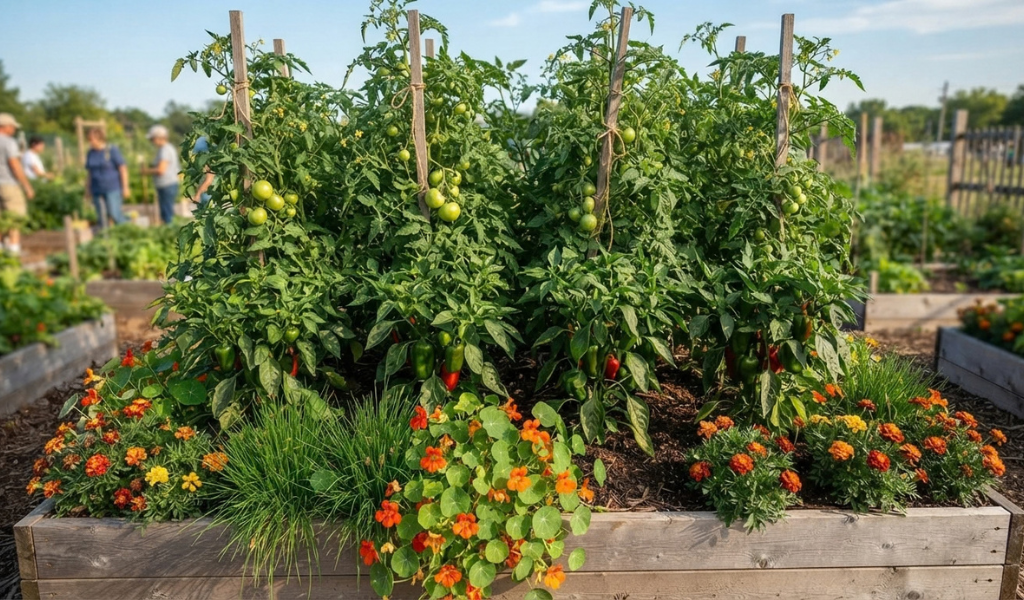
In raised beds or small garden plots, container companion planting is another option worth considering. A large container can hold one tomato plant with basil and marigolds planted around its base, giving you the same pest control benefits in a fraction of the space a traditional row garden would need.
Rotating where you plant tomatoes, peppers, and their companions each year also helps keep soil healthy and reduces the buildup of pests and diseases that can settle into one spot over multiple growing seasons. Even in a small garden, alternating bed sections year to year makes a noticeable difference over time.
Final Thoughts
Choosing the right companion plants for tomatoes and peppers is one of the simplest ways to improve your garden without spending extra money or time on pest control products. Basil, marigolds, borage, and a handful of other proven partners work quietly in the background, repelling pests, attracting pollinators, and even improving the health and productivity of your garden as a whole.
Start small if you are new to this. Try tucking a few basil plants and marigolds around your existing tomatoes and peppers this season, and pay attention to how the plants respond. Once you see the difference firsthand, planning your garden layout around good companion pairings will start to feel like second nature.
Frequently Asked Questions
Can I plant basil directly next to both tomatoes and peppers?
Yes, basil works well with both crops since they share similar sun and water needs. Planting basil between or around tomatoes and peppers helps repel pests while giving you a useful herb harvest too.
How many marigolds should I plant per tomato or pepper plant?
One or two marigold plants near each tomato or pepper is usually enough to help deter nematodes and attract pollinators, without taking up too much extra garden space.
Is it bad to plant tomatoes and peppers next to each other?
No, tomatoes and peppers actually grow well together since they belong to the same plant family and have similar care needs. Just give each enough space for airflow and root room.
What is the best companion plant for pest control specifically?
Basil and marigolds are usually the top picks for pest control, since both repel common pests like aphids while also attracting beneficial insects that prey on garden troublemakers.
Can companion planting really improve the taste of tomatoes?
Many gardeners report that basil planted near tomatoes improves their flavor, though the science behind it is still debated. At minimum, the shared growing conditions tend to benefit both plants.
Why should I avoid planting fennel near my vegetable garden?
Fennel releases compounds into the soil that can stunt the growth of nearby plants, including tomatoes and peppers, so it is best kept in a separate area of the garden.
How much space do I need for companion planting in a small garden?
Even a small raised bed or container garden can support companion planting. Layer tall plants like tomatoes with shorter companions like basil, chives, or marigolds to make the most of limited space.