Homemade Tomato Fertilizer: Easy Homemade Fertilizer Options for Gardeners
Homemade Tomato Fertilizer: Complete Homemade Fertilizer Guide for Healthy Plants
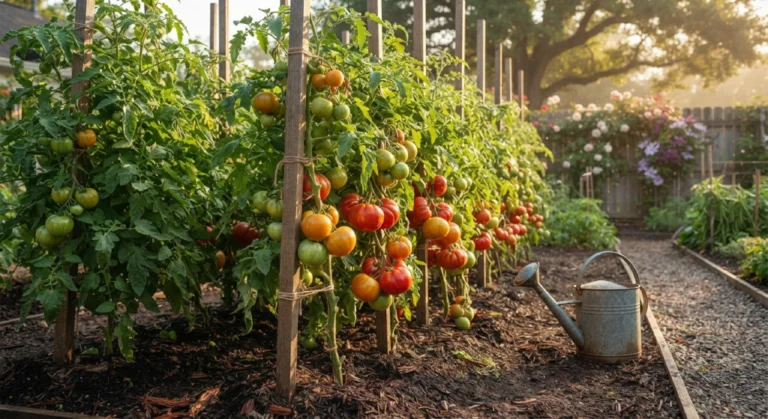
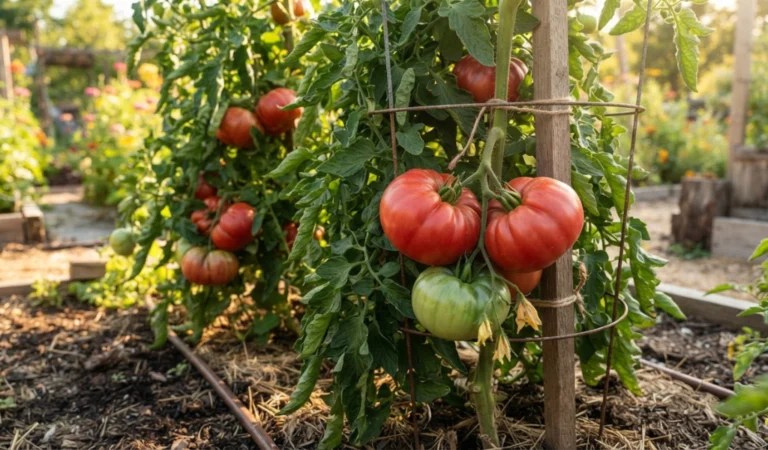
If you have ever bitten into a store-bought tomato and wondered why it tastes like watery cardboard, the answer usually comes down to what the plant was fed. A homemade tomato fertilizer can turn a so-so tomato patch into the kind of garden that neighbors stop and ask about. You do not need a shelf full of chemical bottles or a degree in soil science to get there. Most of what your tomato plants crave is probably already sitting in your kitchen, your yard, or your recycling bin.
This guide walks through everything you need to know about making and using your own tomato fertilizer at home. We will cover the nutrients tomatoes actually need, which household ingredients work best, how and when to apply them, and the mistakes that trip up even experienced gardeners. By the end, you will have a practical, repeatable feeding routine that keeps your plants green, sturdy, and loaded with fruit.
Why Make Homemade Fertilizer for Tomato Plants?
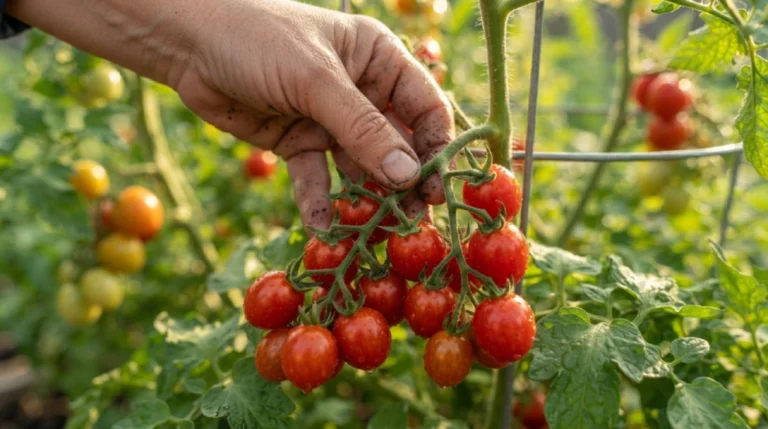
Tomatoes are heavy feeders. Unlike herbs or lettuce that can coast along on average soil, tomato plants pull a lot of nutrients out of the ground to support their rapid growth, thick stems, and heavy fruit clusters. If the soil runs short, you will see it quickly: pale leaves, weak stems, blossoms that drop before they set fruit, or tomatoes that stay small no matter how much you water.
Making your own fertilizer at home solves this problem without the downsides of commercial products. Store-bought fertilizers are often synthetic, meaning the nutrients are delivered in a fast, concentrated burst rather than released gradually. That can lead to a quick green flush of leaves followed by a crash, or worse, chemical burn on the roots if you apply a bit too much. Homemade options tend to release nutrients slowly, feeding the soil biology as well as the plant, which builds healthier growing conditions over time.
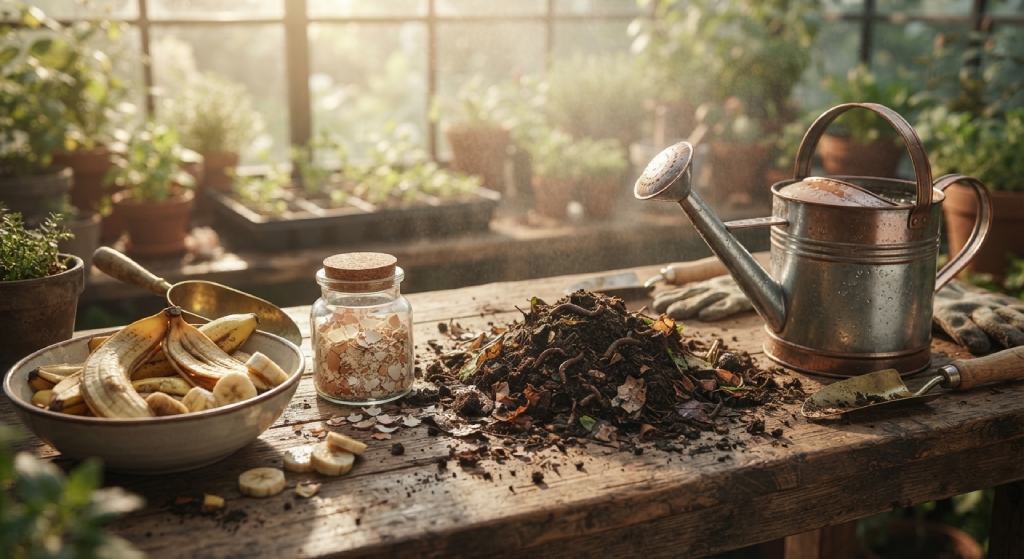
There is also the cost factor. A bag of banana peels, crushed eggshells, and used coffee grounds costs nothing, since you were probably throwing those items away anyway. Composting kitchen scraps and garden waste into plant food is one of the simplest ways to reduce household waste while improving your garden at the same time.
Finally, homemade fertilizer gives you control. You know exactly what went into it, with no fillers, no synthetic dyes, and no guesswork about hidden ingredients. For anyone growing tomatoes to eat, that peace of mind matters.
What Nutrients Do Tomato Plants Need?
Before mixing anything in a bucket, it helps to understand what tomato plants are actually looking for. Three nutrients matter most, and each plays a different role in the plant’s life cycle.
Nitrogen
Nitrogen fuels leafy growth. It is the nutrient responsible for those deep green leaves and strong early stems. Tomato seedlings and young plants need a steady supply of nitrogen to build the foliage that will later power photosynthesis and fruit production.
That said, nitrogen is a bit of a double-edged sword. Too much of it, especially later in the season, pushes the plant to grow leaves and vines at the expense of flowers and fruit. Gardeners sometimes call this “all vine, no tomato,” and it is one of the most common feeding mistakes. The trick is giving plants plenty of nitrogen early on, then easing back once flowering starts.
Phosphorus
Phosphorus is the nutrient tied to root development and flowering. A plant with a strong root system can pull in water and nutrients more efficiently, which shows up later as better fruit set. Phosphorus also supports the energy transfer inside the plant that triggers blooming, so a shortage often shows up as few or no flowers even on an otherwise healthy-looking plant.
Bone meal and rock phosphate are classic slow-release sources, but you can also get phosphorus from things like crushed eggshells and certain composted materials, which we will cover shortly.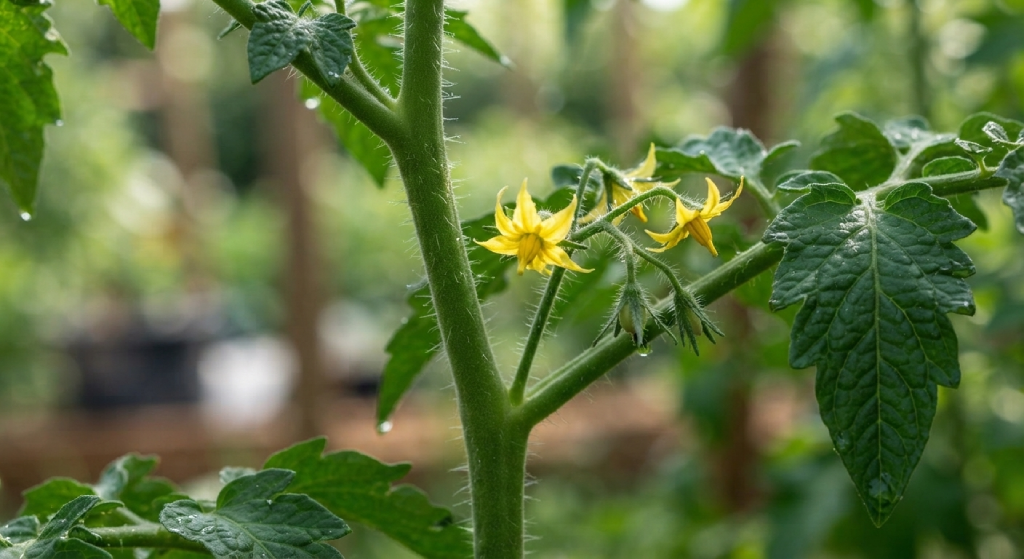
Potassium
Potassium, sometimes labeled as potash on fertilizer packaging, supports overall plant vigor and plays a major role in fruit quality. It helps regulate water movement within the plant, strengthens cell walls, and improves resistance to disease and temperature stress. Tomato plants low on potassium often develop yellowing along the leaf edges and produce fruit that ripens unevenly or has soft, mushy spots.
Banana peels, wood ash, and certain seaweed extracts are rich, easy-to-source potassium options for a homemade tomato fertilizer routine.
Homemade Fertilizer Ingredients You Can Use
Once you understand the nitrogen, phosphorus, and potassium balance tomatoes need, building a feeding routine from household items becomes much easier. Here are the most reliable ingredients gardeners turn to.
Compost
Compost is the backbone of any organic tomato feeding plan. It is not a single-nutrient fix but a balanced, slow-release source of everything the plant needs, plus it improves soil structure, water retention, and the population of beneficial microbes in the root zone.
A well-made compost pile using kitchen scraps, dried leaves, grass clippings, and a bit of garden soil breaks down into a dark, crumbly material that smells earthy rather than sour. Mixing a few inches of finished compost into the planting hole, and then top-dressing around the base of the plant every few weeks, gives tomatoes a steady nutrient supply throughout the season. If you do not have a compost bin yet, even a simple pile in a corner of the yard, turned occasionally, will produce usable compost within a few months.
Eggshells
Eggshells are mostly calcium carbonate, and calcium is critical for preventing blossom end rot, that frustrating black, leathery patch that shows up on the bottom of otherwise perfect tomatoes. Crushed eggshells break down slowly, releasing calcium over time as they decompose in the soil.
To use them, rinse the shells to remove any egg residue, let them dry out, then crush them into small pieces or grind them into a powder using a blender or mortar and pestle. 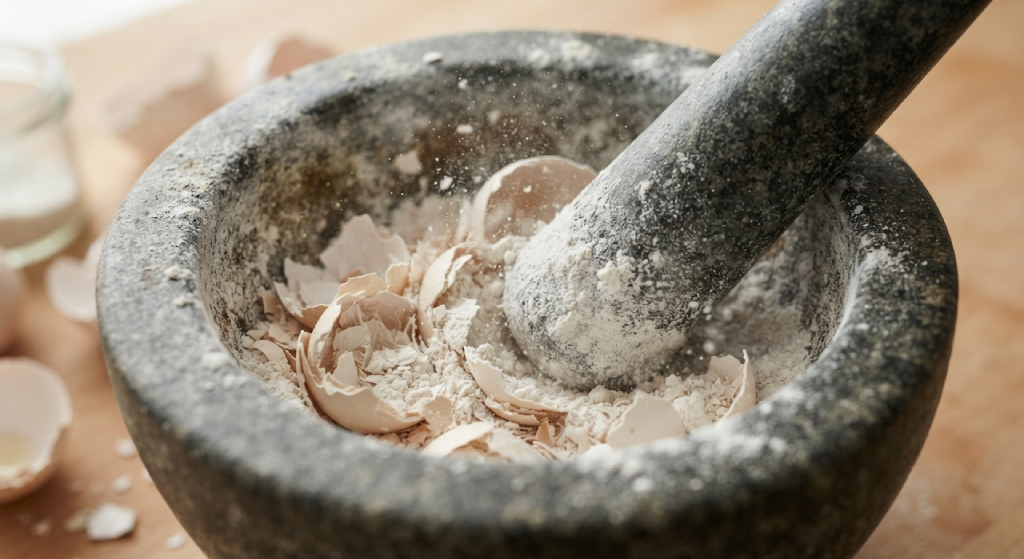 The finer the pieces, the faster they break down and become available to the plant. Work crushed shells into the soil at planting time, or sprinkle them around established plants and lightly work them into the top layer of soil.
Other Organic Materials
Beyond compost and eggshells, several other kitchen and garden items make excellent additions to a homemade tomato fertilizer mix.
Banana peels are a great source of potassium and can be chopped and buried a few inches deep near the base of the plant, or dried and ground into a powder for easier mixing. Used coffee grounds add a mild dose of nitrogen and help improve soil texture, though they should be worked into the soil rather than left in a thick layer on top, which can crust over and block water. Epsom salt, while not organic in the traditional sense, provides magnesium and sulfur, both of which support chlorophyll production and overall plant health. Diluted in water and applied as a soil drench, it is a quick fix for plants showing yellowing between the leaf veins.
Fish emulsion, made from processed fish byproducts, is another popular homemade or store-bought option that delivers a fast, balanced dose of nitrogen and trace minerals. It has a strong smell, so it is best used outdoors and watered in well. Grass clippings, as long as they have not been treated with herbicides, can be dried and used as mulch that slowly releases nitrogen as it decomposes.
How to Apply Homemade Fertilizer
Knowing what to use is only half the equation. How you apply your homemade tomato fertilizer matters just as much for getting good results.
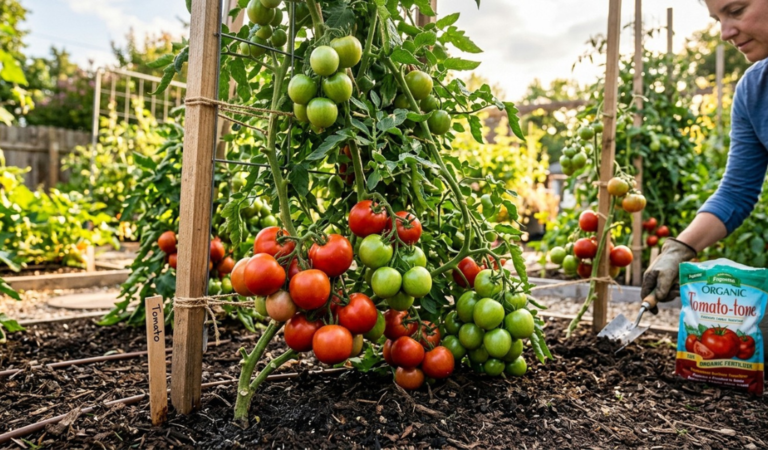
For solid materials like compost, crushed eggshells, or chopped banana peels, the general approach is to work them into the soil around the base of the plant rather than leaving them sitting on top. This gets the nutrients closer to the root zone and reduces the chance of attracting pests. A shallow trench a few inches from the stem, filled with your chosen material and then covered with soil, works well for most tomato plants.
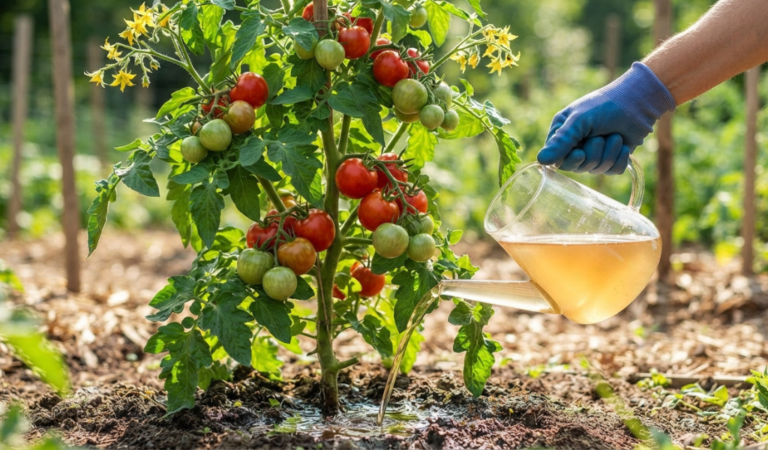
Liquid fertilizers, such as compost tea, diluted fish emulsion, or an Epsom salt solution, should be applied as a soil drench around the base of the plant rather than poured directly onto the stem or leaves. Watering the soil first before applying liquid fertilizer helps prevent root burn, since dry soil can absorb nutrients too quickly and in too concentrated a form.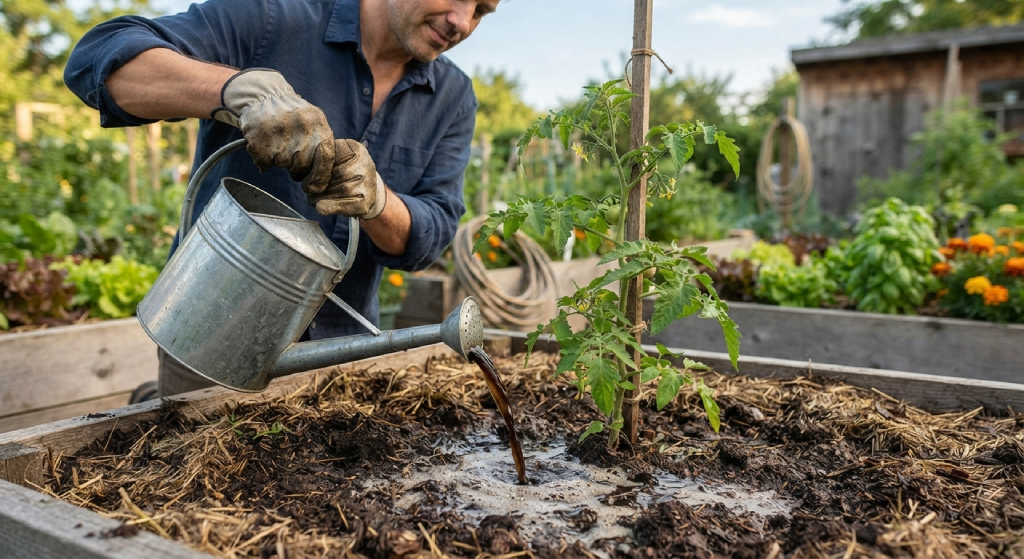
Morning is generally the best time to fertilize, giving the plant a full day to take up nutrients before temperatures drop in the evening. Avoid fertilizing during the hottest part of the day, especially in summer, since heat stress combined with a feeding can shock the plant.
How Often to Apply Homemade Fertilizer
Overfeeding is just as harmful as underfeeding, so timing matters. As a general rule, working compost into the soil at planting time gives young tomato plants a solid nutritional base. After that, a light top-dressing of compost or a diluted liquid feed every three to four weeks through the growing season keeps nutrient levels steady without overwhelming the plant.
Fast-acting liquid feeds like fish emulsion or compost tea can be used more frequently, roughly every two weeks, since they are diluted and release nutrients quickly compared to slower solid amendments. Slow-release materials like crushed eggshells or bone meal only need to be applied once or twice a season, since they break down gradually over many weeks.
Pay attention to what the plant is telling you. Vigorous, deep green growth with plenty of flowers usually means the feeding schedule is working. Pale leaves or stalled growth suggest it is time for another round, while overly leafy plants with few flowers may mean it is time to cut back on nitrogen-heavy inputs.
Compost vs. Homemade Liquid Fertilizer
Gardeners often wonder whether they should focus on compost or lean toward liquid feeds, and the honest answer is that both have a place in a healthy tomato garden.
Compost works slowly. It builds soil health over months and years, feeding not just the plant but the entire ecosystem of microbes, fungi, and earthworms that keep soil fertile. Think of compost as the foundation, the long-term investment that makes everything else work better.
Liquid fertilizers, on the other hand, act fast. A compost tea or diluted fish emulsion drench delivers nutrients directly to the root zone within days, which is useful when a plant shows signs of deficiency and needs a quick boost. Liquid feeds are also easier to dose precisely, since you can dilute them to whatever strength suits your plant’s current stage of growth.
The best approach usually combines both. Use compost as the steady, season-long base, then bring in liquid feeds when plants need an extra push, particularly during flowering and early fruit development when nutrient demand spikes.
Fertilizing Seedlings, Mature Tomato Plants, During Flowering and Fruiting
Tomato plants have different nutritional needs depending on their stage of growth, and adjusting your homemade fertilizer routine accordingly makes a noticeable difference in yield.
Seedlings need very little feeding at first. Their tiny root systems can be easily overwhelmed by concentrated fertilizer, so it is best to wait until the first true leaves appear before offering anything beyond a light, well-diluted compost tea. Overfeeding at this stage is a common reason seedlings stretch out and become leggy.
Once plants are established and actively growing, usually a few weeks after transplanting, they can handle regular feeding. This is the stage where nitrogen-rich additions like compost, diluted fish emulsion, or worked-in coffee grounds help build strong stems and healthy foliage.
When flowering begins, shift the focus toward phosphorus and potassium rather than nitrogen. This is where crushed eggshells, banana peel additions, and wood ash earn their keep, supporting flower formation and helping blossoms turn into fruit instead of dropping off. A plant that gets too much nitrogen during flowering often produces lush green growth but disappointing fruit set.
During fruiting, potassium becomes especially important for fruit quality and disease resistance. Continuing with banana peel feeds, diluted Epsom salt drenches for magnesium, and steady watering all support the plant as it puts energy into ripening tomatoes rather than growing new leaves.
Common Fertilizer Mistakes to Avoid
Even well-intentioned gardeners run into trouble with homemade fertilizer, usually from a handful of predictable mistakes.
Using fresh, unfinished compost is one of the biggest culprits. Compost that has not fully broken down can actually rob nitrogen from the soil as it continues decomposing, and it may contain pathogens or weed seeds that finished compost would have killed off through heat. Always let compost cure fully before applying it around tomato plants.
Another common error is applying too much of a single nutrient, particularly nitrogen. Gardeners eager for a lush, green plant sometimes overdo it with nitrogen-heavy inputs like coffee grounds or grass clippings, resulting in a bushy plant that produces very little fruit. Balance is more important than volume.
Skipping calcium is another frequent oversight. Blossom end rot is often blamed on watering problems, and inconsistent watering does play a role, but a lack of available calcium, easily solved with crushed eggshells worked into the soil early in the season, is just as often the real cause.
Fertilizer Burn and Overfertilization
Fertilizer burn happens when nutrients are applied in too concentrated a form, drawing moisture out of the plant’s roots rather than feeding them. This is more common with liquid feeds that have not been diluted enough, or with dry amendments applied directly against the stem instead of worked into surrounding soil.
Signs of fertilizer burn include browning or crispy leaf edges, wilting despite adequate soil moisture, and stunted growth shortly after a feeding. If you suspect burn, flush the soil thoroughly with plain water to dilute the concentrated nutrients and give the plant a break from any further feeding for a couple of weeks.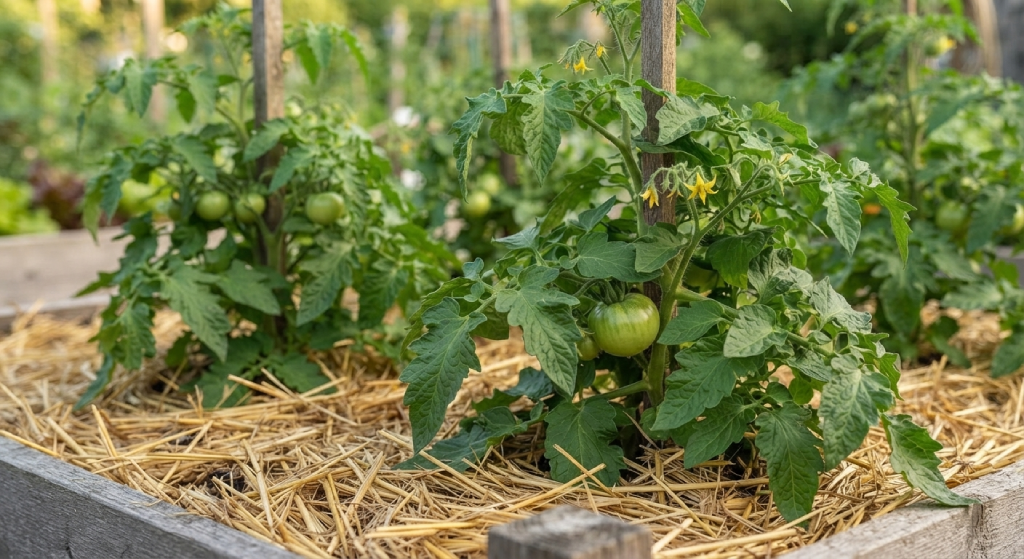
Overfertilization, even without outright burn, can also throw off the plant’s natural growth rhythm, leading to the leafy, fruit-poor plants mentioned earlier. When in doubt, it is almost always better to underfeed slightly and watch the plant’s response than to pile on more fertilizer than needed.
Tips for Healthier Tomato Plants
A good feeding routine works best alongside a few supporting habits. Consistent watering matters just as much as fertilizer, since irregular moisture is a major trigger for blossom end rot and cracked fruit, regardless of how well fed the plant is. Aim for deep, even watering rather than frequent shallow sprinkles.
Mulching around the base of tomato plants with straw, dried grass clippings, or shredded leaves helps retain soil moisture, suppresses weeds that compete for nutrients, and slowly adds organic matter as it breaks down.
Rotating where you plant tomatoes each year, rather than using the same spot repeatedly, helps prevent the buildup of soil-borne diseases and nutrient depletion specific to tomato plants. Companion planting with basil, marigolds, or borage can also support healthier growth by deterring certain pests and, in some cases, improving flavor.
Finally, keep an eye on your plants throughout the season rather than sticking rigidly to a fixed schedule. Soil, weather, and individual plant variety all affect how quickly nutrients get used up, so the best gardeners adjust their homemade tomato fertilizer routine based on what they actually see growing in front of them.
Final Thoughts
Growing great tomatoes does not require an expensive bag of synthetic fertilizer or a complicated feeding chart. With compost as your foundation and simple additions like crushed eggshells, banana peels, and diluted liquid feeds layered in at the right stages, you can give your plants everything they need using materials you likely already have at home. Pay attention to how your plants respond, adjust as you go, and you will end up with healthier vines and a much better tomato harvest by the end of the season.
If you have not started a compost pile yet, that is the best first step. Save your kitchen scraps, gather some dried leaves, and start building the foundation for next season’s tomato feeding routine today.
Frequently Asked Questions
Can I use only eggshells as fertilizer for tomato plants?
Eggshells provide calcium, which helps prevent blossom end rot, but they do not supply enough nitrogen, phosphorus, or potassium on their own to fully support a tomato plant. They work best as part of a broader feeding routine that includes compost or other nutrient sources.
How long does homemade compost take before it is ready to use?
A properly maintained compost pile, turned every couple of weeks and kept moderately moist, usually takes two to four months to fully break down. You will know it is ready when it looks dark, crumbly, and smells like fresh earth rather than rotting food.
Is coffee ground fertilizer safe for tomato plants?
Yes, used coffee grounds are safe in moderate amounts and add a mild dose of nitrogen along with organic matter. Work them into the soil rather than piling them on top, and avoid using large quantities at once, since too much can affect soil pH over time.
Why are my tomato plants leafy but not producing much fruit?
This is usually a sign of too much nitrogen relative to phosphorus and potassium. Cut back on nitrogen-heavy inputs like coffee grounds or fresh grass clippings, and shift toward eggshells, banana peels, or a phosphorus-rich amendment to encourage flowering and fruit set.
Can homemade fertilizer cause fertilizer burn?
Yes, especially concentrated liquid feeds like undiluted fish emulsion or strong compost tea. Always dilute liquid fertilizers before applying and water the soil beforehand to reduce the risk of burning the roots.
How often should I fertilize tomato plants during the growing season?
A general guideline is a light feeding every three to four weeks for solid amendments like compost, and every two weeks for diluted liquid feeds. Adjust based on how the plants look, since pale or slow growth may call for more frequent feeding.
What is the best homemade fertilizer for tomatoes during flowering?
During flowering, shift focus toward phosphorus and potassium rather than nitrogen. Crushed eggshells, banana peel additions, and diluted Epsom salt drenches support strong flower formation and help blossoms develop into healthy fruit.