Tomato Fertilizer NPK Ratio for Seedlings, Flowering, and Fruiting
Tomato Fertilizer NPK Ratio: Complete Guide for Healthy Plants
If your tomato plants are looking pale, dropping flowers, or growing tall but producing barely any fruit, the problem often comes down to one thing: the tomato fertilizer NPK ratio you are using. Getting this number right is one of the simplest ways to turn a so-so harvest into a season full of juicy, red tomatoes hanging heavy on the vine.
Most gardeners buy a bag of fertilizer, glance at the three numbers on the front, and hope for the best. But those numbers actually tell a story about what your plant needs at each stage of its life. Once you understand how to read them and apply them at the right time, feeding your tomatoes stops being guesswork and starts being a science you can control.
In this guide, we will break down what NPK really means, why the ratio matters so much for tomatoes specifically, and how to adjust feeding as your plants move from seedling to harvest. We will also cover common mistakes, warning signs of overfeeding or underfeeding, and answer the questions gardeners ask most often about tomato nutrition.
What Is the NPK Ratio in Tomato Fertilizer?
Every fertilizer bag carries three bold numbers, something like 10-10-10 or 5-10-10. These numbers represent the percentage by weight of nitrogen, phosphorus, and potassium in that particular blend. A bag labeled 5-10-10, for example, contains 5 percent nitrogen, 10 percent phosphorus, and 10 percent potassium, with the remaining percentage made up of filler material and trace minerals.
This three-number code is called the NPK ratio, and it is the single most important label to check before you feed any plant, tomatoes included. Each nutrient plays a distinct role, and tomatoes are particularly sensitive to getting the balance wrong. Too much of one element can throw off the uptake of another, leading to stunted growth or fruit problems that seem to come out of nowhere.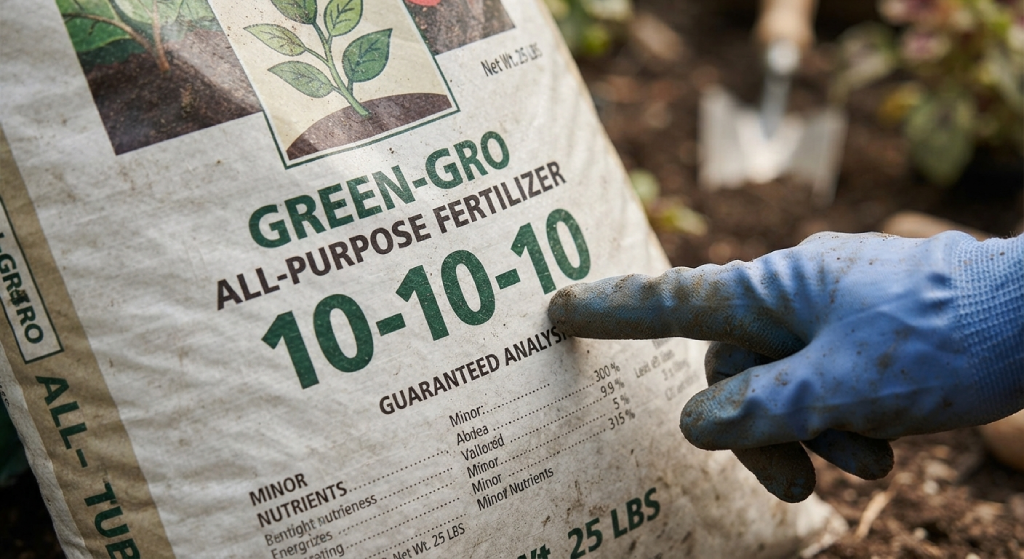
What Does N Stand For?
The N stands for nitrogen, and it is responsible for leafy green growth. Nitrogen helps build chlorophyll, the compound that gives plants their green color and allows them to convert sunlight into energy through photosynthesis. Early in a tomato plant’s life, a healthy dose of nitrogen encourages strong stems and lush foliage.
The catch with tomatoes is that too much nitrogen, especially later in the season, pushes the plant to keep producing leaves and stems at the expense of flowers and fruit. Gardeners sometimes call this “all vine, no tomato,” and it is one of the most common frustrations tied to poor fertilizer choices.
What Do P and K Mean?
P stands for phosphorus, a nutrient that fuels root development, flowering, and fruit set. Without enough phosphorus, a tomato plant may grow tall but struggle to produce blossoms, and the blossoms it does produce may fail to turn into fruit.
K stands for potassium, sometimes labeled as potash on older fertilizer bags. Potassium supports the plant’s overall health and resilience, helping regulate water movement within the plant, strengthen cell walls, and improve resistance to disease. It also plays a direct role in fruit quality, influencing size, color, and flavor. A tomato plant low on potassium often produces fruit with blotchy ripening or a weaker, less flavorful taste.
Why NPK Ratio Matters for Tomato Plants
Tomatoes are heavy feeders with a growth pattern that shifts dramatically from one stage to the next. A young seedling has completely different nutritional needs than a mature plant loaded with green tomatoes. If you feed every stage with the same generic blend, you are almost guaranteed to shortchange your plant at some point in the season.
This is why the ratio matters more than the raw quantity of fertilizer. Dumping extra fertilizer on a struggling plant rarely fixes the issue, and it can actually make things worse by creating nutrient lockout, a condition where an excess of one mineral blocks the plant from absorbing another. Phosphorus and potassium, for instance, can interfere with each other’s uptake when either one is present in extreme excess.
Matching the ratio to the plant’s current stage of growth supports steady, balanced development. It encourages strong roots early on, healthy foliage through the vegetative phase, and then shifts the plant’s energy toward blossoms and fruit production when it matters most. Get this timing right and you will notice the difference in both yield and fruit quality by the end of the season.
What Is the Best NPK Ratio for Tomatoes?
There is no single perfect ratio that works for every garden, since soil composition varies widely from one backyard to the next. That said, most experienced growers agree on a general pattern that works well across most conditions.
A balanced starter ratio, such as 10-10-10, works fine when first planting seedlings or transplants, since it supports root establishment without overloading the plant with any one nutrient. Once the plant starts to mature and move toward flowering, switching to a phosphorus and potassium heavy blend, something like 5-10-10 or 4-6-8, tends to produce better results. This lower-nitrogen approach discourages excess leaf growth and redirects the plant’s energy toward blossoms and fruit set.
Many commercial “tomato fertilizer” products are formulated with this fruiting-stage ratio in mind, which is why reading the label matters more than trusting the marketing on the front of the bag. If a product is labeled specifically for tomatoes but still carries a high first number, it may not actually suit your plant’s needs once flowering begins.
NPK Needs at Different Tomato Growth Stages
Tomato plants move through three fairly distinct growth phases, and each one calls for a different approach to feeding.
Seedling Stage
During the seedling stage, the priority is root development rather than rapid top growth. A balanced fertilizer with a mild concentration works best here, since young roots can be sensitive to strong chemical blends. Many gardeners dilute their fertilizer to half strength during this window to avoid burning tender roots. Phosphorus plays an outsized role at this point, helping the seedling establish a strong root system that will support the plant for the rest of the season.
Vegetative Growth
As the plant enters its vegetative growth phase, it needs more nitrogen to fuel the rapid development of stems and leaves. This is the stage where the plant is essentially building its structure, the framework that will eventually support flowers, fruit, and the weight of a full harvest. A ratio with a slightly higher first number, or a balanced 10-10-10, tends to work well here. Keep an eye on the plant’s color and growth rate. Deep green leaves and steady upward growth are signs that nitrogen levels are on track.
Flowering and Fruiting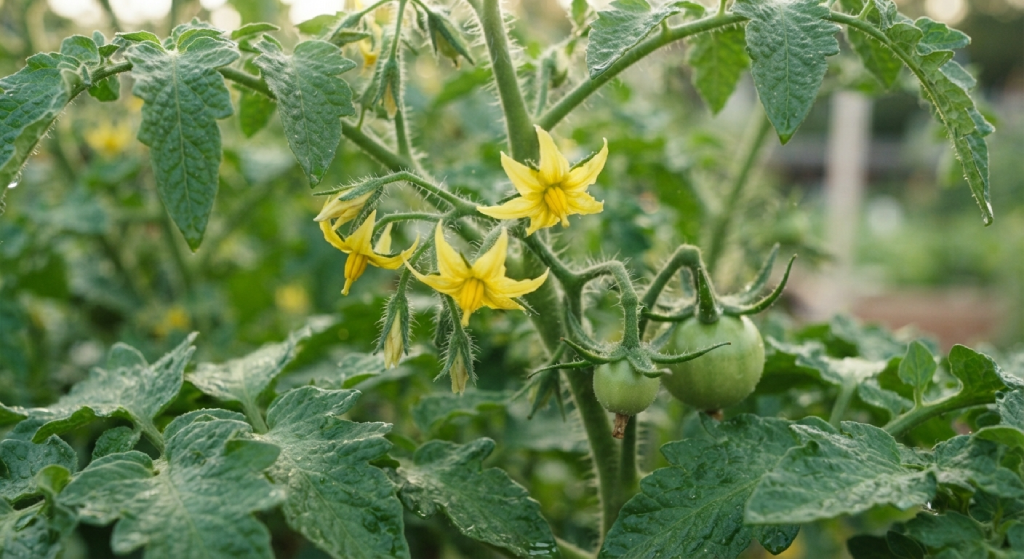
Once flowers begin to appear, it is time to cut back on nitrogen and increase phosphorus and potassium. This shift tells the plant to stop prioritizing leafy growth and start channeling energy into blossoms and developing fruit. A ratio like 5-10-10 supports strong flower formation, better fruit set, and improved fruit quality as tomatoes ripen. This is also the stage where potassium becomes especially important, since it directly affects how evenly and how well the fruit ripens.
How to Choose Tomato Fertilizer
Choosing the right product comes down to a few practical factors beyond just the NPK numbers. First, consider whether you want a granular, slow-release fertilizer or a liquid feed. Granular options break down gradually and are convenient for gardeners who do not want to feed plants every week, while liquid fertilizers act faster and allow for more precise control over timing, which is useful during the flowering stage.
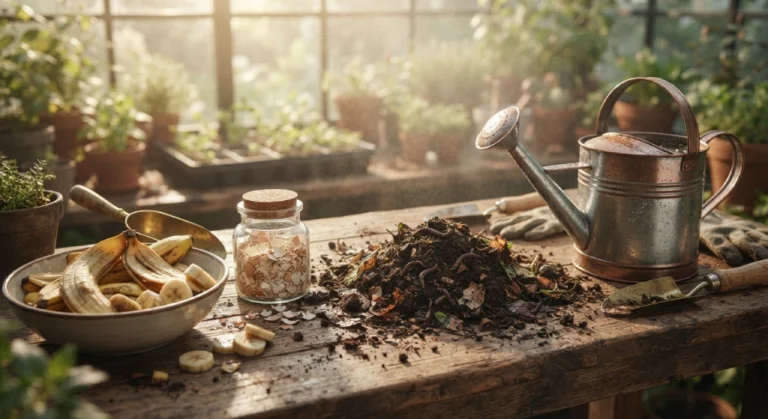
Second, think about organic versus synthetic options. Organic fertilizers, such as compost, bone meal, or fish emulsion, release nutrients more slowly and tend to improve soil health over time. Synthetic fertilizers act quickly and offer more precise NPK ratios, but they do less to build long-term soil structure. Many gardeners use a combination of both, relying on compost as a base and supplementing with a targeted liquid feed during key growth stages.
Finally, a soil test can save you a lot of guesswork. Testing your soil before the season starts tells you exactly which nutrients are already present in sufficient quantities and which ones are lacking, so you are not adding phosphorus or potassium your soil already has in abundance.
How Often Should You Fertilize Tomatoes?
Timing matters just as much as the ratio itself. A general schedule that works for most home gardens looks like this: feed once at transplanting with a balanced or root-focused blend, then again about two to three weeks later as the plant settles into vegetative growth. Once flowering begins, switch to a phosphorus and potassium heavy fertilizer and apply it every two to three weeks through the fruiting period.
Container-grown tomatoes tend to need more frequent feeding than those planted directly in garden soil, since nutrients wash out of pots more quickly with regular watering. If you are growing in containers, plan on feeding every one to two weeks once fruiting begins, using a diluted liquid fertilizer for gentler, more consistent nutrition.
Overfeeding is a real risk, so resist the urge to fertilize more often just because you want faster results. Tomatoes generally respond better to consistent, moderate feeding than to occasional heavy doses.
Signs of Too Much or Too Little Fertilizer
Learning to read your plant’s signals can help you catch nutrient problems before they seriously hurt your harvest. Too much nitrogen typically shows up as dark green, oversized leaves with thick stems, but little to no flowering. The plant looks lush and healthy at first glance, but it simply is not producing fruit.
Too little nitrogen usually presents as pale, yellowing leaves, especially on older growth near the bottom of the plant, along with slow, weak growth overall. 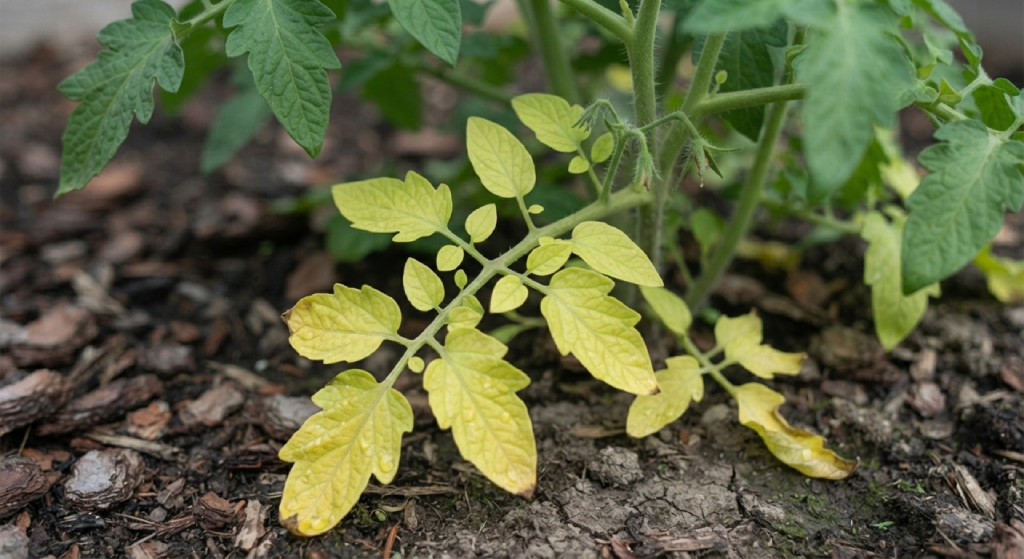 A phosphorus deficiency often shows up as a purplish tint on the underside of leaves and stunted root development, while a potassium deficiency tends to cause yellowing or browning around the edges of leaves along with uneven fruit ripening.
On the other end of the spectrum, too much fertilizer of any kind can lead to fertilizer burn, which appears as crispy, brown leaf edges, or in more severe cases, wilting despite adequate watering. If you notice these symptoms, flush the soil with plain water to help dilute excess salts and hold off on additional feeding until the plant recovers.
Common NPK Fertilizing Mistakes
One of the most frequent mistakes gardeners make is using the same high-nitrogen fertilizer throughout the entire growing season. This works fine early on but backfires once flowering starts, leading to plenty of leaves and very few tomatoes.
Another common error is over-fertilizing in an attempt to boost yield. More fertilizer does not equal more fruit, and in many cases it does the opposite by disrupting nutrient balance in the soil. Skipping a soil test is another misstep, since it leaves gardeners guessing rather than making informed decisions based on what their soil actually needs.
Finally, many people forget that fertilizer needs shift with the weather and watering schedule. Heavy rain or frequent watering can wash nutrients out of the soil faster than expected, meaning your feeding schedule may need small adjustments depending on conditions that season.
Conclusion
Getting the tomato fertilizer NPK ratio right is less about finding one magic number and more about matching your feeding schedule to what your plant needs at each stage of growth. Start with a balanced or phosphorus-heavy blend for seedlings, shift toward nitrogen during vegetative growth, and then favor phosphorus and potassium once flowering begins. Pay attention to your plant’s leaves and growth pattern along the way, since they will tell you almost everything you need to know about whether your feeding plan is working.
With a bit of attention and the right timing, you can avoid the common trap of lush green plants that never produce much fruit. Try adjusting your fertilizer schedule this season based on the stages outlined above, and watch how your tomato harvest responds.
FAQs About Tomato Fertilizer NPK Ratio
What is the best NPK ratio for tomatoes in pots? Container tomatoes generally do well with a balanced ratio early on, such as 10-10-10, followed by a phosphorus and potassium heavy blend like 5-10-10 once flowering starts. Because nutrients leach out of pots faster than garden soil, container plants usually need more frequent, diluted feeding.
Can too much nitrogen stop tomatoes from fruiting? Yes. Excess nitrogen pushes the plant to focus on leaf and stem growth rather than flowers, which means fewer blossoms and less fruit even though the plant may look healthy and green.
Is Epsom salt good for tomatoes? Epsom salt provides magnesium and sulfur, which can help with leaf color and overall plant health, but it is not a substitute for a proper NPK fertilizer. It works best as a supplement rather than a primary feeding source.
How do I know if my tomato plant needs more potassium? Watch for yellowing or browning around the edges of leaves and uneven or blotchy fruit ripening. These are classic signs of a potassium shortage.
Should I fertilize tomatoes every week? Weekly feeding is generally too frequent for garden soil and can lead to nutrient buildup. Every two to three weeks with a diluted liquid fertilizer, or following the schedule on a granular product, tends to work better.
Can I use the same fertilizer for the whole growing season? It is better to adjust the ratio as the plant moves through its stages. A single fertilizer used from seedling through fruiting often leads to imbalanced growth, usually too much foliage and not enough fruit.
What happens if I give tomatoes too much phosphorus? Excess phosphorus can interfere with the plant’s ability to absorb other nutrients, particularly zinc and iron, which can lead to deficiencies elsewhere even though phosphorus itself is not directly toxic in most garden settings.