Powdery Mildew on Tomatoes Treatment: Complete Treatment Guide
Powdery Mildew on Tomatoes Treatment: Simple Identification and Prevention for Your Garden
You walk out to the garden one morning and notice a dusty white film on your tomato leaves. It looks like someone shook flour over the plant. Before you grab the nearest spray bottle, take a breath. This is a common problem, and with the right powdery mildew on tomatoes treatment you can stop it from taking over.
Powdery mildew is a fungal disease that affects a wide range of plants. It shows up on squash and cucumber vines, on roses and on many other garden plants, and tomatoes get their share too. The good news is that it rarely kills a tomato plant outright. The bad news is that it can weaken plants, shrink your harvest and spread fast if you ignore it.
This guide walks you through the whole process in plain steps. If you are still setting up your garden, you may also like our post called Tomato Trellis: Complete Guide, since good support is one of the easiest ways to keep air moving around your vines.
Signs and Symptoms of Powdery Mildew
The first signs of powdery mildew are small, pale spots that look like talcum powder. They usually start on the tops of leaves, but they can also appear on the underside of the leaf, on the leaves and stems and even on the calyx near the fruit. At first you can wipe a spot away with your finger. A few days later the patches grow, join together and cover the whole leaf surface.
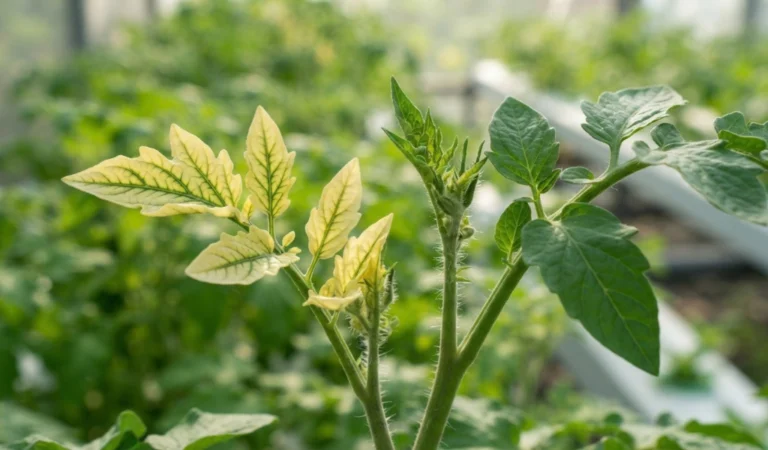
As the infection grows, the plant’s leaves turn yellow, then brown, and finally dry up and curl. Heavy outbreaks can strip the foliage. Without enough leaves the plant cannot make food, so the fruit stays small and may get sunburned because the leaves no longer shade it. Mildew rarely lands on the tomato itself, but a weak plant means fewer and smaller toms.
It helps to know how the fungus works. The life cycle of powdery mildew starts when tiny spores land on a leaf. These spores float from plant to plant on the wind, and one infected leaf can release thousands of them. Unlike most fungal growth, mildew does not need wet leaves to get going. It thrives in warm days, cool nights and high humidity, and it can survive on old plant debris until the next season. That is why a dry summer garden can still get hit.
One handy clue is your squash patch. If your cucumbers and squash show white leaves first, keep a close eye on the tomatoes next to them. The strains are different, but the weather that helps one often helps the other.
Check Your Tomato Plant for Infection
Before you treat anything, make sure you are looking at powdery mildew and not something else. Several pests and diseases cause spotted or dusty leaves, and the wrong treatment wastes time and money.
Start with the touch test. Rub a white patch with your thumb. Powdery mildew smears off like dust. Late blight leaves dark, greasy lesions that do not rub off. Early blight makes brown spots with rings like a target. Spider mites create tiny yellow dots and thin webbing, and a pest like whitefly leaves sticky residue and flies up in a cloud when you shake the stem.
Next, check the whole plant. Look at the upper and lower surfaces of the leaves, the stems and the lower branches. Mildew often starts on older leaves near the soil or deep inside the canopy where air barely moves. Walk through your garden and inspect each plant, because the fungus does not always show up everywhere at once.
Take notes or snap a few photos. Write down the date, which varieties are affected and how many leaves show signs. A real life example comes from a gardener who found three white leaves on a Roma plant in July. She marked the date and checked again after five days. The patches had doubled, so she acted right away and saved the rest of her row. Quick checks catch an outbreak while it is still small.
Remove Severely Infected Plant Parts
The next step is to cut away the worst of it. Powdery mildew cannot be fully cured on a leaf that is already covered, so the goal is to stop it from sending spores to healthy foliage. Removing infected leaves also gives sprays and other treatments a better chance to work.
Prune with clean tools. Wipe your scissors or pruning shears with rubbing alcohol before you start and again between plants. Cut off leaves that are more than half covered in white growth, and remove any stems that look weak or twisted.  Work on a dry morning so the plant can heal quickly.
Be careful not to go too far. A tomato plant needs leaves to feed the fruit and to protect it from sun. As a rule of thumb, do not take off more than a third of the foliage at one time. If the infection is heavy, spread your pruning over a week.
Handle the cut pieces with care. Drop them straight into a bag or bucket so spores do not shake loose around the plants. Throw them in the trash instead of the compost pile, since a backyard heap may not get hot enough to kill the fungus. Wash your hands after the job, and pick up any fallen leaves from the ground.
Improve Sunlight and Airflow
Mildew loves stuffy corners. Crowded plants with thick leaves trap moisture and block the wind, and that creates the perfect home for the fungus. Opening up your garden is one of the best things you can do to manage powdery mildew without spraying anything.
Start with pruning. Remove suckers and extra leaves near the bottom of the plant, up to about a foot above the soil. This lifts the foliage away from the damp ground and lets air flow underneath. Thin out the crowded centers of bushy plants so light can reach the inner leaves. Strong air circulation dries the leaf surface and makes it much harder for spores to settle.
Spacing matters just as much. Space tomato plants about two to three feet apart, and give indeterminate types a bit more room. Do not tuck other plants right up against them. Cucumber or squash vines that sprawl into the tomato bed can trap humid air and pass the disease along.
Use support to your advantage. A trellis or tall cage keeps the vine upright and spreads the leaves out in the sun. Our Tomato Trellis guide covers how to pick and set up the right support. Also check the sunlight. Tomatoes need at least six to eight hours of direct light, and a shady spot makes the plant weak and more open to infection.
Natural Powdery Mildew Treatments
When only a few leaves are affected, gentle home treatments often do the job. They cost little and are easy to find. Most work by changing the leaf surface so spores cannot grow. Keep in mind that natural options work best as a way to prevent and treat powdery mildew early, and you will need to repeat them often.
Baking Soda Solutions
Baking soda is a favorite among home gardeners. Also known as sodium bicarbonate, it makes the leaf surface less friendly to the fungus. To mix it, stir one tablespoon of baking soda and a few drops of mild liquid soap into one gallon of water. The soap helps the spray stick to the leaf. Pour it into a clean sprayer and shake well.
Spray in the early morning or in the evening, never in strong midday sun, since hot light can burn wet leaves. Coat the top and bottom of every leaf until the liquid just starts to drip.  Repeat every seven days, and again after rain. Test the mix on a single leaf first and wait a day to see if it causes any burn.
Milk spray is another old trick that many gardeners swear by. Mix one part milk with two parts water, which is the ratio of 1 part milk to 2 parts water, and spray the plant. Natural compounds in the milk seem to slow the fungus down when it is used in sunny weather. It can leave a sour smell if you overdo it, so rinse the plant with plain water after a few treatments.
Do not use more baking soda than the recipe calls for. Too much salt builds up on the leaf and in the soil and can hurt your plants.
Horticultural Oils
Horticultural oils are the next step up. They smother the spores and stop new growth of the fungus. Neem oil is the most popular choice. It is made from the seeds of the neem tree and acts as a fungicide and a pest control spray at the same time. Light mineral oils and some oils based on plants work in a similar way.
Read the label closely, since the strength of each product is different. For many neem oil concentrates, the recommended dose is about one to two tablespoons mixed in a gallon of water, but follow the directions on your bottle. Add a drop of soap if the label says to, and stir often because oil and water separate quickly.
Spray when the weather is mild, ideally below 85 degrees Fahrenheit, and when the plants are not in direct sun. Cover both sides of the leaf, the stems and any other part of the affected plant. Use it every seven to fourteen days until the outbreak slows down. Skip the spray when bees are active, and keep oil away from open flowers.
One warning: never mix oils with sulfur products, and avoid using them within two weeks of each other. The mix can burn the leaves badly.
When to Use Fungicides
Sometimes home treatments are not enough. If more than a quarter of your plant is covered, the weather stays humid or the spread keeps going after two weeks of natural care, it is time to think about a fungicide. Waiting too long means the pathogen gets a head start and the plant loses vigor.
Several choices are sold at garden stores. Sulfur-based sprays and dusts are a longtime favorite and are approved for organic gardens in most places. Potassium bicarbonate works much like baking soda but is stronger and more reliable. Copper fungicides can help as well. Stronger synthetic products are also available, but they are usually better kept for serious cases. Always check that the label lists tomatoes and fungal disease like powdery mildew before you buy.
Use the product exactly as written. Measure the dose carefully, wear gloves and long sleeves, and follow the label for how often you may spray and how long you must wait before you pick fruit. Sulfur can harm plants in hot weather, so skip it when it is above 85 or 90 degrees.
Rotate between products if you need many sprays. Using the same one over and over can lead to resistance in the fungus. Think of fungicides as a safety net and not the main plan. The best treatment plans mix pruning, airflow and sprays, and they start early.
Prevention Tips for Future Growth
Once you have beaten the fungus, you want to keep it away. Prevention costs far less than treatment, and most of it happens before the first leaf turns white.
Choose resistant varieties when you can. Some seed companies now sell powdery mildew-resistant cultivars, and the catalog or packet often says so. Disease resistance will not make the plant immune, but it can cut the damage a lot. If your neighbors have trouble every year, this choice is a smart one.
Water at the base of the plant. Use a soaker hose or a watering can and keep water off the leaves, which also helps against other diseases. Water in the morning so the plant dries fast. A thick layer of mulch cuts splashing and holds steady moisture in the soil.
Feed with care. Too much nitrogen creates soft, leafy growth that mildew loves. A balanced fertilizer and good compost are usually enough. Strong, healthy plants fight off infection much better than weak ones.
Clean up at the end of the growing season. Pull dead plants, rake up fallen leaves and throw out the debris. Rotate your crops each year so tomatoes do not sit in the same spot as last year. Check your plants once or twice a week, because early action is the heart of every good prevention plan.
Final Thoughts
Powdery mildew looks scary, but it is a problem you can handle. Spot the white dusty patches early, confirm what you are dealing with and cut away the worst leaves. Then open up the plants to light and air, and start with gentle sprays like baking soda or neem oil. Keep fungicides ready for tough cases, and use the prevention habits above to protect next year’s crop.
Now it is your turn. Walk through your garden today and check the undersides of a few leaves. If you find any signs, start with one simple step and keep going each week. Your tomato plants will thank you with a bigger and tastier harvest.
Frequently Asked Questions
Can I still eat tomatoes from a plant with powdery mildew?
Yes. The fungus attacks leaves and stems and rarely touches the fruit. Wash the tomatoes as usual and enjoy them. The fruit may be smaller or get sunburned if the plant lost too many leaves.
Will powdery mildew kill my tomato plant?
Usually not. It weakens the plant and lowers the yield, but most plants survive. Severe and untreated cases can wear a plant down by late summer, so it is worth acting early.
Does powdery mildew spread from squash and cucumbers to tomatoes?
The fungus on cucumbers and squash is often a different species, so it does not always jump over. Still, the same warm and humid conditions help both. If your cucurbits get it, watch your tomatoes closely and improve airflow around all of them.
How often should I spray for powdery mildew?
For most home sprays like baking soda, milk or neem oil, plan on every seven days, and spray again after rain. Stop when new growth looks clean. Always follow the label on any store-bought product.
Is it safe to use baking soda on tomatoes every week?
It is safe in small doses, but do not overdo it. Stick to about one tablespoon per gallon of water. If you see leaf burn or a white crust building up, switch to another treatment for a while.
Can powdery mildew survive the winter?
It can survive on old leaves and plant debris and in warm greenhouses. That is why a good fall cleanup matters. Remove all infected material and do not add it to your compost pile.
When is the best time of day to treat my plants?
Early morning or late evening is best. Cooler light keeps the leaves from burning, and the spray has time to dry before the heat of the day.