White Spots on Pepper Leaves: Causes, Diagnosis & Treatment
White Spots on Pepper Leaves: How to Diagnose, Treat and Prevent Them in Your Garden
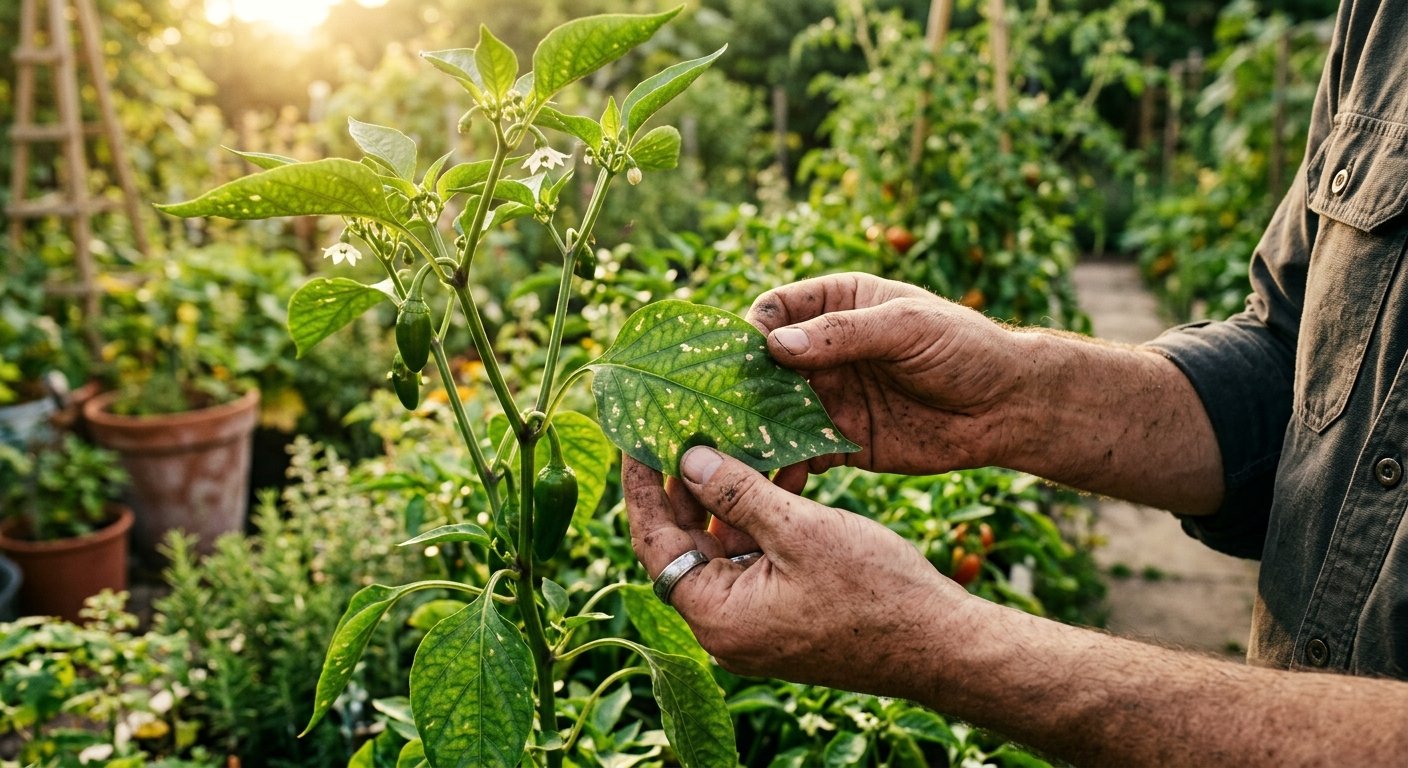
You walk out to your garden with a cup of coffee, and something looks off. A few leaves on your favorite pepper plant have pale patches. Some look like tiny white dots. Others look like someone brushed flour across the leaf. It is easy to panic, but white spots on pepper leaves are common and most of the time fixable.
The tricky part is that many different problems can cause the same look. A fungus, a tiny pest, a bad sunny afternoon or even too much fertilizer can leave similar marks on pepper leaves. This guide helps you diagnose the real cause, treat it the right way and keep your pepper plant strong for the rest of the season. A good trellis for tomatoes is one of the best upgrades you can make Whether you grow sweet bells, jalapeño or fiery habanero plants, the steps below will help.
What Causes White Spots on Pepper Leaves?
Before you reach for a spray bottle, take a breath and look closely. Treating the wrong problem wastes time and can stress the plant even more. Most cases of white spots come from one of three sources: a fungal disease, a pest or the weather. Each one leaves its own clues.
Powdery Mildew
Powdery mildew is the most common fungal problem behind white patches. It starts as small, dusty white spots that look like powder on top of the leaf. Over time the spots grow, join together and cover large parts of the foliage. Older leaves are usually hit first, and then the problem moves up the plant.
This fungus likes warm days, cool nights and humid weather. Unlike many other fungal diseases, it does not need wet leaves to spread. Poor airflow, crowded plants and shady corners of the garden make things worse. If you rub the white coating with your finger and it smears off like talc, powdery mildew is a strong suspect.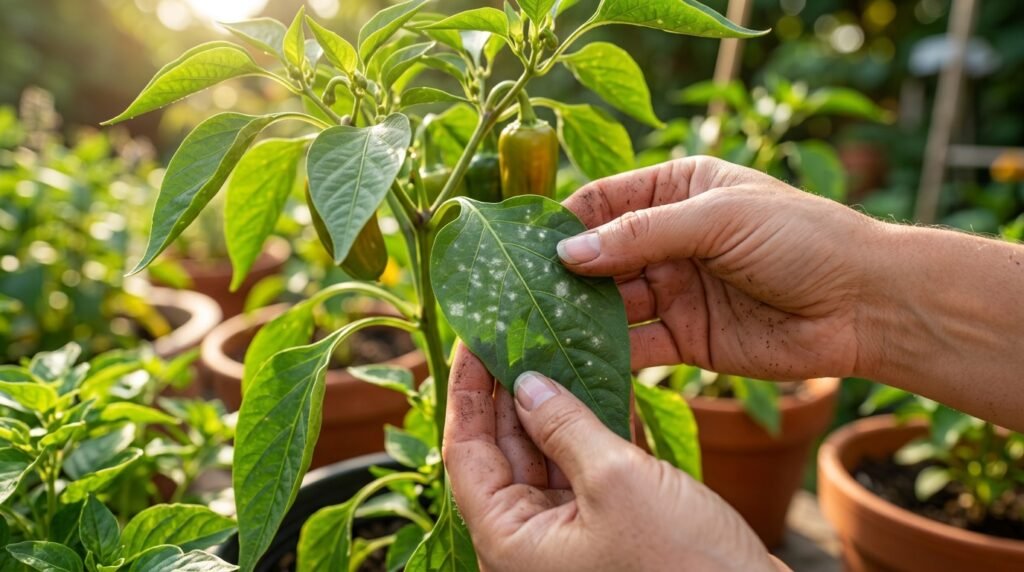
Left alone, infected leaves may curl, turn yellow and drop. The plant then has less leaf surface to make food, so you may see smaller peppers and slower growth. The good news is that powdery mildew rarely kills a healthy pepper plant if you act early.
Insect Damage
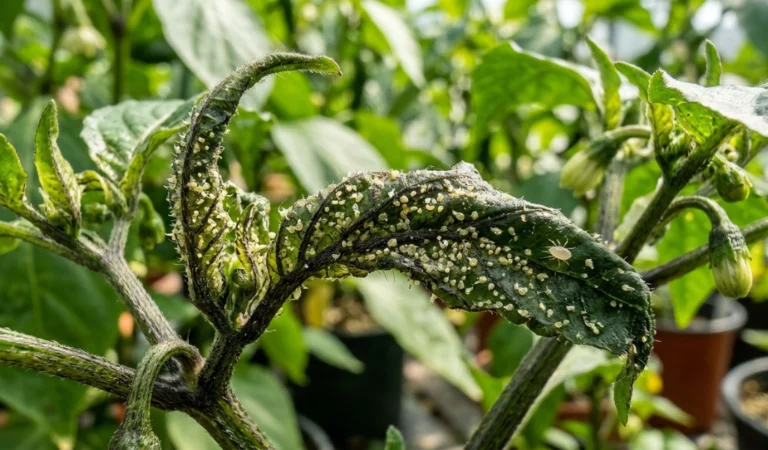
Sometimes the white dots are not a disease at all. Tiny pests can leave pale, stippled marks as they feed. Spider mites are the usual culprits. They are so small that you may not notice them until the damage shows. They suck the sap from the leaf tissue, and each feeding spot turns into a pale dot. When many mites feed together, the whole leaf looks washed out and speckled.
Thrips, whiteflies and leafhoppers can cause a similar look. Mites love hot, dry weather, which makes them a big problem for pepper plants grown indoors or in a greenhouse. A fine web on the underside of the leaf is a clear sign that mites have moved in.
A gardener I know once spent two weeks spraying a fungicide on his habanero plants because he thought it was mildew. Nothing changed. When he finally checked with a small magnifying glass, he found hundreds of mites hiding under the leaves. The wrong treatment cost him time and a few good leaves.
Sunscald and Environmental Stress
Sunscald is one of the most common reasons leaves turn white, especially on young plants. Think of it as a sunburn for your pepper. When a seedling grown indoors or in shade is suddenly moved into direct sun, its soft leaves cannot handle the strong light. The damaged areas bleach out and turn white or pale tan, and they feel thin and papery.
Sunscald often shows up right after transplant, or after a cloudy week followed by a blast of hot weather. Fruit can burn too, especially when heavy leaf loss exposes peppers to full sun.
Other stress can also cause pale spots. Too much fertilizer can burn the leaf edges. Cold nights can leave blotchy marks. Even edema, a condition where the roots take up more water than the leaves can release, may cause small blisters that dry into light, rough dots. Edema is common when soil stays wet and the air stays humid.
Ways to Identify the Cause
Good diagnosis comes down to careful looking. You do not need fancy tools. A bit of patience, good light and a small hand lens will tell you most of what you need to know.
Examine the Shape and Texture of the Spots
Start with the top of the leaf. Note the shape, the color and the feel of each spot.
Powdery mildew looks soft and fuzzy. The spots are round at first, then spread into larger patches with no clear edge. You can wipe the coating off with your thumb.
Sunscald looks different. The spots are flat, dry and bleached, with no powder at all. They often appear on the side of the plant that faces the sun. The tissue feels thin like paper, and the edge between healthy and damaged areas is usually sharp.
Pest damage shows up as many tiny dots, often in clusters near the veins. The leaf may look dusty or speckled instead of coated.
It also helps to know what white spots are not. Bacterial leaf spot, a common pepper disease, usually starts as small, water-soaked dots that turn dark brown with a yellow ring. Those are brown spots, not white ones, but old lesions sometimes dry out and look pale in the middle. If your leaves show dark, greasy-looking spots and then begin dropping, think bacterial spot instead of mildew. Fungal leaf spot diseases can also leave tan or gray centers with dark borders.
Check the Undersides of Leaves
Most gardeners only look at the top of the leaf, but many problems hide below. Gently flip a few affected leaves and study the underside. Use a magnifying glass if you have one.
 A 10x loupe magnifier can make it easier to inspect pepper leaves for tiny pests and other signs of damage. The rechargeable loupe features LED and UV lights, which provide additional illumination when examining small details on the upper and lower surfaces of leaves.
Look at both older leaves near the base and fresh growth at the top.
If you see tiny moving specks, fine webbing or small eggs, you are dealing with pests. If you see a white powder on the underside too, mildew has probably taken hold. If the underside looks clean and the top shows bleached patches, sunscald or other stress is the likely answer.
Here is a simple trick. Hold a sheet of white paper under a branch and tap it gently. If tiny specks fall and start crawling, you have mites. It takes ten seconds and saves a lot of guessing.
How to Treat White Spots
Once you know the cause, treatment gets much easier. The goal is simple: stop the problem from spreading and help the plant recover. Some steps work for almost every case, while others depend on what you found.
Remove Affected Leaves
If only a few leaves show spots, remove them. Use clean scissors or pruners and wipe the blades with rubbing alcohol or a weak bleach mix between plants. This matters a lot because disease can spread from one plant to another on dirty tools and wet hands.
Do not toss infected leaves on the ground or into your compost pile. Bag them and discard them with household trash. Fungal spores and bacteria can survive in compost and return next season.
Do not prune too much at once. Pepper plants need leaves to make energy. If a plant is severely affected, remove the worst leaves first and give it a few days before cutting more. Taking off more than a third of the foliage at one time can shock the plant and lead to wilt or sunscald on the remaining fruit.
For powdery mildew, you can also use a spray. A mix of one tablespoon of baking soda and a few drops of mild soap in a gallon of water works for light cases. Potassium bicarbonate products, neem oil and sulfur sprays are other options. Always test a spray on one or two leaves first and wait a day. 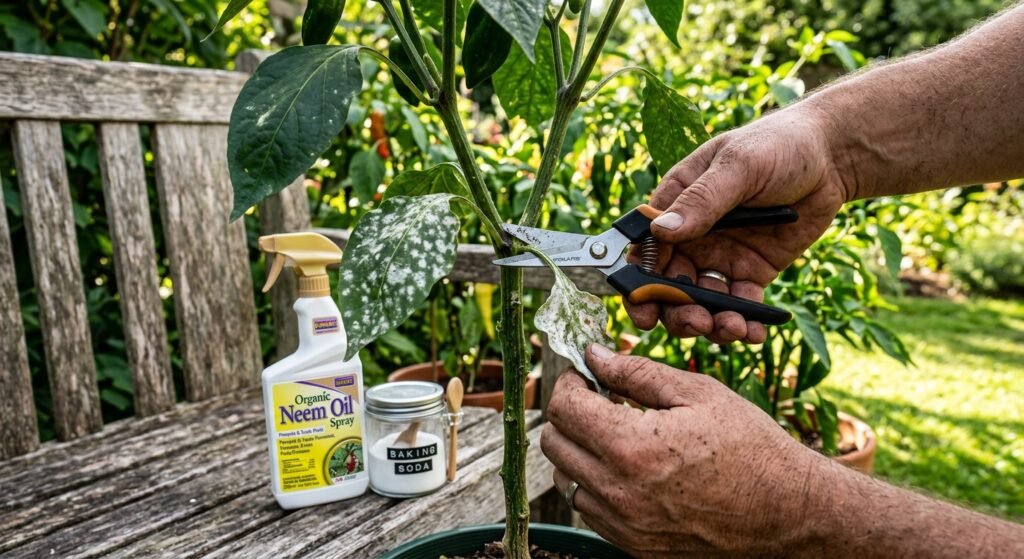 Apply in the early morning or evening, never in the hot midday sun, because spraying in full sun can burn the leaves.
For mites, a strong stream of water blasts many of them off. Follow up with insecticidal soap or neem oil, and cover the undersides of leaves. Repeat every five to seven days for a few weeks, since eggs will keep hatching.
Improve Growing Conditions
Sprays and pruning only treat the symptoms. Lasting recovery comes from fixing the conditions that caused the trouble in the first place.
Start with airflow. Space your pepper plants far enough apart so air can move through the leaves. Most pepper varieties do well with 18 to 24 inches between plants. Trim lower branches that touch the soil. Better airflow helps leaves dry faster and makes life harder for fungus.
Next, check how you water. Water at the base of the plant, not over the top. Water that splash from the soil onto the leaves can carry bacteria and fungal spores upward. Drip irrigation or a simple watering can with a long spout works great. Water in the morning so any moisture on the leaves dries during the day.
If the cause is sunscald, add light shade for a few days. A piece of shade cloth or even a light bedsheet clipped to stakes can protect young plants during a heat wave. The damaged leaves will not turn green again, but new growth will come in healthy.
How to Restore Healthy Pepper Leaves
Plants are tougher than most people think. With the right care, a pepper plant can bounce back from white spots and still give you a good harvest. Recovery has two parts: quick action now and steady care over the coming weeks.
Immediate Steps
On day one, do these things in order. First, isolate the plant if it is in a pot, especially if you grow peppers indoors or in a greenhouse. This keeps pests and disease from moving to your other plants. Second, remove the worst leaves and discard them. Third, treat the cause you found, whether that means a mildew spray, a water blast for mites or a bit of shade for sunscald.
Then check the soil. If it is soggy, hold off on watering until the top inch is dry. Good drainage is key. Pots must have holes, and garden beds with heavy clay should be loosened with compost. Overwatering leads to root stress, wilt and edema, and a stressed plant is an easy target for every problem on this list.
Also stop feeding the plant for a week or two if you think you overdid the fertilizer. Too much nitrogen gives you soft, leafy growth that pests and mildew love. Flush the soil with plain water to wash out extra salts.
Long-Term Plant Care
After the first week, shift to steady care. Feed your pepper plant with a balanced fertilizer at the label rate, and choose one with enough potassium once flowers appear. Potassium helps the plant handle stress and builds stronger leaf tissue. A lack of key nutrients can leave leaves weak and more open to damage, so do not skip feeding, but do not overdo it either.
Keep an eye on new growth. Healthy new leaves are the best sign that your treatment is working. If new leaves also show spots, repeat your treatment and look again for something you missed. Sometimes two problems happen at once, like mites on a plant that is also dealing with sunscald.
Be patient. Damaged leaves will not turn green again. Your job is to protect the new ones. Most plants show clear improvement in two to three weeks.
How to Keep Pepper Leaves Healthy
Prevention is far easier than a cure. A few smart habits can stop most white spot problems before they start. Gardeners who grow peppers year after year usually follow the same simple routine.
Prevention Tips
Harden off every seedling before transplant. This means giving young plants a slow introduction to the outdoors over seven to ten days. Start with one or two hours in light shade, then add more sun each day. This one step prevents most sunscald, and it is the thing new gardeners skip most often. Even sun lovers like habanero and reaper types need time to adjust before they can handle full sun.
Rotate your crops. Do not plant peppers, tomatoes or eggplants in the same spot more than once every three years. Fungus and bacteria can stay in the soil and wait for the next host. Rotation breaks that cycle.
Choose resistant pepper varieties when you can. Many seed companies list varieties with resistance to bacterial spot and mildew. Buy seed from a trusted source and start with clean trays and pots. In a greenhouse, wash benches and pots between seasons.
Mulch around the base of your plants with straw or shredded leaves. Mulch stops soil from splashing onto the lower leaves and keeps the roots at an even moisture level. Avoid working in the garden when leaves are wet, because that is when disease passes easily from one plant to another on clothes and hands.
Finally, plan for weather. In wet weather, give plants extra space and skip the evening watering. In hot weather, water deeply and think about light shade in the afternoon.
Regular Monitoring
The best tool in your garden is your own eyes. Walk through your plants at least twice a week and look at more than the tops of the leaves. Turn a few over. Check the older leaves and the newest growth. Catching one or two spotted leaves is much easier than fighting a plant covered in mildew.
Keep a small notebook or use your phone to record what you see. Write down dates, weather, and any treatment you used. After a season or two, you will notice patterns, like mildew showing up each August or mites arriving during a dry spell. That knowledge helps you act before the trouble starts.
If you grow peppers indoors, add a small fan to keep the air moving, and place a few yellow sticky traps near the plants to catch flying pests. Wipe leaves gently with a damp cloth from time to time to keep dust down, since dust can encourage mites.
Final Thoughts
Seeing white spots on pepper leaves is worrying, but it is rarely the end of your plant. Powdery mildew, mites and sunscald are the usual causes, and each one has clear signs. Look closely at the shape and feel of the spots, check under the leaves and match what you see to the cause. Then remove damaged leaves, treat the real problem and fix the growing conditions that started it.
The long game matters most. Space your plants, water at the base, harden off every seedling and check your garden often. These small habits protect your harvest far better than any spray.
Now it is your turn. Head out to your garden today, flip over a few leaves and see what you find. If you have a tip or a story about your own pepper problems, share it in the comments so other growers can learn from it.
Frequently Asked Questions
Are white spots on pepper leaves harmful to the plant?
It depends on the cause. Sunscald only damages the exact spot that was burned, and the plant keeps growing. Powdery mildew and mites can weaken the whole plant if you ignore them, since they reduce the leaf area the plant uses to make food. Quick action keeps the damage small.
Can I eat peppers from a plant with white spots on the leaves?
Yes, in most cases. Peppers from plants with mildew or mites are safe to eat after a good wash. Skip any fruit that is rotting or has soft, moldy patches. If you used a spray, check the label for how long you should wait before harvest.
How do I tell sunscald from powdery mildew?
Try wiping the spot. Powdery mildew leaves a white dust on your finger, while sunscald does not. Sunscald also feels dry and papery and often appears on the sunny side of the plant, usually after a sudden change in light or heat.
Will the white spots go away on their own?
The damaged tissue will not heal or turn green again. Sunscald spots stay as they are, but the plant will grow new, healthy leaves if the cause is gone. Mildew spots will keep spreading unless you treat them.
What is the best spray for white spots on pepper leaves?
Match the spray to the cause. Baking soda mix, neem oil or sulfur work for powdery mildew. Insecticidal soap or neem oil is better for mites and other soft-bodied pests. A spray will not fix sunscald, so shade and gradual hardening are the answer there. Always test on a few leaves first and spray in the early morning or evening.
Can bacterial leaf spot look like white spots?
Not at first. Bacterial leaf spot starts as small, water-soaked dots that turn brown, often with a yellow halo, and leaves may drop. Old spots can dry and look pale in the center, which may confuse you. If the spots look greasy or dark, think bacterial spot and remove infected leaves quickly to stop it from spreading.
Should I move my pepper plant indoors if it has white spots?
Only if the weather is the problem, such as hail, frost or extreme heat. If the issue is mildew or pests, moving the plant inside can spread the problem to your other houseplants. Treat it outside or keep it apart from other plants until it recovers.