Ultimate Tomato Trellis Guide: How to Support Heavy Plant Yields
Tomato Trellis: Complete Guide to Growing Healthy Indeterminate Tomato Plants
Every gardener knows the sight. It is mid-July, and your tomato plant has flopped over like a tired runner. Fruit sits in the dirt, leaves are tangled, and you cannot tell where one vine ends and the next begins. A tomato trellis fixes all of that. It lifts your plants off the ground, keeps them tidy, and makes harvesting a lot more fun.
Maybe you have tried a flimsy tomato cage and watched it fold under the weight of a large plant. Maybe you want to grow more tomatoes in a small garden without losing your whole yard. A good trellis for tomatoes is one of the best upgrades you can make. You can build a simple tomato string trellis in an afternoon, or go for a heavy duty cattle panel that lasts for a decade. This guide shows you how to choose, build, and use the right one.
What Is a Tomato Trellis?
A tomato trellis is a frame or support that holds your tomato vines upright as they grow. Instead of letting the plant sprawl across the soil, you guide it up a string, a wire, a panel, or a tall stake. The plant climbs, and you tie or clip the main stem as it goes.
The idea comes from vertical gardening, where you grow up instead of out. It is the same trick that works for beans, cucumbers, and grapes. Tomatoes are not true climbers like peas, since they do not have little curly tendrils that grab on. They are vining plants that need a little help from you. That is why a trellis works so well. It gives the plant something to lean on, and you decide where each branch goes.
You can make one from many things. Some gardeners use wooden posts and twine. Others use metal T posts and wire. A few go all in with a cattle panel bent into an arch. Each one does the same job, which is to keep your plants upright, open, and easy to reach.
If you have only ever used round tomato cages from the garden center, a trellis may feel like a big change. But once you try it, you may never go back. Cages are fine for small plants, but a trellis handles the big, wild ones with ease.
Do Tomato Plants Need Support?
Short answer: yes, most of them do. Whether you need a trellis depends on the type of tomato you grow. Tomatoes come in two main groups, determinate and indeterminate, and they behave very differently.
Determinate tomatoes grow to a set size, usually three to four feet tall. They flower and set fruit over a short window, and then they are done. These plants are bushy and compact, so a sturdy cage or a single stake is often enough. Many gardeners who grow determinate tomatoes for canning use a cage and never think twice about it.
An indeterminate tomato is another story. These plants keep growing all season, until frost stops them. A single vine can reach eight, ten, or even fifteen feet long. They keep making flowers and fruit from early summer to the end of the season, which is great for fresh eating. But all that growth needs a strong plant support. Without one, the vines sprawl across the ground and take over your garden space.
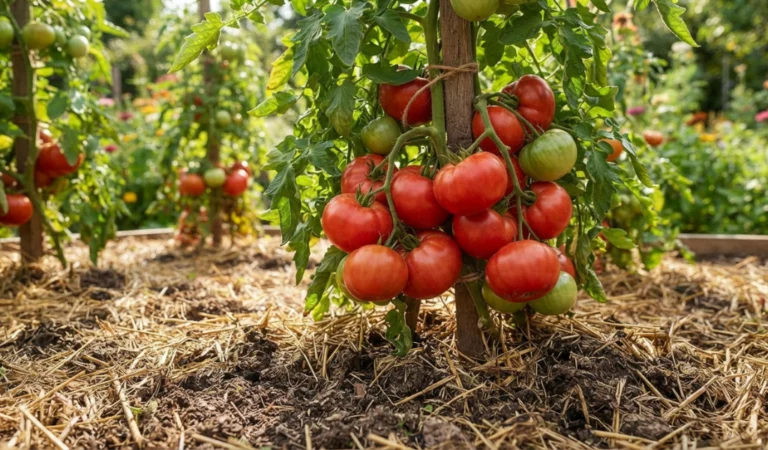
Letting tomatoes lie on the soil causes real trouble. Fruit that touches the ground rots faster, and slugs and other pests love it. Wet leaves stay damp, which invites fungal disease. Air cannot move through a pile of vines, so problems spread quickly. Supporting your plants is not just about looks. It protects your whole crop.
Most heirloom varieties are indeterminate, so if you grow them, plan on a trellis from day one. Check the plant tag when you buy, since it usually says which type you have.
Benefits of Using a Tomato Trellis
The biggest win is better airflow. When vines hang loose in the air instead of piling up on the ground, wind moves through them. Dry leaves mean fewer fungal problems like blight and leaf spot. Increased air movement also helps the plant dry out quickly after rain or morning dew.
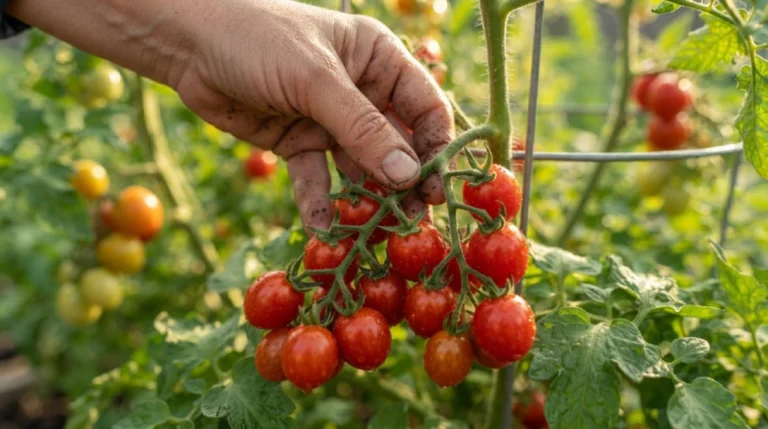
Next is easier harvesting. When fruit hangs at eye level, you can see ripe tomatoes right away. You do not need to dig through leaves or crawl on your knees. Easier access to the fruit also means you spot problems sooner, like cracks, worms, or split skins.
A trellis saves space too. Growing vertically lets you plant your tomatoes closer together than you could with sprawling plants. In a small garden, this can mean the difference between four plants and eight. If you grow in raised garden beds, a trellis keeps the tall plants from spilling over the sides and shading your other crops.
Healthier fruit is another bonus. Sunlight reaches more of the plant, so tomatoes ripen evenly and taste sweeter. Fruit stays clean off the soil, which means fewer splits and less rot. Many gardeners also notice bigger harvests from trellised plants, because the plant puts its energy into fruit instead of fighting through tangled growth.
Finally, a good trellis makes pruning simple. When the main stem is clear and visible, you can easily spot the side shoots and snip them. A plant that is trellised and pruned is neater, stronger, and easier to manage than one left to grow wild. And at the end of the season, cleanup is simple. You cut the vine at the base, lift it off, and you are done.
Materials and Tools You Need
What you buy depends on the trellis you choose, but most builds share a short list of basics. The good news is that none of it is hard to find. A trip to the garden center or hardware store covers nearly everything.
For posts, you have a few choices. Wooden stakes, such as 2×2 or 4×4 lumber, work well and cost little. Metal T posts last longer and drive easily into the soil. Rebar is another option, especially for short supports or temporary setups. For a heavy duty trellis, choose posts that are at least seven feet long, so you can sink a foot or more into the ground and still have six feet standing.
For the support itself, think about what the plant will climb. Twine or strong garden string is cheap and flexible. Wire gives a firmer line. A galvanize cattle panel gives you a rigid frame that will not sag. Look for galvanized steel, which resists rust and lasts for years in the garden.
You will also want small items to attach the plant. Tomato clips are cheap plastic pieces that hold the stem to the string. Zip ties can work in a pinch, though you should loosen them as the stem grows. Soft plant ties or strips of cloth also do the job, since they will not cut into the stem.
For tools, a hammer or post driver helps set the stakes. A pair of wire cutters trims strings and wire. A tape measure keeps your spacing even. Gloves are a good idea, especially when handling cut metal or panels. And a sharp pair of pruners is a must for removing suckers during the season.
Finally, consider your site. A level spot with full sun is ideal. Check that your soil is loose enough to hold posts firmly. If you grow in a planter or an elevated garden bed, make sure the sides can handle the extra weight, or anchor the trellis to the ground behind it.
Best Types of Tomato Trellises
There is no single best design. Each one fits a different garden, budget, and skill level. Here are the three most popular options, along with who they suit best.
String Trellis
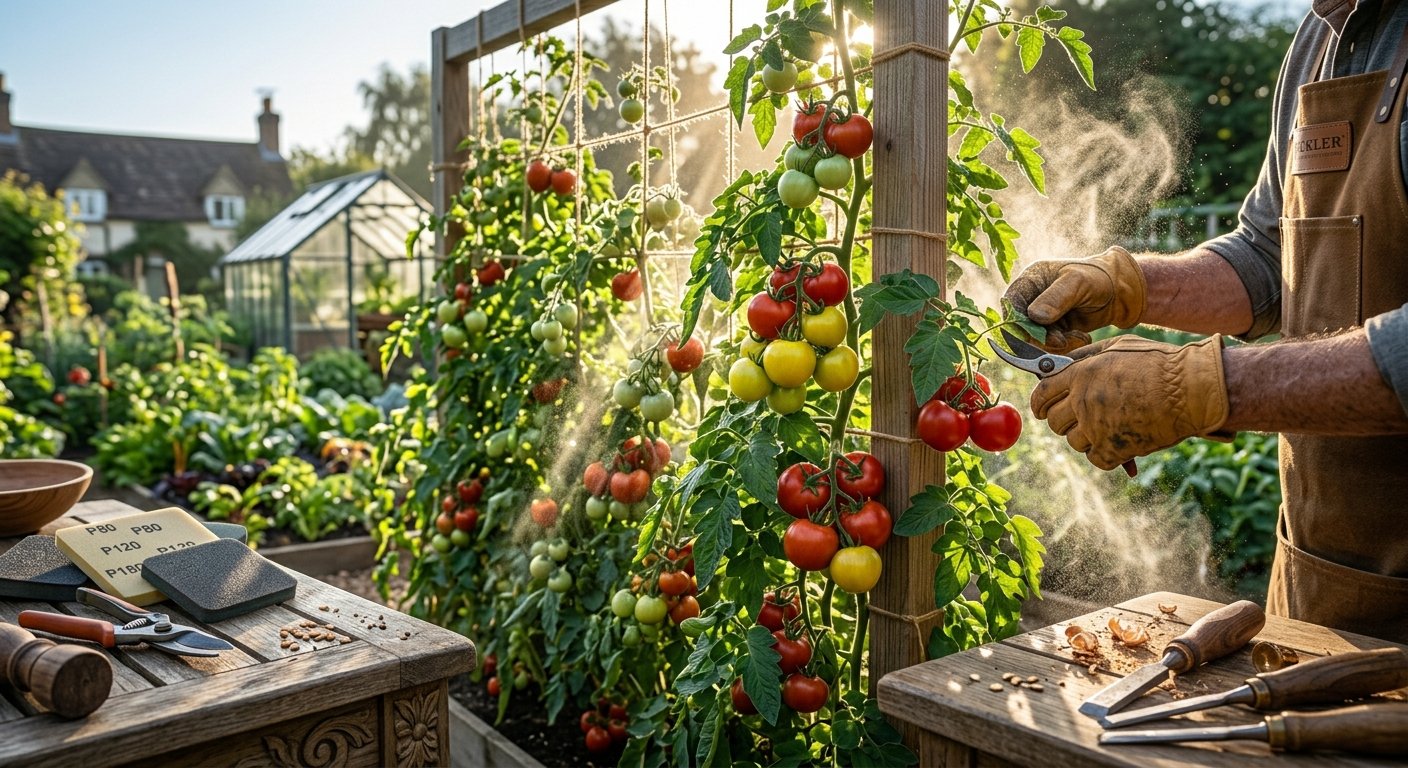
A string trellis is the simplest and cheapest choice. You run a strong horizontal wire or beam across two tall posts, then hang a length of twine down to each plant. As the plant grows, you wrap the twine around the main stem or clip the stem to the string every few inches. This method keeps one leader climbing straight up, which is great for pruning.
The beauty of a tomato string trellis is how little it takes. Two posts, a top wire, and some twine are all you need. It also takes up almost no room, so it works well in a small garden or a narrow bed. You can set plants a little closer together, since each one has its own string.
The main downside is that the structure needs sturdy end posts. A fully loaded tomato plant is heavy, and a row of them can pull a weak post sideways. Brace the ends with angled supports, or sink the posts deep. Also, string can sag over time, so use good quality twine and check it each week.
This method is perfect for gardeners who like to prune tomato plants and keep things tidy. If you grow a few indeterminate varieties and want a clean, simple look, it is hard to beat.
Cattle Panel Trellis
A cattle panel trellis is the heavy duty favorite. These are stiff sheets of galvanized wire, usually about 16 feet long and 50 inches tall. You can stand them upright between posts, or bend them into an arch over a bed. The thick wire holds plants without any extra string, and it will not sag, even under a huge harvest.
The panels come with large openings, which makes harvesting easy. You can reach through the holes to pick fruit, and you can weave the vines in and out as they grow. Gardeners using cattle panels often say they have never had one fail, even in strong wind.
There are two things to keep in mind. First, panels are large and awkward to carry. You may need a truck or a friend to help you haul one home from the farm store. Second, they cost more up front than string. But since a good panel can last ten years or more, the price per season is low.
A cattle panel works well for big gardens, raised beds in a row, or anyone who grows many large tomato plants. Arched versions also look lovely, and they create a shady tunnel you can walk under.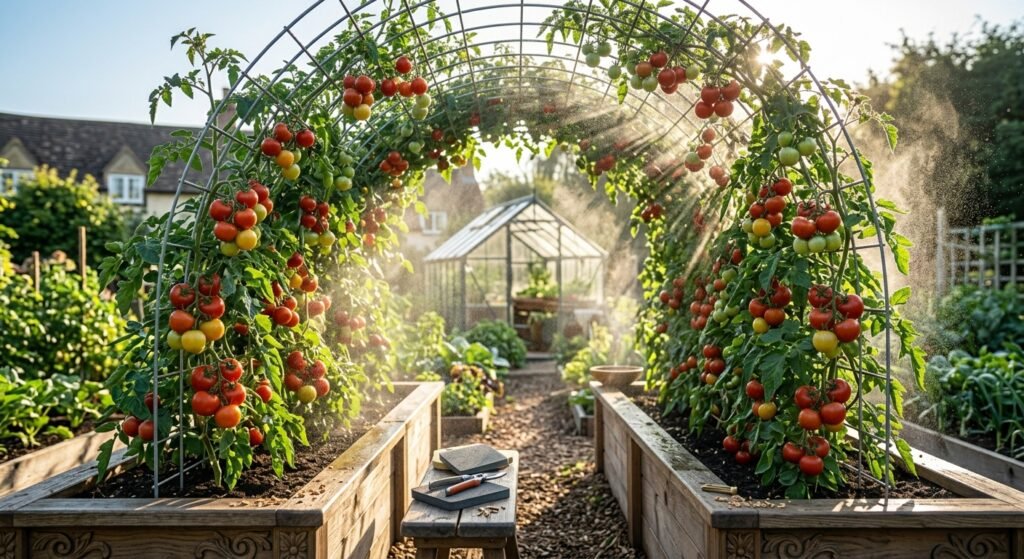
Stake and Wire Trellis
The stake and wire trellis sits between the other two. You drive a row of sturdy posts into the ground, and then run several lines of wire between them at different heights. The tomato vines are tied to the wire as they grow. It is also called a Florida weave in some circles, where you weave twine back and forth between stakes to hold plants in place.
This setup is strong, flexible, and easy to adjust. You can add more wire lines as the plants get taller. It also works for long rows, so commercial growers and market gardeners often use it. Tomato stakes made of wood or metal serve as the main support, and the wire keeps everything straight.
The weakness is that it takes more work to set up. You have to place the posts evenly, string the wire tight, and keep it tight all season. But once built, it is easy to maintain, and it works with nearly any type of tomato plant.
Choose this style if you want a strong yet low cost trellis, and you have a longer row to cover.
Best Way to Choose the Right Trellis
Picking the right trellis comes down to a few simple questions. Start with your tomato varieties. If you grow only determinate tomatoes, a sturdy cage may be all you need. If you grow indeterminate varieties, go with a taller, stronger system like a string, panel, or stake and wire setup.
Think about your garden space next. In a small garden or a patio planter, a single stake or a short string trellis fits best. In a larger plot, a cattle panel or long wire system makes more sense. Measure the area, and think about how much sun the plants will get. Tall trellises can cast shade on nearby crops, so place them on the north side of the bed.
Budget matters, too. A string trellis costs only a few dollars. A stake and wire setup costs a bit more. A cattle panel costs the most up front, but lasts the longest. If you plan to garden for many years, spending more now often saves money later.
Consider your own skills and time. If you hate pruning, a cage or panel gives you more room to be lazy. If you enjoy training plants and spending time in the garden, a string or wire system gives you more control. Be honest about how much weekly work you want to do.
Also think about the weather. Windy sites need extra strong posts and good anchoring. Heavy rain areas benefit from airy designs that dry quickly. If you live in a place with long summers, expect a taller plant, and build higher.
If you are still unsure, start small. Try one trellis on one or two plants and compare it with another method in the same bed. By the end of the season, you will know exactly what works best in your yard.
How to Install a Tomato Trellis
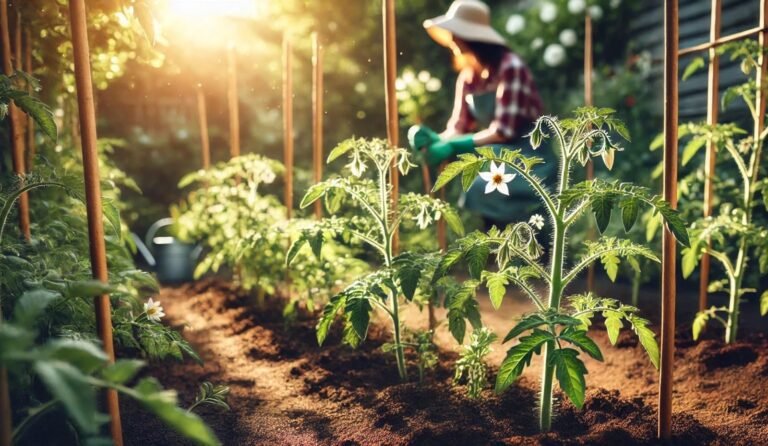
Putting up a trellis is not hard, but doing it right makes a big difference. The key is to build it before or right when you plant your tomatoes. Adding a trellis later can damage roots, so it is best to set it up first.
Set the Support Posts
Begin by marking your row. Decide how far apart to plant your tomatoes. A good rule is to place plants about 18 to 24 inches apart on a trellis, since they grow upward and do not need as much room as sprawling vines. If you use a cage, plan on closer to three feet apart. Leave at least three to four feet between rows so you can walk and work.
Next, set the end posts. These carry the most weight, so make them strong. Drive each one at least 12 to 18 inches into the ground. A post driver makes this easier than a hammer. If your soil is soft, dig a hole, set the post, and pack the dirt tight around it. Adding concrete is not required, but it helps in loose or sandy ground.
For a longer row, add a middle post every six feet. Six feet apart is a good spacing for most trellis systems. It keeps the wire from sagging without using too many posts. Check that each post stands straight up with a level. Posts that lean tend to get worse over time.
If you use a cattle panel, set a T post at each end, and wire the panel to them. For an arch, bend the panel gently and anchor the ends into the ground with rebar or stakes. Two people make this job much easier.
Space your posts evenly, and keep the tops at the same height. A uniform height makes the top wire easier to run and keeps your garden looking neat.
Attach Wire or String
Once the posts are set, run the top line. For a string system, stretch a strong wire between the end posts at about six feet high. Pull it tight, and tie it off at each post. Use a wire tensioner or twist the wire around a bolt to keep it taut.
Now hang the strings. Cut a piece of twine long enough to reach from the top wire to the base of each plant, plus a little extra. Tie one end to the wire, and the other end to a small stake near the plant or loosely around the base of the stem. Some gardeners drop the string into a ring of clips at the plant base.
For a stake and wire trellis, run horizontal wires at intervals. A common pattern is one line at about a foot off the ground, then another every foot or so up to the top. Tighten each line until it barely moves when you push it. Loose wire sags under the weight of fruit.
Choose good twine. Cheap string can rot in a few months, and a snapped line in August is no fun. Look for UV resistant garden twine, or use jute if you want something natural. Tie secure knots, and check them from time to time.
Create a Strong Support Structure
A trellis is only as strong as its weakest point. Take a few extra minutes to reinforce the whole setup. Brace the end posts with diagonal supports that angle into the ground. These keep the posts from tilting inward as the wire pulls.
Add a top rail if you can. A strip of wood or a length of conduit across the top ties all the posts together. This spreads out the load and keeps the frame square. If you use cattle panels, wire them to each post in several places with strong zip ties or metal wire.
Test your work by pushing on the frame. It should barely move. Imagine it loaded with 15 pounds of fruit per plant, plus leaves and rain. If it wobbles now, it will fail later. Fix weak spots before planting.
Finally, think about how you will reach everything. Leave a gap at one end so you can walk through. Place the trellis so the sun hits both sides of the row. And keep your tools nearby, so you can make quick repairs when needed.
Tips for Training Tomato Plants
Setting up the trellis is only half the job. The other half is training your plants to climb it. This takes a few minutes each week, and the payoff is big.
Start by choosing your growing style. Many gardeners prune to one leader, which means you keep a single main stem and remove most side shoots. This gives you a tall, tidy plant with big fruit. Others keep two or three stems for a bushier plant with more tomatoes, though each one will be smaller. Pick whichever suits your space and taste.
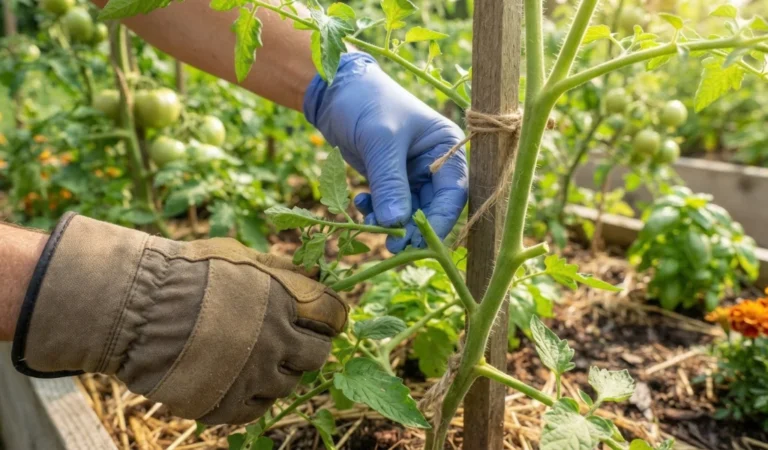
Check your plants once or twice a week. As the main stem grows, wrap it around the string or clip it to the support. Always wrap in one direction, usually clockwise, so the plant stays consistent. Do not tie too tight. Stems get thicker, and a tight tie can choke them. Tomato clips are handy here, since they have some give.
Prune the suckers. A sucker is a small shoot that grows in the joint between the main stem and a branch. Left alone, it grows into a full stem with its own flowers and fruit. Pinch off small suckers with your fingers, or cut larger ones with clean pruners. Do this while they are small, because large cuts can invite disease. Pruning is especially important for indeterminate varieties, which can turn into a jungle if ignored.
Remove the bottom leaves too. Once the plant is about three feet tall, take off the lower leaves up to the first flower cluster. These leaves are closest to the soil and most likely to get splashed with water and fungus. Clearing them improves air flow and keeps the plant healthier.
Watch your plants as the season goes on. When a vine reaches the top of the trellis, you can lower it gently or let it hang over the wire. Some growers cut the top off about a month before frost, so the plant puts its energy into ripening the fruit it already has. At the end of the season, remove the vines, clean the trellis, and store it for next year.
Finally, harvest often. Ripe fruit left on the vine adds weight and attracts pests. Pick when tomatoes are fully colored but still firm, and your plants will keep making more.
Common DIY Trellis Mistakes
Even a good plan can go sideways. Here are the mistakes gardeners make most often, and how to avoid them.
Using weak posts. Thin stakes or short posts bend under the weight of a mature plant. Choose heavy duty metal or thick lumber, and sink them deep.
Building too short. Indeterminate tomatoes can grow far past six feet. A trellis that is too short forces you to bend or cut the plant early. Plan for at least six feet of height above the ground.
Skipping the end bracing. The ends of the row take the most strain. Without diagonal supports, they lean inward and the whole line sags.
Planting too close. Crowded plants block airflow and invite disease. Keep your plants 18 to 24 inches apart on a trellis, and more for cages.
Tying stems too tight. A snug knot can cut into the stem as it grows. Leave a little slack, and use soft ties or clips.
Using cheap twine. Thin string breaks in wind or rain. Pick strong, weather resistant twine, and replace it each year.
Forgetting to prune. A trellis helps, but it will not do the work for you. Without regular pruning, plants fill with leaves and become too heavy.
Adding the trellis late. Pushing posts in after planting can hurt the roots. Build first, then plant.
Ignoring rust and wear. Cheap metal rusts and weakens quickly. Choose galvanized parts, and check for damage before each season.
Facing the wrong way. A tall trellis in the wrong spot can shade your garden. Place it on the north side, so the sun reaches your other plants.
Final Thoughts
A tomato trellis is one of the easiest ways to get a better harvest. It keeps plants clean, healthy, and easy to reach. It saves space, improves airflow, and makes pruning a breeze. Whether you pick a simple string setup, a stake and wire row, or a cattle panel arch, the right trellis will pay you back with every ripe tomato.
Start by knowing your tomato varieties. Pick a design that fits your garden space, budget, and weekly routine. Build strong, set your posts deep, and train your plants early. Then enjoy a season of tall, tidy vines loaded with fruit.
Ready to try it? Grab a few posts, a roll of twine, and a pair of pruners. Build your first trellis this weekend, and share your results with fellow gardeners. Once you taste a tomato picked from a well-supported plant, you will wonder why you waited so long.
Frequently Asked Questions
What is the best tomato trellis for beginners?
A simple string trellis is the easiest place to start. It costs little, takes just a few hours to build, and works well for indeterminate plants. If you want something stronger with less upkeep, try a cattle panel.
How tall should a tomato trellis be?
Aim for at least six feet above the ground. Many indeterminate tomatoes grow taller than that, so a trellis of seven or eight feet gives them room. You can always lower the vines or trim the tops later in the season.
How far apart should I plant tomatoes on a trellis?
Plant them about 18 to 24 inches apart if you prune to one stem. If you let plants grow with two or three stems, give them closer to three feet. Proper spacing helps airflow and lowers the risk of disease.
Do determinate tomatoes need a trellis?
Most do not need a tall one. A sturdy cage or a single stake usually works fine. However, a short trellis can still help keep fruit off the ground and make harvesting easier.
Can I use a tomato trellis in a raised bed or planter?
Yes. Trellises work very well in raised garden beds and large planters. Just make sure the posts are anchored well, and that the container is deep enough to hold the roots and the support. In an elevated garden bed, you can also attach the trellis to the frame itself.
How do I keep tomato vines attached to the trellis?
Use soft ties, tomato clips, or twine to attach the main stem every 8 to 12 inches. Wrap loosely so the stem has room to grow. Check the ties each week and adjust them as the plant gets thicker.
Should I prune my tomato plants on a trellis?
Yes, pruning helps a lot. Removing suckers and lower leaves keeps the plant tidy and improves airflow. A plant that is trellised and pruned usually gives bigger fruit and fewer disease problems.