When to Fertilize Pepper Plants After Planting: Fertilizer Dosage and Timing
When to Fertilize Pepper Plants After Planting: From Seedling to Harvest
Pepper plants are rewarding to grow, but they are also heavy feeders. Get the fertilizer timing wrong and you will end up with plants that either produce too much leafy growth or struggle to set fruit. Get it right and you will have healthy, productive plants loaded with peppers from summer through fall.
This guide covers everything you need to know about how to fertilize pepper plants after planting, including what nutrients they need at each growth stage, how to choose the right fertilizer, and when to make adjustments. Whether you are growing sweet bell peppers or fiery hot peppers, the principles are the same.
One thing worth noting early on: fertilizing is closely tied to the full growing cycle. Knowing when to harvest peppers matters just as much as knowing when to feed them, because once plants start putting energy into ripening fruit, your fertilizer approach should shift. To make peppers grow faster, use the right nutrients at each growth stage and avoid overfeeding. More on that below.
What to Feed Peppers and When to Fertilize Pepper Plants After Planting
Pepper plants go through several distinct growth stages, and their nutritional needs change at each one. Feeding them the wrong nutrients at the wrong time can cause more harm than good.
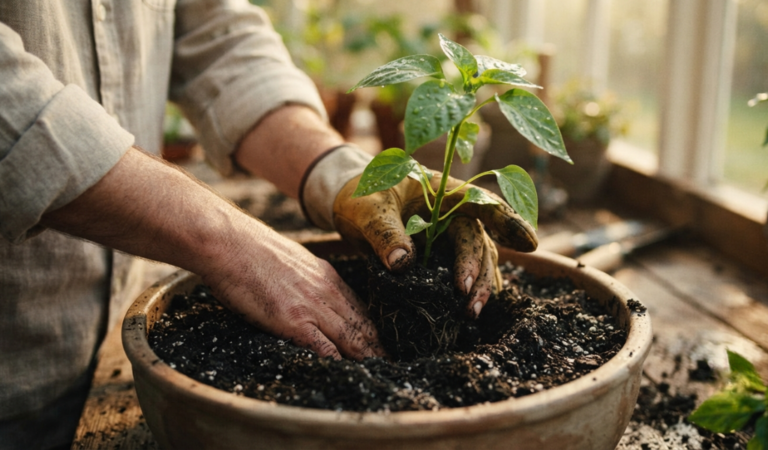
Generally speaking, you should start fertilizing pepper plants about two weeks after transplanting them into the garden. Before that point, most seedlings are still adjusting to their new environment, and adding fertilizer too soon can cause fertilizer burn on the tender roots. If you started your peppers from seed indoors, a diluted liquid fertilizer can be introduced once seedlings develop their first set of true leaves.
The goal is to provide what the pepper plant needs at each stage: strong roots and stems early on, then a shift toward flower and fruit production as the season progresses.
Soil pH: The Starting Point for Fertilizing Peppers
Before you add any fertilizer to the soil, it is worth taking a soil test. Pepper plants prefer a soil pH between 6.0 and 6.8. Outside of this range, plants cannot properly absorb nutrients even when fertilizer is present. A soil that is too acidic or too alkaline can cause yellow leaves and stunted growth regardless of how much you fertilize.
Most garden centers sell inexpensive soil test kits. If your pH is too low, add garden lime to raise it. If it is too high, sulfur or peat moss can help bring it down.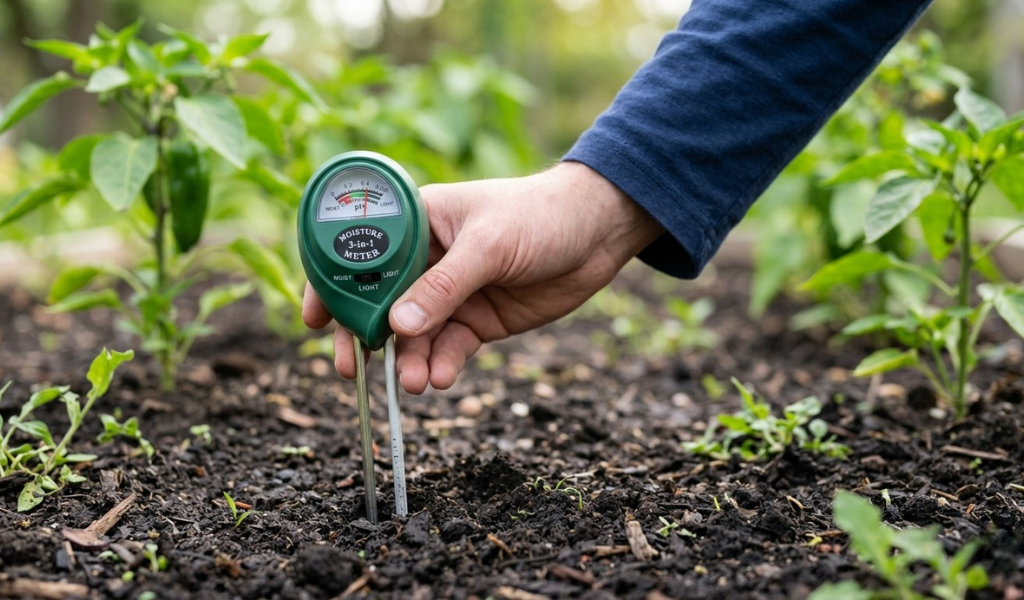 Getting the pH right before planting your pepper plants makes everything else easier.
The Three Primary Nutrients Pepper Plants Need (N-P-K)
Every fertilizer label shows three numbers, known as the NPK ratio. These numbers represent the percentage of nitrogen (N), phosphorus (P), and potassium (K) in the product. Understanding what each one does for your pepper plant will help you choose the right fertilizer at the right time.
Nitrogen (N)
Nitrogen drives leafy, vegetative growth. It is the nutrient responsible for deep green leaves and strong stems. Pepper plants need a good supply of nitrogen early in the season when they are putting on size and building structure. However, too much nitrogen later in the season can cause plants to keep producing leaves instead of flowers and fruit. This is a common mistake among home gardeners. If your plants look lush and green but are not setting fruit, excess nitrogen is often the reason.
Phosphorus (P)
Phosphorus supports root development and is critical during the flowering and fruiting stages. A fertilizer with a higher phosphorus content encourages peppers to produce more flowers, which leads to more fruit. If you notice slow growth, poor root development, or leaves with a purplish tint, your plants may be phosphorus deficient. When transitioning from vegetative growth to flowering, shifting toward a fertilizer with a higher phosphorus number makes a real difference. 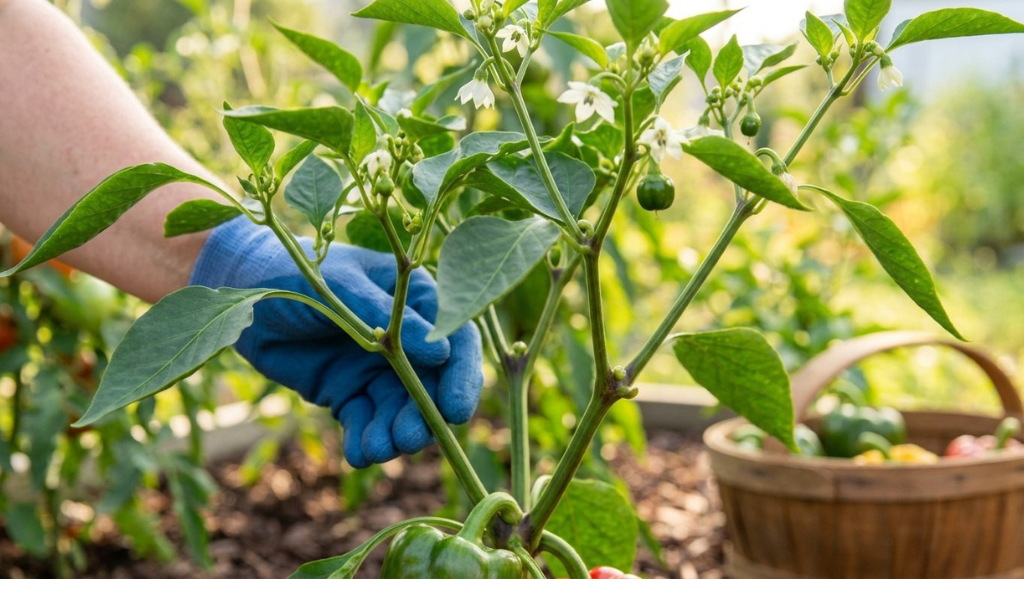
Potassium (K)
Potassium improves overall plant health, disease resistance, and fruit quality. It helps regulate water movement within the plant and plays a role in how sugars are transported to developing fruit. Hot pepper growers in particular tend to notice that adequate potassium leads to thicker-walled, better-flavored fruit. Phosphorus and potassium work well together during the fruiting phase, and many pepper fertilizers designed for this stage emphasize both.
Secondary Nutrients Peppers Still Depend On
Beyond the big three, pepper plants require several secondary nutrients to stay healthy and productive.
Calcium
Calcium is essential for cell wall strength. Without enough of it, pepper plants can develop blossom end rot, a common condition where the bottom of the fruit turns dark and mushy. This is especially common during periods of uneven watering, which affects calcium uptake. Calcium is often overlooked when choosing a fertilizer, but it plays a major role in fruit quality.
Magnesium
Magnesium is the central element in chlorophyll, which means it directly affects a plant’s ability to photosynthesize and produce energy. A magnesium deficiency shows up as yellowing between the leaf veins, a condition called interveinal chlorosis. This is where Epsom salt (magnesium sulfate) comes in as a popular home remedy. A diluted Epsom salt solution applied as a foliar spray or soil drench can help correct mild deficiencies.
Sulfur
Sulfur supports protein production and enzyme function within the plant. It also plays a role in the development of flavor compounds, which is why some hot pepper growers pay attention to sulfur availability during fruiting. Most complete fertilizers include some sulfur, and well-amended organic soil usually contains enough to meet the plant’s needs.
Trace Nutrients That Support Healthy Growth
In addition to the primary and secondary nutrients, pepper plants need small amounts of trace elements like iron, manganese, boron, zinc, and copper. These are needed in tiny quantities, but deficiencies can still cause problems. Iron deficiency, for example, causes yellowing in new growth. Most balanced fertilizers and healthy soils provide adequate trace nutrients, but if you are growing peppers in containers or heavily depleted soil, a complete micronutrient supplement can help.
How to Choose the Right Fertilizer for Peppers
Choosing a fertilizer depends on your plants’ current growth stage and your soil’s existing nutrient levels. Here is how to think through it at each phase of the season.
Early Growth (Seedlings and Transplants)
Young pepper plants and fresh transplants need gentle nutrition. A starter fertilizer with a balanced NPK ratio, something like 10-10-10 or a diluted all-purpose fertilizer, works well during this period. Liquid fertilizers are ideal for seedlings because they are easier to control and less likely to burn roots. Avoid heavy applications right after transplanting your pepper plants, as roots are still getting established and are sensitive to excess fertilizer.
Vegetative Growth
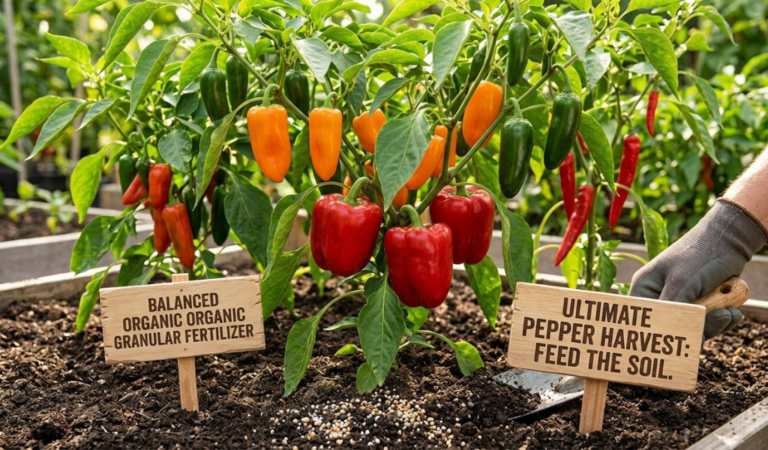
Once your pepper plant is actively growing and filling out, it benefits from a fertilizer that is slightly higher in nitrogen. Something in the range of 5-3-3 or a similar organic fertilizer blend supports strong stem and leaf development. This is also a good stage to work a slow-release granular fertilizer into the soil around your plants, which provides steady nutrition over several weeks without requiring frequent reapplication.
Flowering and Fruiting
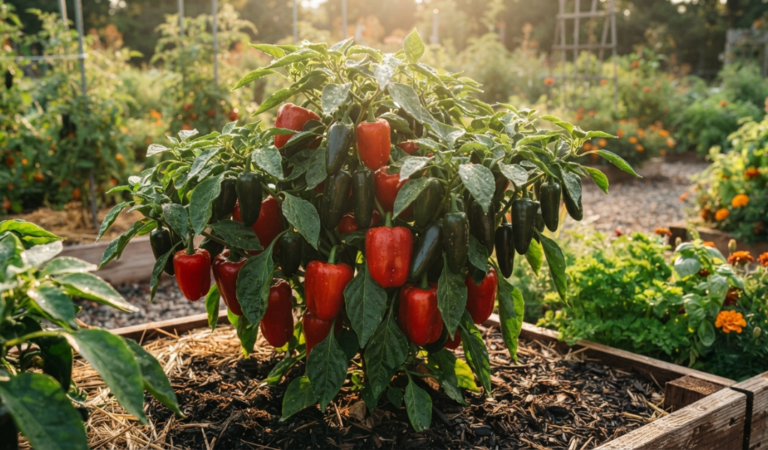
When flower buds begin to appear, it is time to change direction. Reduce nitrogen and increase phosphorus and potassium. A fertilizer with an NPK ratio like 5-10-10 or 3-12-12 encourages fruit set and supports the plant’s increased energy demands during fruiting. Many experienced pepper growers switch to a tomato fertilizer at this stage since tomatoes and peppers have similar needs during fruiting. Continue feeding throughout the fruiting period right up to when to harvest peppers.
How to Fertilize Pepper Plants After Planting (Step by Step)
Here is a practical fertilizer schedule to follow from transplant to harvest:
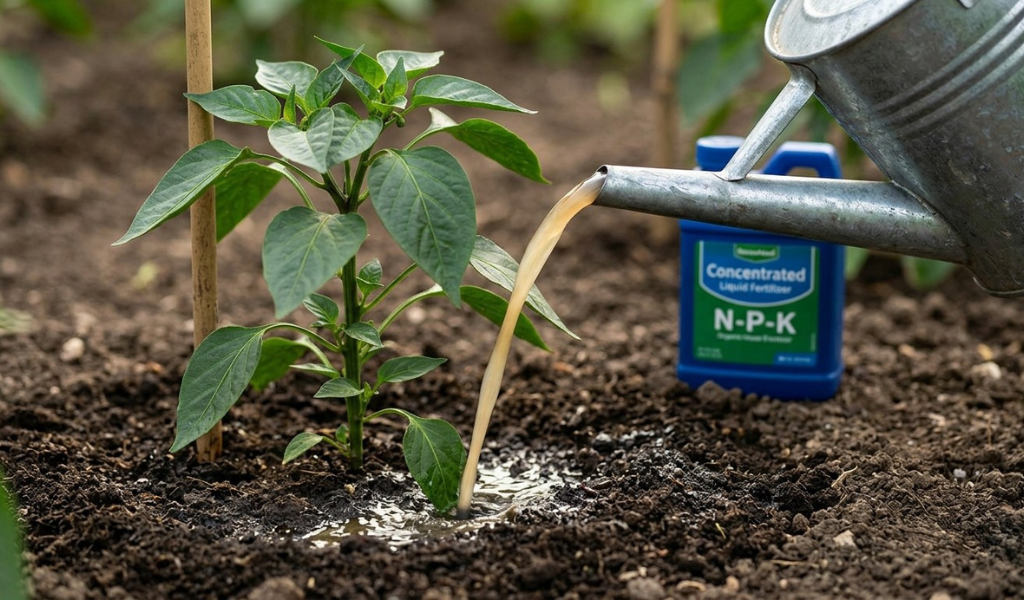 Week 2 after transplanting: Apply a diluted liquid all-purpose fertilizer at half strength. This gives roots time to settle before introducing full fertilizer doses.
Weeks 3 to 6: Begin regular fertilizing every 7 to 14 days with a balanced liquid fertilizer, or apply a granular slow-release fertilizer once and water it in thoroughly. Keep an eye on leaf color. Deep green leaves are a good sign. Pale or yellow leaves may indicate a need for more nitrogen.
When flower buds appear: Switch to a lower-nitrogen, higher-phosphorus-and-potassium formula. Continue applying every 10 to 14 days.
During heavy fruiting: Maintain feeding with your fruiting fertilizer. Make sure you are also watering consistently. Uneven watering leads to calcium uptake problems even when calcium is present in the soil.
Late season: As plants approach the end of the season and you are nearing harvest, you can taper off fertilizing. The plant’s energy is focused on ripening existing fruit rather than producing new growth.
Always follow the instructions on the fertilizer package. Applying more than the recommended amount does not speed up growth and can cause fertilizer burn.
Importance of Staking Pepper Plants
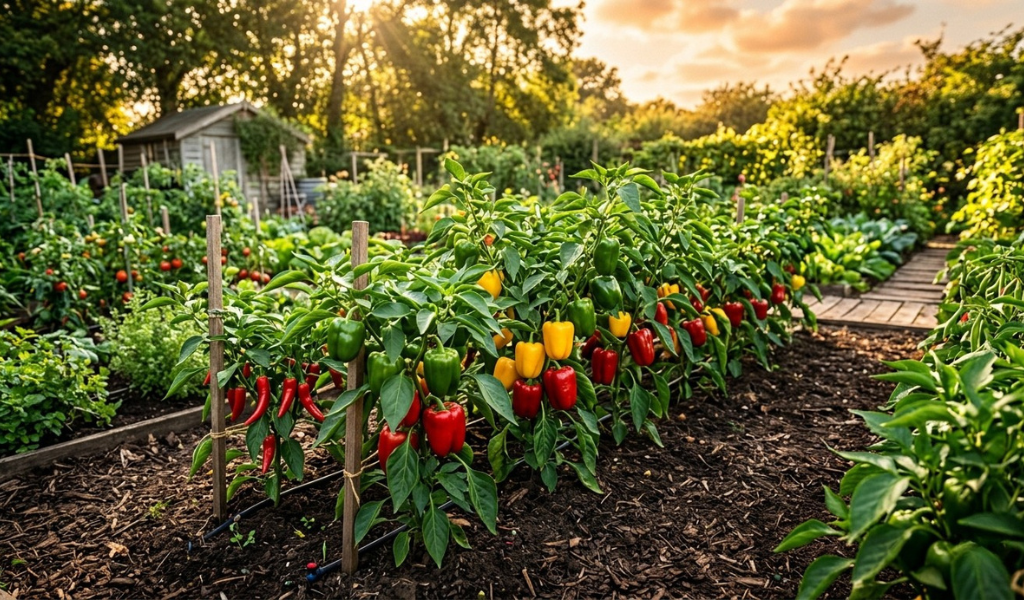
Fertilizing well leads to heavy, productive pepper plants, which is exactly why staking matters. As pepper plants fill out and begin carrying the weight of developing fruit, stems can snap or bend under the load. A simple wooden stake or tomato cage placed early in the season gives the plant structure to grow upright.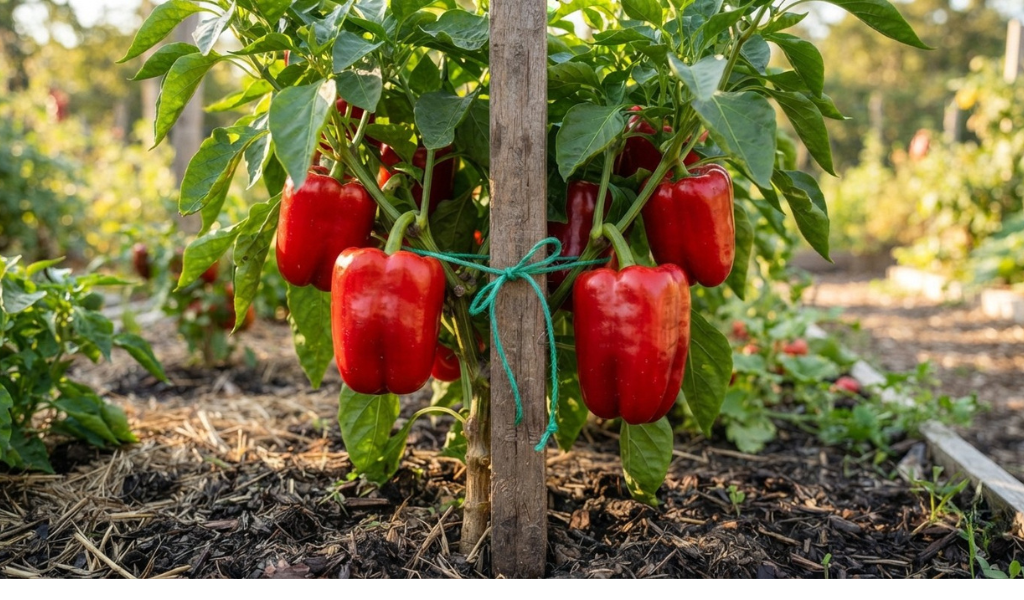 This also improves air circulation around the foliage, which reduces the risk of fungal disease. For larger pepper varieties like bell peppers or larger hot pepper types, stakes are especially worth the effort.
Fertilizing Tips to Avoid Common Problems
Watch for yellow leaves. Yellowing in older, lower leaves often points to nitrogen deficiency. Yellowing in new growth is more likely linked to iron or magnesium issues. Understanding why pepper plants turning yellow can help you identify nutrient problems early and keep your plants healthy.
Do not fertilize dry soil. Always water your plants before applying fertilizer, especially granular types. Fertilizer applied to dry soil can concentrate around roots and cause burning. Knowing When to Fertilize Pepper Plants After Planting helps ensure nutrients are applied safely and effectively. Proper watering and timing support healthy roots, strong growth, and better pepper production throughout the growing season.
Potted pepper plants need more frequent feeding. Containers drain nutrients faster than garden beds, so if you are growing peppers in pots, plan to fertilize every 7 to 10 days during the growing season using a liquid fertilizer. Regular feeding helps replenish nutrients, support healthy root development, encourage flowering, and promote steady pepper production throughout the season.
Avoid excess fertilizer late in the season. Once peppers are sizing up and approaching harvest, heavy feeding encourages new vegetative growth at the expense of ripening fruit. At this stage, focus on consistent watering, sunlight, and proper plant care rather than pushing additional leafy growth. If fertilizer is needed, use it sparingly and choose a formula that supports fruit development. Reducing unnecessary feeding can help peppers mature properly, develop better color, and reach harvest at the right time.
Organic fertilizers release slowly. Compost, worm castings, fish emulsion, and kelp meal all feed the soil and the plant over time. They are less likely to cause burn and improve soil structure with repeated use. Many experienced gardeners combine organic fertilizer with occasional liquid feeding for balanced results. Choosing the best organic fertilizer depends on your plant’s needs, soil condition, and growth stage. Using the right combination can support stronger roots, healthier foliage, better flowering, and more productive harvests.
Final Thoughts
Growing healthy and productive pepper plants comes down to giving them what they need, when they need it. Start with good soil pH, choose a fertilizer that matches your plant’s growth stage, and adjust your approach as the season shifts from vegetative growth to flowering and fruiting. Pay attention to what your plants are telling you through their leaves, growth rate, and fruit production, and you will be well ahead of the curve.
Whether you are growing bell peppers, hot peppers, or anything in between, a consistent fertilizer schedule makes a real difference. Start simple, stay observant, and you will be rewarded with a productive harvest.
Frequently Asked Questions
What do coffee grounds do for pepper plants?
Coffee grounds add organic matter to the soil and can slightly lower soil pH over time, which may benefit peppers growing in alkaline conditions. They also contain small amounts of nitrogen. However, they should be used in moderation and mixed into the soil rather than piled around the base of the plant, as thick layers can restrict water and air movement.
Do peppers like to be watered every day?
Not necessarily. Pepper plants prefer consistent moisture but not waterlogged soil. In hot weather, watering every one to two days may be needed. In cooler or cloudy conditions, less frequent watering is usually enough. The goal is to keep the soil evenly moist without letting it dry out completely or stay soggy.
Does Epsom salt help peppers grow?
Epsom salt (magnesium sulfate) can help if your pepper plants are showing signs of magnesium deficiency, such as yellowing between the leaf veins. It is not a fertilizer and does not replace a balanced fertilizer regimen. A tablespoon dissolved in a gallon of water, applied as a foliar spray or soil drench every two to four weeks, is a common approach.
Is Miracle-Gro good for pepper plants?
Yes. Miracle-Gro All Purpose Plant Food is a popular and effective option for pepper plants, particularly during the vegetative growth stage. For fruiting, you may want to switch to a formula with a higher phosphorus and potassium content, such as Miracle-Gro Tomato Plant Food, which is well-suited for fruiting crops like peppers.
Can you over-fertilize pepper plants?
Yes, and it happens more often than gardeners realize. Too much nitrogen causes lush green growth but poor fruit production. Excess fertilizer in general can cause fertilizer burn, which shows up as brown leaf tips and wilting. Always follow the dosage instructions on your fertilizer and avoid applying more frequently than recommended.
What nutrients do pepper plants need?
Pepper plants need nitrogen, phosphorus, and potassium as their primary nutrients, along with calcium, magnesium, and sulfur as secondary nutrients. Small amounts of trace elements like iron, boron, and zinc also support healthy plant function. The balance of these nutrients should shift depending on the growth stage, with nitrogen prioritized early and phosphorus and potassium becoming more important during flowering and fruiting.
How often should I fertilize pepper plants?
As a general rule, fertilize pepper plants every 7 to 14 days using a liquid fertilizer, or apply a slow-release granular fertilizer every four to six weeks. Potted pepper plants typically need more frequent feeding since containers lose nutrients faster than garden beds. Always factor in rainfall and soil conditions when deciding how often to apply fertilizer.
When Should I Start Fertilizing My Pepper Plants?
Start fertilizing pepper plants after seedlings develop their first set of true leaves and begin active growth. For young pepper seedlings, use a diluted, balanced fertilizer at about one-quarter strength every 1–2 weeks. Avoid heavy feeding early, as too much fertilizer can damage tender roots. Once pepper plants are established and transplanted, gradually increase feeding based on their growth, soil quality, and fertilizer type.
How Long Do You Wait to Fertilize Your Seedlings?
Wait until pepper seedlings have developed their first true leaves before applying fertilizer. This is usually about 2–4 weeks after germination, depending on growing conditions. Start with a weak fertilizer solution and increase the strength gradually as the seedlings grow. Proper timing helps provide the nutrients pepper plants need without causing fertilizer burn or stunted growth.