How to Make Peppers Grow Faster: Best Care and Fertilizing Tips
How to Make Peppers Grow Faster: Complete Growing Guide
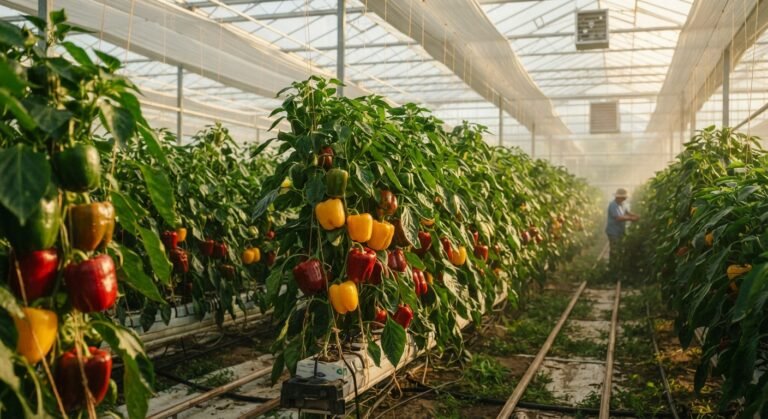
If you have ever stood in your garden staring at a pepper plant that refuses to speed up, you are not alone. Learning how to make peppers grow faster is one of the most common questions home gardeners ask, especially when tomatoes and cucumbers nearby seem to be racing ahead while the pepper patch barely moves. The good news is that pepper plants are not slow by nature. They just have specific needs, and once those needs are met, growth picks up noticeably within a few weeks. This guide walks you through everything from soil prep to fruit production so your pepper plants can reach their full potential this season.
What Do Pepper Plants Need to Grow Faster?
Before jumping into fixes, it helps to understand what actually drives pepper growth. These plants are native to warm climates, and they thrive when conditions mimic their natural habitat. That means consistent warmth, plenty of direct light, steady moisture, and soil that is rich but never soggy. Peppers also respond strongly to nutrients, particularly phosphorus and potassium once flowering begins. When any one of these factors is missing, the plant redirects its energy toward survival instead of growth, which is why so many gardeners end up with short, stunted plants even after months of care. Getting the basics right from day one is the single biggest factor in speeding things up.
Choose the Right Pepper Variety
Not all peppers grow at the same pace, and picking the wrong variety for your climate or timeline can set you up for frustration. Bell peppers, for example, tend to take longer to mature than smaller chili varieties. If your growing season is short or you simply want quicker results, look for varieties bred specifically for early maturity. Seed packets and plant tags usually list the number of days to maturity, so comparing a few options before planting can save you weeks of waiting later on.
Fast-Growing Pepper Varieties
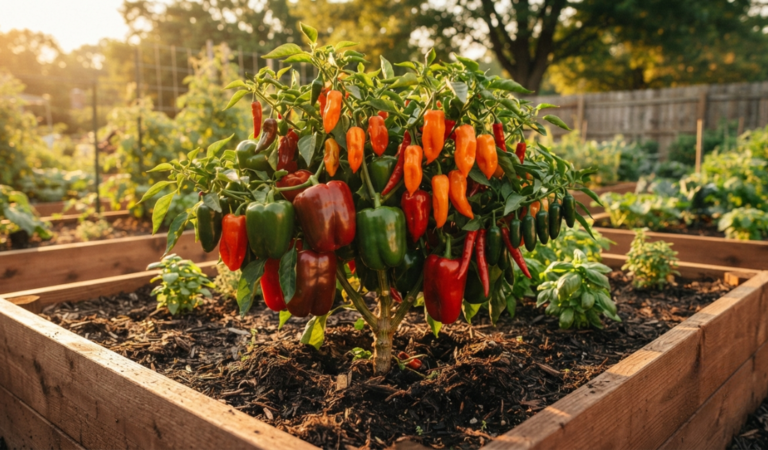
Some cultivars are simply built for speed. Jalapenos and serranos are known for maturing quickly, often producing usable peppers within 60 to 75 days. Shishito peppers are another excellent choice for gardeners who want fast turnaround, and they tend to be forgiving of minor care mistakes. Among sweet peppers, mini bell varieties and banana peppers usually outpace standard bell peppers by several weeks. If speed is your main goal, starting with one of these varieties gives you a head start before any care techniques even come into play.
Choosing Healthy Pepper Plants or Seeds
Growth speed often begins before the plant ever touches soil. Weak or old seeds germinate slowly and unevenly, while seedlings that already look pale or leggy at the nursery rarely catch up later. When buying seeds, choose fresh packets from a reputable source and check the germination rate if it is listed. When buying starter plants, look for compact stems, deep green leaves, and no visible yellowing or spotting. A strong start makes every later stage of growth easier and faster.
Prepare the Soil for Faster Pepper Growth
Soil is where most pepper growth problems actually begin, even though gardeners often blame sunlight or watering first.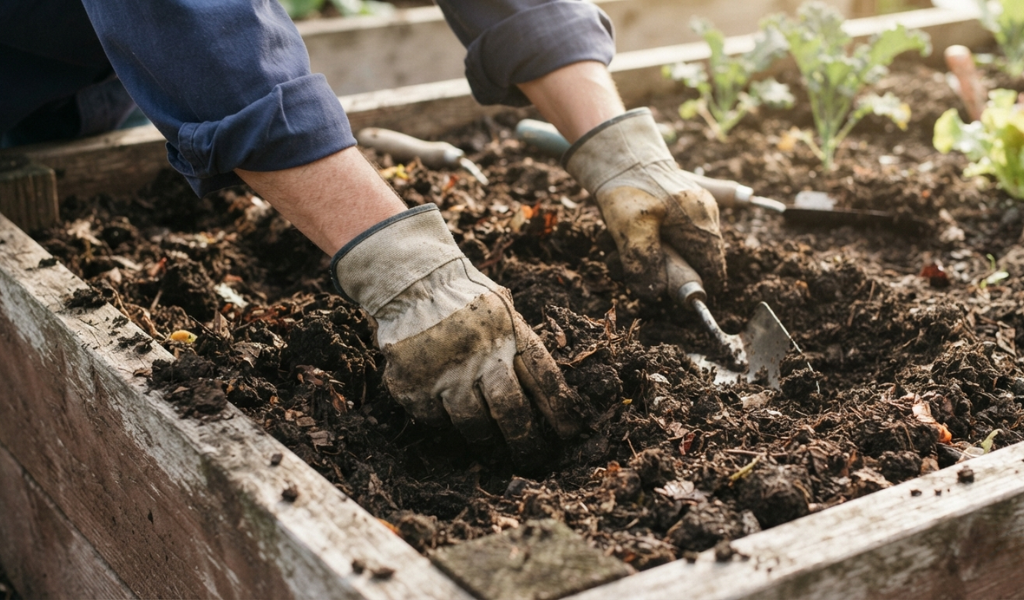 Peppers are somewhat particular about what is happening beneath the surface, and getting this right pays off for the entire growing season.
Use Nutrient-Rich, Well-Draining Soil
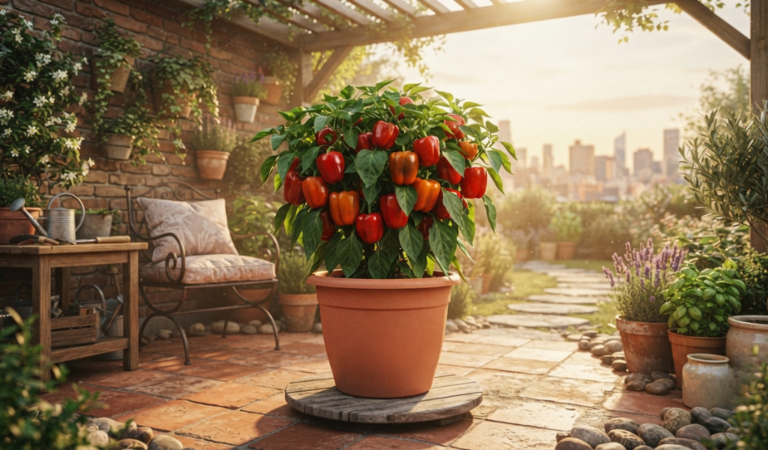
Peppers grow best in loose, well-draining soil that still holds enough organic matter to feed the roots. Heavy clay soil traps water and suffocates roots, while sandy soil drains too fast and leaves the plant hungry. Mixing in compost or well-rotted manure before planting improves both structure and nutrition at the same time. Raised beds or large containers filled with a quality potting mix are also a reliable option if your native soil is poor.
Check and Adjust Soil pH
Pepper plants prefer slightly acidic to neutral soil, generally in the range of 6.0 to 6.8. Outside this range, roots struggle to absorb nutrients even if those nutrients are technically present in the soil. A simple home pH test kit can tell you where you stand. If the soil is too alkaline, adding sulfur or peat moss can lower it gradually. If it is too acidic, garden lime helps bring it back into balance.
Give Pepper Plants Enough Sunlight
Light is fuel for pepper plants, and skimping on it is one of the fastest ways to slow growth to a crawl. Peppers use sunlight to power photosynthesis, which directly determines how quickly they build new leaves, stems, and eventually fruit.
How Much Sun Do Peppers Need?
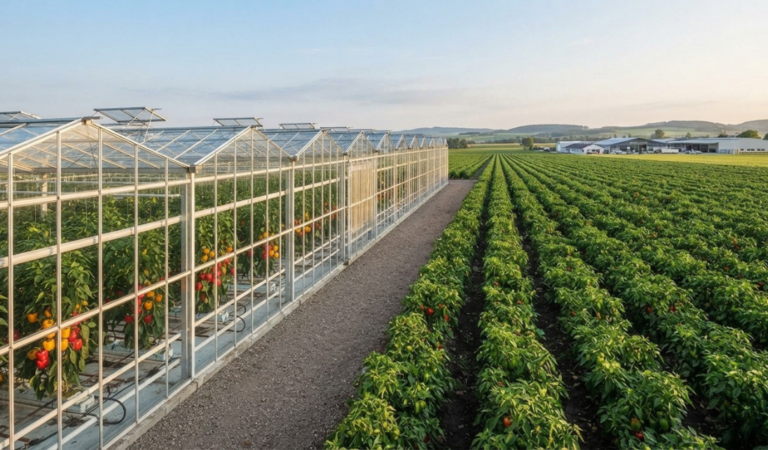
Most pepper varieties need at least six to eight hours of direct sunlight every day. In cooler climates, more sun exposure is generally better, while in extremely hot regions some afternoon shade can prevent stress. If you are growing peppers indoors or in a greenhouse, a grow light rated for vegetable production can fill the gap during shorter winter days.
Signs Your Pepper Plant Needs More Light
A pepper plant that is not getting enough sun often looks thin and stretched, with long gaps between leaves as it reaches toward any available light source. Leaves may appear a duller green than normal, and flowering can be delayed or reduced significantly. If you notice these signs, try relocating container plants to a sunnier spot or trimming back nearby foliage that might be casting shade.
Water Pepper Plants Correctly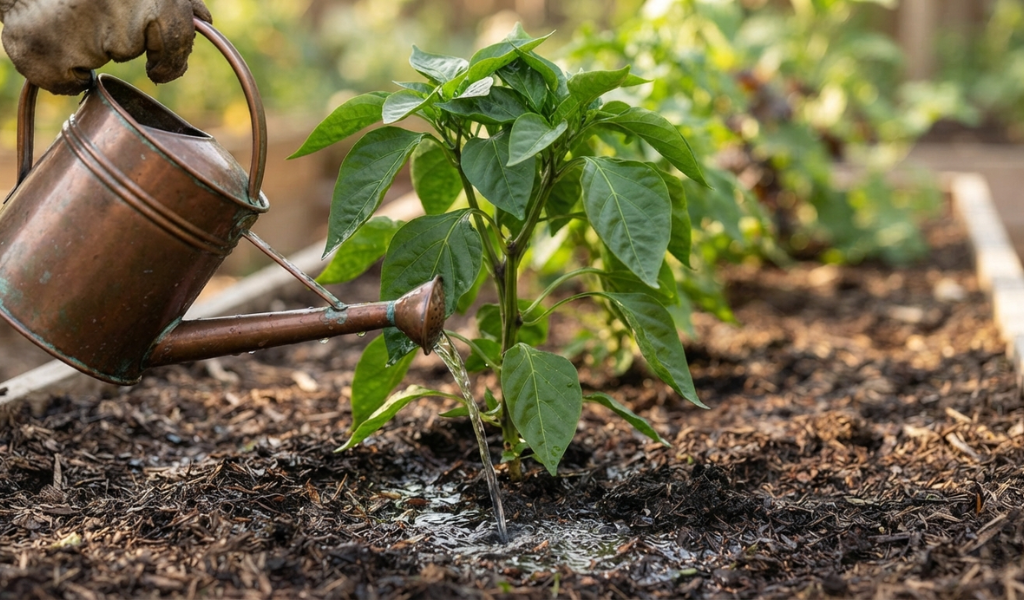
Watering seems simple, but it is one of the areas where small mistakes cause the biggest slowdowns in growth. Peppers want consistency far more than they want large amounts of water at once.
How Often to Water Peppers
In general, pepper plants do well with about one to two inches of water per week, adjusted for rainfall and temperature. Rather than sticking to a strict schedule, check the top inch of soil with your finger. If it feels dry, it is time to water. During hot summer stretches, container plants may need watering daily since pots dry out faster than garden beds.
Avoid Overwatering and Underwatering
Too much water pushes oxygen out of the soil and can lead to root rot, which shows up as wilting leaves even though the soil is wet. Too little water causes the plant to drop blossoms and slow its growth to conserve energy. The goal is soil that stays evenly moist, similar to a wrung-out sponge, never fully dry and never waterlogged. Mulching, which is covered later in this guide, makes maintaining that balance much easier.
Use the Right Fertilizer for Faster Growth
Feeding pepper plants at the right time with the right nutrients can make a visible difference within just a couple of weeks. Peppers are moderately heavy feeders once they start putting on real growth.
Best Fertilizer for Pepper Plants
During the early growing stage, a balanced fertilizer with roughly equal nitrogen, phosphorus, and potassium supports leafy growth. Once flowers begin to appear, switching to a formula lower in nitrogen and higher in phosphorus and potassium encourages the plant to focus on fruit rather than continued leaf growth. Organic options like fish emulsion, bone meal, and compost tea work well for gardeners who prefer natural inputs, while granular or liquid synthetic fertilizers offer more precise control.
When and How Often to Fertilize Peppers
A good rule of thumb is to fertilize lightly every two to three weeks throughout the growing season. Avoid heavy doses of nitrogen once flowering starts, since too much nitrogen at that stage often produces bushy plants with very little fruit. Always water the soil before and after applying fertilizer to prevent burning the roots.
Keep Pepper Plants Warm
Temperature has a bigger influence on pepper growth than most gardeners realize. Peppers are tropical in origin, and cold stress can stall growth almost completely, sometimes for weeks at a time.
Ideal Temperature for Pepper Growth
Pepper plants grow fastest when daytime temperatures sit between 70 and 85 degrees Fahrenheit, with nighttime temperatures staying above 60 degrees. Growth slows noticeably below 55 degrees, and prolonged exposure to cold can cause blossom drop or permanent stunting.
Protecting Peppers From Cold Weather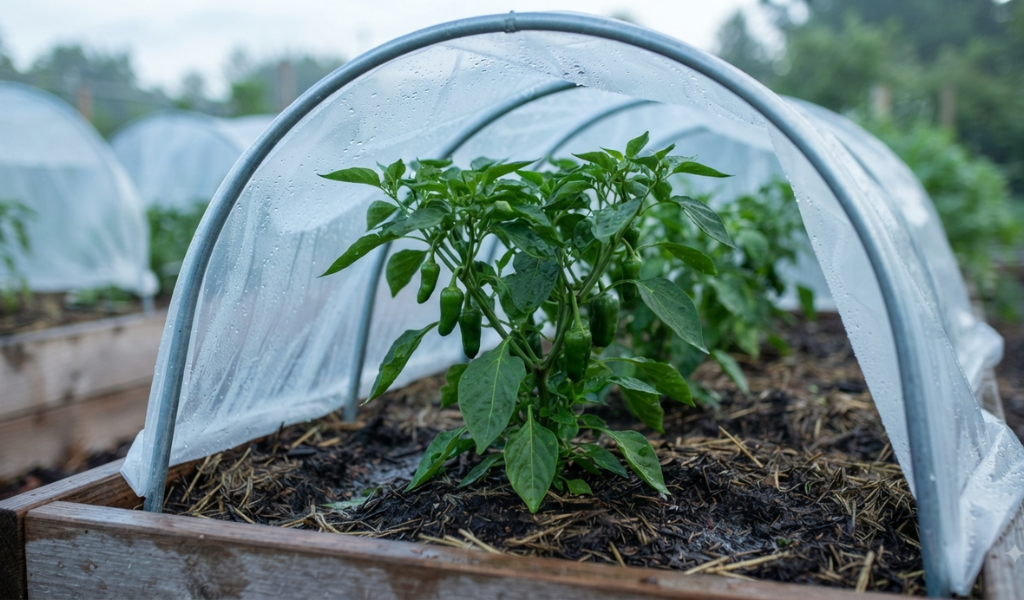
If a cold snap is expected, covering plants with a frost cloth or moving container plants indoors overnight can prevent setbacks. Black plastic mulch also helps by absorbing heat during the day and releasing it slowly at night, which keeps root zones warmer during cool spring and fall periods.
Improve Pepper Plant Growth With Proper Care
Beyond the core needs of light, water, and nutrients, a handful of ongoing care habits can noticeably speed up how fast pepper plants develop.
Mulching Around Pepper Plants
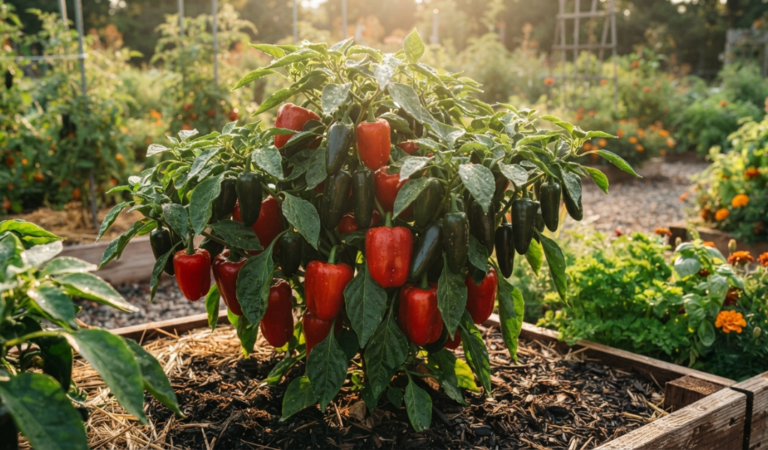
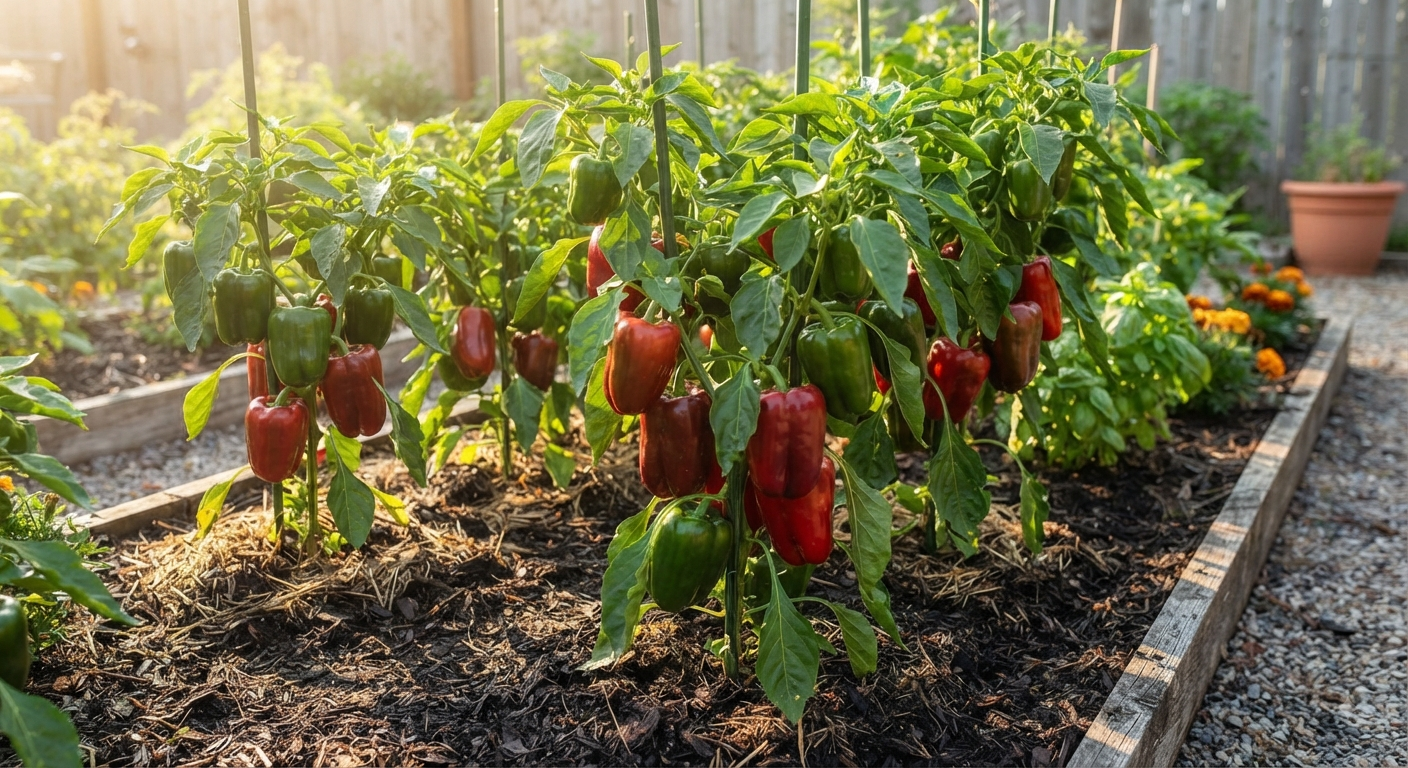
A two to three inch layer of mulch around the base of each plant helps regulate soil temperature, retain moisture, and suppress weeds that would otherwise compete for nutrients. Straw, shredded bark, and compost all work well as mulch materials for pepper beds.
Providing Support for Growing Plants
As pepper plants grow taller and start carrying fruit, the added weight can cause branches to bend or snap. Simple stakes or small tomato cages give the plant structural support, which allows it to put energy into growth rather than recovering from damage.
Pruning Pepper Plants When Necessary
Light pruning of the lower leaves and any early flower buds on young plants can redirect energy toward root and stem development first. This slightly delays flowering but often results in a sturdier plant that grows faster and produces more once it does start flowering.
Prevent Pests and Diseases From Slowing Growth
Even with perfect soil, light, and water, pests and disease can undo weeks of progress in just a few days. Staying ahead of these problems keeps growth on track.
Common Pepper Plant Pests
Aphids, spider mites, and whiteflies are among the most frequent visitors to pepper plants, often clustering on the undersides of leaves where they are easy to miss. Regularly inspecting leaves and using insecticidal soap or neem oil at the first sign of trouble usually keeps populations under control before they cause serious damage.
Signs of Disease and Nutrient Problems
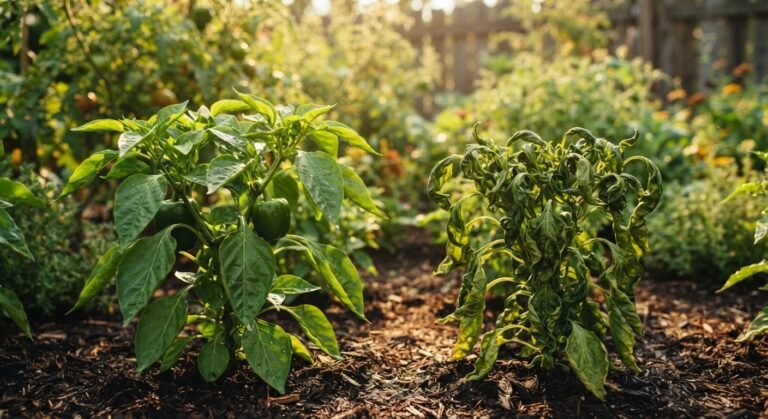
Yellowing leaves can point to several different issues, including nitrogen deficiency, overwatering, or early fungal disease, so it helps to look at the whole plant rather than just one symptom. Dark spots on leaves often signal fungal or bacterial infection, especially in humid conditions. Curling leaves combined with stunted growth can indicate a viral infection spread by pests, which unfortunately usually means removing the affected plant to protect the rest of the garden.
How to Get Pepper Plants to Produce Fruit Faster
Growing a healthy plant is only half the goal for most gardeners. The other half is getting that plant to actually produce peppers quickly once it matures.
Encourage Healthy Flowering
Consistent watering and a phosphorus-rich fertilizer during the early flowering stage encourage more blooms to form. Extreme heat above 90 degrees can cause flowers to drop before they are pollinated, so providing light afternoon shade during heat waves can protect the flowering process.
Support Pollination and Fruit Development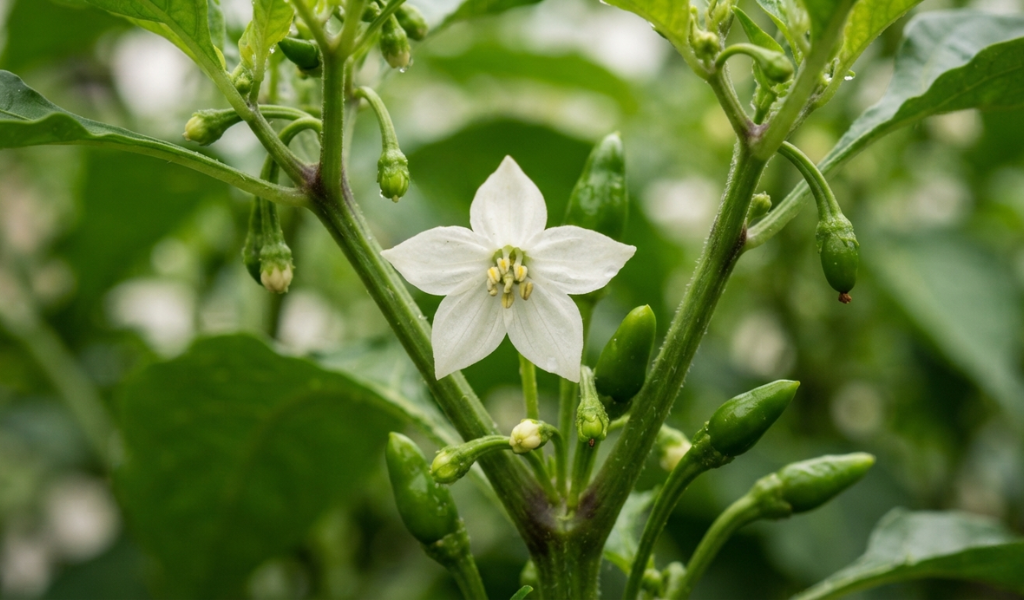
Peppers are self-pollinating, but a gentle shake of the plant or a light breeze helps pollen move between flower parts more effectively. Gardeners growing peppers indoors or in enclosed greenhouses often pollinate by hand using a small brush, gently transferring pollen from flower to flower.
Avoid Common Pepper Growing Mistakes
Overcrowding plants too closely together limits airflow and light, which slows growth across the entire bed. Skipping the hardening off process before transplanting seedlings outdoors can shock young plants and delay growth by weeks. Inconsistent watering, whether too much or too little, remains one of the most common reasons pepper plants fail to speed up even when everything else is done correctly.
Conclusion
Getting peppers to grow faster comes down to consistency rather than any single trick. Warm temperatures, full sun, well-draining nutrient-rich soil, and steady watering create the foundation, while smart fertilizing and simple care habits like mulching and pruning push growth along even further. Add in early pest management and a bit of attention during flowering, and most gardeners see noticeably quicker results within a single season. Start with one or two changes from this guide, watch how your plants respond, and adjust from there. Your pepper patch has more potential than it might be showing right now.
Frequently Asked Questions
How long does it take for pepper plants to grow fast?
Most pepper varieties take between 60 and 90 days from transplant to first harvest, though fast-growing types like jalapenos can be quicker. Providing ideal light, warmth, and nutrients throughout that window helps plants reach that timeline rather than falling behind it.
What is the best fertilizer to make peppers grow faster?
A balanced fertilizer works well early on, followed by a lower-nitrogen, higher-phosphorus formula once flowering begins. This shift encourages fruit production instead of excess leaf growth.
Why are my pepper plants growing so slowly?
Slow growth usually traces back to insufficient sunlight, cold temperatures, poor soil drainage, or inconsistent watering. Checking each of these factors individually often reveals the culprit.
Can peppers grow faster in containers than in the ground?
Containers can actually speed up early growth since the soil warms faster in spring, but they also dry out more quickly and need more frequent watering and feeding to keep pace.
Does pruning really help peppers grow faster?
Light pruning of early buds and lower leaves redirects energy into root and stem development, which often leads to stronger, faster growth once the plant matures.
How much sunlight do pepper plants need to grow quickly?
Six to eight hours of direct sunlight daily is ideal. Less than that typically results in leggy growth and delayed flowering.
What temperature makes peppers grow the fastest?
Daytime temperatures between 70 and 85 degrees Fahrenheit, paired with nighttime temperatures above 60 degrees, create the fastest and most consistent growth conditions for pepper plant