Why Pepper Plants Turning Yellow Even With Fertilizer: Causes, Solutions, and Fertilizer Tips
Why Pepper Plants Turning Yellow Even With Fertilizer?Common Causes and Fixes
You’ve been watering on schedule, feeding your plants, and doing everything right so why are your pepper plants turning yellow? It’s one of the most frustrating things a gardener can face. You’re putting in the effort, and the plants still look sick.
Yellow leaves on pepper plants don’t always mean you’re doing something wrong. But they do mean something needs to change. The cause could be as simple as too much water or as sneaky as a pest hiding under the leaves. And yes, even fertilizer, the very thing you’re using to help can sometimes be part of the problem.
Before you add more nutrients or water, it’s worth slowing down and diagnosing what’s actually going on. Many gardeners make the mistake of throwing more fertilizer at yellowing leaves, only to make things worse. If you’ve been wondering whether fish fertilizer is good for pepper plants, the short answer is yes it’s a great organic nitrogen source but it still won’t fix yellowing caused by overwatering, disease, or pests.
This guide walks you through every common reason pepper plant leaves turn yellow, how to check your soil, and exactly what to do to fix the problem and keep it from coming back.
Why Pepper Plants Turn Yellow Even With Fertilizer
Here’s the thing fertilizer is not a cure-all. Pepper plants are turning yellow for many reasons, and fertilizer only addresses one of them: nutrient deficiency. If the yellowing is caused by overwatering, root rot, pests, or disease, adding more fertilizer won’t help. In fact, it can make the situation worse by burning already-stressed roots.
Yellowing leaves are a stress signal. The plant is telling you something is off. Your job is to figure out what that something is before reaching for more products. Once you understand the root cause, fixing it becomes much more straightforward.
Common Reasons Pepper Plants Turn Yellow
There are several reasons why leaves on your pepper plants start turning yellow. Here’s a breakdown of the most common ones.
Overwatering
Overwatering is one of the most common reasons pepper plants turn yellow. When the soil stays soggy for too long, roots can’t get the oxygen they need. They begin to break down, and the plant loses its ability to absorb water and nutrients. Even if there’s plenty of nitrogen in the soil, the plant can’t use it if the roots are damaged.
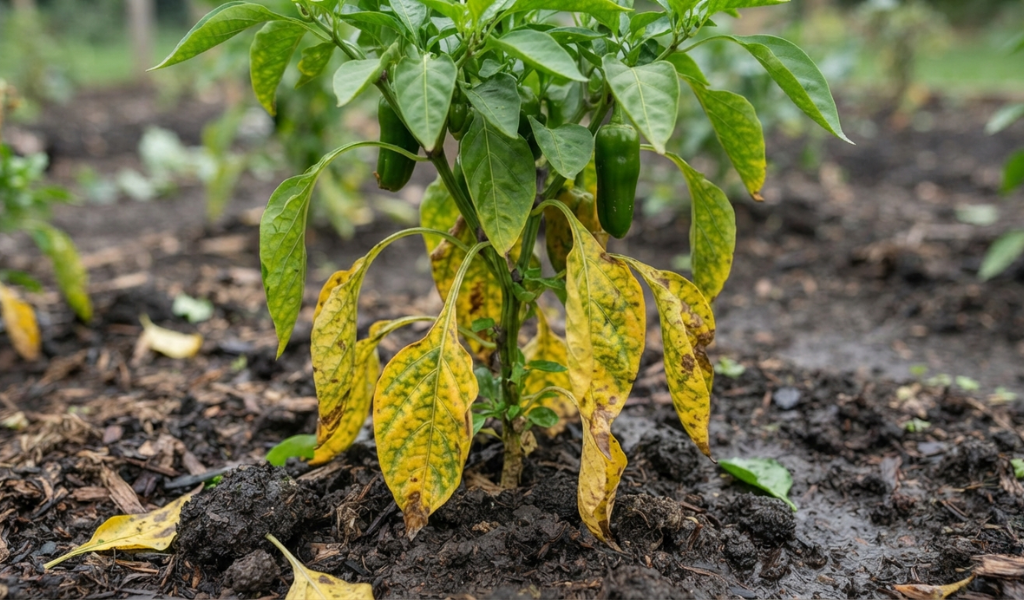
Signs of overwatering include soft, drooping stems, soggy soil that never fully dries out, and yellowing that starts on the lower leaves and moves up the plant.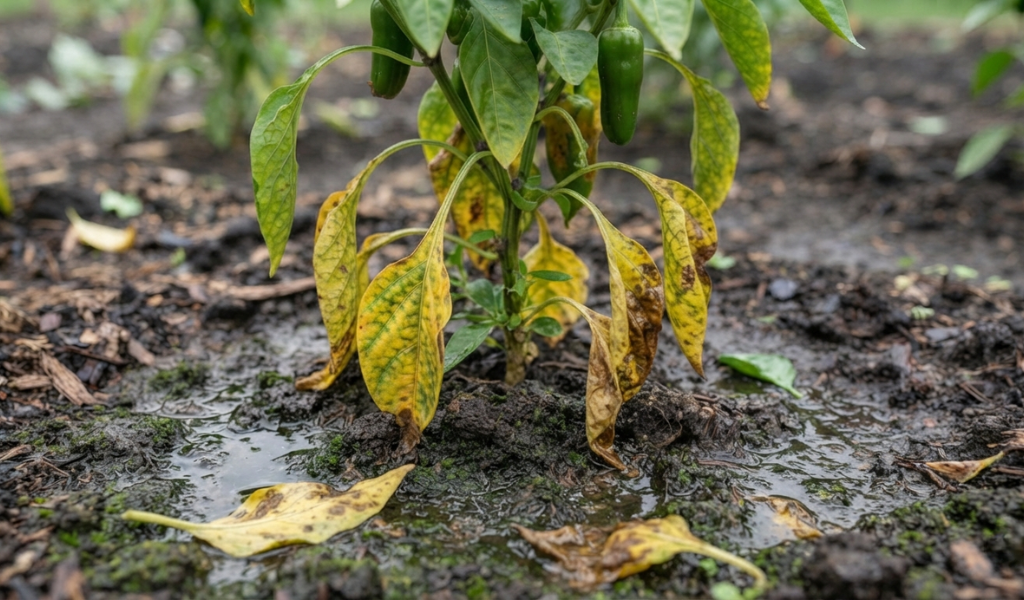
Underwatering
On the other side, underwatering also causes pepper plant leaves to turn yellow. When the soil is too dry, the plant goes into survival mode. It drops older leaves to conserve moisture. You’ll notice the leaves look dry and crispy at the edges before turning fully yellow.
Always let the soil dry out slightly between watering sessions, but don’t let it go bone dry. The goal is moist, not wet or cracked.
Nitrogen Deficiency
A lack of nitrogen is one of the most common causes of yellowing in pepper crops. Nitrogen is the compound that makes leaves green, and without enough of it, leaves start turning yellow usually beginning with the older, lower leaves first.
If your pepper plants don’t get enough nitrogen in the soil, growth will slow, new growth will look pale, and the entire plant can start to stunt. A nitrogen-rich fertilizer or an organic option like compost or fish fertilizer can help correct this quickly.
Magnesium or Iron Deficiency
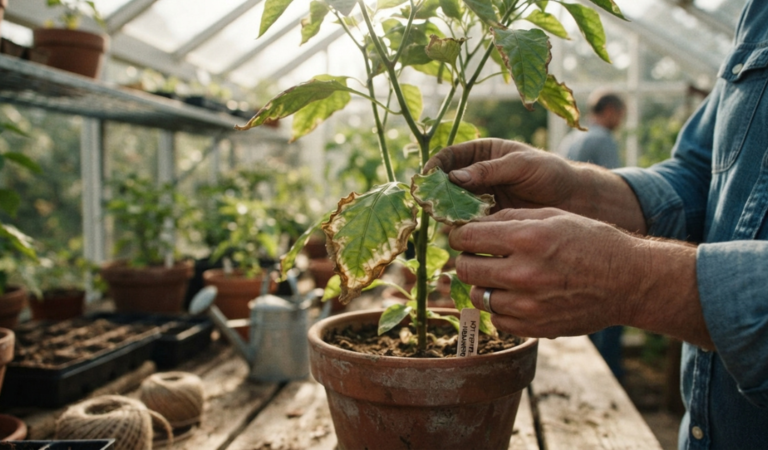
Magnesium deficiency shows up a bit differently than nitrogen deficiency. Instead of the whole leaf turning yellow, you’ll notice the area between the leaf veins turns yellow while the veins themselves stay green. This is called interveinal chlorosis.
Iron deficiency looks similar but tends to affect new growth first, while magnesium deficiency usually starts on older leaves. Epsom salt (magnesium sulfate) can help correct magnesium deficiency when applied as a foliar spray or soil drench.
Pest Infestations
Pests like aphids and spider mites feed on the plant’s sap, which drains nutrients and causes yellow leaves. You may not notice them at first since they tend to hide under leaves and at the base of the plant. Over time, the damage adds up and leaves start to yellow, curl, or drop.
Fungal or Bacterial Diseases
Certain fungal and bacterial diseases cause spots on the leaves that eventually spread and turn large portions of the leaf yellow. Bacterial leaf spot is one example that pepper growers commonly deal with. These diseases thrive in wet, humid conditions and can spread quickly if not caught early.
Incurable Plant Viruses
Some viral infections, like pepper mosaic virus, cause a mottled yellow pattern across the leaves. These infections are spread by pests like aphids and have no cure. Once a plant is infected, it’s best to remove it to prevent the virus from spreading to other plants.
Can Too Much Fertilizer Cause Yellow Pepper Leaves?
Yes. Over-fertilizing is a real problem and a common one among gardeners who are trying to help their plants grow faster. When you apply too much fertilizer, especially synthetic types, the salt concentration in the soil rises. This draws moisture away from the roots through a process called osmosis, which ends up dehydrating the plant even when the soil looks moist.
The result? Yellow leaves, leaf drop, and in serious cases, a plant that wilts and dies despite having “plenty of nutrients.”
Signs of Fertilizer Burn
Fertilizer burn has a few telltale signs that separate it from other causes of yellowing. Look for:
- Brown or scorched leaf tips and edges
- Yellow leaves that progress quickly and look dried out
- White, crusty salt deposits on the soil surface
- Wilting even when the soil has moisture
If you notice these signs, reduce fertilizer immediately and flush the soil with clean water to dilute the salt buildup.
How Excess Fertilizer Affects Pepper Roots
Too much fertilizer doesn’t just show up on the leaves. Underground, excess salts damage the fine root hairs that the plant relies on to absorb water and nutrients. Once these roots are damaged, the plant loses its ability to take up the very nutrients you’re trying to give it.
Think of it like this: a highway full of traffic. The nutrients are there, but nothing is moving. Damaged roots create a bottleneck that no amount of additional fertilizer can fix until the roots recover.
Give the plant time to recover by flushing the soil and holding off on additional fertilizing for a few weeks.
Nutrient Deficiencies That Cause Yellow Leaves
Not all nutrient deficiencies look the same. Here’s a quick reference for the most common ones in pepper plants:
Nitrogen deficiency causes uniform yellowing that starts on older lower leaves and moves upward. New growth looks pale.
Magnesium deficiency causes interveinal yellowing on older leaves. The veins stay green while the tissue between them turns yellow.
Iron deficiency causes interveinal yellowing on new growth. Young leaves look yellow while older leaves stay green.
Calcium deficiency typically shows up as distorted new growth and tip burn on young leaves.
Matching the yellowing pattern to the deficiency helps you choose the right fix instead of guessing.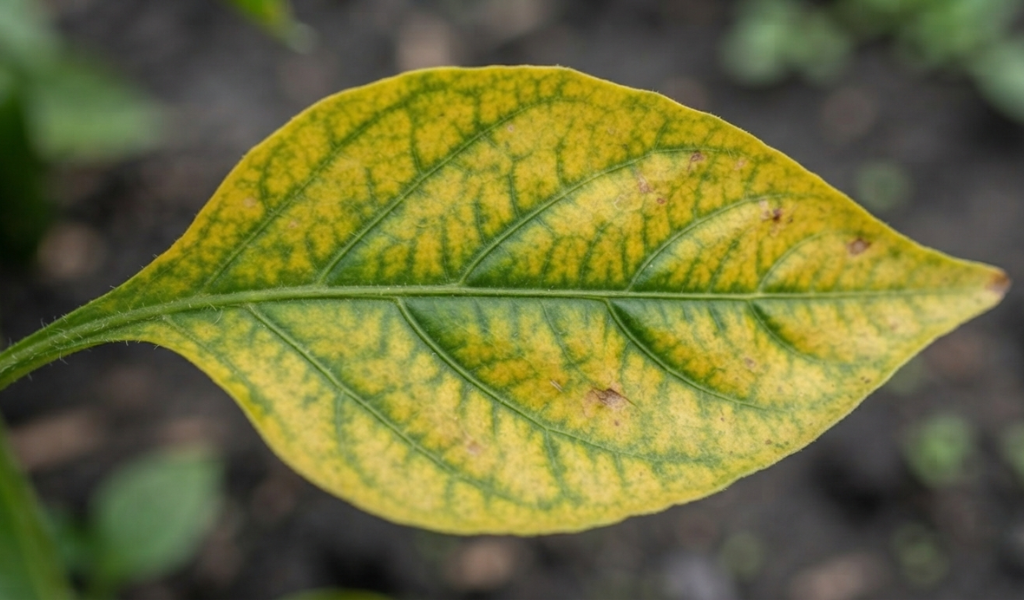
Why Fertilizer May Not Be Helping Your Pepper Plants
Adding fertilizer to already struggling pepper plants can backfire for a few reasons:
Wrong soil pH. Pepper plants need a soil pH between 6.0 and 7.0. Outside this range, nutrients become locked in the soil and plants can’t absorb them no matter how much fertilizer you apply. This is one of the most overlooked causes of yellowing, even in well-fed plants.
Root damage. If the roots are already compromised by overwatering or root rot, they can’t absorb nutrients. Fertilizing in this state just adds more salt stress.
Wrong nutrient. Adding more nitrogen won’t fix a magnesium or iron deficiency. Using a balanced fertilizer or testing the soil first ensures you’re addressing the actual problem.
Timing. Young pepper seedlings need less fertilizer than mature plants. Applying too much too soon can stunt early growth rather than support it.
How to Check the Soil Before Adding More Fertilizer
Before adding anything to the soil, spend a few minutes checking its current condition. This simple step can save you a lot of guesswork.
Testing Soil pH
Use an inexpensive pH meter or a basic soil test kit to check the acidity level of your soil. Pepper plants do best in a slightly acidic to neutral pH range of 6.0 to 7.0. If the pH is too low (acidic), add garden lime to raise it. If it’s too high (alkaline), sulfur or acidic compost can help bring it down.
Checking Soil Moisture
Before watering or fertilizing, push your finger about two inches into the soil. If it feels wet, hold off on watering. If it feels dry all the way through, it’s time to water. The goal is to let the soil dry out slightly between sessions so the roots get both moisture and oxygen.
Identifying Nutrient Problems
A full soil test from a garden center or agricultural extension office tells you exactly what’s in your soil and what’s missing. This takes the guesswork out of the equation. If you’d rather diagnose visually, use the yellowing patterns described above to narrow down the likely deficiency.
How to Fix Yellow Leaves on Pepper Plants
Once you’ve identified the cause, here’s how to fix it:
Overwatering: Stop watering until the top two inches of soil are dry. Improve drainage by adding perlite or coarse sand to the soil. Make sure pots have drainage holes.
Underwatering: Water deeply and consistently. Mulching around the base of the plant helps the soil retain moisture between waterings.
Nitrogen deficiency: Apply a nitrogen-rich fertilizer or organic option like compost or fish fertilizer. Fish fertilizer is a fantastic organic source of nitrogen that also includes trace minerals. It won’t burn roots the way synthetic options sometimes can.
Magnesium deficiency: Dissolve one tablespoon of Epsom salt in a gallon of water and apply it as a foliar spray or soil drench. Repeat every two weeks until the leaves stay green.
Iron deficiency: Apply a chelated iron supplement to the soil or as a foliar spray. Also check and adjust soil pH, since high pH is often the reason iron becomes unavailable.
Fertilizer burn: 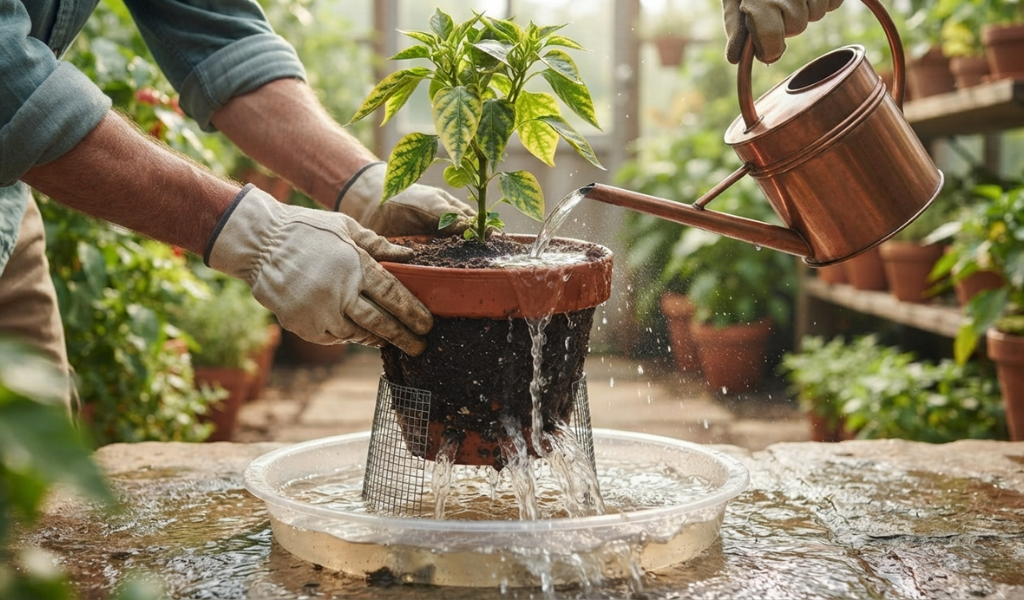 Flush the soil with clean water for several minutes. Stop fertilizing for two to four weeks and allow the plant to recover.
Pests: Spray the leaves with neem oil or insecticidal soap, paying close attention to the undersides of leaves. Repeat every five to seven days until the pests are gone.
Fungal disease: Remove affected leaves and improve air circulation around the plant. Apply a copper-based fungicide if needed and avoid overhead watering to prevent fungal diseases from spreading.
Pests and Diseases That Cause Yellow Pepper Leaves
Aphids and Spider Mites
Aphids cluster on new growth and the underside of leaves, sucking out plant sap. Heavy infestations cause leaves to curl, yellow, and droop. Spider mites create tiny webbing under the leaves and cause a stippled, yellowish appearance across the leaf surface.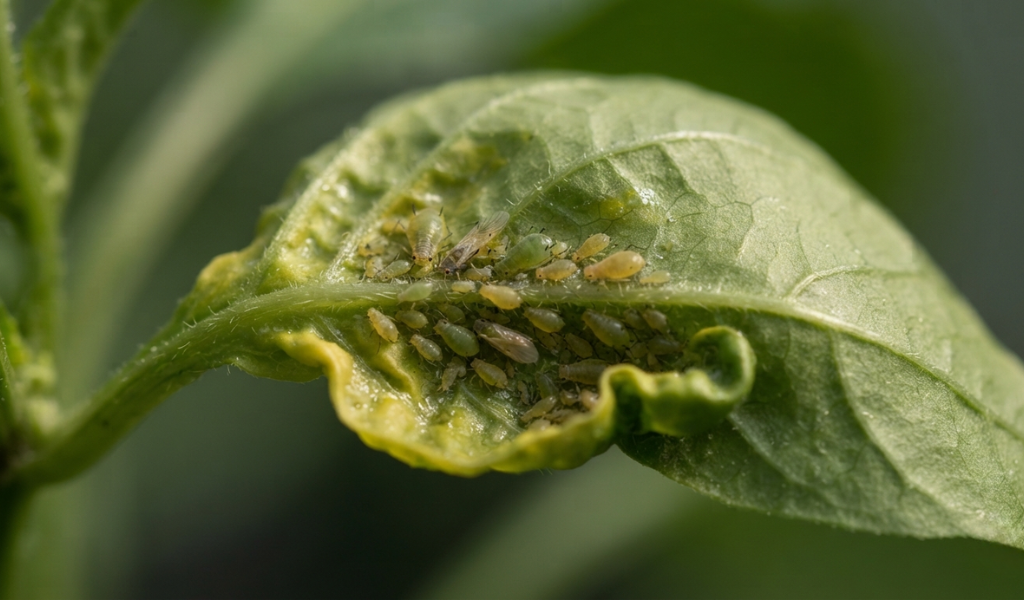
Both pests can be treated with neem oil or insecticidal soap. Spray the entire plant, especially under the leaves, and repeat applications every week until the infestation is under control. Keeping plants well-spaced helps prevent these pests from spreading quickly between plants.
Root Diseases
Root rot caused by the fungus Phytophthora or Pythium species starts underground but quickly shows up as yellowing leaves and a wilting plant. The base of the plant may look dark or mushy. Soggy, poorly draining soil is almost always the cause.
There’s no quick cure for severe root rot. Your best bet is to repot the plant in fresh, well-draining soil, trim off any black or mushy roots, and reduce watering going forward. In garden beds, improving drainage by adding compost or raised planting areas helps prevent the problem from recurring.
Viral and Bacterial Problems
Bacterial leaf spot causes dark, water-soaked spots on leaves that are surrounded by a yellow halo. The spots eventually dry out and fall away, leaving ragged holes. Remove infected leaves, avoid wetting the foliage when watering, and apply a copper-based bactericide if the problem is spreading.
Viral infections like pepper mosaic virus cause irregular yellow mottling across the leaves. Since there’s no treatment, the focus shifts to prevention. Control aphid populations (which spread most pepper viruses), use certified disease-free seeds, and remove any infected plants promptly.
How Much Fertilizer Do Pepper Plants Need?
Choosing the Right Fertilizer
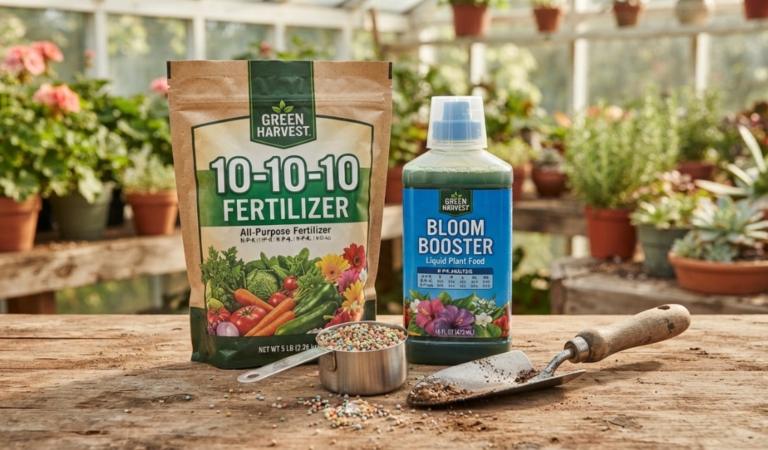
Pepper plants benefit from a balanced fertilizer in the early growth stage, something like a 10-10-10 (equal parts nitrogen, phosphorus, and potassium). Once the plant starts flowering, shift to a fertilizer higher in phosphorus and potassium and lower in nitrogen to encourage fruit production rather than leaf growth.
Organic options like compost, worm castings, and fish fertilizer are gentler on roots and improve soil health over time. Fish fertilizer in particular is a popular choice among vegetable gardeners for delivering nitrogen and micronutrients without the risk of chemical burn.
How Often to Fertilize Peppers
A general rule of thumb for growing peppers is to fertilize every two to three weeks during the growing season. Slow-release granular fertilizers can be applied monthly. Always follow the label instructions, and when in doubt, apply slightly less than recommended rather than more.
Pepper seedlings need very light feeding starting with half the recommended dose and increase gradually as the plants mature.
Preventing Pepper Plants From Turning Yellow
Providing Proper Sunlight
Pepper plants need at least six to eight hours of direct sunlight each day. When pepper plants don’t get enough sunlight, they can’t produce enough energy through photosynthesis, which leads to pale, yellowish leaves and slow growth. Plant peppers in a spot with full sun exposure and make sure plants have enough space between them to avoid shading each other.
Maintaining Healthy Soil
Healthy soil is the foundation of healthy pepper plants. Work compost into the soil before planting to improve its structure, drainage, and nutrient content. Test soil pH at the start of each season and amend as needed. Healthy soil that drains well while retaining enough moisture gives pepper plants the ideal environment to thrive.
Following a Consistent Watering Routine
Inconsistent watering is a common reason pepper plant leaves turn yellow. Too much one week and too little the next creates stress that shows up as discoloration. Water deeply but infrequently, always checking the soil first. Make sure to let the soil dry out slightly between watering sessions, and use mulch around the base of the plant to slow evaporation and keep moisture levels more consistent.
Stop Guessing and Start Diagnosing
Yellow leaves on pepper plants are a message. Once you learn to read what the plant is telling you, fixing the problem becomes much less overwhelming. Start by checking your watering habits and soil conditions before adding more fertilizer. Work through each possible cause systematically, and you’ll have a much better chance of turning those yellow leaves back to a healthy, vibrant green.
If you’re still unsure, do a full soil test. It’s one of the most useful tools any gardener can use, and it takes the guesswork completely out of the equation.
Frequently Asked Questions About Yellow Pepper Plants
Do cold weather or pests cause pepper plant leaves to turn yellow?
Yes, both can. Cold temperatures below 55°F slow nutrient uptake and can cause yellowing, especially in spring when nights are still chilly. Pests like aphids and spider mites drain the plant’s sap, causing yellow and mottled leaves. Check under leaves for signs of pests and bring young plants indoors if temperatures drop unexpectedly.
What diseases or viruses can cause yellowing leaves on pepper plants?
Bacterial leaf spot causes yellow-haloed spots on leaves that eventually fall out. Pepper mosaic virus causes irregular yellow mottling across the leaf surface. Fungal root diseases like Pythium root rot cause widespread yellowing starting from the lower leaves. Disease management involves removing infected leaves, improving air circulation, and treating with copper-based sprays where applicable.
What does an overwatered pepper plant look like?
An overwatered pepper plant typically has soft, drooping stems and soggy soil that stays wet for days at a time. The lower leaves turn yellow first, often becoming mushy and falling off. The base of the plant may look dark or discolored if root rot has set in. If you lift the plant out of its pot, the roots may appear brown and mushy rather than white and firm.
Can Epsom salts help with yellow pepper leaves?
Epsom salt can help if the yellowing is caused by a magnesium deficiency. It won’t help with yellowing caused by overwatering, pests, nitrogen deficiency, or disease. To use it, dissolve one tablespoon of Epsom salt in one gallon of water and apply as a soil drench or foliar spray. Repeat every two weeks and monitor for improvement.
Is fish fertilizer good for pepper plants?
Fish fertilizer is a great organic option for pepper plants. It provides a good source of nitrogen along with trace minerals that support healthy leaf color and overall growth. It’s gentler on plant roots than many synthetic fertilizers and also helps improve soil microbial activity over time. Use it every two to three weeks during the growing season, following label directions.
When should I be worried about yellow leaves on my pepper plant?
A few lower leaves turning yellow as the plant matures is normal. Concern is warranted when yellowing spreads quickly, affects new growth, or is accompanied by other symptoms like spots, wilting, or stunted growth. In these cases, investigate the cause promptly to avoid losing the plant or spreading the problem to nearby pepper crops.
Can I save a pepper plant that’s mostly yellow?
It depends on the cause. If the plant has been overwatered, has fertilizer burn, or is dealing with a pest problem, recovery is possible with the right treatment and some time. If the plant is infected with a viral disease, recovery is unlikely. Focus on the root cause, provide the right conditions, and give the plant a few weeks to show signs of improvement before making a decision.