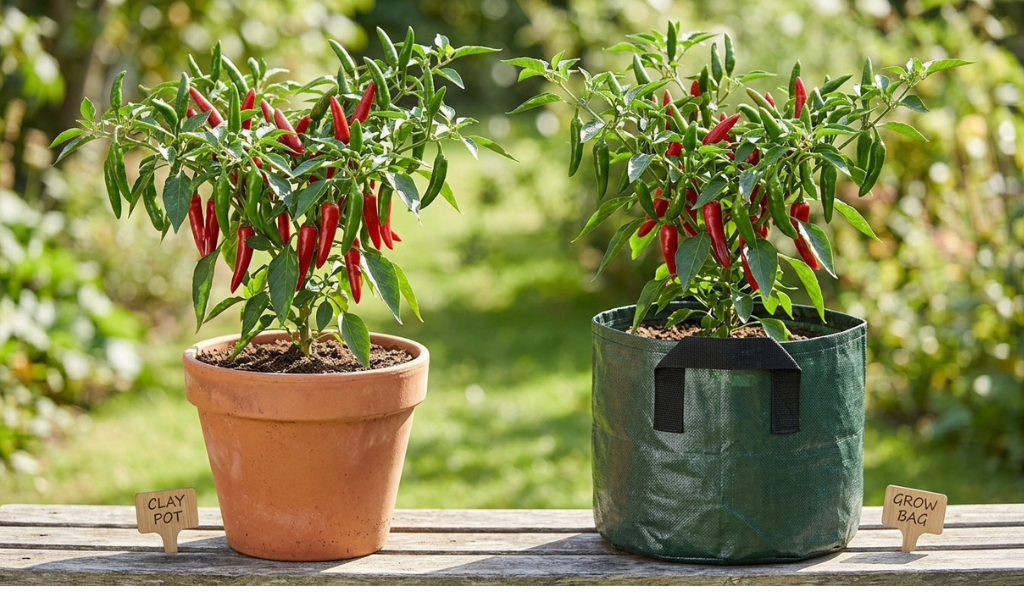
Clay Pots vs. Plastic Bags for Growing Chili: Fabric Grow Bag vs. Plastic Pot for Better Growth
Clay Pots vs. Plastic Bags for Growing Chili: Best Container for Your Garden
Choosing between clay pots vs. plastic bags for growing chili is one of the first big decisions a chili grower faces. It sounds simple, but the container you pick shapes how your plant drinks, breathes, and grows. Get it right, and your chili plant rewards you with healthy leaves and plenty of fruit. Get it wrong, and you spend the season fighting soggy roots or dried-out soil.
 Good pepper plant care in pots starts with understanding how each container behaves. A clay pot and a plastic grow bag treat water, heat, and air in completely different ways. Neither one is perfect for every gardener. What works on a sunny balcony may fail in a shaded backyard, and what suits a beginner may frustrate someone who loves control. Choosing the right container also means paying attention to watering, drainage, sunlight, soil quality, and the right fertilizer for pepper plants to support healthy growth and better fruit production. With the right balance of care, both clay pots and plastic grow bags can help your pepper plants grow strong, productive, and healthy throughout the season.
This guide walks through the real strengths and weaknesses of both options. You will learn how each container affects root health, watering, cost, and space. By the end, you will know exactly which one fits your garden, your climate, and your style.
Clay Pots vs. Plastic Bags for Growing Chili: Understanding the Basic Difference
Before you compare features, it helps to know how each container works at a basic level. A clay pot and a plastic grow bag do the same job, but they handle moisture and air in very different ways.
How Plastic Grow Bags Behave
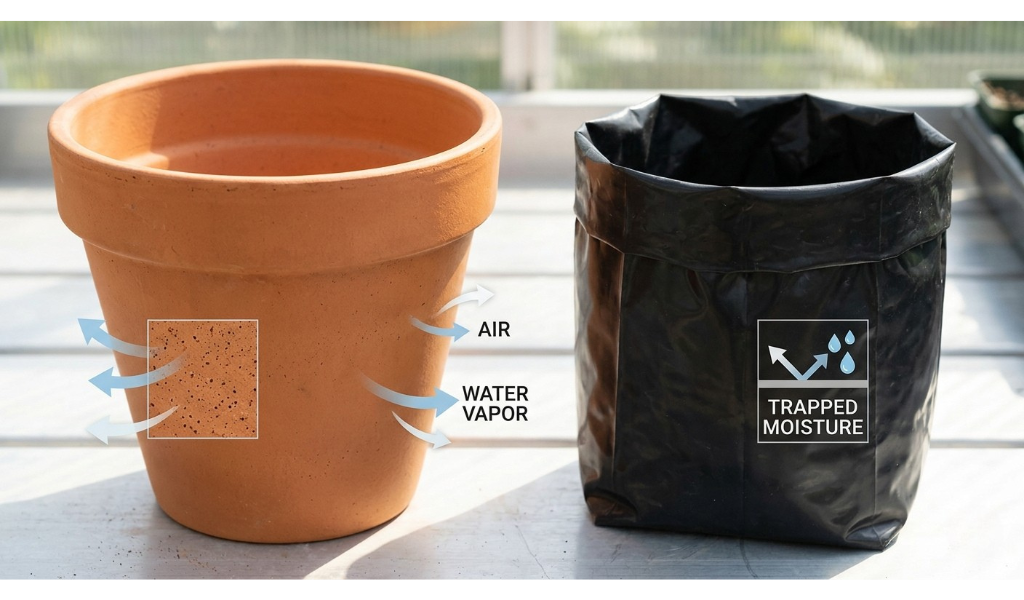
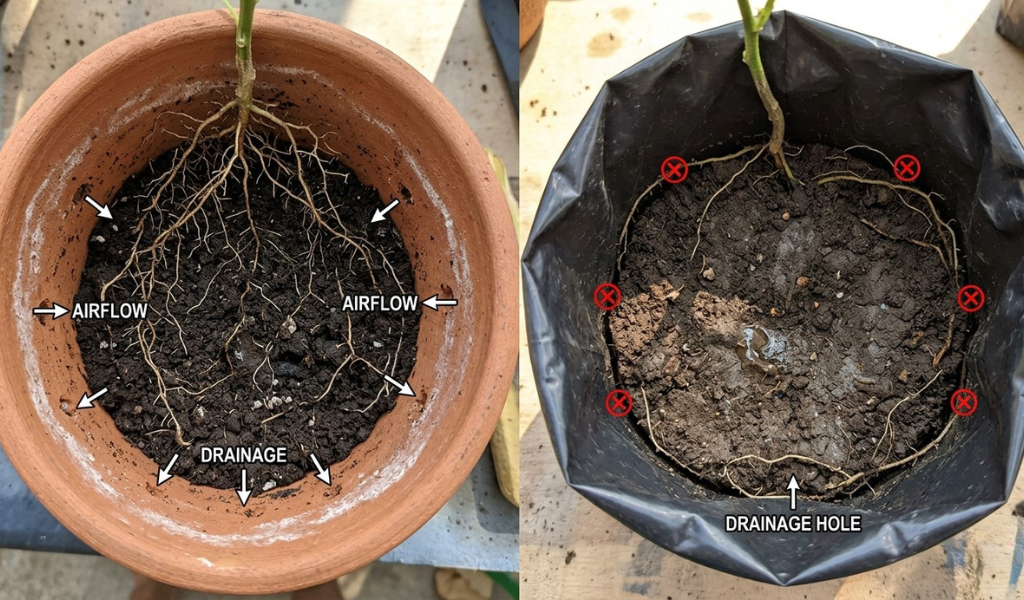
A plastic grow bag works the opposite way. Plastic does not breathe, so water stays trapped inside longer. Fabric grow bags sit somewhere in between, since the breathable fabric allows better aeration than sealed plastic. A traditional plastic grow bag is lightweight, easy to move, and folds flat when empty. Because the plastic holds moisture, you water less often, but you also risk keeping the roots too wet.
How Clay Pots Behave
Clay is a porous material. Tiny holes in the walls let water and air pass through slowly. 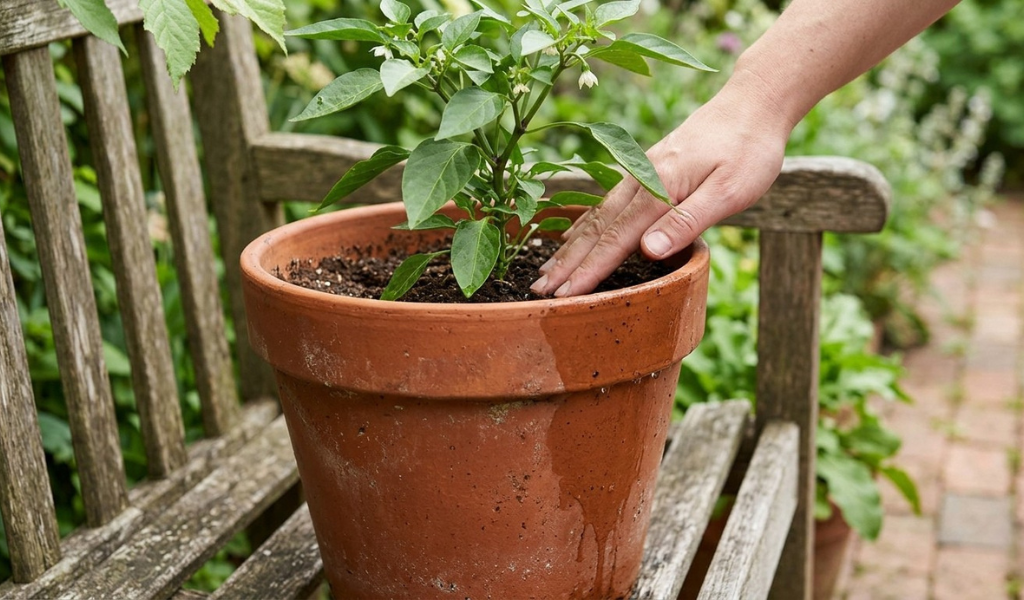 This means the soil inside a clay pot loses moisture from the sides, not just the top. The result is a container that dries out faster and rarely stays soggy. Clay also feels heavy and solid, which gives the plant a stable base.
Why Container Choice Matters for Chili Plants
The container is more than a place to hold soil. It controls the environment around the roots, and chili plants are sensitive to that environment.
Chili Roots Need Oxygen Too
Many gardeners forget that roots need air. When soil stays wet all the time, air pockets disappear and the root system starts to suffer. Good air circulation helps the roots take in nutrients and stay healthy. This is one reason fabric pots have become popular, since the breathable fabric feeds oxygen to the plant roots.
Drainage Makes a Huge Difference
Drainage decides whether extra water leaves the soil or sits at the bottom. A container with proper drainage holes protects your chili from root rot. Without it, water builds up and slowly drowns the plant. Both clay pots and plastic containers can drain well, but only if you set them up correctly.
Clay Pots for Growing Chili: Main Advantages
Clay pots have been used for growing plants for centuries, and there are solid reasons why gardeners still trust them.
Clay Pots Are Stable
A clay pot is heavy, and that weight is a feature, not a flaw. Tall chili plants can get top-heavy once they start producing fruit. A solid clay pot keeps everything grounded, even on a windy day. You will not find your plant tipped over after a strong gust.
Clay Pots Look Good Around the Home
Looks matter for many gardeners. Clay pots have a warm, natural finish that fits almost any patio or balcony. They age gracefully and blend into a garden far better than a plastic bag ever could.
Clay Pots Can Help Prevent Constantly Wet Soil
Because clay is porous, it pulls moisture out through its walls. 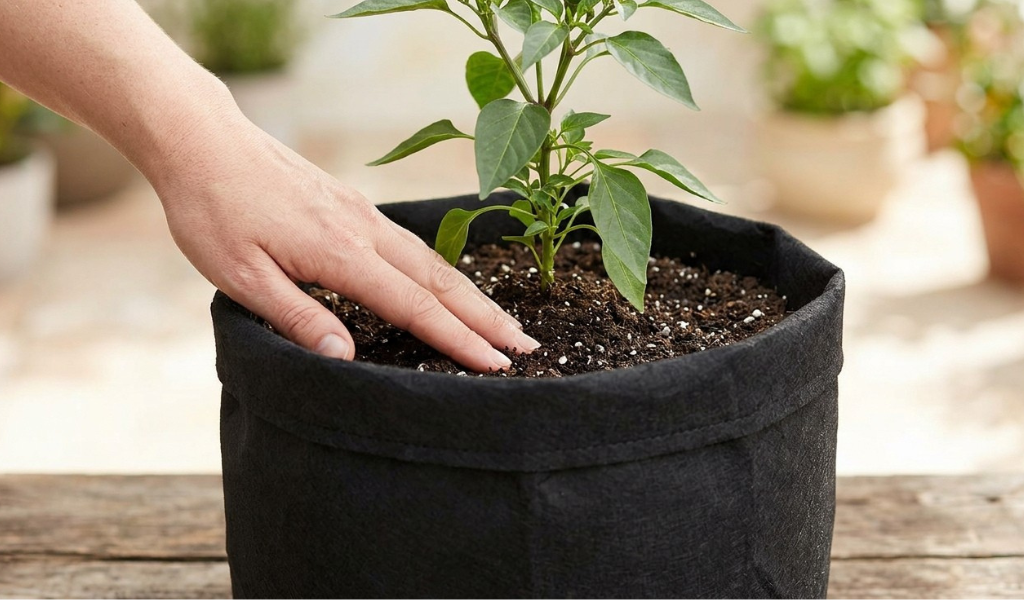 This makes it very hard to overwater a chili plant in a clay pot. If you tend to water too much, clay forgives that habit and keeps the soil from turning into mud.
Clay Pots for Chili: Disadvantages to Consider
Clay is not perfect. The same features that make it great also create a few real drawbacks.
Frequent Watering May Be Necessary
The porous walls that prevent soggy soil also mean the container dries out quickly. In hot weather, you may need to water a chili plant in a clay pot every single day. If you travel often or forget to water, this can become a problem.
Clay Pots Can Break
Clay is fragile. Drop it, knock it over, or leave it out in a hard frost, and it can crack or shatter. Compared to a flexible grow bag, clay demands careful handling.
Small Clay Pots Can Restrict Chili Roots
A pot that is too small limits how far the root system can spread. Chili roots that run out of room grow in circles and stay cramped. This slows the plant and reduces your harvest, so size selection matters a lot with clay.
Plastic Bags for Growing Chili: Main Advantages
Plastic bags and grow bags have earned a loyal following, especially among budget-minded and space-conscious growers.
 Plastic Bags Hold Moisture Longer
Since plastic traps water, the soil stays damp far longer than it would in clay. This is a real benefit in hot, dry climates or for anyone who cannot water every day. You spend less time with a watering can and more time enjoying the garden.
Plastic Bags Are Easy to Store
An empty plastic bag folds flat and slips into a drawer. When you compare grow bags vs pots vs other containers for storage, bags win easily. This matters if you grow seasonally and need to pack containers away over winter.
Plastic Bags Are Usually Affordable
Cost is a major draw. Plastic bags are often cheaper than high-quality plastic pots and far cheaper than clay. For growers who want several chili plants without a big spend, bags make it easy.
Plastic Bags for Chili: Disadvantages to Consider
The same qualities that make plastic convenient can also cause trouble if you are not careful.
Heat Can Become a Problem
Dark plastic soaks up sunlight and heats up fast. In strong, direct sunlight, that trapped heat can cook your plants and stress the roots. Temperature control is harder with sealed plastic, which is why fabric grow bags, with their better air circulation, often handle heat more gracefully.
Poor Drainage Can Cause Trouble
If a plastic bag lacks proper drainage holes, water pools at the bottom. Roots sitting in that water quickly rot. You can also see fuzzy mold growing on the surface when the growing medium stays too wet. Always check that your bag drains freely.
Plastic Bags Can Become Unstable
A soft, flexible bag does not offer the sturdy base a heavy clay pot does. A tall, fruit-heavy chili plant can lean or topple, especially in wind. Fabric bags with wide bottoms help, but they still lack the anchor weight of clay.
Clay Pots vs. Plastic Bags for Growing Chili: Watering Comparison
Water management is where these two containers differ the most, so it deserves a closer look.
Watering Chili Plants in Clay Pots
With clay, expect to water often. Check the soil daily in summer by pushing a finger an inch below the surface. If it feels dry, water deeply until it runs out the bottom. The upside is that you rarely need to worry about overwatering, since the clay drains and evaporates extra moisture on its own.
Watering Chili Plants in Plastic Bags
Plastic bags need water far less often. The risk here is the opposite one: it is easy to overwater a grow bag because the moisture lingers. Always feel the soil before adding more water. If the top inch is still damp, wait. This simple habit prevents most root problems in plastic.
Clay Pots vs. Plastic Bags for Growing Chili: Root Health
Healthy roots lead to a healthy plant, and the container plays a big role in building a strong root system.
Why Soil Structure Matters
Roots need a mix of water, nutrients, and air to thrive. When soil holds too much water, air disappears and roots weaken. Fabric grow bags support a healthier root system through a process called air pruning. When a root reaches the breathable fabric and touches the air, it stops growing outward and sends out new feeder roots instead. This builds a dense, fibrous root system that improves nutrient uptake. Clay supports good roots too, thanks to its steady drainage, while sealed plastic offers the least air to the roots.
Which Container Is Better for Hot Weather?
Climate should guide your choice more than almost anything else. Heat changes how each container performs.
When Clay May Work Better
In humid or rainy climates, clay shines. Its ability to release extra moisture keeps the soil from staying waterlogged during wet spells. If your area sees frequent rain, clay helps protect the roots from constant dampness.
When Plastic Bags May Work Better
In dry heat, plastic and fabric bags often win. They hold water longer, so the soil does not bake dry by midday. Fabric grow bags are especially good here, since they regulate temperature better than sealed plastic and keep the roots from cooking in intense sun.
Clay Pots vs. Plastic Bags for Growing Chili in Small Spaces
Space is a real limit for many growers, and each container fits different setups.
Clay Pots for Balconies
On a balcony, clay pots offer stability and good looks. They stay put in wind and turn a small space into a tidy little garden. The main downside is weight. Moving heavy clay pots around a tight balcony can be a chore.
Plastic Bags for Small Gardens
For small gardens or crowded patios, plastic bags are easy to move and store. Many grow bags come with convenient handles, so you can shift plants to catch the sun or clear space when needed. Their light weight makes them ideal for anyone who rearranges plants often.
Choosing the Right Container Size for Chili Plants
Size affects growth just as much as material does. Chili plants need enough room, but not too much.
Give Chili Roots Enough Room
A cramped container stunts a chili plant. For most varieties, aim for a container that holds at least three to five gallons of soil. This gives the root system space to spread and supports a full-size, productive plant.
Avoid Oversized Containers Too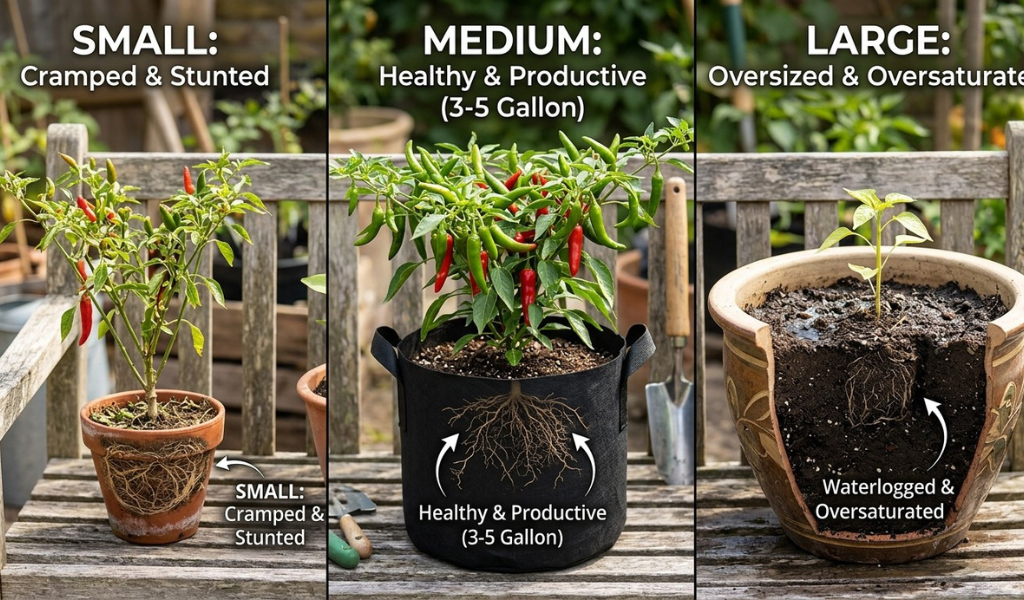
A container that is far too large can hold more water than a young plant can use. That extra wet soil sits around the roots and raises the risk of rot. Match the container size to the plant, and pot up gradually as the chili grows.
Clay Pots vs. Plastic Bags for Growing Chili: Cost Comparison
Budget shapes many gardening choices, and these two options sit at different price points.
Clay Pots Are an Investment
Clay pots cost more up front. A good one, though, lasts for years if you protect it from frost and drops. Think of clay as a long-term buy that pays off over many seasons.
Plastic Bags Are Better for Low-Cost Growing
Plastic bags are the budget champion. They are cheap, and you can buy many at once. High-quality grow bags cost a bit more but still beat clay on price, especially if you want to grow several chili plants at the same time.
Clay Pots vs. Plastic Bags for Growing Chili: Which Is Easier?
Ease depends on your habits and what you value most in day-to-day care.
Choose Clay If You Prefer Stability
If you want a container that stands firm, looks good, and forgives overwatering, clay is the easier choice. You will water more often, but you will worry less about soggy roots and tipping plants.
Choose Plastic If You Value Flexibility
If you want light, movable, and low-cost containers, plastic bags win. They are simple to store, easy to carry, and gentle on the wallet. Just stay mindful of drainage and heat.
Common Mistakes With Chili Containers
A few simple errors cause most container growing problems. Avoid these and your chili will thank you.
Using Containers Without Proper Drainage
This is the biggest mistake of all. Any container, clay or plastic, needs drainage holes so extra water can escape. Without them, roots drown no matter how careful you are with watering.
Watering on a Fixed Schedule
Watering by the calendar ignores what the plant actually needs. Weather changes daily, and so does the soil. Always check the soil first, then decide whether to water.
Choosing a Container That Is Too Small
A tiny container limits roots and cuts your harvest. Give chili plants enough room from the start, or repot them as they grow.
Putting Containers in Excessive Heat
Placing a dark plastic bag in blazing sun can overheat the roots. Move containers to catch morning sun and some afternoon shade, or pick fabric bags that handle heat better.
Clay Pots vs. Plastic Bags for Growing Chili: My Practical Pick
After years of growing chili, my honest take is that fabric grow bags offer the best of both worlds for most people. The breathable fabric gives roots the air they crave, drainage is excellent, and air pruning builds a strong, fibrous root system. Bags are also easy to move and store.
That said, I still keep a few clay pots around. They anchor my tallest plants, look great on the patio, and are hard to beat in a rainy season. My advice is simple: match the container to your climate and your routine, not to a one-size-fits-all rule.
Final Thoughts
There is no single winner in the clay pots vs. plastic bags debate. Clay pots offer stability, natural good looks, and strong protection against soggy soil, but they dry out fast and can break. Plastic bags hold moisture, cost less, and store easily, though they can overheat and hold too much water if drainage is poor.
The right choice comes down to your garden, your weather, and how you like to care for your plants. Think about how often you can water, how much sun your space gets, and how much you want to spend. Then pick the container that fits your life. Ready to grow? Choose your container, fill it with good soil, and plant your first chili with confidence.
Frequently Asked Questions
Which is better, grow bags or pots?
It depends on your needs. Grow bags offer better aeration, excellent drainage, and easy storage, which suits most home growers. Pots offer more stability and a longer lifespan. For chili in hot, dry climates, grow bags often edge ahead thanks to their breathable design.
Do plants grow better in plastic or clay pots?
Both can grow healthy plants. Clay pots dry out faster and resist overwatering, which helps in wet climates. Plastic pots hold moisture longer, which helps in dry heat. The best choice depends on your watering habits and local weather.
What are the downsides of using clay pots?
Clay pots dry out quickly, so you water more often. They are heavy to move and can crack if dropped or exposed to frost. Small clay pots can also restrict the root system and limit your chili harvest.
Are grow bags better than plastic pots for growing plants?
Grow bags, especially fabric grow bags, often beat traditional plastic pots because they provide better aeration and air pruning. This builds a healthier root system. Plastic pots, however, retain moisture longer and may need less frequent watering.
Are grow bags effective?
Yes, grow bags are effective for growing vegetables and chili. The breathable fabric supports strong roots, excellent drainage prevents root rot, and the handles make plants easy to move. Good results depend on choosing the right size and watering with care.
Do grow bags dry out faster than pots?
Fabric grow bags dry out faster than sealed plastic pots because air passes through the fabric. They usually dry more slowly than porous clay pots, though. In hot weather, expect to water grow bags more often than plastic containers.
Are grow bags good for vegetables?
Grow bags are excellent for vegetables. Many gardeners grow tomatoes, peppers, and even potatoes in a grow bag with great success. The extra air around the roots and the strong drainage create a healthy growing environment for most crops.