Pepper Fertilizer Ratio and NPK Explained: How to Fertilize Pepper Plants for Bigger Harvests
Pepper Plant Fertilizer Guide: The Ideal NPK Ratio to Fertilize Peppers
Getting the pepper fertilizer ratio right can be the difference between a plant full of fruit and one that barely survives the season. Whether you’re growing bell peppers in raised beds, hot peppers in containers, or banana peppers along a garden fence, fertilizing peppers correctly is one of the most important things you can do for your harvest.
This guide breaks down everything you need to know about the NPK ratio for pepper plants, when to fertilize pepper plants at each growth stage, and which products actually deliver results. You’ll also find a quick-reference comparison of five top-rated fertilizers, common mistakes to avoid, and answers to the questions pepper growers ask most often.
If you’ve ever wondered when to harvest peppers or why your plants stall out mid-season, the answer often comes back to nutrition. A well-fed pepper plant is a productive one, and this guide will show you exactly how to get there.
Why the Right Pepper Fertilizer Ratio Matters
Pepper plants are heavy feeders. They grow over a long season, produce a lot of fruit, and demand a consistent supply of nutrients from the soil. Without the right fertilizer for pepper plants, growth stalls, flowers drop, and fruit production suffers.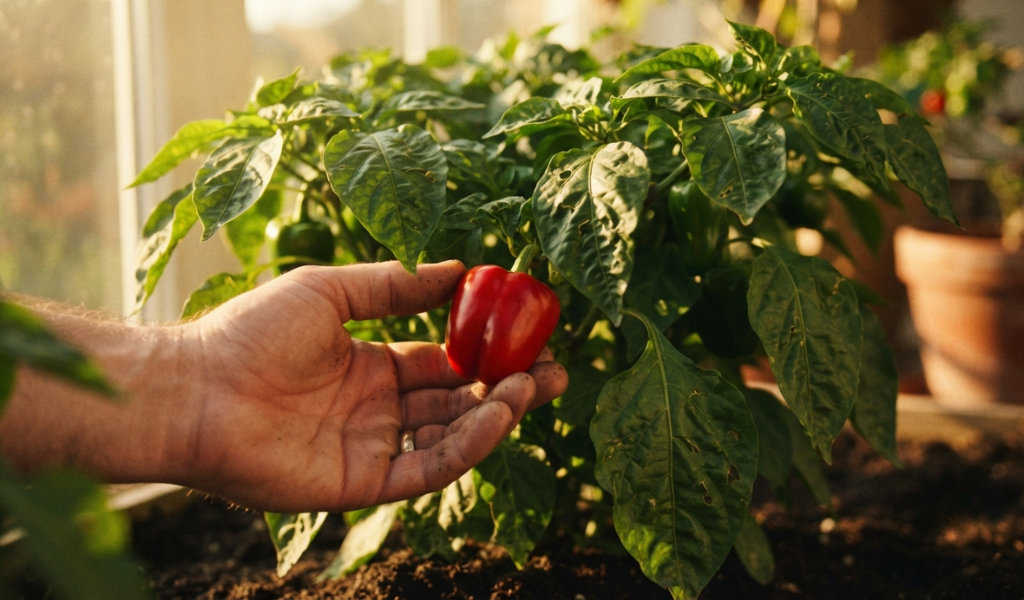
The NPK ratio on a fertilizer label tells you the percentage of nitrogen (N), phosphorus (P), and potassium (K) in that product. Each nutrient does something different, and each growth stage requires a different balance. Using a high-nitrogen fertilizer when your plants are flowering, for example, can cause lush foliage with very little fruit. Using too little phosphorus during root development can stunt seedlings before they ever get going.
Many pepper growers treat fertilizer as a one-size-fits-all solution, applying the same product at transplant, flowering, and fruiting. This approach leaves a lot of yield on the table. Understanding the NPK ratio and adjusting it based on what your pepper plants need will make a real difference in your harvest.
What Peppers Need at Each Growth Stage
Pepper growth happens in phases, and each phase has different nutritional demands. Fertilizing your pepper plants without considering this is one of the most common reasons growers get disappointing results.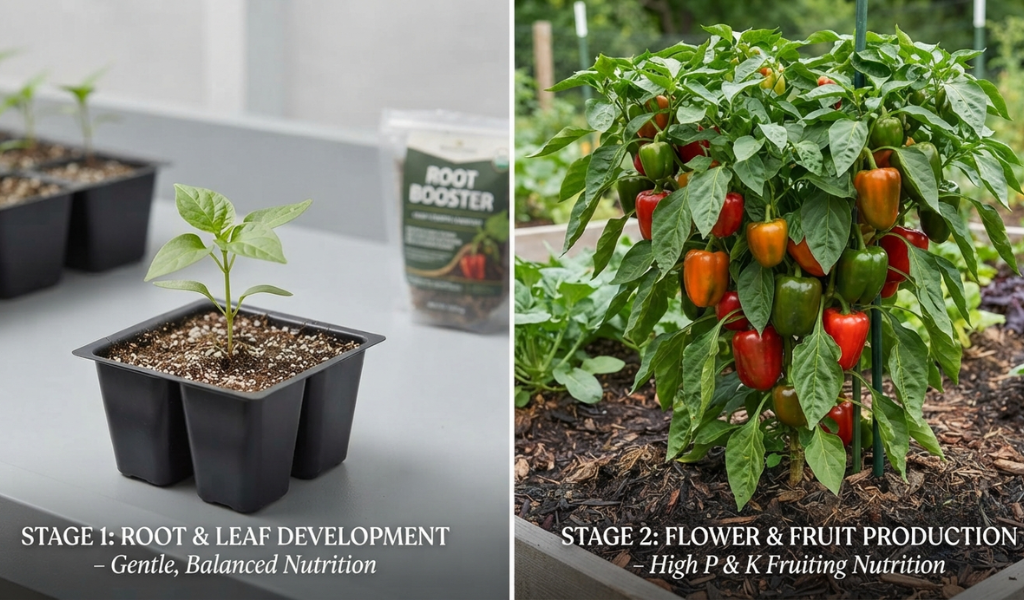
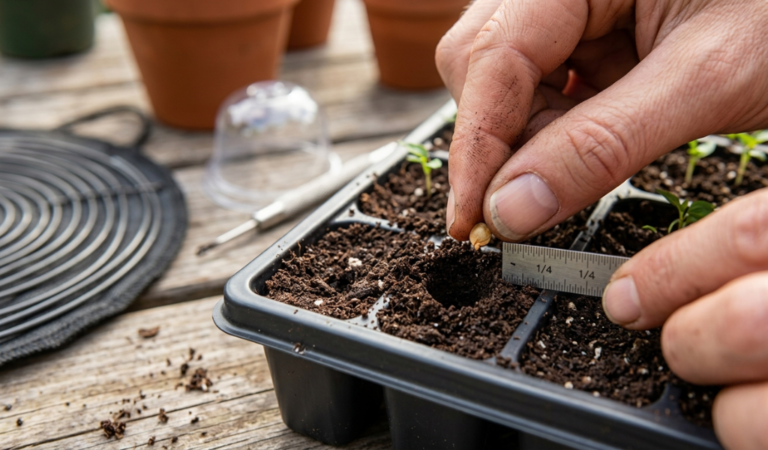
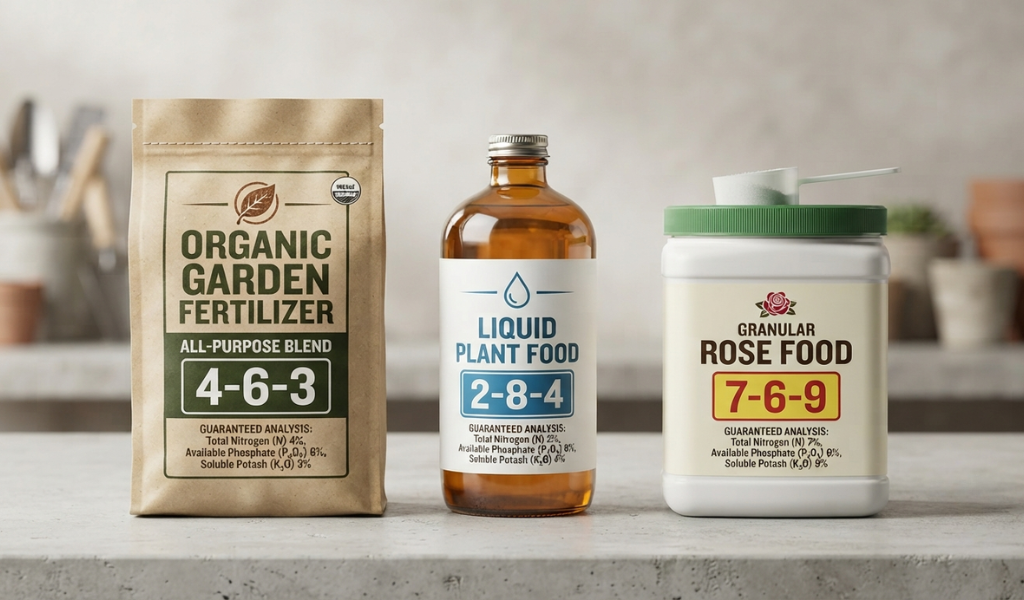
Seedling Stage: Young pepper plants need gentle nutrition. At this point, roots are still developing, and too much fertilizer can cause fertilizer burn. A balanced fertilizer with a modest NPK ratio like 3-4-4 or 4-6-3 works well. Focus on giving seedlings just enough to support steady root development without overwhelming them.
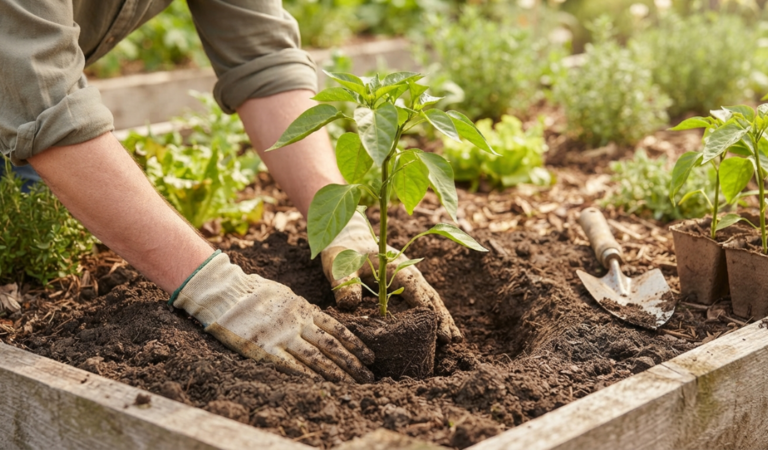
Transplant Stage: When transplanting your pepper plants into the garden, phosphorus becomes especially important. It encourages strong root development and helps plants absorb water and other nutrients. A fertilizer higher in phosphorus, like a 2-5-3 ratio, supports a smooth transition from pot to ground. Hold off on high-nitrogen options at this stage.
Vegetative Stage: Once pepper plants are established and growing actively, nitrogen becomes the priority. Nitrogen drives foliage growth, giving your plant the size and structure it needs to eventually support a full load of fruit. An NPK ratio around 5-5-5 or 7-6-9 works well during this phase.
Flowering and Fruiting Stage: This is where many pepper growers make the switch to a fertilizer high in phosphorus and potassium. Nitrogen should drop here. Too much nitrogen at this point encourages leaf growth at the expense of flower and fruit. Products with ratios like 2-8-4 or 5-10-10 are ideal for supporting fruit production.
Late Season: As the season winds down, potassium remains important for plant health and fruit quality. Ease off nitrogen entirely and keep potassium levels up to help peppers ripen fully before harvest.
Understanding NPK: Nitrogen, Phosphorus, and Potassium for Pepper Plants
Every fertilizer label shows three numbers. Those numbers represent the N-P-K ratio by weight. Here is what each essential nutrient does for your pepper plant:
Nitrogen (N) drives vegetative growth. It is responsible for dark green leaves, strong stems, and the overall size of your plant. Young pepper plants need it to build the framework that will eventually hold their fruit. The challenge is that too much nitrogen late in the season causes plants to keep pushing foliage instead of setting fruit. Many pepper growers who complain about beautiful plants with no peppers are dealing with excess nitrogen.
Phosphorus (P) supports root development, flower formation, and energy transfer within the plant. It is critical during transplanting and again during the flowering stage. Phosphorus is what helps plants absorb other nutrients efficiently, so when it is lacking, the effects ripple across the whole plant. Bone meal is a popular organic source of phosphorus that many pepper growers add to their soil before planting.
Potassium (K) handles a wide range of plant functions including water regulation, disease resistance, and fruit quality. A good supply of potassium during fruit production leads to firm, healthy peppers with better flavor. For hot peppers specifically, potassium plays an interesting role in capsaicin development, which is covered later in this guide.
Quick Comparison: 5 Best Fertilizers for Pepper Plants
Choosing the best fertilizer for pepper plants depends on your budget, experience level, and the specific growth stage you are targeting. Here are five strong options that many pepper growers trust.
Best Overall: Dr. Earth Home Grown 4-6-3
Dr. Earth Home Grown is a premium organic fertilizer with a balanced NPK ratio of 4-6-3. It works across multiple growth stages, making it a reliable all-season option. The blend includes beneficial soil microbes that help roots absorb nutrients more efficiently. It works well for both in-ground plants and potted pepper plants. Slow-release granular formula means you are not feeding every week.
Best Budget: Espoma Garden-Tone 3-4-4
Espoma Garden-Tone offers solid nutrition at an affordable price. The 3-4-4 NPK ratio is well-suited for general pepper growing, with enough phosphorus and potassium to support steady growth without overdoing nitrogen. It is a granular fertilizer, easy to apply, and widely available. A good pepper plant fertilizer for growers who want organic ingredients without spending a lot.
Best for the Flowering Stage: Jobe’s Organics Vegetable and Tomato 2-5-3
When your pepper plants start forming buds and flowers, Jobe’s Organics 2-5-3 is one of the best choices you can make. The lower nitrogen and higher phosphorus content is exactly what flowering pepper plants need. It also contains their proprietary Biozome formula, which improves soil structure over time. Many pepper growers use this product specifically during the transition from vegetative to flowering stage.
If you’re looking for a granular fertilizer for the flowering and fruiting stage, Jobe’s Organics Vegetable & Tomato 2-5-3 is a practical option to consider. Its balanced NPK formula provides phosphorus and potassium while keeping nitrogen relatively lower, making it a good fit for peppers as they move into flowering and fruit production.
Best Liquid Fertilizer: FoxFarm Tiger Bloom 2-8-4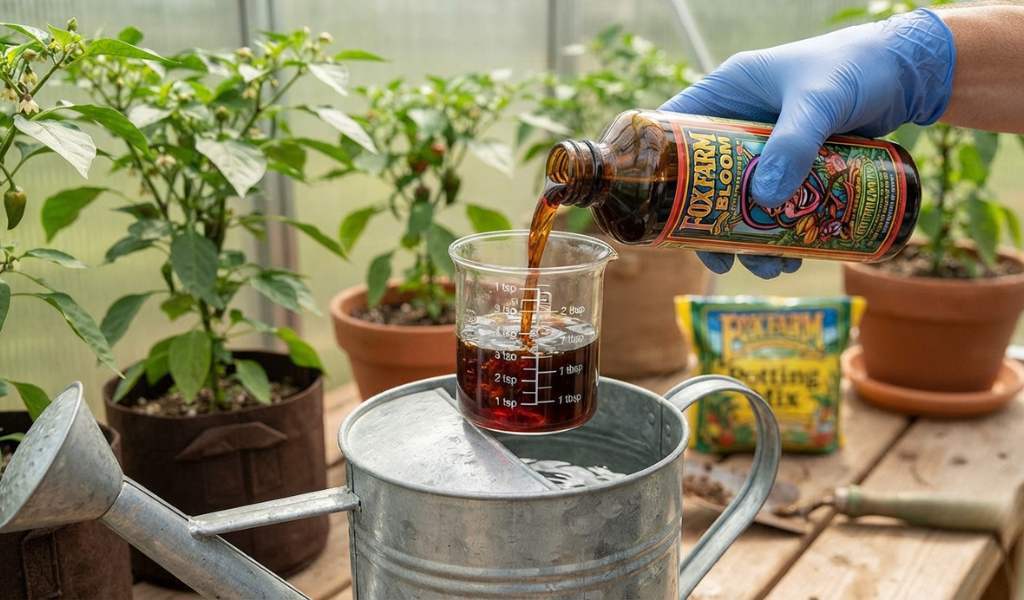
FoxFarm Tiger Bloom is one of the most popular liquid fertilizers for pepper plants, and for good reason. The 2-8-4 NPK ratio is purpose-built for the flowering and fruiting stage. Liquid fertilizer is fast-acting, so plants absorb nutrients quickly, which is useful when you notice fruit drop or slow fruit development mid-season. Mix it at the recommended rate per gallon of water and apply every one to two weeks during peak fruiting.
Best for Beginners: Miracle-Gro Performance Organics Edibles 7-6-9
Miracle-Gro Performance Organics Edibles is one of the most forgiving fertilizers for those new to growing peppers. The 7-6-9 NPK ratio covers the broad nutritional needs of the vegetative stage well, and the potassium level is strong enough to carry through into early fruiting. It is an all-purpose fertilizer that simplifies decision-making for beginners who are still learning how to read their plants.
How and When to Apply Pepper Fertilizer
Applying fertilizer correctly matters as much as choosing the right product. Here is a straightforward approach that covers the full growing season. 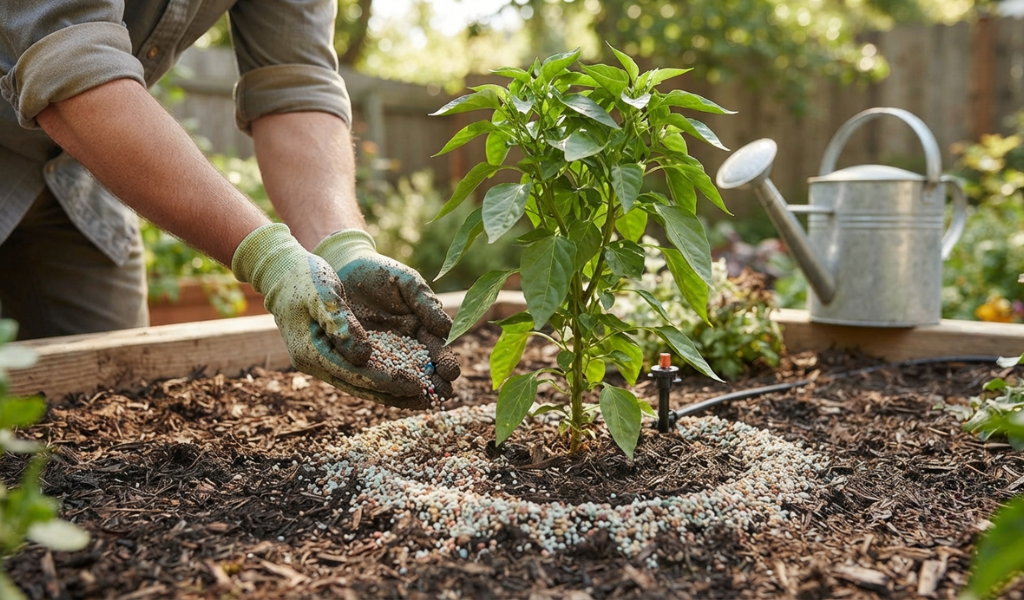
Before planting: Work a slow-release organic fertilizer or compost into your soil before planting your pepper plants. This gives roots an immediate supply of nutrients to tap into. A soil test at this stage is worth doing, since it shows you exactly what your soil already has and what it is missing.
At transplant: Apply a phosphorus-forward fertilizer to support root development. This is not the time for high nitrogen. Jobe’s 2-5-3 or a diluted liquid fertilizer works well.
During vegetative growth: Switch to a balanced or nitrogen-forward fertilizer once plants are growing actively. Feed every two weeks with liquid fertilizer or apply granular fertilizer monthly.
At first flower: Shift to a low-nitrogen, higher phosphorus and potassium formula. This is a critical window. Many pepper growers who miss this transition end up with flowering issues or slow fruit set.
During fruiting: Continue with a potassium-rich fertilizer through the fruiting stage. FoxFarm Tiger Bloom at 2-8-4 is a reliable choice here.
Potted pepper plants generally need more frequent fertilizing than in-ground plants because nutrients leach out faster through drainage. Every ten to fourteen days is a reasonable schedule for container-grown peppers during the growing season.
Fertilizing Mistakes That Cost Pepper Growers Yield
Even experienced growers make these errors. Knowing what to watch for can save you a frustrating season.
Mistake 1: Too Much Nitrogen During Fruiting. This is the most common mistake in growing peppers. When you keep applying a high-nitrogen fertilizer after flowering begins, plants channel energy into foliage instead of fruit. You end up with dark green, leafy plants and very few peppers. Switch to a lower nitrogen ratio once you see the first flowers forming.
Mistake 2: Applying Too Much Fertilizer at Once. Applying too much fertilizer at once can cause fertilizer burn, which shows up as brown, scorched leaf edges. Young pepper plants are especially vulnerable. Always follow label directions, and when in doubt, use less than the recommended amount until you see how your plants respond.
Mistake 3: Skipping the Soil Test. Adding fertilizer to soil that already has excess nutrients creates imbalances that hurt plant health. A soil test takes fifteen minutes and tells you exactly what your soil needs. Many pepper growers skip this step and then wonder why their plants still struggle despite regular feeding.
Hot Peppers: The Capsaicin-Potassium Trade-Off
Growing hot peppers adds an extra layer to fertilizer decisions. Capsaicin, the compound that makes chili peppers hot, is influenced by stress and plant nutrition. Research shows that potassium plays a meaningful role in capsaicin development.
When you grow hotter peppers and want to maximize heat, keep potassium levels strong during the fruiting stage. Some growers also apply a mild sulfate-based fertilizer toward the end of the season to encourage higher capsaicin production. At the same time, avoid overwatering and excessive nitrogen, both of which tend to dilute heat.
This does not apply to all peppers equally. Bell peppers have no capsaicin at all, and sweet varieties like banana peppers produce very little. For those types, focus purely on yield and fruit size, where balanced nutrition throughout the season is the best strategy.
Essential Rules for Pepper Fertilization
Before moving on, here are the key principles to carry through the entire growing season:
Start with a soil test before adding anything. Know what your plants are working with. Match your fertilizer to the current growth stage, not just the plant type. During flowering and fruiting, always reduce nitrogen and increase phosphorus and potassium. Organic fertilizers release nutrients slowly, which reduces the risk of burn and builds long-term soil health. Liquid fertilizers act fast, which is useful when you need a quick correction mid-season. When applying granular fertilizer, water it in thoroughly so pepper roots can absorb the nutrients. Epsom salt (magnesium sulfate) is not a replacement for a balanced fertilizer, but a light application can help if your plants show signs of magnesium deficiency, like yellowing between leaf veins.
Final Thoughts
Fertilizing peppers well is not complicated once you understand what each stage requires. Start with a soil test, match your NPK ratio to your plant’s current needs, and adjust as the season progresses. Young plants need support for root development. Established plants need nitrogen for strong growth. Flowering and fruiting plants need phosphorus and potassium to do their best work.
The five fertilizers in this guide cover a range of budgets and growing styles, so there is something here for everyone. Whether you are growing sweet bell peppers for salads or fiery chili peppers for hot sauce, the right fertilizer approach will help you get more from your plants.
Ready to put this to work? Pick one of the recommended fertilizers above, do a quick soil test, and set a feeding schedule before your next growing season begins. Your peppers will show you the difference.
Frequently Asked Questions
What does Epsom salt do for pepper plants?
Epsom salt provides magnesium and sulfur, two secondary nutrients that pepper plants need in smaller amounts. It is most useful when plants show signs of magnesium deficiency, such as yellowing leaves with green veins. It is not a complete fertilizer and should not replace your regular NPK fertilizing routine.
Is 20-20-20 fertilizer good for pepper plants?
A 20-20-20 balanced fertilizer can work during the vegetative stage when plants need a broad supply of nutrients. However, it is not ideal for flowering or fruiting stages because the high nitrogen content can reduce fruit set. Use it early in the season and transition to a lower-nitrogen product once flowers appear.
Is 3-4-4 fertilizer good for peppers?
Yes. A 3-4-4 NPK ratio is a well-balanced option for general pepper growing. It is a good fit for young plants and the vegetative stage. The slightly elevated phosphorus and potassium relative to nitrogen makes it a versatile choice for gardeners who want a reliable all-purpose fertilizer.
What is a 3-1-2 fertilizer ratio for pepper plants?
A 3-1-2 ratio describes the proportion of nitrogen to phosphorus to potassium, not the actual percentages. Many experienced growers and soil scientists recommend this ratio as a baseline for vegetables during active growth. Products like a 6-2-4 or 9-3-6 follow this ratio. It supports healthy foliage without overdoing nitrogen.
Are Marconi peppers fertilized the same as bell peppers?
Yes, Marconi peppers and bell peppers have similar nutritional needs and respond well to the same fertilizing schedule. Both are sweet varieties without significant capsaicin, so the focus stays on yield and fruit size. Use a balanced fertilizer early in the season and shift to a potassium-forward product during fruiting.
Can I use aged chicken manure as a fertilizer for pepper plants?
Aged or composted chicken manure is an excellent organic fertilizer for pepper plants. It provides a broad range of nutrients and improves soil structure over time. Fresh manure should never be used directly on plants because it is too concentrated and can cause fertilizer burn. Allow it to compost fully before working it into your soil.
What are the best NPK ratios for pepper plants at different growth stages?
For seedlings, a gentle balanced ratio like 3-4-4 works well. At transplant, lean toward higher phosphorus such as 2-5-3. During vegetative growth, a balanced or nitrogen-forward formula like 5-5-5 or 7-6-9 supports strong development. At flowering and fruiting, switch to lower nitrogen and higher phosphorus and potassium, such as 2-8-4 or 5-10-10.