How Often to Fertilize Pepper Plants in Containers for Healthy Growth : Complete Guide
How Often to Fertilize Pepper Plants in Containers: Complete Guide
If you have ever watched your potted pepper plant grow a handful of leaves and then just… stop, you already know that container growing comes with its own rules. One of the biggest questions new and experienced growers ask is how often to fertilize pepper plants in containers, and the honest answer is that it depends on the growth stage, the fertilizer type and ratio, and how often you water. In this guide, we will break down exactly when and how to feed your potted peppers so you get strong plants and a heavy harvest, without guessing or overdoing it.
Growing peppers in pots is different from growing them in the ground. The roots are confined, the soil dries out faster, and nutrients wash away every time you water. That means your feeding schedule needs to be more deliberate than it would be for an in-ground garden bed. By the end of this article, you will know exactly what to do at every stage, from seedling to fruiting, so your pepper plants stay healthy and productive all season long.
How Often Should You Fertilize Pepper Plants in Containers?
As a general rule, potted pepper plants should be fed every two to three weeks with a balanced liquid fertilizer, or according to the release schedule if you are using a slow-release granular product. Young seedlings need lighter, less frequent feeding, while plants that are actively flowering and setting fruit benefit from more consistent nutrition. There is no single fixed number that works for every grower, since pot size, soil type, and climate all play a role, but this two to three week window is a solid starting point that most gardeners can rely on.
The key thing to remember is that container soil behaves very differently from garden soil. It holds far less reserve nutrition, so your feeding routine has to fill that gap. Think of it less as a strict calendar rule and more as a rhythm you build around your plant’s actual behavior.
Recommended Feeding Frequency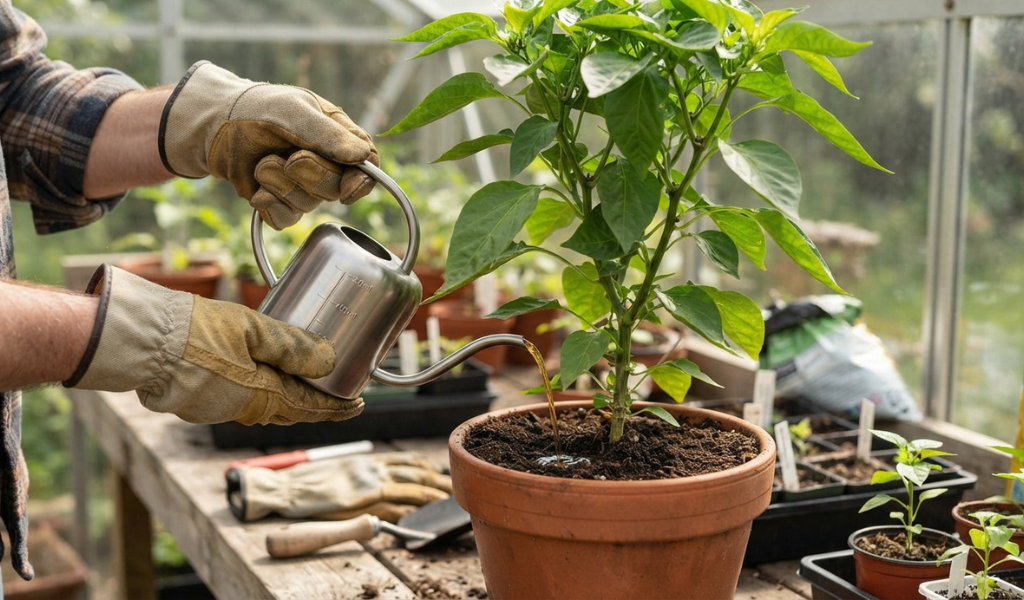
Here is a simple breakdown you can follow through the season:
- Seedling stage (first 2-3 weeks): No fertilizer, or a very diluted feed once every 3-4 weeks
- Vegetative growth (before flowers appear): Liquid feed every 2 weeks
- Flowering and fruiting: Liquid feed every 1-2 weeks, or granular slow-release every 6-8 weeks
- Late season: Reduce or stop feeding as the last fruits mature
This kind of structured pepper plant feeding schedule takes the guesswork out of the process and helps you avoid both starving your plant and drowning it in nutrients.
Why Container Peppers Need Regular Feeding
Potted plants rely entirely on you for their nutrition. In the ground, roots can spread out and tap into a much larger reservoir of organic matter and minerals. In a container, that reservoir is limited to whatever is in the pot, and it runs out fast. Peppers are also fairly heavy feeders once they start setting fruit, so a container that was well fed at planting time can become nutrient poor within a month or two if you are not topping it up.
Regular feeding also supports steady growth rather than the stop-start pattern you see when a plant runs out of nutrients, recovers after a feed, then stalls again. Consistent nutrition keeps the plant’s energy focused on producing flowers and peppers instead of just trying to survive.
Why Do Container Pepper Plants Need More Fertilizer?
Compared to garden soil, potting mix is often made from lightweight materials like peat, coco coir, perlite, and compost. These materials drain well and resist compaction, which is great for root health, but they simply do not hold onto nutrients the way natural garden soil does. There is also far less microbial life in a bag of potting mix compared to living garden soil, and those microbes are usually the ones responsible for slowly breaking down organic matter into usable nutrients.
On top of that, the limited volume of soil in a pot means there is only so much nutrition available in the first place. A five gallon container might hold a fraction of the organic material that the same footprint of garden bed would contain, so it makes sense that potted peppers need more frequent supplementation to stay healthy.
How Watering Flushes Nutrients From Potting Soil
Every time water drains out the bottom of a pot, it takes dissolved nutrients with it. This is called leaching, and it happens constantly in container gardening, especially during hot weather when you might be watering daily. Nitrogen and potassium are particularly prone to washing away since they are highly soluble.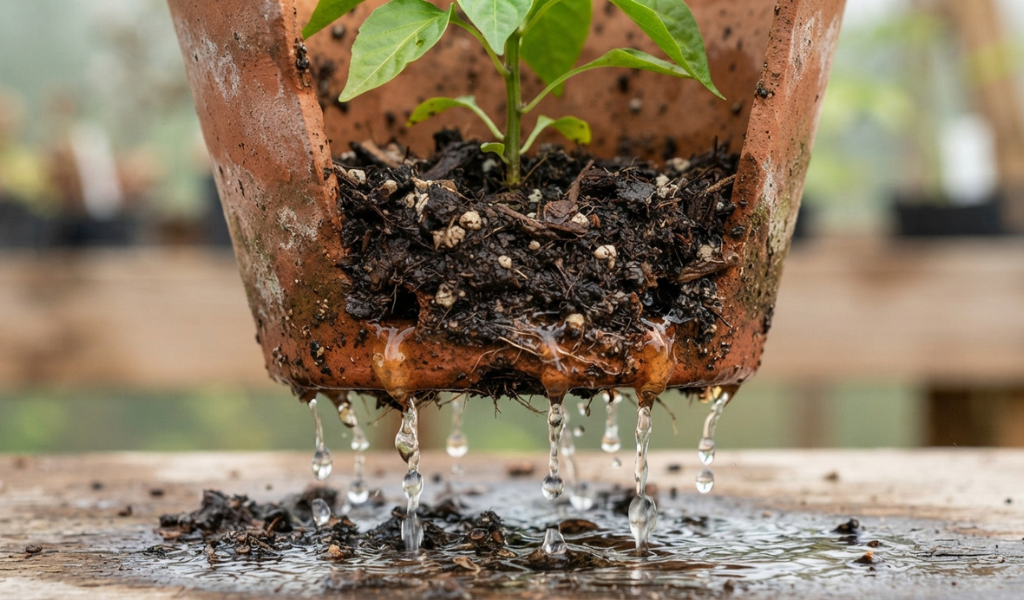
This is one of the main reasons container gardening requires a different mindset than in-ground growing. A garden bed loses some nutrients to rain runoff too, but the sheer volume of soil buffers that loss. A pot has no such buffer. If you are watering your pepper plant every day or two during summer, you should expect that fertilizer applied a few weeks ago is largely gone, which is exactly why a repeat feeding schedule matters so much.
Nutrient Needs of Potted Pepper Plants
Peppers need a mix of macronutrients and micronutrients to thrive. Nitrogen fuels leafy growth, phosphorus supports root development and flowering, and potassium strengthens the plant and improves fruit quality. Calcium and magnesium are also important, particularly for preventing problems like blossom end rot, which is a common issue in container grown peppers when calcium uptake is inconsistent.
Micronutrients such as iron, zinc, and manganese are needed in smaller amounts but still matter, especially over a long growing season where the original potting mix has been depleted. A quality fertilizer formulated for vegetables or fruiting plants usually covers these bases, which is why picking the right product matters as much as picking the right schedule.
When Should You Start Fertilizing Container Peppers?
Timing your first feed correctly sets the tone for the rest of the season. Feed too early and you risk burning tender roots. Wait too long and the plant may already be nutrient starved by the time you start.
Feeding Young Pepper Seedlings
Seedlings carry their own food reserves in the seed itself for the first couple of weeks, so there is no rush to fertilize right away. Most quality seed starting mixes also contain a small amount of starter nutrition. Once the seedling has developed its first set of true leaves, you can begin light feeding with a heavily diluted liquid fertilizer, roughly a quarter strength of what the label recommends. This gentle approach avoids shocking young roots while still supporting healthy leaf development.
Fertilizing After Transplanting
When you move your pepper plant into its final container, give it a week or two to settle in before fertilizing. Transplanting is stressful on roots, and adding fertilizer too soon can compound that stress. Once you see new growth, which is a sign the roots have taken hold in their new home, you can resume a normal feeding routine. Many gardeners like to use a diluted fertilizer at the two week mark and then move to full strength feeding from there.
How Often to Use Liquid Fertilizer on Container Peppers
Liquid fertilizer is a favorite among container gardeners because it is fast acting and easy to control. Since nutrients are already dissolved, the plant can absorb them almost immediately through its roots.
Recommended Liquid Feeding Schedule
For most container peppers, applying liquid fertilizer every two weeks during vegetative growth works well. Once flowering begins, many growers shift to a weekly or biweekly schedule with a formula higher in phosphorus and potassium to support blooms and fruit set. Because liquid fertilizer washes out with watering, sticking to a consistent schedule rather than feeding randomly will give you far more predictable results.
How to Dilute Liquid Fertilizer Properly
One of the most common mistakes new growers make is mixing fertilizer too strong. Always follow the dilution ratio on the product label, and when in doubt, err on the side of a weaker mix applied more often rather than a strong dose applied rarely. A good habit is to fertilize at half the recommended strength but on a slightly more frequent schedule, which tends to produce steadier growth with less risk of nutrient burn.
Use room temperature water when mixing, since cold water can shock roots, and always water the plant lightly before applying diluted fertilizer so you are not feeding into completely dry soil.
How Often to Use Granular Fertilizer for Pepper Plants
Granular fertilizers work differently from liquid feeds. They release nutrients slowly as they break down or dissolve with regular watering, which means they require far less frequent application.
Slow-Release Fertilizer Schedule
Most slow-release granular products are formulated to last anywhere from six to eight weeks, though some premium formulas can stretch to three or four months. This makes them a convenient option if you want a more hands-off approach to your pepper plant care. A single application at planting time, followed by a top up midway through the season, is often enough to keep container peppers well fed.
Following the Product Label
Every granular fertilizer is formulated a little differently, so the label is your best guide. Pay attention to the recommended amount per container size, since overapplying granular fertilizer can lead to a slow but steady buildup of salts in the soil. If you are combining granular fertilizer with occasional liquid feeding during fruiting, reduce the liquid feeding frequency slightly to avoid overlapping too much nutrition at once.
What Fertilizer Is Best for Peppers in Containers?
Choosing the right formula matters just as much as timing. Peppers respond best to a fertilizer that shifts in emphasis as the plant matures.
Understanding NPK for Pepper Plants
NPK refers to the three numbers on a fertilizer label representing nitrogen, phosphorus, and potassium. A balanced formula like 10-10-10 works well during early vegetative growth when the plant is building leaves and stems. Once flowering starts, a formula lower in nitrogen and higher in phosphorus and potassium, such as 5-10-10, tends to encourage more blooms and stronger fruit development rather than excessive leafy growth.
Choosing Fertilizer for Different Growth Stages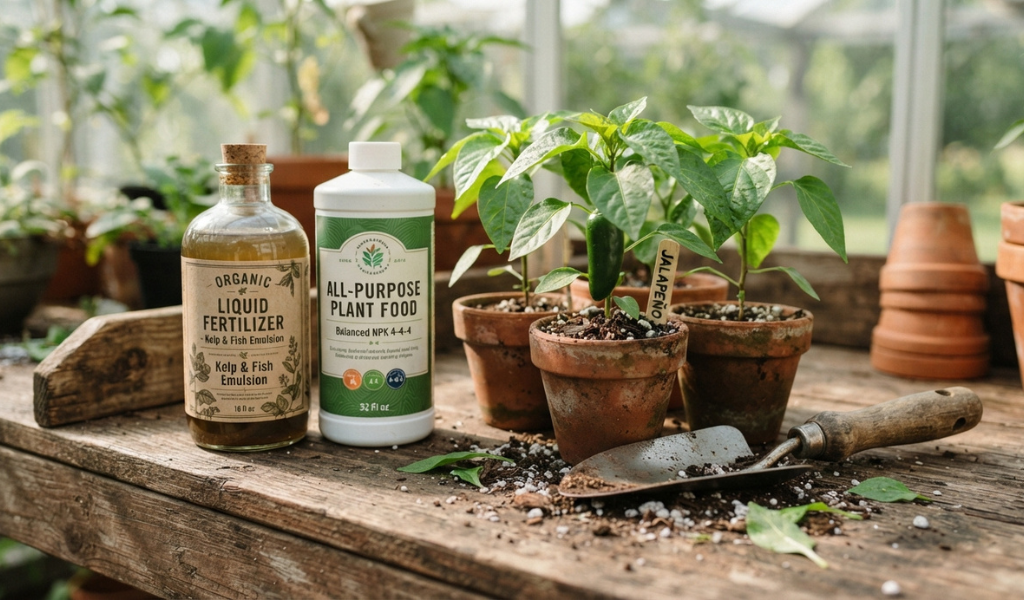
Many gardeners keep two products on hand, a balanced all purpose fertilizer for the early stage and a bloom booster formula for flowering and fruiting. Organic options like fish emulsion, compost tea, or worm castings also work well and have the added benefit of supporting soil microbial life, which is especially valuable in containers where that natural activity tends to be limited.
When to Change Your Pepper Fertilizer Schedule
Your feeding routine should not stay static across the entire growing season. Peppers have different needs depending on what stage of growth they are in.
Fertilizing During Vegetative Growth
During the early leafy growth stage, focus on a nitrogen rich formula to support strong stems and healthy foliage. This is the foundation stage, and a well fed plant here will be better prepared for the demands of flowering later on.
Feeding During Flowering and Fruiting
Once buds and flowers appear, shift toward a formula with more phosphorus and potassium. This is also typically the point where you increase feeding frequency slightly, since fruit development pulls heavily on the plant’s nutrient reserves. A pepper plant loaded with developing fruit is working hard, and consistent feeding during this window has a direct impact on yield.
Reducing Fertilizer at the End of the Season
As the season winds down and you want the plant to finish ripening its last fruits rather than pushing new growth, taper off fertilizing. Cutting back nitrogen especially can help the plant redirect energy toward ripening existing peppers instead of producing new flowers that will not have time to mature.
Signs Your Container Pepper Plants Need Fertilize
Even with a solid schedule, it helps to know what a nutrient deficient plant looks like so you can adjust on the fly.
Yellow or Pale Leaves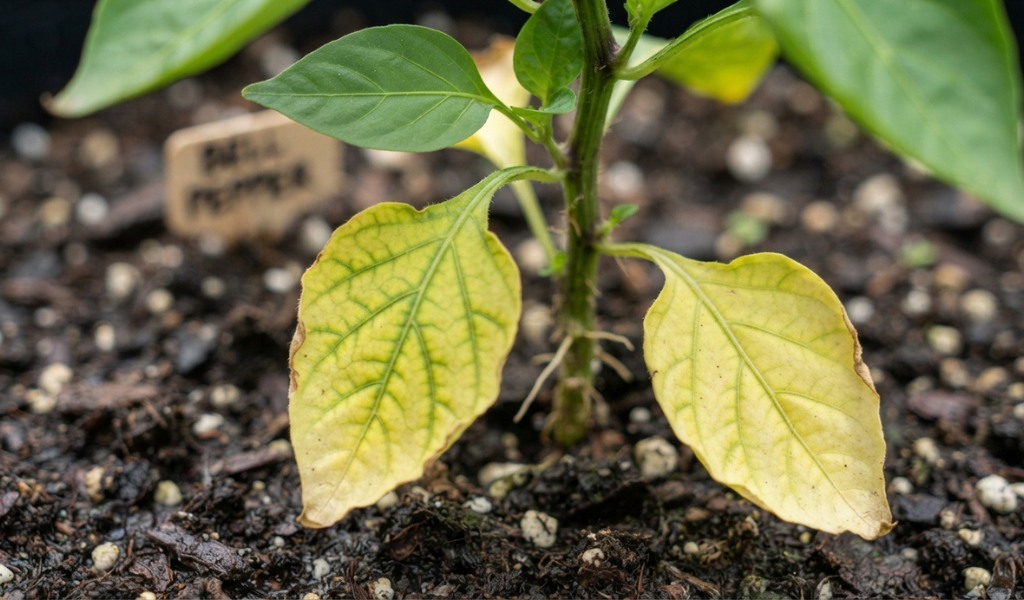
Pale or yellowing leaves, especially older leaves lower on the plant, often signal a nitrogen shortage. This is one of the most visible cues that your feeding schedule needs attention.
Slow Growth
If your pepper plant seems stuck, not putting out new leaves or gaining height over several weeks despite good light and water, a nutrient deficiency is often the cause. Compare growth rate to earlier in the season as a benchmark.
Poor Flower and Fruit Production
A pepper plant that flowers but drops blooms before fruiting, or produces very few peppers despite looking otherwise healthy, may be lacking in phosphorus or potassium. This is a common sign that it is time to switch to a bloom focused formula.
Can You Overfertilize Pepper Plants in Containers?
Yes, and it happens more often than underfeeding in container gardens, since it is easy to assume more fertilizer means more growth. Peppers are sensitive to nutrient salt buildup, particularly in the confined space of a pot where there is nowhere for excess salts to disperse.
Signs of Fertilizer Burn
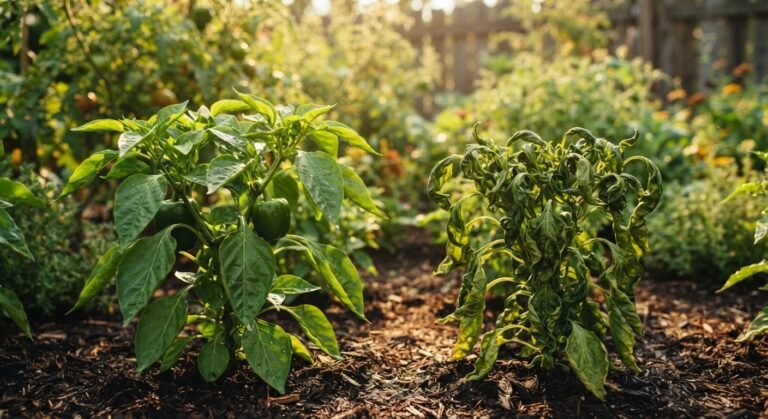
Look for crispy brown edges on leaves, a white crusty buildup on the soil surface, wilting despite moist soil, or leaves that curl downward. These are all classic signs that your plant has received too much fertilizer too quickly.
How to Fix Overfertilized Container Peppers
If you suspect fertilizer burn, flush the container thoroughly with plain water, letting it drain completely through the bottom several times. This helps wash out excess salts from the root zone. Hold off on any further feeding for at least three to four weeks, and when you resume, use a more diluted mix than before.
Final Thoughts
Getting the timing right on how often to fertilize pepper plants in containers really comes down to paying attention to your plant’s growth stage and adjusting as you go. Start light with seedlings, build up during vegetative growth, and increase support once flowers and fruit appear. Whether you choose liquid feeding every two weeks or a slow-release granular approach, consistency matters more than perfection. Keep an eye on your plant’s leaves and growth rate, and you will quickly learn to read what it needs. With a steady feeding routine, your container peppers will reward you with strong growth and a generous harvest all season long.
Container Pepper Fertilizing Tips and FAQs
Should You Fertilize Peppers Every Week?
Weekly fertilizing can work if you are using a very diluted liquid feed, particularly during heavy fruiting. However, for most growers using standard strength fertilizer, every two weeks strikes a better balance between keeping the plant well fed and avoiding nutrient buildup.
Should You Water Before Fertilizing?
Yes. Watering the soil lightly before applying fertilizer helps prevent root burn and allows nutrients to distribute more evenly through the container rather than pooling in one spot.
How Often Should You Fertilize Peppers While Fruiting?
During active fruiting, every one to two weeks with a liquid fertilizer higher in phosphorus and potassium is typically ideal. If using granular slow-release fertilizer, a single application timed to cover the fruiting period is often sufficient.
What Happens If You Never Fertilize Container Peppers?
Without any fertilizer, container peppers usually grow slowly, produce fewer flowers, and yield smaller or fewer peppers. Since potting soil lacks the natural nutrient reserves of garden soil, unfed container plants tend to show deficiency symptoms within a month or two of planting.
Can You Use Coffee Grounds or Kitchen Scraps as Fertilizer?
Coffee grounds and composted kitchen scraps can supplement soil nutrition but should not replace a proper fertilizer routine. They break down slowly and provide inconsistent nutrient levels, so they work best as an occasional soil amendment rather than a primary feeding source.
Do Different Pepper Varieties Need Different Fertilizing Schedules?
Hot peppers and sweet peppers generally follow the same basic feeding schedule, though some growers reduce nitrogen slightly for hot pepper varieties once flowering begins, since research suggests moderate stress can enhance heat levels in certain chili varieties. The core schedule of regular feeding through vegetative growth and fruiting still applies across most types.
Is Organic Fertilizer as Effective as Synthetic for Container Peppers?
Organic fertilizers like fish emulsion or compost tea are effective but tend to act more slowly since they need to break down before nutrients become available. Synthetic fertilizers act faster but require more careful dilution. Many gardeners find a combination of both works well, using organic feeds for steady background nutrition and occasional diluted synthetic feeds during heavy fruiting.