Liquid Fertilizer for Pepper Plants: The Best Fertilizer for Peppers to Boost Growth
Liquid Fertilizer for Pepper Plants: Here’s What You Need to Grow Lots of Chillies
Growing peppers is one of the most satisfying things a gardener can do. Whether you’re chasing heat for your spicy recipes or growing sweet bell peppers for fresh salads, getting your fertilizer right makes all the difference. Liquid fertilizer for pepper plants is one of the fastest, most effective ways to give your plants the nutrients they need exactly when they need them.
But here’s where a lot of growers go wrong: they treat all fertilizers the same, apply them without a plan, and then wonder why their pepper plants are producing fewer fruits or dropping flowers. The truth is that peppers are heavy feeders, and what you feed them, and when, has a huge impact on your harvest.
So what nutrients do pepper plants need? Peppers require three main nutrients: nitrogen (N), phosphorus (P), and potassium (K). They also benefit from secondary nutrients like calcium, magnesium, and sulfur throughout the growing season. Getting this balance right is what separates a struggling plant from one that’s loaded with fruit.
This guide covers everything you need to know: how to choose the best liquid fertilizer for peppers and when, how often to apply it, common mistakes to avoid, and expert tips for growing strong plants from seed to harvest.
What Is Liquid Fertilizer for Pepper Plants and Why Does It Matter?
Liquid fertilizer is a concentrated or water-soluble plant food that you mix with water and apply directly to the soil or as a foliar spray. Unlike granular fertilizers that slowly break down over time, liquid fertilizers are absorbed quickly by the roots, giving your plants fast access to the nutrients they need.
For pepper plants, this speed matters. Peppers go through several distinct growth stages, each with different nutritional demands. A plant pushing out new leaves needs different support than one setting flowers or developing fruit. Liquid fertilizer lets you adjust what you’re feeding your plants in real time, which granular slow-release options simply can’t match.
Pepper plants are also sensitive to nutrient deficiencies. A magnesium deficiency, for example, shows up as yellowing between the leaf veins and can slow fruit development significantly. Because liquid fertilizer is absorbed so quickly, it works well for correcting these deficiencies before they cause lasting damage.
Another advantage is flexibility. You can apply liquid fertilizer to both outdoor garden plants and potted pepper plants, and you can use it throughout the season without disrupting the soil structure. Whether you’re growing hot pepper varieties like jalapeños or habaneros, or milder capsicum types, liquid fertilizer helps your plants stay nourished from seedling to harvest.
Choosing the Best Liquid Fertilizer for Pepper Plants
Check the NPK Ratio Before Choosing Liquid Fertilizer
Every fertilizer label shows three numbers representing nitrogen (N), phosphorus (P), and potassium (K). These are the main three nutrients your pepper plants need to thrive. Nitrogen supports leafy green foliage and strong stems. Phosphorus encourages healthy root development and flower production. Potassium supports overall plant health, fruit quality, and disease resistance.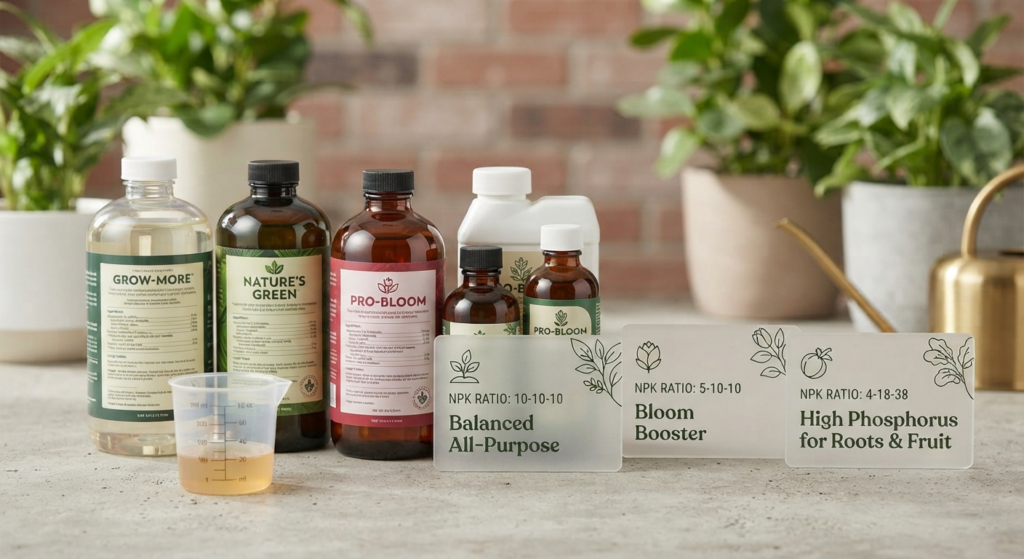
For young pepper plants that are still growing their first set of leaves, a balanced fertilizer like 10-10-10 works well. As your plants near flowering and fruiting, it’s smart to reduce nitrogen and boost phosphorus and potassium. A ratio like 5-10-10 is commonly recommended at this stage to encourage more fruit rather than excess leafy growth.
How to Select the Best Fertilizer for Pepper Plants Based on Growth Stage
Pepper plants have three main growth stages, and each one benefits from a different fertilizer approach. During the seedling phase, plants need a gentle, balanced feed to support early root development without overwhelming young roots. Once the plant reaches its vegetative stage, slightly higher nitrogen levels help build a strong, leafy structure. Then, as flowering and fruit production begin, shift your focus to phosphorus and potassium to support fruit set and ripening.
Choosing the best fertilizer for your pepper plants based on where they are in their growth cycle is one of the most important decisions you can make. Plants that receive too much nitrogen during fruiting will produce lots of green foliage but fail to develop quality fruit.
Organic vs. Synthetic Liquid Fertilizer for Pepper Plants
Organic liquid fertilizers include options like compost tea, fish emulsion, and seaweed extract. They release nutrients slowly, feed beneficial soil organisms, and are a great fit for organic gardening practices. Synthetic options like Miracle-Gro water-soluble fertilizers deliver nutrients immediately and give you precise control over NPK ratios.
Neither is universally better. The right choice depends on your goals, your soil, and your growing setup.
Factors to Consider When Choosing Fertilizer for Peppers
Before choosing a fertilizer, consider your soil pH. Peppers prefer a slightly acidic soil with a pH between 6.0 and 6.8. If your soil pH is off, your plants won’t absorb nutrients properly, no matter how much fertilizer you apply. A simple test kit can tell you where your soil stands. Also think about whether you’re growing in garden soil or containers, since potted pepper plants need more frequent feeding because nutrients leach out with every watering.
When and How to Fertilize Pepper Plants with Liquid Fertilizer for Maximum Growth
The Best Time to Apply Liquid Fertilizer to Pepper Plants
The best time to apply liquid fertilizer is in the morning or late afternoon, never in the midday heat. Applying fertilizer when the sun is intense can scorch foliage, especially if you’re using a foliar spray. Morning applications give the soil time to absorb moisture before the heat of the day sets in.
Avoid fertilizing pepper plants that are drought-stressed or sitting in bone-dry soil. Water your plants thoroughly first, then apply fertilizer. This protects the roots and helps the nutrients move through the soil more evenly.
Step-by-Step Guide on How to Fertilize Pepper Plants with Liquid Fertilizer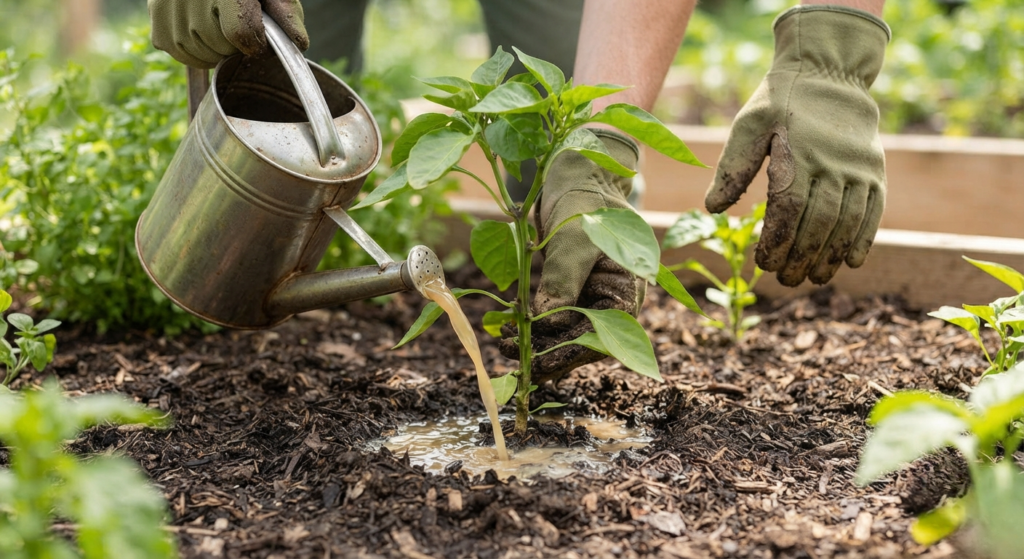
Step 1: Always read the label and dilute the liquid fertilizer according to the manufacturer’s instructions. Over-concentrated fertilizer can burn roots and damage plant health.
Step 2: Water your pepper plants the day before or a few hours before fertilizing so the soil is moist but not waterlogged.
Step 3: Apply the diluted liquid fertilizer evenly around the base of the plant, avoiding direct contact with the stem.
Step 4: If you’re using a foliar spray, apply it in the early morning so leaves have time to dry before nightfall. This prevents fungal issues.
Step 5: Record when you fertilized and what you used. This makes it easier to track your fertilizer regimen and spot patterns in plant growth.
How Often Should You Fertilize Pepper Plants?
During the active growing season, most pepper plants benefit from liquid fertilizer applied every 2 to 3 weeks. If you’re using a diluted mix, some gardeners feed weekly with a weaker solution. Container-grown peppers tend to need more frequent feeding than those growing in garden beds.
Hold off on fertilizing immediately after transplanting. Newly transplanted pepper seedlings need time to settle before their roots can handle a full dose of fertilizer. Wait at least 1 to 2 weeks after transplanting before applying liquid fertilizer for the first time.
Adjusting Liquid Fertilizer for Seedlings, Flowering, and Fruit Production
Seedlings are delicate. Use a very diluted fertilizer or a seedling-specific mix to avoid overwhelming young roots. As the plant matures and enters its vegetative phase, increase the frequency and concentration slightly. When flowers appear, switch to a fertilizer lower in nitrogen and higher in phosphorus and potassium. This shift encourages more fruit set and helps peppers develop fully rather than putting all their energy into foliage.
Best Liquid Fertilizer for Pepper Plants: Organic vs. Synthetic Options
Benefits of Organic Liquid Fertilizer for Pepper Plants
Organic liquid fertilizers like compost tea, fish emulsion, and worm casting tea feed your plants while also improving soil biology. They support beneficial microbes that break down nutrients and make them more available to plant roots over time. These options are especially useful for gardeners who want to avoid synthetic chemicals and build long-term soil health.
Fish emulsion is a popular choice among gardeners growing hot pepper and chilli plants because it provides a good nitrogen boost during the vegetative stage without the risk of chemical burn. Compost tea works well as a light ongoing feed throughout the season.
Advantages of Synthetic Fertilizer for Faster Pepper Growth
Synthetic fertilizers like Miracle-Gro are water-soluble and deliver nutrients immediately. They’re easy to measure, mix, and apply, and they give you precise control over what your pepper plants are receiving at each stage. For gardeners who want fast results or are correcting a specific nutrient deficiency, synthetic options often act faster than organic alternatives.
Comparing the Best Fertilizers for Peppers for Different Growing Needs
If you’re growing peppers indoors under grow lights, a synthetic water-soluble fertilizer gives you the most control. For outdoor raised beds or garden soil, organic options like compost and compost tea help build soil fertility over time. In containers, either works, though you’ll need to feed more often since pots don’t retain nutrients the same way garden beds do.
Choosing the Right Fertilizer for Hot Pepper and Chilli Plants
Hot peppers like cayenne, habanero, and ghost pepper varieties are heavy feeders that respond well to consistent fertilizing. During fruit development, these pepper varieties benefit from adequate calcium and magnesium to prevent blossom end rot, a condition where the bottom of the fruit turns black and rots. Adding Epsom salt (magnesium sulfate) to your fertilizer regimen can help if your plants show signs of magnesium deficiency.
How Healthy Soil Improves Liquid Fertilizer Performance
Why Soil Quality Matters for Pepper Plant Growth
Even the best liquid fertilizer won’t do much if your soil is in poor condition. Compacted soil, low organic matter, and incorrect soil pH all reduce the plant’s ability to absorb nutrients. Healthy soil acts as a reservoir for nutrients, water, and beneficial organisms that work alongside fertilizer to support pepper plant growth.
Preparing Soil Before Applying Liquid Fertilizer for Pepper Plants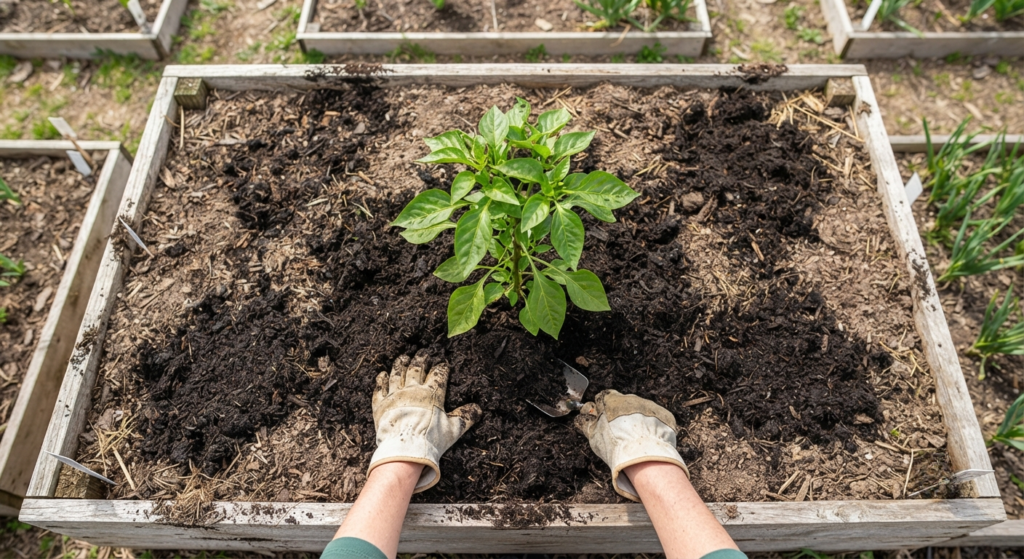
Before you start fertilizing, prepare your soil well. Work in compost or aged manure to improve structure and add organic matter. Test your soil pH and adjust if needed. Peppers prefer slightly acidic soil, so if your pH is too high, you may need to lower it with sulfur or acidic compost.
Improving Soil Nutrients for Better Fertilizer Absorption
Adding bone meal to your soil before planting provides a slow-release source of phosphorus that supports root development from the start. Working in compost improves soil structure and adds a wide range of secondary nutrients. For plants showing signs of calcium deficiency, crushed eggshells mixed into the soil can help over time.
Maintaining Healthy Soil for Bigger Pepper Harvests
Keep the soil consistently moist but well-draining throughout the season. Mulching around your pepper plants helps retain moisture, regulate soil temperature, and reduce nutrient runoff when you apply liquid fertilizer. Healthy roots grow in healthy soil, and healthy roots mean more fruit.
Common Fertilizing Mistakes That Can Harm Your Pepper Plant
Using Too Much Liquid Fertilizer on Pepper Plants
Over-fertilizing is one of the most common mistakes pepper gardeners make. Excess fertilizer, especially nitrogen, causes lush green foliage at the expense of flowers and fruit. In severe cases, too much fertilizer can burn roots, causing the plant to wilt and decline even when the soil is moist.
Applying Fertilizer at the Wrong Growth Stage
Using a high-nitrogen fertilizer once your pepper plants start flowering is a recipe for disappointment. Those nutrients go straight into producing more leaves instead of setting fruit. Always match your fertilizer choice to the current growth stage.
Ignoring Soil Conditions Before Fertilizing Peppers
Applying fertilizer to dry, compacted, or pH-imbalanced soil is a waste. The plant simply can’t absorb what you’re offering. Always check soil conditions before you feed, and fix any underlying issues first.
Signs Your Pepper Plant Is Getting Too Much Fertilizer
Watch for yellow leaves, brown leaf tips, wilting despite regular watering, and reduced flower production. These are all signs that your fertilizer regimen may need adjusting. If you suspect over-fertilization, flush the soil with plain water to dilute and remove excess fertilizer.
Expert Tips for Fertilizing and Growing Peppers
- Start Early for Strong Root Development
Feed your pepper seedlings with a diluted, balanced fertilizer as soon as they develop their first true set of leaves. Strong roots early on support everything that comes later. - Choose the Best Fertilizer for Peppers
Match your fertilizer to the growth stage. A 10-10-10 early, then a switch to 5-10-10 once flowering begins, is a reliable approach for most pepper varieties. - Feed Your Peppers Consistently but Don’t Overdo It
Stick to a regular fertilizer schedule of every 2 to 3 weeks and avoid the temptation to add extra fertilizer when growth seems slow. Patience and consistency matter more than volume. - Use Epsom Salt for Vibrant Leaves and Fruit
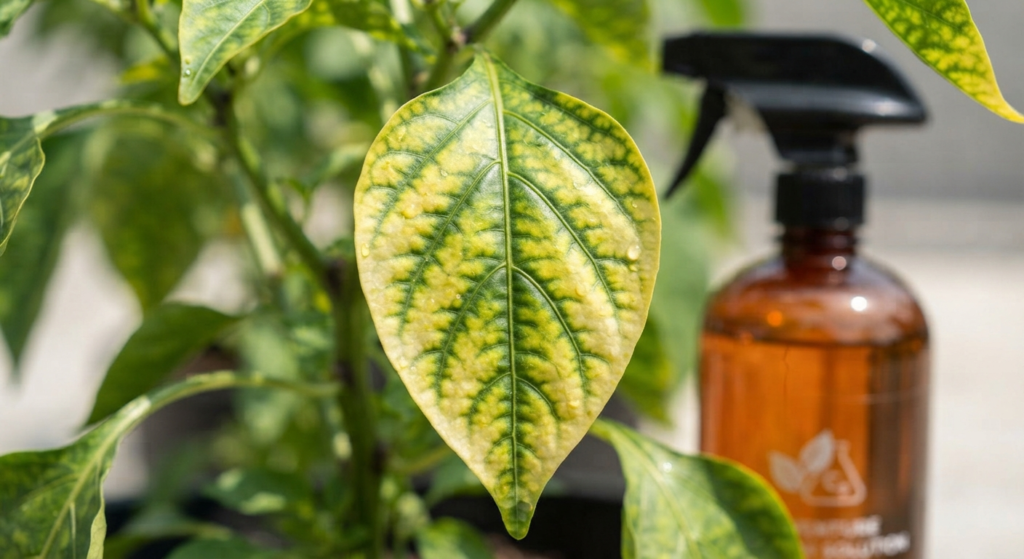
Dissolve 1 tablespoon of Epsom salt (magnesium sulfate) in a gallon of water and apply it as a foliar spray or soil drench every 4 weeks. This helps prevent magnesium deficiency and supports deep green foliage and healthy fruit development. - Water Wisely and Mulch Deeply
Peppers don’t need to be watered every day. Deep, infrequent watering encourages roots to grow deeper and makes plants more resilient. Mulch helps keep moisture in and reduces the frequency of both watering and fertilizing. - Watch for Ripeness and Harvest at the Right Time
Harvesting peppers at the right time encourages the plant to keep producing. Leaving overripe fruit on the plant signals to it that the job is done, slowing production. Regular harvesting keeps your plants growing strong throughout the season.
Final Thought:
Growing great peppers comes down to understanding what your plants need and when they need it. Liquid fertilizer for pepper plants gives you the flexibility and speed to meet those needs at every stage of growth. Pair it with healthy soil, a consistent watering routine, and a fertilizer schedule that changes as your plants grow, and you’ll be harvesting more chillies than you know what to do with.
Start with a soil test, choose a fertilizer that matches your goals, and feed your plants regularly without overdoing it. Small, consistent efforts throughout the growing season add up to a big harvest by the end.
Need help keeping your pepper plants healthy all season long? Bookmark this guide and refer back to it as your plants move through each growth stage.
Frequently Asked Questions
What is the best fertilizer for peppers?
The best fertilizer for peppers depends on the growth stage. A balanced 10-10-10 fertilizer works well during the vegetative phase, while a lower-nitrogen option like 5-10-10 is better once flowering and fruiting begin. Liquid fertilizers are a popular choice because they’re absorbed quickly and allow you to adjust nutrients as the plant’s needs change.
Is liquid fertilizer good for pepper plants?
Yes. Liquid fertilizer is one of the most effective options for pepper plants because it delivers nutrients directly to the roots quickly. It’s especially useful for correcting nutrient deficiencies and for feeding pepper plants at specific growth stages when their needs shift.
What can you put on pepper plants to make them grow faster?
Consistent feeding with a balanced liquid fertilizer, combined with adequate watering and sunlight, is the most reliable way to speed up growth. Adding Epsom salt to your routine helps address magnesium deficiency, which can slow plant growth and reduce fruit production. Make sure your soil pH is in the right range too, as plants can’t absorb nutrients efficiently when the pH is off.
Do peppers like to be watered every day?
No. Peppers prefer deep, infrequent watering rather than daily light watering. Overwatering can lead to root rot and poor nutrient absorption. Aim to water when the top inch of soil feels dry, and always ensure your pots or garden beds have good drainage.
What natural fertilizer is good for pepper plants?
Fish emulsion, compost tea, and worm casting tea are all excellent natural options for feeding pepper plants. These organic liquid fertilizers provide a steady supply of nutrients while also improving soil health. Compost worked into the soil before planting also provides a strong nutritional foundation for the entire growing season.
Can you make homemade fertilizers for pepper plants?
Yes. Compost tea is one of the easiest homemade fertilizers to prepare. Simply steep finished compost in water for 24 to 48 hours, strain it, and apply it to your plants. Coffee grounds mixed into the soil add a small amount of nitrogen and can help lower soil pH slightly, which is beneficial for peppers that prefer slightly acidic conditions.
How do I know if my pepper plant needs more fertilizer?
Common signs of nutrient deficiency in pepper plants include yellowing leaves, slow growth, pale or washed-out foliage, and reduced fruit production. A soil test is the most accurate way to identify what’s missing. If yellow leaves appear between the veins, magnesium deficiency is a likely cause and can be corrected with an Epsom salt treatment.