How to Grow Peppers From Seed: A Complete Growing Guide
How to Grow Peppers From Seed: Everything You Need for Healthy, Productive Plants
Growing peppers from seed is one of the most rewarding things a home gardener can do. You get more variety, better value, and the satisfaction of watching a tiny seed become a plant loaded with sweet or hot peppers. But peppers have a reputation for being tricky starters and that reputation is not entirely undeserved.
The good news? Most problems come down to a handful of avoidable mistakes. Get the basics right, and starting pepper seeds indoors is genuinely straightforward. This guide walks you through every step, from prep to transplant, so you can grow peppers from seed with confidence whether you’re after crisp bell peppers, smoky chipotles, or fiery Thai peppers.
What Is Pepper Seed Germination?
Germination is the process where a pepper seed absorbs moisture, activates its internal chemistry, and pushes out its first root and shoot. For peppers, this process is slower than most vegetables. Peppers are a heat-loving plant, and they need warm soil temperatures ideally between 80°F and 90°F to germinate efficiently.
Unlike tomatoes, which can sprout in less than a week, pepper seeds take anywhere from 7 to 21 days to germinate. Hot pepper varieties, especially super hots like ghost peppers or habaneros, can take even longer. Understanding this upfront saves a lot of unnecessary worry.
When Should You Start Pepper Seeds Indoors?
Most gardeners should start pepper seeds indoors 8 to 10 weeks before the last frost date in their area. Peppers have a long growing season, so starting seeds indoors gives them the head start they need to produce fruit before summer ends.
For most of the US, that means starting seeds somewhere between late January and early March. Check your local last frost date and count backward. If you plan to grow hot peppers from seed—especially longer-season varieties err on the earlier side.
Types of Pepper Plants to Grow from Seeds
There’s no shortage of peppers to choose from when starting pepper seeds indoors. Here are a few popular categories:
- Sweet peppers: Bell peppers, banana peppers, and pimento varieties are easy to grow and widely loved.
- Mild-medium heat: Poblano, Anaheim, and Hungarian wax peppers sit in the middle of the heat scale.
- Hot pepper varieties: Jalapeños, serranos, and cayennes are reliable producers.
- Superhots: Habaneros, ghost peppers, and Carolina Reapers are possible from seed, but hot peppers take longer and need extra patience.
- Thai peppers: These compact plants produce prolific clusters of small, fiery peppers and grow well in pots.
Starting from seed opens up far more variety than what you’d find at a local nursery. That alone makes it worth the effort.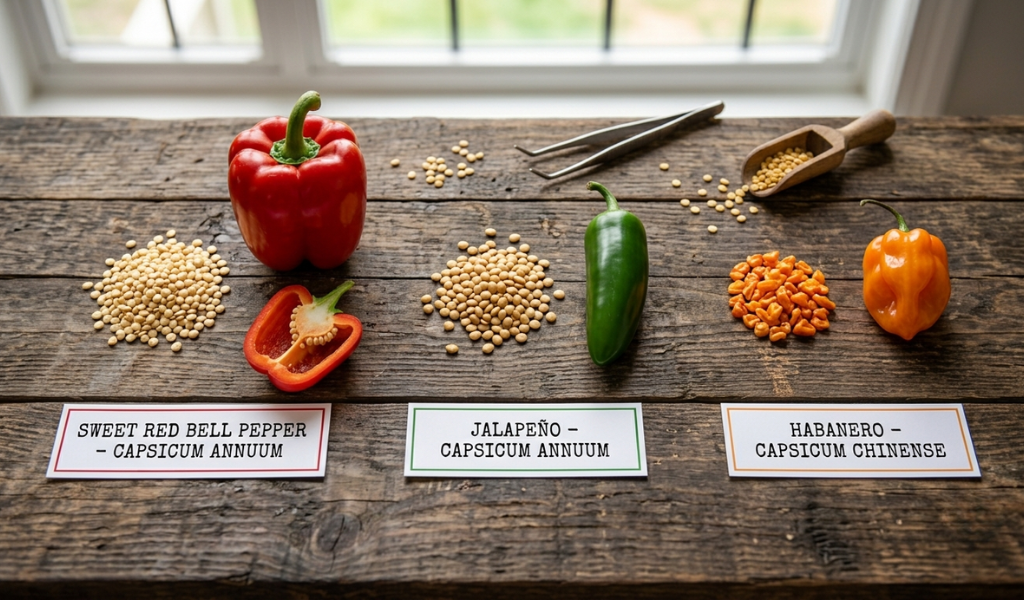
How to Grow Peppers from Seed
Here’s exactly how to plant pepper seeds indoors for the best results.
Step 1: Pre-Saturate Your Seed Starting Mix
Fill your seed trays or small pots with a quality seed starting mix not regular garden soil. Before planting, thoroughly moisten the mix so it’s damp throughout but not dripping. Dry mix won’t provide the moisture a germinating seed needs right away.
Step 2: Make a ¼-Inch Hole
Using a pencil tip or your fingertip, press a small indentation about ¼ inch deep into each cell. Pepper seeds don’t need to be buried deep; too deep and they’ll struggle to sprout.
Step 3: Plant the Seeds
Drop 2 to 3 pepper seeds per cell. Planting multiple seeds increases your odds of at least one germinating per cell. Lightly cover the seeds with a thin layer of seed starting mix and gently press down.
Step 4: Add Bottom Heat and Humidity
This step makes a real difference. Place your seed trays on a seedling heat mat set to around 80–85°F. Cover trays with a clear humidity dome to trap moisture and warmth. Check daily to make sure the soil doesn’t dry out.
Step 5: Add Grow Lights
Pepper seeds don’t need light to germinate, but the moment seedlings sprout, light becomes critical. Set up a grow light 2 to 4 inches above the tray and run it for 14 to 16 hours per day. Inadequate light is one of the main reasons seedlings grow tall and leggy.
Care of Your Pepper Seedlings
Once seeds sprout, your job shifts to maintaining steady conditions. Keep the grow light close, maintain soil moisture without overwatering, and watch for early signs of damping off (a fungal issue caused by overly wet soil with poor airflow).
Supplies Needed to Start Pepper Seeds Indoors
Essential Supplies:
- Seed starting mix
- Seed trays or small pots with drainage holes
- Seedling heat mat
- Humidity dome
- Grow light
- Spray bottle or gentle watering can
- Balanced liquid fertilizer (for after the first true leaves appear)
How Long Do Pepper Seeds Take to Germinate?
Most pepper seeds germinate in 7 to 21 days under good conditions. Sweet bell pepper seeds tend to sprout faster. Hot peppers take longer—sometimes 3 to 4 weeks, and superhot varieties can stretch to 5 or 6 weeks.
Factors That Affect Germination
- Soil temperature: The single biggest factor. Below 70°F, pepper seeds germinate slowly or not at all.
- Seed viability: Old seeds or those stored in poor conditions have lower germination rates. Always check the date on your seed package.
- Moisture levels: Soil that dries out between checks will stall germination.
- Seed quality: Fresh, viable seed from a reputable source gives you the best odds.
Ongoing Care During Germination
Check trays daily. Mist the surface if it looks dry. Keep the heat mat running around the clock—consistency matters more than peak temperature.
Keep Soil Moist , Not Soaked
This is the balance every seed starter has to find. Soil that’s too wet invites mold and rot. Soil that’s too dry stops germination cold. Aim for the texture of a wrung-out sponge damp throughout with no pooling water.
What to Do After Seeds Sprout
Once you see pepper seeds sprout, a few immediate actions set your seedlings up for success.
Remove the Humidity Dome
As soon as the majority of seeds sprout, pull the humidity dome off. Keeping it on too long encourages fungal problems and weak growth.
Add Gentle Airflow
A small fan on low, running a few hours per day, strengthens seedling stems and discourages damping off. This is often skipped by beginners, and it makes a noticeable difference.
Fix Leggy Seedlings
Leggy seedlings tall, thin, and floppy are almost always a light problem. Lower your grow light or increase the daily hours. You can also bury part of the stem when transplanting to compensate for legginess.
Thin Seedlings
If multiple seeds sprouted per cell, snip the weaker ones at soil level with scissors. Don’t pull them out that can disturb the roots of the seedling you’re keeping. Each cell should have one strong plant.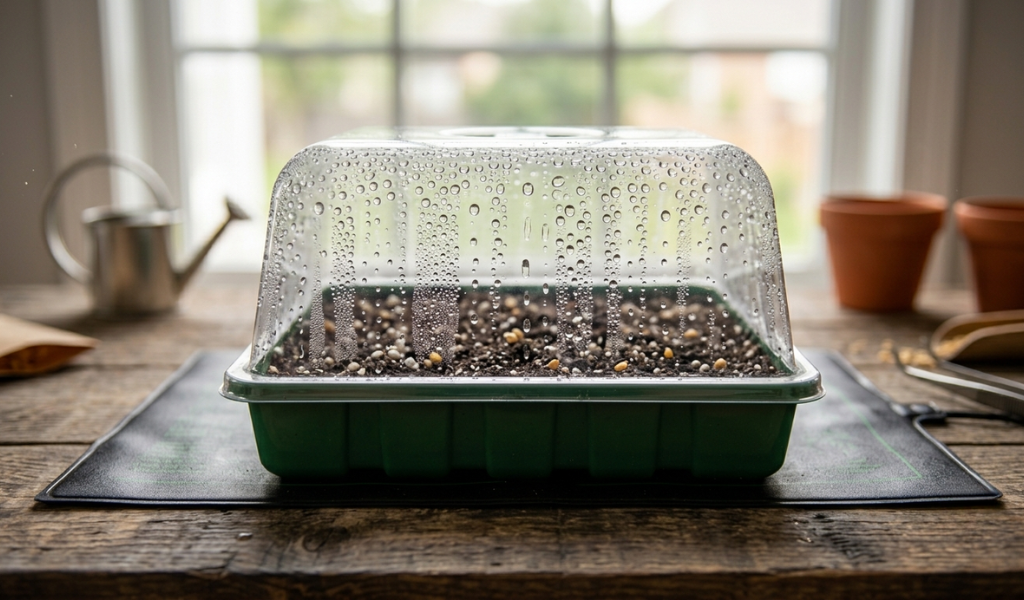
When to Fertilize Pepper Seedlings
Hold off on fertilizing until the first set of true leaves appears (the second set of leaves, which look like actual pepper plant leaves). Start with a diluted, balanced liquid fertilizer half strength once per week. Over-fertilizing young seedlings causes more harm than good.
Hardening Off Your Pepper Seedlings
Before transplanting peppers into the garden, they need to be hardened off. This means gradually introducing them to outdoor conditions over 7 to 14 days. Start with an hour or two of shade outside, then slowly increase exposure to sun and wind each day.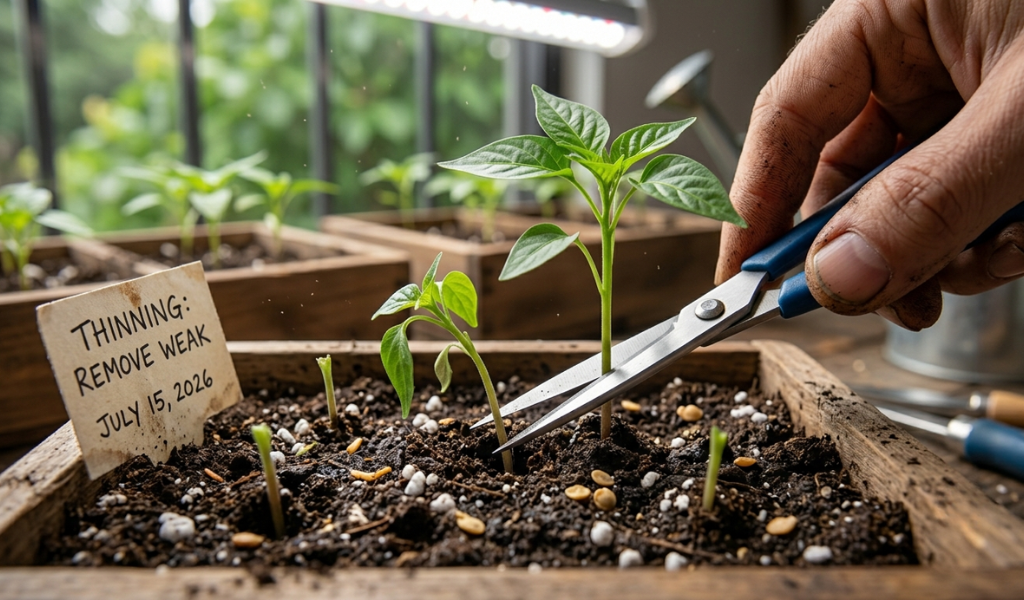
Skipping this step is a common mistake. Seedlings moved directly from indoors to full sun often get sunscald or transplant shock, setting them back by weeks.
Common Germination Mistakes to Avoid
- Starting too early: Seedlings outgrow indoor space or become root-bound before it’s warm enough to plant outside.
- No heat mat: This is the most common reason pepper seeds don’t sprout.
- Overwatering: Wet, cold soil is the fastest path to seed rot.
- Planting too deep: Keep seeds at ¼ inch depth, no more.
- Neglecting grow lights: Windowsill light is rarely enough for healthy pepper seedlings.
- Using garden soil: Seed starting mix drains better and stays disease-free.
Grow Peppers From Seed and Start Eating Your Own Homegrown Sweet and Hot Peppers!
Once your pepper plants are hardened off and nighttime temperatures stay consistently above 55°F, they’re ready to go in the ground or into pots if you’re growing peppers in containers. Peppers grow well in pots with good drainage and full sun, making them great for patios and balconies.
From there, regular watering, occasional feeding, and patience will carry you through to harvest. Sweet bell peppers typically ripen in 70 to 85 days from transplant; hot peppers take a bit longer depending on the variety.
Final Thoughts: Growing Peppers from Seed Indoors
Learning how to grow peppers from seed is a skill that pays off season after season. The startup costs are low, the variety is practically unlimited, and there’s something genuinely satisfying about eating a pepper you grew from a tiny seed. The biggest hurdle is usually just getting the conditions right early on warm soil, consistent moisture, and good light.
Start with a heat mat, pick a variety that excites you, and give your seedlings the attention they need in those first few weeks. The rest tends to take care of itself.
Frequently Asked Questions
How long does it take for a pepper plant to grow from seed?
From seed to harvest, most peppers take 100 to 150 days total. That includes roughly 8 to 10 weeks of indoor seed starting, a hardening-off period, and 70 to 100 days from transplant to ripe fruit. Hot peppers take longer than sweet peppers on average.
What are common pepper growing mistakes?
The most common mistakes include not using a heat mat (which leads to poor or slow germination), starting seeds too late, overwatering seedlings, skipping the hardening-off process, and giving plants too little sunlight. Each of these can be avoided with a bit of planning.
What is the trick to growing peppers?
Consistent warmth is the single most important factor. Peppers are a heat-loving plant at every stage—germination, seedling growth, and fruit production. A heat mat during germination, full sun after transplanting, and warm nights will take you most of the way there.
What supplies are essential for starting pepper seeds?
You’ll need seed starting mix, seed trays or small pots with drainage, a heat mat, a humidity dome, and a grow light. A spray bottle helps with gentle watering during germination. Once seedlings develop true leaves, a diluted liquid fertilizer rounds out the list.
Can I grow peppers from fresh pepper seeds?
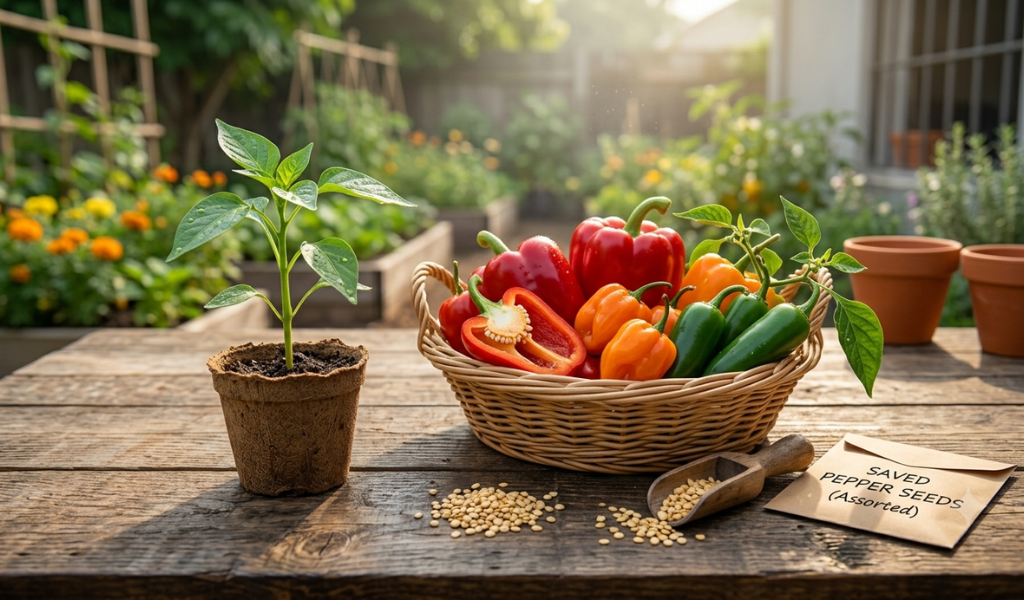
Yes, but with a caveat. Seeds saved from grocery store peppers are often from hybrid varieties, meaning the plants may not grow true to the parent pepper. Seeds from heirloom or open-pollinated peppers are a better choice for saving and replanting. Also, make sure the seeds are fully dry before storing or planting.
How often should I water pepper plants?
Water when the top inch of soil feels dry. For seedlings, that may be every 1 to 2 days indoors. Established pepper plants in the garden typically need water every 2 to 3 days in warm weather, more during heat waves. Overwatering is a more common problem than underwatering for most home gardeners.
Why is my pepper plant healthy but producing no flowers or fruit?
A few things can cause this. Too much nitrogen fertilizer promotes leafy growth at the expense of flowers. Temperatures above 95°F or below 55°F at night can cause flower drop. Insufficient sunlight is another culprit. Make sure plants get at least 6 to 8 hours of direct sun, ease up on nitrogen once plants are established, and give them time hot peppers take longer to set fruit than sweet varieties.