How Do You Apply Fertilizer to Pepper Plants? A Simple Guide fertilize pepper plants
How Do You Apply Fertilizer to Pepper Plants: Dos and Don’ts
Getting the most out of your pepper plants starts with one thing: feeding them right. If you’ve ever wondered how do you apply fertilizer to pepper plants without burning the roots or stunting growth, you’re not alone. Many gardeners either overfeed their plants or apply fertilizer at the wrong time, and both mistakes can cost you your harvest.
This guide breaks down everything you need to know about fertilizing your pepper plants, from choosing the right fertilizer to knowing exactly when and how to apply it. Whether you’re growing bell peppers, hot peppers, or ornamental peppers, the principles are the same. What type of fertilizer do peppers need is an important question to answer before feeding your plants, as the right nutrients can support strong stems, healthy foliage, flowering, and fruit development. Get this part of the process right, and your plants will reward you with strong growth and a big harvest.
One thing worth mentioning early: not every gardener wants to rely on store-bought products. Homemade fertilizer for pepper plants, like compost tea or worm castings, can work just as well as commercial options when used correctly. We’ll cover that too.
How Do You Apply Fertilizer to Pepper Plants Correctly?
Before anything else, technique matters. Even the best fertilizer for peppers won’t help if it’s applied the wrong way.
Apply Fertilizer Around the Root Zone
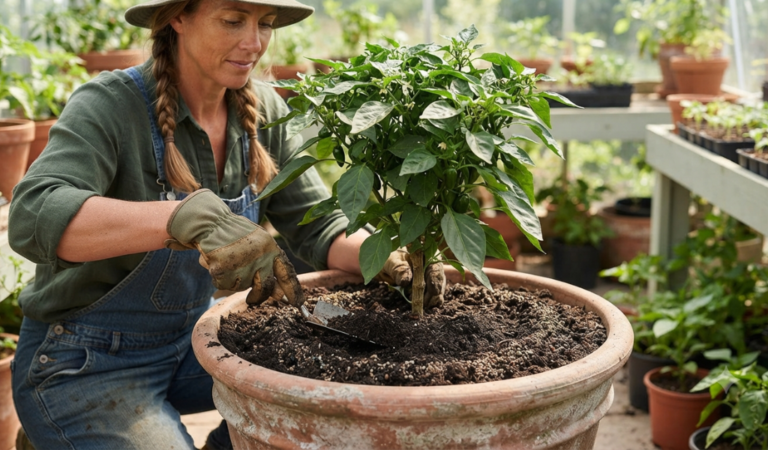
When adding fertilizer, focus on the root zone, the area directly beneath the plant’s canopy. This is where the roots are actively absorbing nutrients from the soil. A common approach is to spread granular fertilizer in a ring about 6 inches from the base of the plant, then water it in thoroughly.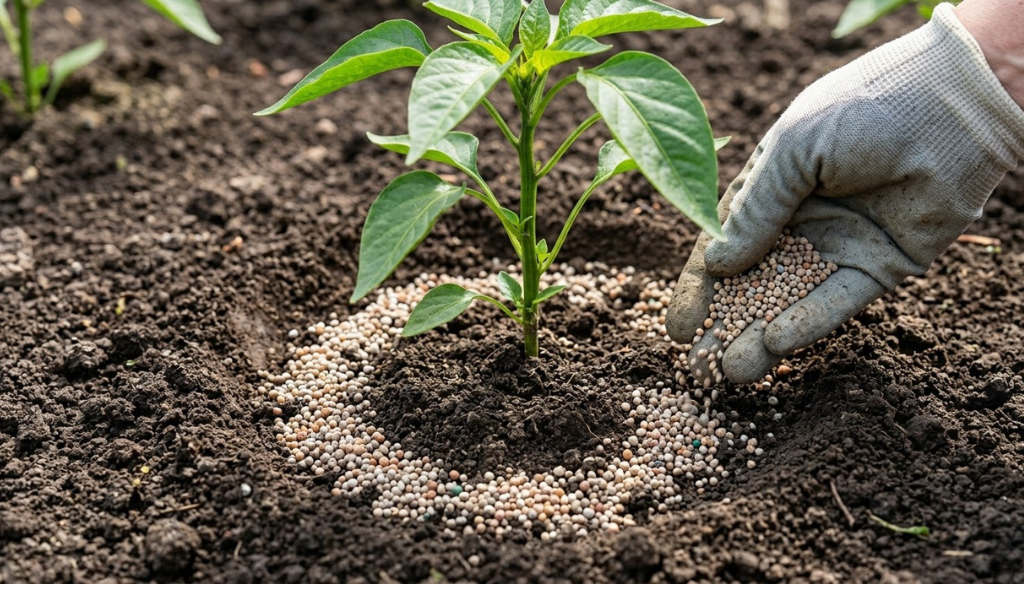 For liquid fertilizer, pour it slowly around the base, giving the soil time to absorb it evenly.
Avoid applying fertilizer too close to the stem. The roots that absorb nutrients actually extend outward, not straight down, so placing fertilizer at the drip line (the outer edge of the leaves) is often more effective than piling it right next to the trunk.
Keep Fertilizer Away From the Stem
Direct contact between fertilizer and the stem can cause fertilizer burn, a condition where the concentrated salts in fertilizer damage plant tissue. You’ll notice this as yellowing or browning where the fertilizer touched. Always keep granular fertilizer a few inches away from the stem, and if you’re using a liquid fertilizer, avoid splashing it onto the leaves or stem directly.
When Should You Fertilize Pepper Plants?
Timing is one of the most important factors in fertilizing your pepper plants. Feed them at the right stage and they’ll grow strong. Feed them at the wrong time and you’ll push all that energy in the wrong direction.
Fertilizing During Early Growth
When a seedling first goes into the ground (or a pot), it’s still getting established. The root system is small and delicate. A gentle, balanced fertilizer applied two to three weeks after transplanting gives the plant the nutrients it needs without overwhelming it. 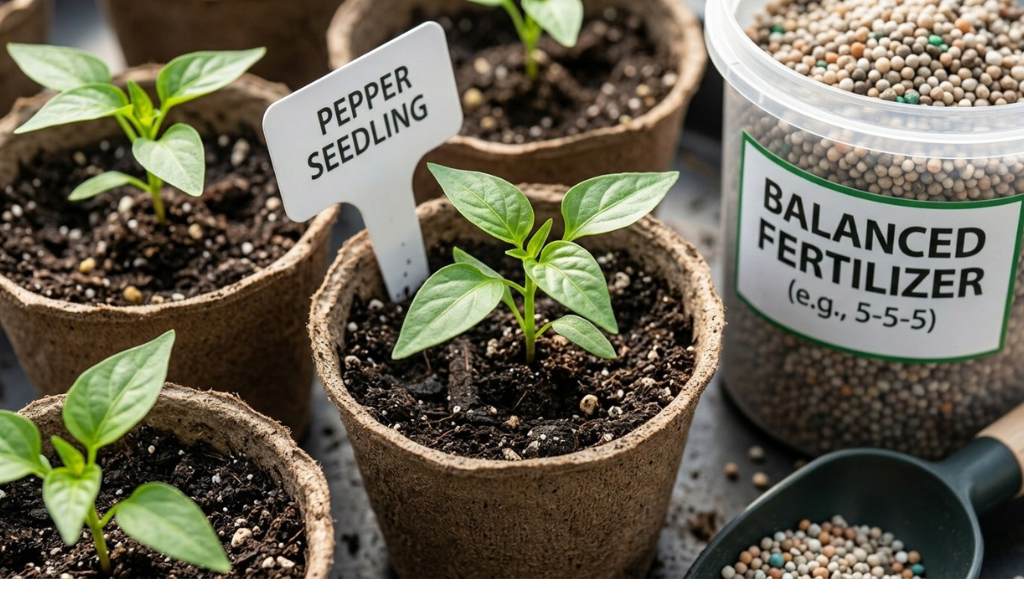 Look for a balanced fertilizer with equal or near-equal N-P-K numbers, like a 10-10-10 or 5-5-5.
During early vegetative growth, nitrogen is the most important nutrient. Nitrogen drives leafy, green plant growth and helps build a strong structure before flowering begins.
Don’t Overfeed Young Pepper Plants
A common mistake is fertilizing seedlings too early or too heavily. Young pepper plants don’t need a lot of fertilizer. In fact, too much nitrogen at this stage can cause lush, leafy growth at the expense of root development and future fruit set. If your seedlings are in a quality potting mix, hold off on fertilizing for the first couple of weeks after transplanting.
How Do You Apply Fertilizer to Pepper Plants During Flowering?
Once your pepper plants start flowering, their nutritional needs shift. This is a critical stage, and getting it wrong can lead to blossom drop and poor fruit set.
Choose Fertilizer Based on Plant Needs
When flowers appear, the plant needs less nitrogen and more phosphorus and potassium. Too much nitrogen at this stage encourages the plant to keep producing foliage instead of setting fruit. Switch to a fertilizer that has a lower first number (nitrogen) and higher second and third numbers (phosphorus and potassium), something like a 5-10-10.
Phosphorus supports root growth and flower development. Without enough of it, you’ll see fewer blossoms and weaker fruit production.
Why Potassium Matters for Peppers
Potassium is important for overall plant health and fruit quality. It helps peppers manage water efficiently, resist disease, and develop firm, flavorful fruit. A potassium deficiency often shows up as browning leaf edges, especially on older leaves. If you see this sign during the growing season, a fertilizer higher in potassium can help correct it quickly.
How Often Should You Fertilize Pepper Plants?
Peppers are heavy feeders, especially during the main growing season. But “heavy feeder” doesn’t mean “feed every day.” It means they use nutrients quickly and need regular replenishment throughout the season.
For most gardeners, fertilizing every two to three weeks during the growing season works well. If you’re using a slow-release granular fertilizer, you might apply it once a month. Liquid fertilizer gets used up faster by the plant and washes out of the soil more quickly, so it needs more frequent application.
Container Peppers Need Special Attention
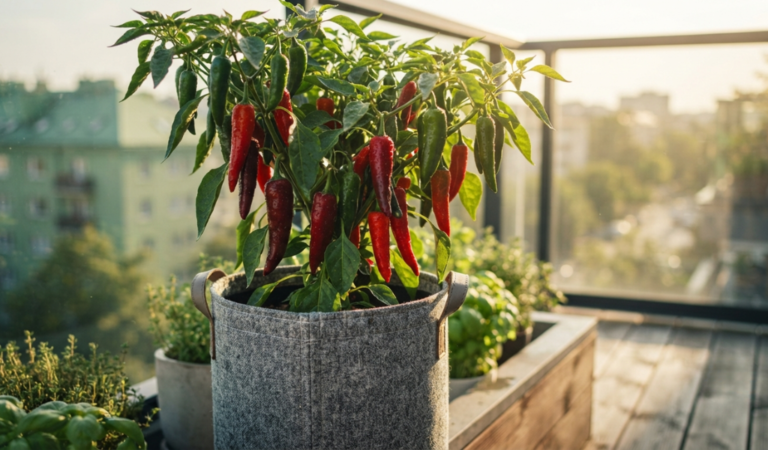
Container-grown peppers need fertilizing more often than garden peppers. Water drains through the pot and takes nutrients with it. A liquid fertilizer applied every one to two weeks keeps container plants fed without letting nutrients build up to harmful levels.
Watch for Salt Buildup
When you fertilize pepper plants in containers repeatedly, salts from the fertilizer can accumulate in the soil.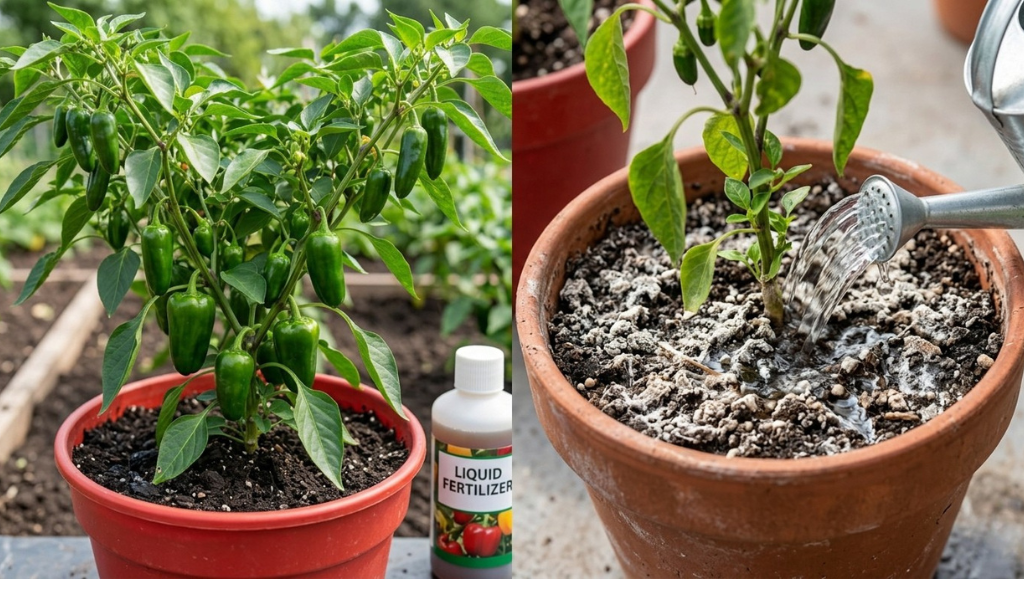 You might notice a white crusty layer forming on the soil surface or on the outside of clay pots. Flushing the pot with plain water every few weeks helps wash out excess salts and keeps the soil environment healthy.
How Do You Apply Fertilizer to Pepper Plants in Containers?
Growing peppers in containers is popular for good reason. You control the soil, the drainage, and the nutrient levels. But containers do require a more hands-on approach to fertilizing.
Start with a quality potting mix that drains well. Poor drainage leads to waterlogged roots and nutrient lockout, where plants can’t absorb nutrients even when they’re present in the soil.
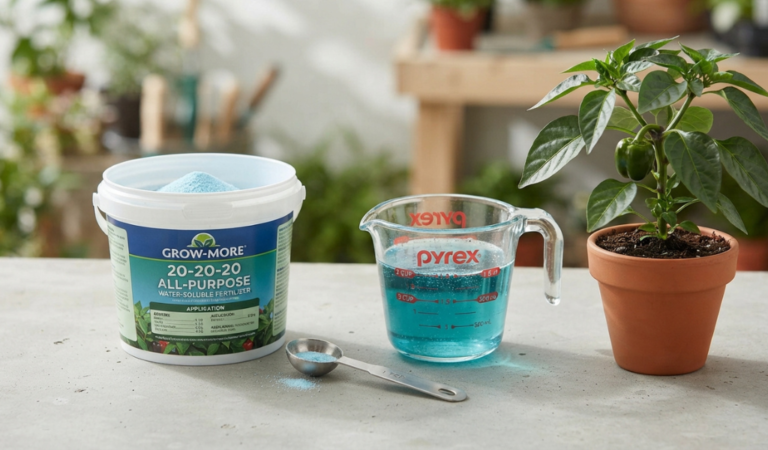
Apply liquid fertilizer directly to the soil (not the foliage) after watering. This dilutes the fertilizer slightly and prevents root shock from concentrated nutrients hitting dry soil. A half-strength liquid fertilizer applied more frequently is often gentler and more effective than full-strength doses applied less often.
Why Watering Matters After Fertilizing
Whether in a garden bed or a container, always water the plants after applying fertilizer. Water helps carry the nutrients down into the root zone where the plant can actually use them. Without water, granular fertilizer just sits on the surface. With liquid fertilizer, watering in lightly afterward helps settle it into the soil.
What Type of Fertilizer Is Best for Pepper Plants?
Choosing the right fertilizer for your pepper plants depends on your soil, your growing method, and how hands-on you want to be.
A balanced fertilizer works well for most of the growing season. During flowering and fruiting, shift to something with more phosphorus and potassium. Many gardeners use a two-fertilizer approach: a balanced product in early growth, then a bloom or fruit fertilizer once flowers appear.
Granular fertilizers are easy to use in garden beds. You spread them around the base, scratch them lightly into the soil, and water them in. They release nutrients slowly over several weeks. Liquid fertilizer acts faster, which is useful if you notice signs of nutrient deficiency and need to act quickly.
Compost as a Soil Amendment
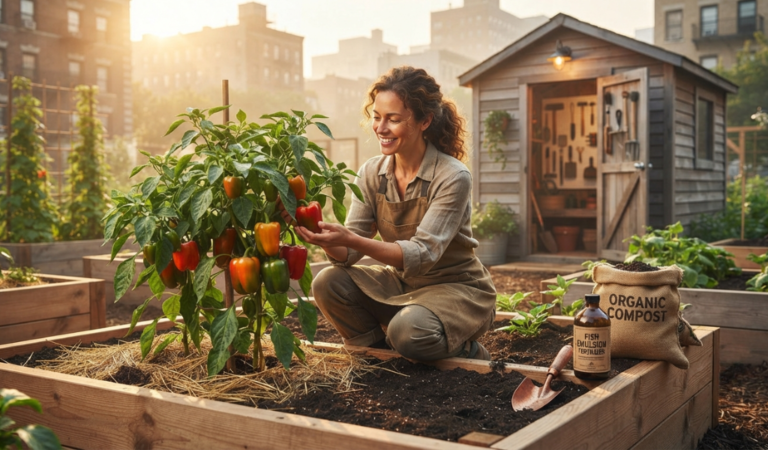
Compost is one of the best things you can add to your garden soil before planting peppers. It improves soil structure, adds organic matter, and feeds soil microbes that help make nutrients available to plants. Homemade compost, made from kitchen scraps and yard waste, works just as well as bagged compost from the store.
Mix compost into your garden bed or container soil before planting. A 2 to 3 inch layer worked into the top 8 to 10 inches of soil gives your pepper plants a nutrient-rich foundation to grow from.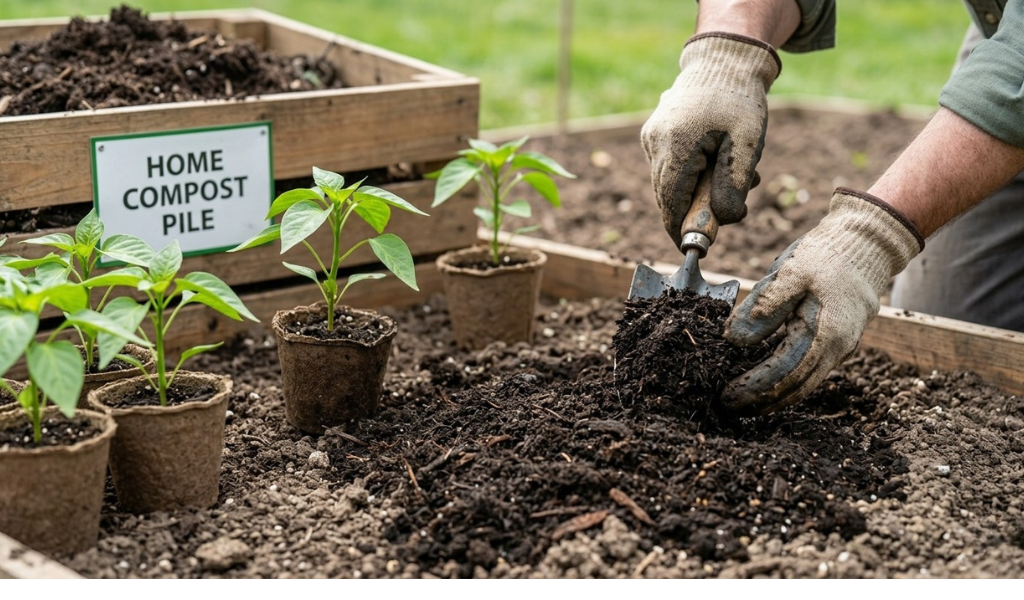
Don’t Treat Compost Like Instant Fertilizer
Compost releases nutrients slowly as it breaks down. It improves long-term soil health but won’t fix an immediate nitrogen deficiency the way a liquid fertilizer will. Think of compost as a soil builder and granular or liquid fertilizer as the on-demand nutrient source.
How Do You Know If Pepper Plants Need Fertilizer?
Plants communicate through their leaves. If something is off, the foliage usually shows it first.
Look at the Whole Growing Environment
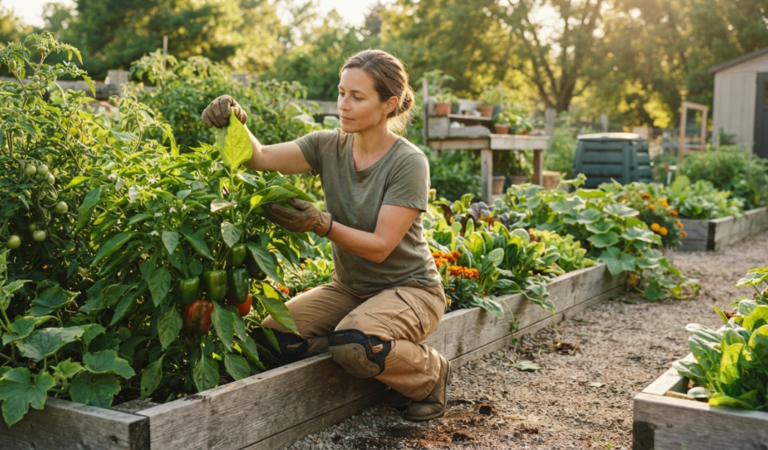
Yellowing leaves are the most common sign of nutrient deficiency, but they can also signal overwatering, underwatering, or pH problems. Before reaching for more fertilizer, check the basics. Is the soil draining well? Is the plant getting enough sunlight? Is the soil pH in the right range?
Pepper plants thrive in soil with a pH between 6.0 and 7.0. Outside that range, nutrients become less available to the plant even when they’re technically present in the soil. A soil test can confirm whether pH is the problem.
Soil Testing Can Remove the Guesswork
A basic soil test tells you the pH of your soil and the levels of key nutrients like nitrogen, phosphorus, and potassium. Many garden centers sell simple test kits. Your local cooperative extension office may also offer more detailed testing for a small fee.
Knowing what your soil actually needs before you add fertilizer means you’re solving a real problem rather than guessing. This is especially useful at the start of the season, before you plant.
Common Fertilizing Mistakes With Pepper Plants
Even experienced gardeners make these mistakes. Knowing them in advance can save your plants.
Too Much Nitrogen
Excess nitrogen causes lush, dark green foliage and very few flowers or fruit. If your pepper plants look beautiful but aren’t producing, too much nitrogen is often the reason. This is especially common when gardeners use a high-nitrogen lawn fertilizer on their vegetable garden. Peppers don’t need that level of nitrogen, especially once they start flowering.
If you suspect too much nitrogen is the problem, stop fertilizing for a few weeks and let the plant use up what’s already in the soil. Then switch to a fertilizer higher in phosphorus and potassium.
Fertilizing Dry, Stressed Plants
Never fertilize a pepper plant that’s already stressed from drought or heat. A plant that hasn’t been watered recently has concentrated salts in its root zone. Adding fertilizer on top of that can burn the roots and make things worse. Always water the plant a day or two before fertilizing if the soil has been dry.
A Simple Fertilizer Routine for Pepper Plants
If you want a simple system that works for most gardeners, here it is:
Step 1: Work compost into your soil before transplanting.
Step 2: Wait two to three weeks after transplanting, then apply a balanced fertilizer (like 10-10-10) every two to three weeks during early growth.
Step 3: When flowers appear, switch to a fertilizer higher in phosphorus and potassium (like 5-10-10). Continue applying every two to three weeks.
Step 4: Keep watering consistently and watch your plants for signs of nutrient imbalance.
Step 5: Do a soil test at the start of next season so you know exactly what your garden needs.
The Best Approach Is Usually the Simplest
You don’t need dozens of products. A balanced fertilizer for early growth, a bloom fertilizer for flowering, and compost mixed into the soil at planting covers most situations. Overcomplicating the process often leads to more problems, not fewer.
Final Thoughts
Learning how to apply fertilizer to pepper plants correctly is one of the highest-return skills you can develop as a gardener. The difference between a plant that barely produces and one that gives you a big harvest often comes down to timing, technique, and choosing the right fertilizer for each stage of growth.
Start with healthy soil. Feed your pepper plants consistently but not excessively. Pay attention to what your plants are telling you through their leaves. And when in doubt, do a soil test rather than guessing.
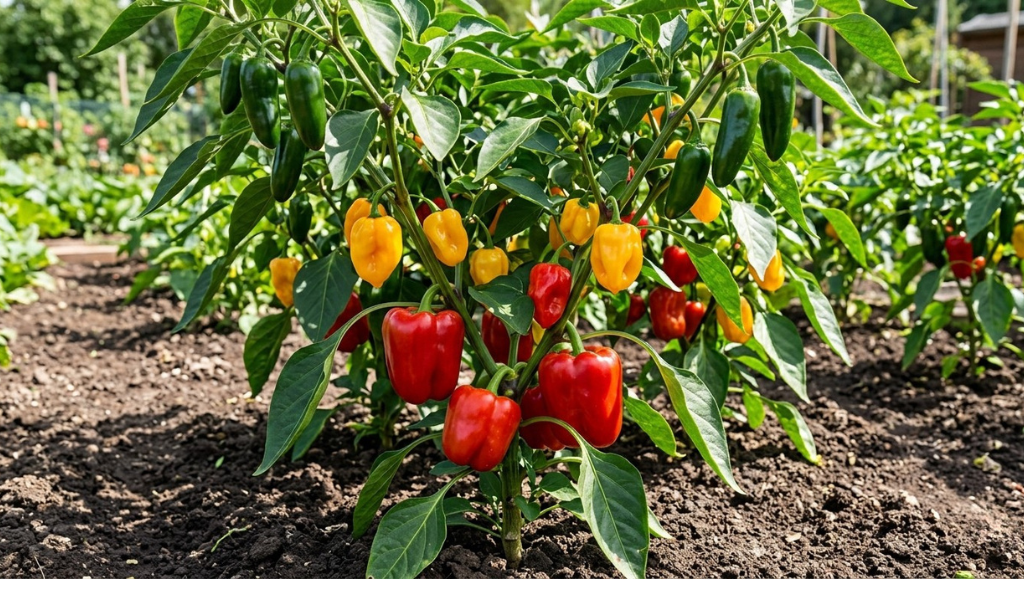
Whether you’re growing bell peppers, jalapeños, or any other variety, the same core principles apply. Peppers are heavy feeders, but they respond best to steady, balanced nutrition rather than large, infrequent doses.
Give your plants what they need, when they need it, and they’ll give you exactly what you’re growing them for.
Frequently Asked Questions
Do peppers like to be watered every day?
Peppers generally don’t need daily watering. Most pepper plants do well with deep, thorough watering two to three times per week, depending on the temperature and soil type. Container plants dry out faster and may need watering more often. The goal is to keep the soil consistently moist but never waterlogged. Overwatering can cause root rot and nutrient deficiencies.
What do coffee grounds do for pepper plants?
Coffee grounds add a small amount of nitrogen to the soil as they break down. They can also slightly lower soil pH over time, which some pepper gardeners find useful. However, coffee grounds should be used in moderation and mixed into compost rather than applied directly in large amounts. A thin layer worked into the top inch of soil or added to a compost pile is the safest approach.
Is Epsom salt a good fertilizer for pepper plants?
Epsom salt provides magnesium and sulfur, two nutrients that pepper plants do use. If a soil test shows a magnesium deficiency, Epsom salt can help. Dissolve one tablespoon in a gallon of water and apply it as a soil drench. That said, Epsom salt is not a substitute for a complete fertilizer and shouldn’t be used routinely without confirming a deficiency first.
What type of fertilizer is best for peppers and tomatoes?
Both peppers and tomatoes benefit from a balanced fertilizer during early growth and a lower-nitrogen, higher-phosphorus-and-potassium fertilizer during flowering and fruiting. Many fertilizers marketed specifically for tomatoes work well for peppers too, since both crops have similar nutritional needs throughout the growing season.
What nutrients do pepper plants need?
Pepper plants need three main nutrients: nitrogen (N), phosphorus (P), and potassium (K). Nitrogen supports leafy growth, phosphorus supports root and flower development, and potassium supports fruit quality and disease resistance. They also benefit from secondary nutrients like calcium, magnesium, and sulfur, and small amounts of micronutrients like iron and zinc.
How often should you fertilize pepper plants?
Most pepper plants benefit from fertilizing every two to three weeks during the growing season. Container-grown peppers may need feeding every one to two weeks since nutrients wash out of the pot more quickly. Always follow the instructions on your specific fertilizer product, as application rates and frequency vary between formulas.
How do you apply fertilizer to pepper plants?
Apply fertilizer around the root zone, not directly against the stem. For granular fertilizer, spread it in a ring about 6 inches from the base, scratch it lightly into the soil, and water thoroughly. For liquid fertilizer, pour it slowly around the base after watering. Always water the plants after fertilizing to help carry nutrients into the root zone.