How to Dehydrate Peppers Without a Machine: Best Ways to Dry Peppers Without a Dehydrator
How to Dehydrate Peppers Without a Machine: Easy Drying Guide
If you have a basket full of peppers and no fancy gadget to preserve them, you are in luck. Learning how to dehydrate peppers without a machine is easier than most people think. You do not need a food dehydrator, an expensive appliance, or any special skill. All you need is a little patience, some air, and one of the simple methods you probably already have access to at home.
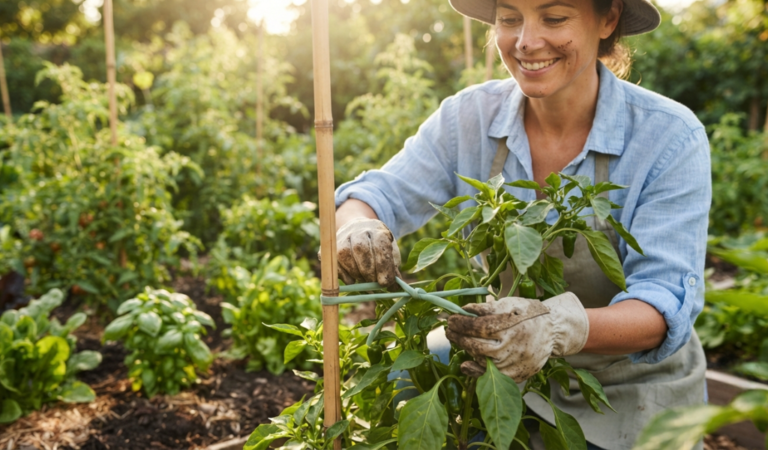
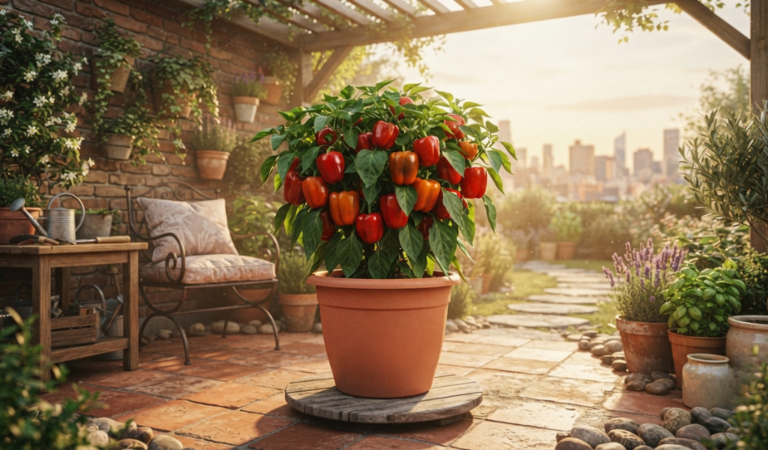
Peppers are one of the most rewarding crops to preserve. When the pepper growing season hits its peak, gardens tend to produce far more peppers than any family can eat fresh. During the pepper growing season, learning how to properly preserve your harvest can help you enjoy fresh-tasting peppers long after the garden slows down. Instead of letting them spoil, you can dry them and enjoy their flavor for months. Dried peppers hold onto their heat, color, and taste, and they take up very little space in your pantry.
This guide walks you through every method you can use to dry peppers without a dehydrator. You will learn how to pick the right peppers, prepare them properly, and dry them using your oven, open air, or the sun. By the end, you will feel confident turning a pile of fresh peppers into a jar of shelf-stable spice.
Why Dehydrate Peppers Without a Machine?
Drying is one of the oldest and easiest ways to preserve peppers. People have been doing it for centuries, long before any dehydrator existed. When you dry peppers, you pull the moisture out so mold and bacteria cannot grow. This lets you keep them for months without losing much flavor.
Choosing to dry peppers without a dehydrator saves money and space. Not everyone wants to buy a bulky machine that only does one job. If you only preserve peppers a few times a year, spending money on a food dehydrator may not make sense. The methods in this guide give you the same results using tools you already own.
What Makes This Method Different?
Using a dehydrator means setting a temperature and walking away while circulating hot air does the work. Drying peppers without a machine takes a bit more attention. You will check the peppers more often, adjust for weather, and rely on low heat or natural airflow instead of a set fan.
The trade-off is worth it. These methods cost almost nothing, and many people say air dried or sun dried peppers taste richer. You also get more control over the process. Once you learn how to read your peppers, you can dry any type, from a mild bell pepper to a fiery hot pepper, with ease.
Choosing the Right Peppers for Drying
The peppers you start with matter just as much as the drying method. Good peppers make good dried spice. Poor peppers can rot before they ever finish drying. Picking the right ones sets you up for success.
Use Fully Mature Peppers When Possible
Ripe peppers dry better and taste better. A fully mature pepper has developed its full color and flavor, whether that is deep red, orange, or yellow. These peppers also tend to have thinner walls at peak ripeness, which helps them dry faster. If you are pulling peppers from the garden, wait until they reach their final color before you dry them.
Avoid Damaged or Moldy Peppers
Always inspect your peppers before you begin. Toss out any that show soft spots, cuts, or signs of mold. A damaged pepper holds extra moisture and can spoil during the slow drying process. One bad pepper can even affect the batch around it. When in doubt, throw it out and keep only firm, healthy peppers for drying.
Different Peppers Dry Differently
Not every pepper behaves the same way. Thin-walled types like cayenne or Thai chili peppers dry quickly and are perfect for beginners. Thick peppers such as poblano peppers, banana peppers, and sweet peppers hold more water and take longer to dehydrate. Bell peppers are the thickest of all and need extra time and care. Knowing the type of peppers you have helps you plan your drying time.
How to Prepare Peppers Before Dehydrating
Preparation makes the whole process smoother. A few simple steps before you start will help your peppers dry evenly and safely. Rushing this stage often leads to uneven results.
Start by washing your peppers under cool water to remove dirt and any garden residue. Pat them dry with a clean towel. Any leftover water on the surface slows down drying, so make sure they are dry to the touch before you move on.
Remove the Stems
Pull off the stems from each pepper before drying. Stems hold moisture and do not add flavor to your final product. For thin peppers you plan to dry whole, you can leave a small bit of stem to hang them, but for most peppers, removing the stem helps them dry faster.
Slice Thick Peppers
Thick peppers need to be cut open so moisture can escape. Slice large peppers like bell peppers or poblano peppers into strips or rings. Cutting a pepper in half also works well. The thinner you cut the peppers, the faster they dry. Just try to keep your slices about the same size so they finish at the same time.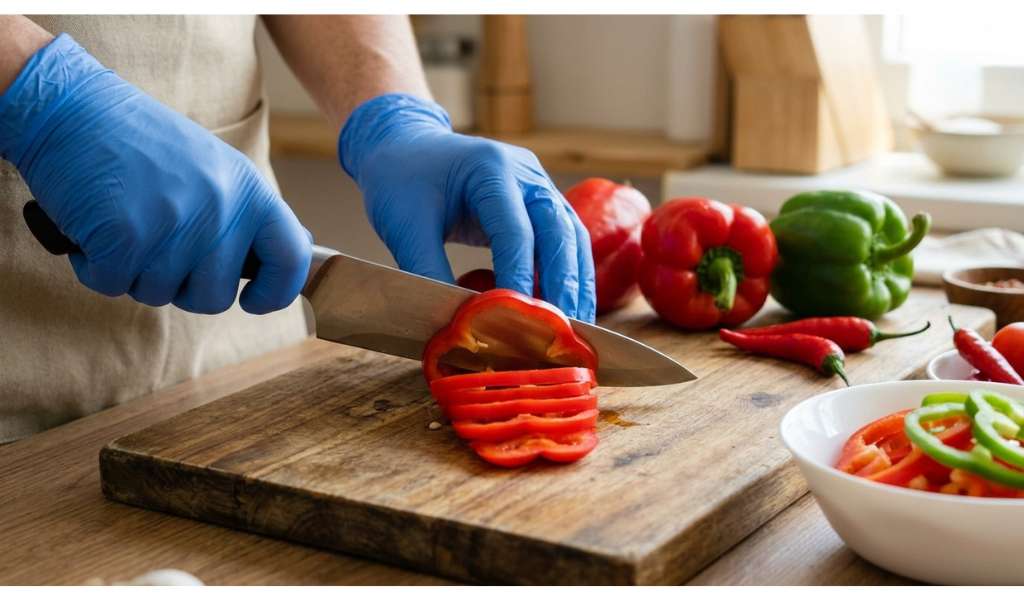 Always wear gloves when working with hot peppers, since the oils can burn your skin and eyes.
Leave Small Peppers Whole When Appropriate
Small, thin peppers can dry whole without any slicing. Cayenne, Thai chilies, and similar varieties work great this way. Their thin walls let moisture leave easily, so cutting them is not needed. Leaving them whole also makes it easy to string them up for air drying later.
How to Dehydrate Peppers Without a Machine in the Oven
The oven is the fastest way to dry peppers without a dehydrator. It gives you steady, low heat that works no matter the weather outside. This method is ideal when you want dried peppers within a day rather than waiting a week or more.
Set the Oven to a Low Temperature
Preheat your oven to the lowest setting, usually around 150 to 170 degrees Fahrenheit. High heat will cook the peppers instead of drying them, so keep the oven temperature as low as it will go. If your oven does not go this low, set it to its minimum and keep a close eye on the peppers.
Arrange the Peppers in a Single Layer
Line a baking sheet with parchment paper and arrange the peppers in a single layer.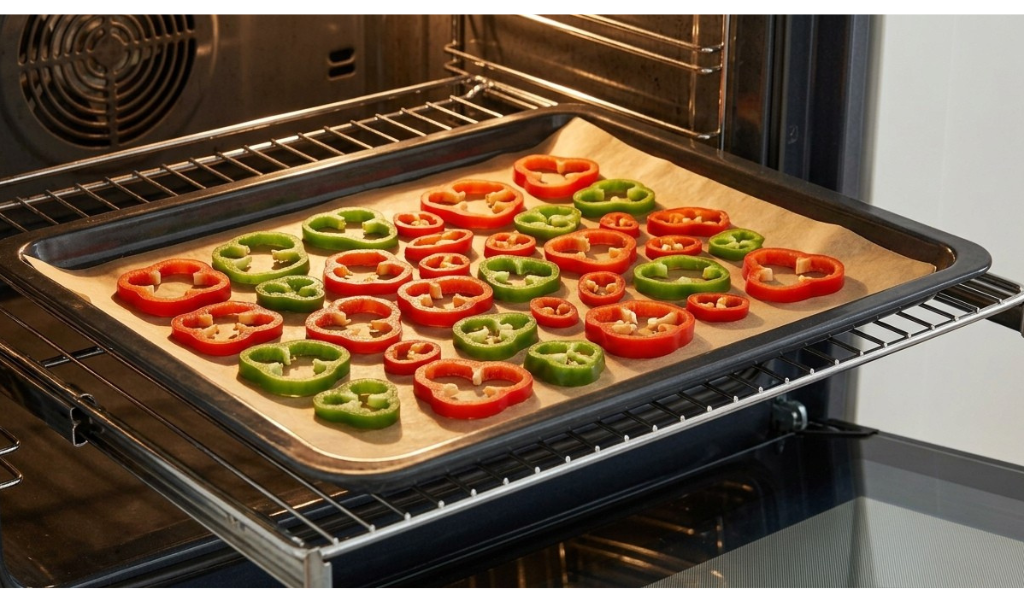 Make sure none of the pieces overlap. Overcrowding traps moisture and leads to uneven drying. Give each piece room so the warm air can reach every side. Placing the peppers in a single layer is the key to even results.
Keep an Eye on Moisture
Prop the oven door slightly ajar during drying. This lets moisture escape instead of building up inside. A wooden spoon wedged in the door works well. Check the peppers every 30 minutes and flip them so both sides dry evenly. Keeping the oven door open a crack makes a big difference in how well your peppers dry.
How Long Does Oven Drying Take?
Oven drying time will vary depending on the size and thickness of your peppers. Thin peppers may be ready in one to two hours. Thick peppers or bell peppers can take four to six hours or more.Check often near the end so you do not scorch them. The peppers are done when they feel dry and brittle.
How to Dehydrate Peppers Without a Machine Using Air Drying
Air drying is the oldest and simplest method of all. It uses no power at all, just time and good airflow. This method works best for small, thin peppers and in dry climates with low humidity.
Choose a Dry, Well-Ventilated Location
Pick a spot with good air circulation and low humidity. A kitchen corner, covered porch, or dry room all work well. Avoid damp areas like basements, since moisture in the air will slow drying and invite mold. The drier the air around your peppers, the better this method works.
String Small Peppers Carefully
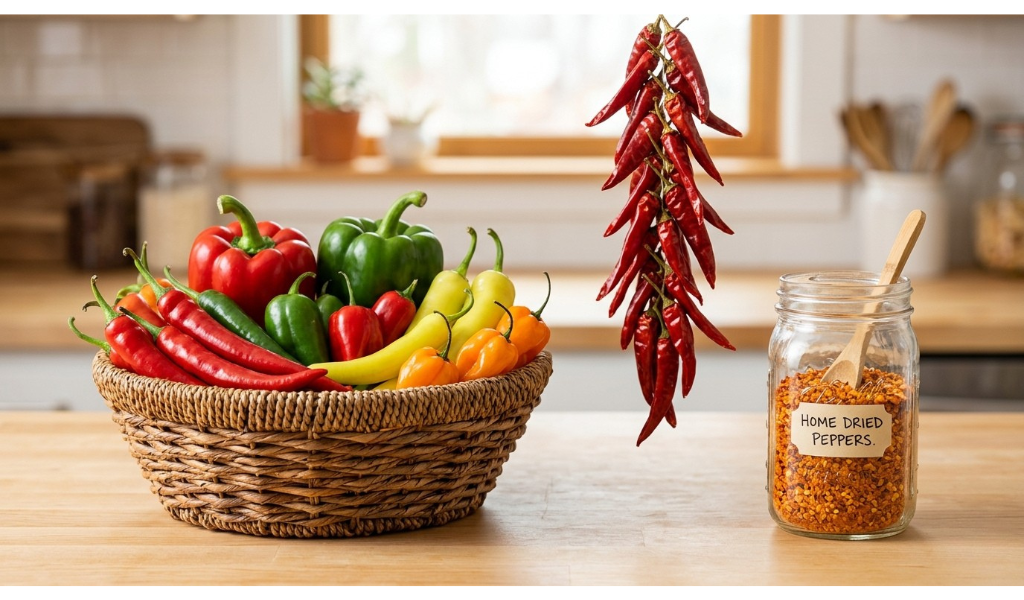
To air dry peppers, thread a needle with strong thread and pass it through the base of each pepper near the stem. Space the peppers out along the string so air can move between them. Hang the string in your chosen spot.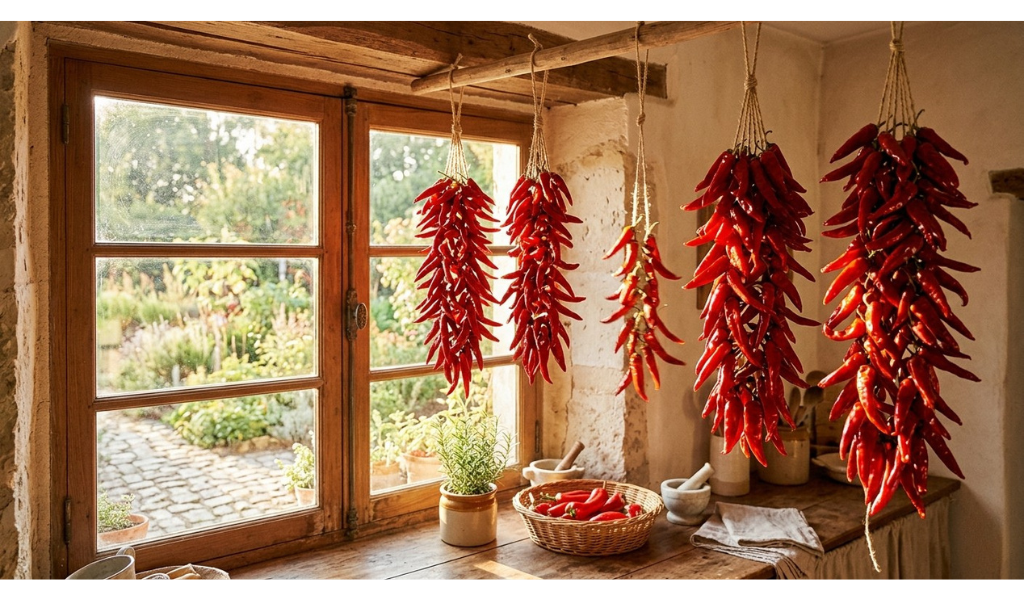 This classic method, often called a ristra, looks beautiful and dries small chili peppers well.
Check Them Every Day
Air drying is slow and can take one to four weeks. Check the peppers every day for any signs of mold or soft spots. Remove any pepper that looks off so it does not spoil the rest. Patience is key here, but the payoff is deeply flavored, naturally dried peppers.
How to Dehydrate Peppers Without a Machine in the Sun
Sun drying uses free heat from the sun to dry your peppers. It works well in hot, dry regions with plenty of sunshine. If you live somewhere with strong sun and low humidity, this method can dry peppers quickly and cheaply.
Use a Clean Drying Surface
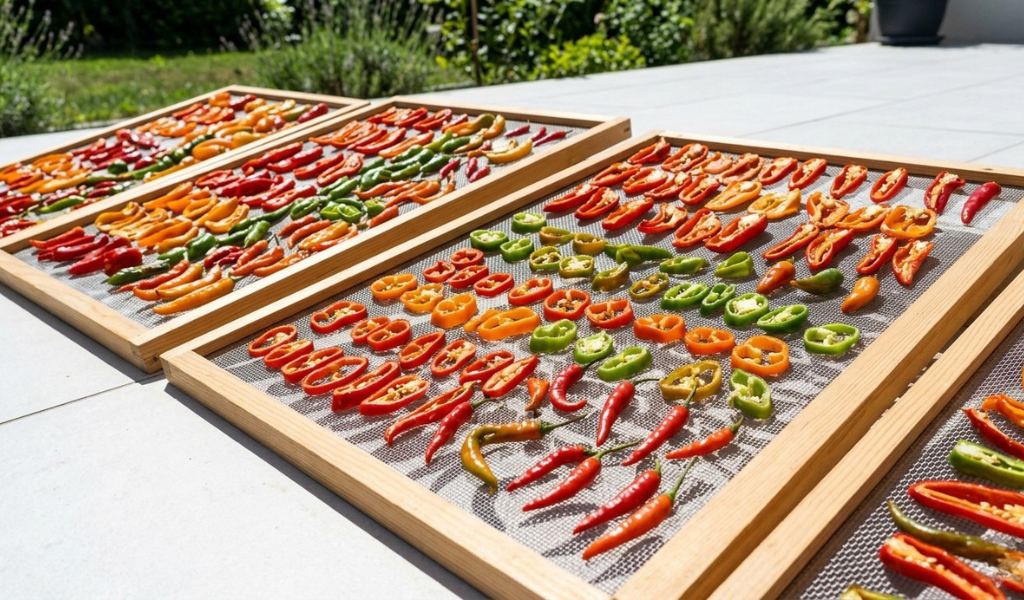
Place your peppers on a clean tray, screen, or rack. A screen works best because it lets air flow underneath. Arrange the peppers in a single layer with space between each piece. Set the tray in a spot that gets direct sunlight for most of the day.
Bring the Peppers Inside at Night
Cool night air and dew can add moisture back into your peppers. Bring the tray indoors each evening and set it back out in the morning. This keeps the peppers drying instead of soaking up nighttime moisture. Repeat this daily until the peppers are fully dried.
Know When Sun Drying Is a Bad Idea
Sun drying only works in the right climate. If you live somewhere humid, rainy, or cloudy, this method will likely fail. The peppers may mold before they dry. In those conditions, stick to oven drying, which gives you reliable results no matter the weather.
How to Tell When Dried Peppers Are Ready
Knowing when to stop is one of the most important parts of the process. Peppers that are not fully dried can grow mold in storage. Peppers left too long can scorch. Learning to read the signs keeps your batch safe.
Thin Peppers Should Feel Dry
A properly dried thin pepper feels crisp and brittle. It should snap or crumble when you bend it. If it still feels leathery or bends without breaking, it needs more time. Thin peppers reach this point faster than any other type.
Thick Pieces Need Extra Attention
Thick peppers and sweet peppers hold moisture deep inside. A piece may feel dry on the outside while still holding water within. Tear one open to check the middle. If you feel any softness or moisture, keep drying. Completely dried peppers should have no soft spots anywhere.
Let Them Cool Before Storing
Once your peppers are fully dried, let them cool to room temperature before you store them. Warm peppers release steam, and that trapped moisture can cause mold in a sealed jar. Cooling first is a small step that protects your whole batch.
Common Pepper Drying Mistakes and How to Avoid Them
Even simple methods can go wrong. Most drying failures come from a few common mistakes. Knowing them ahead of time saves you from wasted peppers and effort.
Cutting Pieces Too Thick
Thick pieces trap moisture and dry unevenly. If you leave large peppers whole or cut them too thick, the centers may never dry properly. Slice thick peppers thin and keep your pieces a similar size so they finish together.
Using Too Much Heat
High heat cooks peppers rather than drying them. Cooked peppers turn dark, lose flavor, and can burn. Always use the lowest oven temperature possible and keep the process slow and gentle. Low and slow is the golden rule for drying peppers.
Overcrowding the Tray
Piling peppers on top of each other blocks airflow. When air cannot reach every side, moisture gets trapped and drying slows down. Always arrange the peppers in a single layer with space between the pieces, whether you use the oven, sun, or air.
Storing Peppers Too Soon
Sealing peppers before they are completely dry is the most common storage mistake. Any leftover moisture will create mold inside the jar. Make sure your peppers are fully dried and cooled before you put them away.
How to Store Homemade Dried Peppers
Proper storage keeps your hard work from going to waste. Dried peppers can last a very long time when stored correctly. The goal is to keep out air, moisture, and light.
Whole Dried Peppers
Store whole dried peppers in an airtight container such as a glass jar. Mason jars work perfectly for this. Keep the jar in a cool, dark pantry away from heat and sunlight. Whole peppers keep their flavor longer than crushed ones, so store them whole if you want maximum shelf life.
Crushed Peppers and Chili Flakes
If you want chili flakes or powder, crush your dried peppers using a coffee grinder or a regular grinder. Store the flakes or powder in a small airtight container. Ground peppers lose their punch faster than whole ones, so grind only what you plan to use over a few months.
Check Stored Peppers Occasionally
Every few weeks, glance at your stored peppers. Look for any sign of moisture, clumping, or mold. If you see condensation inside the jar, the peppers were not fully dried. In that case, dry them again before storing. A quick check now and then keeps your supply safe.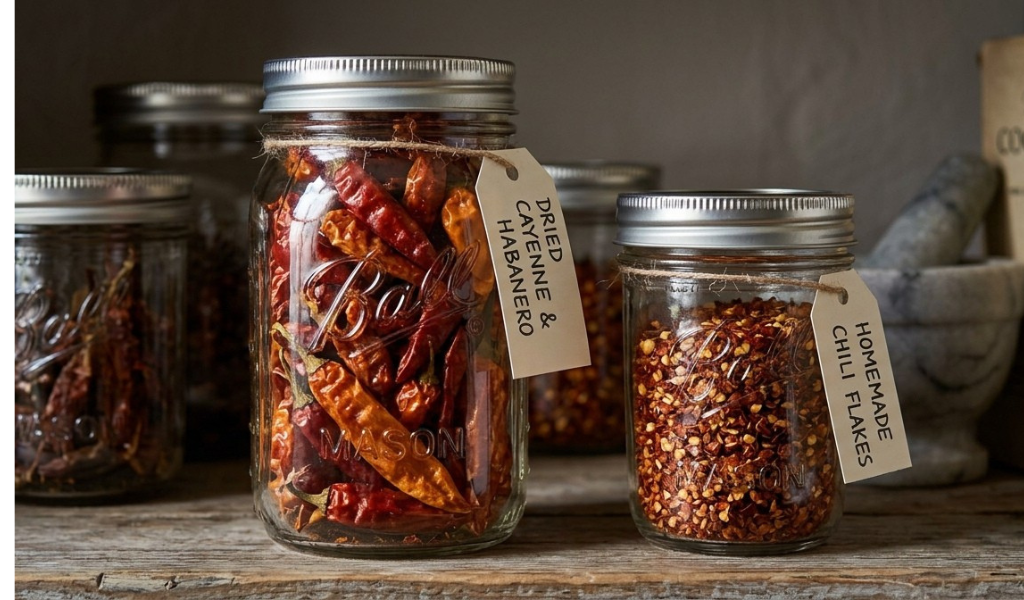
How to Use Peppers You Dehydrated at Home
Drying peppers is only half the fun. The real reward comes when you cook with them. Home dried peppers add deep flavor to countless dishes and last far longer than fresh ones.
Make Homemade Chili Powder
Grind dried peppers into a fine powder using a coffee grinder. You can make single-pepper powders or mix a few types together. Homemade chili powder tastes fresher and stronger than store-bought versions, and you control exactly what goes in it.
Add Them to Soups and Sauces
Whole dried peppers bring smoky, rich flavor to soups, stews, and sauces. Drop a few into a simmering pot and let them soften and release their heat. You can also soak dried peppers in warm water, then blend them into a paste for sauces and marinades.
Create Your Own Pepper Blend
Mix different types of peppers to create your own custom spice blend. Combine sweet peppers with hot ones for balanced heat, or blend several chili peppers for a bold kick. Making your own blend lets you match the exact flavor and spice level you enjoy.
Final Thoughts
You do not need a food dehydrator to preserve a great pepper harvest. Learning how to dehydrate peppers without a machine gives you three reliable options: the oven for speed, air drying for tradition, and the sun for free heat. Each one turns fresh peppers into a lasting supply of flavor.
The steps are simple. Pick healthy peppers, prepare them well, dry them slowly, and store them once they are completely dry. Follow those basics and you will end up with jars of rich, flavorful peppers ready for chili powder, sauces, and your own custom blends.
So the next time your garden gives you more peppers than you can handle, do not let them go to waste. Try one of these methods, save your harvest, and enjoy homemade dried peppers all year long. Grab a baking sheet or a length of string and start drying today.
Frequently Asked Questions
Is it worth dehydrating peppers?
Yes, drying peppers is a great way to save a big harvest and cut down on waste. Dried peppers last for months, take up little space, and keep their bold flavor. It costs almost nothing when you use your oven, the sun, or open air instead of a machine.
How long will dehydrated peppers last?
When stored properly in an airtight container away from heat and light, whole dried peppers can last one to two years. Crushed peppers and powders stay fresh for about six months to a year. Always keep them fully dried and sealed to reach this shelf life.
What types of peppers are best for dehydrating?
Thin-walled peppers like cayenne, Thai chilies, and other hot peppers dry the fastest and easiest. Thicker types such as poblano peppers, banana peppers, and bell peppers work too, but they take longer and should be sliced thin before drying.
Can you dehydrate peppers whole?
Yes, small thin peppers can be dried whole with great results. Their thin walls let moisture escape easily, so slicing is not needed. Thick peppers, though, should be cut open or sliced so the moisture inside can escape and they dry evenly.
What is the best way to dehydrate peppers?
The oven is the most reliable way to dry peppers without a dehydrator, since it works in any weather. Air drying and sun drying are also excellent choices in dry climates. The best method depends on your peppers, your climate, and how quickly you want them done.
Can I dry chili peppers without a dehydrator?
Absolutely. Chili peppers dry very well without any machine. You can string them up to air dry, lay them on a baking sheet in a low oven, or set them out in the sun. Thin chili peppers are among the easiest peppers to dry at home.
What is the easiest way to preserve peppers?
Drying is one of the easiest ways to preserve peppers. It needs no special equipment and very little effort. Once your peppers are fully dried, simply store them in mason jars in a cool, dark pantry, and they will keep for a long time.