What Grows Well with Peppers? A Complete Guide to Companion Gardening
What Grows Well with Peppers? Companion Planting Guide
If you have ever wondered what grows well with peppers, you are already thinking like a smart gardener. Pairing the right plants next to your pepper patch can boost yields, keep pests away, and make better use of every inch of your garden bed. Peppers are a bit picky about their neighbors, and choosing wisely can mean the difference between a so-so harvest and a bumper crop of glossy, colorful peppers all season long.
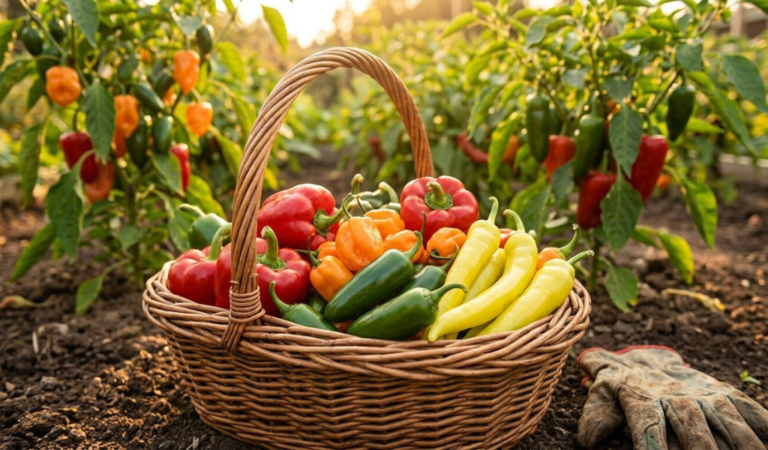
In this guide, we will walk through everything you need to know about companion planting with peppers, from the herbs and flowers that help them thrive to the vegetables you should keep far away. Whether you are growing peppers like bell, jalapenos, or habaneros, this guide will help you build a garden bed where every plant works together.
What Is Companion Planting?
Companion planting is the practice of growing certain plants near each other because they help one another grow better. This idea has been around for centuries, long before synthetic fertilizers and pesticides existed. Early farmers noticed that some crops seemed to thrive when planted side by side, while others struggled when placed too close together.
At its core, companion planting is about creating relationships in the garden. Some plants repel harmful insects, others attract helpful pollinators, and some simply share the soil and space without competing for the same nutrients. When you plant peppers next to the right companions, you are essentially giving them a support system that reduces the amount of work you need to do yourself.
Think of it like assigning roommates. Some combinations just click, sharing resources fairly and even helping each other out. Others clash constantly, fighting over the same closet space or hogging the kitchen. Peppers are no different. They do best with companions that complement their needs rather than compete with them.
How Companion Planting Works
The science behind companion planting comes down to a few key mechanisms. First, there is pest control. Many plants release scents or chemical compounds that confuse or repel insects looking for a meal. Basil, for example, gives off a strong aroma that many pepper pests find unpleasant, which helps keep your plants safer without chemical sprays.
Second, there is the matter of soil health. Some plants, like beans and peas, pull nitrogen from the air and add it back into the soil. This is especially useful for peppers, which are moderate feeders and appreciate a nitrogen boost early in their growth cycle. Other plants act as living mulch, shading the soil and keeping moisture locked in, which reduces how often you need to water.
Third, companion planting can improve pollination. Flowers planted near peppers attract bees and other pollinators, which means more flowers on your pepper plants get fertilized and turn into fruit. Without enough pollinator activity, pepper plants can flower heavily but still produce a disappointing harvest.
Finally, smart plant pairing helps with space efficiency. Tall plants can offer light shade to peppers during scorching summer afternoons, while low growing plants fill in gaps around the base without stealing sunlight. When you understand these mechanisms, picking companions for your peppers becomes much easier.
Benefits for Pepper Plants
Peppers are not the toughest vegetable in the garden. They can be sensitive to temperature swings, inconsistent watering, and pest pressure from aphids, spider mites, and flea beetles. This is exactly why choosing the right neighbors matters so much.
Good companions can shield peppers from harsh sun during the hottest part of the day, especially in regions with intense summer heat. They can also improve airflow around the plant, which lowers the risk of fungal diseases like powdery mildew. Some companions even help peppers develop stronger flavor, since certain herbs are believed to enhance the essential oils in nearby vegetables when grown close together.
Beyond the plant health benefits, a well-planned companion garden also saves you time. Fewer pest problems mean less time spent inspecting leaves for damage or mixing up organic sprays. Better soil health means less frequent fertilizing. And efficient use of space means you can grow more food in the same size garden bed, which is a win for anyone working with limited square footage.
Best Companion Plants for Peppers
Now let us get into the specifics. There are three main categories of pepper companions worth knowing about: herbs, flowers, and vegetables. Each one brings something different to the table.
Herbs That Grow Well with Peppers
Herbs are some of the best companions you can plant next to peppers, and many gardeners tuck them right into the same raised bed. Basil is probably the most popular choice. It is often said to repel aphids and thrips while possibly improving the taste of nearby peppers. Basil also enjoys the same warm, sunny conditions that peppers love, so their care requirements line up nicely.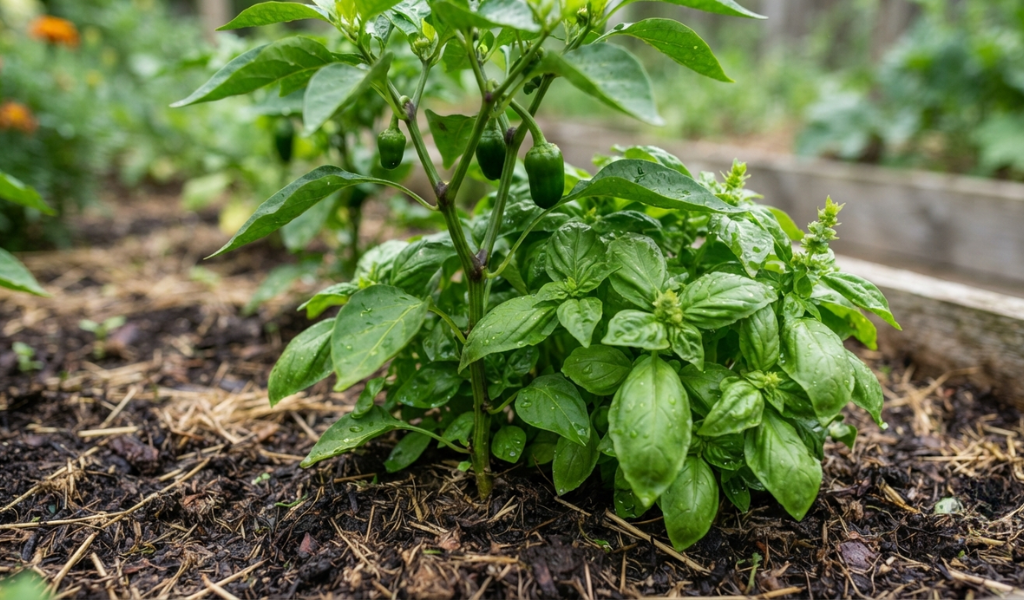
Oregano is another excellent option. It grows low to the ground and acts as a natural weed suppressant, while its strong scent can help mask the smell of peppers from pests searching for aroma. Parsley attracts beneficial insects like hoverflies and parasitic wasps, both of which prey on common pepper pests such as aphids and caterpillars.
Chives and dill round out the list nicely. Chives are known to deter aphids and can even help prevent certain fungal issues in the soil. Dill draws in ladybugs, which are voracious aphid eaters, making it a quiet but effective bodyguard for your pepper patch.
Flowers That Protect Pepper Plants
Flowers are not just for looks in a vegetable garden. Many of them serve a real purpose when planted alongside peppers. Marigolds are the classic choice, and for good reason. Their roots release compounds that can suppress nematodes in the soil, tiny worms that damage plant roots and stunt growth. Marigolds also attract pollinators while repelling certain beetles.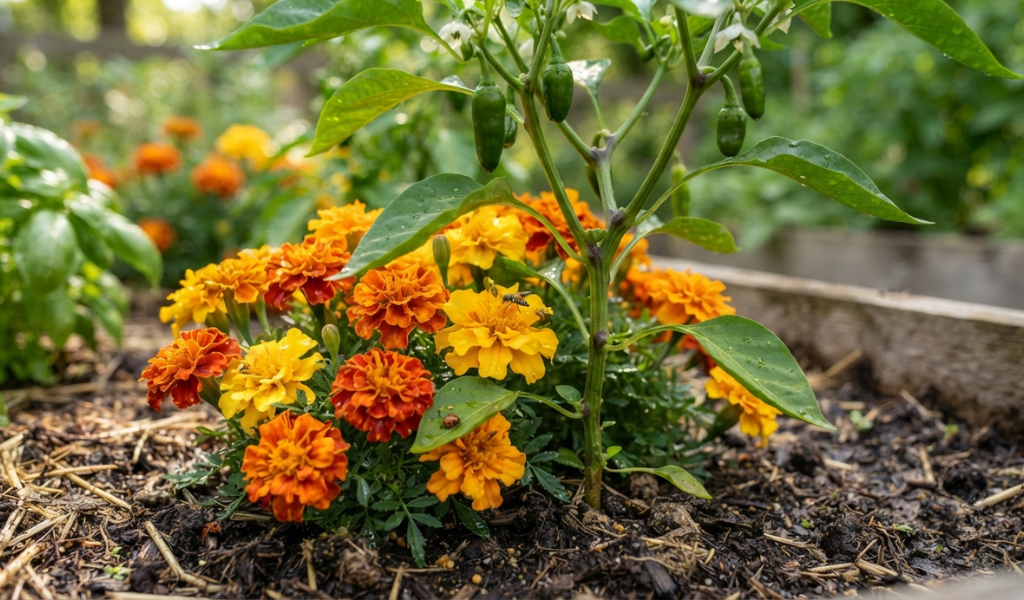
Nasturtiums work almost like a trap crop. Aphids and other pests are drawn to nasturtiums first, which means they leave your peppers alone. As a bonus, nasturtium flowers and leaves are edible and add a peppery bite to salads, which feels fitting given the company they keep.
Petunias are another helpful flower, known for deterring aphids, leafhoppers, and certain beetles. Zinnias, meanwhile, are pollinator magnets that bring in bees and butterflies, which supports better fruit set on your pepper plants throughout the growing season.
Vegetables That Make Great Neighbors
When it comes to vegetables, a few stand out as reliable partners for peppers. Onions and garlic are often planted nearby because their strong smell confuses pests that rely on scent to find their next meal. They also take up very little horizontal space, so they slot in easily between pepper rows.
Carrots are another solid choice. They grow underground and do not compete with peppers for sunlight or surface nutrients, making them a low-maintenance neighbor. Beans and peas, as mentioned earlier, fix nitrogen in the soil, giving nearby peppers a nutrient boost without any extra fertilizer.
Spinach and lettuce can also be tucked in around the base of pepper plants. These leafy greens mature quickly and can be harvested before the peppers grow large enough to need all the space, making them a smart way to double up on production in the same bed.
Plants to Avoid Growing with Peppers
While plenty of plants make great companions, others can actively hurt your pepper harvest. Knowing what to avoid is just as important as knowing what to plant.
Poor Companion Plants
Fennel is one plant that should be kept far away from peppers and most other vegetables. It releases compounds into the soil that can stunt the growth of nearby plants. Brassicas like broccoli, cabbage, and cauliflower are also poor matches. These heavy feeders compete aggressively for nutrients and can shade out shorter pepper plants as they mature.
Kohlrabi falls into the same category, along with apricot trees if you happen to be gardening near an orchard. Apricot roots can release substances that are toxic to pepper plants over time, leading to poor growth or plant decline.
Why Some Plants Compete with Peppers
The reasons certain plants clash usually come down to resource competition or chemical interference. Some plants are simply heavy feeders, pulling large amounts of nitrogen, phosphorus, and potassium from the soil, leaving little behind for peppers. Others grow tall and wide quickly, blocking sunlight that peppers need to develop strong stems and healthy fruit.
There is also the issue of shared pests and diseases. Planting peppers near other nightshades like eggplant in large quantities can increase the risk of spreading soil-borne diseases such as verticillium wilt, since these plants are vulnerable to the same pathogens. Keeping some distance and rotating crops each season helps reduce this risk significantly.
How to Plan a Companion Garden
Planning ahead makes a huge difference in how well your companion garden performs. A little bit of thought before planting season saves a lot of frustration later on.
Proper Plant Spacing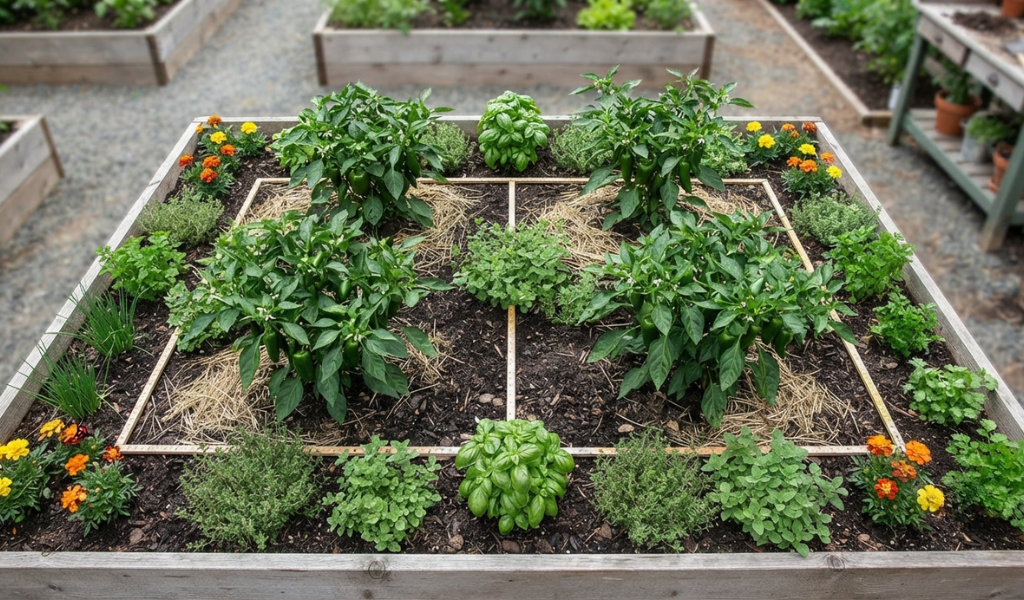
Peppers generally need about 18 to 24 inches of space between plants, depending on the variety. When adding companions, make sure herbs and flowers are not crowding the base of the pepper plant too tightly. Basil and marigolds can be planted about 6 to 12 inches from the pepper stem, giving both plants room to spread their roots without stealing each other’s resources.
Taller companions like beans should be positioned where they will not shade the peppers for most of the day. A general rule of thumb is to place taller plants on the north side of the bed if you are in the northern hemisphere, so they do not block sunlight from shorter neighbors.
Maximizing Garden Space
Small gardens benefit the most from smart companion planting. Interplanting fast-growing crops like radishes or lettuce between young pepper plants lets you harvest something early while the peppers are still filling out. By the time the peppers need the extra space, the quick crops are already gone.
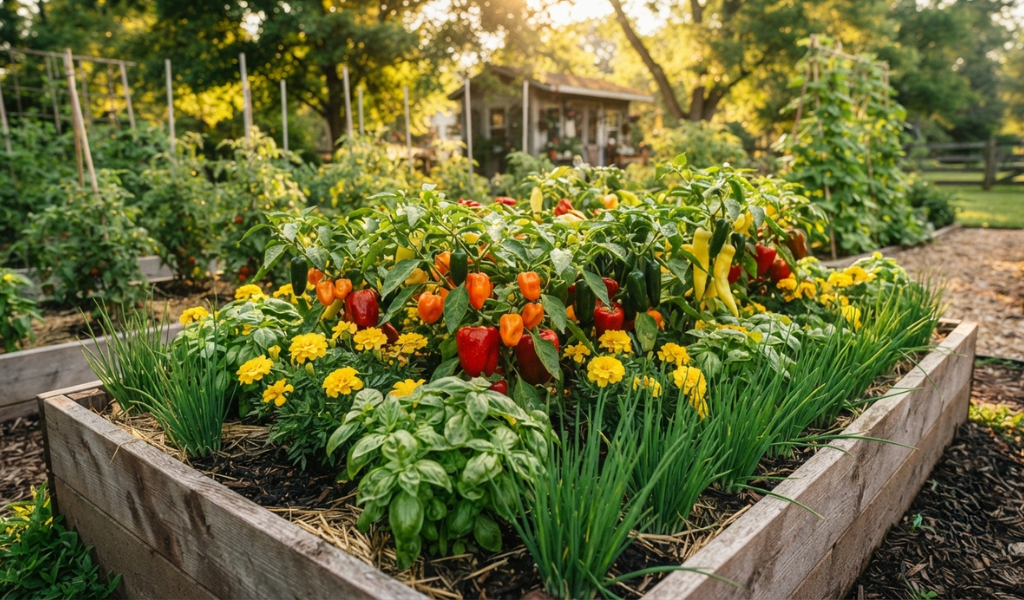
Vertical growing is another way to maximize space. Training beans or peas up a trellis on one side of the bed frees up ground space for peppers and low growing herbs. Raised beds and container gardens also work well for companion planting, since you have more control over soil composition and spacing.
Common Companion Planting Mistakes
Even experienced gardeners run into trouble with companion planting sometimes. Here are the two mistakes that come up most often.
Overcrowding Plants
It is tempting to squeeze in as many companions as possible, but overcrowding leads to poor airflow, which increases the risk of fungal diseases and makes pest problems harder to spot early. Crowded plants also compete for water and nutrients, which can leave everyone a little malnourished. Stick to recommended spacing guidelines even when the bed looks empty at first. Plants fill in quickly once the growing season kicks into gear.
Ignoring Sunlight and Soil Needs
Not every plant that pairs well with peppers on paper actually thrives in the same conditions. Peppers need full sun and well-draining soil with a slightly acidic to neutral pH. Some companions, like lettuce, prefer partial shade and cooler soil, which can create a mismatch if not planned carefully. Always check the sunlight and soil preferences of a companion plant before adding it to your pepper bed, rather than assuming that a good pest-repelling reputation means it will grow well in the same spot.
Benefits of Companion Planting
Bringing it all together, the benefits of companion planting go beyond just a healthier pepper plant. It creates a more balanced, resilient garden overall.
Natural Pest Control
One of the biggest wins is a real reduction in pest damage without relying on chemical sprays. Herbs and flowers that repel insects or attract beneficial predators create a natural defense system around your peppers. Over time, this can lead to a garden that largely takes care of itself when it comes to minor pest issues.
Improved Pepper Growth
Companion planting also supports stronger, more productive pepper plants. Better pollination from nearby flowers means more fruit set. Nitrogen-fixing companions mean healthier foliage and stronger stems. Shade from taller plants during peak summer heat can even prevent sunscald on the fruit itself. Many gardeners also experiment with soil amendments alongside companion planting, and a common question that comes up is whether coffee grounds help peppers grow. Used sparingly and mixed into compost, coffee grounds can add small amounts of nitrogen and improve soil structure, though they should never be piled directly against the stem since fresh grounds can be too acidic for young plants.
Conclusion
Figuring out what grows well with peppers does not have to be complicated. With the right herbs, flowers, and vegetables planted nearby, your pepper plants can enjoy natural pest protection, better pollination, and healthier soil all season long. Just as important is knowing what to avoid, since a few poor plant choices can undo all that hard work. Take some time this planting season to map out your garden bed, group your peppers with proven companions like basil, marigolds, and onions, and give everything enough room to grow. Your future harvest of crisp, colorful peppers will thank you for it.
Frequently Asked Questions
Can tomatoes grow with peppers?
Yes, tomatoes and peppers can grow together since they share similar sunlight, water, and soil needs. Both belong to the nightshade family, so it helps to rotate their location each year and watch for shared pests like aphids and hornworms.
What flowers help pepper plants?
Marigolds, nasturtiums, petunias, and zinnias are among the best flowers for peppers. They repel harmful insects, attract pollinators, and some even act as trap crops that lure pests away from the peppers themselves.
Do coffee grounds help peppers grow?
Coffee grounds can help peppers grow when used in moderation, usually mixed into compost rather than applied directly to the soil. They add a small amount of nitrogen and can improve soil texture, but too much at once may make the soil too acidic for healthy root growth.
How far apart should peppers and their companions be planted?
Peppers typically need 18 to 24 inches between each plant. Smaller companions like herbs can be planted 6 to 12 inches away, while taller plants should be positioned so they do not block sunlight from reaching the peppers.
Can I plant peppers with cucumbers?
Cucumbers and peppers can coexist, though cucumbers are heavy feeders and vigorous growers, so give them enough distance to avoid competing for nutrients and space. Adding compost regularly helps support both plants when grown together.
Why should peppers avoid growing near fennel?
Fennel releases compounds into the soil that can inhibit the growth of many nearby plants, including peppers. It is best grown in its own separate area of the garden, away from most vegetables.
Is basil really a good companion for peppers?
Basil is widely considered one of the best companions for peppers. It may help repel aphids and thrips, thrives in the same warm sunny conditions peppers need, and some gardeners believe it can even enhance the flavor of nearby peppers.