Gypsum vs Agricultural Lime for Tomato Soil: Preventing Blossom End Rot
Gypsum vs Agricultural Lime for Tomato Soil: Key Differences and Benefits
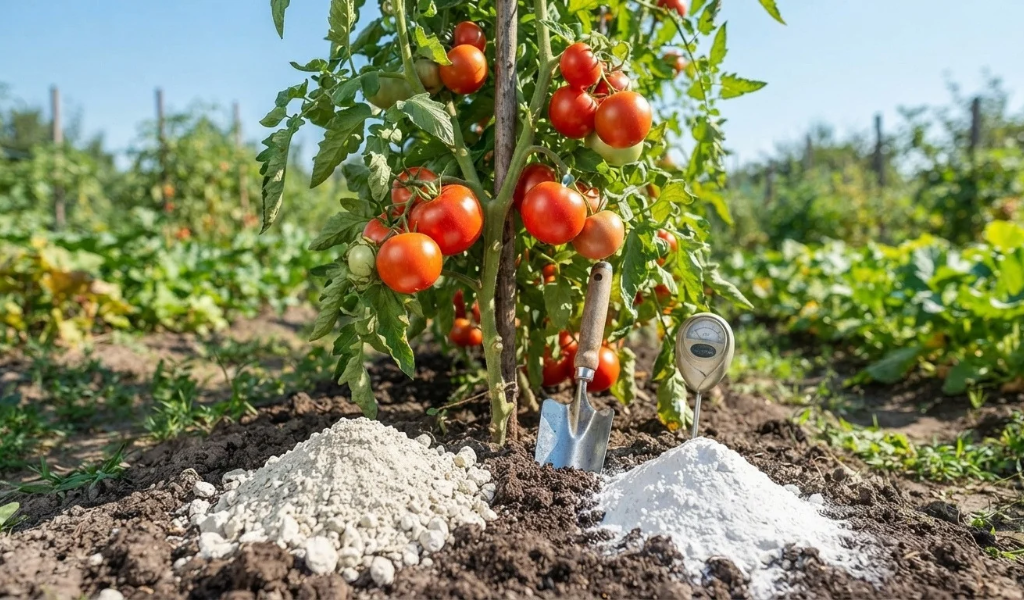
Gypsum vs agricultural lime for tomato soil comes down to one simple split. Agricultural lime changes soil pH. Gypsum supplies calcium and sulfur without moving the pH much. Lime is ground limestone made mostly of calcium carbonate. Dolomitic lime also carries magnesium. Gypsum is calcium sulfate dihydrate, a mineral that dissolves slowly in water and releases calcium and sulfate into the soil.
The chemical composition explains why they do different jobs. The carbonate in lime reacts with acid in the soil and neutralizes it. The sulfate form in gypsum has no such effect, so the soil pH stays close to where it started. That is why gypsum vs agricultural lime for tomato soil is not a contest with one winner. Each amendment solves a different problem in the garden.
Lime is the better pick for sour soil with a low pH. Gypsum suits soil that already has a good pH but runs short on calcium or has turned into compacted clay. Homemade fertilizer for tomatoes can also help provide essential nutrients when used appropriately. Tomato plants also need steady water and balanced nutrients, so neither product works as a cure for everything. A soil test is the best place to start because it shows pH levels and calcium levels before any money is spent.
Understanding Soil pH and Calcium Needs for Healthy Tomato Plants
Tomatoes grow best in slightly acidic soil with a pH between 6.2 and 6.8. In this range, roots can take up calcium, magnesium, nitrogen, and phosphorus more easily. Outside this range, plants may struggle to absorb essential nutrients even when they are present in the soil. Understanding soil pH is an important part of gypsum vs agricultural lime for tomato soil, as both amendments affect soil differently.
The Role of Calcium in Tomato Growth and Fruit Development
Calcium builds strong cell walls in leaves, roots, and fruit. It travels upward through the plant with water, so it only reaches developing tomatoes when the soil stays evenly moist. Young tomatoes grow quickly and need a steady calcium supply during fruit development. When calcium delivery falls behind, the tissue at the blossom end breaks down and turns dark. This condition is known as blossom end rot.
Calcium uptake depends on consistent watering as much as on the amount of calcium in the soil. This is where gypsum vs agricultural lime for tomato soil becomes important. Gypsum supplies calcium without significantly raising soil pH, while agricultural lime adds calcium and raises soil pH. Choosing the right amendment depends on your soil test results. Remember, gypsum vs agricultural lime for tomato soil should never replace proper watering habits or balanced nutrient management.
How Soil Acidity Affects Nutrient Availability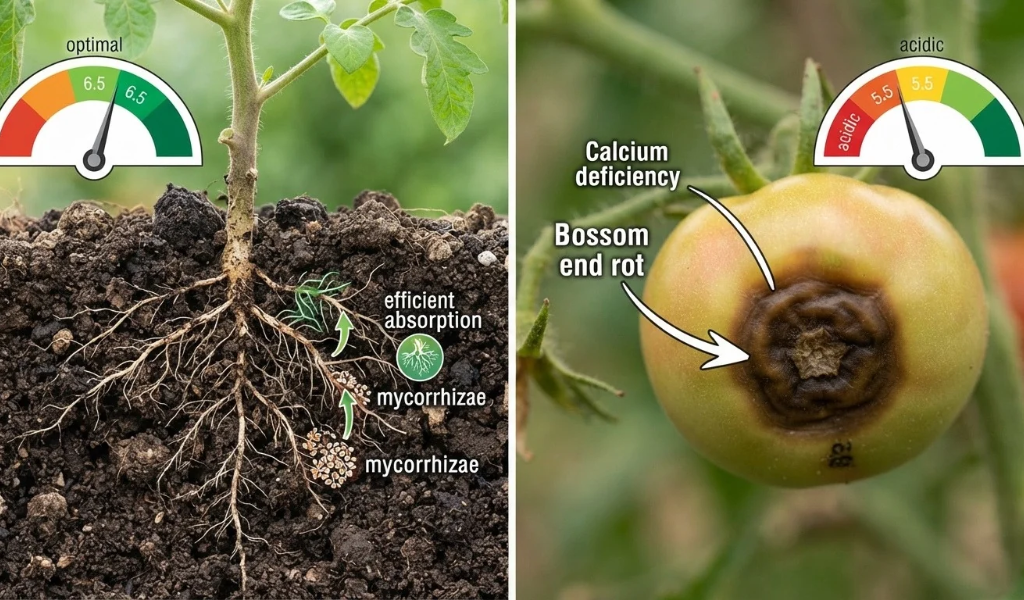
In acidic soils aluminum and manganese dissolve more easily and can turn toxic. Calcium and magnesium wash out and become scarce. Phosphorus gets tied up and roots cannot reach it. In alkaline soil the opposite problem appears. Iron, zinc and manganese lock up and the leaves turn pale. This is why raising the pH without a test is risky. A tomato crop needs the pH in the right range, not just more calcium.
Agricultural Lime for Tomato Soil: Benefits, Uses, and Best Application Methods
Agricultural lime, often called ag lime, is the standard fix for acidic soils. It is cheap and easy to find at farm stores and at Home Depot. In the gypsum vs agricultural lime for tomato soil debate, lime wins whenever acidity is the main problem. It also adds calcium and, in the dolomitic form, some magnesium. Understanding the difference in gypsum vs agricultural lime for tomato soil helps gardeners choose the right amendment for healthier tomato growth.
How Agricultural Lime Raises Soil pH
Lime reacts with water and carbon dioxide in the soil and forms ions that neutralize acid. The reaction frees exchange sites on soil particles so calcium can hold there in place of hydrogen. As acidity drops, aluminum toxicity eases and microbial activity improves. Finely ground lime works faster than coarse rock dust or chunky dolomite. The amount needed depends on soil type. Clay and soils rich in organic matter hold more acid than sand and need more lime to reach the same pH. This is an important consideration when comparing gypsum vs agricultural lime for tomato soil, as gypsum does not significantly raise soil pH.
Choosing the Right Time to Apply Lime Before Planting Tomatoes
Lime works slowly, so plan to apply it two to three months before planting. Fall is a popular choice. Spread it evenly and mix it into the top six inches with tillage or a garden fork. Surface-applied lime moves down very slowly and mostly helps the top inch or two. Incorporation gives faster results in the root zone. Avoid applying lime right before transplanting because a sudden jump in pH can stress young roots. For a pot, mix a small amount of dolomitic lime into the potting mix and follow the label rate.
Before applying either amendment, test your soil to check its pH and calcium levels. Tomatoes generally grow best in slightly acidic soil, around pH 6.0 to 6.8. Choosing between gypsum vs agricultural lime for tomato soil depends on whether your garden needs pH correction or additional calcium without changing acidity. Using the correct amendment and application rate helps maintain balanced soil conditions and supports healthier tomato plants.
Gypsum for Tomato Plants: Improving Soil Structure and Calcium Supply
Gypsum is mined or captured as a byproduct and sold as powder or pelletized granules. Pellets are easier to spread in a home garden and create less dust. The main benefits are calcium and sulfur supply and better soil structure. When considering gypsum vs agricultural lime for tomato soil, understanding these benefits helps you choose the right amendment for your garden.
How Gypsum Adds Calcium Without Raising Soil pH
The calcium in gypsum is soluble enough to move into the root zone relatively quickly. It can also reach deeper soil layers, unlike lime, which moves slowly through the soil. Because the sulfate form carries no carbonate, gypsum does not neutralize soil acidity or significantly raise soil pH. This makes it a suitable option for soil that already has a good pH but lacks sufficient calcium. It also supplies sulfur, which tomato plants use to build proteins and support healthy growth.
Many growers apply gypsum at planting or as a side dressing during the growing season. However, testing soil before application helps prevent unnecessary calcium buildup. Gypsum can also improve certain clay soils by encouraging better soil structure and water movement. When deciding gypsum vs agricultural lime for tomato soil, choose gypsum when additional calcium and sulfur are needed without changing soil pH. If the soil is acidic and needs a higher pH, agricultural lime is generally the better choice.
The Benefits of Gypsum in Heavy Clay and Sodic Soils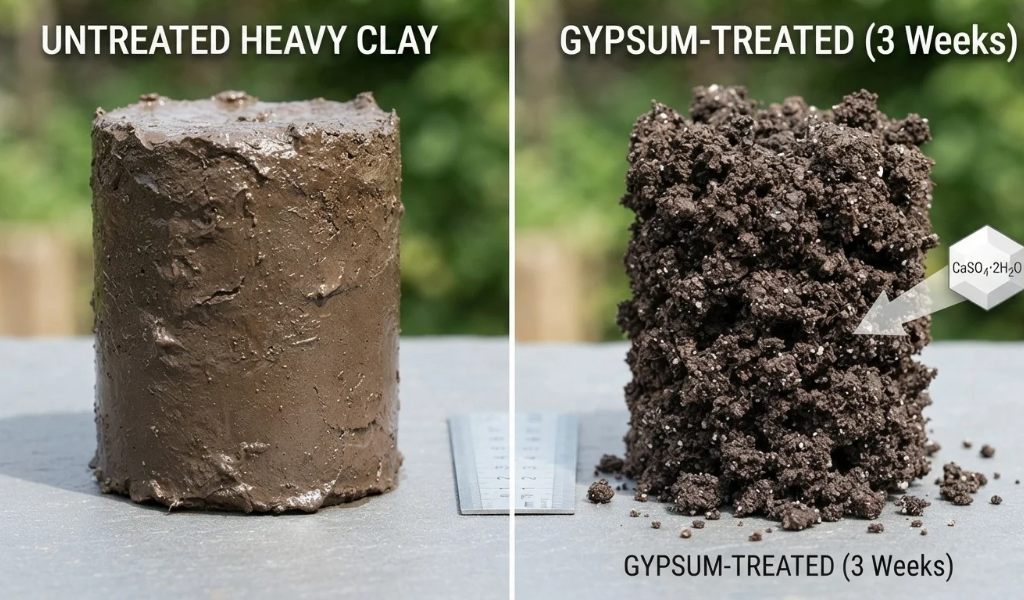
In heavy clay the calcium from gypsum replaces sodium on clay surfaces through cation exchange. Particles then clump into crumbs and leave space for air and water. Drainage and infiltration improve and surface crusting breaks down. Sodic soils gain the most because irrigation water carries the displaced sodium below the roots. Farmers use gypsum on alfalfa, soybean and squash fields for the same reason. A garden bed with compacted clay can improve too when gypsum goes in with compost and mulch. Gypsum alone will not fix a hard pan, so organic matter is needed to keep the gains.
Gypsum vs Agricultural Lime for Tomato Soil: 7 Major Differences
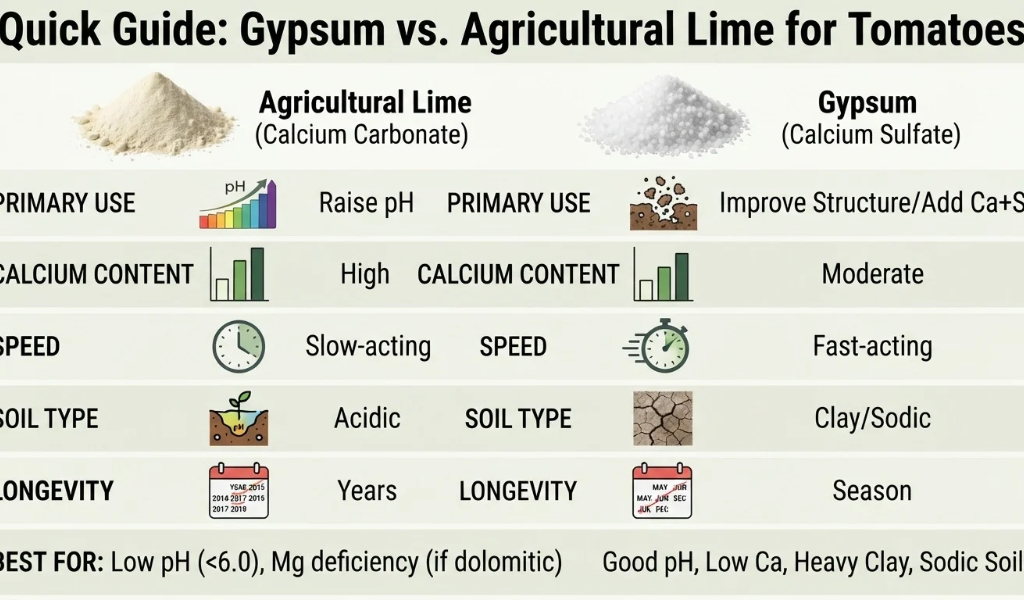
Seven differences matter most. They are calcium content, effect on soil pH, nutrient availability, speed, soil structure, sodium issues and cost.
Calcium Content, Soil pH, and Nutrient Availability
Calcium content comes first. Pure calcitic lime holds up to 40 percent calcium. Gypsum holds about 23 percent plus 18 percent sulfur. The second difference is pH. Lime can raise pH by a full point over time while gypsum barely moves it. The third is nutrient availability. Lime frees phosphorus in acidic soils and cuts aluminum toxicity. Gypsum feeds calcium and sulfur and leaves micronutrients like manganese mostly alone. Dolomitic lime adds magnesium while gypsum adds none. Always check the magnesium level on the soil test before choosing between gypsum vs agricultural lime for tomato soil.
Soil Texture, Drainage, and Long-Term Soil Improvement
The fourth difference is speed. Gypsum dissolves in weeks while lime needs months. The fifth is soil structure. Gypsum improves aggregation in heavy clay while lime helps only when acidity is the cause of poor structure. The sixth is sodium issues because only gypsum handles sodic soils well. The seventh is the cost of gypsum compared with lime. Lime is cheaper per unit of calcium. Per acre rates for lime often run one to two tons while gypsum rates are usually one ton or less. Home gardeners buy by the bag so the gap stays small. Lime effects last several years while gypsum leaches out in a season or two.
 Signs Your Tomato Soil Needs Gypsum or Agricultural Lime
Plants and soil both give clues. Reading them helps settle the gypsum vs agricultural lime for tomato soil question before anything is bought.
Recognizing Calcium Deficiency and Blossom End Rot
Blossom end rot shows as a brown or black sunken patch at the bottom of the fruit. New leaves may curl and growth may look stunted. This rot often hits the first fruit cluster. Check the watering routine first. If the soil test shows low calcium and a near neutral pH, gypsum fits. If calcium is low and the pH is below 6.0, lime fits. Calcium deficiency caused by poor uptake in cold or dry spells will not disappear with any amendment.
Identifying Acidic Soil and Poor Soil Structure
Acidic soil often brings moss, slow growth and yellow leaves. Water may pool on the surface and then crust over. Clay lumps that stay hard after rain point to poor soil structure and compaction. A simple pH kit gives a quick reading. A lab soil test is better because it also lists calcium, magnesium and sodium. Matching those results to the right product avoids waste.
How to Apply Gypsum and Agricultural Lime for Better Tomato Growth
Good results come from the right rate at the right time. Guessing leads to waste and sometimes damage.
Soil Testing, Application Rates, and Proper Timing
Take samples from six inches deep in several spots and mix them together. Send them to a lab or use a trusted kit. Follow the lime recommendation on the report. A common guide is five to ten pounds of lime per 100 square feet for a modest pH rise. For gypsum many gardeners use one to two pounds per 100 square feet in a bed or a couple of tablespoons per plant at planting. Large fields use rates per acre. Lime goes on in fall or early spring well before planting. Gypsum can go on at planting or as a side dress. Water well after spreading. Retest every two or three years.
Common Application Mistakes That Can Affect Tomato Plants
Using lime on soil that already sits near 6.5 is the biggest mistake. Skipping a soil test comes next. Some growers add gypsum expecting a pH change and see none. Others pile either product against the stem and burn the tissue. Mixing up dolomite and calcitic lime can push magnesium too high. Heavy ammonium nitrogen can also block calcium uptake. Expecting lime to work in a week leads to disappointment. Compost and mulch help hold moisture and smooth out swings.
Choosing Between Gypsum and Agricultural Lime for Healthier Tomato Harvests
Start with the soil test. If the pH is below 6.0 choose lime, and pick dolomitic lime when magnesium is low. If the pH is in range but calcium is low or the soil is heavy clay choose gypsum. If both pH and calcium are low lime usually covers both. Some gardens need both products. Gypsum and lime can be applied in the same season because they do not react badly with each other. Keep every gypsum vs agricultural lime for tomato soil decision tied to numbers and not guesses.
Final Thoughts
Choosing between lime and gypsum depends on what your tomato soil actually needs. Gypsum vs agricultural lime for tomato soil is not about finding one amendment that works for every garden but understanding the specific soil problem you want to correct. Agricultural lime helps raise soil pH when the soil is too acidic, while gypsum supplies calcium and sulfur without significantly changing soil pH. It can also help improve certain clay soils and soil structure. Before adding either amendment, test your soil to check its pH and nutrient levels. Maintain consistent watering, add organic compost, and provide balanced nutrients throughout the growing season. These simple steps help create healthier soil, stronger roots, and better tomato production. Take time to understand your garden’s soil conditions before choosing an amendment, and you will be better prepared to grow healthy tomato plants and enjoy a more productive harvest.
Frequently Asked Questions
Which is better for soil, gypsum or lime?
It depends on your soil’s condition and nutrient needs. Lime is better for acidic soil because it raises pH and makes nutrients more available to tomato plants. Gypsum is more suitable for heavy clay, sodic soil, or soil with a normal pH but low calcium. When comparing gypsum vs agricultural lime for tomato soil, always consider soil pH, calcium levels, and drainage before choosing either amendment.
Does gypsum help tomatoes grow?
Yes, gypsum can help tomatoes when the soil lacks calcium or has heavy clay that restricts root growth. It supplies calcium and sulfur while improving soil structure in certain conditions. However, it will not provide much benefit if the soil already contains enough calcium.
Can you put down lime and gypsum at the same time?
Yes, you can apply both on the same day if your soil test recommends them. Lime gradually raises soil pH, which can take several months, while gypsum supplies calcium without significantly changing pH.
Are gypsum vs agricultural lime for tomato soils?
Gypsum vs agricultural lime for tomato soil involves two different soil amendments with different purposes. Lime corrects soil acidity and supplies calcium, while gypsum adds calcium and sulfur without significantly raising soil pH. The right choice depends on your garden soil conditions.
Can you apply too much gypsum to soil?
Yes, excessive gypsum application can wash away magnesium and potassium, creating nutrient imbalances. Always follow soil test recommendations instead of applying large amounts every year.
Will gypsum make acidic soils less acidic?
No, gypsum does not significantly raise topsoil pH. Although it may help reduce aluminum toxicity in some subsoils, agricultural lime is the better choice when your garden soil needs acidity correction.
Can gypsum and lime be applied together?
Yes, gypsum and lime can be applied together when the soil needs both calcium and pH correction. However, calculate each application rate separately based on soil test results to avoid unnecessary amendments.