Boron Deficiency in Tomato Plants: Nutrient Management and Foliar Spray
Boron Deficiency in Tomato Plants: Signs, Effects, and Solutions
Boron deficiency in tomato plants is a quiet nutrient problem that can cut yield and quality long before a grower understands what went wrong. Boron is a micronutrient, so tomato plants need only a tiny amount, yet that small supply controls cell wall formation, pollen germination, and the movement of sugars through the plant. When the supply runs short, the damage shows first in the newest leaves, the growing tips, and the flowers. Many growers mistake the early signs for heat stress, disease, or a lack of water, and they lose weeks of valuable growth.
This guide explains boron deficiency in tomato plants in simple terms. You will learn how to spot the symptoms, why the problem appears, and how to correct it with borax, boric acid, or a foliar spray without harming the crop. Good soil care matters just as much as treatment. Even a plain homemade fertilizer for tomatoes, such as compost tea or well rotted manure, can help hold boron in the root zone when the soil is light and sandy. Whether you grow a few plants in a backyard bed or manage a larger cultivation plot, the steps below will help you protect tomato growth from the first leaf to the last harvest.
Boron deficiency in tomato plants is also easy to avoid once you know the causes. A few smart habits can keep the nutrient content of your soil balanced and your plants healthy all season.
Understanding Boron Deficiency in Tomato Plants and Its Impact on Growth
Boron is one of the essential micronutrients, and its role in plant growth is much bigger than its small quantity suggests. Inside a tomato plant, boron helps build the cell wall, supports the growth of new root tips, and guides sugar transport from the leaves to the fruit. It also plays a role in pollen tube growth and pollen germination, which are the steps that turn a flower into a tomato. Without enough boron, the plant cannot build healthy new tissue.
The main challenge is that boron barely moves inside the plant. Once it reaches a leaf it stays there, so older leaves cannot share their supply with young leaves. That is why boron deficiency in tomato plants shows up first at the top of the plant while the lower foliage looks normal.
Research on Solanum lycopersicum L. shows that low boron reduces dry matter production, root growth, and chlorophyll content. Photosynthesis slows down and vegetative growth becomes weak. The final result is lower yield and quality, with smaller fruit and weaker plants. Understanding boron deficiency in tomato plants is the first step toward better tomato cultivation and higher yields.
Early Signs and Symptoms of Boron Deficiency in Tomato Plants
Spotting boron deficiency in tomato plants early gives you time to act before the flowers drop. The signs often look like other problems, so careful checks at the top of the plant are the best habit to build.
Changes in Young Leaves and Growing Tips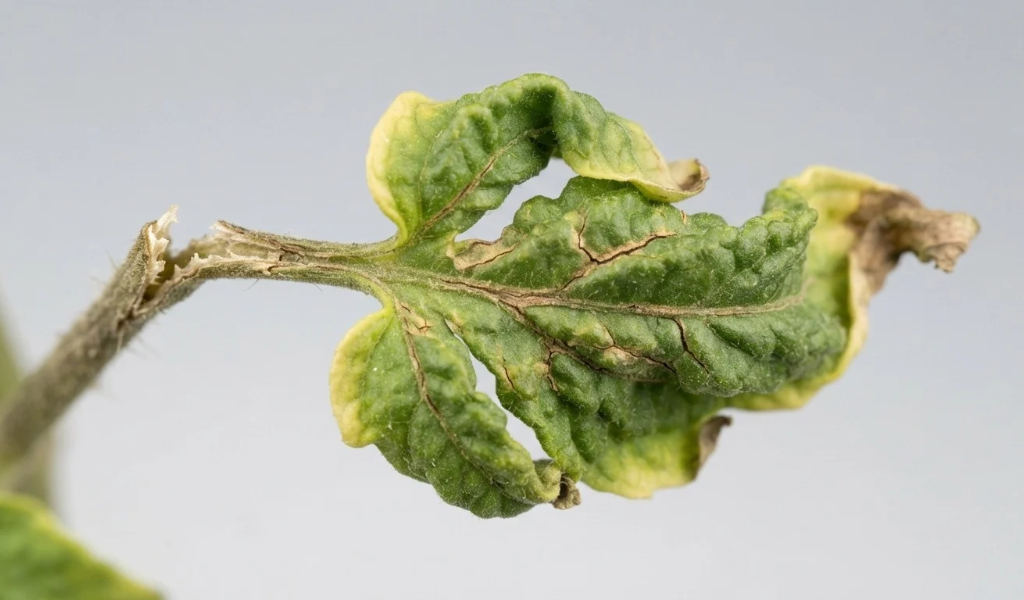
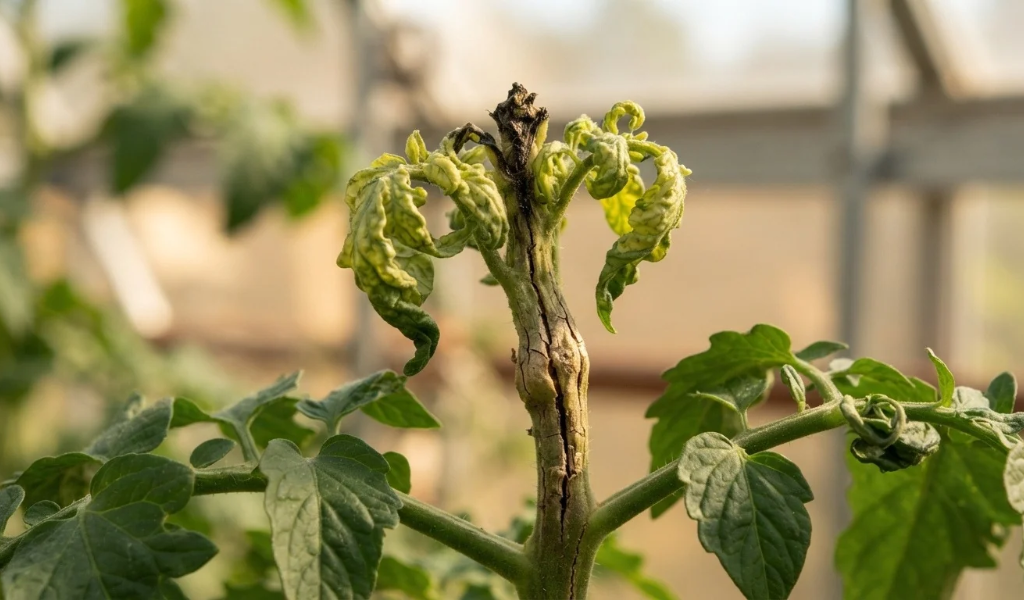
The youngest leaves react first. They stay small, turn thick and leathery, and curl downward or twist out of shape. The color of the leaves may fade to pale yellow at the tips, which is a sign of chlorosis, while some plants show the opposite and the leaves turn dark green and look crinkled. Veins and petioles often become rough, swollen, and brittle, and tiny cracks can appear along them. In advanced cases the tips turn necrotic and the growing point dies. When the main tip dies, side shoots burst out below it and give the plant a bushy and unhealthy shape. This pattern in young leaves is the clearest early signal of boron deficiency in tomato plants.
Brittle Stems, Poor Flowering, and Stunted Growth
Stems affected by low boron become hard and brittle and snap with a light bend. Internodes shorten, so the plant looks compact and stunted next to healthy neighbors. Root growth also suffers because tomato root tips need boron to divide and expand. Weak roots limit nutrient uptake, which makes stunted growth even worse. Flower buds may form in smaller numbers or fail to open. Plants can also wilt during the day even when the soil is moist, because damaged tissue cannot move water well. These signs together point to boron deficiency in tomato plants rather than a simple water problem.
How Boron Deficiency Affects Tomato Flowers, Fruit Set, and Fruit Quality
Flowers and fruit pay the highest price when boron runs low. Because boron plays such a direct role in reproduction, boron deficiency in tomato plants often shows up in the harvest before the leaves look bad.
Poor Pollination and Blossom Development
Healthy pollen needs boron to germinate on the stigma and to grow a tube down to the ovary. When boron is short, pollen germination falls and tube growth stops early. Flowers may drop before opening or open and then fall without setting fruit. A grower may see plenty of blossoms in the morning and very few small tomatoes two weeks later. Flower clusters also tend to be small and weak. Poor pollination is one of the main ways boron deficiency in tomato plants reduces yield, and extra potassium or nitrogen will not fix it.
Cracked, Misshapen, and Unevenly Ripened Tomatoes
Fruit that does form often shows damage. Tomatoes may crack near the stem, develop rough corky patches, or take odd shapes. Ripening can be uneven, leaving green or yellow shoulders on a red fruit. Inside the fruit the flesh may show hard brown spots caused by necrosis. Fruit also tends to be smaller with fewer seeds. All of this lowers yield and quality and makes tomatoes harder to sell or store. Some tomato varieties react more strongly than others, so keep notes on which ones struggle in your soil.
Main Causes of Boron Deficiency in Tomato Plants
Most soils hold some boron, so the real problem is usually availability. Several soil and weather factors decide how much boron the roots can actually take up.
Soil pH, Sandy Soil, and Low Organic Matter
Sandy soil is the most common cause. Boron dissolves easily in water, so rain and irrigation leach it out of light soils quickly. Clay soil holds boron better but can still fix it when the pH is high. Soil pH above 7 binds boron and makes it less available, and heavy liming makes this worse. Organic matter content matters too because compost and decayed plant material store boron and release it slowly. Soils with low organic matter lose boron fast. A simple soil analysis shows the pH and the boron level, which explains why boron deficiency in tomato plants appears in a given bed.
Drought, Excessive Rainfall, and Nutrient Imbalances
Weather swings are another trigger. During drought the topsoil dries and boron uptake slows because boron travels to roots with water. Heavy rain does the opposite by causing nutrient leaching that washes boron below the root zone. Nutrient imbalances also play a part. Too much nitrogen pushes fast leafy growth that uses boron quicker than the soil can supply. High levels of potassium, calcium, and magnesium can also interfere with boron uptake. When several of these factors overlap, boron deficiency in tomato plants can appear suddenly even in a bed that grew good crops last year.
Boron Deficiency vs. Other Tomato Plant Nutrient Deficiencies
Many nutrient deficiencies look alike, which leads to wrong treatment. Comparing symptoms carefully helps you confirm boron deficiency in tomato plants before you add anything to the soil.
Boron Deficiency vs. Calcium Deficiency
Calcium and boron both cause dead growing tips and distorted new leaves because neither moves easily inside the plant. Calcium deficiency often adds blossom end rot on the fruit and scorched leaf edges. Boron deficiency in tomato plants adds brittle petioles, swollen veins, and poor flower set. The two nutrients also work together in the cell wall, so a shortage of one can worsen the other. Soil and tissue tests are the safest way to tell them apart.
Boron Deficiency vs. Zinc and Other Micronutrient Problems
Zinc deficiency causes small leaves with yellow patches and short internodes. Manganese deficiency causes chlorosis between the veins of young leaves, yet the leaf shape stays normal. Magnesium and nitrogen problems begin on older leaves, which is the opposite of the boron pattern. Potassium shortage burns leaf margins on older leaves and causes blotchy ripening. If damage starts at the top and the leaves are thick and brittle, boron is the likely cause. If damage starts at the bottom, look at mobile nutrients such as nitrogen, potassium, and magnesium. A lab check removes the guesswork and keeps you from applying the wrong fertilizer for boron deficiency in tomato plants.
How to Fix Boron Deficiency in Tomato Plants Safely and Effectively
Treatment must be careful because the gap between enough boron and too much boron is small. Always confirm the problem with a soil analysis or leaf test first. Then choose a product and a method that match the stage of the crop.
Best Boron Fertilizers for Tomato Plants
Borax is the best known boron fertilizer and is easy to find. It contains about 11 percent boron and suits soil application when mixed well. Boric acid and Solubor dissolve faster and work better as a foliar spray. Some growers prefer a chelate or a mixed micronutrient product that includes zinc and manganese. Compost and well rotted manure also add small amounts and improve soil structure. Whatever you choose, read the label and count every source so you do not stack too much when treating boron deficiency in tomato plants.
Soil Application and Foliar Spray Treatment
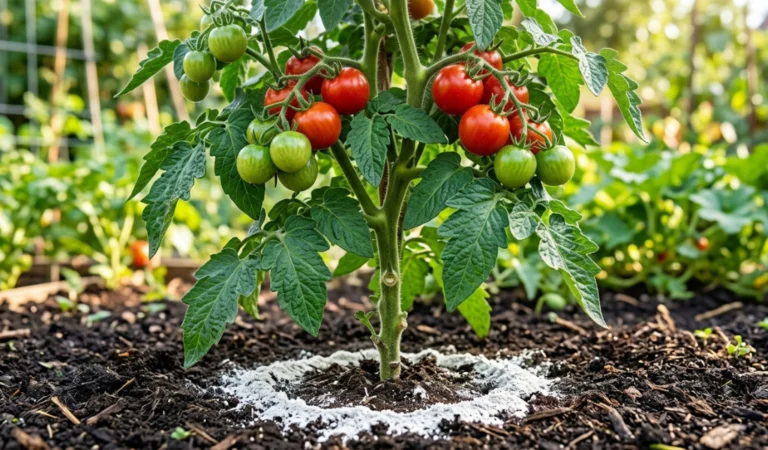
Soil application works slowly but lasts longer. Dissolve borax in warm water and spread it evenly over the bed before watering it in. A foliar application acts much faster because leaves absorb boron directly. Spray young leaves and flower clusters in the early morning or late evening to avoid burn. Plants often recover within one to two weeks, although damaged tissue will not heal. A foliar spray is the best first aid, and soil fertilization is the better long term fix for boron deficiency in tomato plants.
Correct Boron Dosage and Application Timing
For soil use, apply about 1 to 2 teaspoons of borax per 100 square feet, which is roughly 1 gram per square meter. Mix it with water or dry sand so it spreads evenly. For a foliar spray, dissolve about 1 gram of boric acid or Solubor in a liter of water and follow the product label. Apply the first spray when symptoms appear or at early flowering. Repeat once after 10 to 14 days if needed. Do not go beyond that without a new tissue test. Measure with a kitchen scale or measuring spoons and never guess. Correct dosage is the safest way to manage boron deficiency in tomato plants.
How to Prevent Boron Deficiency in Tomato Plants Naturally
Prevention costs less than correction. Healthy soil keeps boron available all season, which is the best defense against boron deficiency in tomato plants.
Improving Soil Health With Compost and Organic Matter
Add compost every season to raise organic matter content and improve soil structure. Organic matter holds boron near the roots and slows nutrient leaching in sandy soil. A homemade fertilizer for tomatoes made from kitchen scraps, leaf mold, and aged manure feeds soil life and supports steady nutrient uptake. Mulch with straw or dry leaves to protect the surface and keep moisture even. Test the soil every spring and keep the soil pH between 6.2 and 6.8. Avoid liming without a test result. These habits support plant health and crop strength in every season.
Maintaining Proper Soil Moisture and Nutrient Balance
Boron moves with water, so steady watering is essential. Deep and regular irrigation works better than short and frequent sprays. Drip lines keep the root zone evenly moist and reduce leaching. Balance nitrogen, potassium, calcium, and magnesium with a full fertilization plan instead of heavy doses of one nutrient. Split feeding into smaller rounds so the plant never faces a sudden imbalance. Rotate crops and avoid planting tomatoes in the same low boron bed each year. A balanced program is the most reliable way to keep boron deficiency in tomato plants from returning.
Common Boron Fertilizer Mistakes That Can Damage Tomato Plants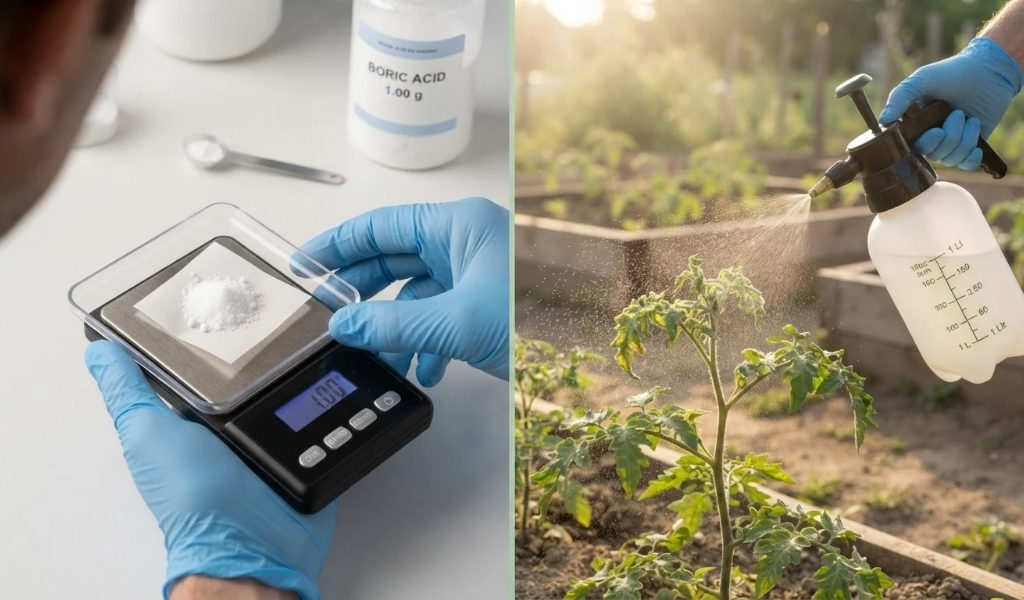
The biggest mistake is applying boron without a test. Growers see twisted leaves and add borax at once, but the real cause may be calcium, a virus, or herbicide drift. A short wait for test results is always cheaper than a ruined crop. The second mistake is overdosing. Boron toxicity shows as yellow edges and scorched tips on older leaves, which is the reverse of deficiency symptoms. If this happens, stop all boron and water the soil deeply to flush the excess. Poor mixing is another problem, since borax clumps and can burn roots when dumped in one spot. Spraying in strong midday sun also burns leaves. Some growers repeat foliar sprays every week out of worry, but boron builds up and harms the crop. Many also forget that compost, manure, and mixed fertilizers already contain boron. Counting every source keeps treatment of boron deficiency in tomato plants safe.
Final Thoughts
Boron deficiency in tomato plants is easy to miss but simple to manage once you know the signs. Watch the young leaves, the petioles, and the flowers. Confirm the cause with a soil analysis, then correct it with a careful foliar spray or a measured soil application of borax. Build organic matter, keep the soil pH in range, and water evenly to prevent the problem next season. Small steps taken early protect both plant health and crop value. Your tomato crop will reward the effort with better yield and quality. Check the top of your plants today and share this guide with another grower who may be dealing with boron deficiency in tomato plants.
Frequently Asked Questions
Can we mix boron with NPK fertilizer?
Yes, boron can be blended with NPK for soil use, but spread the mix evenly to avoid hot spots. Do not tank mix Solubor with other sprays unless the label allows it.
How to increase lycopene in tomato plants?
Give plants full sun, steady moisture, and balanced potassium, and let fruit ripen on the vine. Too much nitrogen can reduce color. Avoiding boron deficiency in tomato plants also helps fruit reach its best nutrient content.
What does a boron deficiency plant look like?
It has thick and twisted young leaves, yellow or bronze tips, brittle stems, swollen petioles, and dead growing points. Older leaves often stay green.
What are the symptoms of boron deficiency in tomato fruit?
Look for cracks near the stem, rough corky patches, small or misshapen fruit, uneven ripening, and hard brown spots inside the flesh.
What is boron important for in tomato plants?
Boron is important for cell wall formation, pollen germination, root growth, and sugar transport. It also helps the plant use calcium well, which supports yield and quality.
Can boron deficiency in tomato plants stunt growth?
Yes. Low boron shortens internodes, weakens root growth, and kills growing tips, so plants stay small and bushy. Treat it early to protect plant growth.
What can boron deficiency in tomato plants cause?
It can cause flower drop, poor fruit set, cracked fruit, dead tips, and lower yield and quality if it is not corrected early.